
Heating a house in Caledon costs more than heating the same house inside Toronto. The town sits north and west of the city on higher, more exposed ground, with long stretches of open farmland and escarpment that let wind move freely across rooflines. Most requests for attic insulation Caledon homeowners send us begin the same way: a second floor that never warms up, ice building along the eaves in February, or a gas bill that has climbed faster than rate increases alone can explain. In almost every one of those cases, the attic is the problem.
This guide covers what attic insulation Caledon projects actually cost in 2026, which materials make sense for local housing stock, how much you can realistically expect to save on energy, and what separates a proper job from a quick blow-in that leaves the same cold spots behind. Universal Roofs is based in the Toronto area and works across Peel Region, so the numbers below reflect what crews are quoting on real Caledon attics this year, not national averages.
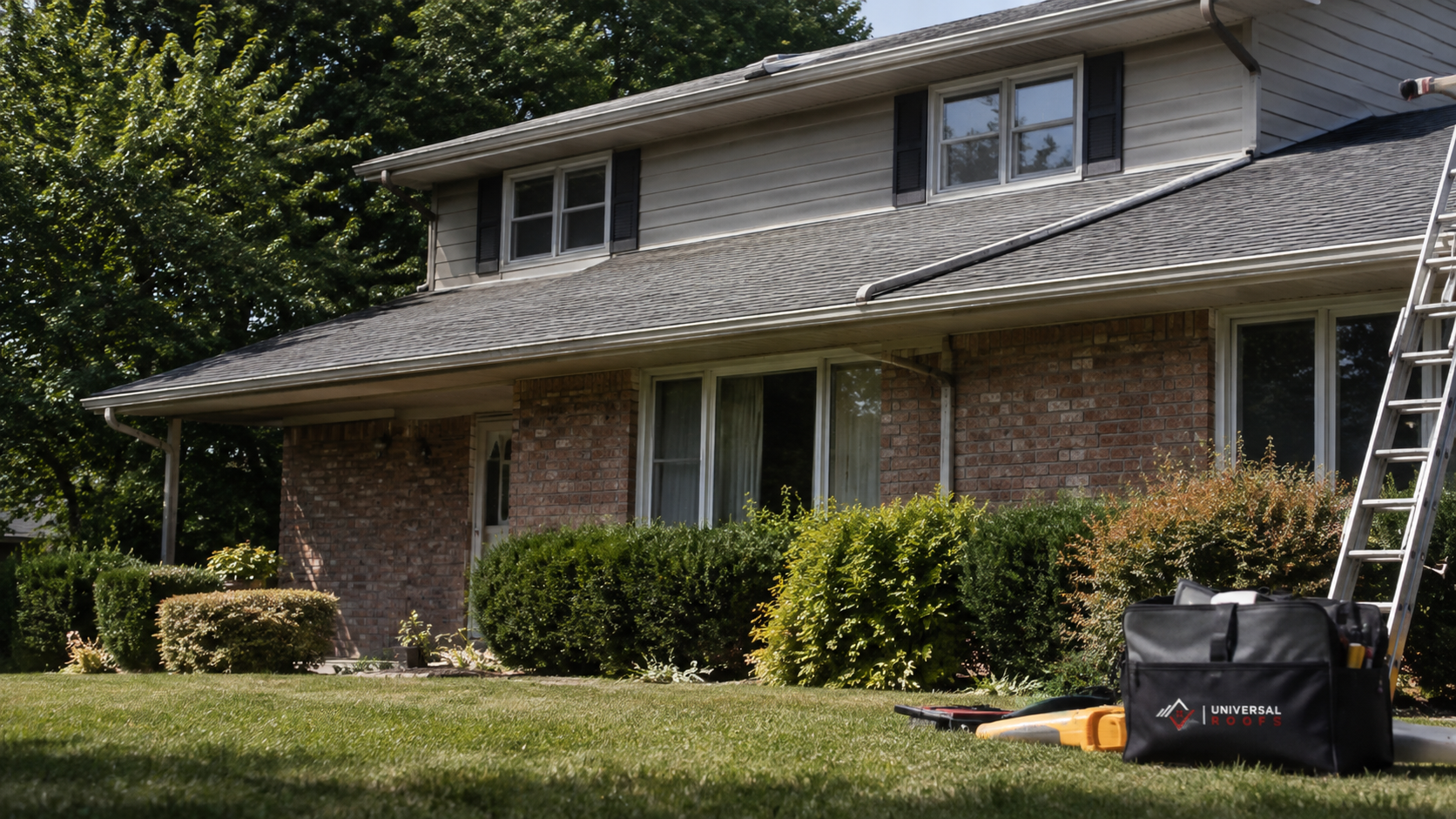
What Makes Attic Insulation Caledon Projects Different
Contractors who work across the GTA notice the pattern quickly. An attic insulation Caledon job usually involves more air volume, more roof surface per square foot of living space, and more exposure than the same job in an older Toronto semi. Detached homes on wide lots lose heat from all four sides. Bungalows, which are common through Caledon’s older residential pockets, have the largest attic footprint relative to their heated floor area of any house type, so the ceiling plane is doing more work than it would in a two storey home.
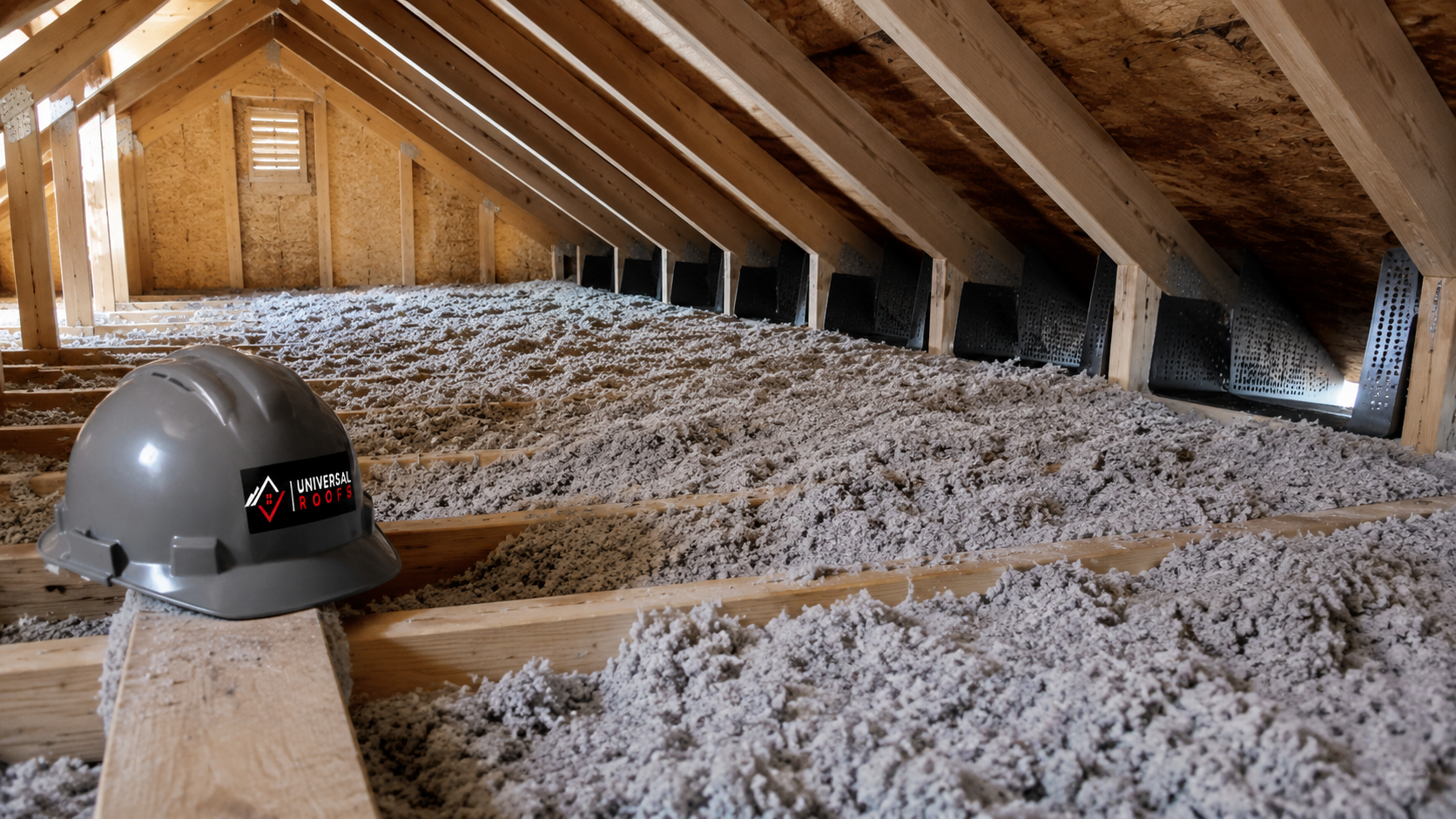
Wind matters more here as well. Loose blown insulation that has been installed without proper baffles or without attention to the soffit intake will drift and thin out near the eaves, which is exactly where you need depth most. On exposed rural and semi-rural lots, wind washing can strip effective R-value from the perimeter of an attic within a few seasons. Any attic insulation Caledon contractor who has worked north of Brampton for long will build the perimeter with baffles and dense edge treatment rather than simply hosing loose fill toward the eaves.
The third difference is the sheer variety of construction. Within one small area you can find a 1950s bungalow with three inches of original mineral wool, a 1990s subdivision home built to R-31, a converted farmhouse with a knee wall attic and no continuous ceiling plane, and a 2015 estate build with R-50 or better. There is no single default recommendation. A useful attic insulation Caledon estimate always starts with someone getting into the attic with a measuring stick and a light.
How Caledon’s Housing Stock Shapes the Work
Caledon is not one housing market. It is a collection of older village cores, postwar bungalows, large newer subdivisions, and estate lots on acreage, and each of those categories brings its own attic problems.
Postwar bungalows and older brick homes
These typically have shallow attics with limited headroom at the perimeter, original batt or loose mineral wool that has settled to a fraction of its rated depth, and ceiling penetrations that were never sealed. Pot lights added during later renovations are a frequent culprit, since older non IC rated fixtures cannot be covered with insulation and often leak warm, moist air straight into the attic. Work in these homes almost always includes air sealing before any new insulation goes down.
Newer subdivision homes
Homes built from the late 1990s onward usually started with R-31 to R-40 in the attic, which met the code of the day but falls well short of the current R-60 target. These attics are generally easy to work in, with truss framing, decent headroom at the ridge and clear access. A top-up here is one of the least expensive and most reliable upgrades available, and it is the most common attic insulation Caledon service booked in the shoulder seasons.
Estate homes and rural properties
Larger homes bring cathedral sections, multiple attic spaces separated by dropped ceilings, mechanical rooms in the attic, and long duct runs above the insulation line. These jobs need a more detailed plan, and sometimes a hybrid approach: dense pack or spray foam at the difficult transitions and blown insulation across the open field areas. Rural properties can also have rodent damage and contaminated insulation that must be removed rather than topped up.
Converted farmhouses and village properties
Older village housing frequently has knee walls, sloped ceilings and no continuous flat attic. Insulating these correctly means treating the sloped roof assembly and the small triangular spaces behind the knee walls, which is more labour intensive than a standard blow-in. Anyone quoting an attic insulation Caledon project on a house like this without going up to look is guessing.
What Attic Insulation Costs in Caledon in 2026
Pricing depends on attic size, existing conditions, access, and whether removal is required. The ranges below reflect typical 2026 quotes across Peel Region for a standard detached home with an attic footprint between roughly 1,000 and 1,600 square feet. Treat these as planning numbers, not fixed prices.
| Scope of work | Typical attic size | 2026 price range | Notes |
|---|---|---|---|
| Blown cellulose top-up to R-60 | 1,000 to 1,400 sq ft | $2,200 to $3,800 | Most common upgrade on subdivision homes |
| Blown fibreglass top-up to R-60 | 1,000 to 1,400 sq ft | $2,000 to $3,500 | Lighter product, needs more depth |
| Full removal plus reinsulation | 1,000 to 1,600 sq ft | $4,500 to $8,500 | Required for rodent, mould or fire damage |
| Air sealing package | Any | $600 to $1,800 | Top plates, penetrations, hatch, pot lights |
| Baffles and soffit vent correction | Per home | $350 to $1,100 | Priced by number of rafter bays |
| Bathroom fan ducted to exterior | Per fan | $250 to $650 | Common code deficiency in older homes |
| Closed cell spray foam at roof deck | Cathedral or partial | $5,500 to $14,000 | Specialty use, not a whole attic default |
Two line items surprise people. The first is removal. If the existing material is contaminated by rodents, water or old vermiculite, it has to come out, and that alone can add $1.50 to $2.50 per square foot before any new product goes in. The second is air sealing. It is not optional filler on the quote. Adding insulation over an unsealed ceiling traps the same warm, moist air that caused the original problem, and moisture will condense in the new material. If an attic insulation Caledon quote does not itemise air sealing, ask why.
Access also affects price. A small hatch in a bedroom closet means every bag of material and every piece of debris travels through a finished room, which adds labour and protection time. Exterior gable access or a garage hatch is faster and usually cheaper.
Insulation Materials Compared for Caledon Attics
There is no single best material. The right choice depends on attic geometry, budget, moisture history and whether the space is vented. The table below gives realistic performance and installed cost figures for the products used most often on attic insulation Caledon work.
| Material | R-value per inch | Depth needed for R-60 | Installed cost per sq ft | Best suited to |
|---|---|---|---|---|
| Blown cellulose | R-3.4 to R-3.7 | About 16 to 18 in | $1.60 to $2.60 | Open vented attics, good coverage around obstructions |
| Blown fibreglass | R-2.5 to R-2.9 | About 21 to 24 in | $1.50 to $2.40 | Attics with generous headroom, low dust preference |
| Fibreglass batts | R-3.1 to R-3.4 | About 18 to 19 in | $1.80 to $3.00 | Small or compartmented attics, knee walls |
| Mineral wool batts | R-4.0 to R-4.2 | About 15 in | $3.00 to $4.50 | Fire resistance, sound control, tight cavities |
| Open cell spray foam | R-3.6 to R-3.9 | About 16 in | $3.50 to $5.50 | Unvented assemblies, complex framing |
| Closed cell spray foam | R-6.0 to R-6.5 | About 9 to 10 in | $5.50 to $8.50 | Cathedral ceilings, shallow assemblies, air barrier duty |
For most vented attics in Caledon, blown cellulose or blown fibreglass over a properly sealed ceiling is the sensible answer. Cellulose is denser, resists wind washing better and settles into gaps around wiring and framing. Fibreglass is lighter and slightly cheaper but needs more depth to reach the same rating, which matters if headroom at the eaves is tight. Spray foam is excellent where it belongs, at cathedral sections, shallow assemblies and difficult transitions, but foaming an entire open attic is rarely the best use of a renovation budget.
Energy Savings You Can Realistically Expect
Insulation contractors have a reputation for optimistic savings claims. The honest answer is that savings depend almost entirely on where you start. Going from R-12 to R-60 is transformative. Going from R-40 to R-60 is a modest efficiency gain that mostly buys comfort and ice dam prevention rather than a dramatic bill reduction.
The figures below assume a detached home of roughly 1,800 to 2,400 square feet heated with natural gas, using 2026 Ontario energy pricing. Actual results vary with the building envelope, window quality, thermostat habits and the winter itself.
| Existing attic condition | Approximate current R-value | Upgraded to | Typical annual energy savings | Simple payback |
|---|---|---|---|---|
| Original 1950s to 1960s insulation, settled | R-8 to R-14 | R-60 | $260 to $520 | 6 to 11 years |
| 1970s to 1980s upgrade | R-20 to R-28 | R-60 | $150 to $330 | 9 to 16 years |
| 1990s subdivision build | R-31 to R-35 | R-60 | $95 to $210 | 12 to 22 years |
| 2000s build | R-40 to R-50 | R-60 | $50 to $120 | 18 years or more |
| Air sealing added to any of the above | Varies | Sealed ceiling plane | Adds 5 to 15 percent | 3 to 7 years |
Notice the last row. Air sealing consistently returns faster than insulation alone, because uncontrolled air movement carries heat and moisture far more efficiently than conduction through a ceiling. This is why a good attic insulation Caledon crew spends the first half of the job on foam, caulk and mechanical sealing before a single bag of insulation is opened.
There are savings that do not show on a gas bill as well. Summer cooling load drops noticeably once the ceiling plane is sealed and insulated, since an unshaded attic in July can exceed 60 degrees Celsius. Rooms above garages and bonus rooms over unheated space usually become usable year round. And the roof itself lasts longer, because a cold, well ventilated attic in winter prevents the melt and refreeze cycle that drives ice dams and premature shingle failure.
Air Sealing, Ventilation and Ice Dams
Insulation, air sealing and ventilation are one system. Get one wrong and the other two underperform. Homeowners who search for attic insulation Caledon pricing often assume the job is simply about depth, but depth without a sealed ceiling and adequate intake air is a partial fix at best.
The sealing list on a typical older home includes plumbing stacks, electrical penetrations, the top plates of interior walls, chimney chases with proper non combustible material, bathroom fan housings, dropped soffits above kitchen cabinets, and the attic hatch itself. The hatch is the single most neglected item in the GTA. An uninsulated, unweatherstripped hatch behaves like a small open window in the ceiling.
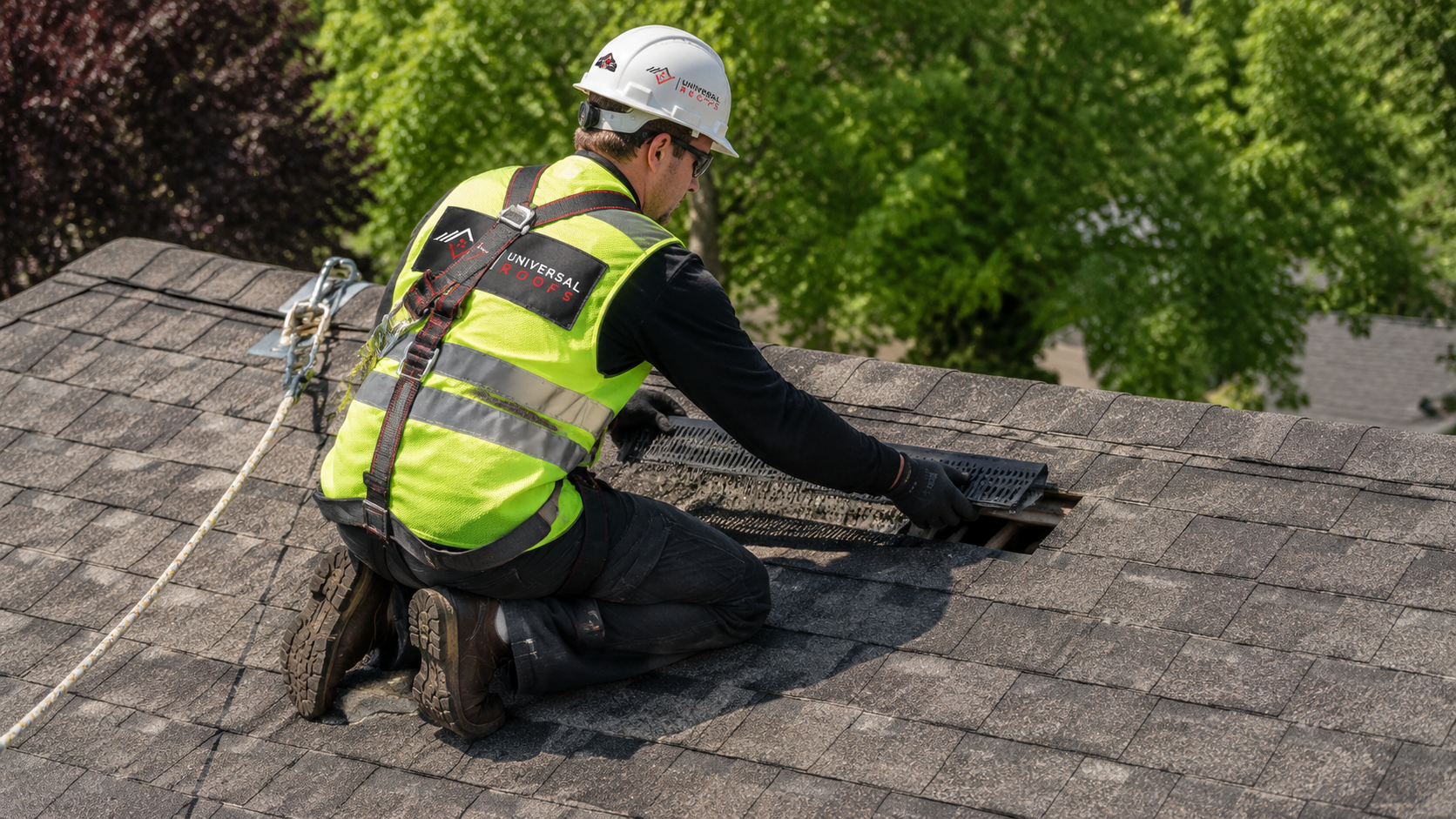
Ventilation is the other half. Ontario practice calls for balanced intake and exhaust, with roughly 60 percent of the vent area at the soffit and 40 percent at or near the ridge. Blocked soffits are extremely common after an insulation top-up done without baffles, and the result is trapped moisture, frost on the sheathing in January and mould by spring. If your attic has ever shown dark staining on the underside of the roof deck, ventilation is the first thing to check.
Ice dams are the visible symptom of all of this. Warm air leaks into the attic, melts snow on the upper roof, the water runs down to the cold overhang and refreezes into a ridge of ice that backs water up under the shingles. Caledon’s freeze thaw swings make this worse than in warmer parts of the GTA. Heating cables treat the symptom. Sealing and insulating the ceiling treats the cause. If you have already had water enter at the eaves, it is worth pairing the attic work with a proper roof repair assessment so any damaged sheathing or underlayment is addressed at the same time.
Ontario Building Code, Permits and Rebates
Ontario’s Building Code, through Supplementary Standard SB-12, sets the current attic insulation target for new housing at R-60, or RSI 10.56, in this climate zone. Existing homes are not required to retrofit to that level, but R-60 is the sensible target for any attic insulation Caledon upgrade because the incremental cost of going from R-40 to R-60 during a job you are already paying to have done is small.
A building permit is generally not required to add insulation to an existing attic in the Town of Caledon. Permits do come into play if the work involves structural changes, converting an attic to habitable space, altering the roof assembly from vented to unvented, or if spray foam is applied in a way that changes the fire separation. Any contractor recommending spray foam on an interior surface should also be specifying the required thermal barrier or ignition barrier, since foam cannot be left exposed in most situations. Confirm requirements with the Town’s building department before committing to an unvented design.
On rebates, be careful with what you read online. Federal and provincial efficiency programs have changed repeatedly over the past few years, with some closing to new applicants and others being reopened under new names and new administrators. Attic insulation is almost always an eligible measure when a program is running, and rebates in the range of several hundred to a few thousand dollars have been typical, usually conditional on a pre and post retrofit energy audit by a registered energy advisor. Verify what is actually open at the time you book, and never let a rebate that may not exist drive the decision. The upgrade pays for itself on the gas bill either way.
How an Attic Insulation Project Runs, Step by Step
A well run job on a standard home takes one day. Larger homes, removals and complex framing can stretch to two or three. Here is the sequence a competent attic insulation Caledon crew follows.
- Assessment. Someone enters the attic, measures existing depth, identifies the material, checks the sheathing for moisture staining, counts rafter bays for baffles, and photographs problem areas. This should happen before you receive a firm price.
- Protection and setup. Floors and stairs are covered, the access point is sealed with plastic, and a negative air machine is used if removal is part of the scope.
- Removal, if required. Old material is vacuumed out through a hose to a truck mounted unit. Debris and old vent boots come out at the same time.
- Air sealing. Penetrations, top plates and chases are sealed with foam, caulk or sheet metal and fire rated sealant where heat is involved. Non IC pot lights are boxed or replaced.
- Ventilation correction. Baffles are installed at every rafter bay to keep the soffit intake clear, bathroom and kitchen fans are ducted to exterior terminations, and exhaust venting is verified.
- Insulation install. Material is blown or laid to the target depth, with depth markers installed so the result can be verified later. The hatch is insulated and weatherstripped.
- Cleanup and documentation. Photographs, depth readings and a written record of what was installed. Keep this for resale and for any future warranty question.
If your roof is within a few years of replacement, sequence matters. Baffle work, vent installation and any sheathing repairs are easier and cheaper when the roof is open. It is worth discussing timing with whoever handles your attic and ventilation services so the two projects support each other rather than duplicating labour.
Choosing an Attic Insulation Contractor in Caledon
The insulation trade has a low barrier to entry, and the finished work is hidden above a ceiling where almost no homeowner will ever look again. That combination attracts operators who cut corners. A few things separate a real attic insulation Caledon contractor from a truck and a blower.
- They go into the attic before quoting. A price given at the door or over the phone from square footage alone is not a quote, it is a guess.
- Air sealing is a line item. If it is not on the estimate, it is not being done.
- Baffles are specified by count. Vague language about ventilation usually means none.
- They carry WSIB coverage and liability insurance. Ask for current certificates, not a verbal assurance.
- The quote states a target R-value and a depth, not just a number of bags. Bag count is meaningless without coverage area.
- They document the finished work with photographs. This is your only practical proof of what is up there.
Local knowledge matters too. A contractor familiar with the roofing and attic services available across Caledon will already know how the town’s mix of bungalows, subdivisions and rural properties behaves in winter, and will size the ventilation to match. You can also read through customer reviews from homeowners across the GTA to see how a company handles the parts of the job that are less visible.
Common Mistakes That Waste Money
Every winter brings the same set of avoidable problems. Knowing them ahead of time makes it easier to evaluate an attic insulation Caledon proposal.
Burying the soffits. Blowing insulation to full depth at the perimeter without baffles blocks the intake air and turns a healthy vented attic into a damp one. The homeowner sees no immediate problem, then finds frost on the sheathing two winters later.
Insulating over a leaking ceiling. New material on top of an unsealed ceiling plane absorbs moisture from the house. Cellulose in particular loses performance when damp and can compress permanently.
Venting bathroom fans into the attic. Still common in older homes and still against code. A single shower puts a surprising amount of water vapour into a cold space.
Topping up over contaminated material. Rodent droppings, mould and water damaged insulation must be removed. Covering it hides the problem and locks the odour into the house.
Choosing spray foam by default. Foam is the right tool for cathedral sections and unvented assemblies. Used across an open attic it costs several times more than blown insulation for the same result.
Ignoring the hatch. A metre square of uninsulated, unsealed hatch undoes a meaningful share of the gain from the rest of the attic. It costs very little to fix at the time of the work.
How much does attic insulation in Caledon cost?
What R-value should my attic have in Caledon?
Will attic insulation stop the ice dams on my roof?
Do I need a permit for attic insulation Caledon work?
Should I remove the old insulation or just add on top?
How long does the work take and can I stay in the house?
Book Your Attic Insulation Caledon Assessment
A properly insulated, sealed and ventilated attic is the least glamorous and most reliable energy upgrade available to a Caledon homeowner. It lowers heating and cooling costs, ends the cold second floor complaint, prevents ice dams, and extends the life of the roof above it. Universal Roofs works throughout Peel Region and the wider GTA, and every assessment begins with a technician in the attic, measuring what is actually there before quoting a solution.
Call us today at (416) 732-2421 or request a free consultation. We will measure your existing R-value, check ventilation and air leakage, and give you a written scope with real numbers attached.
Universal Roofs is based in the Toronto area and proudly serves homeowners in Caledon, Bolton, Caledon East, Brampton, Mississauga and communities across the Greater Toronto Area.