
When a fire damages a Toronto home, the chimney is often the last thing on anyone’s mind. Homeowners focus on smoke damage to walls, ruined furniture, and the emotional toll of the event itself. But chimney repair essential for fire damaged roofs is exactly the phrase insurance adjusters and structural engineers use when they explain why a scorched chimney cannot simply be left alone once the smoke clears. A chimney that has been exposed to intense heat, embers, or direct flame contact is rarely just cosmetically affected. The mortar joints, flue liner, flashing, and even the surrounding roof deck can all suffer hidden structural damage that will not announce itself until months later, usually in the form of a leak, a collapse, or a secondary fire.
At Universal Roofs, we have inspected dozens of fire-damaged roofs and chimneys across the Greater Toronto Area since 2005, and the pattern is consistent: the homes that avoid a second, more expensive disaster are the ones where the chimney was inspected and repaired properly the first time. This guide walks through exactly why chimney repair is essential after a fire, what the inspection process looks like, how to decide between a repair and a full rebuild, and what it costs to do it right.
Why Fire Damage to a Chimney Is Never “Just Cosmetic”
A chimney is a masonry and metal system engineered to handle heat from below, in a controlled and predictable way, through a lined flue. A structure fire introduces heat from every direction at once, often at temperatures far beyond what the chimney’s mortar and flashing were designed to withstand. This uneven, extreme heat causes damage that is frequently invisible from the ground.
The most common forms of fire-related chimney damage we see on Toronto roofs include:
- Thermal cracking in mortar joints, which weakens the entire masonry stack
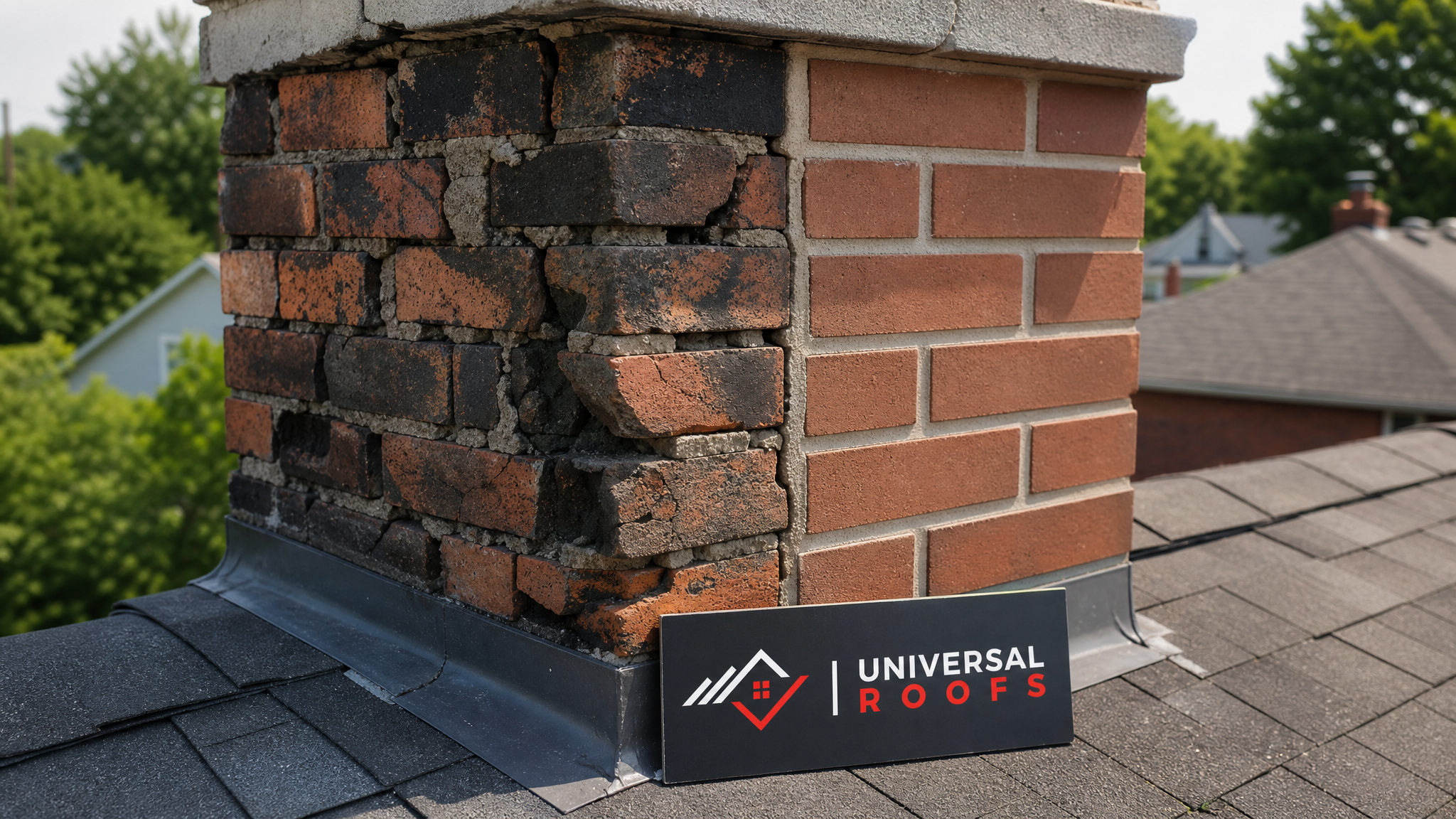
- Spalling brick or stone, where the surface flakes and pops off due to rapid heat expansion
- Warped or melted flashing where the chimney meets the roof deck, creating an immediate leak path
- Cracked or fractured flue liners, which can allow heat, gases, and sparks to reach combustible framing
- Compromised structural bond between the chimney and the roof framing after heat-expansion and contraction cycles
- Soot and creosote deposits that become corrosive once mixed with firefighting water and humidity
Because most of this damage happens inside the flue or beneath flashing that is not visible from the ground or even from a ladder, a fire-damaged chimney can look structurally sound to an untrained eye while actually being one heavy windstorm away from partial collapse. This is the core reason roof repair professionals insist on a full inspection before any homeowner moves back in or begins cosmetic repairs elsewhere in the house.
How Fire Heat Attacks Masonry, Mortar, and Flue Liners
Understanding the physics of what happens to a chimney during a fire helps explain why repair cannot be skipped. Brick, stone, and mortar are all porous materials that expand when heated and contract when cooled. During a house fire, chimneys typically experience:
| Fire Exposure Factor | Effect on Chimney | Typical Location | Detectable By |
|---|---|---|---|
| Direct flame contact | Spalling, surface charring, brick fracturing | Lower chimney, firebox area | Visual inspection |
| Radiant heat (600°C+) | Mortar joint cracking, loss of bond strength | Full chimney height | Tap testing, thermal imaging |
| Rapid cooling (hose water) | Thermal shock cracking, spalling acceleration | Exterior brick face | Visual inspection, moisture meter |
| Sustained smoke and gas exposure | Flue liner fracturing, corrosive soot buildup | Interior flue | Video scan inspection |
| Structural fire below roofline | Chimney lean, separation from framing | Roof penetration point | Structural assessment |
Each of these effects compounds the others. A chimney that has both cracked mortar and a fractured flue liner, for example, no longer safely contains heat or embers, which is exactly the condition that leads to attic fires weeks or months after the original incident is considered “resolved.” This is why insurance companies and structural engineers alike treat chimney inspection as mandatory, not optional, after any fire that reached the roofline.
The Chimney Inspection Process After a Fire
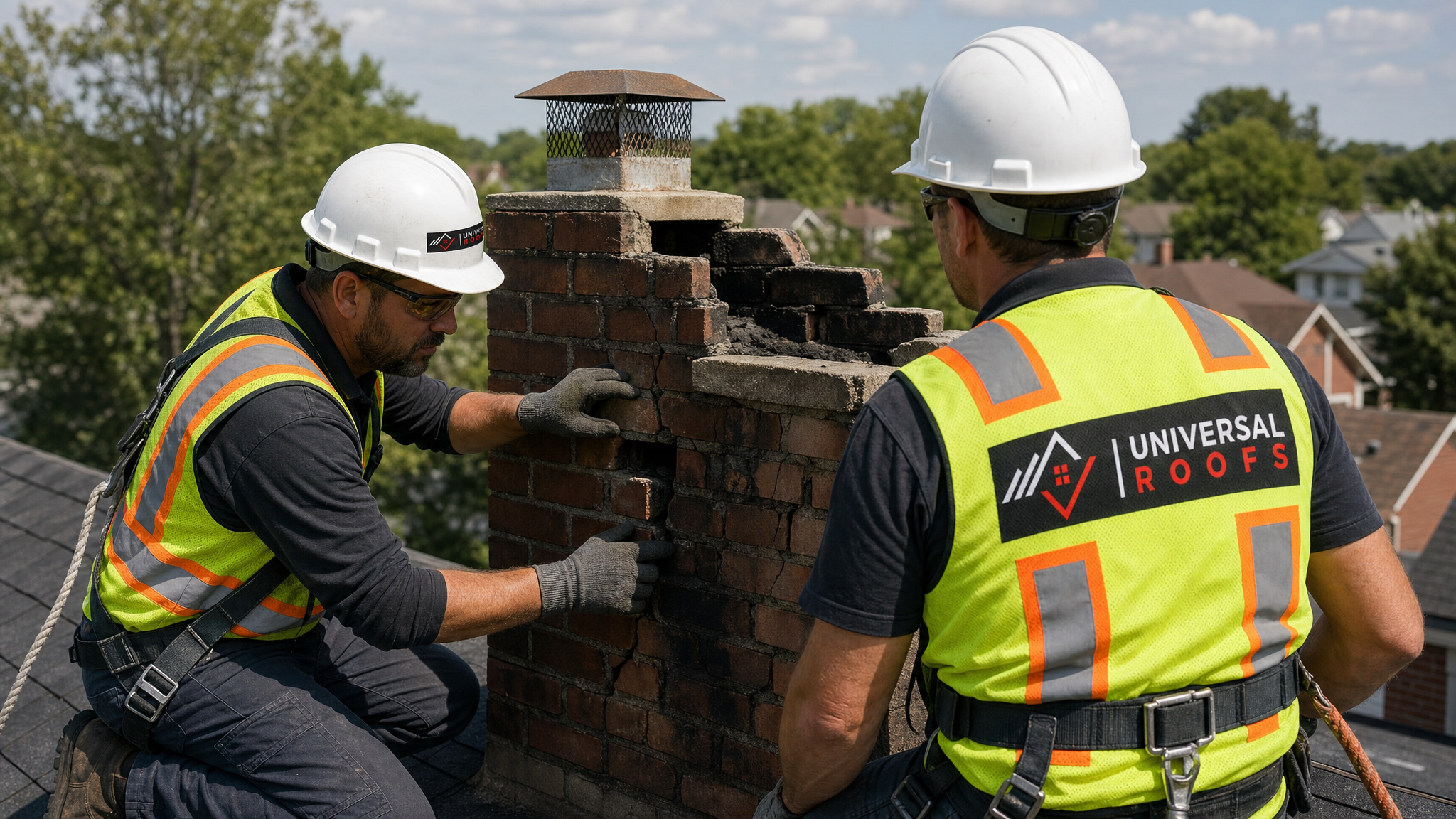
A proper post-fire chimney inspection goes well beyond a visual walk-around. At Universal Roofs, our inspection process for fire-damaged chimneys typically follows these steps:
- Exterior masonry assessment — checking for spalling, cracked brick faces, shifted coping stones, and damaged crown
- Mortar joint tap testing — a trained technician taps along joints listening for hollow sounds that indicate lost bond strength
- Flashing and roof-penetration inspection — examining where the chimney meets the roof deck for warping, gaps, or melted step flashing
- Flue liner video scan — a camera is run down the flue to check for cracks, gaps, or separated liner sections invisible from above or below
- Structural lean and bond check — verifying the chimney has not shifted or separated from the roof framing due to heat expansion
- Interior ceiling and attic inspection — checking for scorching, water staining, or gaps around the chimney chase that could allow heat transfer to framing
This is also the point where a fire-damaged roof deck around the chimney base needs to be assessed. Heat and firefighting water frequently damage the decking and underlayment surrounding the chimney even when the shingles further from the chimney look untouched. If you are unsure whether your roof needs broader attention beyond the chimney itself, our roof repair team can evaluate the full roof system in the same visit.
Repair vs. Rebuild: How the Decision Gets Made
Not every fire-damaged chimney needs to come down. The decision between repair and full rebuild depends on the extent and location of the damage, the age and condition of the chimney before the fire, and whether the structural core remains sound. Below is how we typically categorize the decision on Toronto homes.
| Damage Level | Typical Findings | Recommended Approach | Estimated Timeline |
|---|---|---|---|
| Minor | Surface soot, isolated hairline mortar cracks, intact flue liner | Repointing and flue cleaning | 1-2 days |
| Moderate | Spalled brick faces, damaged flashing, minor liner cracking | Partial rebuild above roofline, flashing replacement, liner relining | 3-5 days |
| Severe | Widespread mortar failure, cracked liner sections, visible lean | Full chimney rebuild from roofline or below | 1-2 weeks |
| Critical | Structural separation from roof framing, collapse risk | Full demolition and rebuild, roof structural repair | 2-3 weeks |
In most cases we see across the GTA, chimneys that were exposed to a kitchen or attic fire fall into the moderate category, where the top few courses of masonry above the roofline absorbed the worst of the heat while the base of the chimney, insulated by the home itself, remained structurally intact. In these cases, a partial rebuild combined with a new liner and fresh flashing restores both safety and appearance without the cost of a full teardown.
Chimneys involved in fires that originated in the attic or that burned for an extended period before suppression, however, are far more likely to require a full rebuild. In these situations we always recommend erring on the side of caution, since a chimney that looks intact but has lost structural bond strength is a liability that will eventually fail, often during a windstorm or heavy snow load.
Insurance, Documentation, and the Cost of Waiting
Chimney repair after a fire is almost always covered under a homeowner’s insurance policy as part of the fire damage claim, but the claims process depends heavily on proper documentation. We recommend photographing all visible damage before any cleanup begins, and requesting a written inspection report that separates cosmetic damage from structural damage. Adjusters need this distinction to approve the right scope of repair.
Homeowners sometimes delay chimney repair because the rest of the home requires more visible restoration work, or because the chimney appears “fine enough” to leave until later. This delay carries real risk and real cost, summarized below.
| Delay Period | Risk Introduced | Likely Cost Impact | Common Outcome |
|---|---|---|---|
| 0-30 days | Minimal added risk if tarped and sealed properly | No significant increase | Repair proceeds as scoped |
| 1-3 months | Water infiltration through cracked mortar and flashing | 10-20% cost increase | Repair scope expands to include water damage |
| 3-6 months | Freeze-thaw cycles worsen cracking; wood rot begins near chimney chase | 25-40% cost increase | Partial repair becomes a rebuild |
| 6+ months | Structural separation, attic mould, possible secondary fire risk | 50%+ cost increase | Full rebuild plus structural roof repair required |
This is the pattern we see repeatedly on Toronto homes: a chimney that could have been repointed and relined for a modest cost turns into a full rebuild with attic repairs a few months later, simply because the freeze-thaw cycles of a Canadian winter accelerated damage that was already present but not yet visible.
How Fire-Damaged Chimneys Affect the Rest of the Roof
A chimney rarely suffers fire damage in isolation from the roof around it. The flashing system that seals the chimney to the roof deck is often the first thing to fail, and once that seal is compromised, water finds its way into the attic space regardless of how sound the rest of the shingles are. We frequently find that homeowners who only address the chimney, without evaluating the surrounding roof deck, end up calling us back within a year for a leak that traces directly back to fire-weakened flashing or decking that was never replaced.
If the fire also affected the attic space, it is worth having our team check attic insulation and ventilation at the same time as the chimney repair. Smoke and heat exposure can degrade insulation’s effectiveness and compromise the moisture barrier that prevents condensation buildup. Our attic inspection service is often bundled with chimney and roof repair work for exactly this reason, since addressing all three systems together prevents a second round of repairs down the line.
Homes with flat roof sections adjoining a sloped roof and chimney assembly face an additional risk, since flat roofing membranes can blister or delaminate under intense radiant heat even without direct flame contact. If your property includes a flat roof section near the fire’s origin, it is worth having that membrane checked alongside the chimney. Our flat roofing specialists frequently coordinate with our chimney and repair crews on these combined jobs.
Skylights near a fire-damaged chimney also deserve a second look, since the seals around a skylight curb can suffer the same thermal shock as chimney flashing. If your home has a skylight within several metres of the affected chimney, our skylights team can inspect the seal integrity while the chimney work is underway, saving a second site visit and a second round of scaffolding or ladder access.
What a Proper Fire-Damage Chimney Rebuild Involves
When a full rebuild is required, the work goes well beyond simply relaying brick. A rebuild done to code, and done to last through Toronto’s freeze-thaw winters, involves several distinct stages:
- Demolition to sound masonry — removing all fire-compromised brick and mortar down to a structurally intact base, not just the visibly damaged top courses
- Flue liner replacement — installing a new, code-compliant liner sized correctly for the appliance or fireplace it serves
- Reinforced rebuild — rebuilding the masonry stack with proper mortar mix and, where required, additional reinforcement for wind and seismic resistance
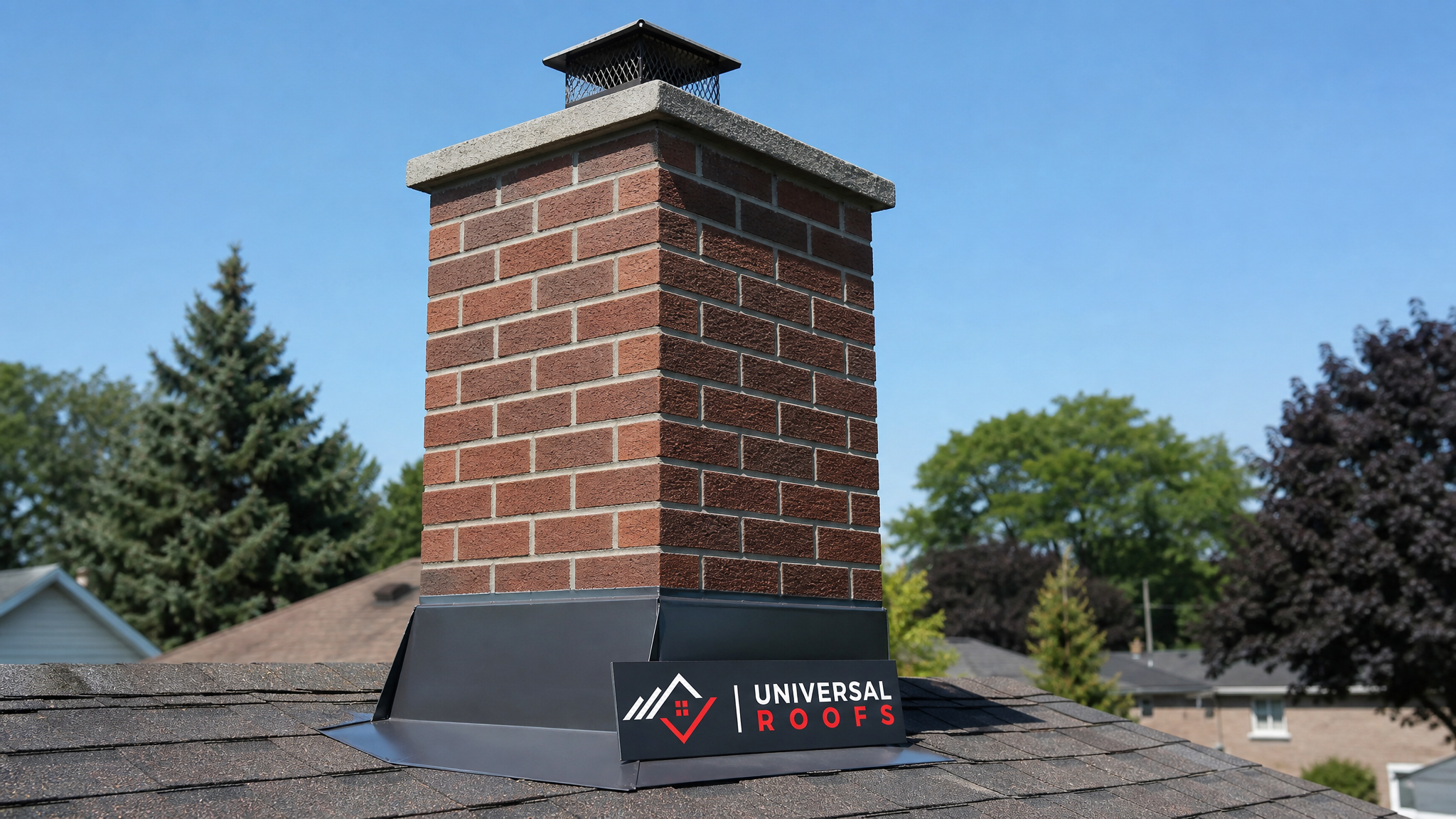
- New crown and cap installation — a properly sloped crown prevents water pooling that would otherwise re-damage new masonry within a few winters
- Full flashing replacement — step flashing, counter-flashing, and cricket (saddle) flashing where applicable, tied properly into the surrounding roofing material
- Final structural and safety inspection — confirming the rebuilt chimney meets Ontario Building Code clearance and structural requirements before sign-off
Skipping any of these stages to save time or cost almost always results in a shorter lifespan for the rebuild, and in several cases we have seen, a repeat call within two to three years for issues that a proper rebuild would have prevented. For homeowners weighing a full chimney rebuild against a broader roof replacement, our roof replacement team can advise on whether bundling the two projects makes sense, both for cost efficiency and to avoid disturbing new roofing twice.
Choosing the Right Contractor for Fire-Damage Chimney Repair
Fire-damage chimney repair is a specialized subset of roofing and masonry work. Not every roofing company is equipped to evaluate flue liner integrity or structural bond strength after heat exposure, and not every mason has the roofing-specific knowledge to properly integrate new flashing with the surrounding shingle or membrane system. When vetting a contractor for this kind of repair, homeowners should look for:
- Documented experience with fire-damage or heat-damage chimney assessments specifically, not just general chimney maintenance
- Willingness to provide a written report distinguishing cosmetic from structural damage, for insurance purposes
- Combined roofing and masonry capability, so flashing integration is handled by the same team doing the chimney work
- Local Toronto and GTA experience, since our freeze-thaw winters and building code requirements differ from other regions
- A track record you can verify independently, not just claims made in a sales pitch
You can read what past clients have said about our fire-damage and chimney repair work on our reviews page, and learn more about our history and approach on our about page. We also maintain a detailed FAQ page covering common questions about repair timelines, insurance coordination, and what to expect during a rebuild.
What Homeowners Can Do Immediately After a Fire
If your home has experienced a fire that reached the roofline or attic, there are several steps worth taking before any contractor arrives, and several you should leave strictly to professionals.
| Action | Who Should Do It | Why It Matters | Timing |
|---|---|---|---|
| Photograph visible chimney and roof damage | Homeowner | Supports insurance claim documentation | Immediately, once safe to do so |
| Avoid using the fireplace or connected appliance | Homeowner | Prevents heat entering a compromised flue | Until inspection is complete |
| Arrange a temporary roof tarp if flashing is damaged | Licensed contractor | Prevents water infiltration before repairs begin | Within 24-48 hours |
| Schedule a full chimney and roof inspection | Licensed roofing contractor | Identifies structural risk invisible from ground level | Within one week |
| Request a written scope of repair for insurance | Licensed contractor | Ensures adjuster approves accurate repair costs | Before repair begins |
The single most important step on this list is the last one before repair begins: getting a written, itemized scope of repair. Homeowners who skip straight to a verbal quote and a handshake often find themselves under-covered by insurance when hidden damage is discovered mid-repair, which is far more common with fire damage than with typical wear-and-tear roofing issues.
Long-Term Risks of Ignoring a Fire-Damaged Chimney
Perhaps the most persuasive reason chimney repair is essential after a fire is what happens when it is ignored entirely. We have responded to several emergency calls over the years where a fire-damaged chimney, left unrepaired for a year or more, eventually caused:
- A secondary chimney fire, ignited by creosote buildup interacting with a cracked, heat-weakened flue liner
- Partial chimney collapse during a windstorm, damaging the roof deck and gutters below
- Significant water damage to attic framing and insulation from flashing that failed months after the original fire
- Carbon monoxide intrusion into living space through gaps created by a separated flue liner
- A far more expensive emergency repair than the original post-fire repair would have cost
Each of these outcomes is preventable with a timely, thorough inspection and the right repair or rebuild scope. This is the core message we want every homeowner to take away: a fire-damaged chimney is not a problem that resolves itself with time, and it is not a problem that gets cheaper the longer it waits.
Frequently Asked Questions
Why is chimney repair essential for fire damaged roofs?
How do I know if my chimney has fire damage even if it looks fine?
Does home insurance cover chimney repair after a fire?
Should a fire-damaged chimney be repaired or fully rebuilt?
How long can I wait before repairing a fire-damaged chimney?
Can fire damage to a chimney affect the rest of my roof?
Need Help With Chimney Repair?
A fire-damaged chimney is not something to guess about or leave for later. Universal Roofs has been inspecting, repairing, and rebuilding fire-damaged chimneys and roofs across the GTA since 2005, and we know exactly what to look for beneath the surface damage that insurance adjusters and homeowners can’t always see on their own.
Call us today at (416) 732-2421 or request a free inspection to get started.
Universal Roofs proudly serves Toronto, Mississauga, Brampton, Vaughan, Markham, Oakville and the GTA since 2005.