
A fireplace that fills your living room with smoke, or a flue that seems to pull cold air right back into the house on a windy November evening, is one of the most common complaints Toronto homeowners bring to a roofing contractor. The good news is that smoke and draft problems almost always trace back to a small number of fixable issues in the chimney structure itself, not a fundamentally broken fireplace. Understanding the right chimney repair solutions for smoke and draft issues can save you a demolition-and-rebuild quote and get your chimney drawing properly again within days.
This guide walks through the four repair approaches that resolve the vast majority of smoke and draft complaints we see across the GTA: crown and cap repair, flue liner restoration, damper and smoke chamber correction, and height or flashing adjustments that fix wind-driven downdrafts. We will also cover the diagnostic steps that come before any repair, realistic cost ranges, and how Toronto’s freeze-thaw climate accelerates the damage that causes these symptoms in the first place.
Whether you are dealing with a chimney that only smokes on windy days, one that never draws well regardless of weather, or a masonry chimney showing visible deterioration, the solutions below are listed roughly in order of how often they resolve the problem, starting with the most frequent root cause.

Diagnosing Why a Chimney Smokes or Drafts Poorly
Before jumping to a repair, it helps to understand what “good draft” actually means. A chimney works on the stack effect: hot air rises up the flue, creating negative pressure that pulls combustion smoke up and out while pulling replacement air in through the firebox opening. When that column of rising air is disrupted, weakened, or overpowered by outside wind pressure, smoke spills into the room instead of exiting the flue.
There are generally four disruption points, and identifying which one applies to your chimney determines which of the repair solutions below will actually fix the issue rather than just masking it for a season:
- Structural leaks at the crown or cap that let water in, which over years cracks the flue liner and interior brick, roughening the surfaces smoke has to pass and creating turbulence.
- Damaged or oversized flue liners that no longer match the appliance below, causing weak draft, condensation, or creosote buildup that further restricts airflow.
- Damper or smoke chamber defects, including a damper that will not open fully, a smoke shelf that traps too much or too little air, or a firebox that is simply too large for the flue size.
- Termination height and wind exposure problems, where the chimney is too short relative to the roofline, nearby trees, or a neighbouring roof section, allowing wind to push down the flue instead of letting the stack effect pull smoke up.
A qualified inspector will typically run a smoke test, check the flue with a camera, and measure the chimney height against the “3-2-10 rule” (at least 3 feet above the roof penetration and 2 feet above anything within 10 feet) before recommending a fix. If you are unsure which category your chimney falls into, our roof repair team can run this diagnostic alongside a general roof inspection, since chimney flashing and roof condition are almost always connected.
Solution 1: Crown and Cap Repair to Stop Water Intrusion
The chimney crown is the concrete or mortar cap that sheds water off the top of the masonry stack, and it is, by a wide margin, the most frequently failed component we find during inspections. A cracked crown lets rainwater seep directly into the brick and flue liner below. In Toronto’s climate, that water freezes and expands dozens of times each winter, widening cracks, spalling brick faces, and eventually degrading the interior liner surface enough to disrupt smooth airflow.
Crown repair typically involves one of the following, depending on severity:
- Crown sealant application for hairline cracking, a flexible waterproof coating that bridges small cracks without a full rebuild.
- Crown resurfacing, where a new layer of crown mix is poured over the existing structure after cracks are cut out and filled.
- Full crown rebuild for crowns with severe spalling or missing sections, removing the old crown down to the brick and pouring a new sloped cap with proper overhang and drip edge.
A properly fitted chimney cap is the companion fix. Beyond keeping rain and snow out, a correctly sized cap with mesh sides also stops downdrafts caused by wind gusting directly into an open flue top, and keeps birds, squirrels, and raccoons from nesting in the flue, which is a surprisingly common cause of sudden smoking problems in spring when a nest blocks the passage.
| Crown/Cap Issue | Repair Approach | Typical Cost (CAD) | Timeline |
|---|---|---|---|
| Hairline crown cracks | Flexible waterproof crown sealant | $250 – $500 | Half day |
| Moderate spalling, minor cracks | Crown resurfacing with new pour | $500 – $1,100 | 1 day |
| Severe crown deterioration | Full crown demolition and rebuild | $1,200 – $2,500 | 1-2 days |
| Missing or undersized cap | New stainless steel cap with mesh screen | $200 – $600 | Half day |
| Wind-induced downdraft | Wind-directional or rotating cap upgrade | $350 – $750 | Half day |
Solution 2: Flue Liner Repair or Relining
If the crown and cap check out fine but smoke and draft problems persist, the flue liner itself is the next place to look. Older Toronto homes, particularly those built before the 1970s, often have unlined chimneys or liners made of thin clay tile that has cracked over decades of thermal cycling. A cracked or gapped liner does two things: it lets heat escape into the surrounding masonry (weakening draft, since draft depends on the flue gas staying hot enough to keep rising), and it creates rough interior surfaces and offsets that generate turbulence, which is what actually pushes smoke back toward the room rather than up and out.
Depending on what a camera inspection reveals, liner repair falls into a few categories:
- Tile liner patching or parging, sealing small cracks or gaps between clay tile sections with a heat-resistant mortar.
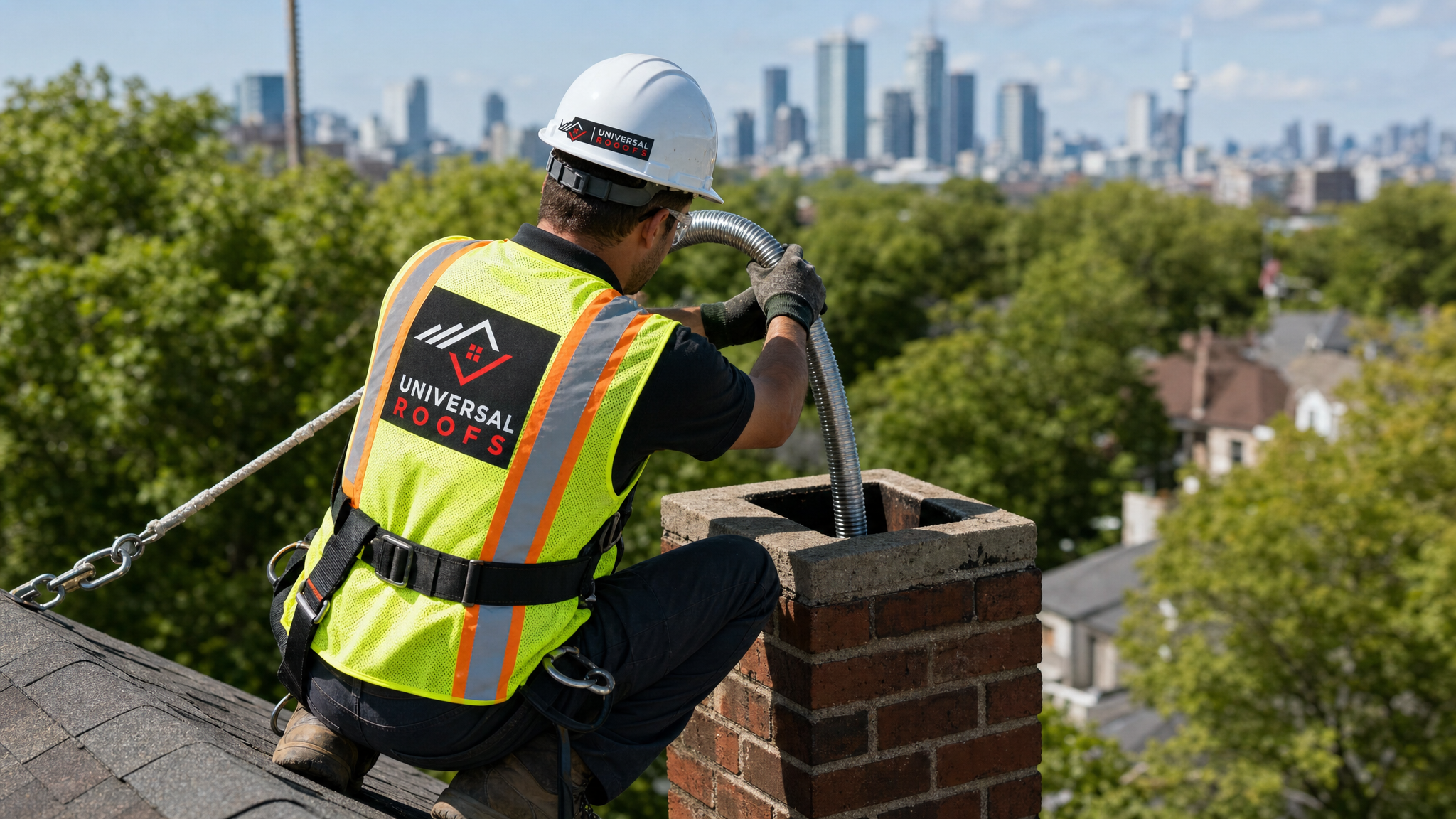
- Stainless steel liner insertion, sliding a new continuous metal liner down the existing flue, which is the standard fix for wood-burning fireplaces and stoves with a cracked or oversized clay liner.
- Cast-in-place relining, pumping a lightweight cementitious material around an inflatable form to create a smooth, insulated, seamless new liner inside the old masonry shaft, often used for chimneys with irregular shapes or significant structural damage.
- Liner resizing, correcting a flue that is oversized for the connected appliance, which is a common but under-diagnosed cause of poor draft since an oversized flue cools flue gas too quickly and weakens the stack effect.
Relining also directly resolves creosote-related draft problems, since a rough or cracked liner accumulates creosote far faster than a smooth stainless or cast liner, and heavy creosote buildup itself narrows the effective flue diameter and restricts airflow.
| Liner Condition | Recommended Fix | Typical Cost (CAD) | Draft Improvement |
|---|---|---|---|
| Minor tile cracks, no gaps | Heat-resistant parging/patching | $300 – $700 | Moderate |
| Cracked or missing tile sections | Stainless steel liner insertion | $1,800 – $4,500 | Significant |
| Irregular or structurally weak shaft | Cast-in-place relining | $3,500 – $7,000 | Significant |
| Oversized flue for appliance | Insulated liner resizing | $2,200 – $5,000 | Significant |
Solution 3: Damper and Smoke Chamber Correction
Sometimes the crown, cap, and liner are all in good condition, and the smoke problem is happening lower down, in the damper and smoke chamber assembly just above the firebox. This area is where flue gases transition from the wide firebox opening into the narrower flue, and if it is poorly shaped, damaged, or obstructed, smoke can back up into the room even with an otherwise healthy chimney.
Common corrections in this category include:
- Damper replacement, swapping a warped, rusted, or improperly adjusted throat damper for one that opens fully and seals tightly when closed.
- Top-sealing damper conversion, moving the damper mechanism to the top of the flue rather than the throat, which also improves energy efficiency by sealing the entire flue column when not in use.
- Smoke shelf and smoke chamber parging, smoothing rough, corbelled brick in the smoke chamber with a heat-resistant coating so gases transition cleanly into the flue instead of curling back down.
- Firebox-to-flue ratio correction, addressing cases where the firebox opening is too large relative to the flue’s cross-sectional area, a ratio problem that no amount of cleaning will fix on its own and that sometimes requires a smoke guard or firebox modification.
This is also where we typically find debris-related draft problems: loose mortar chunks fallen from a deteriorating smoke chamber, or a bird’s nest lodged just above the damper. A camera inspection from either the top or bottom of the flue usually identifies these obstructions quickly.
Solution 4: Height, Flashing, and Wind Exposure Corrections
The fourth category of fix addresses chimneys that are mechanically sound but poorly positioned relative to the roofline, nearby structures, or prevailing wind. This is a particularly common issue on additions, dormers, and homes near mature tree lines throughout York Region and Halton Region, where a chimney that once cleared the roof by a safe margin now sits in the wind shadow of a newer, taller roof section or overgrown canopy.
Fixes in this category include:
- Chimney extension, adding masonry courses or a flue extension kit to meet the 3-2-10 height rule relative to the roof and any nearby obstructions.
- Wind-directional cap installation, using a cap engineered to redirect wind-driven downdrafts regardless of wind direction, often a faster and less invasive fix than a full extension.
- Flashing repair or replacement, correcting the step and counter-flashing where the chimney meets the roofline, since a flashing leak lets water travel down the outside of the flue and into the attic, which can indirectly affect draft by adding moisture load to the surrounding masonry and insulation.
- Attic and insulation review, since a chimney chase running through a poorly insulated attic loses heat faster, cooling flue gas and weakening draft on cold days; our attic team often finds this compounding a chimney’s draft complaints on older homes.
| Symptom Pattern | Likely Cause | Best-Fit Solution | Priority |
|---|---|---|---|
| Smokes only on windy days | Insufficient height or wind exposure | Extension or wind-directional cap | High |
| Smokes regardless of weather | Firebox/flue ratio or smoke chamber defect | Damper/smoke chamber correction | High |
| Weak draft, heavy creosote | Cracked or oversized liner | Liner repair or relining | Medium |
| Water stains on ceiling near chimney | Crown or flashing failure | Crown/cap repair, flashing replacement | High |
| Sudden smoking after months of no issue | Nest or debris obstruction | Chimney sweep plus cap installation | Urgent |
Why Toronto’s Climate Accelerates These Problems
Every one of the four solutions above traces back, at least in part, to the freeze-thaw cycle that defines a GTA winter. Water that gets into a cracked crown, a gapped liner joint, or a flashing seam does not just sit there. It freezes, expands by roughly nine percent, and widens the original defect. Then it thaws, more water gets in, and the cycle repeats dozens of times each winter. A hairline crack that would take a decade to worsen in a milder, drier climate can become a serious structural problem in three or four Toronto winters.
This is why we always recommend addressing a small crown crack or a single displaced flashing shingle the summer it is discovered rather than waiting. A repair that costs a few hundred dollars in July frequently becomes a liner replacement or crown rebuild costing several times more by the following spring. Summer and early autumn, before the first hard frost, are the ideal windows for chimney work in the GTA, since masonry repairs and mortar need stable, mild temperatures to cure properly, and any needed relining should be scheduled well before the fireplace sees regular use.
Homeowners in Peel Region, Durham Region, and across the wider GTA see the same failure patterns; the only real variation is how exposed a given chimney is to wind and how old the original masonry or liner is. Our Toronto, Peel Region, York Region, Halton Region and Durham Region crews all see chimney and roof-flashing failures follow this same seasonal rhythm.
What a Proper Chimney Repair Visit Looks Like
A thorough repair visit for smoke or draft complaints generally follows a consistent sequence, and knowing what to expect helps you evaluate whether a quote you have received is actually addressing the root cause:
- Exterior inspection of the crown, cap, flashing, and visible masonry from the roof, checking for cracks, spalling, missing mortar joints, and correct height relative to the roofline.
- Interior camera inspection of the flue from the firebox or the top, identifying liner cracks, creosote thickness, offsets, and any obstructions.
- Damper and smoke chamber check, confirming the damper opens and seals fully and that the smoke chamber and shelf are smooth and free of debris.
- Draft test, often using a smoke pencil or a small contained test fire, to observe actual airflow behaviour under real conditions rather than relying on visual inspection alone.
- Written recommendation tying each defect found to a specific repair, with a cost breakdown by component rather than a single bundled estimate.
If a contractor recommends a full rebuild without first walking through this diagnostic sequence, it is worth getting a second opinion. In our experience, the majority of smoke and draft complaints are resolved through targeted crown, liner, or cap repair rather than a full chimney reconstruction. You can review examples of past chimney and roofing work on our reviews page, and browse answers to common questions on our FAQ page.

Preventing Smoke and Draft Problems From Returning
Once a chimney has been repaired, a short list of maintenance habits keeps smoke and draft issues from recurring:
- Annual inspection before burning season, ideally in late summer or early autumn, catching small crown or flashing cracks before winter freeze-thaw cycles widen them.
- Chimney sweeping every one to two years for regular wood-burning use, preventing creosote buildup from narrowing the effective flue diameter.
- Cap maintenance, checking mesh screens for debris or nest material each spring.
- Prompt flashing repair at the first sign of a ceiling stain near the chimney chase, since flashing leaks compound quickly once water reaches the attic insulation and framing.
- Monitoring tree growth near the chimney termination point, since a tree that has grown taller over several years can gradually create the same wind-shadow downdraft problem as an undersized chimney.
These are the same principles that apply to the rest of your roof system. A chimney rarely fails in isolation. If your roof is due for a broader assessment, our roof repair and roof replacement teams routinely evaluate chimney flashing as part of a full roof inspection, and homes with flat roof sections around the chimney base benefit from a look at our flat roofing services as well, since flat-to-chimney transitions are a frequent flashing failure point.
Skylights, Attic Ventilation, and Chimney Draft: An Overlooked Connection
One factor homeowners rarely connect to chimney draft is the overall air pressure balance of the house. A home that is too airtight, or one where exhaust fans, a poorly sealed attic hatch, or an improperly flashed skylight are pulling air out faster than it can be replaced, can create negative pressure strong enough to overpower a chimney’s natural draft, pulling smoke back down the flue even when the chimney itself is in excellent condition.
If your home has skylights near the chimney or you have recently noticed draft problems coinciding with new exhaust fans or tighter weatherstripping, it is worth having the whole envelope assessed rather than assuming the chimney alone is at fault. Our skylights and skylight replacement teams can check whether nearby roof penetrations are contributing to pressure imbalances, and a broader attic ventilation review often resolves stubborn draft complaints that survive chimney-only repairs.
What are the most effective chimney repair solutions for smoke and draft issues?
Why does my chimney only smoke on windy days?
How much does chimney liner repair cost in Toronto?
Can a cracked chimney crown really cause draft problems?
Is it normal for a chimney to smoke even when the damper is fully open?
When is the best time of year to schedule chimney repair in the GTA?
Need Help With 4 Effective Chimney Repair?
If your fireplace is smoking, drafting poorly, or showing signs of water damage around the chimney, Universal Roofs has been diagnosing and repairing chimney and roofing issues across the GTA since 2005, with the camera inspection and draft-testing equipment needed to identify the actual cause before recommending a fix.
Call us today at (416) 732-2421 or request a free inspection to get started.
Universal Roofs proudly serves Toronto, Mississauga, Brampton, Vaughan, Markham, Oakville and the GTA since 2005.