
When a roof replacement is booked, the eavestroughs often become an afterthought until the crew asks what to do with them. Deciding whether to replace gutters with new roofing, or take the old ones down and re-hang them, affects how the drip edge and gutter apron are installed, whether rotten fascia gets fixed, how well the colours match and how much the whole job costs. Done in the right order, the roof edge and the eavestroughs work as one system that keeps water off the fascia, out of the soffit and away from the foundation.
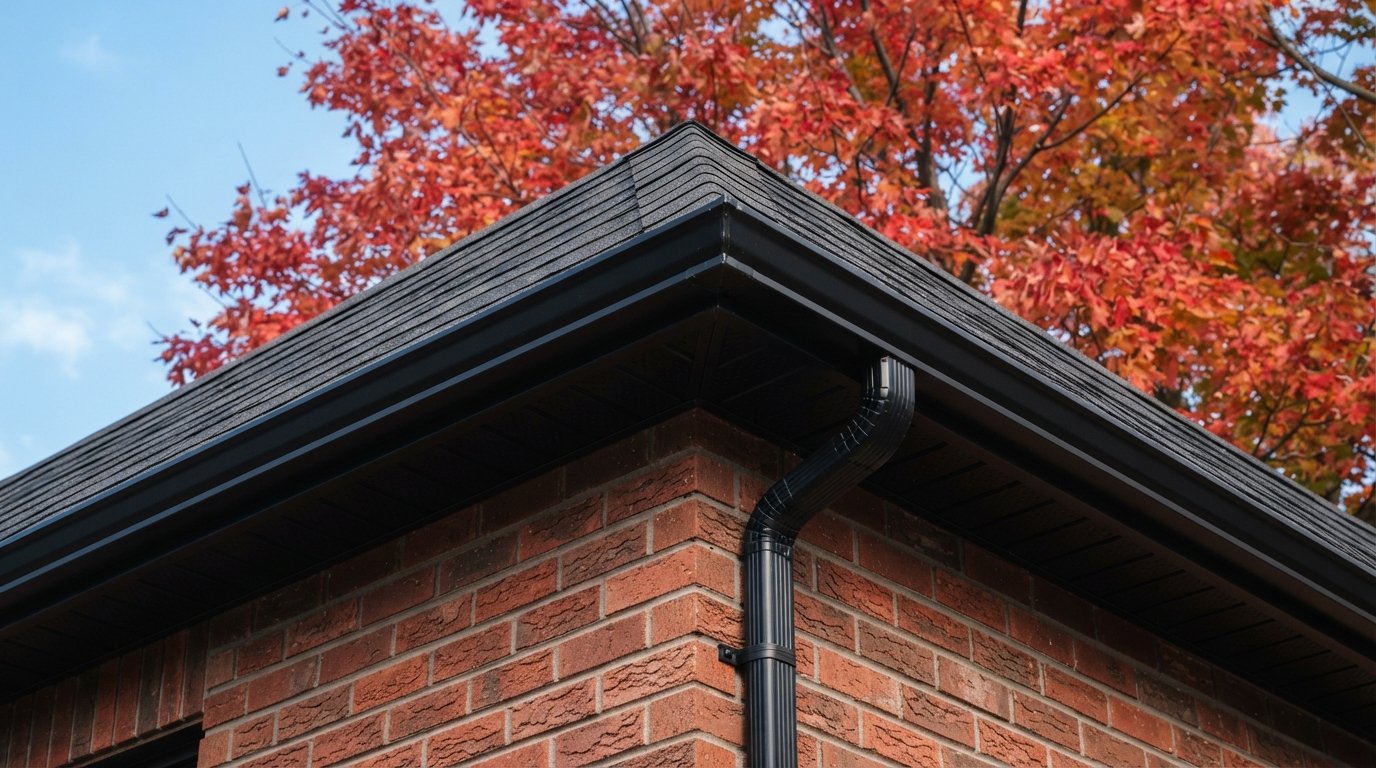
The short version: the troughs come down anyway when the shingles come off, the fascia behind them is finally visible, and the new drip edge has to lap into whatever trough goes back up. That makes the start of a re-roof the cheapest moment you will get to sort out the eavestroughs.
When To Replace Gutters With New Roofing
Eavestroughs and shingles do not wear out on the same schedule, but they meet at the same edge of the house. When a roof is replaced, the old eavestroughs have to come down, be protected in place or be worked around, and the new drip edge has to be integrated with whatever trough ends up hanging there. That is why the decision is best made at the start of the project, not halfway through.
In our experience, it usually makes sense to replace gutters with new roofing when the existing troughs are old, sectional rather than seamless, leaking at seams or corners, sagging, undersized or dented, or when the fascia behind them needs repair. Keeping them can make sense when they are relatively new seamless aluminum, in good condition, the right size and a colour that will still work with the new roof.
| Condition of existing eavestroughs | Usual recommendation | Reason |
|---|---|---|
| Seamless aluminum, a few years old, no leaks, correct slope | Remove carefully and re-hang, or protect in place | Still serviceable; replacement adds cost without much benefit |
| Sectional troughs with leaking joints | Replace | Joints keep leaking; seamless troughs remove most of them |
| Sagging, with pulled hangers or spikes | Replace | Hanger holes and bent troughs rarely re-hang straight |
| Undersized for the roof or overflowing in storms | Replace with larger troughs or more downspouts | The problem will continue on the new roof |
| Dented, corroded or badly faded | Replace | Will look worse next to a new roof, may leak |
| Fascia behind is soft or rotted | Replace troughs and repair fascia together | The fascia must be fixed with the troughs off |
A good contractor will look at the troughs before quoting and tell you which of these categories they fall into. If you are planning a roof replacement with new shingles and roof edge details, ask for the eavestrough decision to be part of the quote, with a separate line for each option.
How The Drip Edge And Gutter Apron Fit Together
At the bottom of the roof, three pieces need to work together: the roofing and its underlayment, the metal flashing at the edge, and the eavestrough. Water running off the shingles has to end up inside the trough, never behind it.
Drip edge
Drip edge is a bent metal flashing installed along the eaves and rakes. It supports the edge of the shingles, protects the fascia and roof deck edge from water and directs runoff away from the fascia. At the eaves, common practice is to install the drip edge first and lap the eave protection membrane over it, so any water that gets under the shingles drains out over the metal. At the rakes the order is usually reversed. Shingle manufacturers publish their own requirements, and those should be followed.
Gutter apron
A gutter apron is a flashing with a longer vertical flange that extends down into the back of the eavestrough. It closes the gap between the roof edge and the trough, so water that runs along the underside of the drip edge or blows back in wind falls into the trough rather than onto the fascia. On some roofs, a drip edge with an extended flange does the same job.
Where the trough sits
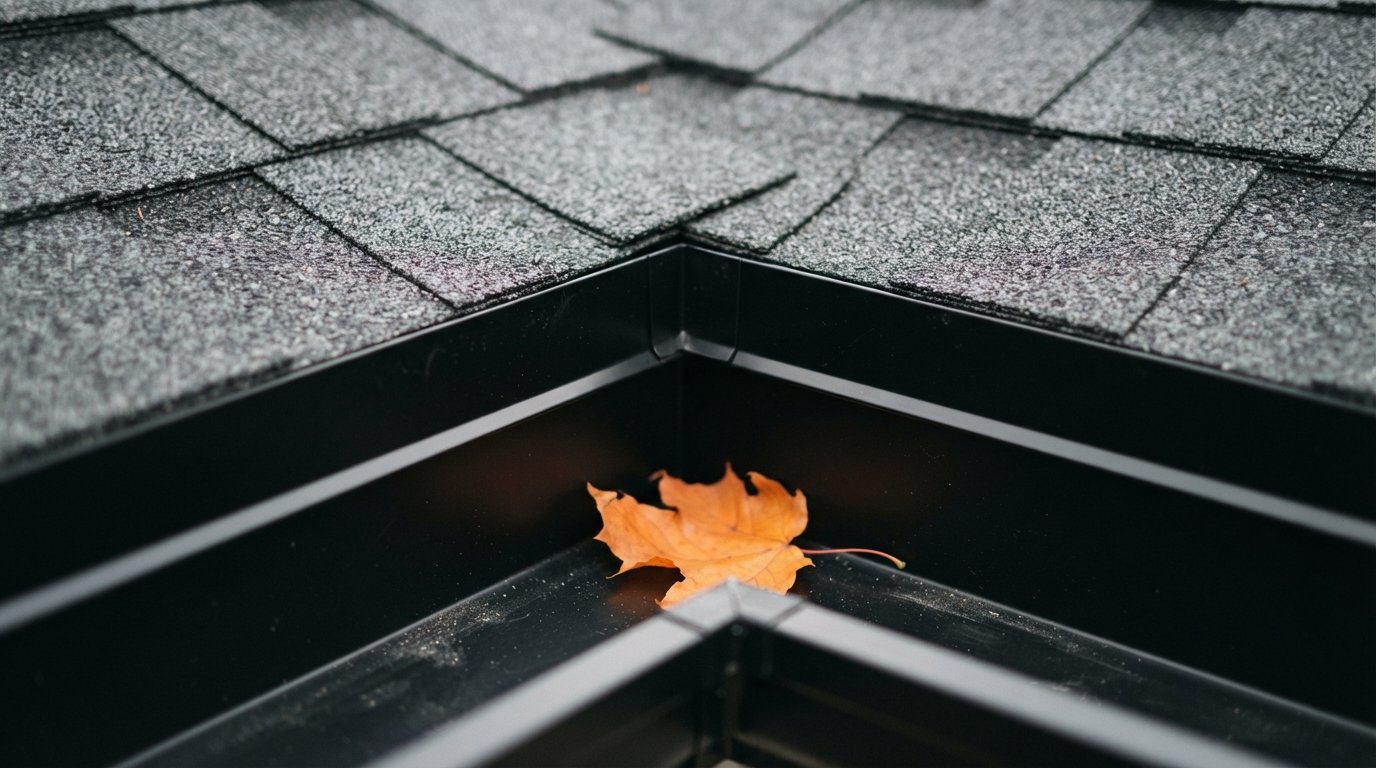
The back of the eavestrough should sit tight to the fascia and below the flange of the drip edge or apron, so the metal laps into the trough. If the troughs are hung before the roofing, the new drip edge has to be slid over the back of the trough. If the troughs are re-hung after roofing, the back is tucked under the flange as it goes up. Either way, the result should be a continuous path from shingle to trough with no gap behind it.
Sequencing problems are a common cause of fascia rot. If the old trough is left in place while the drip edge is installed, it can end up behind the trough instead of lapping into it. Or a re-hung trough can sit below the flange with a gap, so water drips down the fascia every time it rains.
Fascia Condition When The Troughs Come Down
Fascia is often the deciding factor when homeowners weigh whether to replace gutters with new roofing. The fascia board is the vertical trim at the bottom of the roof edge that the eavestroughs hang from. On many houses, it is wood covered with an aluminum fascia wrap. Water that has run behind the eavestroughs for years often rots the wood behind the wrap without any visible sign from the ground.
When the troughs come down, the fascia can be inspected properly. Soft or rotted sections are cut out and replaced, and the new wood is wrapped with aluminum to match the trim. The roof deck edge and rafter tails behind the fascia are checked at the same time. Doing this with the troughs off is far easier and less expensive than trying to repair fascia behind new troughs later.
Soffit vents behind the fascia should also be checked. They can be blocked by insulation, paint or debris, and a re-roof is a good moment to make sure intake ventilation is clear.
Removing And Re-Hanging Old Eavestroughs
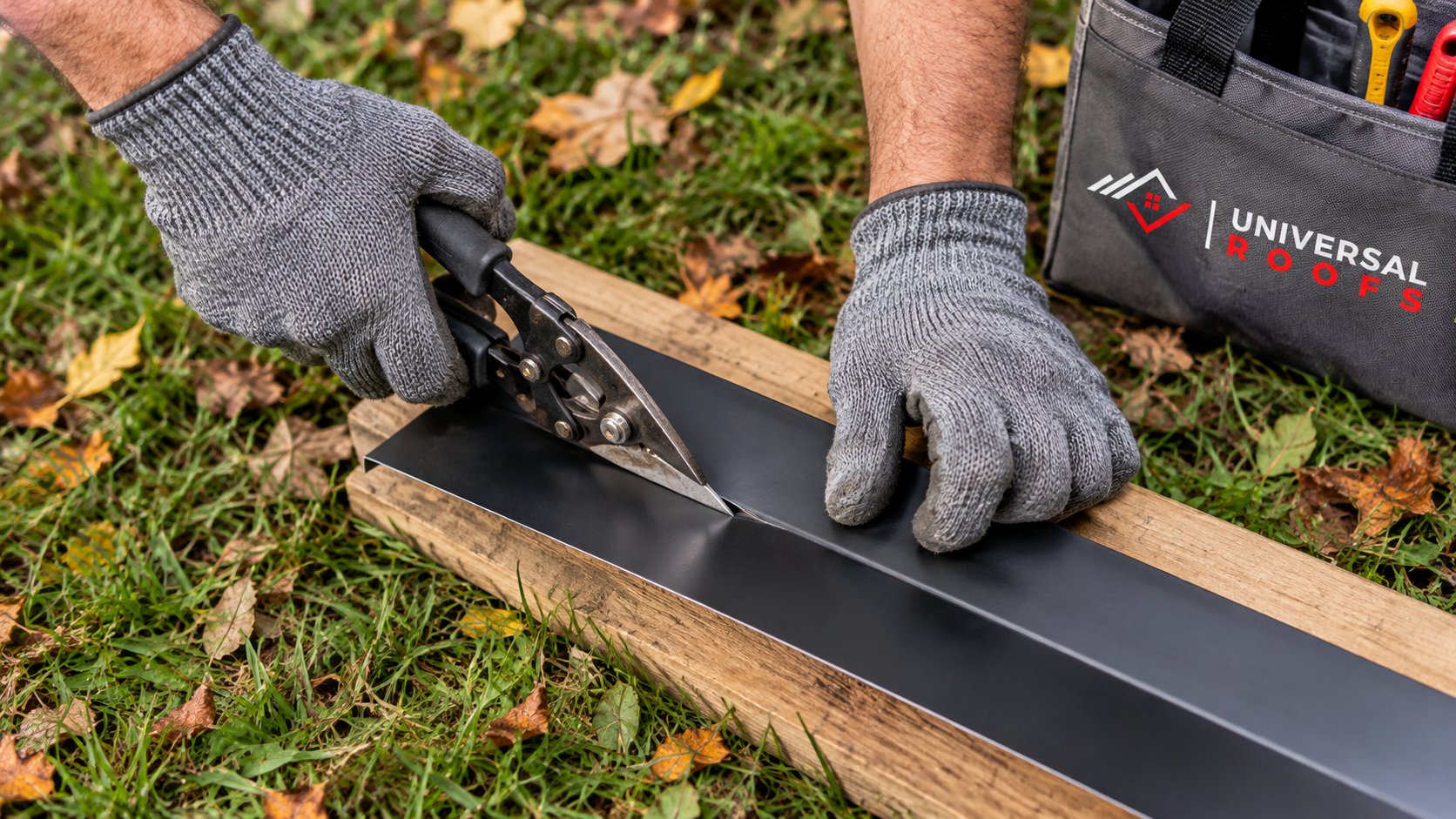
Old troughs can be re-hung, but the process has limits. Seamless aluminum troughs are long and thin, and taking them down without bending them takes care. Sectional troughs can come apart at the joints, which then need resealing. Old hanger holes in the fascia have to be avoided or filled, and new hangers spaced properly.
Re-hanging also does not fix underlying problems. If the troughs were sloped badly, too small or poorly placed, re-hanging them puts the same problems back. If they have dents or corrosion, those stay too. On many houses, the labour to remove, store and re-hang old troughs is a significant fraction of the cost of new seamless troughs, which tilts the decision toward replacement.
When old troughs are kept, ask the contractor to inspect the seams and corners, reseal joints, replace worn hangers, check the slope and flush the downspouts before reinstalling them. Ask how workmanship coverage applies to re-hung troughs, since contractors often limit coverage on old material they did not supply.
Colour Matching, Sizing And Downspouts
A new roof often changes the look of the house. Eavestroughs, fascia, soffit and downspouts that matched the old roof may look out of place next to a new shingle colour. Aluminum trim comes in many colours, and if you replace gutters with new roofing, picking trough, fascia and shingle colours together gives a more finished look. Black, white, brown and grey are common choices, and some homeowners match the troughs to the fascia while others match them to the window trim.
Sizing matters too, and it is one of the strongest reasons to replace gutters with new roofing rather than reuse old troughs. Many older houses have 5-inch troughs and 2 by 3 inch downspouts. Steeper or larger roofs, roofs that receive water from upper roofs, and areas with heavy autumn leaf load may benefit from 6-inch troughs, larger downspouts, or additional downspouts. A re-roof is the easiest time to make those changes, because the roof edge is already open and the fascia is exposed.
Downspout placement is worth reviewing as well. Downspouts should discharge well away from the foundation, onto ground that slopes away from the house. Where downspouts are connected to underground pipes, local rules about disconnection may apply; confirm current requirements with your municipality.
Cost Savings From One Mobilisation
A roofing crew sets up ladders, scaffolding or lifts, brings a disposal bin, protects landscaping and works along the full length of every eave. When the eavestroughs are replaced in the same project, much of that setup is shared. The troughs come down once, the fascia is repaired once, and the new drip edge and troughs are integrated without anyone having to work around the other trade.
Separate jobs often cost more in total: the roofer may charge to remove and re-hang troughs, then the eavestrough installer later removes them again to install new ones, sometimes damaging the new drip edge or shingle edges in the process. Homeowners who replace gutters with new roofing in one booking avoid that duplication, and they usually end up with a cleaner, better-integrated edge.
| Item | Typical estimate range | What affects it |
|---|---|---|
| New 5-inch seamless aluminum eavestroughs, installed | Often around $9 to $16 per linear foot | Height, access, number of corners, hanger type |
| 6-inch troughs or larger downspouts | Often a moderate premium over 5-inch | Material, extra downspouts, roof size |
| Remove, store and re-hang existing troughs | Often around $3 to $7 per linear foot | Trough condition, resealing, new hangers |
| Fascia wood replacement and aluminum wrap | Often around $8 to $20 per linear foot where needed | Extent of rot, height, trim profile |
| Gutter guards added at the same time | Varies widely by product type | Guard style, roof edge details, length |
These figures are broad estimates that vary by house, access and scope. A typical two-storey home has well over a hundred linear feet of eaves, so the per-foot numbers add up. Ask for the eavestrough work, fascia repairs and any downspout changes to be listed separately in the roofing quote.
A Typical Combined Sequence
When the troughs and the roof are handled as one project, the work usually follows this order:
| Step | What happens | What to check |
|---|---|---|
| 1. Inspect and plan | Troughs, fascia, soffit and downspouts assessed; sizes, colours and layout agreed | Every option and repair priced on its own line |
| 2. Remove old troughs | Troughs taken down before or during tear-off, exposing the fascia | Troughs being kept are handled and stored without bending |
| 3. Tear-off and deck repair | Old roofing removed; damaged sheathing replaced, including the eave edge | Soft deck edges and rafter tails found and fixed |
| 4. Fascia repair | Rotted wood replaced and wrapped in aluminum | Colour of the wrap matches the chosen trim |
| 5. Roof edge and roofing | Drip edge and eave protection installed in the correct order, then underlayment and shingles | Membrane laps over the drip edge at the eaves |
| 6. Gutter apron | Apron flashing installed where specified | Flange long enough to reach well into the trough |
| 7. Hang new troughs | Back of each trough tucked under the flashing flange, sloped to each downspout | No gap behind the trough; hangers closely spaced |
| 8. Downspouts and water test | Downspouts and extensions installed; water run through the troughs | Water flows to outlets and discharges away from the foundation |
Our Toronto roofing, eavestroughs and attic work team follows this kind of sequence so the roofing and eavestroughs are built together rather than patched together.
Questions to ask your roofer
- Will the eavestroughs come down before tear-off, and who is responsible for them if they are being kept?
- Is a drip edge included at both eaves and rakes, and will a gutter apron be used?
- How will rotted fascia be identified and priced once the troughs are off?
- What trough size, downspout size and hanger spacing are proposed, and why?
- If I replace gutters with new roofing, who supplies and installs the troughs, the roofing crew or a separate installer, and how are the two trades coordinated?
Autumn timing
Autumn is a busy time for both roofing and eavestroughs. Leaves fill troughs quickly, and the first cold snaps are a reminder that a tight roof edge matters before winter. If you replace gutters with new roofing this autumn, the house goes into winter with a new roof edge that drains properly, rather than new shingles above old troughs that may overflow, freeze and pull away from the fascia.
Roof And Eavestrough Questions
Should I replace my eavestroughs when I get a new roof?
Can old troughs be taken down and put back up?
What is a gutter apron?
Should the troughs go up before or after the shingles?
Do new eavestroughs need to match the roof colour?
How much does it add to a roofing project?
Planning To Replace Gutters With New Roofing
If you are planning a roof replacement and are unsure about your eavestroughs, Universal Roofs can inspect the troughs, fascia and soffit, explain whether to keep or replace them and quote the roof edge as one system.
Call us today at (416) 732-2421 or request a free estimate.
Roofs and eavestroughs installed together for Toronto homes and the wider GTA.