
Impact resistant shingles are marketed as the answer to hail, falling branches and insurance worries, and they now appear on more roofing quotes across Ontario. Some homes genuinely benefit from them. For others, the extra cost buys little that a well-installed standard laminated shingle would not already provide. The difference lies in understanding what impact ratings actually test, what they do not promise, and how your house and its surroundings fit the picture.
The honest answer depends less on the brochure and more on your lot: how much tree canopy hangs over the roof, whether hail has hit your street before and how long you plan to stay. Autumn is when many owners plan next year’s roof replacement, so it is a good moment to weigh the question calmly rather than after a storm.
What Impact Resistant Shingles Are
Most asphalt shingles are a glass fibre mat coated in asphalt and covered in mineral granules. Impact resistant shingles change the recipe so the shingle absorbs a blow rather than cracking. The most common approach is polymer-modified asphalt, often described as SBS modified or rubberized, which makes the shingle more flexible across a wider temperature range. Some products also add reinforcing layers or a tougher mat on the back.
The goal is that when a hailstone or a falling object strikes, the shingle flexes and recovers instead of fracturing the mat. Granules may still be dislodged and the surface may still be marked, but the shingle’s waterproofing layer is less likely to crack.
If you are replacing a roof and comparing materials, our roof replacement services page explains how a full tear-off is planned, including how product choice fits with underlayment, flashing and ventilation.
How Impact Ratings Work
When you see “Class 4” on a shingle brochure, it almost always refers to a standardized laboratory impact test. The best known is UL 2218, which drops steel balls of increasing size onto installed roofing samples from set heights. The samples are then examined for cracks or ruptures. The larger the ball the product survives, the higher the class. Another test, FM 4473, fires ice balls at the sample to simulate hailstones more directly.
| UL 2218 class | Steel ball diameter (approximate) | What the rating suggests |
|---|---|---|
| Class 1 | About 1 1/4 inches | Lowest level of tested resistance |
| Class 2 | About 1 1/2 inches | Modest tested resistance |
| Class 3 | About 1 3/4 inches | Good tested resistance, offered on some premium laminated lines |
| Class 4 | About 2 inches | Highest class in the test, the label most people mean by “impact resistant” |
What a rating does not mean
- It is not hail-proof. Real hail varies in size, density, speed and angle. A rating describes laboratory performance, not every storm.
- It is not a warranty against hail. Many manufacturers state that hail damage is not covered by their limited warranty, even on Class 4 products. Read the actual document.
- It may change with age. Tests are done on new material. How a shingle performs after many years of sun and freeze-thaw cycles is a different question.
- It does not cover everything above the shingle. Vents, skylights, flashing, eavestroughs and siding can still be damaged in the same storm.
A useful way to think about it: impact resistant shingles shift the odds in your favour during moderate hail and small falling debris. They do not make a roof immune.
How to verify a rating
Do not rely on a sales sheet or a verbal claim. The manufacturer’s product data sheet lists the standards a shingle has been tested to, and the bundle wrapper usually carries the same information. Check that the product name on your quote matches the rated product exactly, because some manufacturers sell standard and impact-rated versions under similar family names. If an insurer is involved, ask what documentation they accept, and keep a copy of the data sheet and a photo of a bundle wrapper with your invoice. That small step saves a lot of searching years later.
Impact Resistant Shingles Sold In Canada
Several major manufacturers sell impact-rated asphalt shingles in Canada, and the line-up changes over time, so always check current product documents and the listing for the exact product on your quote. In general terms, you will see:
- Class 4 polymer-modified laminated shingles. For example, IKO’s Nordic line is marketed in Canada with a Class 4 impact rating under UL 2218 and FM 4473. Other manufacturers offer comparable SBS-modified lines in some markets; availability through GTA suppliers varies.
- Premium laminated shingles with a Class 3 rating. For example, the Canadian data sheet for Owens Corning Duration lists Class 3 impact resistance. These sit between standard and Class 4 products.
- Metal roofing. Steel panels and shingles are highly resistant to puncture, though large hail can still dent them cosmetically. Some metal products carry impact ratings.
- Synthetic slate and shake. Composite products made from engineered polymers often carry high impact ratings, at a higher price than asphalt.
| Option | Typical impact rating | Strengths | Trade-offs |
|---|---|---|---|
| Standard laminated asphalt | Usually not rated | Lowest cost, wide colour choice | Can crack or bruise from larger hail or debris |
| Premium laminated (Class 3) | Class 3 on some lines | Better resistance at a modest premium | Not the top rating insurers usually look for |
| Polymer-modified asphalt (Class 4) | Class 4 | Flexible in cold, absorbs impacts | Higher cost, narrower colour range |
| Steel roofing | Varies by product | Very resistant to puncture, long service life | Higher cost, can dent, different look and installation |
| Synthetic slate or shake | Often Class 4 | High-end appearance, light weight | Highest cost, specialist installation |
Practical differences on the roof
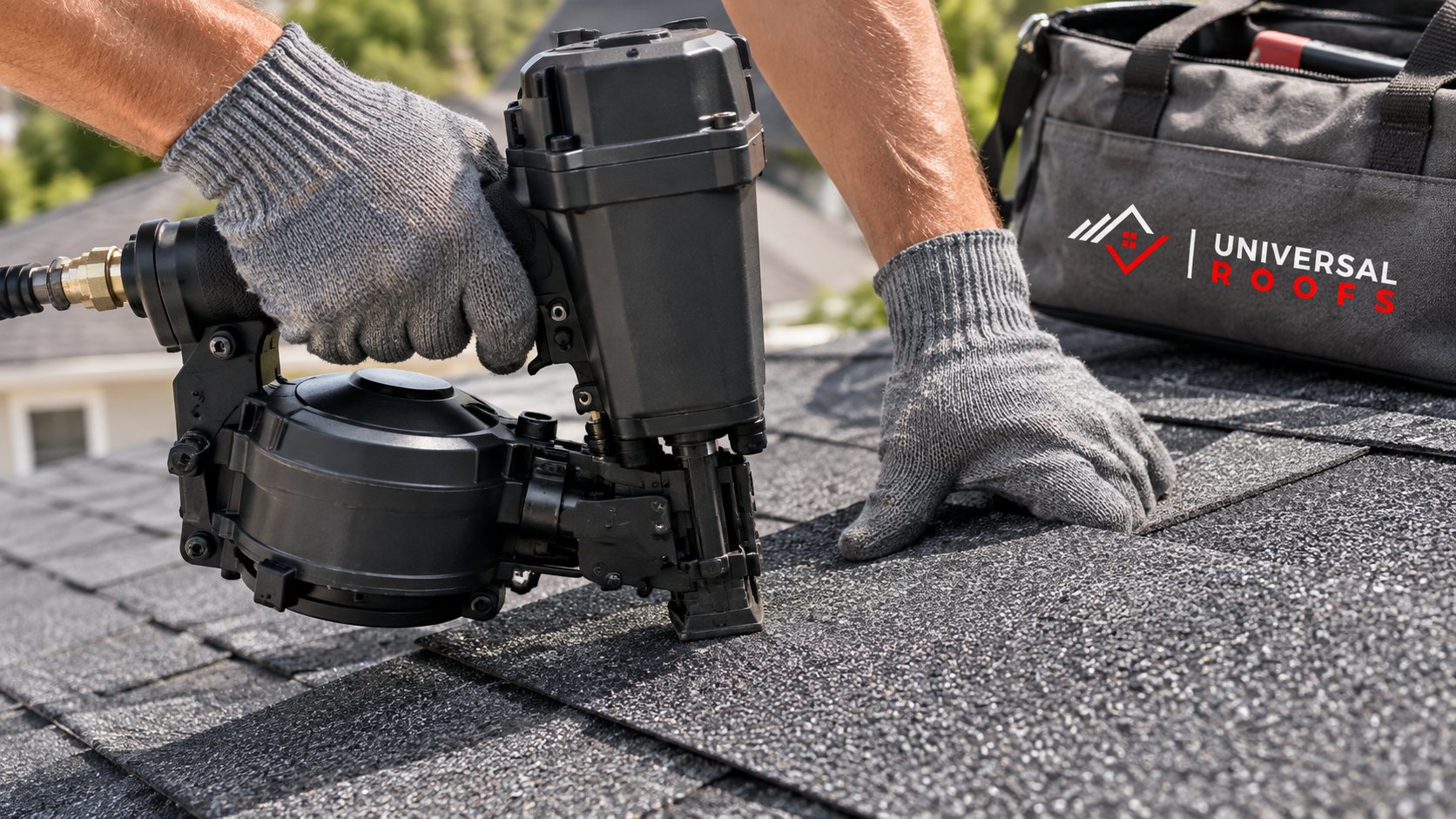
Polymer-modified shingles stay more pliable in cool weather, which can make them easier to handle during autumn installations and helps them seal well. They are often heavier than standard shingles. Installation still follows the same principles: correct nailing, starter strips, eave protection, ventilation and proper flashing. An impact-rated shingle installed with poor details will leak just as readily as any other.
Accessories and future repairs
An impact rating applies to the shingle that was tested, not to the whole roof. Manufacturers often specify their own starter and hip and ridge products for warranty purposes, and ridge caps take a lot of the weather, so ask whether matching impact-rated accessories are available for the line you choose. Keep a few spare bundles from the same production run in a dry place. If a section is ever damaged, repairs with the same product keep both the look and the performance consistent, and a different shingle patched in will not carry the same rating.
What The Cost Premium Looks Like
The extra cost of impact resistant shingles comes mainly from the material. Labour, tear-off, disposal, underlayment and flashing are largely the same as for standard shingles, although heavier bundles can add slightly to handling. These figures are broad estimates and vary by roof size, complexity and supplier pricing.
| Scope (typical detached GTA home) | Estimated range in CAD | Notes |
|---|---|---|
| Standard laminated asphalt reroof | Often $10,000 to $22,000 | Depends on size, pitch, layers removed and details |
| Upgrade to a Class 3 premium laminated line | Often a few hundred to around $2,000 more | Varies with roof size and product |
| Upgrade to Class 4 polymer-modified asphalt | Often $1,500 to $5,000 more | Larger roofs sit at the higher end |
| Steel roofing system | Often $25,000 to $50,000 or more | Profile, gauge, complexity and trim |
| Synthetic slate or shake | Often $35,000 to $70,000 or more | Product, roof complexity, specialist labour |
Treat these as rough guides only. Ask each contractor to price the same roof with both a standard and an impact-rated shingle, line by line, so you can see the true difference.
Insurance Discounts: Ask, But Do Not Assume
Much of the marketing around impact resistant shingles comes from parts of North America where hail is frequent and insurers have formal discount programs. In Canada, interest in such programs has been strongest in hail-prone regions such as the Prairies. In Ontario, insurance discounts for impact-rated roofing are uncommon, and where they exist they vary widely from one insurer to the next.
Before choosing a product mainly for an insurance reason:
- Call your insurer or broker and ask whether they offer any premium reduction or deductible change for a Class 4 roof.
- Ask what proof they require, such as the product name, rating documentation and an invoice showing the installation.
- Check how roof claims are settled. Some policies treat roof damage differently based on age or material, which may matter more than any discount.
- Get the answer in writing if it influences your decision.
Read the manufacturer’s own wording too. IKO, for example, states that the impact rating on its Nordic line is provided for the purpose of helping owners seek an insurance premium reduction, and that hail damage is not covered by its limited warranty. That framing is worth keeping in mind.
Which Homes Benefit Most From Impact Resistant Shingles
The strongest case for the upgrade is a combination of exposure and a long ownership horizon.
Heavy tree cover
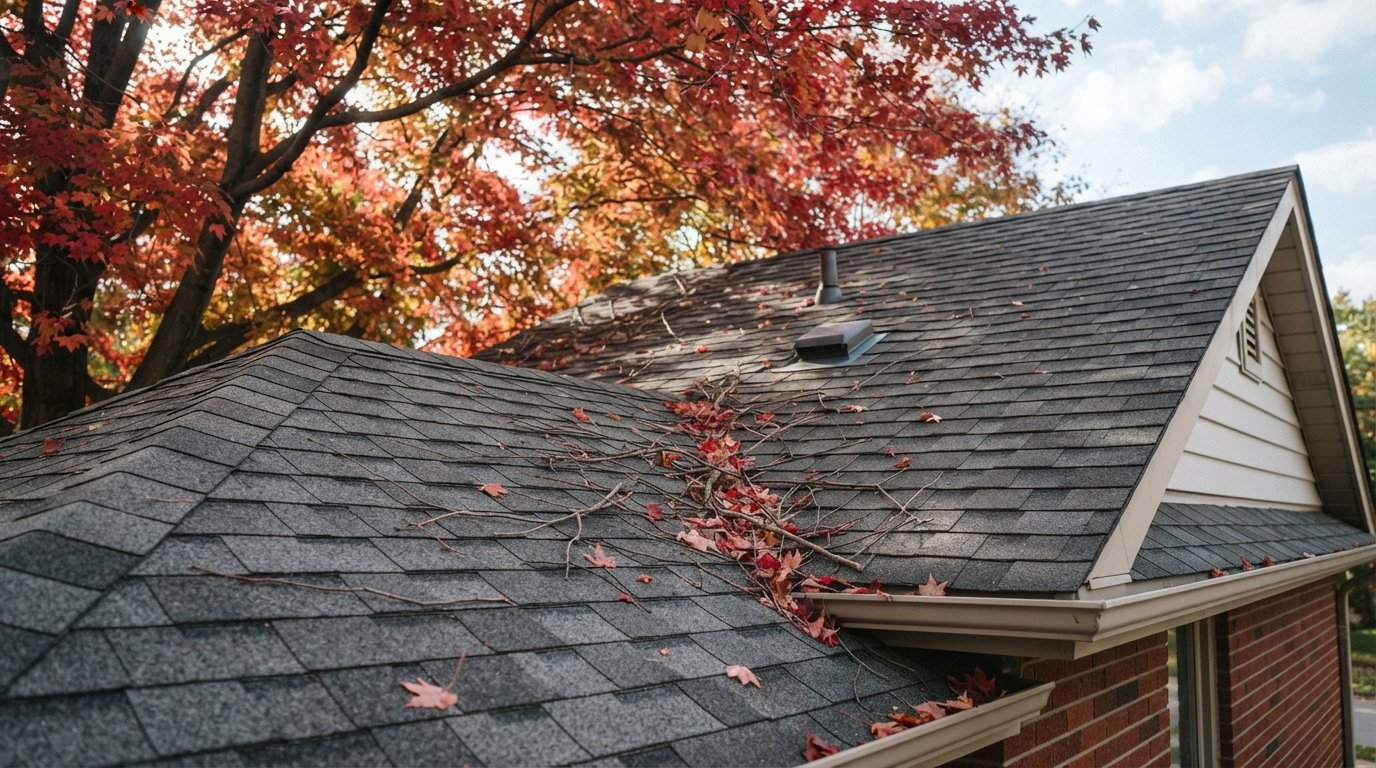
Many established GTA neighbourhoods have mature maples, oaks and other large trees overhanging roofs. Falling twigs, small branches and seed pods strike the roof regularly, especially in autumn wind. Impact resistant shingles handle small strikes better than standard shingles. A large limb will still damage any shingle, so tree maintenance remains the first line of defence.
Hail exposure
Hail in southern Ontario tends to come with summer thunderstorms and is usually localized. If your home has had hail damage before, or if neighbours on your street have needed hail repairs, that history is more useful than general claims about regional hail frequency.
Long-term owners
If you plan to stay for many years, the upgrade has more time to earn its keep through fewer repairs and potentially fewer claims. If you plan to sell soon, a standard well-installed roof is usually sufficient for resale.
Roofs that are hard to repair
Steep, tall or complex roofs are expensive to access for repairs. Reducing the chance of impact damage on these roofs can make more sense than on a simple bungalow.
When the upgrade adds little
- Open sites with no overhanging trees and no history of hail damage.
- Owners who are selling within a few years.
- Roofs where the budget would be better spent on ventilation, eave protection or flashing upgrades.
Past storm damage on your own roof is the most reliable clue to future risk, so it is worth having our Peel Region roofing, eavestroughs and attic work team look for old hail bruising and branch strikes before you decide whether the upgrade fits your house, trees and plans. If a storm has already damaged your roof, our roof repair team can document and fix it.
Checking A Roof After Hail Or A Branch Strike
Whatever shingle you have, knowing how to respond after a storm protects both the roof and any insurance claim. Stay off the roof yourself; wet shingles, autumn leaves and storm debris make it dangerous even for experienced people.
- Look for clues at ground level. Dented downspouts, eavestroughs, metal vents, air conditioner fins or siding usually mean the roof was hit too.
- Watch for granules. Heavy granule wash in the troughs or at downspout outlets after a storm can indicate bruised or damaged shingles.
- Photograph what you can see safely. Date-stamped photos from the ground, including hail on the lawn and any damaged items, help with an insurance claim.
- Check inside. Look at ceilings below the roof and, if accessible, in the attic for fresh stains or daylight.
- Book a professional inspection. A roofer can identify bruising, cracked mats and lifted shingles that are invisible from below, and can tarp any opening until repairs are made.
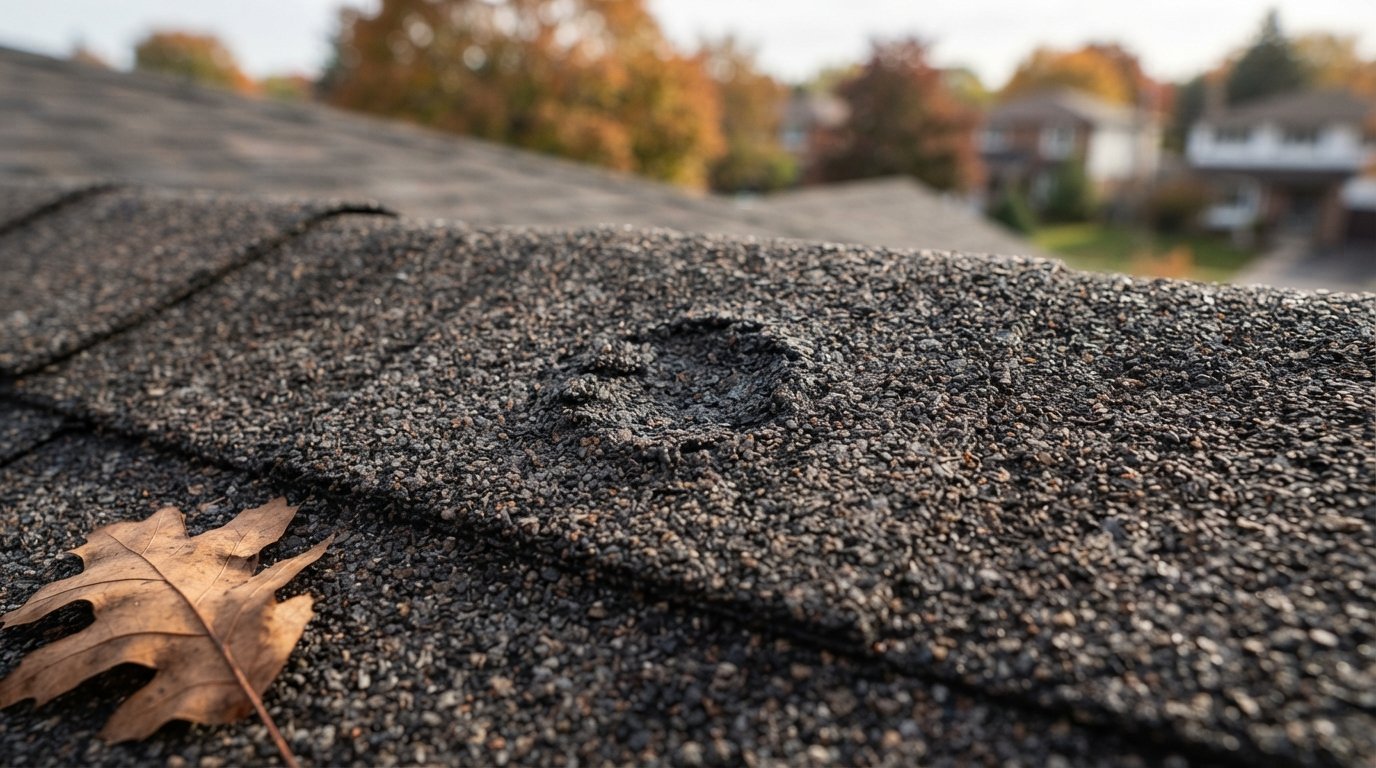
On impact-rated shingles, a roofer will often find surface marks without fractures, which is exactly what the product is designed to do. On standard shingles, the same storm may leave soft, bruised spots that age into leaks over the following seasons, which is why an early inspection matters.
Questions To Ask Before Choosing
- Which exact product are you quoting, and what is its current impact rating and test standard?
- What is the price difference compared with your standard laminated option on the same roof?
- Does the manufacturer’s warranty cover hail damage, or is it excluded?
- Are the colours I want available locally in this product?
- Will installation details such as nailing, starter and ridge products follow the manufacturer’s requirements?
- Would the money do more on ventilation, eave protection or other details on my roof?
Impact Rating Questions
What does Class 4 mean on a shingle?
Are impact resistant shingles worth it in Ontario?
Will my insurance go down with Class 4 shingles?
Does the warranty cover hail damage?
Do impact resistant shingles look different?
Are impact-rated shingles harder to install?
Talk To Us About Impact Resistant Shingles
If you are planning a new roof and wondering whether the upgrade is worth it for your house, we will give you a plain answer based on your trees, exposure and plans, with side-by-side pricing. Universal Roofs installs standard and impact-rated roofing systems across the GTA.
Call us today at (416) 732-2421 or request a free estimate.
Roof replacements under big trees and open skies alike, for Peel Region and the wider GTA.