
Roofing Mississauga homeowners rely on has to survive a demanding set of conditions. Freeze-thaw cycles run from late November into April, wind rolls in off Lake Ontario with very little to slow it down across the south end of the city, summer roof decks routinely bake above 60 degrees Celsius, and every few winters an ice event tests every fastener, flashing and eave detail on the house. A roof that would last three decades in a milder climate often gives up years earlier here, and the difference between a roof that ages gracefully and one that fails early usually comes down to decisions made before a single bundle of shingles is lifted onto the deck.
This guide covers what a roofing Mississauga project actually costs in 2026, which materials hold up in this climate, what the Ontario Building Code requires, how permits and by-laws apply, and how to compare contractors so you are judging the same scope of work rather than three very different jobs that happen to have prices attached. The numbers here are ranges drawn from typical Greater Toronto Area pricing, because any contractor who quotes a firm figure without measuring your roof is guessing.
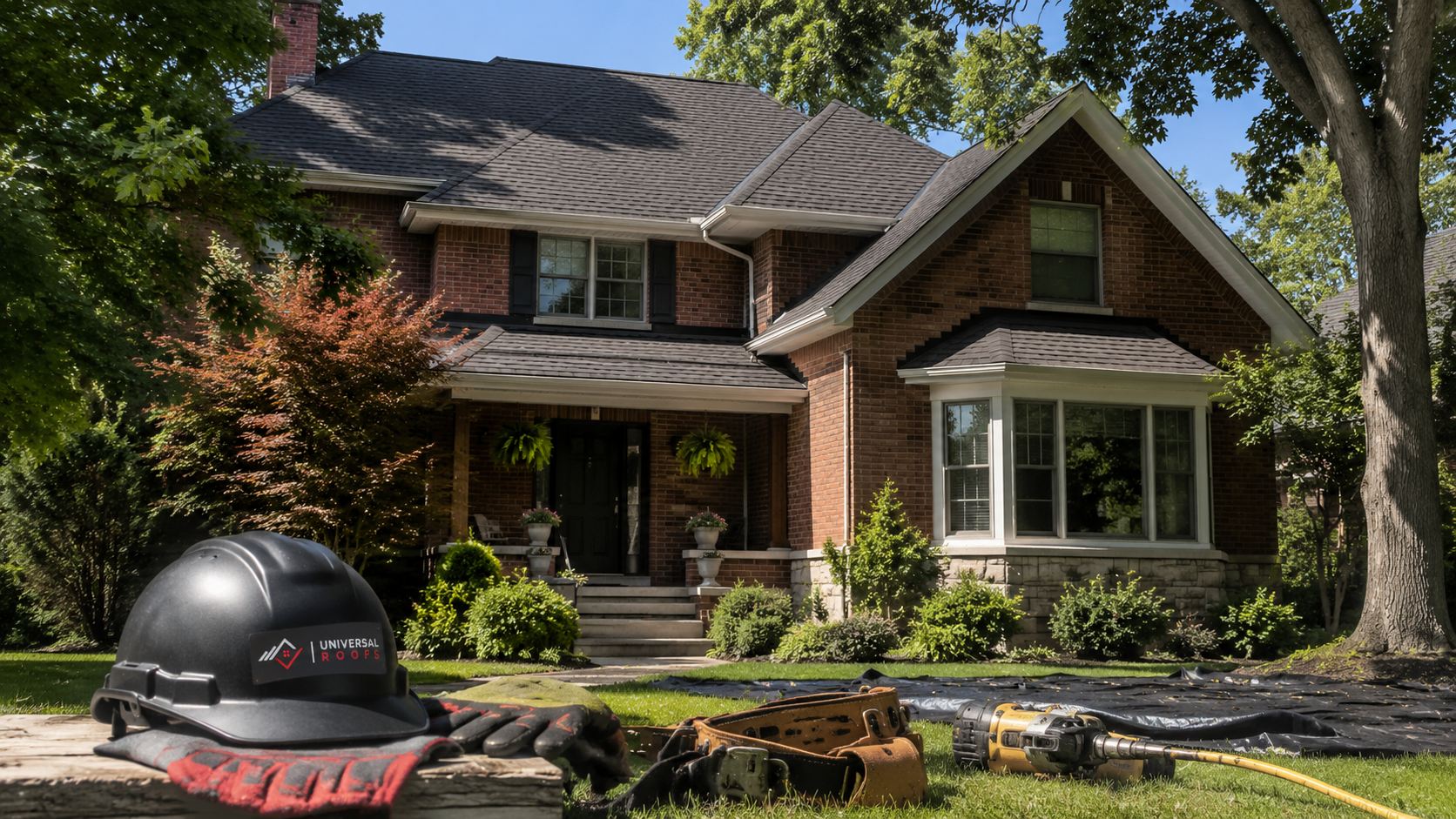
Roofing Mississauga Homes: How Local Housing Stock Shapes the Job
Mississauga is not one kind of house, and that matters more than most homeowners expect. The city grew outward from a set of older villages and then filled in over five decades of subdivision building, so the roofing Mississauga contractors encounter varies enormously depending on which part of the city you live in.
Older areas built through the 1950s and 1960s are dominated by bungalows, side-splits and back-splits. These have relatively small roof areas, simple gable or hip shapes, few penetrations, and often shallow soffits with limited intake ventilation. The roofs themselves are straightforward to replace, but the attic underneath is frequently the real problem: original insulation levels are low by current standards, and ventilation was never designed to move the volume of air a modern insulated attic needs. Replacing shingles on one of these homes without correcting attic ventilation and insulation issues is a common and expensive mistake, because a hot, damp attic will shorten the life of the new roof from the underside.
Subdivisions built from the late 1970s through the 1990s brought larger two-storey homes with hip roofs, multiple valleys, dormers and attached garages. More complexity means more linear metres of valley and flashing, more waste during installation, and more labour, all of which raise the price per square foot. Homes built after 2000 tend to have steeper pitches and prominent front gables, which look impressive but require additional fall protection, staging and time.
Estate properties in the south and west of the city, along with custom infill homes near the lake, often carry large roof areas, steep slopes, and premium materials such as slate-look composites, cedar or standing seam metal. At the other end of the spectrum, a great many Mississauga homes have low-slope sections over rear additions, sunrooms, garages and porches, which cannot be shingled and need a proper flat roofing membrane system instead. Any quote that proposes shingles on a section under a 2:12 pitch should be rejected outright.
Townhouse blocks and condominium-managed rows add another layer, since the roof is often shared property and the work has to be coordinated with a board or property manager rather than a single owner. If you are researching roofing services across Mississauga and the wider Peel Region, start by identifying which of these categories your home falls into, because it determines the realistic price band before anyone measures anything.
What Roofing Mississauga Projects Cost in 2026
Pricing for roofing Mississauga jobs in 2026 sits meaningfully higher than it did five years ago. Asphalt shingle material costs have risen with petroleum-linked inputs, disposal fees have climbed, and insured, WSIB-covered labour costs more than it used to. Most reputable contractors are quoting complete architectural asphalt shingle replacements somewhere between $6.00 and $9.50 per square foot of actual roof area, with complexity, pitch, storey height and access driving where you land in that band.
Note that roof area is not the same as house footprint. A 1,800 square foot two-storey home does not have an 1,800 square foot roof; it may have 1,300 to 1,600 square feet of roof surface once pitch is accounted for. A sprawling bungalow of the same interior size can easily have more roof than the two-storey. This is why comparing quotes by house size rather than measured roof area produces confusing results.
| Home type | Typical roof area | 2026 asphalt replacement range | What drives the range |
|---|---|---|---|
| Postwar bungalow or side-split | 1,300 to 1,900 sq ft | $8,500 to $16,000 | Deck condition, ventilation upgrades, chimney flashing |
| 1980s to 1990s two-storey | 1,500 to 2,300 sq ft | $12,000 to $22,000 | Number of valleys, dormers, steepness, storey height |
| Post-2000 detached with steep gables | 2,000 to 3,000 sq ft | $17,000 to $30,000 | Pitch above 8:12, staging, premium shingle upgrades |
| Estate or custom home | 3,000 to 5,500 sq ft | $30,000 to $70,000 and up | Material choice, roof geometry, copper or metal detailing |
| Low-slope addition or garage section | 300 to 900 sq ft | $4,000 to $12,000 | Membrane type, insulation, number of drains and curbs |
Beyond the base price, budget for the items that are commonly discovered once the old shingles come off. Replacing deteriorated plywood sheathing typically runs $95 to $150 per four-by-eight sheet installed. Rebuilding or reflashing a masonry chimney can add $500 to $1,500. Replacing an aged skylight during the reroof, which is almost always the right call if the unit is more than fifteen years old, adds roughly $1,500 to $3,800 per unit depending on size and type. Adding proper intake and exhaust ventilation usually adds a few hundred dollars and is close to always worth it.
Be careful with quotes that sit far below the ranges above. In the roofing Mississauga market, an unusually cheap number normally means one of a small number of things: no permit-grade underlayment, minimum ice and water membrane coverage, reused flashings, uninsured labour, or a plan to add charges once the deck is exposed. Ask what happens if rotten sheathing is found, and get the per-sheet price in writing before work begins.
Roofing Mississauga Materials That Hold Up in a Lake Ontario Climate
Material selection for roofing Mississauga homes is mostly a question of how long you plan to stay, how complex the roof is, and how much wind exposure the house sees. Architectural asphalt shingles remain the default for the overwhelming majority of homes because the price-to-life ratio is hard to beat and the installation ecosystem is mature. Standard three-tab shingles are effectively obsolete for new work in this climate; the wind ratings and lifespans no longer justify the modest saving.
Metal has grown steadily in the western and northern parts of the city. Standing seam steel and steel shingle profiles shed snow well, resist wind uplift, and last decades longer than asphalt, but they cost roughly double and demand a contractor who genuinely knows metal detailing. A poorly flashed metal roof leaks just as readily as a poorly flashed asphalt one, and it costs far more to correct.
| Material | Installed cost per sq ft | Expected life in the GTA | Best suited to |
|---|---|---|---|
| Architectural asphalt shingle | $6.00 to $9.50 | 22 to 30 years | Most detached and semi-detached homes |
| Premium or designer asphalt | $9.00 to $13.00 | 28 to 35 years | Steep, highly visible roofs and estate homes |
| Steel shingle or tile profile | $12.00 to $18.00 | 40 to 50 years | Owners staying long term, high wind exposure |
| Standing seam steel | $14.00 to $22.00 | 40 to 60 years | Simple roof geometry, modern architecture |
| Two-ply modified bitumen | $9.00 to $14.00 | 18 to 25 years | Low-slope additions, garages, porch roofs |
| TPO or single-ply membrane | $10.00 to $15.00 | 20 to 30 years | Larger flat sections, reflective heat performance |
| Cedar shake | $14.00 to $20.00 | 25 to 35 years | Heritage-appropriate homes with regular maintenance |
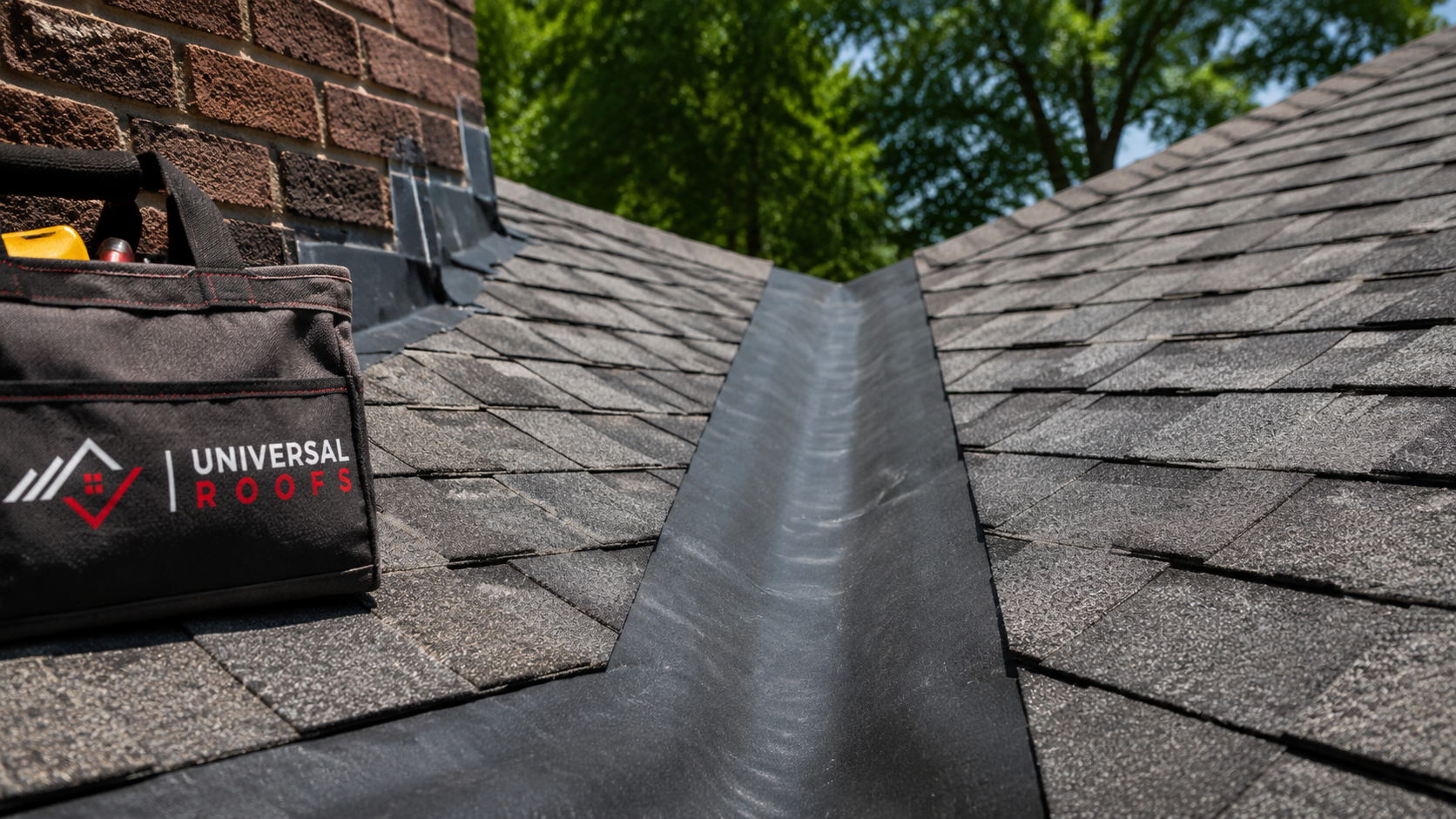
Whatever the surface material, the components underneath decide how the roof performs in winter. Self-adhered ice and water membrane at the eaves, valleys and around every penetration is the single most valuable dollar spent on a Mississauga roof, because ice damming is the dominant failure mode here. Synthetic underlayment across the remaining field, a proper metal drip edge on eaves and rakes, and new step flashing rather than reused flashing round out a complete system. If a quote is silent on any of these, it is not a complete quote.
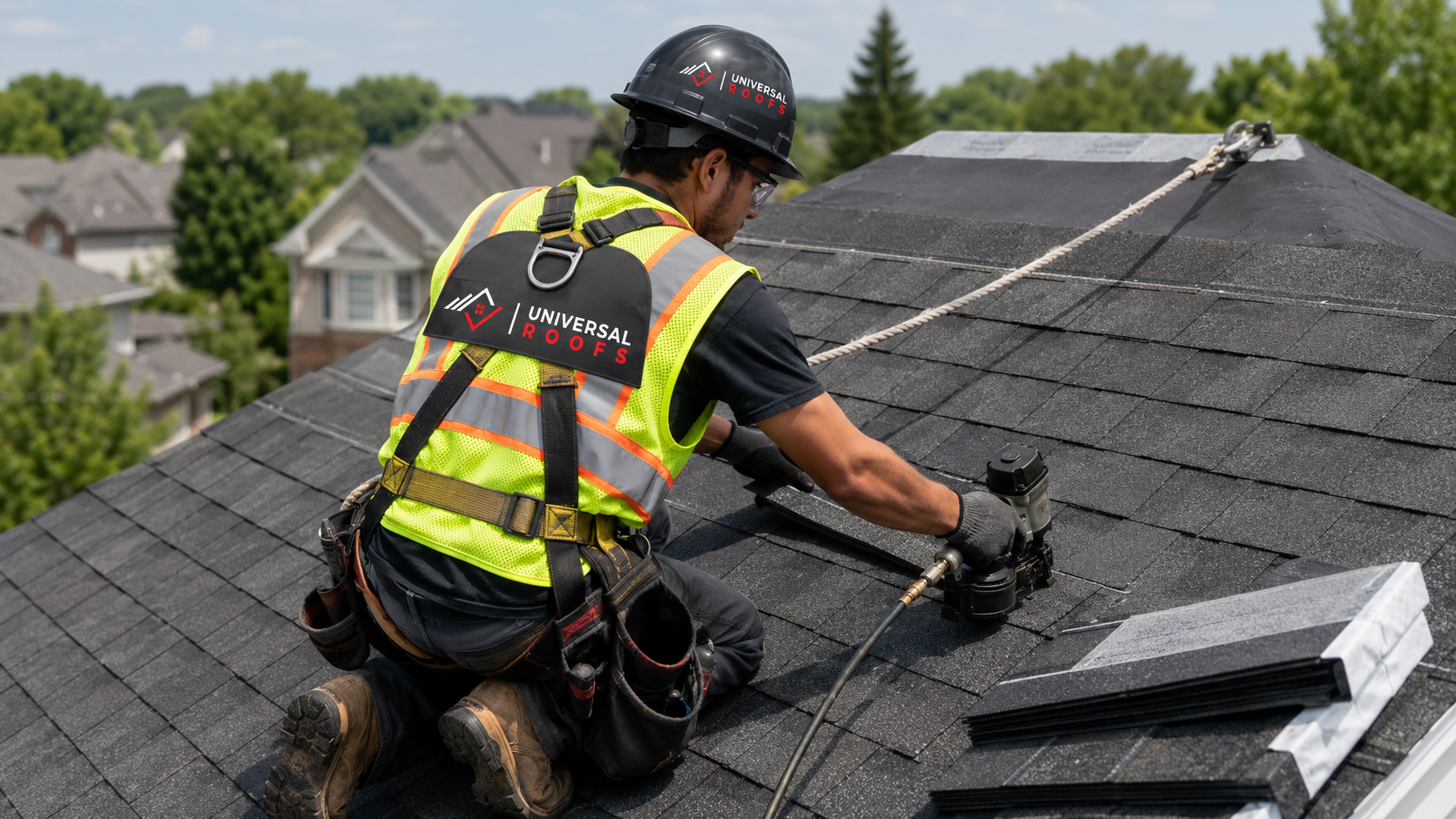
Repair or Replace: Making the Call on a Mississauga Roof
Not every problem calls for a full replacement. A single wind-lifted section, a failed pipe boot, a cracked chimney flashing or localised valley damage on an otherwise sound roof are all legitimate roof repair situations, and a competent contractor will tell you so rather than pushing a reroof.
Replacement becomes the better economic decision when the roof shows systemic ageing rather than isolated damage. Watch for granule loss heavy enough to fill the eavestroughs, shingles that curl at the corners or look brittle and matte instead of flexible, multiple leaks in different areas, visible sagging along a ridge or between rafters, and daylight or dark staining on the underside of the sheathing when you look into the attic. Once a roof passes roughly the twenty year mark in this climate and two or more of those signs are present, spending money on repairs generally buys a short and unsatisfying extension.
There is also the layering question. Ontario permits a second layer of shingles over an existing one in many circumstances, but it is rarely a good idea on a Mississauga home. A second layer traps heat, hides deck rot, complicates flashing, shortens the life of the new shingles, and makes the eventual tear-off more expensive. Full tear-off to the deck is the standard approach for a quality roof replacement, and it is the only way anyone can honestly certify the condition of the sheathing underneath.
One practical tip: get the attic inspected as part of the assessment, not just the roof surface. Moisture staining on the underside of the sheathing, frost accumulation in winter, compressed or displaced insulation, and bathroom fans venting into the attic rather than through the roof or wall are all problems that will damage a brand new roof if they go uncorrected.
Permits, Building Code and By-laws Affecting Roofing Mississauga Projects
Most homeowners are relieved to learn that a straightforward like-for-like reroof, meaning tear-off and replacement of shingles with no change to the roof structure, generally does not require a building permit in Ontario. A permit is required when structural elements are involved: replacing or altering rafters and trusses, changing the roof shape or pitch, adding a dormer, cutting a new opening for a skylight, or converting a section from one roof type to another. If a contractor proposes structural work and tells you no permit is needed, treat that as a serious warning sign.
The Ontario Building Code sets several requirements that directly affect roofing Mississauga installations. Eave protection is required to extend from the edge of the roof to a line not less than 900 millimetres up the slope from the inner face of the exterior wall, which on most homes means the ice and water membrane has to run well past the exterior wall line rather than stopping at the fascia. Attic ventilation for sloped roofs generally requires unobstructed vent area of not less than 1 to 300 of the insulated ceiling area, with a more demanding ratio applying to low-slope assemblies. Roof drainage must be managed so water does not discharge onto a neighbouring property.
Local rules matter too. The City’s noise by-law restricts construction noise overnight, so crews typically start in the morning rather than at first light; confirm current permitted hours with the City if you have shift-work sleepers in the house. If your property is listed or designated under the Ontario Heritage Act, which applies to a number of homes in the city’s older village cores, changes visible from the street may require heritage review before you can proceed. Condominium and townhouse owners need written approval from the corporation, since the roof is usually common element property.
Finally, insist on documentation from the contractor rather than assurances: a valid WSIB clearance certificate, commercial general liability insurance of at least two million dollars, and a written contract that names the manufacturer and product line. Under Ontario consumer protection rules, contracts signed in your home are generally subject to a ten day cooling-off period, so you are never obliged to sign at the kitchen table on the spot.
How to Compare Roofing Mississauga Contractors and Their Quotes
The most common mistake homeowners make is comparing three prices that describe three different jobs. A quote that includes full tear-off, complete ice and water coverage, new flashings, ventilation correction and disposal is not comparable to a quote that includes shingles and labour and leaves everything else as an extra. Before you compare numbers, normalise the scope.
| What to verify | Why it matters | What a solid answer looks like |
|---|---|---|
| Tear-off versus overlay | Overlays hide deck rot and shorten shingle life | Full tear-off to the sheathing, deck inspected before underlayment |
| Ice and water membrane coverage | Ice damming is the leading cause of winter leaks locally | Eaves past the wall line, all valleys, all penetrations, plus rakes on exposed roofs |
| Flashing plan | Reused flashing is the most common source of early leaks | New step and counter flashing at walls and chimneys, new pipe boots |
| Ventilation | Poor airflow voids many manufacturer warranties | Calculated intake and exhaust, soffit baffles installed where needed |
| Insurance and WSIB | You can be exposed if an uninsured worker is injured | Current clearance certificate and liability policy provided in writing |
| Warranty terms | Material and workmanship coverage are separate things | Manufacturer material warranty plus a written multi-year workmanship warranty |
| Payment schedule | Large deposits transfer risk to you | Modest deposit, balance on completion and inspection |
Ask each roofing Mississauga contractor how they measured the roof, how many crew members will be on site, whether the crew is employed or subcontracted, and who your point of contact is if something goes wrong two winters from now. Read the customer reviews for patterns rather than individual scores, and check whether the company answers the awkward questions directly. Our roofing FAQ covers many of these points in more depth.
What a Roofing Mississauga Installation Looks Like Day by Day
For a typical detached home, a full asphalt replacement takes one to three working days. Larger or more complex roofs, and any job involving significant deck replacement, run longer. Here is the normal sequence.
Before the crew arrives. Move vehicles out of the driveway, take down fragile items hanging on walls, since hammering transmits vibration through the framing, and clear patio furniture and planters away from the perimeter of the house. If you have a sensitive garden bed, point it out in advance so the crew can protect it.
Day one. Ground protection goes down, staging and fall protection are set, and tear-off begins, usually working in sections so no large area is left open. Old material goes into a disposal bin or a chute. Once the deck is exposed, the crew inspects the sheathing and flags any boards that need replacing. This is the moment to be home or reachable, because you want to see and approve any extra work before it happens.
Day one to two. Deck repairs, drip edge, ice and water membrane at eaves, valleys and penetrations, synthetic underlayment across the field, then starter course and shingles working up to the ridge. Flashings at walls, chimneys and any skylight units go in as the field courses reach them, not as an afterthought.
Final day. Ridge cap and ridge or box vents, final flashing details, magnetic sweep of the lawn and driveway for nails, bin removal, and a walkthrough with you. A good crew leaves the property cleaner than they found it and shows you photographs of details you cannot see from the ground.
Seasonal Timing, Maintenance and Getting the Full Service Life
Asphalt shingles seal through heat, so installations from late spring through early autumn cure fastest. That is also peak season, which means longer lead times and less scheduling flexibility. Late autumn and even winter installations are entirely workable in this climate when the crew hand-seals the shingles and works within manufacturer temperature guidance, and you will often get faster scheduling. Emergency work, of course, happens whenever it has to.
Once the roof is on, three habits protect it. Clear the eavestroughs at least twice a year, in late spring and again after leaf fall, because overflowing gutters push water back under the eave edge. Keep overhanging branches trimmed back so they neither abrade the surface nor drop debris into valleys. And have the roof looked at after any major wind or ice event rather than waiting for a ceiling stain to appear, since a lifted flashing costs very little to correct and a great deal to ignore.
Understand your warranty in two parts. The manufacturer covers the material against defects, often for decades, but almost always requires that ventilation meets specification and that the product was installed to instructions. The contractor covers workmanship, which is where the vast majority of real-world roof problems originate. A material warranty measured in decades paired with a workmanship warranty measured in months should tell you something about the installer’s confidence. Keep the contract, the product documentation and the completion photographs together, because they are what you will need if you sell the house or file a claim.
How much does a new roof cost in Mississauga in 2026?
Do I need a building permit for roofing Mississauga work?
How long does a roof replacement take on a Mississauga home?
What is the best time of year for roofing Mississauga projects?
How long should an asphalt roof last on a Mississauga house?
Should I repair my roof or replace it?
Book Your Roofing Mississauga Estimate Today
Universal Roofs is based in the Toronto area and serves homeowners throughout Mississauga and the surrounding Peel and Halton communities. Every roofing Mississauga assessment starts the same way: a measured inspection of the roof and attic, a written scope that spells out membrane coverage, flashings, ventilation and disposal, and a clear price with no surprises waiting under the shingles.
Call us today at (416) 732-2421 or request a free consultation. We will tell you honestly whether your roof needs replacing this year or whether a targeted repair will carry it a few more seasons.
Universal Roofs provides roof replacement, repair, flat roofing and skylight services to homeowners in Mississauga and across the Greater Toronto Area.