
Heating and cooling a Halton home costs more than it should when the space above the ceiling is under insulated, which is why attic insulation Burlington homeowners invest in has become one of the highest return upgrades available in the region. A properly air sealed and insulated attic cuts heat loss in January, keeps second floor bedrooms liveable through a humid July, and reduces the ice damming that shortens the life of a roof. It is also one of the few improvements where the result shows up directly on a gas or hydro bill rather than only in comfort.
This guide explains what attic work actually costs in 2026, what energy savings are realistic rather than promotional, how R values and the Ontario Building Code apply to attic insulation Burlington work, and how to judge whether your attic needs a simple top up or a full removal and reinstall. Everything below reflects how homes in this part of Halton Region are genuinely built, from the postwar bungalows and side splits closer to the lake, to the brick two storeys of the 1970s and 1980s, to the newer subdivisions and estate lots further north.
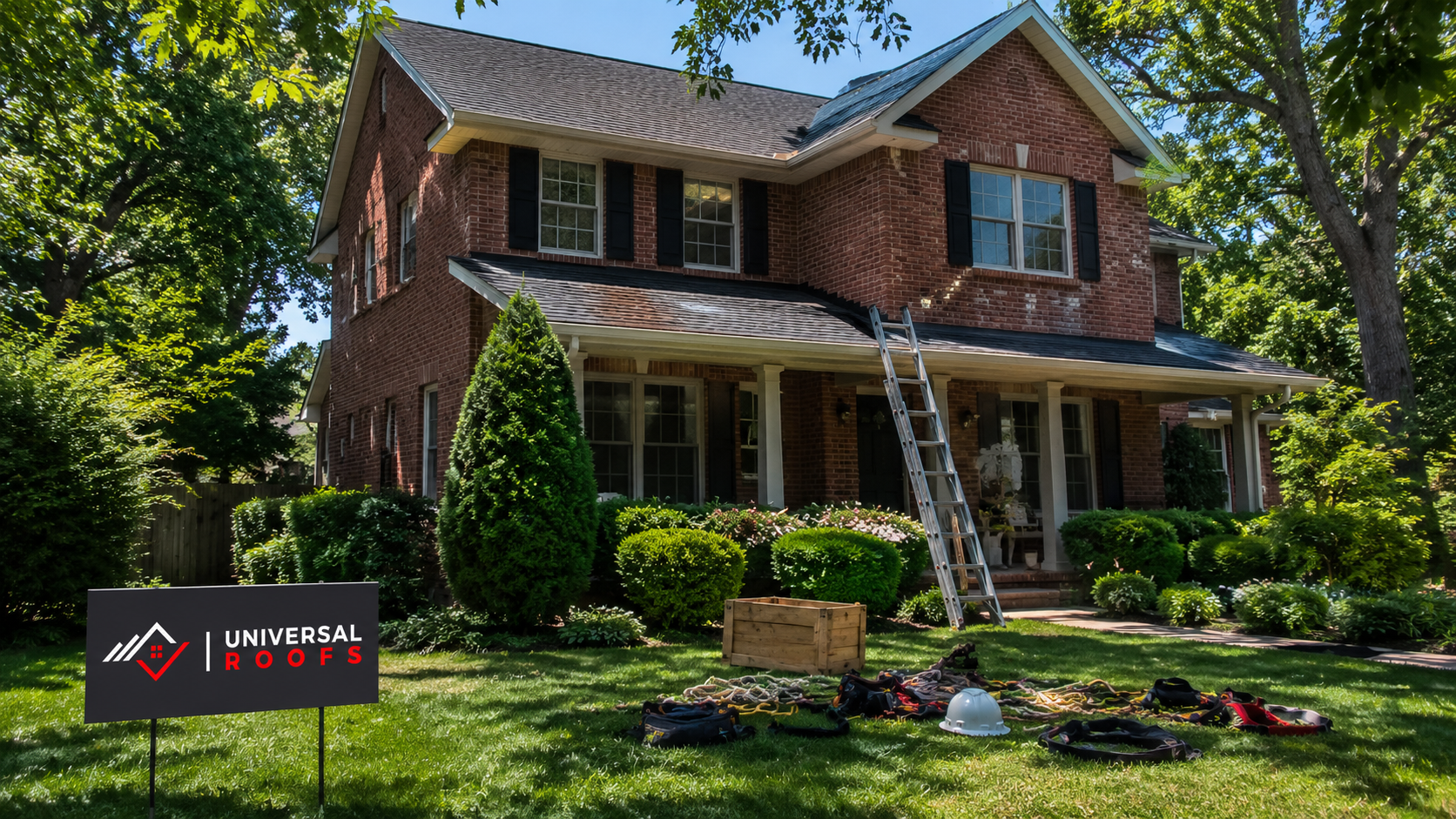
Why Attic Insulation Burlington Homes Need Is Different From a Generic Upgrade
Attics lose heat in three ways: conduction through the insulation layer, convection through air leaks at the ceiling plane, and radiant transfer in summer. Most contractors sell you a solution to the first problem only. The reason attic insulation Burlington projects sometimes disappoint is that the second problem, air leakage, was never addressed. Warm indoor air carrying moisture rises through pot light housings, plumbing stacks, bathroom fan penetrations, top plates and attic hatches. Adding more insulation over top of those leaks buries the problem instead of solving it.
Halton’s climate makes this worse than it sounds. The lake moderates temperatures compared with inland Ontario, which means more freeze and thaw cycles through the winter rather than one long deep freeze. Each cycle is another opportunity for meltwater to refreeze at the eaves. Where the attic insulation Burlington homes rely on is thin or unevenly spread, ice ridges build along the gutter line through those cycles, and the water backing up behind them finds its way under the shingles.
There is also a summer side that gets ignored. An attic over a poorly insulated ceiling can sit well above 50 degrees Celsius on a clear August afternoon. That heat radiates down into bedrooms all evening, which is why so many two storey homes in the area have an upstairs that never quite cools down. Good attic insulation Burlington homeowners install is a year round improvement, not a winter one.
How Burlington’s Housing Stock Shapes the Work
The city’s building periods each present a different attic. Understanding which one you own tells you most of what you need to know before an attic insulation Burlington estimate is even written.
Postwar bungalows and side splits. These typically have shallow roof pitches, low heel heights at the eaves, and original insulation that may be vermiculite, batt, or a thin layer of blown mineral fibre. Low heel height is the recurring challenge: there is simply not much room at the perimeter to build insulation depth without blocking soffit intake. Proper baffles and careful edge detailing matter far more on these attic insulation Burlington jobs than raw material volume.
Brick two storeys from the 1970s and 1980s. Usually easier to work in, with reasonable attic access and truss framing. The common findings are settled blown insulation now measuring well below its original depth, bathroom fans venting into the attic rather than through the roof or soffit, and recessed lights that were never sealed. These are the homes where attic insulation Burlington contractors most often recommend air sealing plus a top up rather than a full replacement.
Newer subdivisions and estate properties. Homes built from the late 1990s onward generally started with better insulation levels, but complex roof geometry creates trouble spots: cathedral sections, dropped ceilings over kitchens, bonus rooms over garages, and long runs of interior soffit. Insulation coverage in those transition areas is frequently thin or missing entirely, so attic insulation Burlington crews should inspect each transition individually. No amount of depth in the open field of the attic compensates for a missed bonus room ceiling.
If you are trying to work out where your home fits and what services apply, our overview of roofing services for Burlington homeowners lays out how attic work connects to the rest of the roof system.
Attic Insulation Burlington Cost Ranges for 2026
Pricing depends on attic square footage, existing conditions, access, and whether removal is required. The figures below reflect typical 2026 attic insulation Burlington pricing across Halton Region for professionally installed work including material, labour, baffles, and basic air sealing. Treat them as planning ranges rather than quotes.
| Scope of work | Typical attic size | 2026 price range | Notes |
|---|---|---|---|
| Blown-in top up over sound existing insulation | 800 to 1,200 sq ft | $1,700 to $3,200 | Most common bungalow and side split scenario |
| Air sealing package (penetrations, hatch, top plates) | Any size | $650 to $1,900 | Priced separately or bundled with insulation |
| Full removal and reinstall to R-60 | 1,000 to 1,600 sq ft | $4,200 to $8,500 | Includes vacuum removal and disposal |
| Vermiculite removal (abatement required) | 800 to 1,400 sq ft | $6,000 to $14,000 | Requires testing and licensed handling |
| Baffle and soffit ventilation correction | Per home | $450 to $1,400 | Often needed before insulation depth is added |
Two cost drivers surprise people. The first is access: an attic reached through a tight bedroom closet hatch costs more to service than one with a hallway hatch or a walk up. The second is existing contamination. Rodent activity, mould on the sheathing, or insulation soaked by a past leak all require removal before anything new goes in, and that shifts a project from the top up column to the replacement column. Any honest attic insulation Burlington estimate should be written only after someone has physically entered the attic.
Energy Savings You Can Realistically Expect
Savings from attic insulation Burlington upgrades depend almost entirely on where you start. Going from nearly nothing to code level is transformative. Going from R-40 to R-60 is a modest refinement. The table below shows the range of annual heating and cooling savings typically reported for a detached home in this climate zone after both insulation and air sealing are completed.
| Starting condition | Approximate existing R-value | Upgrade target | Typical annual savings |
|---|---|---|---|
| Original 1950s insulation, settled | R-8 to R-15 | R-60 | 20 to 30 percent of heating cost |
| 1970s blown fibre, partially settled | R-20 to R-28 | R-60 | 12 to 20 percent of heating cost |
| 1990s batt installation | R-31 to R-40 | R-60 | 6 to 12 percent of heating cost |
| Newer build, good coverage | R-50 or better | Air sealing only | 3 to 8 percent of heating cost |
For a typical Burlington detached home spending roughly $1,400 to $2,200 a year on natural gas heating, a deep upgrade in the first two rows often returns $250 to $500 annually, with additional summer cooling savings on top. That puts simple payback for most attic insulation Burlington projects somewhere between five and nine years, and considerably faster when a rebate applies. Homes with electric baseboard or heat pump heating usually see stronger returns because the displaced energy is more expensive per unit.
Be sceptical of anyone promising a fixed percentage before they have measured your existing depth and looked for air leakage. The honest answer is a range, and the range depends on your starting point.
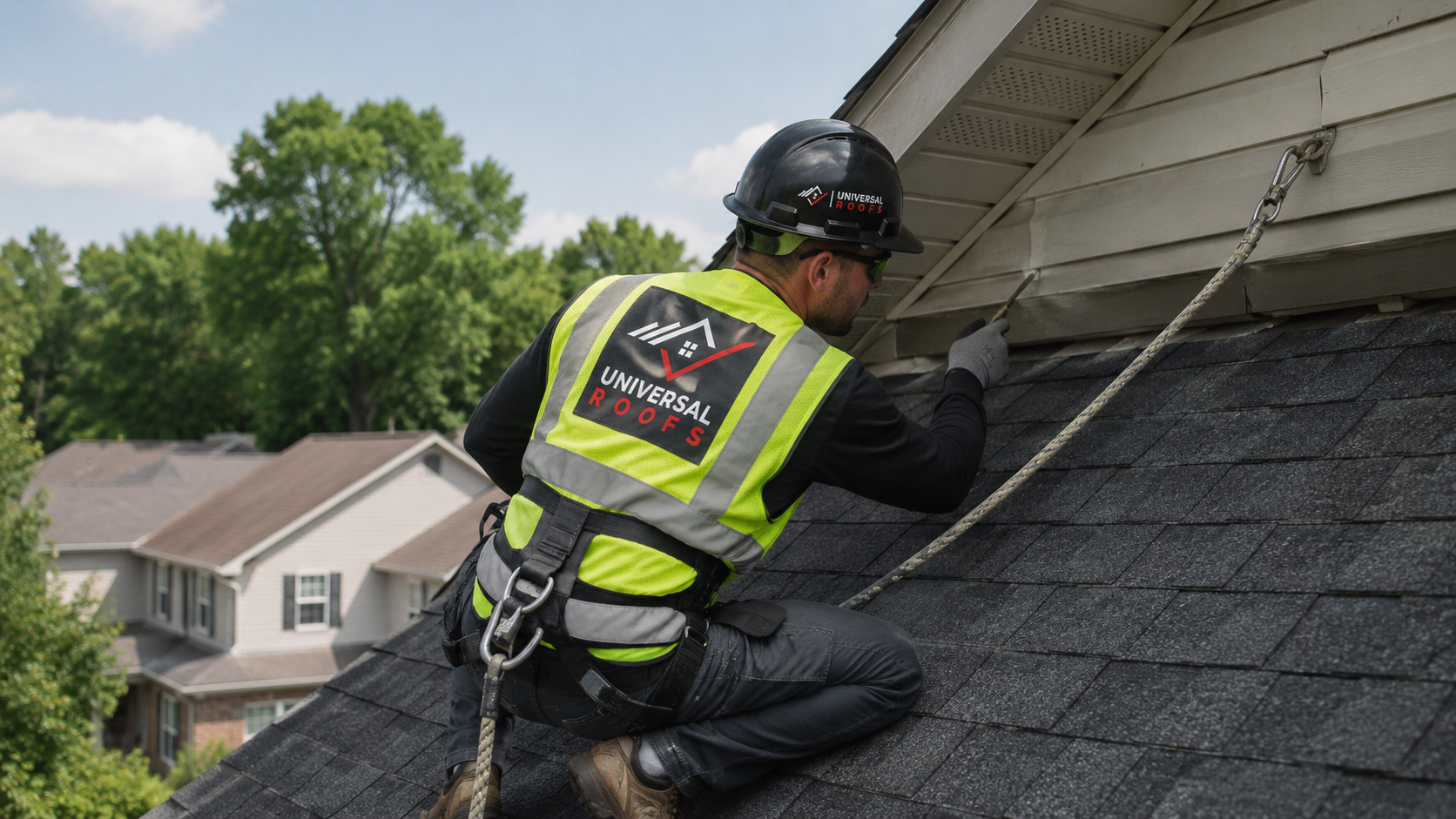
R-Values, Ontario Building Code and Ventilation Requirements
Current Ontario Building Code requirements for new construction in this climate zone call for approximately R-60 in flat attic areas, with lower minimums permitted where framing depth genuinely restricts it, such as cathedral ceilings and low heel truss conditions. Existing homes are not legally required to be brought to that level, but R-60 is the sensible target for any voluntary upgrade because the incremental material cost between R-50 and R-60 is small.
Ventilation is governed alongside insulation. The Code generally requires attic ventilation of roughly one square metre of net free vent area per 300 square metres of insulated ceiling, distributed so that a meaningful share of that area sits low at the soffits and the balance sits high at the ridge or roof vents. This balance matters: adding insulation without preserving intake at the eaves creates a warm, moist attic and can produce frost on the underside of the sheathing in midwinter.
Three details separate a good installation from a mediocre one:
- Baffles at every rafter bay to hold a clear air channel from the soffit to the open attic, installed before insulation is blown.
- An insulated, gasketed attic hatch, since an uninsulated hatch can undo a surprising share of the benefit of a full upgrade.
- Bathroom and kitchen exhaust ducted fully to the exterior, insulated along its run, never terminated inside the attic.
Because insulation, ventilation and the roof covering are one connected system, attic work often surfaces issues that belong to the roof itself. If an inspection reveals damaged sheathing or failing shingles, it usually makes sense to coordinate the roof replacement with the attic work rather than paying twice for access.
Comparing Insulation Materials for Burlington Attics
Material choice matters less than installation quality, but it still affects the cost, depth and suitability of attic insulation Burlington work. The comparison below covers the options most commonly specified for attics in this part of Halton Region.
| Material | R-value per inch | Depth for R-60 | Relative cost | Best suited to |
|---|---|---|---|---|
| Blown cellulose | R-3.2 to R-3.8 | 16 to 19 inches | Low to moderate | Open attics, good coverage around obstructions |
| Blown fibreglass | R-2.5 to R-3.2 | 19 to 24 inches | Low | Large open attics with adequate heel height |
| Mineral wool batt | R-3.8 to R-4.3 | 14 to 16 inches | Moderate to high | Accessible framing, fire and sound performance |
| Closed cell spray foam | R-6.0 to R-6.5 | 9 to 10 inches | High | Cathedral sections, low clearance perimeters |
| Hybrid foam plus blown | Varies | Varies | Moderate to high | Air sealing at the deck with economical depth above |
For most attic insulation Burlington projects, blown cellulose or blown fibreglass over a properly air sealed ceiling gives the best value. Spray foam earns its cost where depth is physically limited or where the attic doubles as conditioned space. A hybrid approach, using a thin layer of foam to seal the trouble spots and blown material for depth, is a practical compromise on complex roofs.
What a Professional Attic Project Involves From Start to Finish
A well run attic insulation Burlington job follows a predictable sequence, and most homes are completed in a single day. Larger properties or projects involving removal run to two days.
- Assessment. Physical entry to the attic, depth measurement in multiple locations, inspection of the sheathing for frost staining or mould, verification of soffit intake, and documentation of every ceiling penetration.
- Preparation. Walkboards and lighting set up, floor protection through the home, and containment at the hatch to keep dust out of living space.
- Removal, where required. Vacuum extraction of contaminated or failed insulation into sealed bags, followed by cleaning of the joist cavities.
- Air sealing. Fire rated foam and caulking at top plates, wire and pipe penetrations, fan housings and chimney chases, plus gasketing of the hatch.
- Baffles and ventilation. Installation of rafter baffles, correction of blocked soffits and confirmation of exhaust routing.
- Insulation. Blown or batt material installed to the specified depth, with depth markers left in place so the result is verifiable.
- Verification. Photographic documentation and a written record of installed R-value, which matters for rebates and for resale.
Ask for photographs before and after. An attic is the easiest place in a house to cut corners because almost no homeowner climbs up to check. Our full description of attic insulation and ventilation services outlines what should be included in a complete scope of work.
Rebates, Timing and the Mistakes Worth Avoiding
Rebate programs that apply to attic insulation Burlington retrofits change from year to year in Ontario, and eligibility usually depends on a pre and post retrofit energy assessment performed by a registered energy advisor. Before committing, confirm what is currently available through your utility and through federal programs, and confirm the sequence, because most programs will not fund work completed before the initial assessment. Keep every invoice and the written record of installed R-value.
On timing, spring and autumn are the most comfortable seasons for attic insulation Burlington work simply because attic temperatures are tolerable, which means crews work more carefully. Summer installations are entirely feasible and are often scheduled early in the day. Winter work is possible but any roof repairs discovered during the assessment become harder to complete safely.
The mistakes we see most often on attic insulation Burlington properties are consistent:
- Adding depth without air sealing, which traps moisture and underdelivers on savings.
- Burying soffit intake, which starves the attic of ventilation and invites frost and mould.
- Leaving bathroom fans venting into the attic, a leading cause of sheathing deterioration.
- Insulating over a roof that is near the end of its service life, which means paying for the same access twice.
- Ignoring the attic hatch and the interior soffit drops, where a disproportionate share of leakage occurs.
If your roof shows granule loss, curling, or repeated leak repairs, it is worth resolving that first. A straightforward roof repair before insulation protects the investment you are about to make above the ceiling.
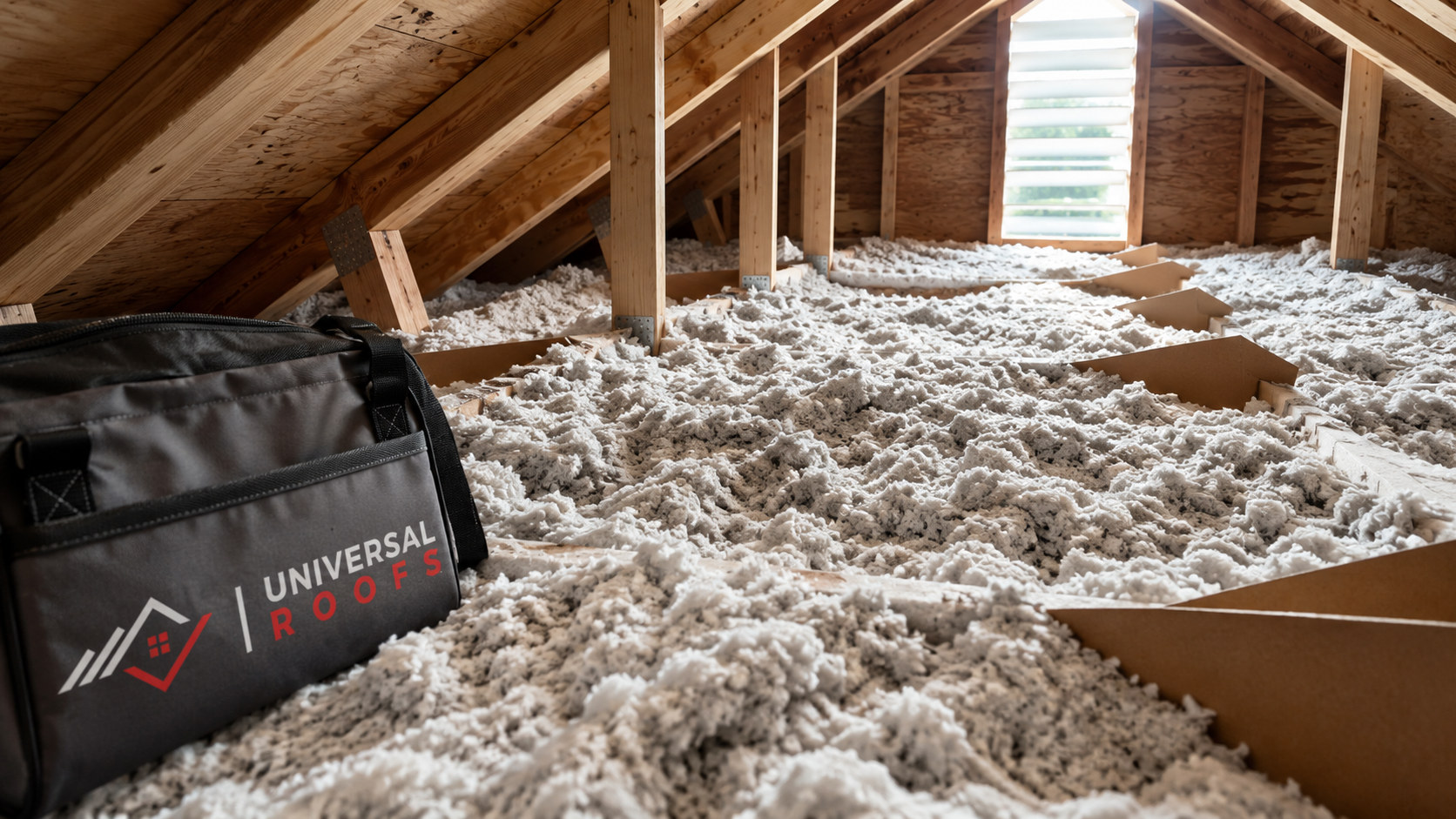
Frequently Asked Questions
How much does attic insulation cost in Burlington?
What R-value should my attic have?
How long does an attic insulation Burlington project take?
Will more insulation stop ice dams?
Can I just add new insulation on top of the old?
Do rebates apply to attic insulation in Burlington?
Book Your Attic Insulation Burlington Assessment Today
An attic is easy to ignore and expensive to get wrong. A proper attic insulation Burlington assessment tells you exactly what you have, what it is costing you, and what a realistic upgrade would return. Universal Roofs is based in the Toronto area and serves homeowners throughout Burlington and Halton Region, with attic insulation, air sealing, ventilation correction and roofing handled by the same team so nothing falls between trades. You can read what past clients have said on our reviews page.
Call us today at (416) 732-2421 or request a free consultation. We will measure your existing insulation depth, check ventilation and air leakage, and give you a written scope with honest cost and savings ranges.
Universal Roofs proudly serves Burlington, Oakville, Milton and communities across Halton Region and the wider GTA.