
Metal roofing in Oakville has moved from a niche choice to a mainstream one over the past decade, and the reason is simple: homeowners are tired of replacing asphalt shingles every fifteen to twenty years. A properly installed steel or aluminum roof can carry a house for forty to sixty years through Halton Region winters, spring ice storms and the humid summers that shorten the life of organic-mat shingles. That durability comes at a higher upfront price, and understanding that trade off is the whole decision.
This guide covers what a metal roof actually costs in Oakville in 2026, which profiles suit which housing styles, how installation works on a typical Halton detached home, and where metal roofing genuinely underperforms compared with asphalt. Prices are given as ranges because every roof has its own pitch, complexity, deck condition and access constraints. Anyone quoting a firm per square foot number before walking your roof is guessing.
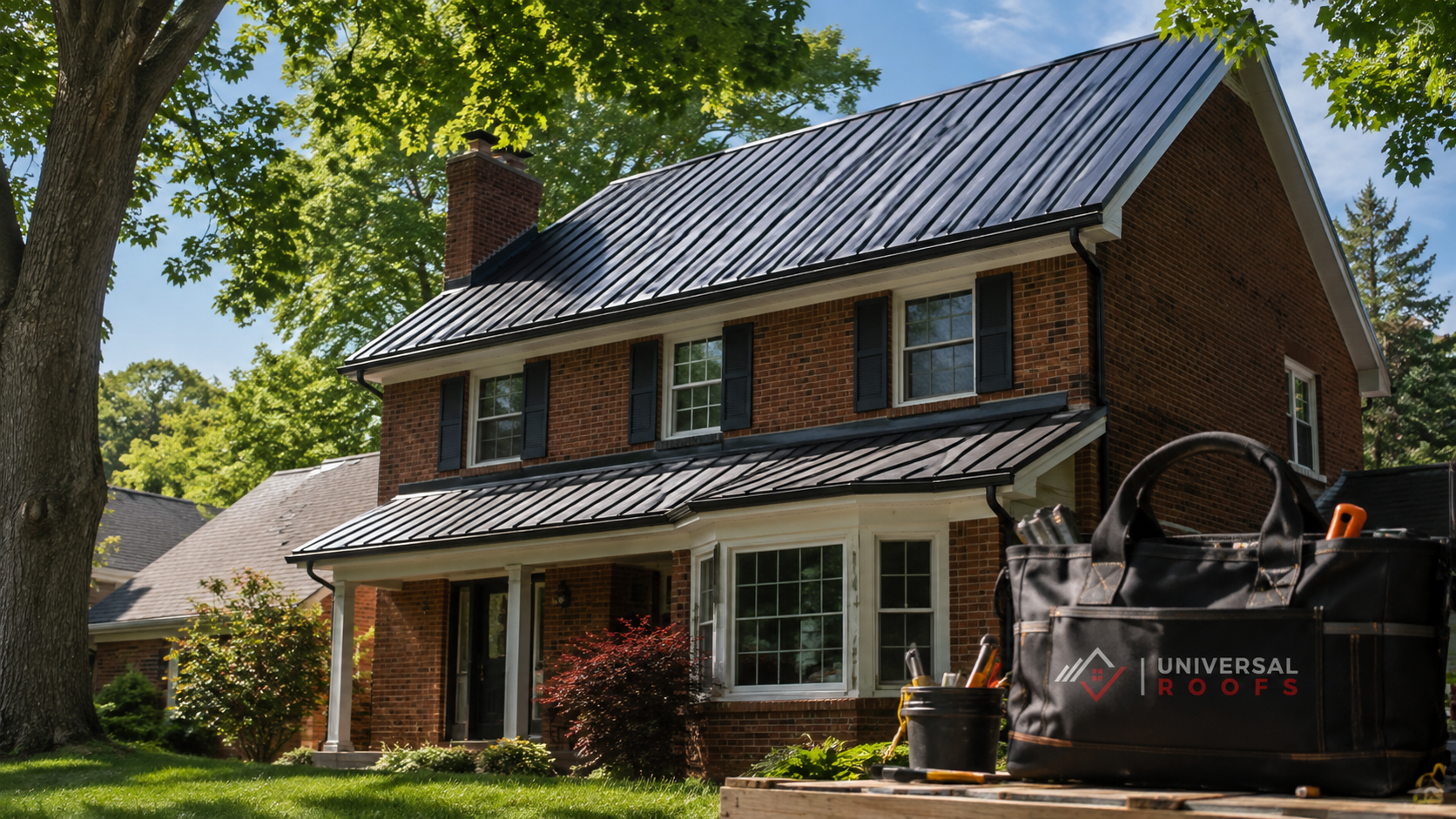
Why Metal Roofing in Oakville Is Worth Considering
Oakville’s housing stock is unusually mixed. You have postwar bungalows and side splits on generous lots in the older south end, dense subdivisions built from the 1980s through the 2000s in the north, larger estate properties on wooded lots, and a stock of older brick homes closer to the lake. Each of those categories has different roof geometry, different sight lines from the street, and different budget expectations. Metal roofing in Oakville performs well across all of them, but the right product varies considerably.
The practical case rests on four things. Steel and aluminum shed snow and meltwater faster than asphalt, which reduces the standing water that drives ice damming at the eaves. Metal panels do not absorb moisture, so freeze and thaw cycling does not delaminate them the way it eventually splits an aging shingle. Coated steel holds its colour far longer than a granulated asphalt surface exposed to south facing summer sun. And because a metal roof is typically the last roof a homeowner buys, the lifetime cost per year is often lower even though the cheque is larger.
There is also a resale consideration. In neighbourhoods where houses regularly trade at prices well above the provincial average, a roof with forty years of remaining service life is a real selling point, and buyers’ home inspectors flag it favourably. That said, metal is not automatically the correct answer. On a low slope rear addition, a properly detailed flat roofing membrane will usually outperform a metal panel, and on a heavily dormered roof the labour premium can push metal past the point where it pays back.
Metal Roofing Oakville Cost Breakdown for 2026
Installed pricing for metal roofing in Oakville in 2026 depends far more on the system you choose than on the brand of the panel. Exposed fastener corrugated steel sits at the bottom of the range and is normally used on garages, shops and agricultural style outbuildings. Concealed fastener standing seam sits at the top of the mainstream range. Stamped metal shingle and tile profiles fall in between and are the usual choice when a homeowner wants the longevity of metal without the contemporary look of vertical seams.
The numbers below reflect fully installed cost including tear off of one existing shingle layer, underlayment, flashing, trim and disposal. They are expressed per square foot of actual roof area, not floor area. A typical Oakville two storey detached home has roughly 1,800 to 2,600 square feet of roof surface, and a bungalow of the same floor area often has more.
| Metal roofing system | Installed cost per sq ft (2026) | Typical Oakville project total | Expected service life |
|---|---|---|---|
| Exposed fastener corrugated steel | $8.00 to $12.00 | $15,000 to $28,000 | 25 to 40 years |
| Stamped steel shingle or shake profile | $11.00 to $16.50 | $21,000 to $38,000 | 40 to 50 years |
| Steel standing seam, concealed fastener | $14.00 to $22.00 | $27,000 to $52,000 | 45 to 60 years |
| Aluminum standing seam | $16.00 to $26.00 | $31,000 to $60,000 | 50 to 70 years |
| Copper or zinc, architectural | $28.00 to $48.00 | $55,000 and up | 70 to 100 years |
For comparison, architectural asphalt shingles on the same Oakville homes generally run $6.00 to $9.50 per square foot installed in 2026, with a realistic service life of eighteen to twenty five years given our freeze and thaw pattern. That means metal roofing in Oakville typically costs somewhere between 1.8 and 2.6 times as much upfront, while lasting between two and three times as long. Over a sixty year horizon the two options land closer together than the initial quotes suggest, and metal avoids the disruption and disposal cost of two additional tear offs.
Several factors move a quote within those ranges. Roof pitch above 8:12 requires staging and fall protection that adds labour. Multiple valleys, dormers, chimneys and skylight curbs each require custom flashing. Removing two or three existing shingle layers adds disposal weight. Replacing rotted sheathing is normally billed per sheet, commonly in the range of $95 to $160 per four by eight sheet installed. And a home with tight side yard access, common in older Oakville streets and in newer link housing, slows material handling for the whole crew.
Comparing Metal Roofing Materials and Profiles
The word metal covers several very different products. Steel with a Galvalume or galvanised substrate and a baked polyester or PVDF finish accounts for the overwhelming majority of residential metal roofing in Oakville and across the GTA. Aluminum is lighter, will not rust, and is the sensible upgrade for properties closer to the lake where salt laden air and moisture are a factor. Copper and zinc are architectural products used on turrets, bay roofs and heritage details more often than on entire houses.
Gauge matters more than most homeowners expect. A 29 gauge panel is thinner and cheaper; a 26 gauge panel resists oil canning and hail denting noticeably better; 24 gauge is the standard for premium standing seam. Finish matters as well. A PVDF or Kynar based coating holds colour and gloss far longer than a standard polyester, which is why the same panel profile can carry a fifteen year or a forty year finish warranty depending on what is sprayed on it.
| Material | Relative cost | Weight per 100 sq ft | Best suited to | Main limitation |
|---|---|---|---|---|
| Galvalume steel, 26 to 24 gauge | Baseline | Roughly 100 to 150 lb | Most Oakville detached homes and subdivisions | Cut edges need proper detailing to avoid corrosion |
| Aluminum, 0.032 to 0.040 in | 15 to 25 percent higher | Roughly 45 to 70 lb | Lakeside exposure, homes with limited structural capacity | Softer, dents more easily from impact |
| Stone coated steel | Similar to standing seam | Roughly 140 to 170 lb | Homes where a tile or shake look is wanted | Granule loss over decades, harder to source matching stock |
| Copper | Two to three times steel | Roughly 100 to 130 lb | Heritage brick homes, bay and turret accents | Cost, and the patina change is not to everyone’s taste |
| Zinc | Two to three times steel | Roughly 110 to 140 lb | Contemporary custom builds on estate lots | Limited installer pool in the GTA |
Profile choice for metal roofing in Oakville is partly aesthetic and partly technical. Standing seam runs vertically from ridge to eave with no fasteners exposed to weather, which is why it is the most watertight residential option and why it works on lower pitches than stamped panels. Stamped shingle and shake profiles install in courses like conventional shingles, hide minor deck irregularities better, and read as more traditional from the street, which matters on older brick homes and on subdivisions with strong architectural consistency.
The Real Advantages of a Metal Roof
Longevity is the headline, but it is not the only benefit of metal roofing in Oakville. The following advantages hold up in practice across Halton Region installations.
- Snow and ice performance. Smooth coated panels release snow loads rather than holding them, which reduces the meltwater refreeze cycle that builds ice dams at eaves and in valleys. This is not a substitute for insulation and ventilation, but it helps.
- Wind resistance. Properly clipped standing seam systems are commonly rated well beyond the wind speeds Oakville sees, including the lake driven gusts that lift shingle tabs on exposed corner lots.
- Fire classification. Metal roofing assemblies are non combustible and typically achieve a Class A rating when installed over an approved underlayment.
- Weight. Steel is lighter than concrete tile and comparable to or lighter than a double layer of asphalt, so structural upgrades are rarely required on a standard framed roof.
- Solar readiness. Standing seam accepts clamp on solar mounting without penetrating the roof surface, which is a meaningful advantage if photovoltaic panels are anywhere in your plans.
- Reduced attic heat gain. Reflective finishes lower peak summer surface temperature, which combined with sound attic insulation and ventilation work can moderate second floor temperatures.
- Environmental profile. Steel roofing carries high recycled content and is fully recyclable, whereas asphalt shingles almost always go to landfill.
One benefit that gets oversold is energy savings. A reflective metal roof does reduce cooling load, but on a well insulated Ontario home the annual saving is modest, often in the range of five to fifteen percent of cooling cost rather than the dramatic figures used in some advertising. Treat energy savings as a bonus, not as the justification for the price difference.
The Drawbacks and Trade Offs of Metal Roofing in Oakville
An honest assessment has to include the reasons homeowners choose asphalt instead. Metal roofing in Oakville is not the correct answer for every property or every budget.
- Upfront cost. Doubling the price of a roof replacement is a real constraint, particularly for a homeowner who expects to move within five to seven years and will not recover the full premium at sale.
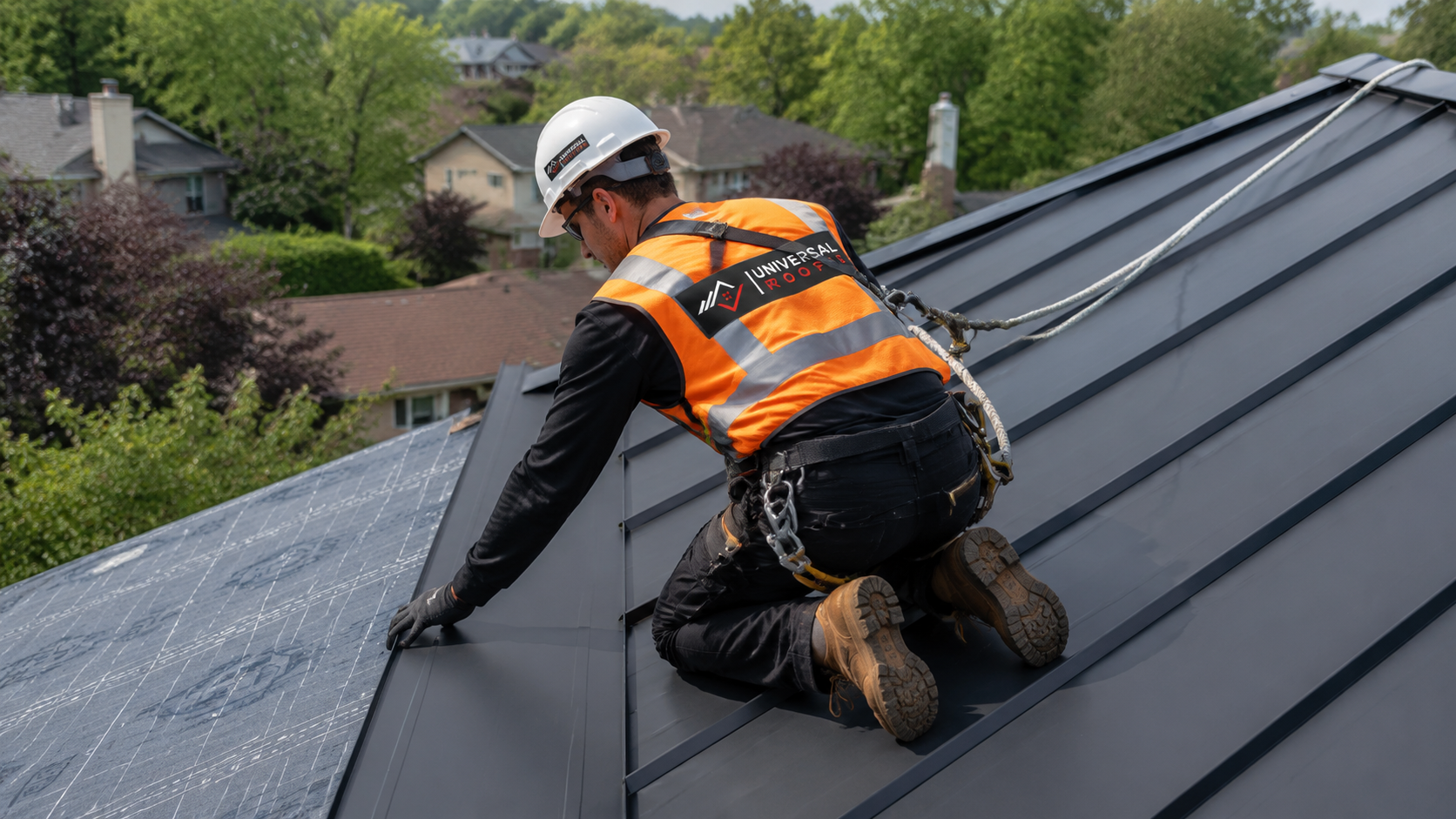
- Installer skill is not optional. Metal is far less forgiving than shingles. Poor flashing at a chimney, a valley detailed without proper expansion allowance, or panels fastened too tightly will cause problems that are expensive to correct later.
- Repairs are more involved. Swapping a damaged shingle is straightforward. Replacing a damaged standing seam panel mid slope often means unclipping adjacent panels, so budget accordingly and use a contractor who does metal roof repair work regularly.
- Noise, with caveats. A metal roof over solid sheathing, underlayment and an insulated attic is only marginally louder than asphalt in rain. Metal over open purlins, as on a barn, is genuinely loud. Make sure any comparison you hear refers to the right assembly.
- Denting. Aluminum and thinner steel gauges can dent from large hail or a dropped tool. Textured and stone coated finishes hide this better than smooth flat panels.
- Oil canning. Broad flat pans can show slight waviness in raking light. This is a cosmetic characteristic of the material, not a defect, and striations or narrower pans reduce it.
- Colour matching later. Adding a dormer or an addition ten years on rarely produces a perfect finish match, since coatings weather and product lines change.
There is also a scheduling reality. Skilled metal crews in Halton Region are booked well ahead through the summer and early autumn, so a spring enquiry for a July installation is realistic while an August enquiry for an August installation usually is not.
How a Metal Roof Installation Works on an Oakville Home
Most residential metal roofing in Oakville follows the same sequence, and knowing it makes it much easier to evaluate competing quotes. The process begins with a measured assessment: pitch, roof area, penetrations, deck condition where visible, ventilation adequacy, and the condition of eavestroughs and fascia. A responsible contractor will also look in the attic, because ventilation problems that were tolerable under asphalt become expensive under a fifty year roof.
Tear off comes next. Existing shingles are stripped to the deck. Installing metal over old shingles is possible in some assemblies but is generally a false economy on a home you intend to keep, since it hides deck rot and complicates flashing. Damaged sheathing is replaced, then a high temperature synthetic underlayment goes down across the field with a self adhered ice and water membrane at eaves, valleys, and around every penetration. Ontario practice is to run that membrane well past the interior wall line at the eaves to protect against ice damming.
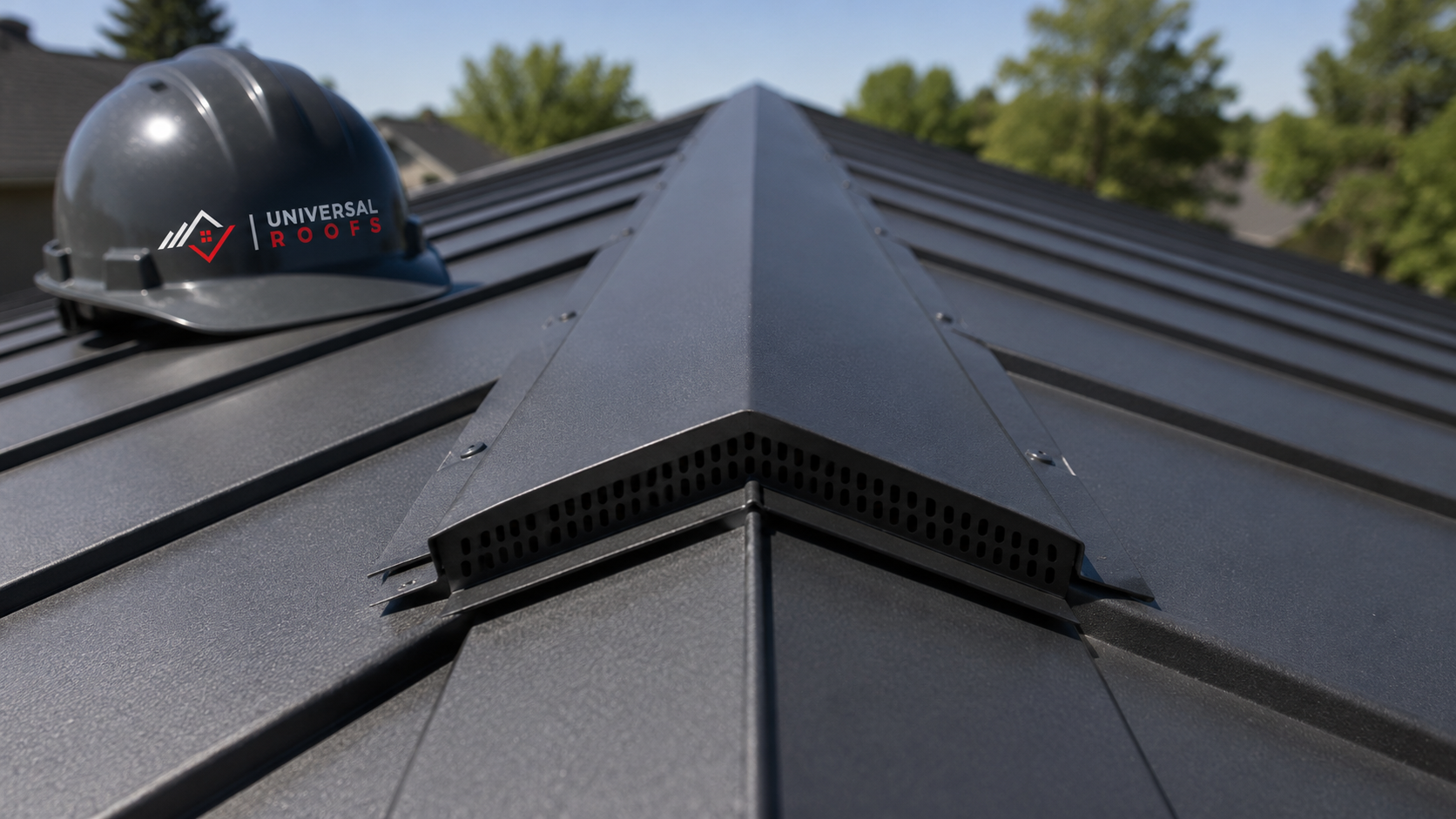
Flashing and trim are where the job is won or lost. Drip edge, valley metal, chimney step and counter flashing, sidewall flashing, pipe boots rated for metal profiles, and curb flashing for any skylight installation or replacement all get detailed before or as panels go on. Panels are then set, clipped or fastened per the manufacturer’s system, and closed at ridge and hips with vented closures that keep the attic exhaust path open.
On permits: in Ontario, a like for like re roof that does not alter the structure generally does not require a building permit, while structural repairs, changes to the roof framing, or work tied to an addition normally do. Requirements are administered locally, so confirm current rules with the Town of Oakville before work begins rather than assuming. Whoever you hire should carry WSIB coverage and liability insurance, and should be willing to show both without being asked twice.
Installation timelines for metal roofing in Oakville are shorter than most homeowners expect. A straightforward bungalow can be completed in two to four working days. A larger two storey with multiple dormers and valleys typically runs four to eight days. Weather is the main variable, since panels are not set in high wind and underlayment is not left exposed through a storm. If you are weighing a full roof replacement in metal versus asphalt, ask each contractor for their expected crew size and day count, because a suspiciously short schedule usually means shortcuts in flashing.
Matching Metal Roofing to Oakville’s Housing Styles
The right metal roofing system depends heavily on what kind of house you own, and Oakville offers a wide spread of them. Postwar bungalows and side splits tend to have simple gable or hip geometry with long uninterrupted runs, which is close to ideal for standing seam: fewer seams, fewer penetrations, and a lower cost per square foot because the crew is not constantly cutting around obstacles. Those homes often have shallower pitches as well, where concealed fastener systems clearly outperform stamped profiles.
Subdivision homes built from the 1980s onward are a different problem. They frequently combine steep front facing gables, multiple dormers, complex valley intersections and short panel runs. Metal still works, but labour rises sharply and stamped metal shingle profiles often make more sense both visually and financially. Where a neighbourhood has strong architectural consistency, a shake or slate style metal profile blends in where a bold vertical seam would stand out.
Older brick homes closer to the lake reward careful material choice. Aluminum resists the corrosive effect of moist lakeside air better than steel, and copper accents on bay roofs and porch canopies suit the period detailing. Estate properties on wooded lots have their own consideration: heavy overhanging tree cover means constant debris load, and metal sheds leaves and needles better than asphalt while also being far less prone to moss and algae staining on north facing slopes.
Whatever the house, the ventilation and insulation assembly underneath matters as much as the panel above. Homeowners looking at the full picture of roofing services available in Oakville should treat attic performance, eavestrough capacity and flashing details as part of the same project rather than as separate line items to defer.
Maintenance, Warranties and Long Term Ownership
Metal roofing in Oakville is low maintenance, not no maintenance. The tasks are simple and infrequent, but skipping them for a decade will shorten the life of a system that should outlast the mortgage. The schedule below reflects what actually needs attention on a residential steel or aluminum roof in this climate.
| Task | Frequency | Why it matters | Typical cost if hired out |
|---|---|---|---|
| Visual inspection of flashing and penetrations | Annually, plus after severe storms | Flashing and pipe boots fail long before panels do | $180 to $350 per visit |
| Clear eavestroughs and valleys of debris | Twice yearly on treed lots | Blocked valleys hold water and organic debris against seams | $150 to $325 |
| Retighten or replace exposed fasteners | Every 8 to 12 years, exposed fastener systems only | Neoprene washers harden and shrink over time | $450 to $1,200 |
| Check sealant at chimney and sidewall counter flashing | Every 5 years | Sealant is the shortest lived component in the assembly | $250 to $700 |
| Wash panels to remove staining and salt residue | Every 3 to 5 years, optional | Preserves finish appearance, particularly on lighter colours | $400 to $900 |
Warranties on metal roofing in Oakville come in two parts and are routinely confused. The manufacturer’s finish warranty covers chalking, fading and coating adhesion, commonly twenty five to forty years on a PVDF coating and less on standard polyester. The substrate warranty covers perforation from corrosion. Neither covers workmanship. The installer’s own labour warranty, usually five to fifteen years, is the one that pays for a leak caused by a poorly detailed valley, so read it and confirm the company has the track record to stand behind it.
Ownership economics are worth doing on paper. If asphalt costs roughly $8.00 per square foot and lasts twenty two years, that is about $0.36 per square foot per year. Standing seam at $18.00 per square foot over fifty years is about $0.36 as well, before counting the avoided cost of two future tear offs, two rounds of disposal and two weeks of disruption. That rough parity is the honest case for metal roofing in Oakville: not that it is cheaper today, but that it is rarely more expensive over the life of the house.
How to Choose a Metal Roofing Contractor
With metal roofing in Oakville, the panel you buy matters less than the crew that installs it. Ask each contractor how many metal roofs they completed in the last two years, and specifically how many in the profile you are considering. Ask whether the crew fabricates flashing on site, since custom bending is what makes chimneys and sidewalls watertight. Ask for the manufacturer’s installation manual for the system quoted, and confirm the quote follows it rather than substituting a cheaper underlayment or fastener.
Quotes should be compared line by line, not on the bottom number. Confirm each includes tear off of all existing layers, an allowance or unit price for deck replacement, ice and water membrane coverage at eaves and valleys, all new flashing rather than reuse of existing metal, ridge ventilation, disposal, and cleanup. A quote that is twenty percent cheaper almost always omits one of those items. Reading independent customer reviews and working through a contractor’s roofing questions and answers before signing is time well spent on a purchase you make once.
How much does metal roofing in Oakville cost in 2026?
How long does a metal roof last in Ontario’s climate?
Is a metal roof noisy when it rains?
Can metal roofing be installed over existing shingles?
Do I need a permit for a metal roof in Oakville?
Does metal roofing in Oakville help with ice dams?
Get a Straight Answer on Metal Roofing in Oakville
A metal roof is a forty to sixty year decision, and it deserves a proper assessment rather than a price over the phone. Universal Roofs is a Toronto area roofing company serving Oakville and the surrounding Halton and Peel communities, and our estimates cover roof measurement, deck and ventilation condition, the specific system recommended for your home, and a line by line scope so you can compare quotes fairly.
Call us today at (416) 732-2421 or request a free consultation to discuss whether metal is the right choice for your property, and what it would cost.
Universal Roofs serves Oakville and communities across the Greater Toronto Area with residential and commercial roofing, flat roofing, skylights and attic work.