
Hiring a roofer is one of the few home decisions where the quality of the work stays hidden until something goes wrong, which is exactly why comparing roofing companies in Oakville deserves more attention than most homeowners give it. A roof is not a product you can inspect on a showroom floor. You are buying labour, sequencing, and judgment, and almost all of it disappears under the finished shingles within a few days. The homeowners who end up happy five years later are usually the ones who asked harder questions before signing, not the ones who found the lowest number. Comparing roofing companies in Oakville properly takes an afternoon of homework, and that afternoon is the cheapest insurance available on a project this size.
This guide walks through how to evaluate roofing companies in Oakville in 2026: what credentials actually matter, what a fair price looks like for the housing stock in this part of Halton Region, how to read a quote line by line, what the Ontario Building Code requires, and which warranty promises hold up. The goal is simple. By the end, you should be able to sit across from three different estimators and know which one is quoting the same scope, which one is cutting corners, and which one is charging you for work your roof does not need.
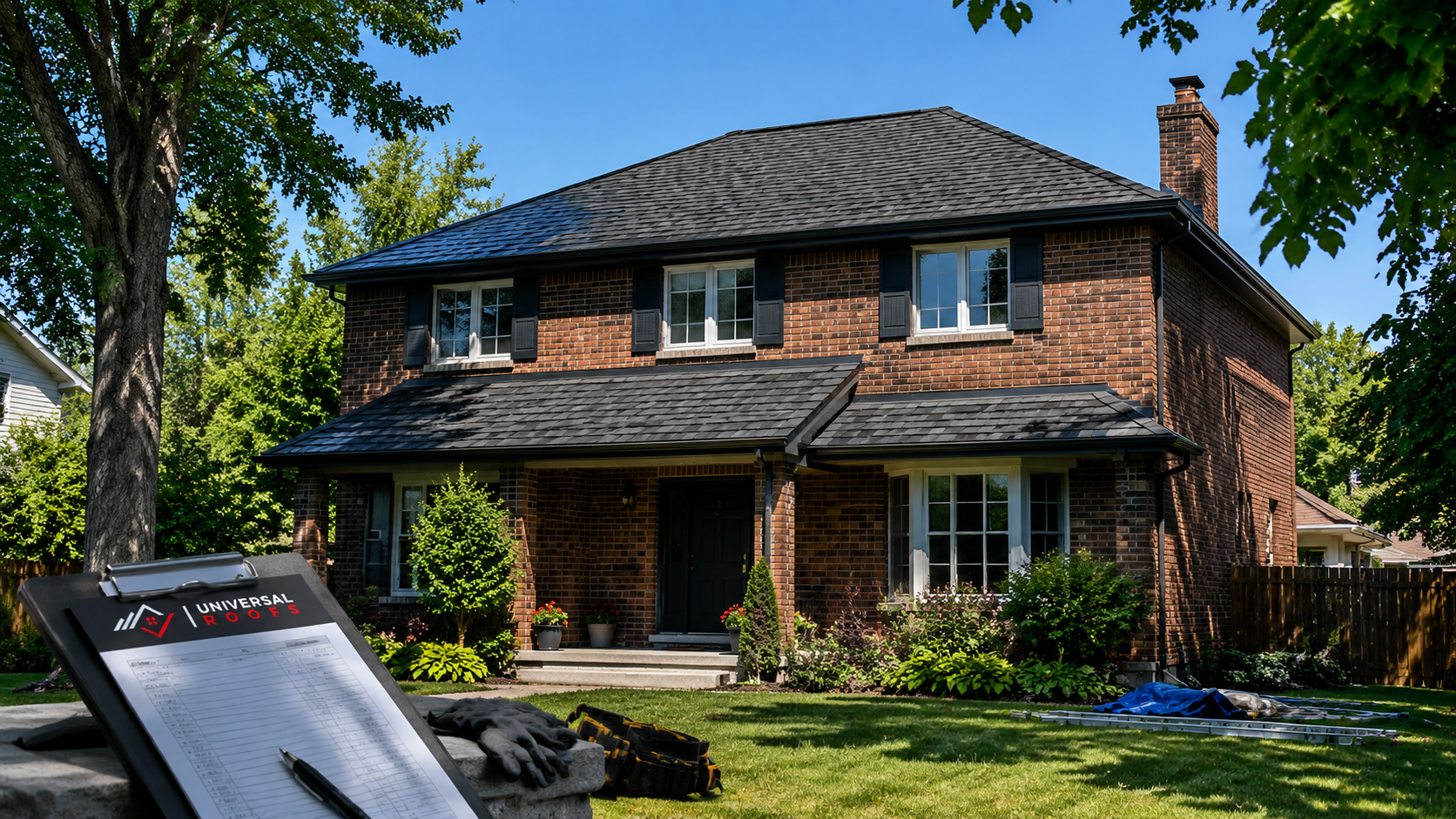
What Separates Strong Roofing Companies in Oakville From the Rest
Every contractor will tell you they use quality materials and stand behind their work. That sentence costs nothing to say. What actually differentiates roofing companies in Oakville is far less glamorous: how they handle the parts of the roof that are not shingles.
Shingles are commodity items. Two companies quoting the same architectural laminate shingle are buying essentially the same product from the same distribution network. The difference in outcome comes from the underlayment choices, the eave protection depth, how the valleys are built, whether old flashing is reused or replaced, whether the plywood deck is properly inspected and refastened, and whether the attic ventilation is corrected or simply left as found. A crew can install a premium shingle over a poorly prepared deck and it will look flawless for about four winters.
When you compare roofing companies in Oakville, listen for whether the estimator talks about your specific roof or recites a general sales pitch. Did they go into the attic? Did they measure the existing ventilation? Did they mention the condition of the chimney flashing or the state of the fascia? An estimator who spends twenty minutes on your property and quotes from a satellite measurement is quoting an average house, not yours.
The other reliable signal is documentation. Serious companies produce a written scope that names materials by manufacturer and product line, states quantities, defines what happens if rotten decking is found, and puts a number on that contingency in advance. Weak quotes stay vague on purpose, because vagueness is where change orders live. If you shortlist three roofing companies in Oakville and only one of them hands you a scope document with product names and quantities on it, you have already learned something important about all three.
Oakville’s Housing Stock and Why It Changes the Roofing Conversation
Oakville is not architecturally uniform, and that matters more than most homeowners expect. The town includes postwar bungalows and side-splits with simple gable roofs, mid-century brick two-storeys, large tracts of subdivision housing built from the 1980s through the 2000s, newer infill and custom builds, and estate properties on generous lots with genuinely complicated roof geometry. Each of those categories behaves differently on a quote, and experienced roofing companies in Oakville price them differently for good reason.
Older bungalows and side-splits usually have straightforward roof planes, low profiles, and easy ladder access. They are among the least expensive homes to reroof per square foot, but they often carry legacy problems: undersized attic ventilation, original board sheathing rather than plywood, and layered shingles from decades of reroofing rather than tear-off. Any honest estimator on an older Oakville bungalow will raise the question of how many existing layers are up there, because that changes both the disposal cost and whether the deck can be assessed properly.
Subdivision two-storeys from the 1980s onward tend to have steeper pitches, more dormers, more valleys, and more intersecting planes. Steeper pitch means slower, safer work and more material waste at hips and valleys. It is normal for two houses of identical square footage to differ by several thousand dollars purely because one has a 4:12 pitch and the other has an 8:12 with three dormers.
Estate homes and custom builds often combine multiple roof systems on one structure: sloped asphalt or metal over the main body, a low-slope membrane over a rear addition or a garage, and sometimes cedar or slate on a feature elevation. These properties need a contractor comfortable with more than one system, because the failure point on a mixed roof is almost always the transition between systems, not the field of either one. If you own a home like this, look specifically at whether the company handles low-slope and flat roofing in-house or subcontracts it, and ask who warranties the transition detail.
Proximity to the lake also deserves a mention, without overstating it. Homes in the south end of town sit in a more exposed wind environment than sheltered inland streets, and wind uplift at rakes, ridges and eaves is a real design consideration. Proper starter strip at both the eave and the rake, correct nailing pattern, and sealed ridge caps matter more on exposed elevations than they do on a protected mid-block lot. Roofing companies in Oakville that work the south end regularly will raise wind detailing without being prompted.
Credentials to Verify Before You Sign Anything
Ontario does not license roofers the way it licenses electricians. There is no provincial roofing trade certificate that a homeowner can look up, which means the verification burden sits with you. The good news is that the checks are quick, and any legitimate company will produce the documents without hesitation. The ones that stall, deflect, or promise to send it later are telling you something useful. Run every one of the roofing companies in Oakville on your shortlist through the same checklist below, and do it before you discuss price.
| What to verify | How to check it | Why it matters |
|---|---|---|
| WSIB clearance certificate | Ask for a current certificate, or request a clearance search through WSIB using the company’s legal name | Without coverage, an injured worker on your property can create liability exposure for you as the homeowner |
| Commercial general liability insurance | Request the certificate of insurance directly; $2 million is the common minimum, $5 million is typical for larger firms | Covers damage to your home, your neighbour’s property, or third parties during the work |
| Legal business name and registration | Confirm the operating name matches the name on the contract, the invoice, and the insurance certificate | Mismatched names make warranty claims difficult to enforce later |
| Manufacturer certification | Ask which manufacturer programs the company is enrolled in and at what level | Enhanced system warranties are only available through certified installers |
| Written scope of work | Require a document naming products, quantities, deck repair rates and cleanup terms | A vague scope is the single most common source of disputes and change orders |
| Local references from Halton Region | Ask for addresses of recent jobs in Oakville, Burlington or Milton and drive by them | Confirms the company actually works in your area rather than travelling in for one-off jobs |
One clarification worth making: some of the best roofing companies in Oakville are not based in Oakville. A contractor headquartered elsewhere in the Greater Toronto Area that services the town regularly, keeps crews scheduled here, and answers warranty calls promptly is a better choice than a local outfit with no insurance and a cash-only pricing model. What matters is whether they genuinely service the area and will come back, not the postal code on their letterhead. You can review how a company describes its coverage of roofing services throughout Oakville as a starting point, then confirm with references.
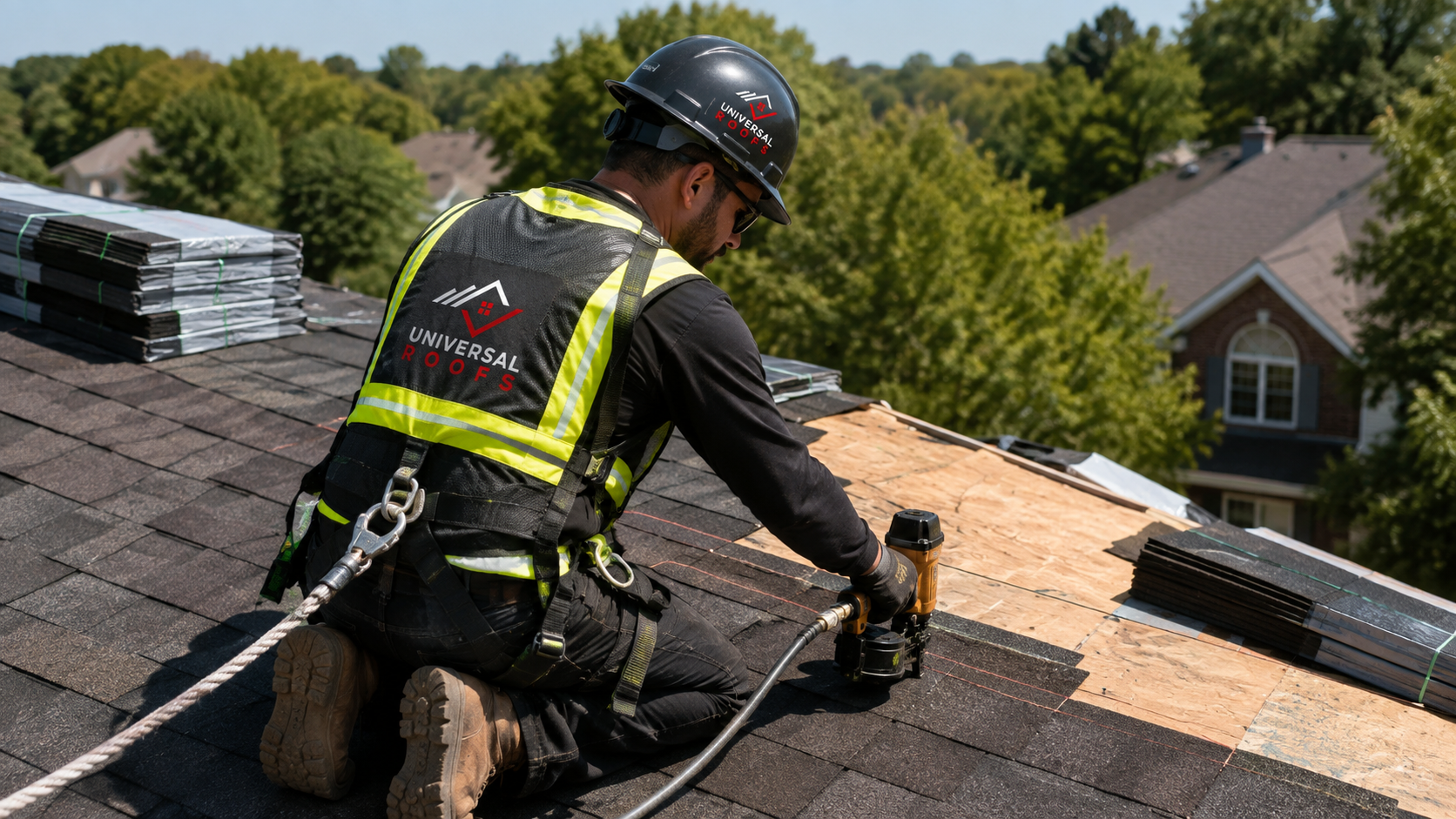
What Roofing Work Actually Costs in Oakville in 2026
Pricing conversations go badly when homeowners compare a number to a number instead of a scope to a scope. Before looking at the table below, understand what drives the figure: roof area measured in squares (one square equals 100 square feet), pitch, number of layers to tear off, complexity of the roof geometry, access, material selection, and how much deck repair is discovered once the old covering is removed.
The ranges below reflect typical 2026 pricing for full tear-off and replacement on residential properties in the western Greater Toronto Area, including disposal, standard underlayment, new flashing, and cleanup. They are ranges, not quotes. Your roof will land somewhere inside them based on the variables above, and reputable roofing companies in Oakville will explain which of those variables pushed your number toward the top or the bottom of the band.
| Home type or system | Typical roof size | 2026 price range | Main cost drivers |
|---|---|---|---|
| Postwar bungalow or side-split, asphalt shingles | 16 to 22 squares | $8,500 to $15,000 | Number of existing layers, board sheathing, ventilation upgrades |
| Subdivision two-storey, architectural asphalt shingles | 20 to 30 squares | $12,000 to $22,000 | Pitch, dormers, valleys, chimney and skylight flashing |
| Larger or estate home, complex asphalt roof | 30 to 50 squares | $22,000 to $40,000 | Geometry, access, staging, multiple roof planes |
| Standing seam or steel panel metal roof | 20 to 30 squares | $25,000 to $50,000 | Panel profile, fabrication, trim detailing, substrate prep |
| Cedar shake replacement | 20 to 30 squares | $28,000 to $55,000 | Grade of cedar, breather membrane, labour intensity |
| Low-slope membrane section (addition or garage) | Per 100 square feet | $900 to $1,800 | Membrane type, insulation, drainage, parapet and edge detail |
| Plywood deck replacement, if required | Per sheet | $85 to $150 installed | Sheet thickness, quantity, whether it was priced in advance |
Repairs follow different logic. A repair is priced on access, diagnosis time and materials rather than area, so a small leak in an awkward location can cost more than a larger repair on an easy slope. Typical roof repair work in the Oakville area runs roughly $400 to $900 for a straightforward shingle or vent boot repair, $600 to $1,800 for chimney reflashing, $900 to $2,500 for valley rebuilds, and $2,500 to $6,000 for reshingling a single slope. If a company will not quote a repair at all and pushes immediately to full replacement without showing you evidence, treat that as a signal rather than a diagnosis.
Beware of quotes that sit dramatically below the ranges above. In roofing, an unusually low number almost always means one of five things: no tear-off, thinner or omitted underlayment, reused flashing, no permit or disposal cost accounted for, or an uninsured crew. Any one of those saves real money on paper and costs far more later. When two roofing companies in Oakville are separated by 40 percent on the same house, the gap is almost never efficiency. It is scope.
How to Read a Roofing Quote Line by Line
A comparable quote should let you place three proposals side by side and identify exactly where they differ. Insist that every quote you receive addresses the following items explicitly. If an item is missing, it is not included, regardless of what was said verbally. Most roofing companies in Oakville will happily add a missing line once you ask, and the ones that will not are self-selecting off your list.
- Tear-off scope: how many layers are being removed, and whether disposal is included. Reroofing over an existing layer is cheaper but prevents deck inspection and shortens system life.
- Deck inspection and repair rate: a per-sheet price for plywood replacement agreed in writing before work starts, so a discovery does not become an open-ended charge.
- Eave protection: the type of ice and water membrane and how far up the slope it runs. The code minimum is a floor, not a target.
- Underlayment: synthetic versus felt, and the coverage across the full field of the roof.
- Flashing: whether chimney, wall, step, valley and skylight flashings are new or reused. Reused flashing is the most common hidden downgrade in a low quote.
- Ventilation: the type and quantity of intake and exhaust vents, and whether the existing configuration is being corrected.
- Fasteners: nail type, length and nails per shingle. Manufacturer specifications typically call for six nails per shingle on steeper pitches and in high-wind zones.
- Cleanup: magnetic sweep of the property, protection of landscaping and gardens, and disposal bin placement.
- Payment schedule: a modest deposit with the balance on completion. Large upfront payments transfer all the risk to you.
- Warranty terms: workmanship period in years, what voids it, and whether it is transferable on sale.
Homeowners frequently ask whether it is worth adding related work while the roof is open. Often it is. Replacing worn skylights, correcting attic insulation and ventilation, or upgrading vents during a tear-off is far cheaper than doing it as a separate project later, because the access and staging costs are already covered.
Permits, the Ontario Building Code and Local Requirements
In most cases, a straightforward reroof that replaces the existing covering with a similar covering does not require a building permit from the Town of Oakville. A permit is generally required once the work goes structural: replacing significant portions of the roof deck, altering or repairing trusses and rafters, changing the roof structure or slope, or adding new openings such as skylights. If you are unsure, the Town’s building services department will confirm, and a competent contractor will already know which side of the line your project falls on. Established roofing companies in Oakville deal with the Town’s permit process often enough that they can tell you within a minute of looking at your roof.
Permit or not, the Ontario Building Code still governs the work. Three requirements matter most to homeowners:
Eave protection. The code requires eave protection extending from the edge of the roof to a line not less than 300 millimetres inside the inner face of the exterior wall. In practice, most quality installers exceed that, running a full course or more of self-adhered ice and water membrane, and applying it in valleys and around penetrations as well. Ice damming is a genuine issue across the GTA, and the incremental material cost of extending coverage is small relative to the risk.
Attic ventilation. The code calls for unobstructed vent area of not less than 1/300 of the insulated ceiling area for typical sloped roofs, increasing to 1/150 for roofs with a slope less than 1 in 6. Just as important as the total is the balance between intake at the soffits and exhaust at or near the ridge. Adding exhaust vents without adequate intake can make performance worse, not better, and blocked soffits are extremely common in older homes where insulation was topped up without baffles.
Fall protection. Ontario’s construction regulations require fall protection for workers at height. This is not your paperwork to file, but it is directly observable. If a crew is working on a steep slope with no harnesses, no anchors and no guardrails, you are watching a company that cuts corners on the things you can see. Draw your own conclusion about the things you cannot.
Understanding Roofing Warranties and What Actually Gets Honoured
Warranty language is where marketing and reality diverge most sharply. A “lifetime warranty” headline usually refers to the manufacturer’s material coverage, which protects against manufacturing defects in the shingle itself. Manufacturing defects are rare. The overwhelming majority of roof problems come from installation and detailing, which the material warranty does not cover at all. This is why the workmanship coverage offered by roofing companies in Oakville is the number worth comparing, not the headline on the shingle brochure.
| Warranty type | Typical term | What it covers | Common limitations |
|---|---|---|---|
| Standard manufacturer material warranty | 25 to 50 years, often described as limited lifetime | Defects in the shingle product itself | Prorated after an initial period; excludes labour and tear-off after the early years |
| Enhanced manufacturer system warranty | 25 to 50 years, frequently non-prorated | Product plus specified accessory components, sometimes including labour | Requires a certified installer and a complete system of that manufacturer’s components; must be registered |
| Contractor workmanship warranty | 2 to 15 years | Installation errors, flashing and detailing failures, leaks caused by workmanship | Only as good as the company’s longevity; verify how long they have operated |
| Extended labour and tear-off coverage | Varies by program | Cost of removing and reinstalling material during a valid claim | Usually only available inside an enhanced system warranty |
| Transferable coverage on sale | Typically one transfer within a set window | Allows a buyer to inherit remaining coverage | Often requires notification within 30 to 60 days of sale and may carry a fee |
The practical takeaway is that a fifteen-year workmanship warranty from a firm with a long operating history is worth considerably more than a fifty-year material warranty from a company that may not exist in five years. When you evaluate roofing companies in Oakville, ask how long the business has operated under its current legal name, and ask what the process is when a homeowner calls about a leak in year seven. The answer to the second question tells you whether the warranty is a service commitment or a sales document.
Warning Signs Worth Walking Away From
Most roofing complaints trace back to signals that were visible before the contract was signed. The following are the ones that come up repeatedly across the GTA, and they apply equally when assessing roofing companies in Oakville.
- Door-to-door urgency. A knock at the door claiming your roof was flagged from the street, paired with a discount that expires today, is a sales tactic rather than an inspection finding.
- Large deposits. Requests for 50 percent or more before materials arrive on site shift the entire risk onto you. A deposit in the range of 10 to 25 percent is reasonable for a residential job.
- Cash-only pricing. A discount for cash with no written contract usually means no insurance, no WSIB coverage and no warranty you can enforce.
- No attic access requested. A contractor who never looks inside cannot assess ventilation, existing moisture damage or deck condition from the ground.
- Verbal scope only. If the details were discussed but never written down, they are not part of the agreement.
- Refusal to provide insurance documents. There is no legitimate reason to withhold a certificate of insurance from a prospective customer.
- Reused flashing presented as normal. Old flashing under new shingles is a leak with a delayed start date.
- No local references. A company that services Oakville regularly can name recent jobs nearby without difficulty.
It is also worth reading how a contractor responds to criticism. Published customer reviews matter less for the star average than for what happens in the replies. A company that answers a complaint with specifics, a timeline and a resolution behaves differently on your job than one that argues or stays silent.
Scheduling, Timelines and What the Job Week Looks Like
Roofing in southern Ontario is seasonal, and that seasonality affects both availability and price. Late spring through early autumn is peak season, when lead times stretch and the best crews book out weeks in advance. Self-adhered membranes and shingle sealing strips need warmth to bond properly, so shoulder-season and cold-weather installs require adjusted methods, including hand-sealing tabs. Work can be done successfully outside peak season, but it should be scoped deliberately rather than rushed. If you are calling roofing companies in Oakville in June for a July install, expect to wait; booking in late winter for a spring start is the reliable way to get the crew you want.
For a typical Oakville detached home, expect the following rhythm. Materials are delivered a day before or the morning of the start. Tear-off happens first and is the loudest, dustiest part of the job. The deck is inspected and repaired as needed. Eave protection, underlayment, drip edge and flashing go on, then the field shingles, hips, ridge and vents. Cleanup includes a magnetic sweep for nails across the driveway, walkways and gardens.
Most straightforward homes are completed in one to three days. Complex or estate roofs, mixed systems, or projects with significant deck replacement can run five days or longer. Weather delays are normal and should not be treated as a red flag; a crew that insists on shingling through rain is a bigger concern than one that pauses. Ask in advance how the company protects an open roof overnight or through an unexpected storm, because that answer reveals a great deal about how they run a site. It is one of the fastest ways to separate experienced roofing companies in Oakville from crews that are improvising.
If you are also weighing whether repair or full replacement is the right call this year, the honest answer depends on remaining service life and the number of active problem areas. A roof with one failed flashing detail and twelve years of shingle life left is a repair. A roof with widespread granule loss, curling, multiple leak points and an original installation date past its expected term is a candidate for full roof replacement. A trustworthy estimator will show you photographs of what they found and let you make that call with evidence in hand.
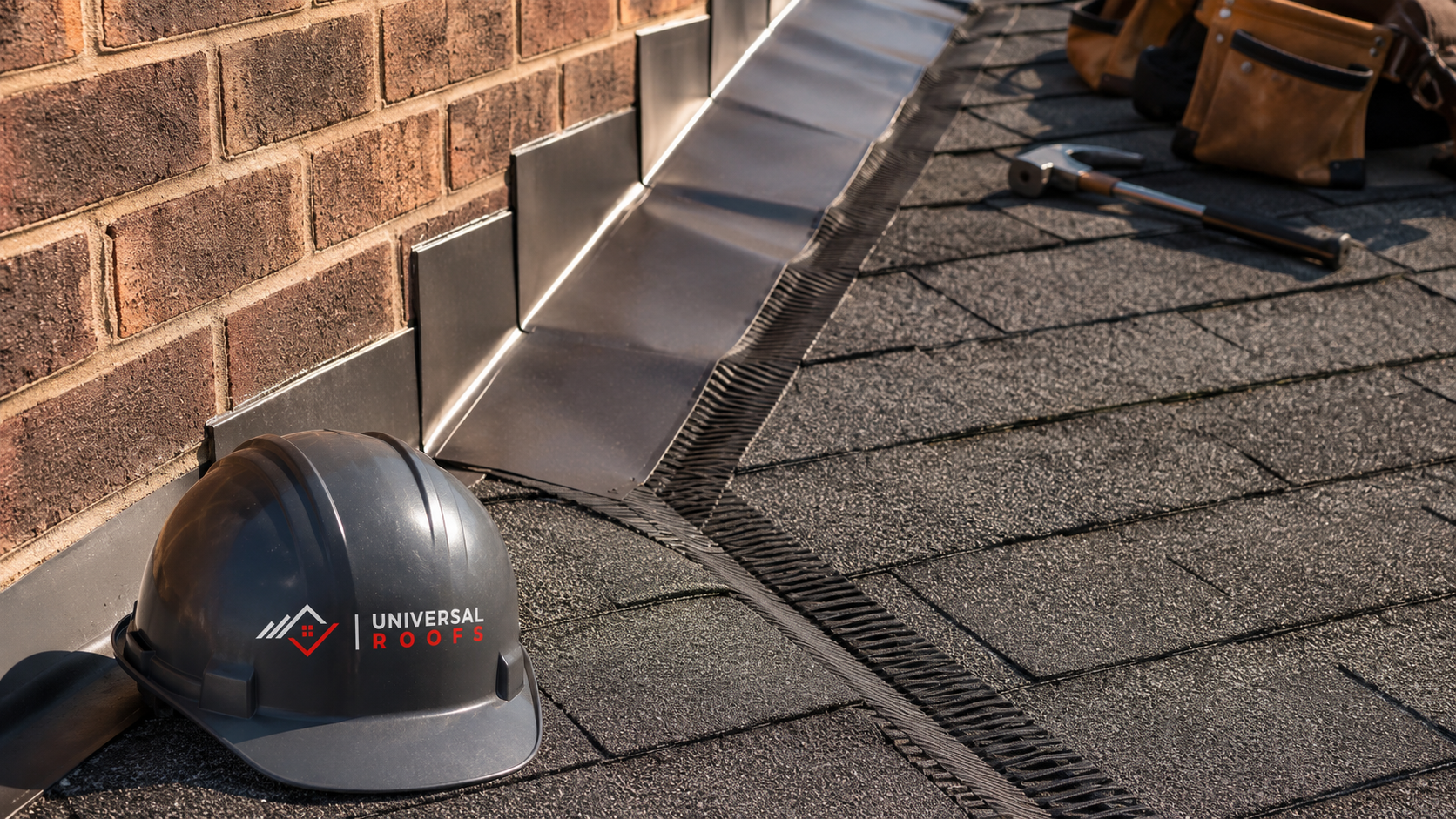
How much should I expect to pay for a new roof in Oakville in 2026?
Do I need a building permit to replace my roof in Oakville?
Are roofing contractors licensed in Ontario?
What questions should I ask roofing companies in Oakville before hiring?
How long does a roof replacement take on a typical Oakville home?
Is it better to repair my roof or replace it?
Talk to One of the Trusted Roofing Companies in Oakville Today
Choosing well comes down to scope clarity, verified credentials and a company that will still answer the phone in year seven. Universal Roofs is based in the Toronto area and works throughout Halton Region, providing written scopes, full flashing replacement, corrected attic ventilation and workmanship coverage that is explained in plain language before anything is signed. If you are still shortlisting roofing companies in Oakville, we are glad to be one of the quotes you compare. If you have more general questions about the process first, the roofing FAQ covers the basics.
Call us today at (416) 732-2421 or request a free consultation. We will inspect the roof and the attic, photograph what we find, and give you a detailed written estimate you can compare against any other quote on your table.
Universal Roofs serves Oakville and communities across the Greater Toronto Area with residential and commercial roofing, repairs, replacements and low-slope systems.