
Vaughan homeowners tend to call about their roof at one of two moments: when a stain appears on a ceiling, or when a neighbour’s roof gets replaced and they start wondering about their own. Both are reasonable starting points, but neither tells you what the work will actually involve or what roof repair in Vaughan should cost. This guide walks through what roof repair in Vaughan really looks like in 2026, from the problems that show up most often on local housing stock to realistic price ranges, permit rules, and the point where repair stops making financial sense. The goal is simple: give you enough practical detail to judge a quote on its merits instead of guessing.
Why Roof Repair in Vaughan Has Its Own Pattern
Vaughan is not one housing type. It covers postwar bungalows and modest brick homes in its older established pockets, a very large stock of subdivisions built through the 1990s and 2000s, newer builds still inside their first shingle cycle, and estate lots with complex roof geometry, multiple dormers and steep pitches. Each of those categories fails differently, and that is why roof repair in Vaughan cannot be quoted from a photo or a phone description alone.
The older brick homes typically have simple gable or hip roofs, shallow eaves and, in many cases, minimal original attic ventilation. Repairs there often start with a leak but end up being a ventilation or ice damming conversation. The 1990s and 2000s subdivisions are the volume category right now. Those roofs were largely finished with three tab or early architectural shingles rated for 20 to 25 years, which means a very large number of them are either at the end of their service life or being asked to work well past it. Repair work on those homes is usually about buying controlled time: fixing what is actively failing, without paying for a full replacement before it is genuinely warranted.
Estate properties are the outlier. More valleys, more sidewalls, more skylights, more chimneys and more roof to walk means more failure points and higher access costs. A repair that takes two hours on a bungalow can take most of a day on a large multi gable roof, purely because of setup, harness anchoring and safe movement across steep planes.
One more local factor matters: the mature tree canopy in Vaughan’s older areas. Overhanging limbs mean debris in valleys, blocked eavestroughs, and shaded slopes that hold moisture longer and grow moss and algae faster than sun exposed slopes. A north facing slope under trees will often show wear several years ahead of the south facing slope on the same house, which is why a sensible approach to roof repair in Vaughan treats each elevation separately rather than assuming the whole roof is in one condition.
The Roof Problems That Come Up Most Often on Vaughan Homes
Across the York Region homes we service, a small set of issues accounts for the large majority of roof repair in Vaughan calls. Recognising which one you have is the first step in understanding the quote you receive.
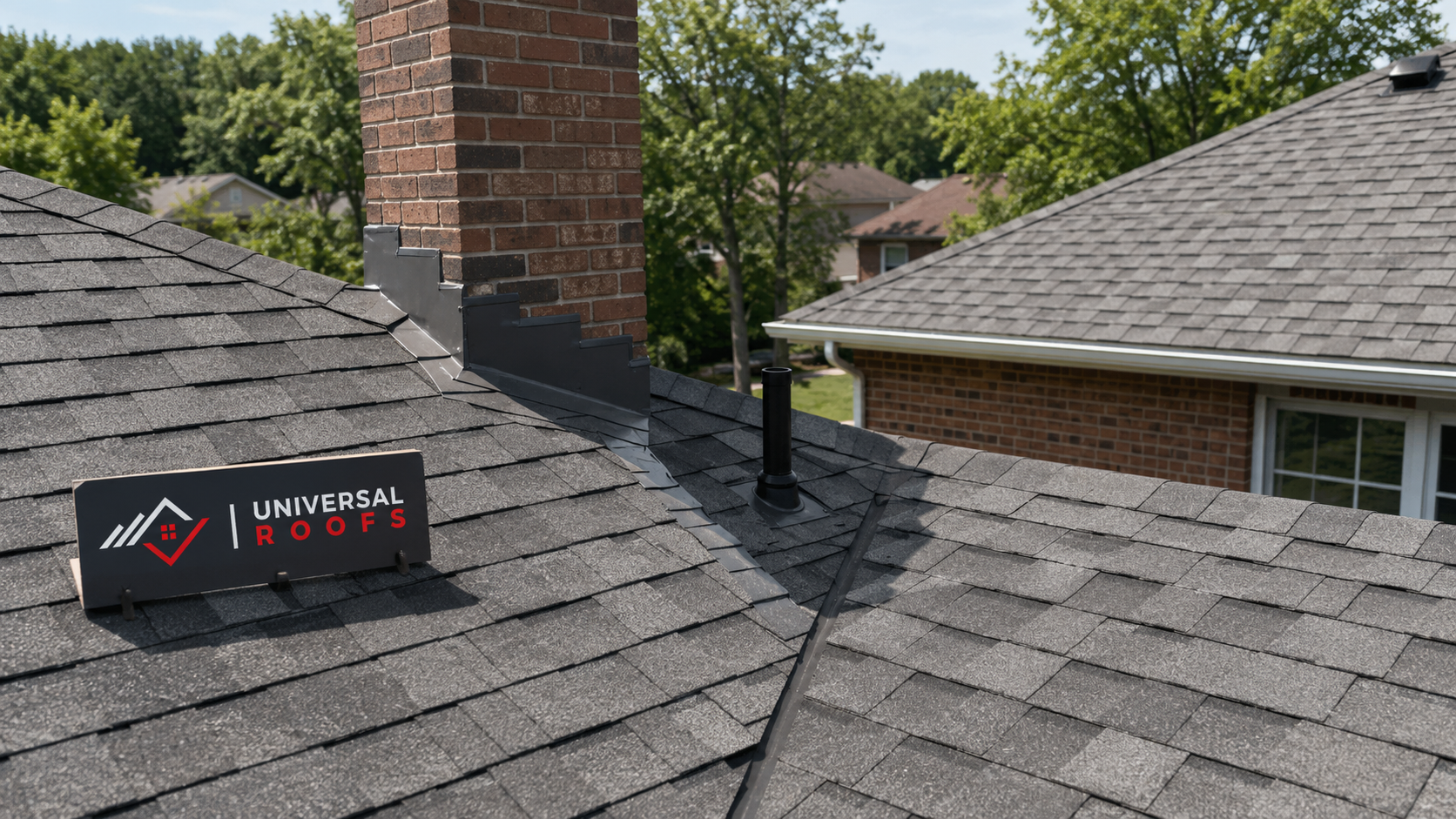
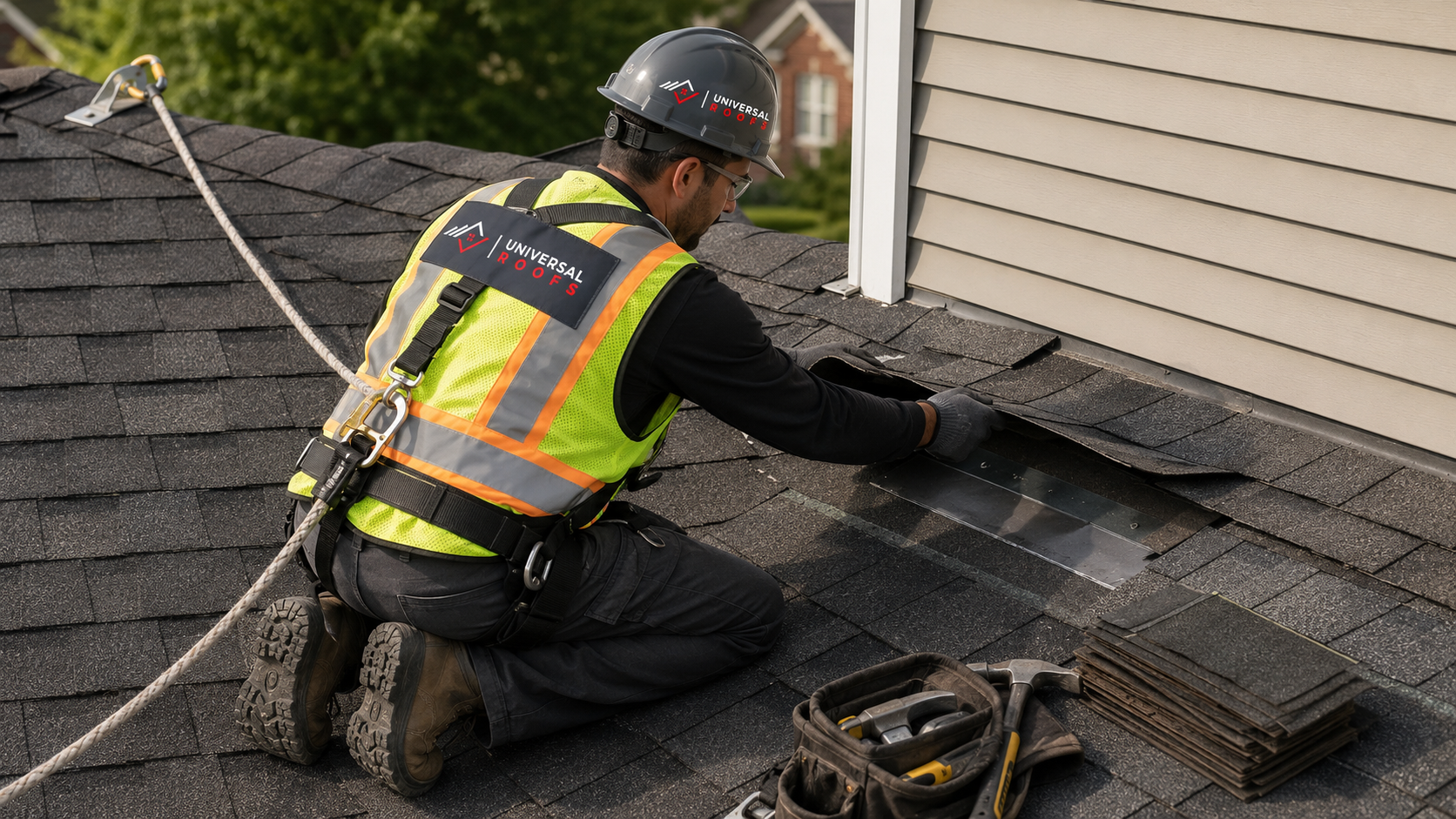
Failed flashing at walls, chimneys and skylights. This is the single most common source of active leaks. Shingles in the open field of a roof rarely leak first. Water gets in where the roof meets something else. Step flashing that was face nailed, caulked instead of properly integrated, or never replaced when the shingles were last done will eventually let water past. Chimney counter flashing that has pulled out of the mortar joint is a close second.
Valley deterioration. Valleys carry the concentrated runoff of two roof planes. Woven valleys wear through in the middle, open metal valleys corrode or get punctured, and both fill with leaf debris that holds water against the shingles long after the rain stops.
Wind lifted and creased shingles. Ontario storm systems regularly deliver gusts that lift tabs on aged shingles where the self sealing strip has lost its grip. Once a tab is creased, it will not reseal properly and becomes a wind catch for the next storm.
Nail pops and exposed fasteners. As decking expands and contracts, nails back out and telegraph through the shingle above, creating pin sized entry points that produce slow, hard to trace leaks.
Vent boot and pipe collar failure. The rubber collar around a plumbing stack has a shorter life than the shingles around it, often 10 to 15 years. Cracked collars are an extremely common cause of ceiling stains directly below a bathroom, and they are among the least expensive items on any roof repair in Vaughan quote.
Attic ventilation and moisture problems. Insufficient intake at the soffits, blocked baffles, or bathroom fans venting into the attic instead of outside all create condensation that gets misdiagnosed as a roof leak. Correcting attic ventilation and insulation is frequently part of a durable repair rather than an upsell.
Ice dam damage carried over from winter. Damage created in January is often not discovered until spring or summer. Lifted shingles at the eave, saturated underlayment and stained soffits are the visible residue, and the warm months are the correct time to correct the underlying ventilation and eave protection.
What Roof Repair in Vaughan Costs in 2026
Pricing varies with access, pitch, roof height, material and how much of the surrounding area has to be opened up to do the work properly. The table below reflects realistic 2026 ranges for roof repair in Vaughan on typical residential roofs. These are ranges, not quotes, and any contractor who commits to a firm number without seeing the roof is guessing.
| Repair type | Typical 2026 range | Usual time on site | Notes |
|---|---|---|---|
| Service call and diagnostic inspection | $200 to $450 | 1 to 2 hours | Often credited toward the repair if you proceed |
| Vent boot or pipe collar replacement | $300 to $600 each | 1 to 2 hours | Cheaper per unit when several are done together |
| Shingle patch, small area of wind damage | $400 to $900 | 2 to 4 hours | Colour matching on aged shingles is rarely exact |
| Step or wall flashing re integration | $800 to $2,200 | Half to full day | Requires removing and relaying adjacent shingles |
| Chimney flashing and counter flashing rebuild | $900 to $2,600 | Half to full day | Higher if masonry repointing is also required |
| Valley repair or replacement, per valley | $1,000 to $2,800 | Half to full day | Open metal valleys cost more but last longer |
| Sheathing replacement, per 4×8 sheet | $150 to $300 | Added to base repair | Only known once the roof is opened up |
| Partial slope re roof, one elevation | $3,500 to $9,000 | 1 to 2 days | Often better value once repairs exceed three areas |
Two cost drivers surprise people. The first is access. A two storey home with a steep pitch, limited ground clearance or landscaping that blocks ladder placement takes longer to set up safely, and that time is real. The second is discovery. Nobody can price rotten decking from the driveway. A trustworthy quote will state a per sheet rate for sheathing so that any additional cost is transparent rather than negotiated on the spot while a crew stands on your roof.
Repair or Replace: Where the Line Actually Falls
The honest answer is that this is an arithmetic question more than a technical one. Roof repair in Vaughan makes sense when the roof has meaningful service life left and the failure is localised. Replacement makes sense when repairs are being repeated, when failures are spread across multiple slopes, or when you are spending a significant fraction of a replacement cost to extend the roof by only a few years.
| Roof age | Typical condition | Usual recommendation | Reasoning |
|---|---|---|---|
| 0 to 8 years | Isolated defect or storm damage | Repair | Material has most of its life left; check warranty and insurance first |
| 8 to 15 years | Flashing, boots or one valley failing | Repair | Component failures are normal at this stage and worth correcting |
| 15 to 20 years | Granule loss, several small leaks | Repair or partial slope | Depends on whether failures are localised or general |
| 20 to 25 years | Curling, brittleness, multiple leak points | Lean toward replacement | Repairs stop holding; each fix buys less time than the last |
| 25 years or more | Widespread wear, exposed mat | Replacement | Shingles are too brittle to lift without breaking neighbouring courses |
A useful rule of thumb: if a repair costs more than roughly 25 to 30 percent of a full replacement and the roof is past 18 years, you are usually better off putting the money toward a full roof replacement and starting a fresh warranty period. If the roof is under 15 years and the failure is confined to one detail, repair is almost always the right call.
There is also a practical constraint people underestimate. On a brittle roof past 20 years, lifting shingles to reach the failure point often cracks the courses around it, which enlarges the repair area and drives the price up. That is not a contractor inflating scope. It is a physical property of aged asphalt, and it is the main reason quotes for roof repair in Vaughan carry wider ranges on older homes than on newer ones.
Emergency Repairs Versus Planned Work
Not every roof leak is an emergency, and treating every call for roof repair in Vaughan as one costs money. An active drip during a storm, a visibly compromised section after wind, or water tracking down an interior wall all warrant same day or next day attention, usually starting with a temporary weather seal to stop the ingress. Permanent repair follows once the surface is dry and the full extent of the damage is visible.
A faint ceiling stain that has not grown, a few lifted tabs visible from the ground, or granules collecting in the eavestrough are not emergencies. They are scheduling items. Booking them as planned work in the summer or early autumn gets you better pricing, better availability and better workmanship than an urgent call in the middle of a storm cycle, when every crew in the region is triaging.
One caution on emergency work: temporary tarping is a stopgap, not a repair. If a tarp is installed, get a written plan and a date for the permanent fix. Tarps degrade quickly under UV exposure and can cause secondary damage if they are still up months later.
Permits, Ontario Building Code and What Compliant Work Includes
In Ontario, routine roof repair in Vaughan and like for like shingle replacement generally does not require a building permit. A permit is typically triggered when structural elements change: replacing or altering rafters and trusses, changing the roof structure or slope, adding a dormer, or creating a new opening for a skylight. If a contractor tells you a straightforward shingle repair needs a permit, or conversely tells you that structural framing work does not, ask more questions. The municipal building department is the authority on any borderline case, and a legitimate contractor will simply confirm with them rather than guess.
Several Ontario Building Code requirements matter for repair quality even when no permit is involved:
- Eave protection. A self adhered membrane or equivalent is required at eaves on sloped roofs, extending well up the slope past the interior face of the exterior wall. On repairs that reopen the eave area, this must be reinstated properly.
- Underlayment. Sheathing must be covered with a code compliant underlayment before the finish material goes on. Repairs that skip this step to save an hour create the next leak.
- Attic ventilation. Required ventilation area is governed relative to insulated ceiling area, and balanced intake and exhaust matter as much as raw vent count. Mixing incompatible exhaust types on the same attic space can short circuit airflow entirely.
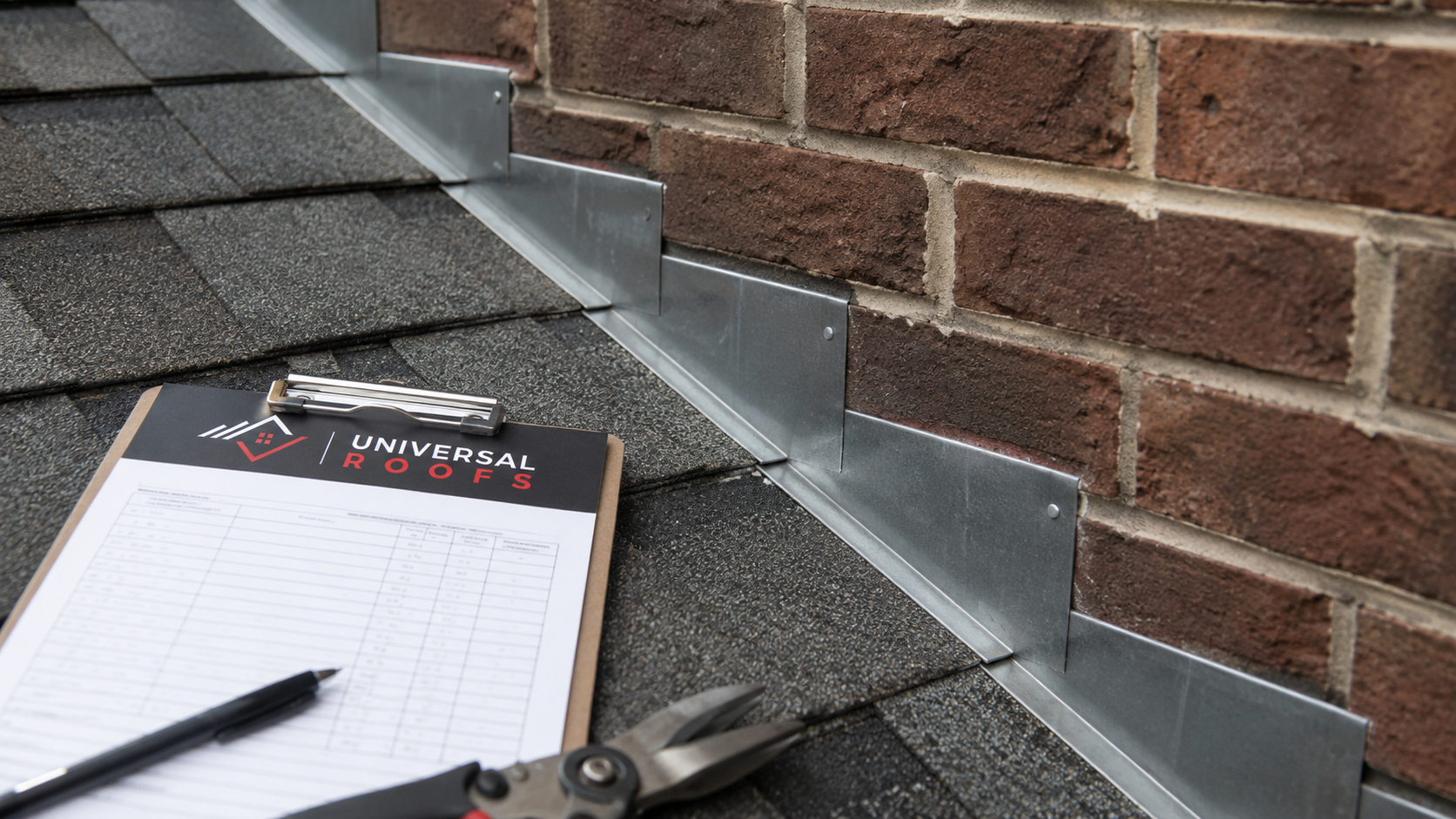
- Flashing at intersections. Every junction between roof and wall, chimney or penetration requires proper flashing. Sealant alone is not flashing, and any quote that relies on caulking as the primary fix is a temporary measure being sold as a permanent one.
Beyond code, confirm two things on paper before work starts: valid WSIB coverage and a minimum of two million dollars in liability insurance. Ask for the certificates directly rather than accepting a verbal assurance. Anyone doing legitimate residential roof repair work will have both ready to send within minutes.
How to Evaluate a Roof Repair Quote
Homeowners often collect three quotes with a spread of several hundred dollars and no clear way to compare them. The differences are usually buried in scope, not in profit margin. The comparison below covers what separates a durable repair from a cosmetic one, and it applies to any quote for roof repair in Vaughan regardless of who provides it.
| What to check | Weak quote | Strong quote | Why it matters |
|---|---|---|---|
| Diagnosis | Names a symptom, such as “leak at ceiling” | Names the failed component and its location | You cannot fix a stain; you fix the source |
| Scope detail | “Repair roof as discussed” | Materials, area, layers and method listed | Vague scope means disputes later |
| Hidden damage | Silent on decking | States a per sheet rate for sheathing | Prevents pressure pricing mid job |
| Flashing approach | Sealant applied over existing flashing | Flashing removed and re integrated with courses | Sealant buys one or two seasons at most |
| Warranty | None, or verbal only | Written workmanship term with a duration | A repair warranty signals confidence in the method |
| Documentation | No photos | Before and after photos of the repair area | You cannot inspect your own roof safely |
| Insurance | “We’re covered” | WSIB and liability certificates provided | Protects you from liability for site injuries |
Ask one more question that separates experienced crews from the rest: what caused this failure? A contractor who can explain the mechanism, whether it is a ventilation imbalance, an original installation error or simple material age, is far more likely to fix it in a way that holds. If the only answer offered is that the roof is old, keep looking.
Timing Your Roof Repair in Vaughan Through the Year
Summer is the strongest window for roof repair in Vaughan. Asphalt shingles are pliable in warm weather, self sealing strips bond properly within days, and dry decking means any hidden rot is visible rather than masked by moisture. Work booked between late spring and early autumn also avoids the compressed scheduling that follows the first hard freeze.
Early autumn remains good, with the caveat that availability tightens quickly once temperatures start dropping and every homeowner who postponed decides to act at once. Late autumn work is still viable but sealing takes longer and hand sealing may be required. Winter repair is possible for genuine emergencies but is slower, more expensive and harder to warranty, because shingles become brittle and adhesives do not activate reliably below roughly 5 degrees Celsius.
If you are reading this in summer with a known problem, this is the right moment to act. A repair scheduled now is a repair completed under ideal conditions, at normal pricing, before the autumn rush and well ahead of the first freeze and thaw cycle. Homeowners comparing options across the region can review the full range of roofing services available to Vaughan homeowners alongside coverage in neighbouring communities such as Richmond Hill and Markham.
What Homeowners Can Safely Check From the Ground
You do not need to climb anything to gather useful information before a roof repair in Vaughan contractor arrives. Working from the ground and from inside the attic covers most of what matters and keeps you off a ladder.
- Walk the perimeter with binoculars. Look for lifted or missing tabs, dark patches where granules have worn away, and any shingle sitting at a different angle than its neighbours.
- Check the eavestroughs. A heavy accumulation of granules that resembles coarse sand indicates advancing shingle wear.
- Look along the roof line. Sagging or waviness between rafters can indicate saturated or failed decking underneath.
- Inspect the attic on a bright day. Daylight visible through the sheathing, dark staining on the wood, damp insulation, or frost on nail tips in cold weather all point to specific problems.
- Photograph interior stains with a date. Knowing whether a stain grows after rain helps distinguish an active leak from historical damage.
- Note recent storms. If damage appeared after a specific wind event, that date matters for any insurance claim.
Bring those notes to the inspection. A homeowner who can say the stain appeared after a storm in June, grows only during driving rain from the west, and sits below a bathroom has narrowed the diagnosis considerably before anyone gets on the roof.
What a Professional Repair Visit Should Involve
A competent visit for roof repair in Vaughan follows a predictable sequence. It starts with an interior assessment, because the location of the stain relative to the roof geometry narrows the search area. It moves to the attic, where the underside of the sheathing shows staining, moisture and ventilation issues directly. Only then does it move to the roof surface, where the crew traces water upslope from the interior evidence, since water rarely enters directly above the point where it appears.
From there, the repair itself should involve removing enough material to reach sound substrate, correcting the actual failed component rather than covering it, reinstating underlayment and eave protection where they were disturbed, and relaying courses so that every layer sheds water onto the layer below it. The crew should clean the site with a magnet sweep for nails, and leave you with photographs of the completed work.
The final piece is the written warranty. Repair warranties are shorter than replacement warranties, commonly one to five years on workmanship depending on scope, and that is normal. What matters is that the term exists in writing and names exactly what it covers. A verbal promise on a repair is worth very little a year later when the same area starts weeping again.
How much does roof repair in Vaughan cost in 2026?
Do I need a permit for roof repair in Vaughan?
How long does a typical roof repair take?
Will a repaired section match my existing shingles?
Is it worth repairing a roof that is over twenty years old?
Does home insurance cover roof leaks?
Book Your Roof Repair in Vaughan With a Team That Explains the Work
Good roof repair in Vaughan fixes the cause, not the symptom, and leaves you with documentation you can actually use. Universal Roofs is based in the Toronto area and serves Vaughan and the surrounding York Region communities, handling everything from single vent boot replacements to full flashing rebuilds on complex estate roofs. Every visit starts with a proper diagnosis, and every quote states scope, materials and the rate for any hidden damage before work begins.
Call us today at (416) 732-2421 or request a free consultation. If you would rather see how previous jobs have gone first, our customer reviews and roofing FAQ cover the questions homeowners ask most often.
Universal Roofs provides roof repair, replacement and inspection services to homeowners in Vaughan and across the Greater Toronto Area.