
Attic insulation Markham homeowners installed twenty or thirty years ago is usually the weakest thermal layer left in the house. Windows get replaced, furnaces get swapped for high efficiency models, and the attic quietly stays at whatever depth it was blown to on the day the home was framed. That single layer of settled fibre is doing more to set your gas bill than almost anything else you can see from the street.
This guide covers what an attic insulation Markham project costs in 2026, what R-value you should actually be aiming for, how much you can realistically expect to save on heating and cooling, and how to tell a careful job from a fast one. Prices are quoted as ranges because attic work is priced by measured square footage, existing conditions and access, not by a flat menu price.
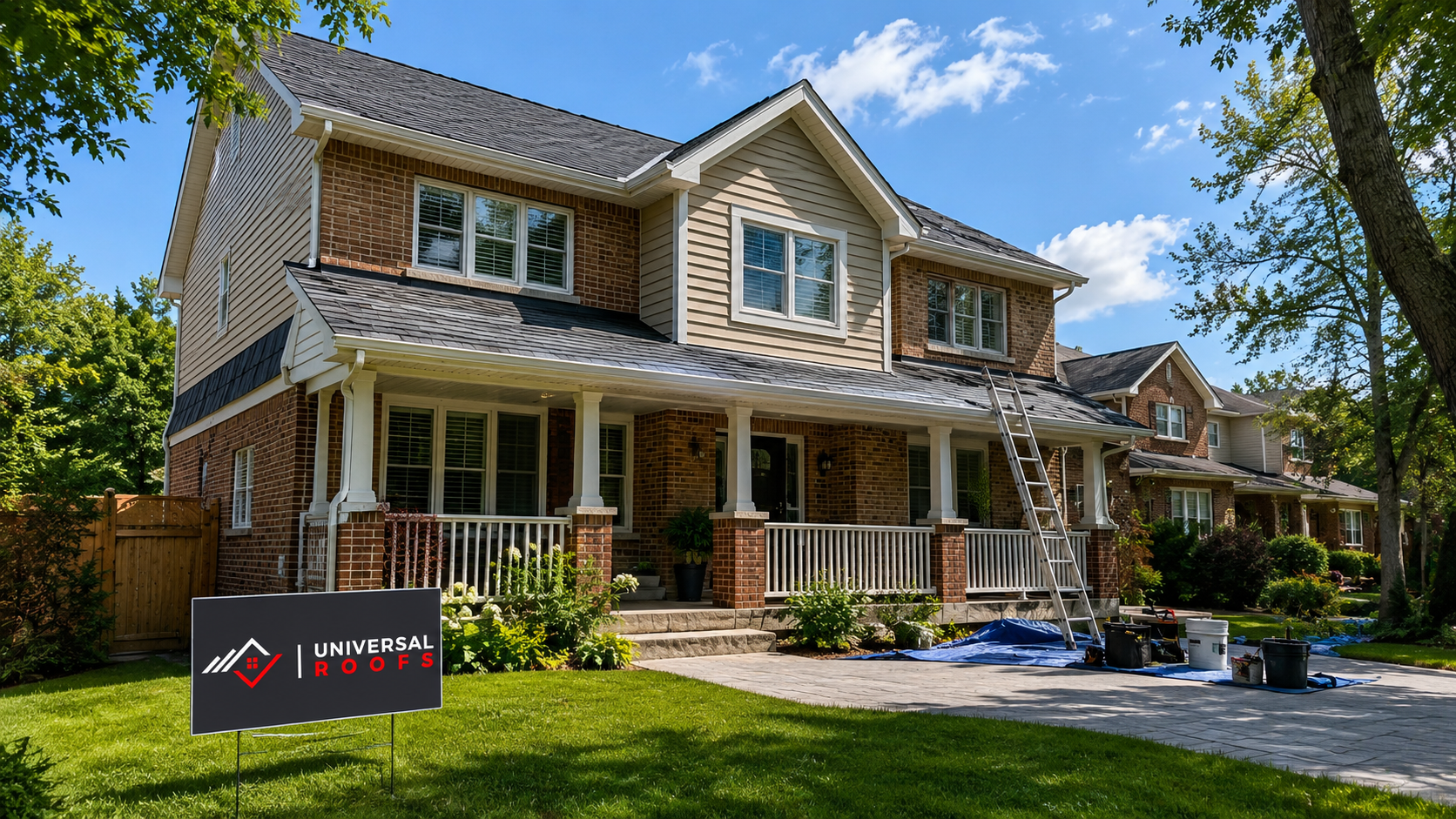
What Attic Insulation Markham Homeowners Pay in 2026
Most attic insulation Markham quotes are built the same way: a price per square foot of attic floor for the insulation itself, a separate line for air sealing, and further lines for removal, ventilation baffles, hatch sealing and any repairs uncovered once the crew is inside. A quote that shows only one number is hiding decisions you should be making yourself.
The most common project on a Markham street is a top-up: existing insulation stays in place, air leaks are sealed, and blown cellulose or blown fibreglass is added to reach a modern depth. The most expensive is a full removal and replacement, which is warranted when the existing material is contaminated by rodents, soaked from a past roof leak, or so compressed that it cannot be measured reliably.
| Scope of work | Typical 2026 price range | What it includes |
|---|---|---|
| Blown-in top-up to R-50 or R-60 | $2.50 to $4.50 per sq ft | Blown cellulose or fibreglass added over sound existing insulation |
| Attic air sealing package | $600 to $1,800 | Sealing top plates, plumbing stacks, wiring penetrations, pot lights, hatch |
| Removal of old or contaminated insulation | $1.50 to $3.25 per sq ft | Vacuum removal, bagging, disposal, deck cleaning |
| Full removal plus new insulation, average detached attic | $5,000 to $9,500 | Removal, sanitizing, air sealing, baffles, new blown insulation |
| Closed cell spray foam, targeted areas only | $5.00 to $8.50 per sq ft | Cathedral sections, knee walls, tight bays with no room for loose fill |
| Ventilation corrections (baffles, added vents) | $450 to $1,600 | Soffit baffles, additional roof or ridge venting, clearing blocked soffits |
For a typical 1,100 to 1,400 square foot attic footprint, a straightforward top-up with proper air sealing usually lands somewhere between $3,200 and $6,000 in 2026. Attic insulation Markham pricing runs slightly above the provincial average for the same reason most trades do in York Region: travel, disposal fees and a busy renovation market. Anything quoted dramatically below that band is almost always skipping the air sealing, skipping the baffles, or blowing to a depth that will not hold its rated R-value once it settles.
Why Markham Housing Stock Loses So Much Heat Through the Attic
Markham is not one housing type, and attic insulation Markham projects differ sharply depending on which era of the city you live in. The older cores around Markham Village, Unionville and Thornhill hold a large share of postwar bungalows, side-splits and brick two-storeys, many of them insulated originally to standards that would look alarming today. It is common to find R-12 to R-20 in those attics, sometimes as vermiculite or thin batts laid between joists with visible gaps at the perimeter.
The large subdivisions that filled in through the 1980s and 1990s generally started at a better depth, often R-31 to R-40, but three decades of settling, attic traffic and pot light installations have usually left them well short of that figure, which is why attic insulation Markham top-ups are so common in homes that look modern from the curb. Every service run through the ceiling since construction, every bathroom fan retrofit and every pot light cut into a hallway punched another hole in the air barrier.
Newer estate homes and the more recent subdivisions carry a different problem. Complex roof geometry, cathedral sections, tray ceilings and multiple separate attic compartments create small isolated spaces that are hard to reach and easy for a rushed crew to miss entirely. A large newer house can have excellent insulation across ninety percent of its ceiling area and still perform badly because of three unreachable pockets over a bonus room.
Add the local climate load and the picture is clear. The GTA runs a heating season that regularly demands January design temperatures near minus twenty degrees Celsius, followed by humid summers where an underinsulated attic can push well past fifty degrees and drive the air conditioner hard. Attic insulation Markham upgrades pay in both directions, not just in winter. If you want a broader view of the exterior work we handle across the city, our roofing services in Markham page sets out how attic, roof and ventilation work fit together on the same house.
Insulation Types and R-Values for Markham Attics
R-value measures resistance to heat flow, and depth is what buys it. Ontario’s Building Code, through the SB-12 energy efficiency provisions, sets attic requirements for new construction in the R-60 range for most gas heated houses in this climate zone. That figure is not legally binding on an existing ceiling you are simply topping up, but it is the sensible target, and it is the number good attic insulation Markham contractors quote to by default.
| Material | Approximate R-value per inch | Depth needed for R-60 | Best use in a Markham attic |
|---|---|---|---|
| Blown cellulose | R-3.2 to R-3.8 | 16 to 19 inches | General top-ups, good coverage around obstructions |
| Blown fibreglass | R-2.8 to R-3.4 | 18 to 21 inches | Large open attics, lighter load on older ceilings |
| Fibreglass batts | R-3.4 to R-3.8 | 16 to 18 inches | Accessible attics with regular joist spacing |
| Mineral wool batts | R-3.8 to R-4.3 | 14 to 16 inches | Fire resistance priorities, attic knee walls |
| Open cell spray foam | R-3.5 to R-3.8 | 16 to 18 inches | Sealed attic assemblies, complex framing |
| Closed cell spray foam | R-5.8 to R-6.5 | 10 to 11 inches | Cathedral bays and shallow spaces with no depth to spare |
For the great majority of attic insulation Markham jobs, blown cellulose or blown fibreglass over a properly sealed ceiling is the right answer. Loose fill flows around joists, wiring and framing irregularities in a way batts never will, and it fills the awkward triangle at the eaves where heat loss concentrates. Spray foam earns its much higher cost only in specific assemblies: cathedral ceilings, knee walls, and attics being converted to conditioned space.
Watch the difference between nominal and installed R-value. Blown material is rated at a settled thickness, and a crew that blows to the nominal number rather than the settled number leaves you short within a year. Reputable installers post depth markers across the attic and leave a coverage card stating bag count, coverage area and installed thickness. Ask for it, and keep it with your home records.
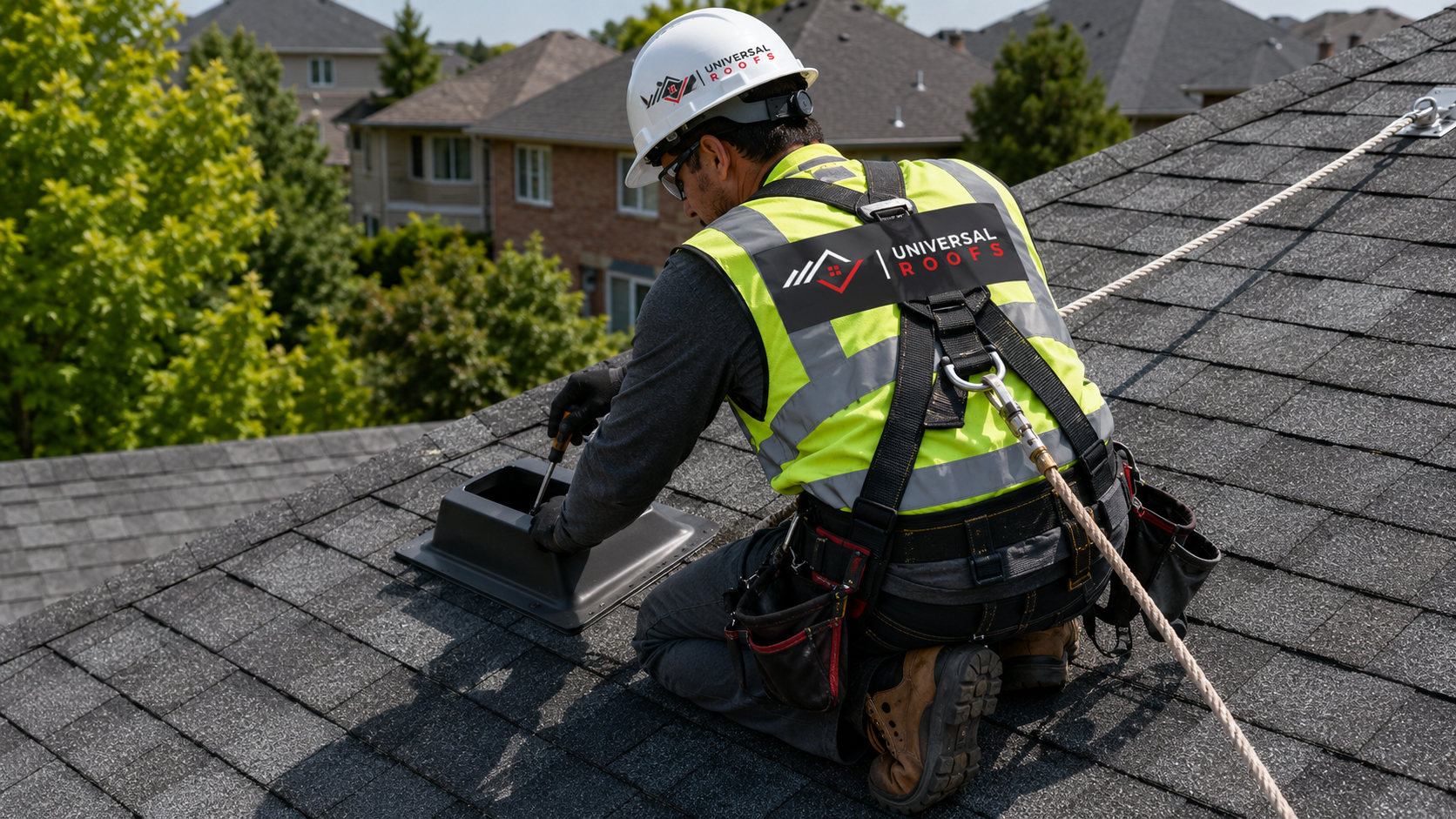
Energy Savings You Can Realistically Expect
This is where most marketing goes wrong. The honest answer is that savings depend almost entirely on where you start. Going from R-12 to R-60 changes a house dramatically. Going from R-40 to R-60 is a modest improvement with a long payback, and any contractor promising otherwise is guessing at your expense.
Heat loss falls on a curve of diminishing returns. The first fifteen inches of insulation do most of the work and the next few refine it. That is why an attic insulation Markham assessment should always start with a measurement of existing depth rather than a sales pitch for the thickest option available.
| Starting condition | Upgrade target | Typical heating and cooling reduction | Indicative annual saving |
|---|---|---|---|
| R-8 to R-15, older bungalow with original insulation | R-60 | 15 to 25 percent | $280 to $520 |
| R-20 to R-28, 1970s to early 1980s build | R-60 | 10 to 18 percent | $180 to $380 |
| R-31 to R-40, 1990s subdivision, settled | R-60 | 5 to 10 percent | $90 to $210 |
| Any depth with significant ceiling air leakage | Air sealing plus R-60 | 12 to 22 percent | $220 to $460 |
| Blocked soffits and poor venting | Ventilation correction plus R-60 | 8 to 15 percent, plus moisture control | $150 to $320 |
Those figures assume a gas heated detached home of average size with a functioning envelope elsewhere. Treat them as planning ranges, not promises. Utility rates move, thermostat habits vary widely between households, and a house with leaky windows and an uninsulated rim joist will not deliver the top of the range from attic work alone.
The non-financial return matters too, and homeowners consistently mention it first: fewer cold rooms above the garage, less temperature swing between floors, quieter interiors and far less ice damming at the eaves in February. Attic insulation Markham upgrades combined with air sealing tend to cut ice dam formation sharply, because an ice dam is a heat loss problem before it is ever a gutter problem.
Air Sealing and Ventilation Come Before Depth
Insulation slows conductive heat transfer. It does very little against air moving straight through the ceiling. If warm, humid indoor air is streaming up through a plumbing stack chase or an unsealed pot light, adding another twelve inches of fibre over top does not stop it. The air simply travels through the new material, carries moisture into a cold attic and condenses on the underside of the roof sheathing.
That is why any credible attic insulation Markham scope starts with sealing. The usual targets are top plates of interior walls, plumbing and vent stack penetrations, bathroom and kitchen exhaust fan housings, wiring holes, chimney chases with proper non-combustible detailing, and the attic hatch itself. Hatches are the most commonly ignored item and one of the largest single leaks in many homes.
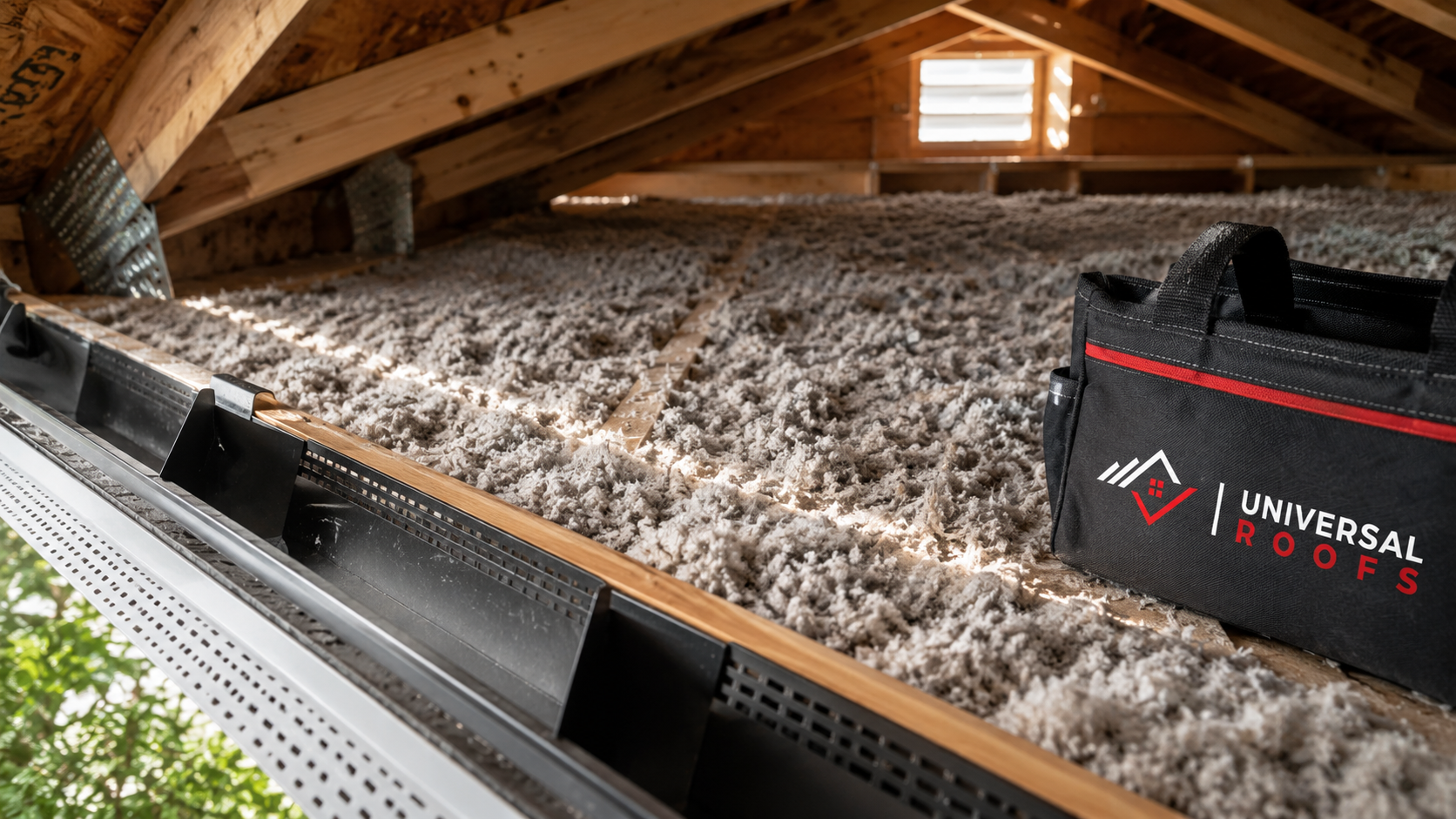
Ventilation is the other half of the equation. An attic needs continuous airflow from the soffits up to the ridge or roof vents so that any moisture reaching it can leave again. Blown insulation pushed tight into the eaves blocks soffit intake, which is one of the most common defects found in attics that were topped up cheaply. Baffles hold that channel open at every rafter bay, and no attic insulation Markham quote should omit them. Bathroom fans must vent through the roof or wall to the outdoors, never into the attic space, a defect still found regularly in older Markham homes.
Where insulation, ventilation and roof condition intersect, it pays to have one contractor assess all three at once. Our attic inspection and insulation services page explains how we evaluate depth, air leakage, ventilation balance and moisture staining in a single visit rather than three separate ones.
How an Attic Insulation Upgrade Actually Runs
A well run attic insulation Markham job follows a predictable sequence, and knowing that sequence makes competing quotes far easier to compare.
- Assessment. Measured existing depth at several points, material identification, ventilation check, moisture and mould inspection, verification that exhaust fans are ducted outdoors, and a look at wiring condition.
- Protection. Drop sheets along the access route, the hatch area masked, the hose run controlled so no fibre reaches living space.
- Removal, if required. Vacuum extraction into sealed bags, the deck cleaned, any rodent contamination treated before new work begins.
- Air sealing. Foam and caulk at penetrations, fire rated detailing around chimneys and flues, an insulated and weatherstripped hatch cover.
- Baffles and dams. Soffit baffles installed at every bay, dams built around the hatch and around any heat producing fixtures that require clearance.
- Blowing. Material installed to marked depth and levelled across the full area, including the eave triangle and the space behind knee walls.
- Verification. Depth markers photographed, coverage card posted, site cleaned, walkthrough completed with the homeowner.
Most single detached attic insulation Markham projects finish in a single day. Removal and replacement usually runs one and a half to two days. Larger estate homes with multiple attic compartments can take two to three. Crews avoid working through the middle of the day in July and August because attic temperatures become genuinely unsafe, so summer bookings are often scheduled for early morning starts.
Rebates, Building Code and Permits in Ontario
Ontario has run incentive programs for attic insulation through utility delivered channels, most recently the Home Renovation Savings Program administered with Enbridge Gas and Save on Energy, which has covered a share of eligible insulation upgrade costs. Where a rebate is available it can meaningfully shorten the payback period on attic insulation Markham work, particularly on older homes starting from a low R-value. Program budgets, eligibility rules and rebate amounts change from year to year and can pause without much notice, so verify current terms directly with the program before you count a rebate into your budget. Any contractor who guarantees a specific rebate amount in advance is overstepping.
On the code side, SB-12 governs new construction and additions rather than voluntary upgrades to an existing ceiling. Practically speaking, a straightforward top-up in an existing Markham home does not typically require a building permit. Work that changes structure, alters the roof assembly, converts an attic into conditioned or habitable space, or adds new roof openings can require one, and the City of Markham building department is the only authority that can confirm your specific case. Ask before assuming either way.
Two safety items are code relevant regardless of permits. Clearance must be maintained around non IC rated pot lights and around chimneys and flues, and knob and tube wiring, still present in a small number of older homes, must never be buried in insulation. If an inspection turns up knob and tube in the attic, that gets resolved by a licensed electrician before insulation goes down, not after.
Choosing an Attic Insulation Markham Contractor
The attic is the easiest place in a house to do poor work invisibly. Nobody climbs up afterwards to check. That makes the selection process more important here than in almost any other trade.
Ask any attic insulation Markham contractor for four things in writing: the target installed R-value and settled depth, a separate line item for air sealing, confirmation that soffit baffles are included at every rafter bay, and a coverage card at completion. Confirm WSIB coverage and liability insurance, because attic and roof work carries real fall and confined space risk. Ask what happens if the crew finds mould, rodent contamination or evidence of a past roof leak once they are inside, and get the change order process explained before the truck arrives rather than during the job.
Be cautious of quotes given over the phone without anyone entering the attic. Depth cannot be estimated from the driveway, and neither can ventilation adequacy. Be equally cautious of a quote that jumps straight to spray foaming an entire attic deck at several times the cost of loose fill, unless there is a specific assembly reason for it that the contractor can explain in plain language.
Universal Roofs is a Toronto based roofing and attic contractor serving Markham and the surrounding communities. We work throughout York Region, including neighbouring Richmond Hill and Vaughan, and we assess attic and roof condition together because in practice they tend to fail together. You can read what past clients have said on our customer reviews page.
How much does attic insulation in Markham cost in 2026?
What R-value should a Markham attic have?
Do I need a permit for attic insulation in Markham?
Should the old insulation be removed first?
Will attic insulation stop ice dams on my roof?
How long does an attic insulation upgrade take?
Book Your Attic Insulation Markham Assessment Today
An attic assessment takes under an hour and gives you real numbers to work from: measured depth, ventilation status, air leakage points and a scoped quote rather than a guess. Universal Roofs has spent years working on attics and roofs across the Greater Toronto Area, and we will tell you plainly if your existing insulation is already adequate and your money is better spent elsewhere on the house.
Call us today at (416) 732-2421 or request a free consultation to get an accurate, itemized quote for your attic.
Universal Roofs is a Toronto based roofing contractor serving Markham and communities across the Greater Toronto Area.