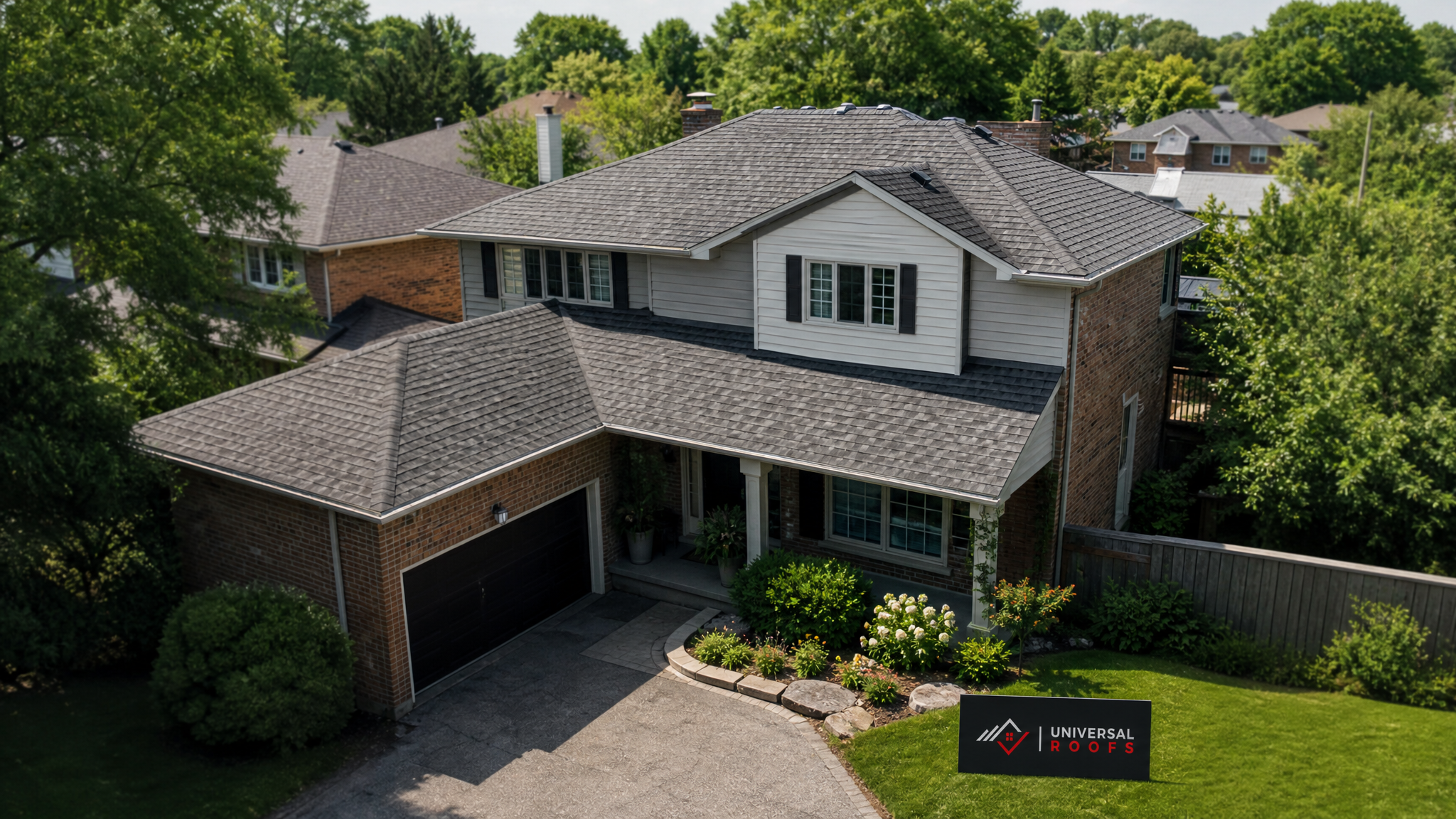
A drone roof inspection has quietly become one of the smartest ways for Toronto homeowners and property managers to understand the true condition of a roof without anyone ever setting foot on the shingles. Instead of relying on a technician balancing on a steep slope with a ladder, a drone roof inspection captures high-resolution aerial imagery, thermal data, and detailed close-ups of every valley, ridge, flashing, and vent from angles the human eye simply cannot reach from the ground. At Universal Roofs, we have folded drone technology into our standard assessment process across the Greater Toronto Area because it produces faster, safer, and far more accurate results than a traditional visual walkthrough alone. This guide explains exactly how a drone roof inspection works in 2026, what it costs, what it can and cannot detect, and why more Toronto property owners are choosing this approach before committing to any repair or replacement decision.
What Is a Drone Roof Inspection and How Does It Work?
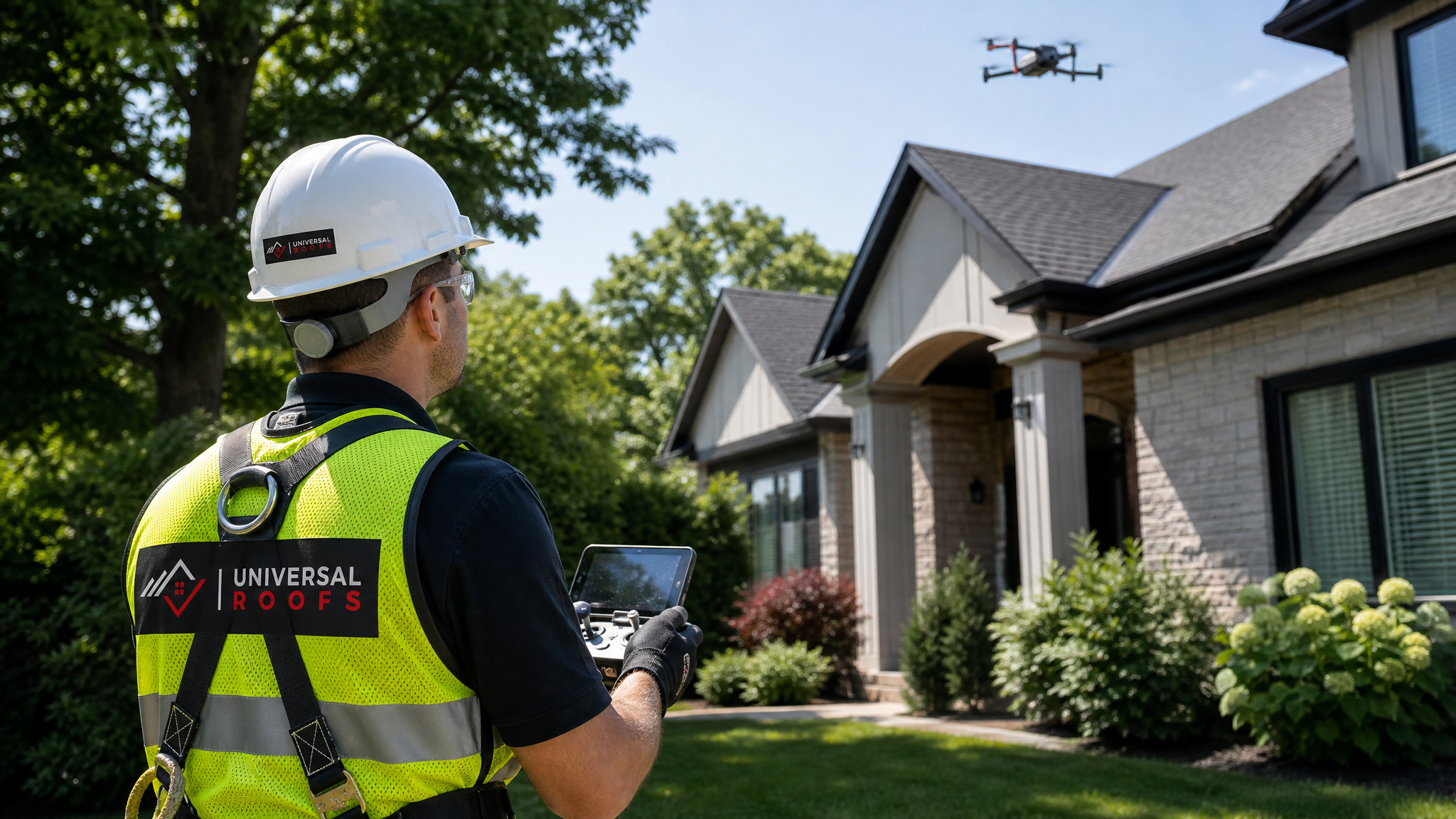
A drone roof inspection uses an unmanned aerial vehicle equipped with high-megapixel optical cameras, and often thermal or infrared sensors, to survey a roof surface systematically from above. A certified operator pilots the drone along a pre-planned flight grid, capturing overlapping images of the entire roof plane. Modern inspection drones can hover within centimetres of a problem area, zoom into a cracked seam, and record video that our estimators review frame by frame back at the office. The result is a complete visual and thermal record of the roof rather than a handful of photos taken from a ladder at the eaves.
The process typically unfolds in three stages. First, the operator conducts a site briefing and checks airspace conditions, since parts of Toronto sit under controlled airspace near Pearson and the Toronto Islands. Second, the drone performs an automated or manually guided sweep, gathering optical imagery of shingles, membranes, chimneys, skylights, and gutters. Third, if thermal imaging is included, the drone captures heat-signature data that highlights trapped moisture and areas of poor insulation. Every pass is logged, so the homeowner receives a documented, repeatable survey rather than a subjective opinion.
Because the equipment does the climbing, a drone roof inspection removes the single largest risk in traditional roof assessment: a person working at height. It also means steep, fragile, or multi-storey roofs that are genuinely dangerous to walk can still be inspected thoroughly. For anyone weighing a full roof replacement against a targeted roof repair, that complete picture is exactly what leads to a confident, cost-appropriate decision.
Why Toronto Homeowners Are Choosing Aerial Roof Surveys
Toronto’s housing stock is remarkably varied, from century-old Victorian homes in Cabbagetown to sprawling suburban builds in Vaughan and Markham. Each roof geometry presents its own inspection challenges, and a drone handles them all with equal ease. Homeowners appreciate that an aerial survey is non-invasive, quick, and produces evidence they can actually see and keep. When we hand over a folder of crisp aerial images, the conversation shifts from “trust me, it needs work” to a clear, shared understanding of what the roof looks like right now.
Speed is another major driver. A conventional inspection of a large or complex roof can take a technician a couple of hours of careful climbing and repositioning. A drone can cover the same area in a fraction of the time, capturing more data with less disruption to the household. For property managers overseeing multiple buildings, that efficiency compounds quickly. Many of our clients across the Toronto service area now request drone documentation as a routine part of seasonal maintenance rather than waiting for a visible leak to appear.
There is also a documentation and accountability benefit. Insurance claims, real estate transactions, and warranty disputes all move faster when there is objective aerial evidence. A time-stamped set of images from a drone roof inspection gives homeowners leverage and clarity that a written report alone cannot match. You can read what our clients say about that transparency on our reviews page.
Drone Roof Inspection vs Traditional Inspection Methods
It helps to see how a drone roof inspection compares directly against the older ladder-and-harness approach. Both have their place, but the differences in safety, coverage, and detail are significant for most Toronto properties.
| Factor | Drone Roof Inspection | Traditional Walk-On Inspection |
|---|---|---|
| Safety risk | Very low, operator stays on the ground | High, technician works at height |
| Time on site | 20 to 45 minutes typical | 1 to 3 hours for complex roofs |
| Coverage | Full roof plane, all angles and pitches | Limited to safely accessible areas |
| Thermal moisture detection | Available with infrared payload | Not possible visually |
| Documentation | Hundreds of geotagged images and video | A handful of manual photos |
| Roof surface impact | Zero foot traffic on shingles | Foot traffic can dislodge granules |
The zero-foot-traffic point matters more than many people realise. Walking on aging asphalt shingles, especially during a hot Toronto summer afternoon when the material is soft and pliable, can scuff granules and shorten the roof’s remaining life. A drone roof inspection eliminates that wear entirely. For delicate materials like slate, clay tile, or a membrane on a flat roofing system, avoiding foot traffic protects the very surface being evaluated.
What a Drone Roof Inspection Can Detect
The value of any inspection lies in what it actually finds, and a well-executed drone roof inspection surfaces a wide range of issues that often go unnoticed until they become expensive. High-resolution optical imagery reveals surface-level damage, while thermal sensors expose problems hiding beneath the surface. Together they build a complete diagnostic picture.
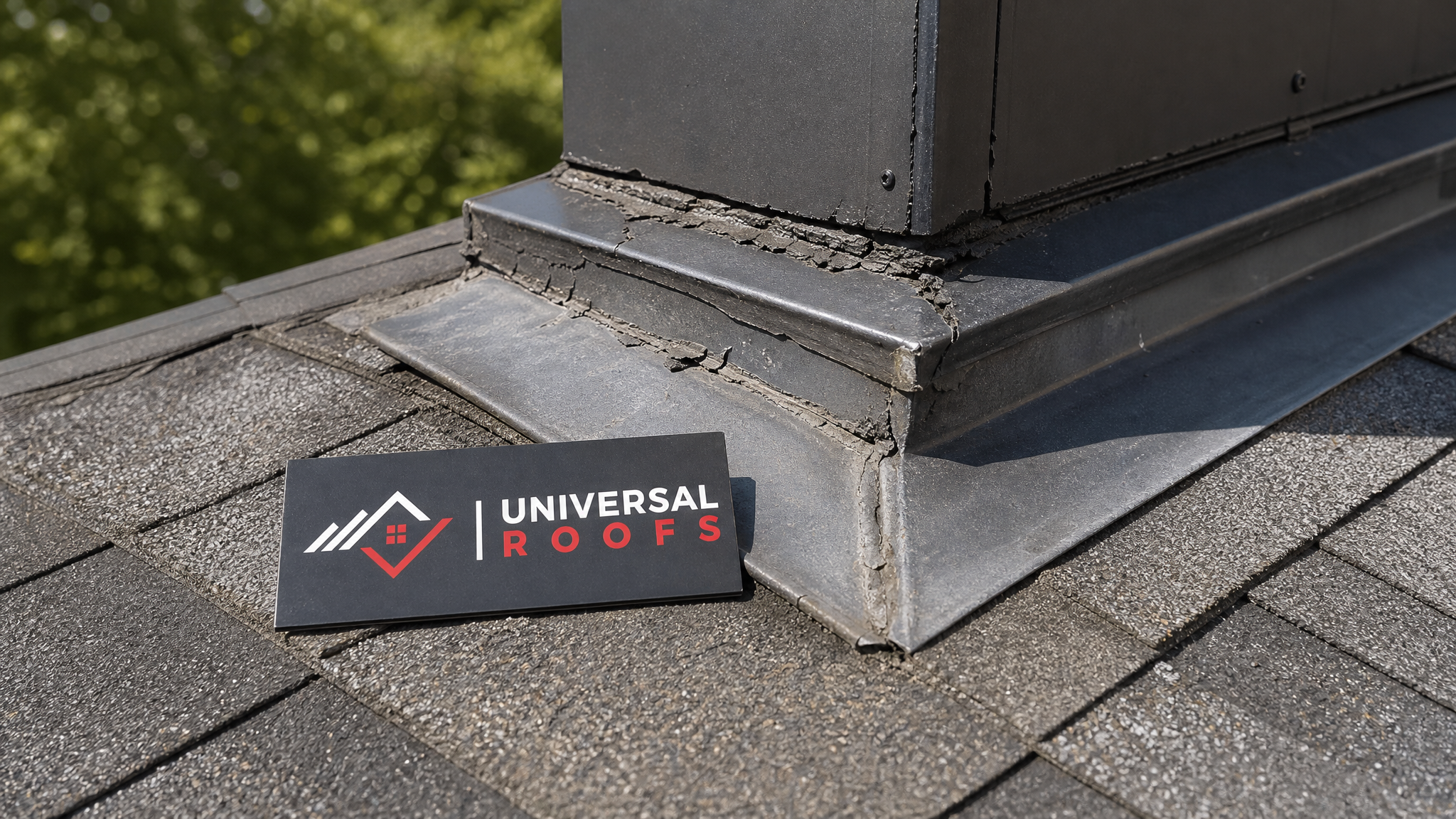
On the optical side, our estimators look for lifted, curled, or missing shingles, cracked or displaced flashing around chimneys and vents, deteriorating sealant, blistered membrane on flat sections, sagging gutters, moss or organic growth, and compromised seals around every skylight. Because the drone can hover close and zoom, even a hairline crack in a boot flashing becomes visible. These are precisely the small defects that, left unaddressed, allow water intrusion into the roof deck.
Thermal imaging adds a second layer entirely. Trapped moisture holds heat differently than dry material, so an infrared scan can reveal saturated insulation or a slow leak long before it stains a ceiling inside the home. Thermal data also highlights areas of heat loss, which ties directly into attic ventilation and insulation performance. Identifying poor ventilation early helps homeowners avoid the premature shingle aging and moisture buildup that plague many older GTA roofs.
| Detectable Issue | Sensor Type | Why It Matters |
|---|---|---|
| Lifted or missing shingles | Optical camera | Direct path for water intrusion |
| Cracked flashing and sealant | Optical zoom | Most common leak entry point |
| Trapped moisture in insulation | Thermal infrared | Invisible until interior damage appears |
| Poor attic ventilation | Thermal infrared | Accelerates roof material aging |
| Ponding on flat sections | Optical camera | Signals drainage or slope problems |
| Failing skylight seals | Optical zoom and thermal | Frequent source of hidden leaks |
The Drone Roof Inspection Process at Universal Roofs
When you book a drone roof inspection with Universal Roofs, the experience is deliberately straightforward. We begin with a short phone conversation to understand your concerns, whether that is a suspected leak, a real estate closing, an insurance requirement, or simple due diligence before a home addition. We confirm the property address and verify the airspace classification, since a portion of the GTA requires additional flight authorisation that our certified operators handle in advance.
On inspection day, our operator arrives with the drone, a ground control station, and backup batteries. The pre-flight checklist covers weather, wind speed, and battery health, because summer thermals and gusty conditions can affect flight stability. Once cleared, the drone executes its survey grid, and the operator monitors the live feed to flag any obvious problem areas for a closer second pass. The entire on-site portion is usually complete within an hour, with minimal intrusion on your day.
Afterward, our team reviews the full imagery set, annotates the findings, and prepares a plain-language summary alongside the visual evidence. If we spot an issue, we show you exactly where it is and explain your options, whether that is monitoring, a spot repair, or a broader plan. You are never pressured, and every recommendation is grounded in an image you can see for yourself. Learn more about our approach on the about page, or browse common questions on our FAQ page.
How Much Does a Drone Roof Inspection Cost in Toronto?
Pricing for a drone roof inspection in the Toronto area depends on roof size, complexity, height, and whether thermal imaging is included. A straightforward optical survey of an average detached home sits at the lower end, while a large multi-unit property with a full thermal scan and detailed reporting sits higher. The table below gives realistic 2026 ranges so you can budget with confidence, though every property is quoted individually.
| Property Type | Inspection Scope | Typical 2026 Range |
|---|---|---|
| Average detached home | Optical survey and report | $200 to $350 |
| Large or complex home | Optical plus targeted thermal | $350 to $550 |
| Multi-unit residential | Full optical and thermal scan | $550 to $900 |
| Commercial flat roof | Thermal moisture mapping | $600 to $1,200 |
| Pre-purchase due diligence | Optical with annotated report | $250 to $450 |
Many homeowners find that the cost of a drone roof inspection pays for itself many times over. Catching a small flashing failure early might mean a modest repair rather than a full deck replacement after months of hidden water damage. When an inspection is performed as part of a larger project quote, the assessment fee is often credited toward the work. It is always worth asking how the inspection fits into your overall plan when you request a free estimate.
Limitations and When a Physical Inspection Still Matters
As powerful as a drone roof inspection is, it is not a complete replacement for hands-on evaluation in every scenario. A drone excels at surveying the exterior surface, but it cannot lift a shingle to check the underlayment, probe a soft spot in the decking, or physically test how securely a component is fastened. For that reason, our most thorough assessments often pair aerial imagery with a targeted physical check of any flagged area.
Weather is another practical constraint. High winds, heavy rain, or dense fog can ground a drone or degrade image quality, so inspections are scheduled around clear, calm conditions. Summer in Toronto generally offers plenty of suitable flight windows, but a sudden afternoon thunderstorm can push an appointment. Airspace restrictions near airports and certain downtown zones also require advance authorisation, which our licensed operators manage as part of the booking.
The right approach is to treat the drone as a precision diagnostic tool that dramatically narrows down where attention is needed, then follow up physically only where the imagery indicates. This combination gives homeowners the best of both worlds: comprehensive, safe coverage from the air, and confirmation on the ground where it genuinely counts. Whenever a physical follow-up is warranted, our team explains why before any additional work begins.
How long does a drone roof inspection take?
Is a drone roof inspection accurate enough to trust?
Do I need to be home during the inspection?
Can drones inspect flat and commercial roofs too?
Are drone roof inspections legal in Toronto?
Will a drone inspection damage my roof?
Book Your Drone Roof Inspection With Universal Roofs Today
A drone roof inspection is the fastest, safest, and most transparent way to understand the real condition of your roof before you spend a dollar on repairs or replacement. Whether you are troubleshooting a stubborn leak, preparing for a sale, or simply staying ahead of maintenance across the GTA, the team at Universal Roofs delivers precise aerial imagery and honest, evidence-based recommendations you can actually see.
Call us today at (416) 732-2421 or request a free inspection to get started.
Universal Roofs proudly serves Toronto, Mississauga, Brampton, Vaughan, Markham, Oakville and the GTA since 2005.