
When your eavestroughs start sagging, splitting at the seams or overflowing during a summer thunderstorm, it is usually a sign that a gutter replacement is on the horizon. In a city like Toronto, where mature trees, heavy August downpours and decades-old housing stock all put pressure on your drainage system, a failing gutter is more than a cosmetic nuisance. It quietly channels water against your foundation, behind your fascia and into your basement. At Universal Roofs, we handle gutter replacement across the Greater Toronto Area every week, and this guide walks you through the warning signs, the material and style options, realistic costs, and what a professional installation should actually look like from start to finish.
Whether you own a century home in Leslieville, a semi in Scarborough or a newer build in Vaughan, understanding when a repair is enough and when a full gutter replacement is the smarter investment can save you thousands of dollars in water damage. Below we break down everything a Toronto homeowner needs to know before scheduling the work.
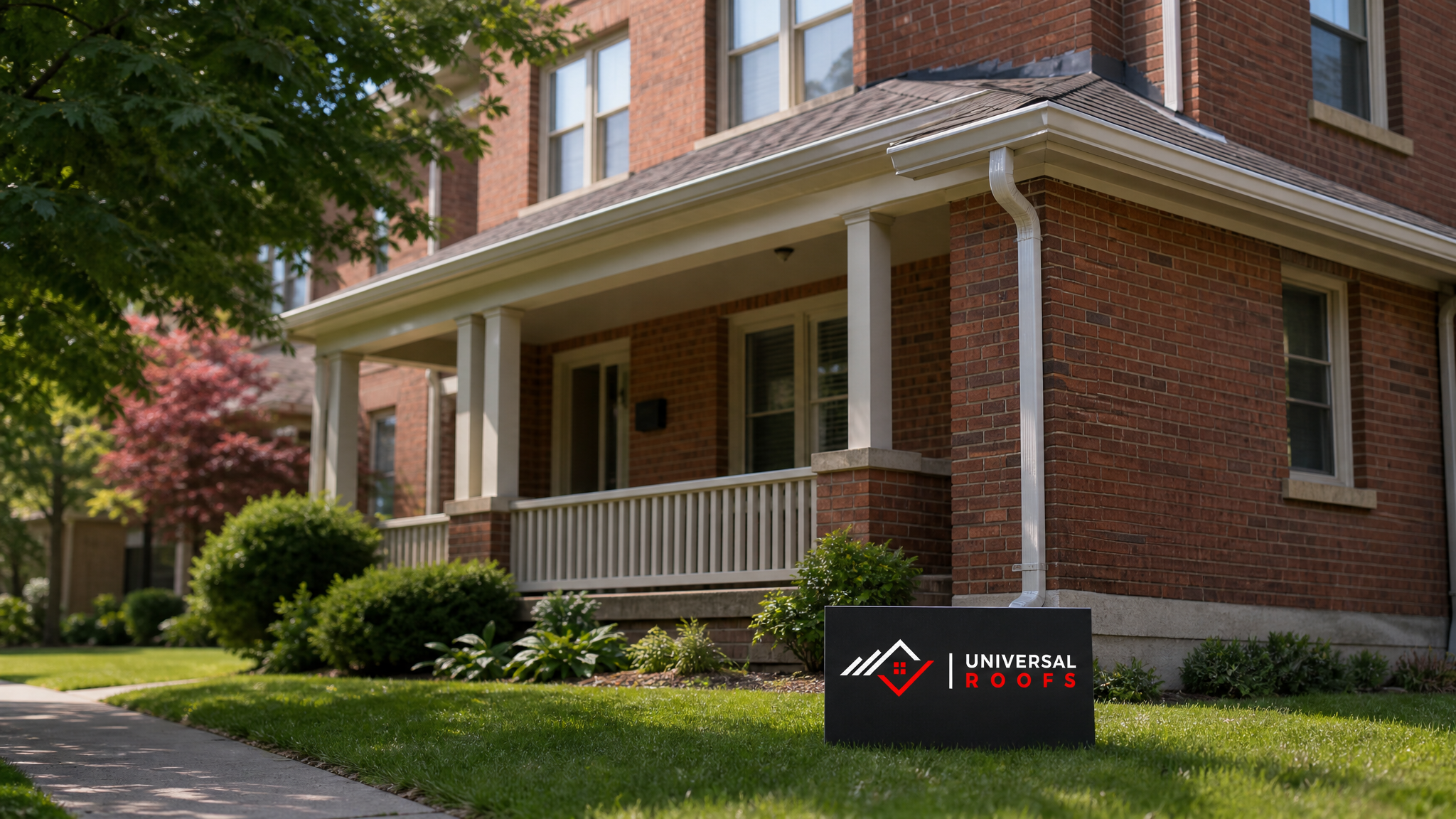
Signs You Need a Gutter Replacement in Toronto
Most gutter systems on GTA homes last between 20 and 30 years, but local conditions can shorten that lifespan considerably. Before you commit to a full gutter replacement, it helps to know the difference between a system that simply needs a tune-up and one that has reached the end of its service life. A single loose bracket or a small hole can often be patched, but when problems appear in multiple places at once, replacement is almost always the more economical route.
Here are the most common warning signs our crews look for during an inspection:
- Cracks and splits — hairline cracks widen quickly under the weight of summer rainwater, and once a seam splits, sectional gutters rarely hold a seal again.
- Sagging and pulling away — gutters that dip in the middle or lean away from the fascia are no longer draining properly and are straining their fasteners.
- Peeling paint and rust streaks — orange staining or bubbling paint means water is sitting where it should be flowing.
- Pooling water and foundation cracks — puddles beside the house after a storm point to overflow that is undermining your foundation.
- Mildew or rot on the fascia and soffit — soft, discoloured wood behind the gutter is a clear signal the system has been leaking for some time.
- Frequent overflow — if your eavestroughs spill over during ordinary rainfall, they may be undersized, clogged beyond repair or improperly pitched.
If you notice several of these issues together, a gutter replacement is usually the responsible choice. Patching one leak while the rest of the run is corroding simply postpones a larger and costlier repair. Our team often finds that homeowners who delay a gutter replacement end up also paying for fascia repair, soffit work, or even attic and insulation restoration once water has found its way inside.
Repair or Replace? How to Decide
Not every drainage problem calls for a full replacement. A well-maintained system with a single fault is often worth repairing, especially if the gutters are less than 15 years old. The decision usually comes down to age, the extent of the damage, and whether the same problems keep returning. The table below summarises how we weigh a repair against a gutter replacement during a Toronto inspection.
| Situation | Recommended Action | Typical Reasoning |
|---|---|---|
| Single leaking seam, system under 10 years old | Repair | Resealing or replacing one section is cost-effective |
| Multiple sagging sections, loose fasteners throughout | Replace | Widespread fastener failure signals end of life |
| Rust or corrosion across several runs | Replace | Corrosion spreads and cannot be reliably patched |
| Undersized gutters overflowing in heavy rain | Replace with larger profile | Capacity problem, not a maintenance problem |
| One dented section from a fallen branch | Repair | Isolated impact damage, rest of system sound |
When we complete a roof repair or a full roof replacement, we almost always recommend inspecting the gutters at the same time. Coordinating a gutter replacement with roofing work reduces labour costs, avoids two separate mobilisations, and ensures the drip edge, flashing and eavestrough all integrate correctly. It is one of the most common ways our GTA clients save money on the overall project.
Gutter Material Options for GTA Homes
Choosing the right material is the single biggest decision in any gutter replacement. Each option balances cost, durability, appearance and maintenance differently, and the right choice depends on your home’s style, your budget, and how much rainfall your roof sheds. Aluminium remains the workhorse of the Toronto market, but it is far from the only option worth considering.
| Material | Lifespan | Relative Cost | Best For |
|---|---|---|---|
| Seamless aluminium | 20-30 years | Moderate | Most GTA homes; rust-proof and low maintenance |
| Galvanised steel | 20-25 years | Moderate to high | Homes needing extra impact resistance |
| Copper | 50+ years | Premium | Heritage and high-end homes wanting a distinctive finish |
| Vinyl | 10-15 years | Low | Budget projects and smaller secondary structures |
| Zinc | 40+ years | Premium | Long-term durability with a modern matte look |
For the vast majority of homeowners, seamless aluminium delivers the best combination of value and longevity. Because it is formed on-site from a single continuous coil, a seamless gutter replacement has far fewer joints than old sectional systems, which means dramatically fewer places for leaks to develop. Copper and zinc are beautiful and last for generations, but their premium price makes the most sense on heritage properties or architecturally significant homes where appearance is a priority.
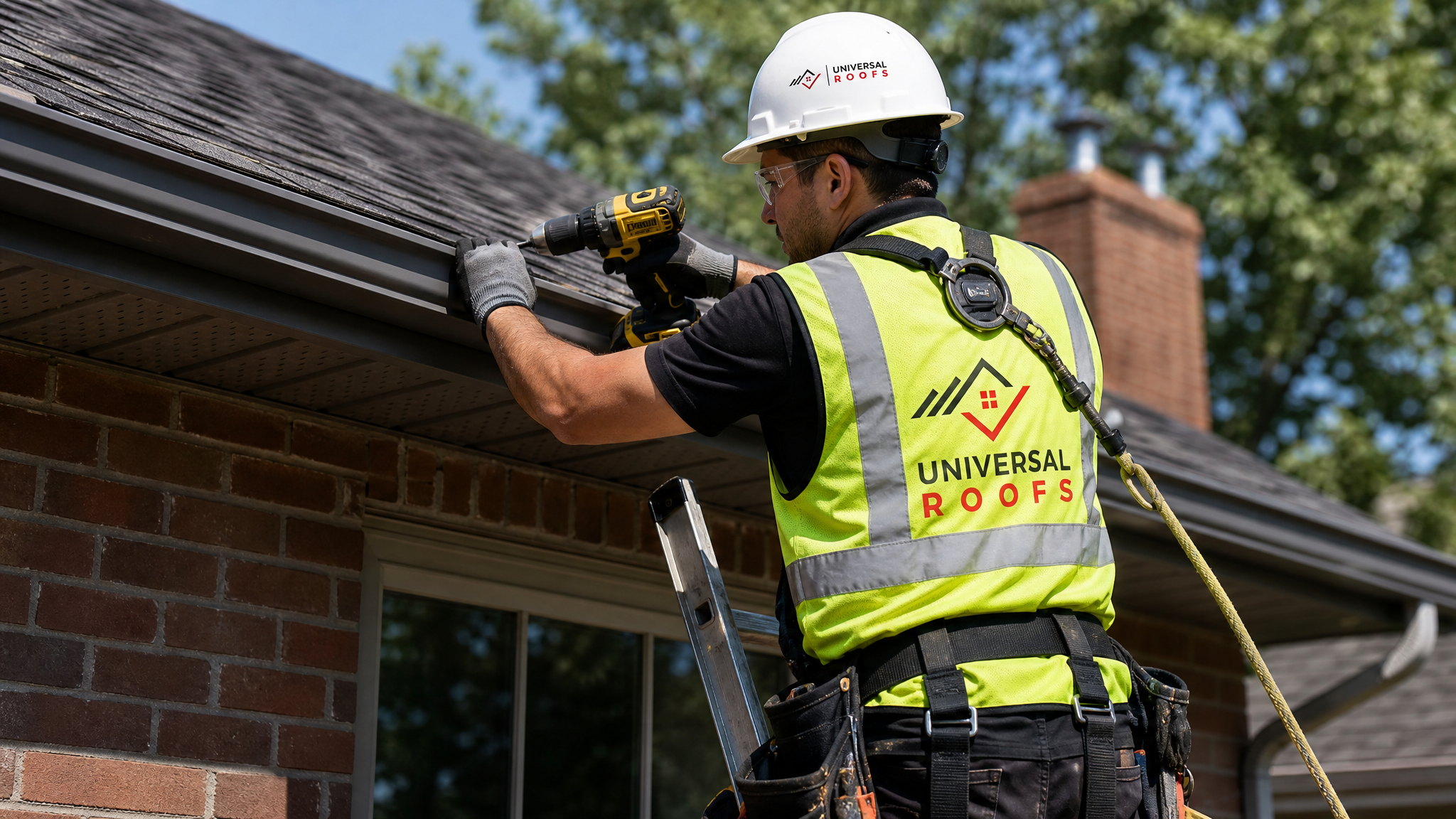
Gutter Styles and Sizing That Matter
Beyond material, the profile and size of your new gutters directly affect how well they handle Toronto’s summer storm bursts. The two dominant styles are K-style and half-round. K-style gutters have a flat back and a decorative front that resembles crown moulding; they carry more water than a half-round of the same width and suit most modern and mid-century homes. Half-round gutters have a classic semicircular shape that complements older brick and heritage properties, and they are easier to keep clean because debris flushes through more readily.
Sizing is equally important. Most GTA homes use five-inch gutters, but homes with large or steep roofs often benefit from stepping up to six-inch troughs paired with larger three-by-four-inch downspouts. During a gutter replacement, we calculate the roof’s drainage area and the local rainfall intensity to make sure the system will not overflow during a heavy July cloudburst. Undersizing is one of the most common mistakes we see on DIY and low-bid installations, and it is precisely the kind of problem that leads homeowners back to us for a second gutter replacement within a few years.
Downspout placement, the pitch of each run, and proper hidden-hanger spacing all influence performance just as much as the gutter itself. A correctly pitched system moves water quickly to the downspouts and away from the foundation, while poor slope leaves standing water that accelerates corrosion. These details are why a professional gutter replacement outperforms a quick patch job every time.
The Gutter Replacement Process Step by Step
Homeowners often ask what actually happens on installation day. A professional gutter replacement is a well-choreographed process, and knowing the sequence helps you understand what you are paying for. Here is how our crews typically approach a project across the GTA:
- Inspection and measurement — we assess the fascia, soffit and roof edge, then measure each run precisely to plan the layout and downspout locations.
- Safe removal — the old gutters and hangers come down carefully so the fascia is not damaged, and any rotten wood is flagged for repair.
- Fascia and drip-edge prep — we repair or replace damaged fascia board and confirm the drip edge and flashing are integrated correctly with the roof.
- On-site forming — for seamless aluminium, we roll continuous lengths on a portable brake so each run has no mid-span joints.
- Installation and pitch setting — gutters are hung with hidden hangers at proper spacing and pitched toward the downspouts for fast drainage.
- Downspouts and extensions — downspouts are secured and fitted with extensions that carry water well clear of the foundation.
- Water test and cleanup — we flush the system to confirm flow, check every seam, and leave the site clean.
Because our crews also handle flat roofing and skylight work, we understand exactly how the eavestrough interacts with the rest of the roof envelope. That whole-system perspective is what separates a lasting gutter replacement from a quick swap that fails at the first hard rain.
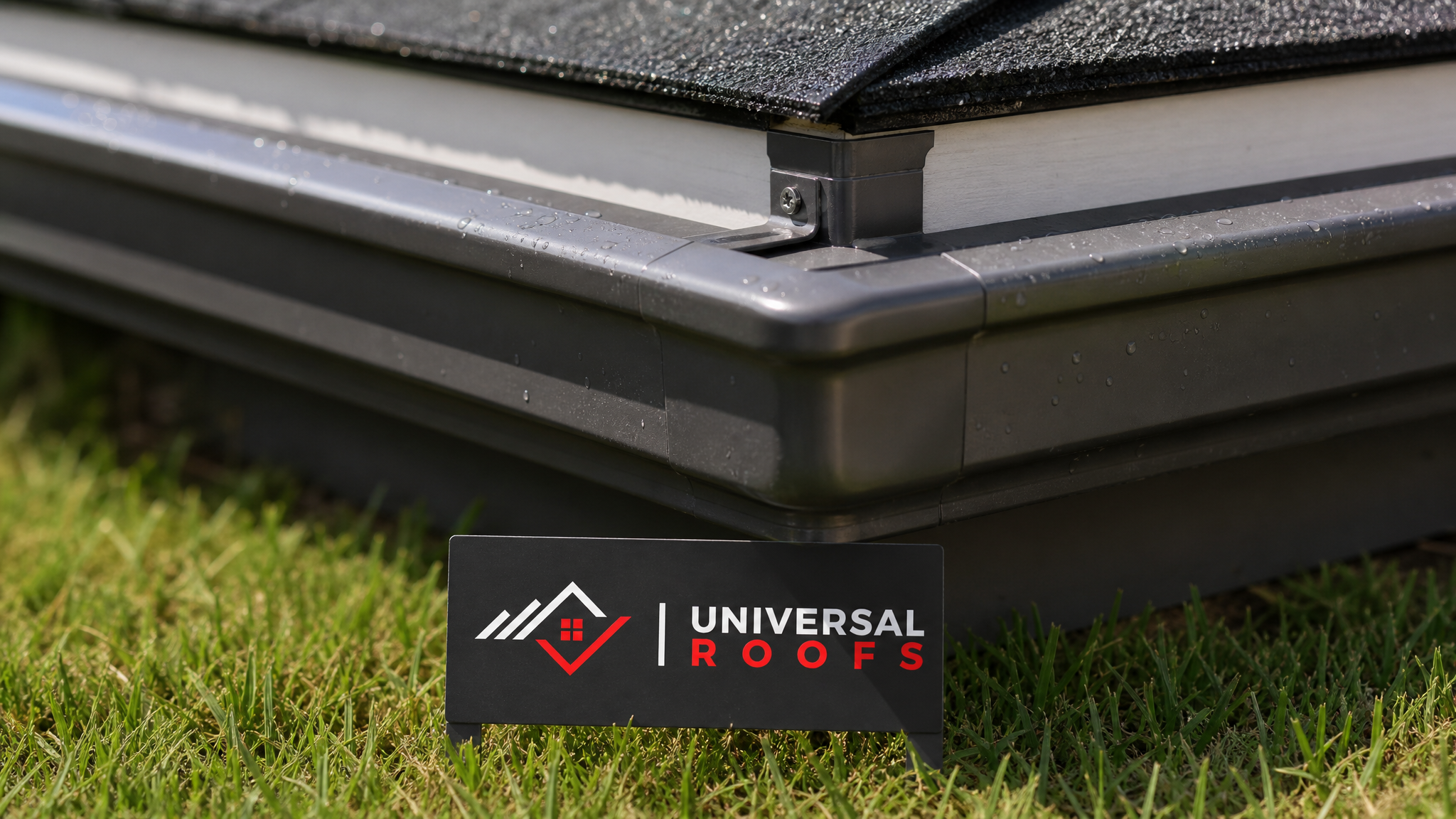
What a Gutter Replacement Costs in Toronto
Pricing for a gutter replacement varies with the length of the runs, the material chosen, the number of storeys, and how much fascia repair is required. As a general guide, most Toronto homeowners can expect to invest somewhere in the ranges below, though every property is different and an on-site quote is always the most accurate. The figures reflect typical installed pricing including labour, materials and cleanup.
| Home Type | Approx. Linear Feet | Typical Installed Range | Notes |
|---|---|---|---|
| Small bungalow or semi | 100-140 ft | $1,200 – $2,400 | Single storey, seamless aluminium |
| Two-storey detached | 150-220 ft | $2,400 – $4,500 | Higher access, more downspouts |
| Large or custom home | 250+ ft | $4,500 – $8,000+ | Six-inch profile, complex rooflines |
| Copper or zinc upgrade | Any | 2-4x aluminium | Premium material and specialist labour |
| Added fascia repair | Variable | +$400 – $1,500 | Depends on extent of rot |
While it can be tempting to chase the lowest bid, remember that a gutter replacement done properly protects a much larger investment: your roof, fascia, foundation and basement. Cutting corners on capacity, pitch or fastener quality almost always costs more in the long run. Reading through our customer reviews gives you a sense of the standard we hold ourselves to on every job, and our frequently asked questions page answers many of the practical concerns that come up before a project begins.
Why Choose Universal Roofs for Your Gutter Replacement
We have been serving homeowners across Toronto and the surrounding region since 2005, and gutter replacement is a core part of what we do alongside full roofing services. When you work with us, your project is handled by trained technicians who follow strict safety protocols, use quality seamless materials, and integrate the eavestrough properly with your roof edge rather than treating it as an afterthought.
Every gutter replacement we complete is backed by a clear warranty and a workmanship standard we stand behind. Because we serve the entire Toronto area and neighbouring cities, we understand the specific demands that local weather, tree cover and older housing put on a drainage system. You can learn more about our company and the values that guide our crews on every project. From the first inspection to the final water test, our goal is a system that protects your home and needs nothing more than routine cleaning for decades.
How long does a gutter replacement take on a typical Toronto home?
Is a gutter replacement worth it or should I just repair my eavestroughs?
What is the best gutter material for the Toronto climate?
Can I schedule a gutter replacement together with a new roof?
What size gutters do I need for my home?
How do I know if my gutters are pitched correctly?
Book Your Gutter Replacement Consultation Today
Protecting your home starts at the roofline, and a properly installed gutter system keeps water where it belongs. The team at Universal Roofs is ready to inspect your eavestroughs, walk you through your options, and deliver a gutter replacement built to last through decades of GTA weather.
Call us today at (416) 732-2421 or request a free inspection to get started.
Universal Roofs proudly serves Toronto, Mississauga, Brampton, Vaughan, Markham, Oakville and the GTA since 2005.