
Roof Underlayment Synthetic vs Felt Comparison: What Every Toronto Homeowner Should Know
If you are planning a re-roofing project in the Greater Toronto Area, the roof underlayment synthetic vs felt comparison is one of the most important decisions you will make before a single shingle goes down. Underlayment is the secondary weather barrier that sits between your roof deck and your shingles, and the material you choose affects durability, moisture protection, and how long your new roof will actually perform once installed. At Universal Roofs, homeowners across Toronto, Mississauga, Brampton, Vaughan, Markham, and Oakville ask us almost every week whether synthetic or felt underlayment is the smarter investment, and the honest answer depends on your roof type, budget, and long-term goals.
This guide breaks down the roof underlayment synthetic vs felt comparison in plain language, covering material composition, performance, cost, and installation considerations specific to our GTA climate. Whether you are re-roofing a century home in the east end or a newer build in a neighbouring suburb, understanding this comparison will help you make a confident decision alongside your roof replacement contractor, and it will help you analyse quotes from different companies with far more confidence than guesswork alone.
Making the right call in the roof underlayment synthetic vs felt comparison now can save you thousands of dollars in avoided repairs later, especially on additions, dormers, and complex rooflines where a roof repair down the road becomes far more disruptive than getting the underlayment right the first time. Summer is an ideal season for this kind of project in Toronto, since dry, stable weather gives crews the widest possible window to work safely and efficiently, and it gives homeowners more flexibility if a project needs to pause partway through for material delivery.
What Is Felt Underlayment and How Does It Perform?
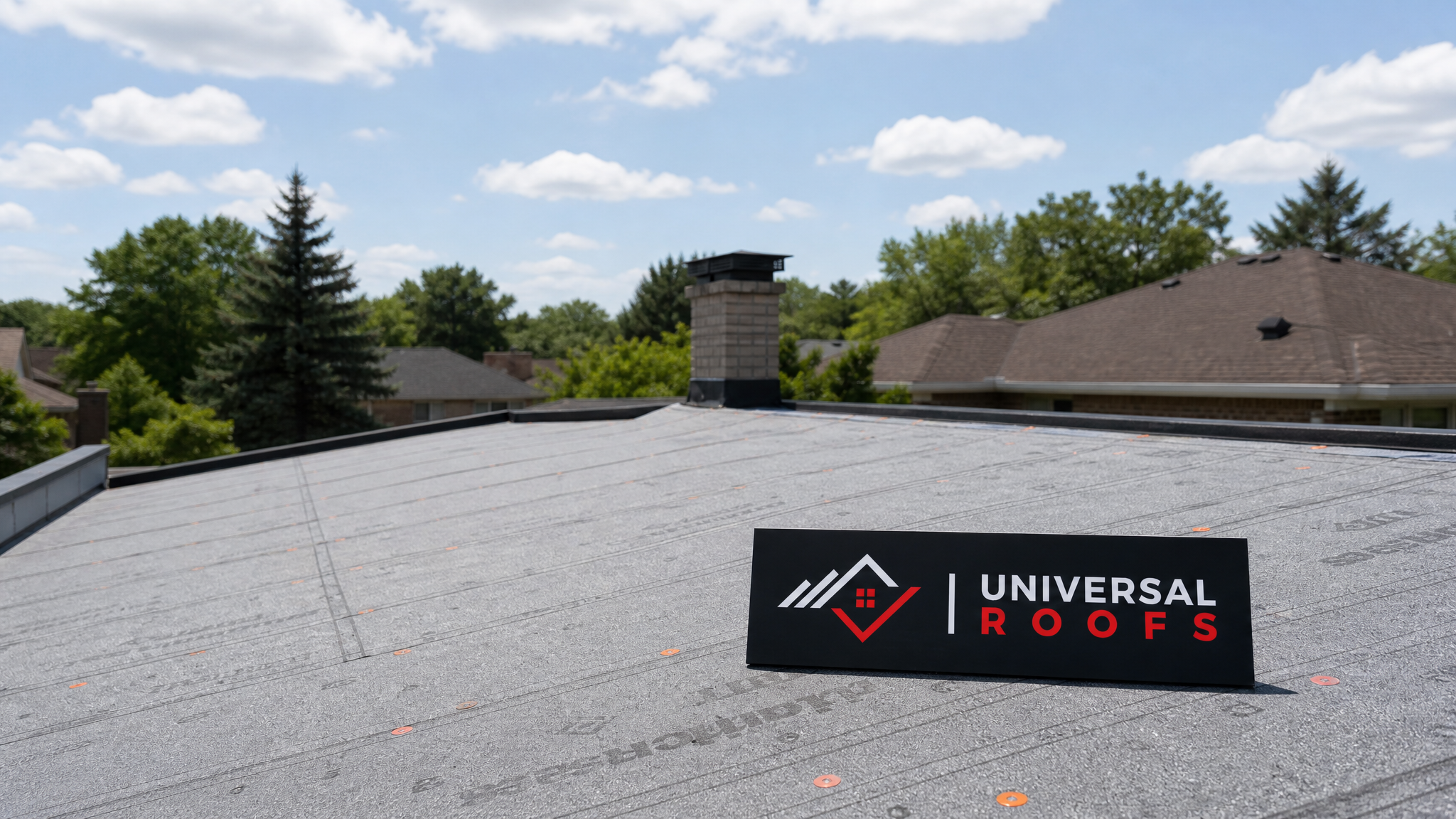
Felt underlayment, often called tar paper or asphalt-saturated felt, has been the standard roofing underlayment for generations. It is manufactured by saturating an organic or fiberglass mat with asphalt, then rolling it into either 15-pound or 30-pound rolls, with the number referring to the historical weight per roofing square. In the roof underlayment synthetic vs felt comparison, felt is the legacy option that most older GTA homes were originally built with, so it remains familiar to many homeowners and to some longtime contractors as well.
Felt has real advantages: it is inexpensive, widely available, and easy for experienced crews to install using standard cap nails or staples. It also has a long track record, having protected roofs successfully for decades before synthetic alternatives existed. However, felt is heavier per roll, tears more easily once it gets wet, and can wrinkle or buckle in humid conditions, which sometimes telegraphs an uneven texture through the finished shingles. Many GTA homeowners still ask about felt because it is familiar and inexpensive, but in a genuine roof underlayment synthetic vs felt comparison, its limitations become apparent once you look closely at tear strength, UV tolerance, and long-term moisture exposure.
Felt also has a shorter safe exposure window and can be prone to nail-pop and seam lifting if a fastening pattern is even slightly off. Left uncovered in direct sun for more than about 30 days, standard felt can become brittle, crack, and lose its water-resistant properties well before shingles are ever installed. On a busy contractor’s schedule, or on a project affected by material back-orders, that narrow window can become a real liability rather than a minor inconvenience, particularly on larger rooflines with multiple valleys.
What Is Synthetic Underlayment and Why Contractors Prefer It
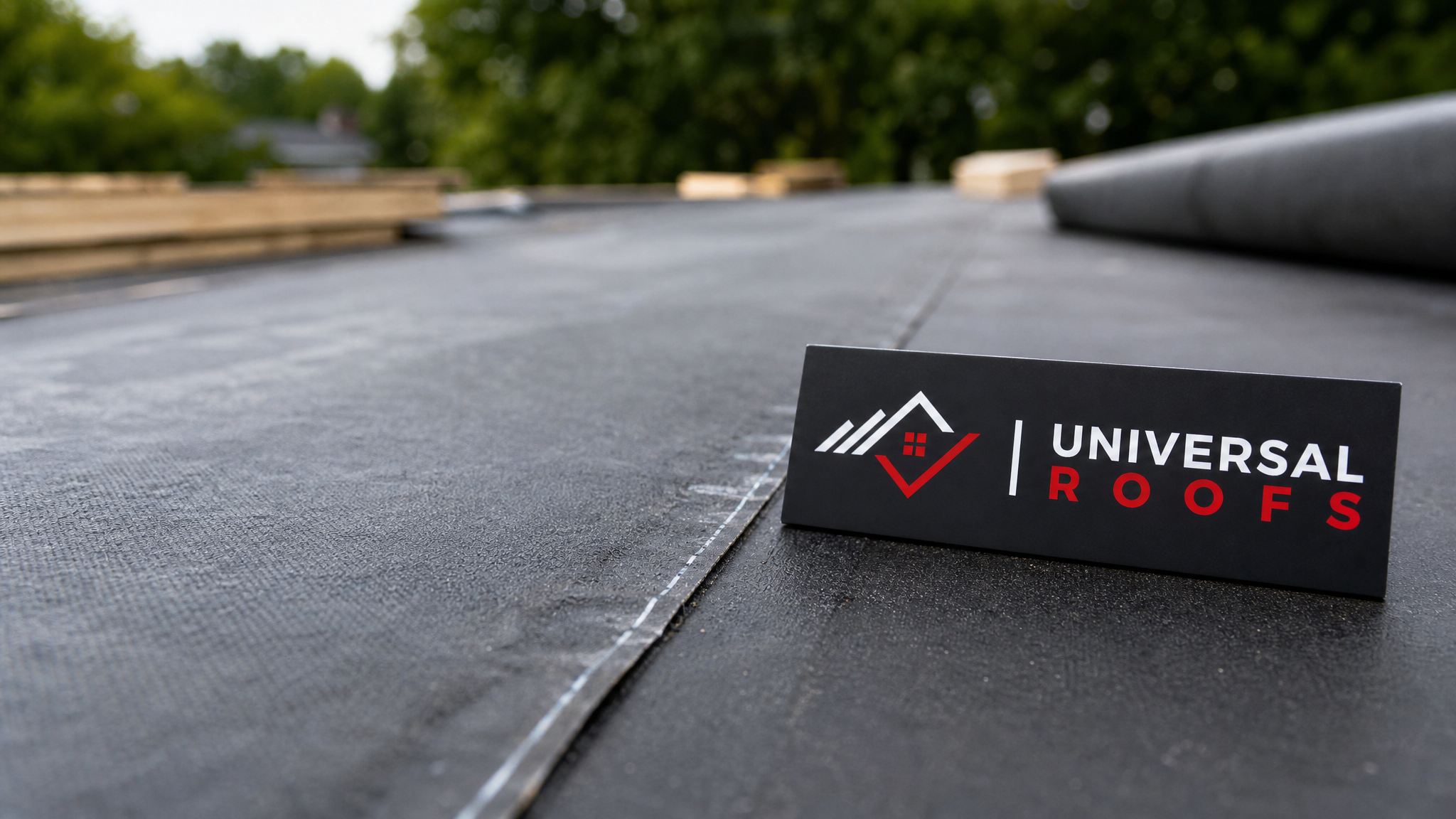
Synthetic underlayment is manufactured from woven or spun polypropylene or fiberglass mat coated with UV-stabilized polymers, rather than asphalt-saturated felt. It arrived on the market as a modern alternative designed specifically to solve the tear resistance and exposure limitations of felt, and today most professional roofing crews at Universal Roofs favour synthetic in almost every roof underlayment synthetic vs felt comparison we walk homeowners through, particularly for full roof replacements.
Because Toronto summers bring long stretches of direct sun before shingles go down, especially on larger or multi-phase residential jobs, synthetic sheets can typically stay exposed for 90 to 180 days without meaningful degradation, a decisive factor in the roof underlayment synthetic vs felt comparison for any project with a scheduling buffer or an unpredictable material delivery timeline. Synthetic underlayment is also significantly lighter than felt, with a standard roll covering roughly 100 square metres of deck compared to far less coverage per roll of felt, which reduces the number of rolls a crew has to carry up a ladder over the course of a workday.
Roofers also find synthetic underlayment safer and more comfortable to walk on. Its textured, non-slip surface provides better traction than smooth felt, particularly on steeper pitches or when morning dew is still present, which matters a great deal for crew safety on multi-storey GTA homes. Synthetic sheets also breathe better and resist wrinkling in humidity, so the finished roof surface stays flatter under the shingles. You can read verified homeowner feedback about how these performance differences play out in real installations on our reviews page, where clients frequently mention how clean and tight a synthetic-underlayment roof looks even before shingles are installed.
Synthetic vs Felt Roof Underlayment: A Performance Comparison
The table below distills the roof underlayment synthetic vs felt comparison into the performance categories that matter most for GTA roofs: weight, tear resistance, UV exposure tolerance, moisture resistance, walkability, and expected service life. These figures reflect typical mid-range synthetic and standard 30-pound felt products used across residential roofing in Ontario.
| Performance Factor | Synthetic Underlayment | Felt Underlayment (30 lb) |
|---|---|---|
| Weight and coverage per roll | Approx. 9-11 kg, covers up to 100 sq. metres | Approx. 27-32 kg, covers roughly 33 sq. metres |
| Tear resistance | High; resists foot traffic and wind uplift | Moderate; tears easily once wet |
| UV exposure tolerance | 90-180 days before shingling | Roughly 30 days before shingling |
| Moisture resistance | Excellent; will not absorb water | Good; can wrinkle or buckle when saturated |
| Walkability and traction | Textured, slip-resistant surface | Smooth; can be slippery when damp |
| Typical service life as a secondary barrier | 25+ years | 15-20 years |
As the roof underlayment synthetic vs felt comparison table shows, synthetic products outperform felt in nearly every technical category, sometimes dramatically so when it comes to tear resistance and safe UV exposure. Felt remains a defensible budget option for short-term applications such as sheds, detached garages, or temporary weatherproofing, but for a primary residence, the performance gap is difficult to ignore once you see the numbers side by side.
Cost Breakdown: Synthetic vs Felt Underlayment in Toronto
Cost is usually the first question homeowners raise once they understand the performance side of the roof underlayment synthetic vs felt comparison. Synthetic underlayment does carry a higher price per roll than felt, but because synthetic rolls cover far more square footage, the true cost gap on a full roof is smaller than most people expect.
| Cost Factor | Synthetic Underlayment | Felt Underlayment |
|---|---|---|
| Material cost per roll | Higher per roll, covers more area | Lower per roll, covers less area |
| Coverage per roll | Up to 100 square metres | Roughly 33 square metres |
| Installation labour, average roof | Faster; fewer rolls and fasteners | Slower; more rolls and fastening |
| Estimated material cost, 200 sq. metre roof | Modest premium overall | Lower upfront, higher long-term risk |
When you calculate the roof underlayment synthetic vs felt comparison on a whole-roof basis rather than a per-roll basis, the price gap narrows considerably, because synthetic rolls cover more deck area per roll and require fewer fasteners and less labour time to install correctly. On an average 200 square metre GTA roof, the difference in underlayment material cost is often only a few hundred dollars, a modest premium against the total cost of a full re-roof.
Underlayment on Flat and Low-Slope Roofs: The roof underlayment synthetic vs felt comparison changes somewhat on low-slope sections, where neither traditional felt nor standard synthetic underlayment is appropriate as a standalone waterproofing layer. Universal Roofs typically pairs synthetic underlayment with a self-adhered ice-and-water membrane at eaves, valleys, and roof-to-wall transitions, then shifts to a fully adhered membrane system on true flat roofing sections, since flat assemblies demand different waterproofing strategies than a sloped shingle roof entirely.
Which Underlayment Is Right for Your GTA Roof?
Every roof is a little different, and the right answer to the roof underlayment synthetic vs felt comparison often depends on your roof’s slope, deck condition, and how the finished home will be used. The table below outlines common scenarios we see across Toronto and the surrounding region, along with our general recommendation for each.
| Roof or Home Scenario | Recommended Underlayment | Why It Fits |
|---|---|---|
| Steep-slope roof, 8/12 pitch or greater | Synthetic | Better traction and safer footing for crews |
| Extended exposure before shingling due to delays | Synthetic | Withstands 90-180 days of direct sun |
| Budget-conscious re-roof on a detached garage | Felt | Lower material cost for a lower-stakes structure |
| Older deck with plank sheathing and uneven boards | Synthetic | Higher tear resistance handles minor irregularities |
| Roofline with multiple skylights or flashing details | Synthetic | Withstands repeated foot traffic near penetrations |
Underlayment Around Skylights and Flashing Details: Homes with rooflines that include skylights or multiple flashing transitions benefit the most from synthetic underlayment’s tear resistance, since these areas see repeated foot traffic during installation and during any future service calls. The roof underlayment synthetic vs felt comparison tends to favour synthetic even more strongly around these complex penetrations, where a small tear can turn into a hidden leak years later.
Underlayment and Attic Ventilation: Underlayment choice also interacts with your attic ventilation setup. A well-ventilated attic reduces the amount of moisture that ever reaches the underlayment layer from below, extending the service life of either material, so proper intake and exhaust balance matters regardless of which side of the roof underlayment synthetic vs felt comparison you land on.
What to Expect During Installation: Regardless of which product you choose, installation follows a similar sequence. Crews strip the old roofing down to the deck, inspect and repair any damaged sheathing, install self-adhered membrane at vulnerable areas, then roll out the chosen underlayment horizontally starting at the eave, overlapping each course by several centimetres and fastening along the centre of each sheet with cap nails or staples spaced according to the manufacturer’s specifications.
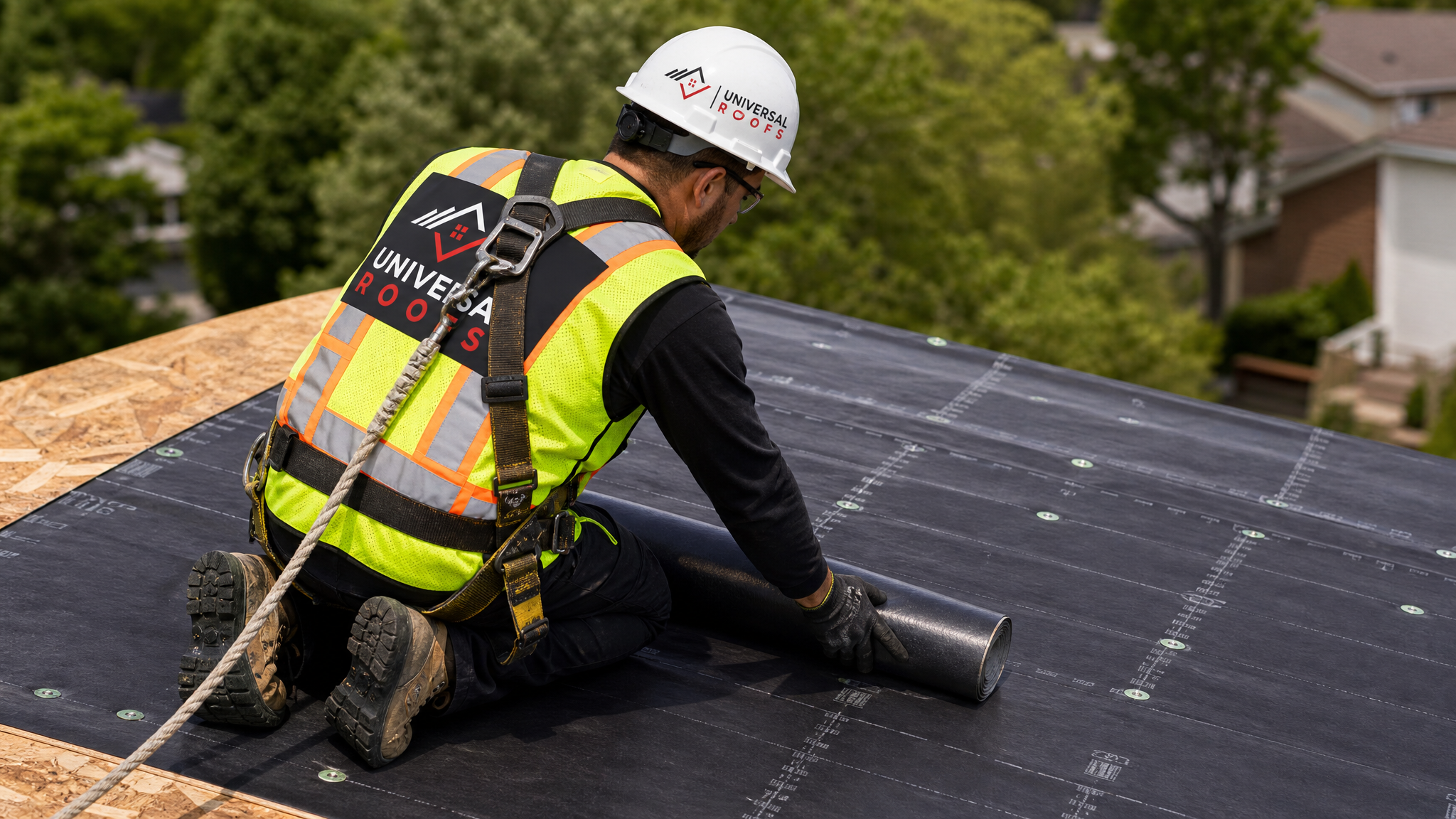
Our installation crews have specialized in exactly this roof underlayment synthetic vs felt comparison decision for two decades, weighing it against real Toronto weather patterns rather than manufacturer marketing alone. You can read more about our team’s background on the about page, review service details for your specific municipality on our Toronto service area page, or browse general roofing questions on our full FAQ page before booking an inspection.
Frequently Asked Questions About Roof Underlayment
Here are six of the most common questions GTA homeowners ask us about the roof underlayment synthetic vs felt comparison, along with straightforward answers from our roofing team.
Which is better in the roof underlayment synthetic vs felt comparison for a typical GTA home?
Does felt underlayment still meet building code requirements in Ontario?
How long can synthetic underlayment stay exposed before shingling?
Is synthetic underlayment worth the extra upfront cost?
Can felt and synthetic underlayment be combined on the same roof?
Who should I call to discuss underlayment options for my roof?
Ready to Settle the Roof Underlayment Synthetic vs Felt Comparison for Your Home?
Choosing between synthetic and felt underlayment does not have to be complicated, and you do not have to make the decision alone. Universal Roofs has guided GTA homeowners through this exact roof underlayment synthetic vs felt comparison for two decades, and our crews can inspect your roof deck, walk you through both options in person, and recommend the system that fits your home, your budget, and your timeline.
Call us today at (416) 732-2421 or request a free inspection to get started.
Universal Roofs proudly serves Toronto, Mississauga, Brampton, Vaughan, Markham, Oakville and the GTA since 2005.