
A sagging roofline is one of those problems homeowners notice long before they understand it. Maybe it is a soft dip along the ridge that catches your eye from the driveway, or a wave in the shingles above the garage that was not there last summer. Whatever the trigger, the moment you spot it, the real question becomes urgent: what should you consider before hiring a roof sagging repair specialist to fix it properly rather than just patch over the symptom?
This is not a decision to rush, and it is also not one to delay indefinitely. A sagging roof deck can be caused by anything from a decades-old undersized rafter to active water damage rotting out the sheathing beneath your shingles. Some causes are cosmetic annoyances; others are structural emergencies. Choosing the wrong contractor, or the right contractor without asking the right questions, can mean paying twice, once for a repair that does not address the root cause, and again when the sag returns or worsens.
In this guide, we walk through exactly what should you consider before hiring a roof sagging repair specialist, covering credentials, diagnostic process, materials, cost transparency, and the red flags that separate a qualified structural repair contractor from someone who will simply nail a new layer of shingles over a failing deck. We will also look at how Toronto’s climate, particularly our freeze-thaw winters and heavy spring snow loads, factors into both the cause of sagging roofs and the urgency of the fix.
Why Roofs Sag in the First Place
Before you can evaluate a specialist’s proposed fix, it helps to understand what typically causes a roof to sag. This matters because a contractor who cannot clearly explain the likely cause of your specific sag is not yet qualified to price the repair.
The most common causes we see across the GTA include:
- Undersized or aging rafters. Many homes built before the 1980s used rafter spans that were adequate by the building codes of their era but are thinner than what is required today, especially once additional layers of shingles or heavier snow loads are added.
- Water damage and rot. A slow leak around a chimney, skylight, or vent boot can quietly saturate the sheathing and rafters for years before a visible sag appears. By the time you see the dip, the wood underneath may already be significantly compromised.
- Excess weight from multiple shingle layers. Ontario allows up to two layers of asphalt shingles on most residential roofs, but two layers plus decades of ice and snow accumulation adds substantial dead load that older framing was never designed to carry.
- Inadequate ventilation and attic moisture. Poor attic airflow allows condensation to build up on the underside of the roof deck, softening plywood or oriented strand board (OSB) over time.
- Truss or rafter modifications. Previous renovations, such as removing a support wall or cutting into rafters for a skylight or vent without adding proper headers, can shift load paths and create a visible dip.
- Foundation or wall settlement. In rarer cases, the sag is not really a roof problem at all. It is the roof reflecting movement in the walls or foundation beneath it.
A genuine roof repair specialist should be able to walk you through which of these is most likely given your home’s age, roof type, and the specific location and shape of the sag, before ever mentioning a price.
What Should You Consider Before Hiring: Credentials and Insurance
The single most important item on any homeowner’s checklist is verifying that the contractor is properly licensed, insured, and experienced specifically with structural roof repairs, not just cosmetic reshingling. A sagging roof repair often involves opening up the deck, sistering or replacing rafters, and sometimes adding new structural supports, work that goes well beyond a standard shingle replacement.
Ask for and confirm the following before signing anything:
| Credential to Verify | Why It Matters | How to Confirm | Red Flag If Missing |
|---|---|---|---|
| WSIB coverage | Protects you from liability if a worker is injured on your property | Ask for a WSIB clearance certificate directly from the contractor | Refuses to provide a certificate or says “we’re covered” without proof |
| General liability insurance | Covers accidental property damage during structural work | Request a certificate of insurance naming your address | Insurance certificate is expired or for a different company name |
| Municipal business licence | Confirms the company is a legitimate, registered contractor | Check the licence number against your municipality’s registry | No licence number provided on quote or contract |
| Manufacturer certification | Ensures shingle and underlayment warranties remain valid | Ask which shingle manufacturers they are certified installers for | Vague answer or no certification with major brands |
| Structural repair experience | Sagging repairs need framing knowledge, not just shingling skill | Ask for 3-5 references specifically for sagging or structural jobs | Only has references for standard reshingling jobs |
If a salesperson gets defensive or evasive when you ask for any of this, treat it as a serious warning sign. A reputable company, including one with two decades of history like ours, should have this documentation ready before you even ask.
How a Qualified Specialist Diagnoses a Sagging Roof
Any contractor can look at a dip from the driveway and quote a number. What separates a genuine roof sagging repair specialist is the diagnostic process they use before that number means anything.
A thorough inspection should include:
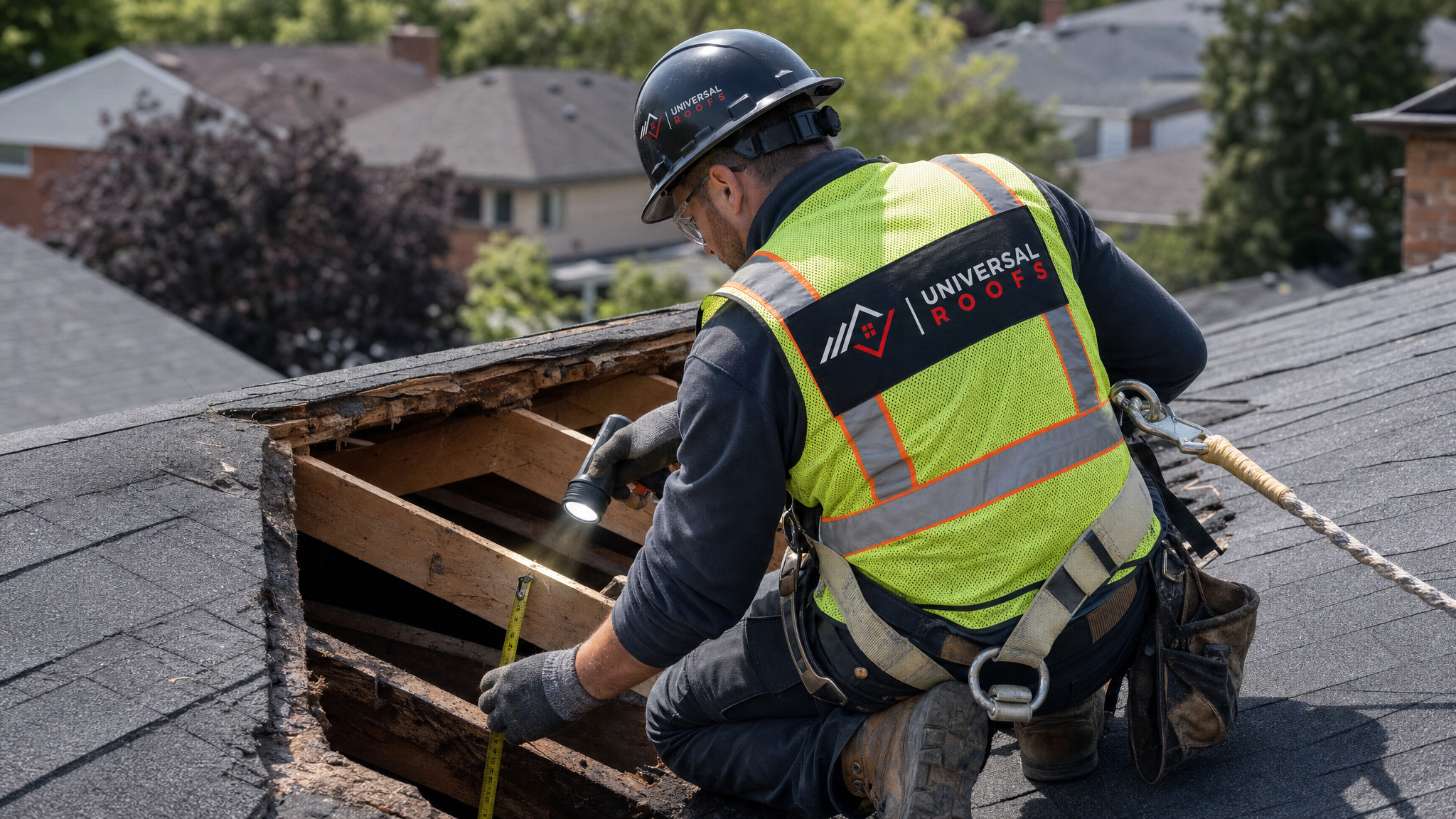
- Interior attic inspection. The specialist should climb into your attic with a flashlight and moisture metre to check rafters, the ridge board, collar ties, and the underside of the sheathing for rot, staining, or soft spots.
- Exterior roof walk. A visual and physical assessment of the exterior deck to map the exact location, size, and depth of the sag, and to check for related issues like cracked or curling shingles, flashing gaps, or moss growth that indicates trapped moisture.
- Ventilation assessment. Checking soffit, ridge, and gable vents to determine whether poor attic airflow contributed to the problem, since fixing the sag without correcting ventilation invites a repeat failure.
- Structural measurement. Using a straightedge or laser level along the ridge and rafter lines to quantify how much the roof has actually dropped, which distinguishes a minor cosmetic dip from a structurally significant sag.
- Load and span calculation. For confirmed structural causes, a proper specialist (or an engineer they bring in) should calculate whether the existing rafters meet current span tables for your snow load zone, which in the GTA is a meaningful factor given our winter accumulation.
If a contractor skips straight from a driveway glance to a repair quote without ever entering your attic, that is a strong signal they are guessing rather than diagnosing.
Comparing Repair Methods for Sagging Roofs
Once the cause is confirmed, there are several accepted methods for correcting a sagging roof, and the right one depends heavily on severity, the extent of any rot, and your budget. A specialist should present the options honestly rather than defaulting to whichever generates the highest invoice.
| Repair Method | Best For | Typical Timeline | Relative Cost |
|---|---|---|---|
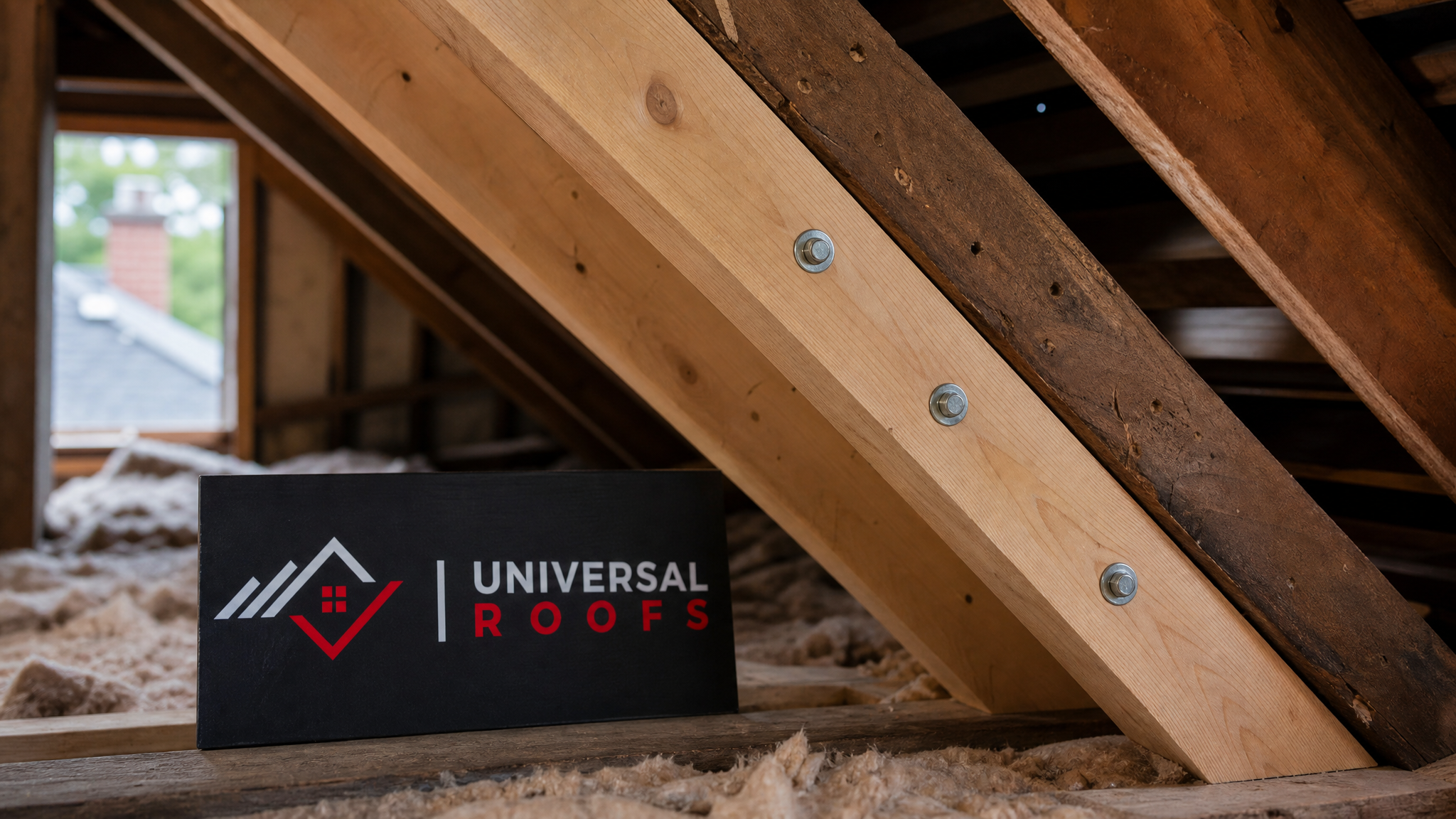
| Sistering rafters | Undersized or mildly weakened rafters with no active rot | 2-4 days | Moderate |
| Full rafter or truss replacement | Severely rotted or broken structural members | 4-7 days | High |
| Adding support posts or beams | Long spans lacking mid-span support in the attic | 1-3 days | Moderate |
| Sheathing replacement only | Localized deck rot with sound rafters underneath | 1-2 days | Low to moderate |
| Shingle layer removal and reroof | Sag caused primarily by excess weight from old shingle layers | 2-3 days | Moderate to high |
Notice that in every scenario, the repair addresses the framing or deck first and the shingles second. Any specialist who proposes reshingling over a confirmed structural sag without touching the framing underneath is treating the symptom, not the cause, and you should ask them directly why they are skipping that step.
Questions to Ask Before Signing a Contract
Beyond credentials and diagnostic process, the conversation with your prospective contractor should cover the practical details of the job itself. Bring this list to your consultation:
- What is the specific root cause you have identified, and how did you confirm it?
- Will you need to bring in a structural engineer, and if so, is that included in the quote?
- What materials will you use for sistering or replacing rafters, and are they kiln-dried and code-rated for our snow load zone?
- How will you match the existing roofline so the repair is not visible from the street?
- What happens if you open the deck and find more extensive rot than expected?
- Is the quoted price fixed, or does it include allowances for unforeseen damage?
- What warranty do you offer on structural repairs versus on shingle work?
- Will a permit be required from the local municipality, and will you pull it?
- How long will my home be exposed to the elements during the repair, and what temporary protection do you use?
A specialist worth hiring will welcome these questions and answer them specifically, not with vague reassurances. Vague answers, particularly around the “what if we find more damage” question, are one of the most common sources of homeowner disputes after the work begins.
Understanding Cost Transparency and Fixed-Price Risk
Sagging roof repairs are notoriously difficult to quote with total precision before the deck is opened up, because the true extent of rot or framing damage is not always visible from an inspection alone. That said, a transparent specialist will structure their pricing to protect you from surprise costs rather than exploit that uncertainty.
| Pricing Approach | How It Works | Homeowner Risk Level | What to Look For |
|---|---|---|---|
| Fully fixed quote | Single price regardless of what is found once opened | Low, but confirm it truly includes structural contingencies | Written confirmation the price is guaranteed even if rot is found |
| Base price plus documented allowance | Set price for expected scope, with a capped allowance for extra rot repair | Low to moderate | A dollar cap and per-unit rate for any additional material, in writing |
| Time and materials | Billed hourly plus materials as work proceeds | High | Daily cost caps and required approval before extra work begins |
| Verbal estimate only | No written scope or pricing structure provided | Very high | Avoid entirely; insist on a written contract before work starts |
Get everything in writing. A detailed, itemized contract that specifies materials, labour, disposal, permits, and a clear process for handling unexpected findings is the strongest protection you have as a homeowner.
Local Building Codes, Permits, and Toronto-Area Considerations
Structural roof repairs in Toronto and across the surrounding Peel Region, York Region, Halton Region, and Durham Region municipalities may require a building permit, particularly when rafters or trusses are being replaced or reinforced. This is not simply bureaucracy. Permitted work is inspected, which gives you an independent confirmation that the repair meets current structural standards for our climate.
Ontario’s building code sets minimum snow load requirements that account for the accumulation typical of GTA winters, and older homes built to earlier code editions may no longer meet that standard once you factor in additional shingle layers or attic insulation upgrades. Freeze-thaw cycling, so common through a Toronto winter, also accelerates rot in any area where moisture has already penetrated the deck, which is part of why sagging problems that seem stable in summer can worsen dramatically by the following spring.
A qualified specialist should know, without needing to look it up in front of you, whether your municipality requires a permit for the specific repair you need, and should be willing to pull that permit themselves rather than leaving you to navigate it. If your roof also has a skylight or is due for a full roof replacement in the near future, ask whether it makes sense to combine that work with the structural repair to avoid opening the same section of roof twice.
Red Flags That Signal You Should Walk Away
Even with a solid checklist in hand, some warning signs are serious enough that they should end a conversation immediately, regardless of how competitive the price sounds.
- Door-to-door solicitation after a storm. Contractors who appear unannounced claiming to have “noticed damage” from the street and pressure same-day signing are a classic pattern associated with storm-chasing scams.
- Demands for full payment upfront. A reasonable deposit is normal; demanding the entire contract value before work begins is not.
- No physical business address. A company that cannot provide a real, verifiable address, only a phone number and a truck, is much harder to hold accountable later.
- Refusal to put the scope in writing. Verbal promises about materials, timelines, or warranties are unenforceable if something goes wrong.
- Pressure to skip the permit. Avoiding a required permit might save a small fee now but can create major problems when you sell your home or file an insurance claim later.
- Unusually low bids compared to every other quote. A bid dramatically below the others often means shortcuts on materials, using unlicensed labour, or a plan to add change orders once work has started.
Trust your instincts here. If something about the sales pitch feels rushed or evasive, it almost always is.
What Happens After the Repair: Warranty and Maintenance
A completed structural repair is not the end of the story. Ask your specialist what warranty applies specifically to the framing and structural work, separate from any shingle manufacturer warranty, since these are frequently different lengths and different scopes.
You should also expect a brief maintenance conversation covering:
- How often the repaired area should be visually checked, particularly after major snow events
- Whether attic ventilation improvements were part of the repair, and how to confirm they remain unobstructed by insulation
- Signs that would indicate a need to call the specialist back, such as new interior water stains or a returning dip
- Whether the attic insulation and ventilation should be reassessed as part of preventing a recurrence
A specialist who treats the repair as a one-time transaction rather than an ongoing relationship with your home is missing an important part of the job. The best contractors want you to call them back for a five-minute check-in next spring, not to disappear after the invoice is paid.
Bringing It All Together: A Practical Checklist
To summarize what should you consider before hiring a roof sagging repair specialist, run through this checklist before you sign anything:
- Confirm WSIB coverage, liability insurance, and a valid business licence
- Insist on a full attic and exterior inspection, not just a driveway estimate
- Get a clear, specific explanation of the root cause, not a generic answer
- Compare at least two or three quotes with matching scopes of work
- Review pricing structure for how unforeseen damage will be handled
- Confirm permit requirements and who is responsible for pulling them
- Get the full scope, materials, and warranty terms in writing
- Watch for red flags like upfront full payment demands or door-to-door pressure
- Ask about post-repair maintenance and ventilation improvements
Taking the time to work through this list before hiring anyone protects both your budget and the long-term integrity of your home. A sagging roof rarely improves on its own, but it also does not need to become a stressful, costly ordeal if you know what to look for in the specialist you hire.
What should you consider before hiring a roof sagging repair specialist for an older home?
How much does it typically cost to fix a sagging roof in the Toronto area?
Is a sagging roof always a structural emergency?
Do I need a permit to repair a sagging roof in Ontario?
Can I just reshingle over a sagging roof instead of fixing the framing?
What warranty should I expect on a structural roof sagging repair?
Need Help With What Should You Consider?
If you are still weighing what should you consider before hiring a roof sagging repair specialist, the team at Universal Roofs is happy to walk through your specific situation, answer every question on this list, and give you a straightforward, written assessment before any work begins.
Call us today at (416) 732-2421 or request a free inspection to get started.
Universal Roofs proudly serves Toronto, Mississauga, Brampton, Vaughan, Markham, Oakville and the GTA since 2005.