
Every homeowner asks the same question eventually: what is the key to a long lasting roof? After more than two decades of inspecting, repairing, and replacing roofs across the Greater Toronto Area, we can tell you it is rarely one single thing. A long lasting roof comes from the right combination of quality materials, correct installation, proper attic ventilation, and consistent maintenance — with regular professional inspections tying everything together.
Toronto’s climate is uniquely hard on roofing systems. Our summers bring intense UV exposure and sudden thunderstorms, while our winters deliver repeated freeze-thaw cycles, ice damming, and heavy snow loads. A roof that might last 30 years in a milder climate can fail in 15 here if it was not built and maintained with our conditions in mind. The good news is that homeowners who understand the fundamentals can add a decade or more of service life to their roof without a full replacement.
In this guide, we break down every factor that actually determines how long a roof lasts, compare materials and maintenance approaches side by side, and give you a practical maintenance schedule you can start using this summer.
The Five Pillars of a Long Lasting Roof
When homeowners ask us for the single key to a long lasting roof, we tell them it is really a system of five interconnected pillars. Weaken any one of them and the others cannot compensate indefinitely.
- Material quality — Not all shingles, membranes, or metal panels are made to the same standard. Cheaper materials often cut corners on UV stabilizers, granule adhesion, or coating thickness.
- Installation quality — Even premium materials fail early when installed incorrectly. Improper nailing patterns, missing underlayment, or poor flashing work are the most common causes of premature roof failure we see.
- Ventilation and insulation — A roof deck that cannot breathe traps heat and moisture, which accelerates shingle deterioration from underneath and encourages ice damming in winter.
- Ongoing maintenance — Debris removal, gutter cleaning, and prompt repair of minor damage prevent small issues from becoming structural problems.
- Professional inspection — Twice-yearly inspections catch failing flashing, cracked sealant, and granule loss long before they cause interior damage.
Homeowners who invest in a quality roof replacement built around all five pillars typically see 20 to 30 percent longer service life than those who focus on material cost alone.
Choosing the Right Roofing Material for Longevity
Material selection is often the first decision homeowners make, and it sets the ceiling on how long your roof can possibly last — no amount of maintenance will make a poor-quality material outperform its inherent limitations. Here is how the most common residential roofing materials in the GTA compare.
| Material | Expected Lifespan (GTA Climate) | Freeze-Thaw Resistance | Relative Cost |
|---|---|---|---|
| 3-tab asphalt shingles | 15-20 years | Fair | $ |
| Architectural (laminate) shingles | 25-30 years | Good | $$ |
| Standing seam metal | 40-60 years | Excellent | $$$$ |
| Modified bitumen (flat roofs) | 15-20 years | Good | $$ |
| TPO/EPDM membrane (flat roofs) | 20-25 years | Very good | $$$ |
| Cedar shake | 25-30 years (with maintenance) | Fair | $$$$ |
Architectural shingles have become the default recommendation for most GTA homes because they balance cost and durability well, holding up to wind gusts and freeze-thaw cycling better than basic 3-tab shingles. For flat or low-slope sections common on additions and garages, a properly installed flat roofing system with a quality membrane will significantly outlast an older tar-and-gravel build.
Why Installation Quality Matters More Than the Product Label
We inspect a lot of roofs that failed years before their material’s rated lifespan, and installation error is behind the majority of them. A few specific mistakes account for most premature failures we see across Toronto, Mississauga, and Vaughan:
- Incorrect nailing — Nails placed too high, too low, or at the wrong angle allow shingles to lift in high winds, which are common during spring and autumn storm systems.
- Missing or inadequate underlayment — Synthetic or felt underlayment is your roof’s last line of defence if the top layer is compromised. Skipping it, or using too thin a product, invites leaks.
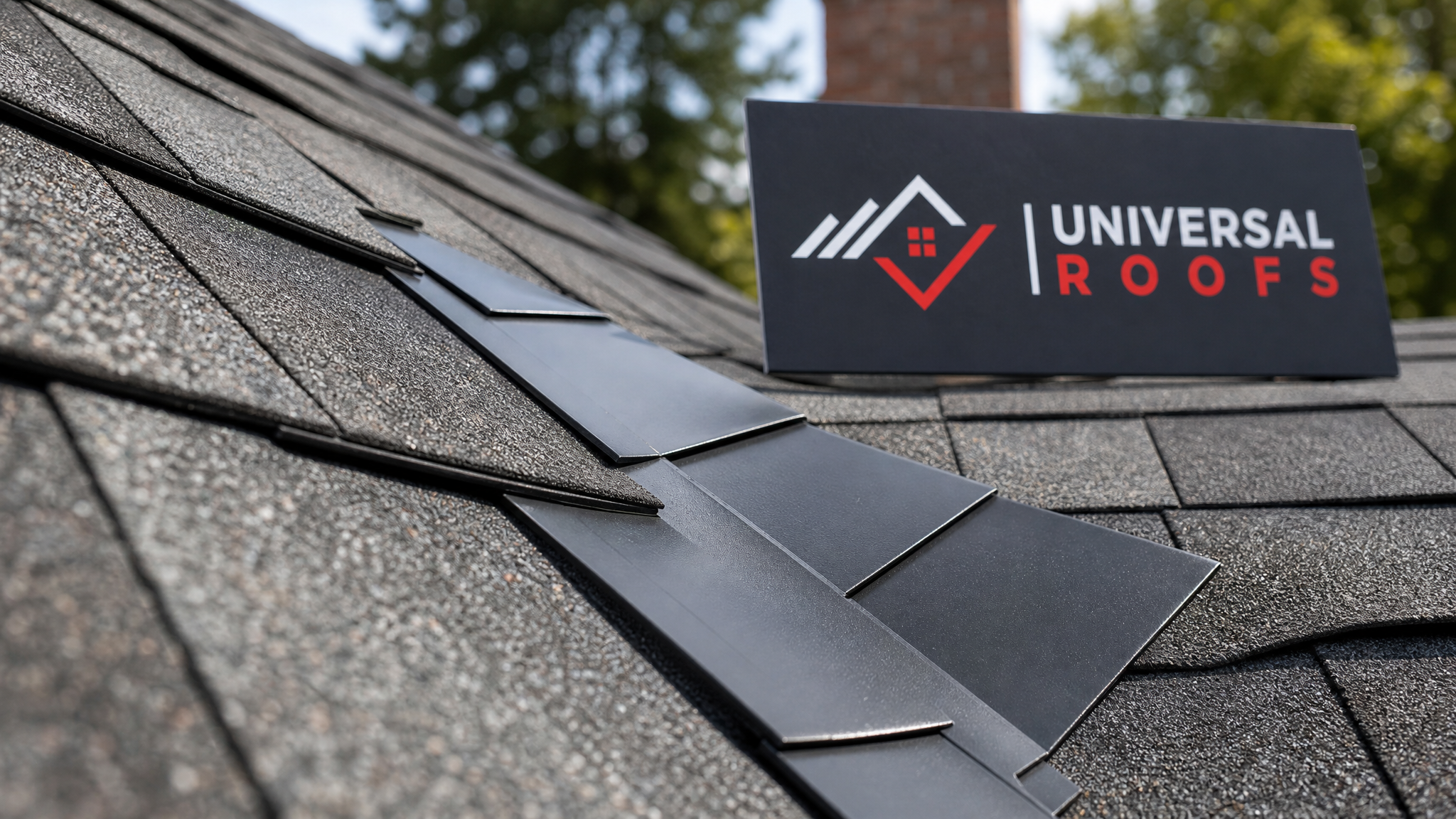
- Poor flashing details — Flashing around chimneys, skylights, and roof-to-wall transitions is the single most common leak point on any roof. It must be properly layered with the shingles, not just caulked on top.
- Insufficient ice and water shield — In our climate, code requires ice and water shield along eaves and valleys to prevent ice dam backup. Corners cut here show up as ceiling stains the following winter.
This is why we always recommend working with a licenced, insured contractor who can document each stage of the installation. If your existing roof shows signs of these issues, a proper roof repair assessment can often correct the problem before it causes structural damage.
Attic Ventilation: The Overlooked Factor
Ask most homeowners what determines roof longevity and they will mention shingles or maybe the contractor. Almost nobody mentions their attic — yet poor ventilation is one of the fastest ways to shorten a roof’s life from the inside out.
In summer, an under-ventilated attic can reach temperatures well above the outdoor air, baking the underside of your shingles and accelerating the breakdown of asphalt and adhesive. In winter, warm, moist air rising from the living space condenses against a cold roof deck, encouraging rot, mould, and ice dam formation at the eaves. Both scenarios lead to the same result: a shingle warranty that is technically still valid, but a roof that is failing years ahead of schedule.
Balanced ventilation combines intake vents at the soffit with exhaust vents at or near the ridge, allowing continuous airflow that keeps the deck temperature closer to the outdoor ambient year-round. Combined with properly installed insulation, this single upgrade regularly adds 5 to 10 years of usable life to an otherwise identical roof system. If you are unsure whether your attic is properly balanced, our attic ventilation and insulation assessment can identify gaps quickly.
Skylights, Penetrations, and Flashing Details
Every hole in your roof deck — whether for a chimney, plumbing vent, or skylight — is a potential leak point that depends entirely on flashing quality. Skylights deserve special attention because they combine a large opening with glass, framing, and multiple flashing layers that must all perform together for decades.
An aging or improperly flashed skylight is one of the most common sources of hidden roof damage we find during inspections, often showing up as water staining on drywall well before any visible leak. If your skylights are more than 15 to 20 years old, or you have noticed condensation, fogging, or staining around the frame, it is worth having them evaluated alongside the roof itself rather than treating them as a separate system. Our skylight and skylight replacement services are built around this integrated approach, since a leaking skylight flashing detail can undermine an otherwise excellent roof.
The Maintenance Schedule That Actually Extends Roof Life
Materials and installation set the ceiling on lifespan, but ongoing maintenance determines whether you actually reach it. Below is the maintenance cadence we recommend to GTA homeowners, adjusted for our seasonal climate.
| Task | Recommended Frequency | Best Season | Why It Matters |
|---|---|---|---|
| Professional roof inspection | Twice per year | Late spring & early autumn | Catches flashing, granule, and seal issues before leaks develop |
| Gutter cleaning | 2-4 times per year | Spring, mid-summer, late autumn | Prevents water backup under shingles and ice dam formation |
| Attic ventilation check | Annually | Summer | Confirms soffit and ridge vents are unobstructed and balanced |
| Moss and debris removal | As needed, checked annually | Summer | Trapped organic matter holds moisture against shingles |
| Flashing and sealant check | Annually | Early autumn | Sealant shrinks and cracks with age, especially after freeze-thaw cycles |
Summer is actually the ideal season to schedule a full inspection. The weather is stable, ice and snow are not obscuring problem areas, and any repairs identified can be completed well before the first autumn storms arrive. Homeowners who wait until a leak appears in December are usually facing a more expensive, more urgent repair than if the same issue had been caught in July.
Warning Signs Your Roof’s Lifespan Is Being Cut Short
Even a well-built roof can develop problems that quietly shorten its remaining service life. Watch for these signs between your scheduled inspections:
| Warning Sign | Likely Cause | Urgency | Recommended Action |
|---|---|---|---|
| Granules collecting in gutters | Shingle wear or UV degradation | Moderate | Schedule an inspection within a few weeks |
| Curling or cupping shingles | Age, heat damage, or poor ventilation | Moderate to high | Have the affected area assessed promptly |
| Ceiling stains or discolouration | Active or past leak, often at flashing | High | Contact a roofer immediately |
| Daylight visible through attic roof boards | Gaps, rot, or missing decking | High | Same-week repair recommended |
| Sagging roofline | Structural or decking failure | Urgent | Immediate professional assessment required |
Catching any of these early is almost always cheaper than waiting. A granule-loss issue caught in its first year might mean a targeted repair; left for several seasons, it can mean a full roof replacement years ahead of schedule.
How Climate and Local Conditions Shape Roof Longevity Across the GTA
While the fundamentals of a long lasting roof apply everywhere, the specific stresses differ slightly by region within the GTA. Homes in Toronto often deal with mature tree canopy that deposits debris and shades roofs unevenly, encouraging moss growth on the north-facing slopes. In Peel Region and York Region, newer subdivisions frequently have larger, more complex roof lines with more valleys and penetrations, which means more flashing details that need to be right. Homes closer to the lake in Halton Region face higher wind exposure, while properties further from the lake in Durham Region can see slightly more extreme temperature swings that stress shingle adhesive over time.
None of these differences change the core answer to what makes a roof last — quality materials, correct installation, ventilation, and maintenance — but they do change which details deserve the closest attention during an inspection. This is why a generic checklist from a national retailer rarely serves GTA homeowners as well as a locally experienced crew that understands these microclimates.
DIY Maintenance vs. Professional Care: What You Should and Shouldn’t Do Yourself
Many homeowners want to do some of this maintenance themselves, and some tasks are genuinely safe and useful to handle on your own. Others carry real risk or require expertise to do correctly.
| Task | Safe for DIY? | Notes |
|---|---|---|
| Visual inspection from the ground with binoculars | Yes | Good way to spot obvious damage between professional visits |
| Clearing gutters from a stable ladder | With caution | Never lean over the edge; use proper ladder standoffs |
| Trimming overhanging branches | Yes | Reduces debris and moss-promoting shade |
| Walking on the roof surface | Not recommended | Risk of injury and can damage shingles underfoot |
| Flashing repair or replacement | No | Requires proper layering technique and roofing experience |
| Ventilation modification | No | Improper venting can create new moisture problems |
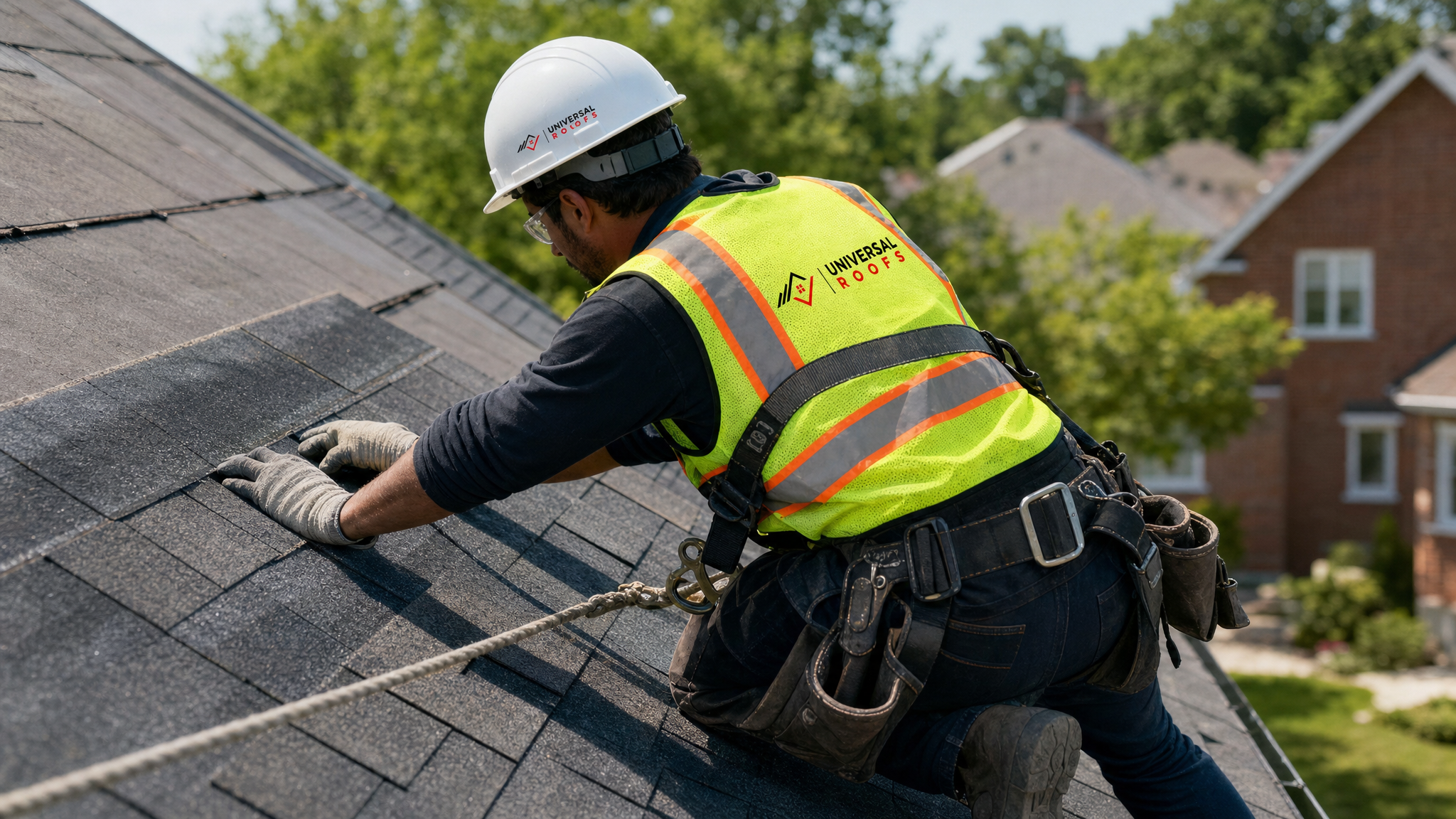
The safest rule of thumb: anything that keeps your feet on the ground is fair game. Anything that requires getting on the roof itself, or altering its structure, is worth leaving to a professional. Our crews carry full fall-protection equipment for exactly this reason — the same techniques used in every roof repair we perform.
What Our Customers Say About Long-Term Roof Performance
We have been serving the GTA since 2005, and a large share of our business comes from homeowners we worked with a decade or more ago, returning for maintenance on the same roof or referring neighbours. You can read real feedback from those projects on our reviews page, and if you have specific questions about your situation, our FAQ page covers many of the details we get asked about most often. You can also learn more about our crews and approach on our about page.
What is the key to a long lasting roof?
How often should I have my roof inspected to maximize its lifespan?
Does attic ventilation really affect how long a roof lasts?
Which roofing material lasts the longest in the Toronto climate?
Can poor installation shorten a roof’s life even with good materials?
What are the earliest warning signs that my roof needs attention?
Need Help With What Is the Key?
Understanding the key to a long lasting roof is only useful if it is applied by people who do this work every day. Universal Roofs has been building and maintaining roofs across the GTA since 2005, using the same quality materials, correct installation practices, and ventilation-first approach described throughout this guide.
Call us today at (416) 732-2421 or request a free inspection to get started.
Universal Roofs proudly serves Toronto, Mississauga, Brampton, Vaughan, Markham, Oakville and the GTA since 2005.