
A failing commercial roof is one of the most disruptive problems a Toronto-area property owner can face. Unlike a residential shingle job, a commercial roof replacement involves larger membrane systems, drainage engineering, rooftop mechanical units, and strict building code compliance — all while the business underneath needs to keep operating. This commercial roof replacement guide expert tips and advice article walks through everything a property manager, landlord, or business owner needs to know before signing a contract, including materials, costs, timelines, and the questions that separate a qualified contractor from a risky one.
Whether you manage a retail plaza in Mississauga, a warehouse in Brampton, or a multi-tenant office building in downtown Toronto, the fundamentals of a successful commercial roof replacement are the same: accurate diagnosis, the right membrane system for your building’s use, proper drainage and insulation, and a contractor who understands GTA weather cycles. Our region’s freeze-thaw winters, humid summers, and heavy spring rain place unique demands on flat and low-slope commercial roofs, and getting the specification wrong can cost tens of thousands of dollars in premature failure.
At Universal Roofs, we have been replacing commercial roofs across the Greater Toronto Area since 2005, and this guide reflects the patterns we see repeatedly: buildings that fail early because of a poor membrane choice, insurance claims complicated by inadequate documentation, and tenants disrupted by replacements that were never properly sequenced. Use this commercial roof replacement guide expert tips and advice resource as a working reference as you plan your project.
Signs Your Commercial Roof Needs Full Replacement, Not Repair
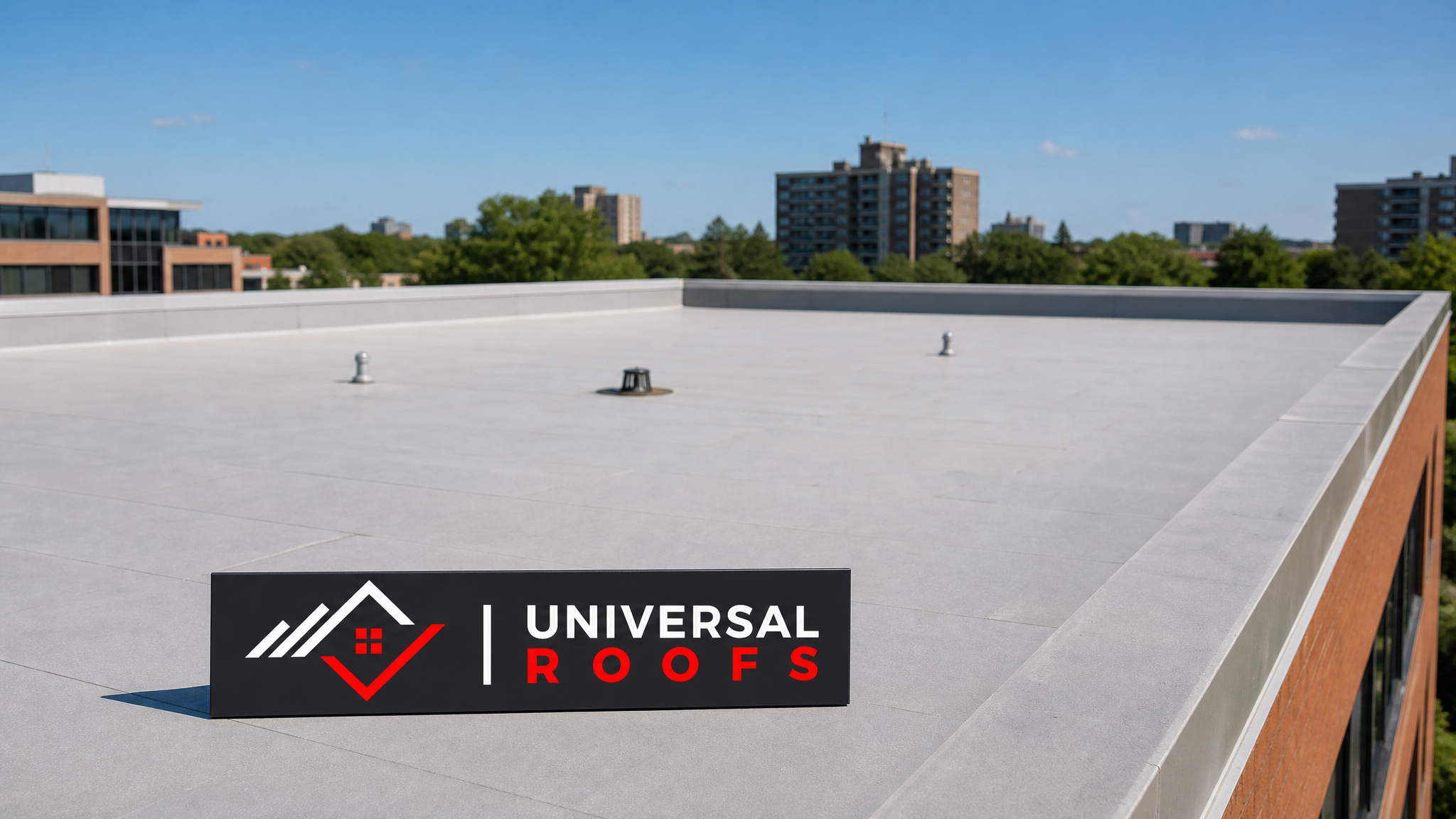
The first decision in any commercial roof replacement guide expert tips and advice discussion is whether replacement is actually necessary, or whether targeted roof repair can extend the roof’s service life economically. As a general rule, if your membrane is past 70 percent of its expected lifespan and repairs are becoming frequent, full replacement is usually the better long-term investment.
Watch for these warning signs during your next rooftop inspection or when reviewing maintenance logs:
- Ponding water that lasts more than 48 hours after rainfall, indicating structural sag or inadequate drainage slope
- Membrane blistering, alligatoring, or brittleness across large sections rather than isolated spots
- Recurring interior leaks in multiple locations despite prior patch repairs
- Visible separation at seams, parapet walls, or curb flashing around rooftop units
- Insulation that has become saturated, which you can sometimes detect through soft spots underfoot
- A roof that is already past its manufacturer-rated lifespan (most built-up and modified bitumen systems are rated for 15 to 20 years; single-ply membranes for 20 to 30 years)
A proper assessment should include a core sample cut, moisture scan, and a review of the building’s insurance and maintenance history. Property managers should also check whether a previous attic or insulation upgrade has changed the roof assembly’s moisture behaviour, since added insulation without proper ventilation can trap condensation inside the roof deck.
Commercial Roofing Membrane Options Compared
Choosing the right membrane system is the single most important decision in the replacement process. Each option carries different cost, durability, and maintenance profiles, and the right choice depends on your building’s use, roof traffic, and budget horizon.
| Membrane Type | Typical Lifespan | Best For | Relative Cost |
|---|---|---|---|
| TPO (Thermoplastic Polyolefin) | 20-25 years | Big-box retail, warehouses, energy-conscious buildings | Moderate |
| EPDM (Rubber Membrane) | 20-30 years | Buildings with heavy foot traffic or rooftop equipment | Moderate |
| Modified Bitumen | 15-20 years | Multi-layer retrofit projects, colder climates | Lower to Moderate |
| PVC Membrane | 20-30 years | Restaurants and buildings with grease or chemical exposure | Higher |
| Built-Up Roofing (BUR) | 15-25 years | Low-slope industrial roofs needing maximum durability | Moderate to Higher |
| Metal Roof Retrofit | 30-50 years | Long-term ownership, low maintenance priority | Higher |
TPO has become the most common choice for GTA commercial buildings over the last decade because it balances cost, reflectivity, and seam strength, but EPDM remains popular for buildings that need proven long-term flexibility through Toronto’s freeze-thaw cycles. If your building includes tenant-facing amenities or a green roof component, ask your contractor to walk through drainage board and root-barrier requirements specifically, since these details are easy to miss in a standard quote.
What Drives Commercial Roof Replacement Costs in the GTA
Commercial roof replacement pricing varies significantly based on membrane type, roof size, deck condition, and access complexity. The table below outlines the major cost factors property owners should budget for.
| Cost Factor | Impact on Budget | Notes |
|---|---|---|
| Membrane material selection | High | PVC and metal cost more upfront but reduce long-term maintenance |
| Deck and insulation condition | High | Rotted decking or saturated insulation adds significant tear-off and disposal cost |
| Rooftop unit relocation or curb work | Moderate | HVAC curbs, vents, and skylight curbs need re-flashing during replacement |
| Roof access and building height | Moderate | Crane or hoist requirements for multi-storey buildings increase labour cost |
| Drainage upgrades | Moderate | Adding tapered insulation to correct ponding water adds material and design cost |
| Permitting and engineering review | Low to Moderate | Required for larger commercial buildings under Ontario Building Code |
| Seasonal timing | Low | Late summer and early autumn bookings often have better contractor availability |
A detailed, itemized quote should separate these costs clearly. Be cautious of any commercial roofing estimate that bundles tear-off, materials, and labour into a single vague line item — this makes it difficult to compare quotes or identify where corners might be cut.
Project Timeline: What to Expect From Tender to Completion
Business owners consistently underestimate how long a commercial roof replacement takes, which can create friction with tenants or operations teams. The timeline below reflects a typical mid-size commercial project (10,000 to 40,000 square feet) in the GTA.
| Phase | Typical Duration | Key Activities |
|---|---|---|
| Inspection and quoting | 1-2 weeks | Core sampling, moisture scan, itemized proposal |
| Permitting and scheduling | 1-3 weeks | Building permit application, material ordering, crew scheduling |
| Tear-off and deck prep | 2-5 days | Removal of old membrane, deck repair, disposal |
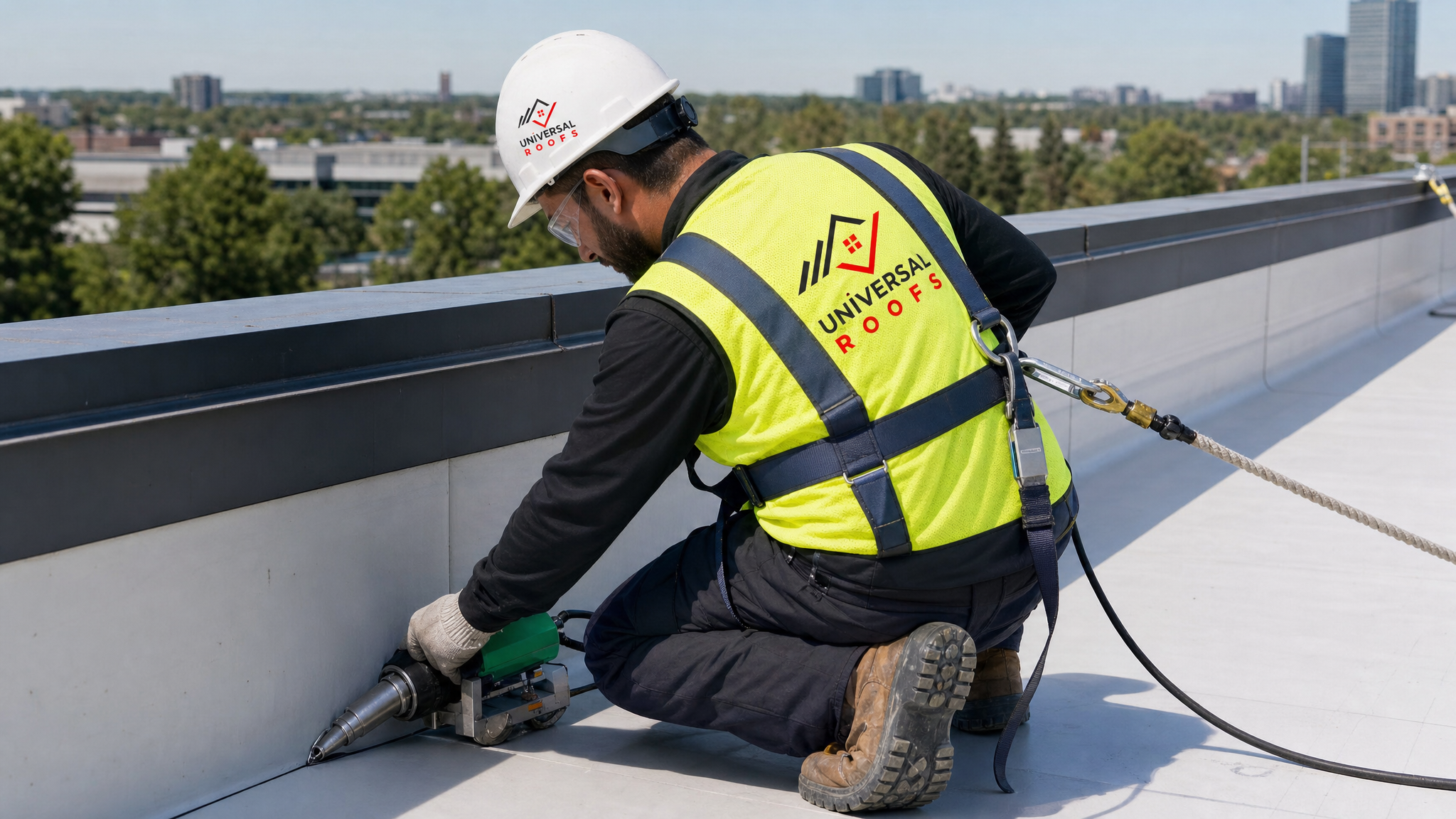
| Insulation and membrane installation | 3-10 days | New insulation layout, membrane adhesion or mechanical fastening, seam welding |
| Flashing, drains, and details | 2-4 days | Parapet flashing, drain retrofits, curb re-flashing around HVAC and skylights |
| Final inspection and warranty documentation | 1 week | Manufacturer inspection, warranty registration, close-out package |
Weather is the single biggest variable in this schedule. Membrane adhesion and seam welding both have minimum temperature requirements, so many GTA contractors prioritize the late spring through early autumn window for large tear-off projects. If your roof is already failing going into a colder season, ask your contractor about temporary emergency measures to protect the building interior until conditions allow a full replacement.
Managing Tenant Disruption and Business Continuity
For occupied commercial buildings, sequencing the work to minimize disruption is often as important as the roofing work itself. A well-run replacement plan should address:
- Noise scheduling — tear-off and mechanical fastening are the loudest phases; align them with off-peak business hours where possible
- Dust and debris containment — interior protection for tenants below active work zones, particularly near loading docks and shared entrances
- Staged sequencing — breaking large roofs into sections so at least part of the building always has weather protection overnight
- HVAC continuity — coordinating rooftop unit disconnection and reconnection with a licensed mechanical contractor so heating or cooling is never off for more than a few hours
- Communication — a written schedule shared with tenants in advance reduces complaint calls and helps property management plan around the work
A contractor who cannot answer specific questions about sequencing and tenant communication before the contract is signed is a warning sign. This is one of the most overlooked parts of any commercial roof replacement guide expert tips and advice discussion, but it is often what determines whether the project feels smooth or chaotic to the people working inside the building.
Drainage, Insulation, and Code Compliance Considerations
Commercial low-slope roofs depend heavily on proper drainage design, and replacement is the ideal time to correct chronic ponding issues rather than simply reinstalling the same slope. Tapered insulation systems can redirect water to drains more effectively, and adding secondary or overflow drains may be required depending on your building’s size and current Ontario Building Code requirements.
Insulation upgrades installed during replacement can also meaningfully reduce a building’s energy costs. Continuous rigid insulation boards installed above the deck reduce thermal bridging at fasteners, and many GTA commercial buildings see a measurable drop in heating and cooling costs after an insulation upgrade paired with a reflective membrane. If your building has an attic or mechanical penthouse space beneath the roof deck, ventilation should be reviewed at the same time to avoid trapping moisture in the new assembly.
Code compliance items to confirm with your contractor and building department include wind uplift ratings appropriate for your building’s height and exposure, fire rating requirements for the assembly, and any requirements tied to insurance underwriting for commercial properties. Ask for documentation of these ratings in writing as part of your project close-out package, not just a verbal assurance.
Choosing the Right Commercial Roofing Contractor
Commercial roof replacement is a specialized trade distinct from residential roofing, and not every roofing company that handles homes is equipped for large-scale commercial membrane work. When vetting contractors, look for:
- Manufacturer certifications for the specific membrane system being installed (TPO, EPDM, or PVC certifications are issued separately)
- A portfolio of completed commercial projects similar in scale to yours, not just residential references
- Proper WSIB coverage and commercial liability insurance limits appropriate for your building’s value
- A written, itemized proposal that separates tear-off, disposal, insulation, membrane, flashing, and drainage line items
- A clear warranty structure covering both workmanship and manufacturer materials
- References you can actually call, and recent reviews you can verify — check our reviews page for examples of completed commercial and residential projects
It’s also worth asking how the contractor handles unexpected deck damage discovered during tear-off. Rotted plywood or steel deck corrosion is common on older commercial roofs, and a trustworthy contractor will have a clear, pre-agreed process for documenting and pricing this work rather than surprising you with change orders after the fact.
Maintaining Your New Commercial Roof
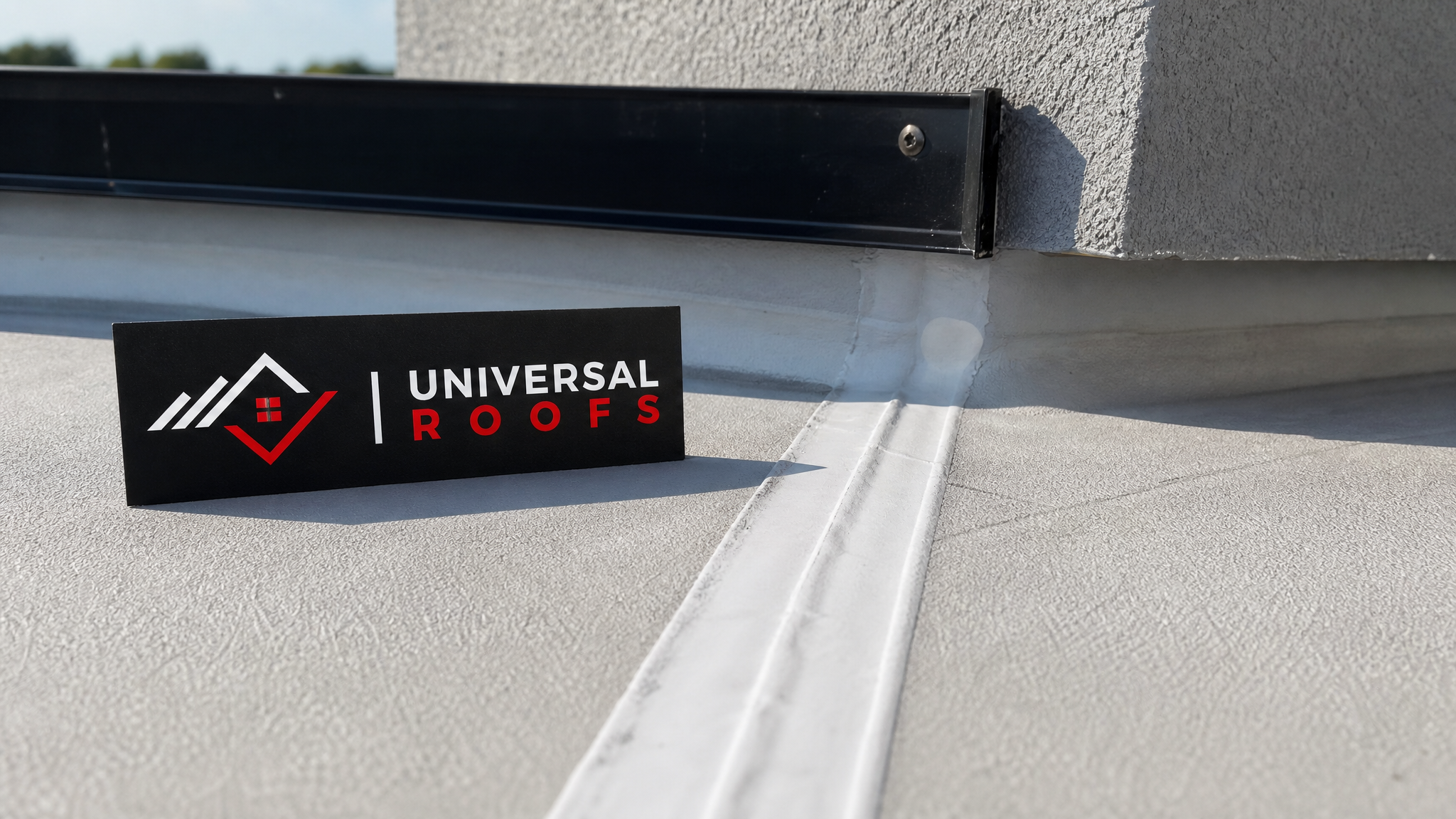
A new commercial roof is a long-term capital investment, and a simple maintenance programme protects that investment. We recommend semi-annual inspections — typically spring and autumn — to check drains for debris, inspect flashing and seams, and confirm rooftop equipment hasn’t damaged the membrane during servicing. Keep a maintenance log for every inspection and repair, since insurers and future buyers will often ask for this documentation.
Property owners across our service areas in Toronto, Peel Region, York Region, Halton Region, and Durham Region should also budget for periodic membrane recoating on modified bitumen and BUR systems, which can extend service life by several years at a fraction of full replacement cost. If your building also has flat sections separate from the main roof, our flat roofing team can assess those areas during the same visit, and any rooftop skylight replacement needs should be coordinated with the main roofing scope to avoid re-opening completed sections of membrane later.
What does a commercial roof replacement guide with expert tips and advice typically recommend for membrane choice?
How much does commercial roof replacement cost in Toronto?
How long does a commercial roof replacement take?
Can a commercial roof be replaced without closing the business?
How do I know if I need repair or full replacement?
What warranty should I expect on a commercial roof replacement?
Need Help With Commercial Roof Replacement Guide?
Planning a commercial roof replacement is a significant decision, and having an experienced partner makes the difference between a smooth project and a costly one. Universal Roofs has guided property owners across the GTA through commercial roof replacements of every size and complexity, from single-tenant retail buildings to multi-storey office and industrial properties.
Call us today at (416) 732-2421 or request a free inspection to get started.
Universal Roofs proudly serves Toronto, Mississauga, Brampton, Vaughan, Markham, Oakville and the GTA since 2005.