
Hailstorms move fast through the Greater Toronto Area, and by the time they pass, a historical building can carry damage that is far more serious than the fractured shingles you would see on a modern subdivision roof. Restoring roof hail damage on historical buildings is not the same job as a standard tear-off and reshingle. Heritage roofs are often built from slate, cedar shakes, clay tile, or standing-seam metal that predates modern manufacturing tolerances, and many are protected under municipal heritage designations that dictate exactly how repairs must be carried out.
For property owners in Toronto, Mississauga, Vaughan, Markham, Oakville, and across the GTA, this means a hailstorm on a century home or a designated heritage building triggers a very different decision tree than it would on a typical 2010s build. You are not just weighing shingle brands and warranty lengths. You are weighing matching historic materials, satisfying a heritage preservation committee, protecting insurance claims with proper documentation, and making sure the contractor you hire actually understands how these older assemblies were built in the first place.
This guide walks through how hail damages historical roofing materials differently than modern ones, how to inspect and document that damage, what restoration options exist for each material type, how heritage designation affects your repair options, what it costs, and how to work with your insurer so the claim does not stall out. We have restored and repaired roofs on older GTA homes and heritage-adjacent properties since 2005, and the patterns below reflect what we see on real inspections, not generic advice.
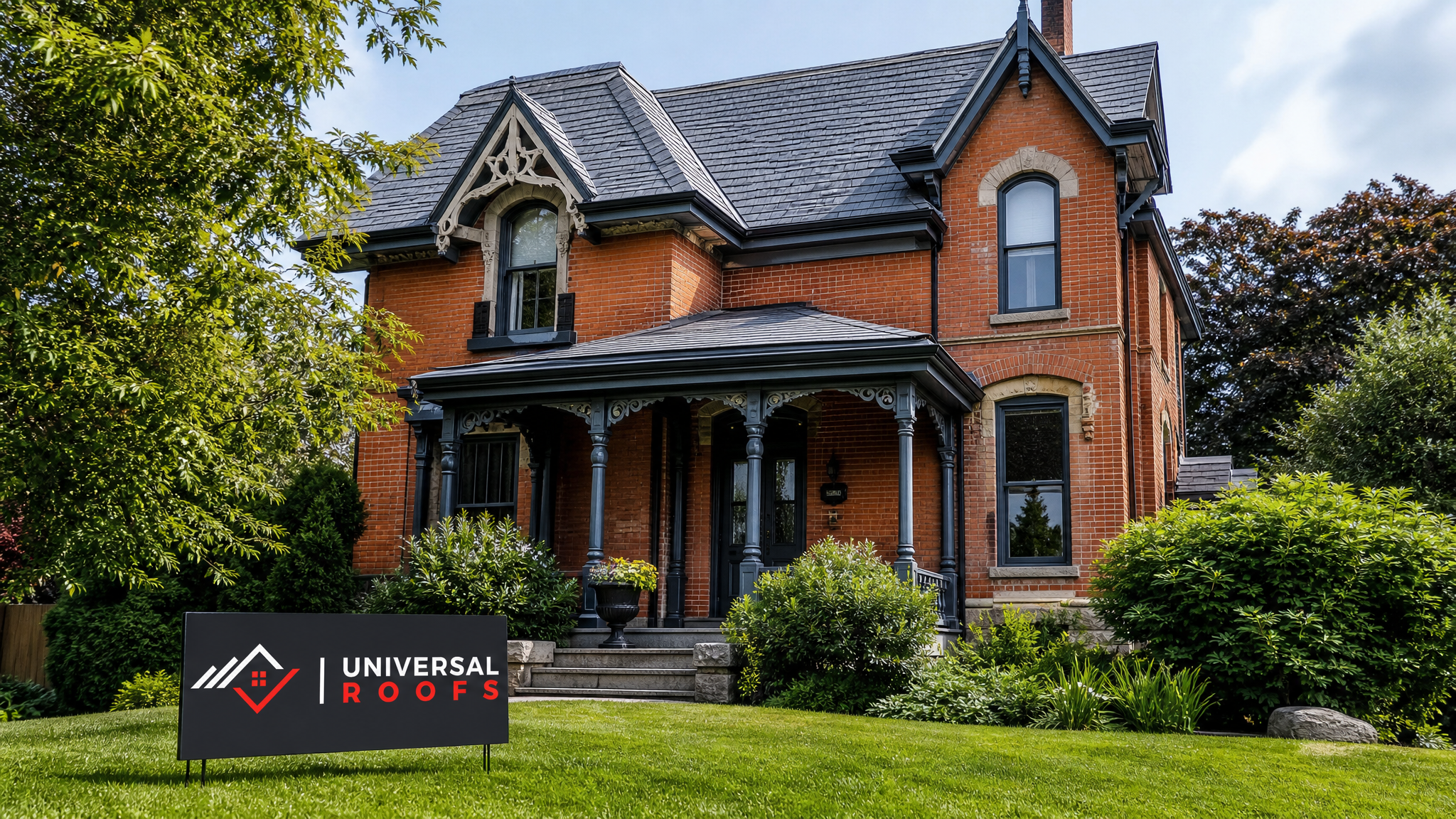
How Hail Damages Historical Roofing Materials Differently
Modern asphalt shingles are engineered with granule mats and reinforced mats specifically to absorb hail impact without cracking through. Historical roofing materials were never designed with that kind of impact resistance in mind, because hail-resistance testing did not exist when they were manufactured or installed. That gap in engineering is the single biggest reason hail damage on a heritage roof needs a different response than hail damage on a newer home.
- Slate: Natural slate is brittle. A hailstone in the 25-40mm range can crack a slate tile straight through, and repeated impacts can create hairline fractures that are invisible from the ground but let water in during the next rain. Older slate that has already been on a roof for 60-100 years has less structural reserve than slate installed five years ago.
- Cedar shakes and shingles: Aged cedar becomes dry and loses its natural oils over decades. Hail impact splits the wood grain, and because older cedar roofs were often installed with wider exposure than current code allows, a single split shake can expose the underlayment much sooner than on a newer cedar roof.
- Clay and terracotta tile: Clay tile is fired to a hardness that resists compression well but fails under sharp impact, especially at the tile’s edges and hip/ridge details, which are thinner than the tile field.
- Standing-seam and built-up metal: Older galvanized steel or copper roofing dents rather than cracks, but repeated denting fatigues the seams and can crack century-old solder joints, particularly on flat roofing sections common on heritage rowhouses and commercial buildings.
- Original wood decking and fasteners: Beneath any of the above, older homes frequently still have the original roof deck boards and hand-driven fasteners, both of which behave differently under storm stress than the plywood and ring-shank nails used today.
Understanding which material you have, and how it has aged, is the starting point for every restoration decision that follows. If you are unsure what you are dealing with, our roof repair team can identify the material and its condition during an on-site assessment.
Inspecting and Documenting Hail Damage on a Heritage Roof
Before any restoration work begins, a thorough inspection needs to happen, ideally within a few days of the storm while the damage pattern is still fresh and before additional rain or wind makes things worse. On a historical building, the inspection has two goals running in parallel: identifying every point of damage, and creating a documentation trail that satisfies both your insurer and, where applicable, your local heritage committee.
A proper inspection covers the roof field, the ridges and hips, all flashing details, gutters and downspouts, any skylights, and the attic space from below. Hail bruising on slate or tile is often subtle: a lighter-coloured impact mark, a spider-web crack pattern, or a slightly displaced tile that has shifted a few millimetres out of alignment. These are easy to miss from ground level, which is why a physical roof walk (done safely, with fall protection) matters far more on heritage roofs than a drone flyover alone.
| Inspection Area | What Hail Damage Looks Like | Why It Matters on Historical Buildings | Recommended Action |
|---|---|---|---|
| Slate/tile field | Hairline cracks, chipped edges, spider-fracture patterns | Cracked slate/tile fails completely within 1-2 freeze-thaw cycles | Tap-test suspect tiles; mark for individual replacement |
| Cedar shake field | Split grain, granule-like wood fibre loss, curling at impact point | Splits let water reach original sheathing, which may lack modern underlayment | Photograph each split; check underside from attic |
| Metal seams and flashing | Dents, dimpling, hairline solder cracks at joints | Historic solder joints are often original and irreplaceable in kind | Pressure-test seams; inspect solder with a heritage-experienced roofer |
| Ridges, hips, and valleys | Displaced or cracked ridge caps, valley metal denting | These details are often custom-fabricated and slow to source replacements for | Document with close-up photos and measurements |
| Attic and interior ceilings | Water staining, daylight visible through deck, damp insulation | Signals a breach has already occurred, not just cosmetic bruising | Inspect immediately after storm and again after next rainfall |
Photograph everything with a wide shot for context and a close-up with a ruler or coin for scale, and note the compass direction each photo faces, since hail damage is rarely uniform across all roof slopes. If your home includes a skylight, check its glazing and frame separately, as hail impact on skylight glass or flashing is a common source of leaks that gets missed during a general roof inspection.
Heritage Designation and What It Means for Your Repair Options
If your building carries a heritage designation, whether it is individually listed or sits within a Heritage Conservation District, your restoration options are legally narrower than they would be for a non-designated property. Ontario’s Heritage Act, and the municipal heritage bylaws layered on top of it across Toronto and surrounding municipalities, generally require that exterior alterations, including roofing material changes, go through a heritage permit process before work begins.
In practice, this changes the restoration conversation in a few specific ways:
- Material matching is usually mandatory, not optional. If your roof is slate, you will typically need to replace damaged sections with slate of a matching colour, thickness, and texture, not a slate-look asphalt or synthetic product, even if that product performs better against future hail.
- Partial replacement is preferred over full replacement. Heritage committees generally favour repairing only the damaged sections and retaining as much original material as possible, both for authenticity and cost reasons.
- Approval timelines add weeks to the schedule. A straightforward repair permit can take several weeks to process, so if your home has active leaks, temporary weatherproofing (tarping, emergency patching) is usually necessary while the permit is pending.
- Some municipalities allow emergency repair exemptions. If water intrusion threatens the interior or structure, most heritage bylaws include an emergency provision letting a contractor stabilize the roof immediately, with formal permitting to follow.
- Contractors need a track record with heritage work. Heritage committees will often ask who is doing the work and may request examples of previous heritage-appropriate repairs before approving a permit.
Even on buildings without formal heritage status, many owners of older homes in neighbourhoods across the Toronto core, parts of Peel Region, and older pockets of York Region choose to match original materials anyway, simply because mismatched patch repairs are visually obvious and can reduce resale value. It’s worth checking your municipality’s heritage register or contacting your local planning department before scheduling any work, since designation status is not always obvious from the street.
Restoration Methods by Material Type
Once you know what material you have and whether heritage rules apply, the actual restoration method depends heavily on the extent of damage. A few cracked slates scattered across a field is a very different job from hail that has compromised 20% of a roof surface.
Slate Roof Hail Restoration
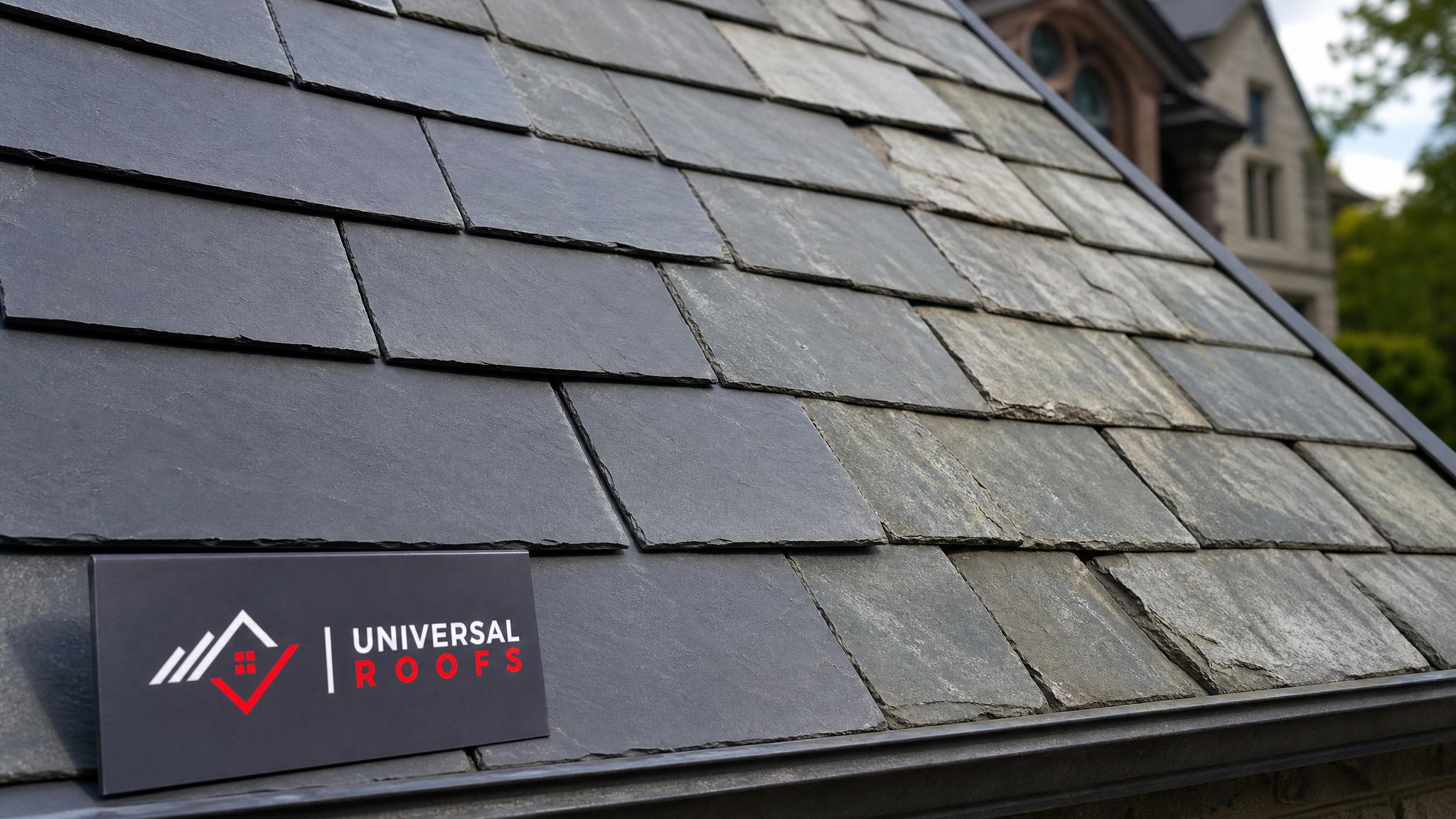
Individual cracked or displaced slate tiles can usually be removed and replaced one at a time using a slate ripper to cut the old fastening nail, without disturbing surrounding tiles. This is slow, detail-oriented work, but it preserves the original roof’s appearance almost perfectly when done well. Sourcing matching slate is the main challenge: colour and thickness vary by quarry, and quarries that supplied Ontario roofs a century ago may no longer be in operation, so salvage slate from architectural reclamation yards is often the best match.
Cedar Shake and Shingle Restoration
Split cedar shakes are removed with a shingle hatchet or ripper and replaced with shakes of matching split-face texture and butt thickness. Because cedar naturally weathers to a silver-grey patina over years, freshly replaced shakes will look noticeably lighter for a season or two before they weather to match. This is normal and expected, and it is worth explaining to heritage committees and neighbours in advance so the temporary colour mismatch does not raise concerns.
Clay and Terracotta Tile Restoration
Cracked clay tiles are replaced individually, with special attention paid to the hip, ridge, and valley tiles, which are often custom profiles unique to the original installation. When exact profile matches cannot be sourced, some contractors fabricate custom replacement tiles through specialty ceramics suppliers, though this adds cost and lead time.
Metal Roof (Standing Seam, Copper, Galvanized) Restoration
Dented metal panels can sometimes be reformed in place using specialized dollies and mallets if the dent is shallow and the coating is intact. Where dents have cracked the coating or fatigued a seam, the affected panel section is cut out and a new matching panel is soldered or seamed in. Historic solder joints, particularly on copper roofing, require a roofer experienced in traditional soldering techniques rather than modern sealant-based patching, which will fail faster and looks visibly different.
| Material | Typical Restoration Approach | Sourcing Challenge Level | Approximate Timeline |
|---|---|---|---|
| Natural slate | Individual tile replacement with slate ripper | High — quarry matching often needed | 1-3 weeks depending on tile availability |
| Cedar shake/shingle | Spot replacement, allow natural weathering to blend | Low to moderate | 3-7 days for moderate damage |
| Clay/terracotta tile | Individual tile and custom hip/ridge replacement | High — may require custom fabrication | 2-4 weeks if custom tiles needed |
| Standing-seam/copper metal | Panel reforming or cut-and-solder replacement | Moderate — needs traditional soldering skill | 1-2 weeks depending on seam access |
| Flat/built-up roofing sections | Membrane patch or section replacement | Low | 1-3 days |
Many heritage properties in the GTA also carry flat roofing sections over additions, porches, or rear extensions. If hail has damaged one of these sections, our flat roofing team can assess and repair that portion separately from the historic sloped sections, often on a faster timeline since flat sections typically fall outside strict heritage material rules.
Working With Your Insurance Company on a Heritage Roof Claim
Insurance claims for hail damage on historical buildings tend to move slower and involve more back-and-forth than claims on standard homes, mainly because adjusters are less familiar with heritage material costs and heritage permitting requirements. A few things make the process smoother:
- Request an adjuster with heritage or specialty-property experience if your insurer offers one. Standard adjusters sometimes underestimate slate, tile, or copper replacement costs because their pricing tables default to asphalt shingle rates.
- Provide your own contractor estimate alongside the adjuster’s assessment. A detailed, material-specific estimate from a roofer experienced with heritage restoration gives the adjuster something concrete to work from rather than a generic per-square-foot number.
- Document the “before” condition if at all possible. Old photos, previous inspection reports, or even real estate listing photos help establish the roof’s condition prior to the storm, which matters if the insurer questions whether some damage pre-dates the hail event.
- Clarify whether your policy covers “like-kind” restoration or actual cash value. Some standard policies will only reimburse for asphalt-shingle-equivalent repair costs unless you carry a heritage or guaranteed-replacement-cost endorsement, which can leave a significant gap on slate or tile roofs.
- Loop in your municipality’s heritage office early if permitting will be required, since some insurers want proof that a permit application has been submitted before releasing full claim payment for the restoration phase.
A written scope of work that separates emergency mitigation (tarping, temporary patching) from permanent restoration (matched material replacement) also helps keep the claim organized, since these two phases are often paid out and permitted separately.
Cost Considerations for Hail Damage Restoration on Historical Roofs
Cost is one of the areas where historical roof restoration diverges most sharply from standard roofing repair. Material sourcing, skilled labour availability, and permitting requirements all add cost that a typical asphalt shingle repair simply does not carry.
| Cost Factor | Standard Asphalt Roof | Historical Roof (Slate/Tile/Copper) |
|---|---|---|
| Material cost per unit repaired | Low — shingles are mass-produced and widely stocked | Higher — matching materials may need sourcing from specialty suppliers or salvage yards |
| Labour skill required | Standard roofing crew | Specialized crew experienced in traditional installation methods |
| Permitting | Usually a standard building permit or none at all for repairs | Heritage permit often required, adding review time |
| Timeline to complete | Typically 1-3 days | 1-4 weeks depending on material availability and permitting |
| Emergency mitigation needs | Rarely required beyond a basic tarp | Often needed while heritage approval is pending |
Because of these added variables, it is worth getting a written, itemized estimate rather than a rough verbal quote, especially for insurance purposes. Our team provides detailed written estimates for exactly this reason when we assess a roof replacement or partial restoration on an older GTA home.
Protecting the Rest of the Building During Restoration
Hail damage restoration on a historical roof rarely happens in isolation from the rest of the building envelope. A few areas deserve attention alongside the roof surface itself:
- Attic ventilation and insulation: If water has entered through hail-cracked material, check the attic for damp insulation or early mould growth. Older homes often have less attic ventilation than current code recommends, which can trap moisture after a leak even once the roof itself is repaired. Our attic assessment covers this as part of a full restoration scope.
- Skylights and roof penetrations: Chimneys, vents, and skylight curbs are common leak points after hail, since flashing around these penetrations is thinner and more exposed than the roof field. If your skylight glazing or seal was compromised, our skylight replacement team can restore it to match the surrounding historic roofline.
- Eavestroughs and downspouts: Hail dents gutters just as it dents metal roofing, and on heritage homes with decorative or custom-profile eavestroughs, replacement sections may need to be special-ordered to match.
- Masonry parapets and chimneys: Hail can chip mortar joints and masonry caps at roof edges, particularly on older brick or stone parapets common on heritage commercial buildings, which is worth a separate visual check.
Addressing these secondary areas at the same time as the roof restoration avoids a second round of scaffolding and access setup a few months later when a missed issue surfaces.
Seasonal Timing for Restoration Work in the GTA
Summer storms, like the ones that roll through the GTA from late June through August, are the most common source of hail damage to roofs in this region, and July is generally a favourable window to get restoration work scheduled and completed. Material suppliers are typically well-stocked heading into peak building season, daylight hours are long enough to complete detailed slate or tile work in a single day, and completing repairs now avoids pushing the job into the fall rainy season or winter freeze-thaw cycles that can turn a small hairline crack into a full leak.
That said, heritage permitting timelines do not speed up for the season, so if your building is designated, starting the documentation and permit application process as soon as possible after a storm is the best way to get the physical repair work done before winter weather arrives.
Choosing a Contractor for Historical Roof Restoration
Not every roofing company is equipped to work on slate, tile, cedar, or historic metal roofing, and hiring a crew without that specific experience is one of the most common ways a hail restoration job goes wrong on a heritage building. Before hiring, it is worth asking a few direct questions:
- Has the contractor completed restoration work on the specific material your roof uses, with photos or references you can check?
- Do they have experience navigating heritage permit applications in your specific municipality?
- Can they source matching materials, or do they have relationships with salvage yards and specialty suppliers?
- Will they provide a written scope that separates emergency mitigation from permanent restoration for insurance purposes?
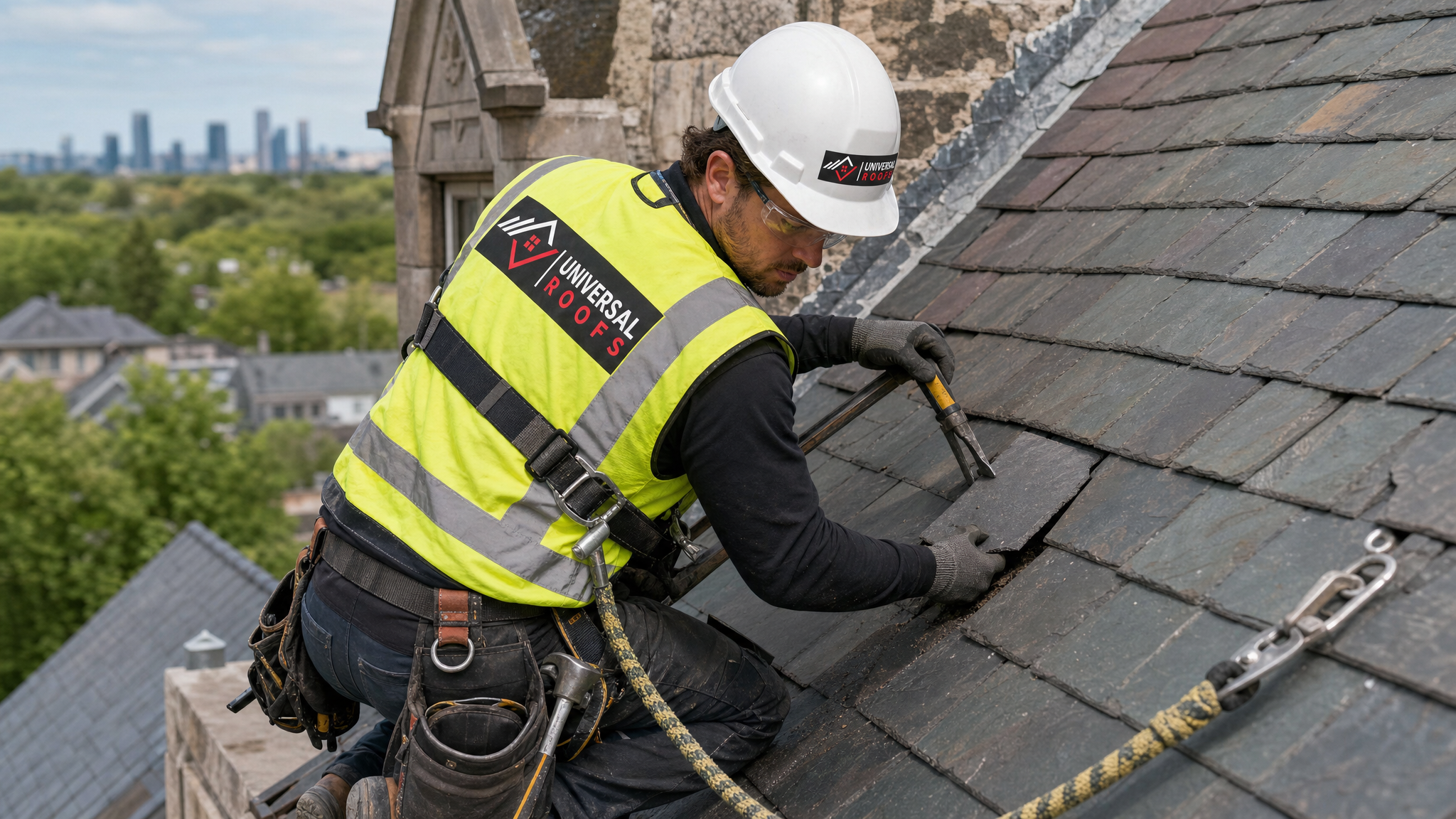
- Are their crews trained and equipped with proper fall protection for steep or fragile historic roof surfaces?
You can read how past clients have described our approach to these kinds of restoration projects on our reviews page, and our FAQ page covers additional questions homeowners commonly ask about repair timelines and insurance coordination. If you would like more background on our team, our about page outlines our history working across the GTA since 2005, including projects in Halton Region and Durham Region where older housing stock is common.
What is involved in restoring roof hail damage on historical buildings?
Does hail damage historical slate and tile roofs more than modern shingles?
Do I need heritage approval before restoring roof hail damage on historical buildings?
How much does restoring roof hail damage on historical buildings typically cost?
Will my insurance cover restoring roof hail damage on historical buildings?
How long does restoring roof hail damage on historical buildings take?
Need Help With Restoring Roof Hail Damage?
Every historical roof has its own construction quirks, and getting the restoration right protects both the building’s character and its long-term weathertightness. Universal Roofs has been restoring and repairing roofs across the GTA since 2005, including slate, cedar, tile, and metal roofing on older and heritage-designated homes.
Call us today at (416) 732-2421 or request a free inspection to get started.
Universal Roofs proudly serves Toronto, Mississauga, Brampton, Vaughan, Markham, Oakville and the GTA since 2005.