
A roof rarely fails all at once. It fails one ignored handful of leaf litter at a time, one clogged downspout at a time, one season of standing moisture at a time. Ensuring long lasting protection: 5 essential roof cleaning tips is the difference between a roof that comfortably reaches or exceeds its rated lifespan and one that needs premature roof repair five or ten years before it should.
Here in the Greater Toronto Area, roofs work harder than most. We ask shingles, membranes, and flashings to shrug off humid summers, sudden hailstorms, driving autumn rain, and then months of freeze-thaw cycling that can turn a small pooling problem into a cracked flashing or a leaking valley. Regular cleaning is not cosmetic maintenance — it is one of the cheapest, most effective ways to protect the investment you have already made in your roof.
This guide walks through five essential, field-tested roof cleaning practices, explains why each one matters for Toronto-area homes specifically, and gives you the tools to decide what you can safely do yourself and what should be left to a professional. Whether you have asphalt shingles, a flat membrane roof, or skylights integrated into the roof deck, the principles below will help you get more useful years out of every roofing dollar you have spent.
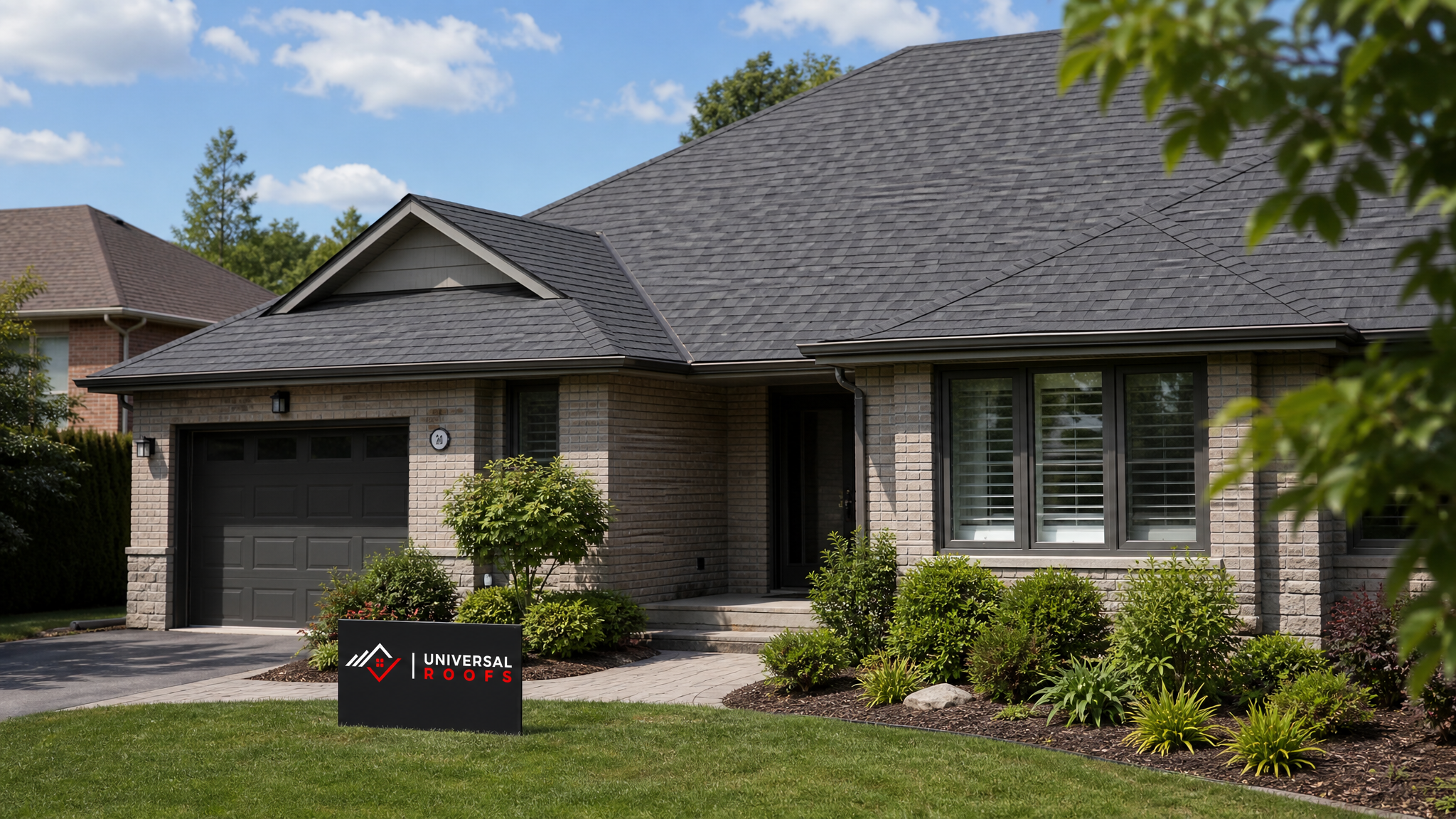
Why Roof Cleaning Is Central to Long-Term Protection
Most homeowners think about their roof only when it leaks. By then, the damage that caused the leak has usually been building for months or years. Ensuring long lasting protection means treating roof cleaning as preventative maintenance, the same way you would treat an oil change for a car engine. A roof that is kept clean of debris, moss, algae, and standing water experiences less material stress, fewer freeze-thaw failures, and a longer effective service life across every roofing type we install and service — asphalt shingles, flat membranes, metal, and everything around skylights and roof penetrations.
Debris left on a roof does three things that shorten its life. First, organic material such as leaves and pine needles holds moisture directly against the roofing surface, which accelerates granule loss on shingles and encourages algae and moss growth on any material. Second, debris blocks drainage paths, causing water to pool rather than sheet off the roof as designed — pooling water is the single biggest threat to a flat or low-slope roof. Third, decomposing organic matter is mildly acidic and can degrade the protective coatings on shingles and membranes over time, especially through a Toronto summer when heat accelerates chemical breakdown. Ensuring long lasting protection with 5 essential roof cleaning habits below addresses each of these failure modes directly, whether your home has a steep-slope shingle roof, a low-slope membrane, or a hybrid roofline with multiple sections.
Tip 1: Clear Debris and Gutters on a Seasonal Schedule
The single most important roof cleaning habit is removing loose debris — leaves, twigs, seed pods, and wind-blown branches — before it has a chance to compact and hold water. In the GTA, this generally means a thorough clean-out in late spring after the trees finish shedding seed pods, again in mid-summer if you are under heavy tree cover, and most critically in late autumn once deciduous leaves have finished falling but before the first hard freeze locks everything in place.
Gutters deserve equal attention. A gutter packed with wet leaves cannot move water away from the roof edge, which forces water to back up under the first course of shingles or over the edge of a flat roof membrane — a leading cause of fascia rot and ice damming in winter. Clear gutters also protect the perimeter flashing details around dormers, roof-to-wall junctions, and skylight curbs.
| Season | Primary Task | Why It Matters in the GTA | Recommended Frequency |
|---|---|---|---|
| Spring | Remove winter debris, check for ice-damage debris and granule loss | Reveals damage from freeze-thaw cycling before summer storms arrive | Once, April–May |
| Summer | Clear seed pods, inspect for algae streaking, trim overhanging branches | Humidity and heat accelerate organic growth and material fatigue | Once, July–August |
| Autumn | Full leaf and needle removal, gutter clean-out | Prevents blocked drainage before freeze locks debris in place | Twice, October and late November |
| Winter | Monitor for ice dams, remove excess snow load if needed | Freeze-thaw cycling is the top cause of GTA roof failures | As needed after major snowfall |
For homes surrounded by mature trees — common across older neighbourhoods throughout Toronto and Peel Region — you may need to add an extra cleaning pass mid-season. If you are not confident working at height, this is one of the easiest cleaning tasks to hand off to a professional, since a trained crew can complete a full debris and gutter clearing in the time it would take most homeowners to set up a ladder safely.
Tip 2: Remove Moss, Algae, and Lichen the Right Way
Dark streaking on a shingle roof is usually gloeocapsa magma, a type of algae that thrives in humid, shaded conditions — extremely common on north-facing slopes throughout the GTA. Left untreated, it spreads, holds moisture against the shingle surface, and accelerates granule loss, which shortens the shingle’s protective lifespan. Moss is even more damaging because its root-like structures (rhizoids) physically lift shingle edges, creating gaps where wind-driven rain can penetrate.
The right way to remove moss and algae is with a gentle, low-pressure application of a cleaning solution — never a pressure washer. High-pressure washing is one of the most common ways homeowners accidentally destroy a perfectly good roof, because it strips away the protective granules that shield the asphalt layer from UV degradation. A 50/50 mix of water and oxygen bleach (not chlorine bleach, which can damage surrounding plants and metal flashings) applied with a pump sprayer, left to dwell for 15–20 minutes, then rinsed with a garden hose at normal household pressure, is the standard safe method recommended by shingle manufacturers.
| Method | Effectiveness on Moss/Algae | Risk to Shingles | Recommended? |
|---|---|---|---|
| Pressure washer (high PSI) | High — strips growth immediately | Severe — removes protective granules, voids many manufacturer warranties | No |
| Oxygen bleach + soft wash/garden hose | High — kills spores at the root | Minimal when diluted correctly | Yes |
| Stiff bristle brush scrubbing | Moderate — removes visible growth only | Moderate — can dislodge granules if scrubbed aggressively | With caution |
| Zinc or copper control strips | Preventative — inhibits regrowth over time | None | Yes, as a long-term add-on |
| Chlorine bleach, undiluted | High but uneven | High — damages landscaping, corrodes metal flashings and gutters | No |
On flat and low-slope membrane roofs — the roofing type behind our flat roofing service — moss is less common but algae staining and grime buildup on the membrane surface still occur, particularly around ponding areas. The same low-pressure, non-abrasive approach applies: a mild detergent solution, a soft-bristle push broom, and a thorough hose rinse. Never use a pressure washer on a membrane roof, as it can force water under seams and laps.
Tip 3: Keep Roof Penetrations, Flashings, and Skylights Clear
Every point where something penetrates the roof plane — a vent stack, a chimney, a skylight curb, a roof-to-wall junction — is a potential leak point, and every one of them collects debris faster than the open field of the roof. Ensuring long lasting protection means paying special attention to these transition areas during every cleaning pass, because a small amount of trapped leaf litter against a flashing seam can hold moisture long enough to corrode metal or lift a shingle tab.
Skylights deserve particular focus. Debris that collects in the corners of a skylight curb blocks the weep channels that are designed to drain condensation and wind-driven rain away from the glazing unit. Over time, this can lead to interior staining, seal failure, or the need for a full skylight replacement years earlier than the unit’s rated lifespan. When you clean debris off your roof, take an extra few minutes to clear the perimeter of every skylight curb and confirm the weep holes are open.
Chimney flashing and step flashing along dormers are similarly vulnerable. These are typically counter-flashed with metal that relies on a clean, unobstructed drainage path to shed water correctly. If you notice granule accumulation, moss, or standing debris packed against any flashing detail, that is a sign the area needs both cleaning and a closer inspection — not just for buildup, but for early signs of flashing separation or sealant failure underneath.
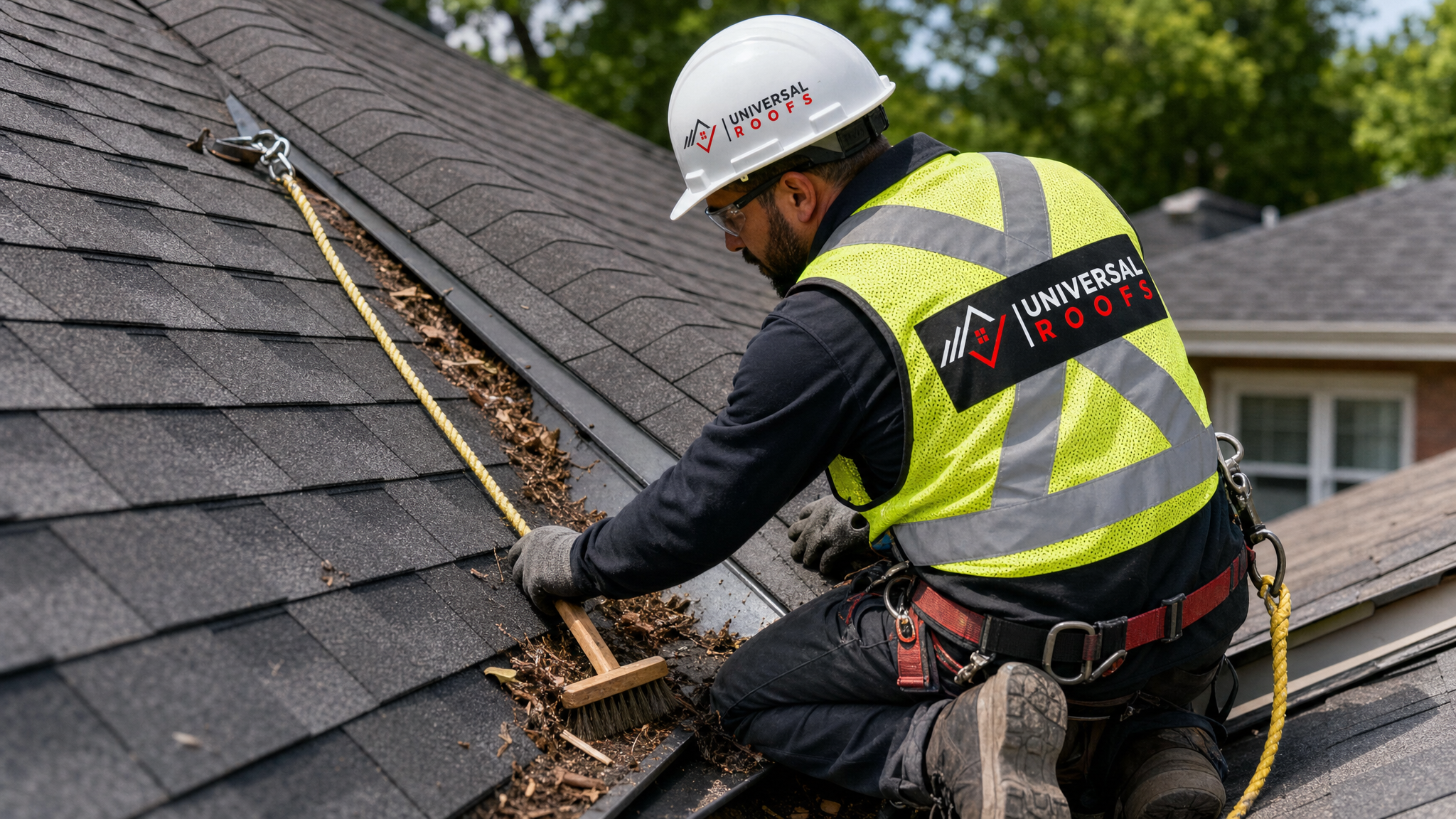
Tip 4: Address Standing Water and Poor Drainage Immediately
Standing water — commonly called ponding — is one of the clearest warning signs on any flat or low-slope roof, and it is directly connected to how well the roof surface has been kept clear of debris. Blocked drains, clogged scuppers, and debris-choked gutters are the most common causes of ponding on the flat membrane roofs we service across the GTA. Water that sits on a membrane for more than 48 hours accelerates UV breakdown of the surface, promotes algae growth, and in cold months, becomes a freeze-thaw hazard that can crack or split seams.
On steep-slope shingle roofs, poor drainage more often shows up as water backing up in valleys where two roof planes meet. Valleys naturally collect more debris than any other part of the roof because they act as a funnel, so they need to be checked and cleared more frequently than the open field of the roof.
| Warning Sign | Likely Cause | Recommended Action | Urgency |
|---|---|---|---|
| Water pooling more than 48 hours after rain | Blocked drain, scupper, or low spot in membrane | Clear drains immediately; schedule an assessment if pooling recurs | High |
| Debris buildup in roof valleys | Natural funnelling of leaves and granules | Manual clearing every cleaning cycle | Medium |
| Staining or dark streaks near drains | Slow-draining or partially blocked drain | Inspect and clean drain strainer/basket | Medium |
| Ice buildup at eaves in winter | Blocked gutters combined with attic heat loss | Clear gutters in autumn; check attic insulation and ventilation | High |
| Sagging or visible depression in flat roof | Long-term ponding causing membrane stress | Professional roof replacement evaluation | Urgent |
If you notice recurring ponding that a good cleaning does not resolve, the issue is often structural rather than a debris problem — a low spot in the deck, insufficient slope, or aging membrane that has lost its ability to shed water. At that point, a proper assessment is the right next step, since continued ponding on a compromised membrane can shorten what remains of the roof’s service life dramatically and may point toward needing a roof replacement sooner rather than later.
Tip 5: Know When to Call a Professional Instead of Climbing Up Yourself
Not every roof cleaning task is a DIY job, and knowing the difference is part of ensuring long lasting protection rather than accidentally causing damage. Ground-level tasks like clearing gutters with an extension tool, trimming overhanging branches, and visually inspecting the roofline with binoculars are reasonably safe for most homeowners. Anything that requires walking on the roof surface itself — especially a steep-slope shingle roof, a roof with any pitch over a gentle walkable slope, or a roof more than one storey off the ground — carries real fall risk and a real risk of damaging shingles simply by walking on them incorrectly.
There is also a knowledge gap that matters here. A homeowner cleaning moss off a roof may not recognize early signs of granule loss, a lifted flashing edge, or a soft spot in the decking underneath — all things a trained technician is specifically looking for during a cleaning visit. Combining routine cleaning with a professional eye catches small problems while they are still inexpensive to fix.
| Task | Safe for Most Homeowners? | Equipment Needed | Best Left to a Professional When… |
|---|---|---|---|
| Gutter clearing (single storey, from ladder) | Yes, with proper ladder safety | Sturdy ladder, gloves, gutter scoop | Home is two storeys or more |
| Debris removal from roof surface | Limited — walking on shingles risks damage | Roof-rated footwear, harness | Steep pitch or any height beyond one storey |
| Moss/algae treatment application | Possible from ground with long-reach sprayer | Pump sprayer, oxygen bleach solution | Full roof coverage or hard-to-reach slopes needed |
| Flashing and skylight curb inspection | Visual only, from ground or window | Binoculars | Any suspected leak or visible gap |
| Drain and scupper clearing on flat roofs | No, generally requires roof access | Roof access, drain snake | Almost always — schedule a professional visit |
Professional roof cleaning and inspection visits are also the best opportunity to catch issues that lead to costly emergency roof repair calls, since a trained eye will flag lifted shingles, deteriorating sealant, or membrane wear well before they become active leaks.
Building a Simple Year-Round Roof Cleaning Routine
The five tips above work best as a repeating routine rather than a one-time project. A simple way to think about it: light seasonal debris clearing four times a year, a moss and algae check every spring, a drainage and flashing inspection every autumn, and a professional visit at least once a year to catch anything a ground-level check would miss. Homes with heavy tree cover, north-facing slopes, or older flat roofs generally benefit from more frequent attention than homes with newer materials and good sun exposure.
It also helps to keep a simple written or photo record of what you find each time you clean — a staining pattern that is new since last season, a drain that took longer to clear than usual, a flashing joint that looks slightly different. These small observations, tracked over a year or two, often reveal a developing problem long before it becomes a visible leak inside the home.
Homeowners across York Region, Halton Region, and Durham Region deal with slightly different microclimates — more tree cover in some older suburbs, more wind exposure in others closer to the lake — so a routine that works well for one home may need small adjustments for another. If you are unsure how often your specific roof needs attention, a professional assessment can set a customized schedule based on your roof’s age, material, slope, and surroundings.
Common Mistakes That Undermine Roof Cleaning Efforts
Even well-intentioned homeowners can do more harm than good during a cleaning session. The most frequent mistake is reaching for a pressure washer, which strips protective granules and can force water under shingles or membrane seams. A close second is using metal rakes or stiff shovels to remove snow or debris, which gouges the shingle surface and damages flashing. Walking on a roof in the wrong footwear, or during the heat of a summer afternoon when asphalt shingles are softest and most prone to scuffing, is another common cause of accidental damage.
Another overlooked mistake is cleaning the roof surface but ignoring the gutters and downspouts entirely, or vice versa — the two systems work together, and neglecting either one undermines the benefit of cleaning the other. Finally, many homeowners wait until they see a problem — a stain on the ceiling, a visible sag — before scheduling any kind of roof attention. By that point, cleaning alone will not fix the underlying damage, and the job has shifted from maintenance to repair.
| Mistake | Consequence | Better Approach | Cost of Ignoring It |
|---|---|---|---|
| Using a pressure washer | Granule loss, forced water infiltration | Low-pressure soft wash with appropriate solution | Premature shingle replacement |
| Cleaning roof but not gutters | Water still backs up at the eaves | Clean both systems together every visit | Fascia rot, ice damming |
| Walking on shingles during peak heat | Scuffed or dislodged granules | Clean in cooler morning hours | Localized leak points |
| Waiting for visible interior damage | Underlying deck or insulation damage already occurred | Preventative cleaning and annual inspection | Full repair or replacement, higher cost |
How Roof Cleaning Fits Into Overall Roof Health
Cleaning is one piece of a larger maintenance picture that also includes proper attic ventilation, adequate insulation, and periodic professional inspection. A roof that is clean but poorly ventilated can still suffer from trapped heat and moisture in the attic space, which shortens shingle life from underneath just as surely as debris shortens it from above. If you notice ice damming every winter despite clearing your gutters diligently, the root cause is often inadequate attic ventilation rather than a cleaning issue, and it is worth having your attic assessed alongside your roof.
Similarly, a roof nearing the end of its expected lifespan will show diminishing returns from cleaning alone — granule loss becomes widespread rather than localized, and no amount of gentle washing restores lost UV protection. At that stage, cleaning still matters for slowing further decline, but it becomes part of a broader conversation about repair versus replacement timing. Reading verified reviews from homeowners who have gone through that assessment process, or checking our FAQ page for common questions about roof lifespan, can help you set realistic expectations for your own home.
Learning more about Universal Roofs and how our team approaches maintenance, repair, and replacement decisions can also help you understand what a thorough, honest assessment looks like versus a sales-driven one. We have been maintaining and repairing roofs across the GTA since 2005, and the roofs that last longest are, without exception, the ones whose owners treated cleaning as a routine habit rather than an afterthought.
What are the 5 essential roof cleaning tips for ensuring long lasting protection?
How often should I clean my roof for long lasting protection?
Is pressure washing safe as part of a roof cleaning routine?
Why does standing water matter so much for roof protection?
Can I clean my own roof, or should I always hire a professional?
What happens if I skip roof cleaning for a few years?
Need Help With Ensuring Long Lasting Protection?
A clean, well-maintained roof is one of the most cost-effective ways to protect your home, and the team at Universal Roofs has spent nearly two decades helping GTA homeowners get the most out of every roof we touch.
Call us today at (416) 732-2421 or request a free inspection to get started.
Universal Roofs proudly serves Toronto, Mississauga, Brampton, Vaughan, Markham, Oakville and the GTA since 2005.