
If you have never given your soffit and fascia a second thought, you are not alone — most homeowners only notice these components when something has already gone wrong. Yet timely soffit and fascia repair is one of the most cost-effective ways to protect a Toronto-area home from water damage, pest intrusion, and premature roof failure. These narrow strips of material along your roofline do far more work than their modest appearance suggests.
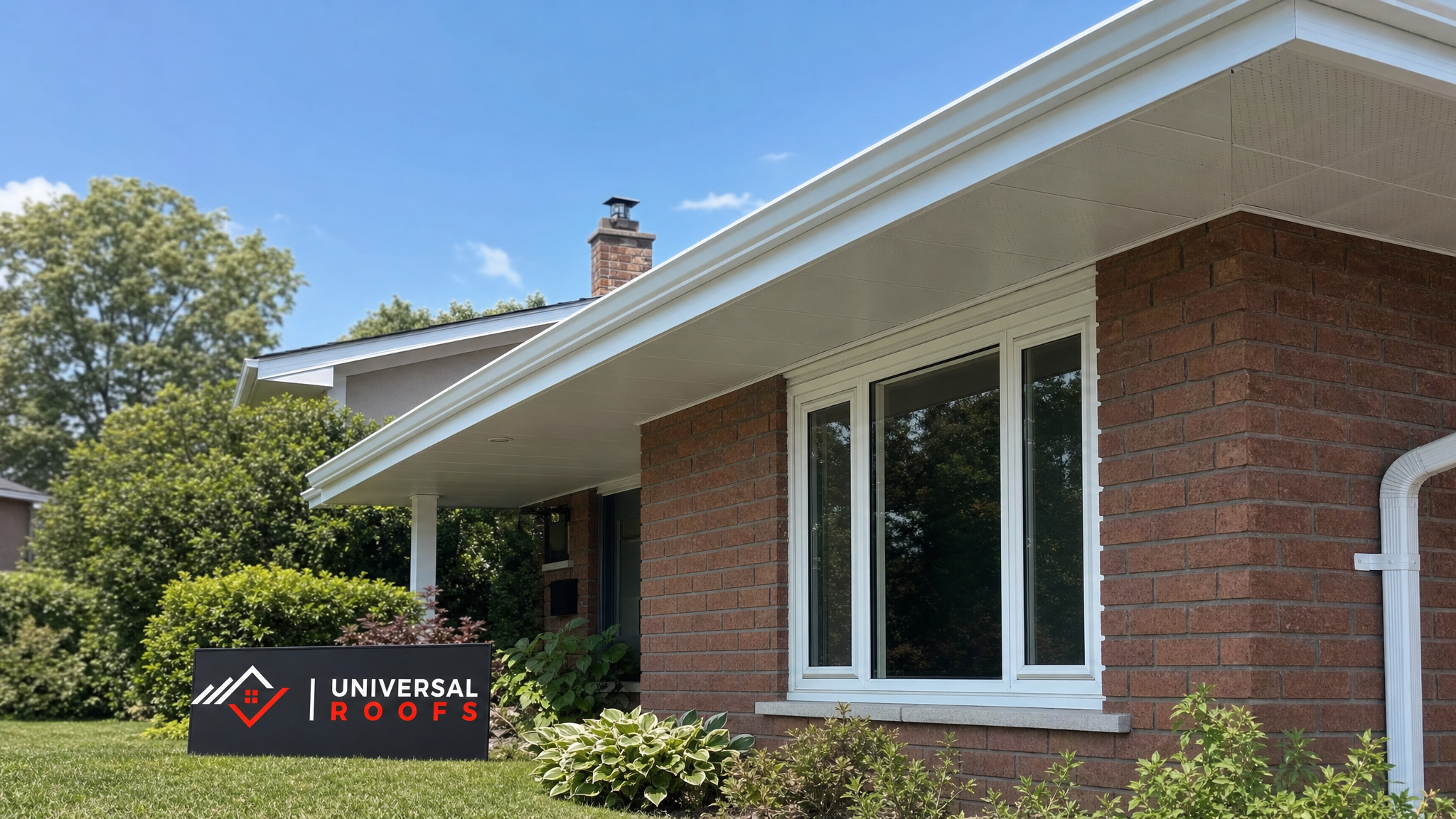
Soffit is the material that covers the underside of your roof overhang, while fascia is the vertical board that runs along the edge of the roof and holds your eavestroughs in place. Together they form a protective boundary between your living space and the outdoors, ventilating your attic, shielding your roof deck from moisture, and giving your home a finished appearance. When either component is damaged, delaying repair is rarely a neutral decision — it is usually a decision that costs more money later.
At Universal Roofs, we have inspected thousands of GTA rooflines since 2005, and the pattern is consistent: small soffit and fascia issues that go unaddressed for one or two seasons almost always graduate into larger, more expensive problems involving the roof deck, attic insulation, or interior ceilings. This guide explains why timeliness matters so much, what to watch for, and how to make informed decisions about repair versus replacement.
What Soffit and Fascia Actually Do
Before discussing why timely soffit and fascia repair is crucial, it helps to understand the job these components perform. Many homeowners assume they are purely cosmetic trim pieces, but each one has a specific structural and functional role.
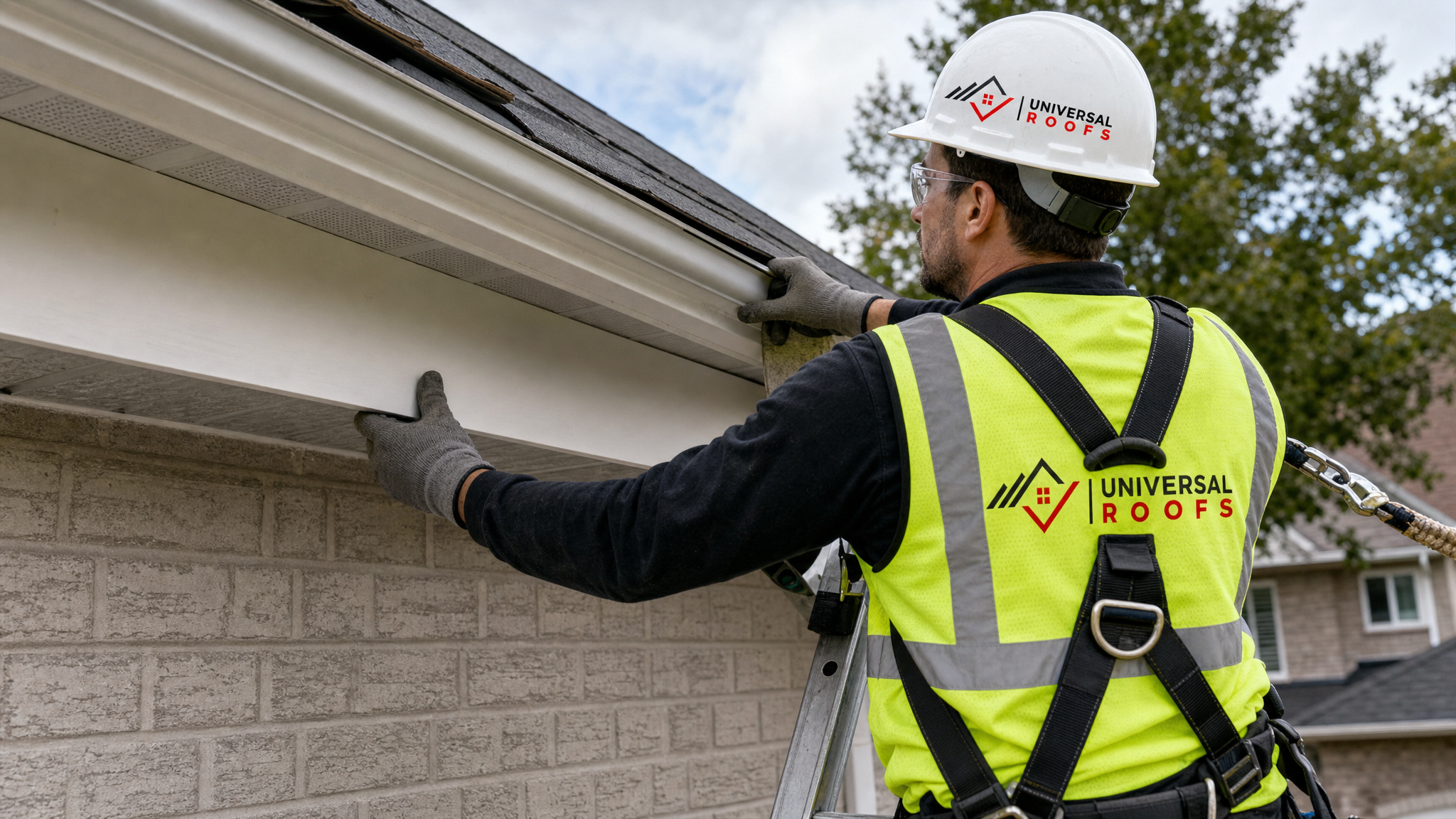
Fascia is the board fastened to the ends of your roof rafters or trusses. It creates a straight, finished edge along the roofline and is the surface your eavestroughs are mounted to. Because fascia bears the weight of gutters full of rainwater — and in a Toronto winter, the weight of ice — it needs to be structurally sound at all times. A rotted or warped fascia board can no longer support gutter hangers securely, which is often the first sign homeowners notice: a section of eavestrough pulling away from the house.
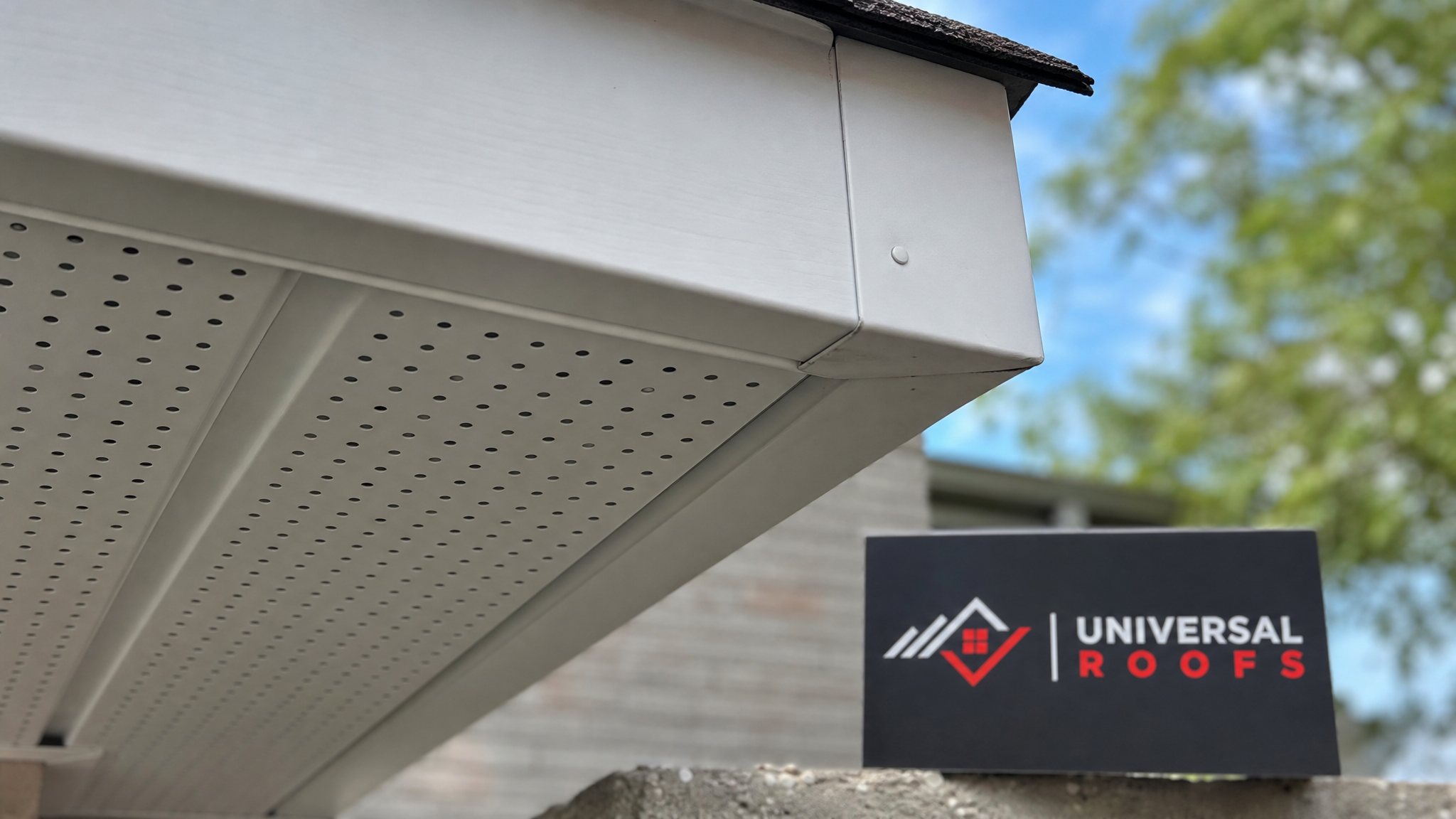
Soffit is the underside panel that closes the gap between the fascia and the exterior wall of the house, covering the roof overhang. Most soffit systems include ventilation — either continuous strip vents or individual perforations — that allow outside air to enter the attic space. This intake ventilation works with roof or ridge vents to create airflow that keeps the attic cool in summer and dry in winter. Without functioning soffit ventilation, attics overheat in July and August, and in colder months they can trap moisture that leads to ice damming and mould growth.
When either component fails, the consequences rarely stay contained to that one part. Water finds the path of least resistance, and a small gap in fascia or soffit becomes an entry point for the rest of the structure.
Why Delaying Soffit and Fascia Repair Is a Costly Mistake
The core reason timely soffit and fascia repair is crucial comes down to how quickly a minor issue compounds. Wood fascia exposed to moisture does not fail all at once — it softens gradually, then rots, then loses its ability to hold fasteners. Soffit with a small crack or gap does not immediately flood the attic — it allows a slow trickle of moisture and pest access that worsens with every rainfall and every freeze-thaw cycle.
Toronto’s climate accelerates this process. Our winters bring repeated freeze-thaw cycles, ice damming along eaves, and heavy spring rain — all of which exploit any weakness in the roofline. A fascia board that shows minor peeling paint in the fall can be soft enough to compress under your thumb by the following spring if water has been working its way into the wood grain all winter.
| Timeframe After First Sign of Damage | Typical Condition | Estimated Repair Scope |
|---|---|---|
| Immediately noticed | Hairline crack, small gap, or paint peeling | Localized patch or sealant, 1-2 hours labour |
| 1-3 months delay | Soft spot forming, minor pest interest | Section replacement of fascia board or soffit panel |
| One season delay | Visible rot, gutter sagging, pest entry confirmed | Multi-section replacement plus gutter re-hanging |
| One year or more | Roof deck moisture, attic insulation damage, interior staining | Roof deck repair, insulation replacement, possible interior drywall work |
| Multiple years neglected | Structural rafter/truss damage, mould, pest colonies established | Structural repair, full roofline reconstruction, remediation |
This progression is the single biggest argument for acting quickly. A repair that costs a few hundred dollars in year one can become a multi-thousand-dollar structural project by year three. Homeowners who schedule an inspection through our roof repair service as soon as they notice a problem consistently spend less over the life of their roof than those who wait for “a more convenient time.”
Warning Signs You Should Never Ignore
Because soffit and fascia sit at the edge of the roofline, they are often out of sight and out of mind. Walking your property perimeter twice a year — ideally in spring and again in late summer — is the easiest way to catch problems early. Look for these indicators:
- Peeling, bubbling, or flaking paint on fascia boards, which often signals moisture trapped underneath
- Soft or spongy wood when pressed, a clear sign of rot has already begun
- Visible gaps, cracks, or holes in soffit panels, especially near corners
- Sagging or separated eavestroughs, which usually means the fascia can no longer hold the hangers securely
- Increased wasp, squirrel, or bird activity around the roofline, indicating an entry point has opened up
- Water stains on exterior walls just below the soffit line
- Musty odours or visible staining on interior ceilings near exterior walls, suggesting water has already breached the envelope
- Ice buildup concentrated at specific points along the eave in winter, which can point to a ventilation imbalance caused by damaged soffit
Any one of these signs on its own may seem minor. Combined, or left unaddressed through a full Toronto winter, they are a reliable predictor of more expensive damage. If your home is showing several of these signs at once, it is worth having a professional assess the full roofline rather than patching a single visible spot, since related sections often show damage as well.
The Hidden Cost of Poor Attic Ventilation
One of the most overlooked consequences of soffit damage is its effect on attic ventilation. Soffit vents are the intake side of your attic’s air exchange system; without steady airflow in through the soffit and out through the roof or ridge vents, the attic cannot regulate temperature or humidity properly.
In summer, a poorly ventilated attic can reach temperatures well above outdoor air temperature, which increases cooling costs and accelerates the aging of roofing shingles from underneath. In winter, trapped warm, moist air rising from the living space condenses against a cold roof deck when it cannot escape, contributing to ice dams along the eaves — one of the most common and expensive winter roofing problems in the GTA.
Damaged, blocked, or improperly installed soffit panels disrupt this airflow in two ways: physical damage can block the vent openings entirely, or gaps and cracks can let air escape at the wrong points, short-circuiting the ventilation path before it reaches the areas that need it. Homeowners dealing with recurring ice dams or unusually high summer cooling bills should have their attic ventilation assessed alongside their soffit and fascia, since the two systems are directly connected.
| Attic Symptom | Likely Contributing Factor | Recommended Action |
|---|---|---|
| Ice dams concentrated at eaves | Blocked or damaged soffit intake vents | Repair or replace soffit, verify vent-to-roof-vent balance |
| High summer cooling costs | Insufficient intake airflow, hot stagnant attic air | Clear or replace soffit vents, confirm insulation baffles are unobstructed |
| Musty attic smell | Trapped humidity from blocked ventilation | Inspect soffit and roof vents together, address moisture source |
| Frost on the underside of the roof deck | Warm moist air not escaping properly | Full ventilation audit, soffit and fascia repair as needed |
| Visible daylight through soffit gaps | Physical damage or missing panel sections | Immediate section replacement to restore the seal |
How Toronto’s Climate Makes Timing Especially Important
Homeowners in milder climates can sometimes get away with postponing exterior repairs for a year or two. The GTA does not offer that luxury. Our region experiences dozens of freeze-thaw cycles each winter, each one an opportunity for water trapped in a crack or gap to expand, contract, and widen the damage. Spring brings heavy rainfall that tests every seal and joint along the roofline, and summer humidity followed by intense sun exposure stresses wood and vinyl materials in a different way.
This means the “safe window” for a small soffit or fascia issue in Toronto is genuinely shorter than in many other markets. A gap that appears in October and is left until the following June has typically been exposed to an entire freeze-thaw season, several major snow-melt events, and possibly an ice dam or two. That is a very different repair scope than the same gap addressed within a few weeks.
It is also worth noting that summer — like right now — is actually the ideal season to schedule soffit and fascia repair. Materials cure and adhere properly in warm, dry conditions, contractors are not racing daylight or freezing temperatures, and any related attic ventilation work can be completed before the next heating season puts it to the test. Waiting until autumn often means competing for contractor availability against homeowners rushing to winterize, and waiting until winter can limit the repair options altogether.
Repair Versus Replacement: Making the Right Call
Not every soffit or fascia issue requires full replacement, but knowing when a patch is sufficient versus when replacement is the smarter long-term investment can save both money and future headaches. The right call typically depends on the extent of the damage, the age and material of the existing system, and whether the damage is isolated or spread across multiple sections.
| Situation | Repair Appropriate? | Replacement Recommended? | Notes |
|---|---|---|---|
| Single small crack or gap, wood otherwise sound | Yes | No | Sealant or patch, minimal cost |
| One or two soft or rotted sections | Yes, partial | Possibly, if adjacent sections are compromised | Section replacement matched to existing profile |
| Widespread rot across multiple sections | Not cost-effective | Yes | Patchwork repairs will not match longevity of full replacement |
| Soffit and fascia over 20 years old, original material | Short-term only | Yes | Aging material is more likely to fail again soon after a patch |
| Damage tied to a larger roofing issue | No | Yes, alongside roof repair | Address the root cause, often paired with roof replacement planning |
Material choice also matters for long-term durability. Aluminum soffit and fascia resist rot entirely and require very little maintenance, making them a popular upgrade for GTA homeowners replacing older wood or vinyl systems. Vinyl is a budget-friendly option but can become brittle in extreme cold. Wood offers a traditional appearance but demands regular painting and moisture vigilance to avoid the very problems this article describes. A qualified contractor can walk you through which material best suits your home’s age, style, and exposure.
What a Professional Inspection Actually Involves
A thorough soffit and fascia inspection goes beyond a visual scan from the ground. Our technicians typically check for:
- Physical integrity of fascia boards at every gutter hanger point, since these bear continuous load
- Soffit panel seating and ventilation clearance, confirming vents are not blocked by insulation, paint, or debris
- Signs of pest entry, including nesting material, gnaw marks, and droppings
- Water staining patterns on the underside of the roof deck, visible from the attic side
- Condition of fasteners, which can loosen or corrode over time and compromise the whole assembly
- Consistency of ventilation balance between soffit intake and roof or ridge exhaust vents
This level of detail is why DIY inspections, while useful for catching obvious warning signs, cannot fully replace a professional assessment. Many of the most damaging issues — trapped moisture behind an intact-looking soffit panel, or a fascia board that looks fine from the ground but is soft at the fastener points — are only detectable up close.
Protecting the Rest of Your Roofing System
Soffit and fascia rarely fail in isolation from the rest of the roof. Because fascia anchors your eavestroughs, ongoing damage here directly affects how well water is channelled away from your foundation. And because soffit governs attic airflow, its condition influences how long your shingles, roof deck, and insulation last. This is one of the main reasons timely repair matters so much — it is rarely just a cosmetic fix, it is preventative maintenance for the whole roofing system.
Homes with flat roof sections face a related but distinct set of considerations, since parapet and edge detailing interact differently with fascia; if your property includes a flat roof, it is worth having that assessed through our flat roofing service alongside a standard soffit and fascia check. Similarly, homes with rooftop skylights or older units that may need a skylight replacement should have those flashing points inspected at the same time, since water intrusion at a skylight can sometimes travel along the roof deck and show up as staining near the soffit line, misleading homeowners about the true source of a leak.
A Simple Seasonal Maintenance Routine
Keeping soffit and fascia in good condition does not require constant attention — it requires consistent, well-timed attention. Consider this straightforward routine:
| Season | Recommended Check | Why It Matters |
|---|---|---|
| Spring | Inspect for winter damage, clear soffit vents of debris | Freeze-thaw cycles are hardest on wood and seals |
| Summer | Schedule any repairs or replacement, repaint wood fascia if needed | Warm, dry conditions are ideal for material cure and adhesion |
| Fall | Clean gutters, confirm fascia is secure before winter | Heavy, wet leaves add load to gutters and fascia hangers |
| Winter | Watch for ice dam patterns and interior ceiling stains | Early detection prevents spring surprises |
Since it is currently summer, this is genuinely the best time on the calendar to address any soffit or fascia concerns you have been putting off. Booking now means the work is completed well ahead of the fall cleanup rush and long before winter puts any new repair to the test.
Why Homeowners Across the GTA Trust Local Expertise
Soffit and fascia systems interact with roofing materials, attic ventilation, and regional weather patterns in ways that are highly specific to this part of Ontario. A contractor unfamiliar with GTA winters may recommend materials or repair methods that hold up fine in a milder climate but underperform here. Since 2005, our crews have repaired and replaced soffit and fascia on homes throughout Toronto, Peel Region, York Region, Halton Region, and Durham Region, giving us a detailed understanding of how local conditions affect these components differently from one neighbourhood to the next.
You do not have to take our word for how that experience translates into results — homeowners across the region have shared their own experiences in our reviews, and we maintain an FAQ page addressing many of the most common questions we receive about roofing, soffit, and fascia work. You can also learn more about our history and approach on our about page.
Common Mistakes That Undermine a Repair
Even when homeowners do act quickly, a handful of avoidable mistakes can shorten the lifespan of a soffit or fascia repair:
- Painting over rot instead of replacing it — paint can mask the appearance of a problem temporarily but does nothing to restore structural integrity
- Blocking ventilation with insulation — attic insulation pushed too far into the eaves can seal off soffit vents entirely, defeating their purpose
- Mismatched materials — pairing new vinyl soffit with an old wood fascia board, for example, can create uneven aging and future gaps
- Ignoring gutter condition during fascia repair — since fascia and eavestroughs are structurally linked, addressing one without checking the other invites repeat problems
- Ad hoc patching without addressing the ventilation balance — a repair that restores appearance but not proper airflow will not solve underlying attic issues
Avoiding these missteps is largely a matter of working with a contractor who evaluates the roofline as an interconnected system rather than treating soffit and fascia as a purely cosmetic trim job.
Frequently Asked Questions
Why is timely soffit and fascia repair crucial for a Toronto home?
What happens if I ignore damaged soffit or fascia?
How do I know if my soffit or fascia needs repair?
Can damaged soffit affect my attic ventilation?
Is summer a good time to schedule soffit and fascia repair?
Should I repair or fully replace my soffit and fascia?
Need Help With Why Is Timely Soffit?
Protecting your home starts with catching soffit and fascia problems early, and the team at Universal Roofs has the local experience to assess, repair, or replace these critical components correctly the first time.
Call us today at (416) 732-2421 or request a free inspection to get started.
Universal Roofs proudly serves Toronto, Mississauga, Brampton, Vaughan, Markham, Oakville and the GTA since 2005.