
A single missed leak can cost a Toronto homeowner thousands of dollars before anyone notices a problem. Water rarely announces itself where it enters — it travels along rafters, wicks through insulation, and shows up as a stain on a ceiling metres away from the actual breach. That gap between where water gets in and where the damage becomes visible is exactly why professional roof leak detection essential work has become one of the most valuable services a roofing contractor can offer. Homeowners who rely on guesswork, or who try to trace a leak themselves from the attic with a flashlight, often patch the wrong spot entirely, leaving the real source to keep feeding moisture into the structure.
In the Greater Toronto Area, this problem is magnified by our climate. Freeze-thaw cycles through the shoulder seasons, heavy summer downpours, and wind-driven rain off Lake Ontario all combine to stress roofing systems in ways that create pinhole leaks, hairline flashing separations, and capillary paths that are invisible to the untrained eye. Understanding why professional roof leak detection essential services matter — and how they actually work — helps homeowners make smarter decisions before small leaks become five-figure repairs.
This guide walks through the science behind leak tracing, the tools and techniques licensed roofers use, the true cost of delayed detection, and how to tell when a stain on your ceiling means it’s time to call in a specialist rather than reach for a bucket and hope for the best.

Why Professional Roof Leak Detection Essential Services Outperform DIY Guesswork
Most homeowners assume a leak enters the roof at the exact point where a stain appears on the ceiling below. In reality, water is lazy — it follows the path of least resistance, which is almost never a straight vertical line. A drip that shows up above a bedroom window might originate from a cracked pipe boot two metres up-slope, with water running along the underside of the roof deck, following a rafter, and only pooling once it hits a joist or a low spot in the insulation. This is precisely why professional roof leak detection essential expertise matters: trained technicians understand water behaviour on a roof assembly, not just the visible symptom in a finished ceiling.
A DIY approach typically involves climbing into the attic with a flashlight during or right after a rainstorm and hoping to catch water actively dripping. This method fails more often than it succeeds, because many leaks are intermittent — they only show up under specific wind directions, at certain rainfall intensities, or once ice has built up at the eaves in winter. Professional detection uses systematic testing that doesn’t depend on catching the leak in the exact moment it’s active.
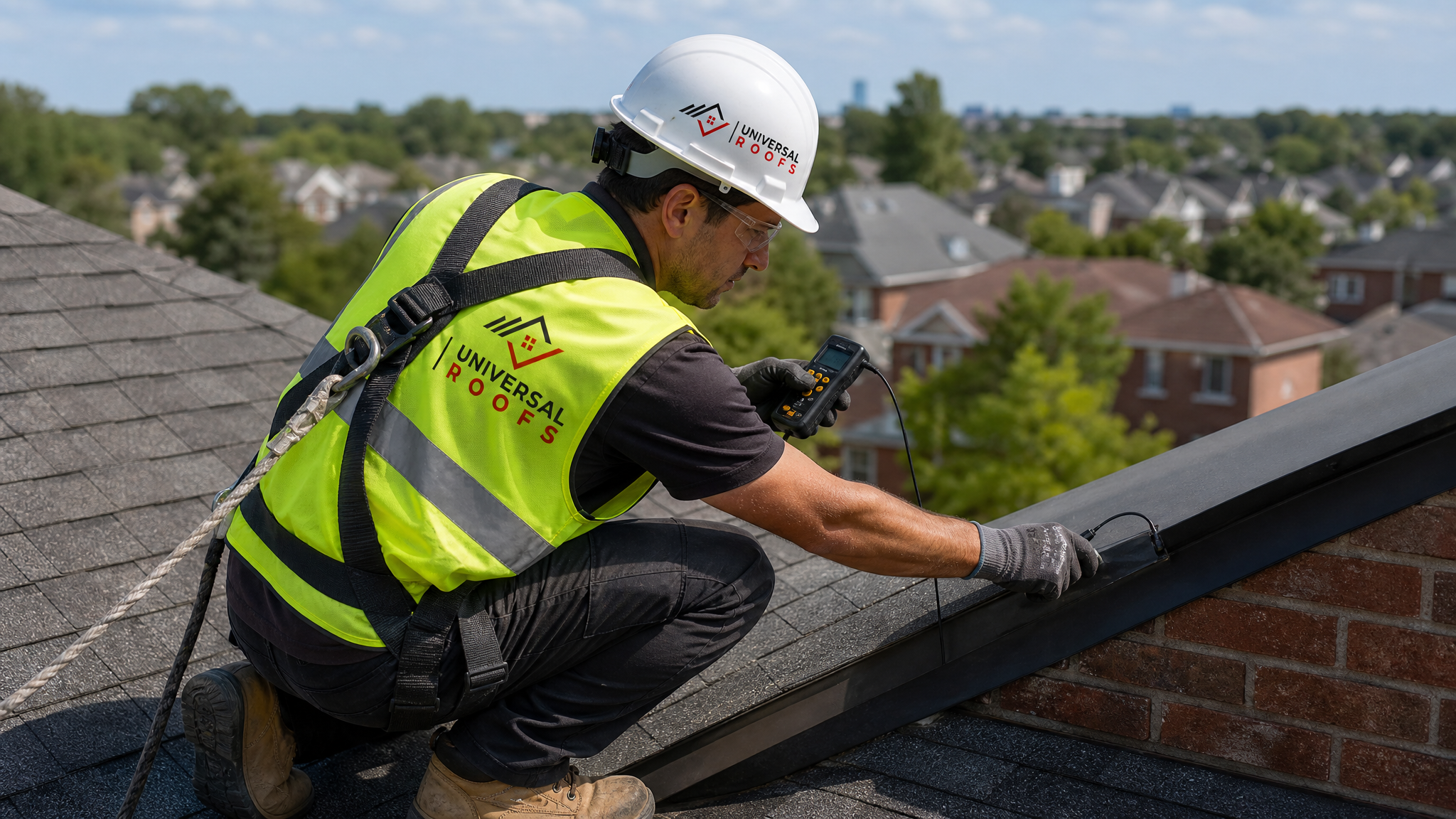
There’s also a real safety dimension. Roofs are steep, often wet, and covered in loose granules that create slip hazards. Homeowners without fall protection, proper footwear, or roof-walking experience are taking on real physical risk to save what usually amounts to a modest service call fee. A licensed roof repair team carries the harnesses, anchor points, and training to safely access every part of the roof, including valleys, dormers, and areas around chimneys where leaks most commonly originate.
How Water Actually Travels Once It Breaches Your Roof
Understanding the physics of a roof leak explains why chasing a ceiling stain rarely leads to the actual entry point. Water entering through a compromised shingle, a failed flashing joint, or a cracked vent boot doesn’t fall straight down through the attic. Instead, it interacts with several layers:
- The roof deck — plywood or oriented strand board that water can travel along for surprising distances before finding a gap, nail hole, or seam to drip through
- Rafters and trusses — structural framing members that act like gutters, channelling water horizontally before it drips at the lowest point
- Insulation — batting or blown-in insulation absorbs and holds moisture, sometimes for weeks, delaying visible signs while mould begins to develop
- The vapour barrier and drywall — the final layer, where enough accumulated moisture finally creates a visible stain or bulge
By the time a homeowner notices a brown ring on the ceiling, the leak may have been active for several rainfalls, sometimes over multiple seasons. This lag is what makes professional roof leak detection essential rather than optional — a trained eye can identify secondary evidence such as water staining on rafters, compressed or discoloured insulation, and mineral deposits on flashing that point back toward the true source, even when no active dripping is happening during the inspection.
Techniques and Tools Used in Professional Leak Detection
Modern leak detection blends old-fashioned visual inspection with technology that makes hidden moisture visible. A qualified inspector typically layers several methods together rather than relying on just one, since no single tool catches every type of leak.
| Detection Method | What It Reveals | Best Used For | Limitations |
|---|---|---|---|
| Visual roof surface inspection | Cracked, lifted, or missing shingles; damaged flashing; deteriorated sealant | Obvious surface-level damage and wear patterns | Cannot detect leaks hidden beneath intact-looking materials |
| Attic and interior inspection | Water stains, mould, damp insulation, rusted nail heads | Confirming a leak exists and estimating its general location | Doesn’t pinpoint the exact exterior entry point |
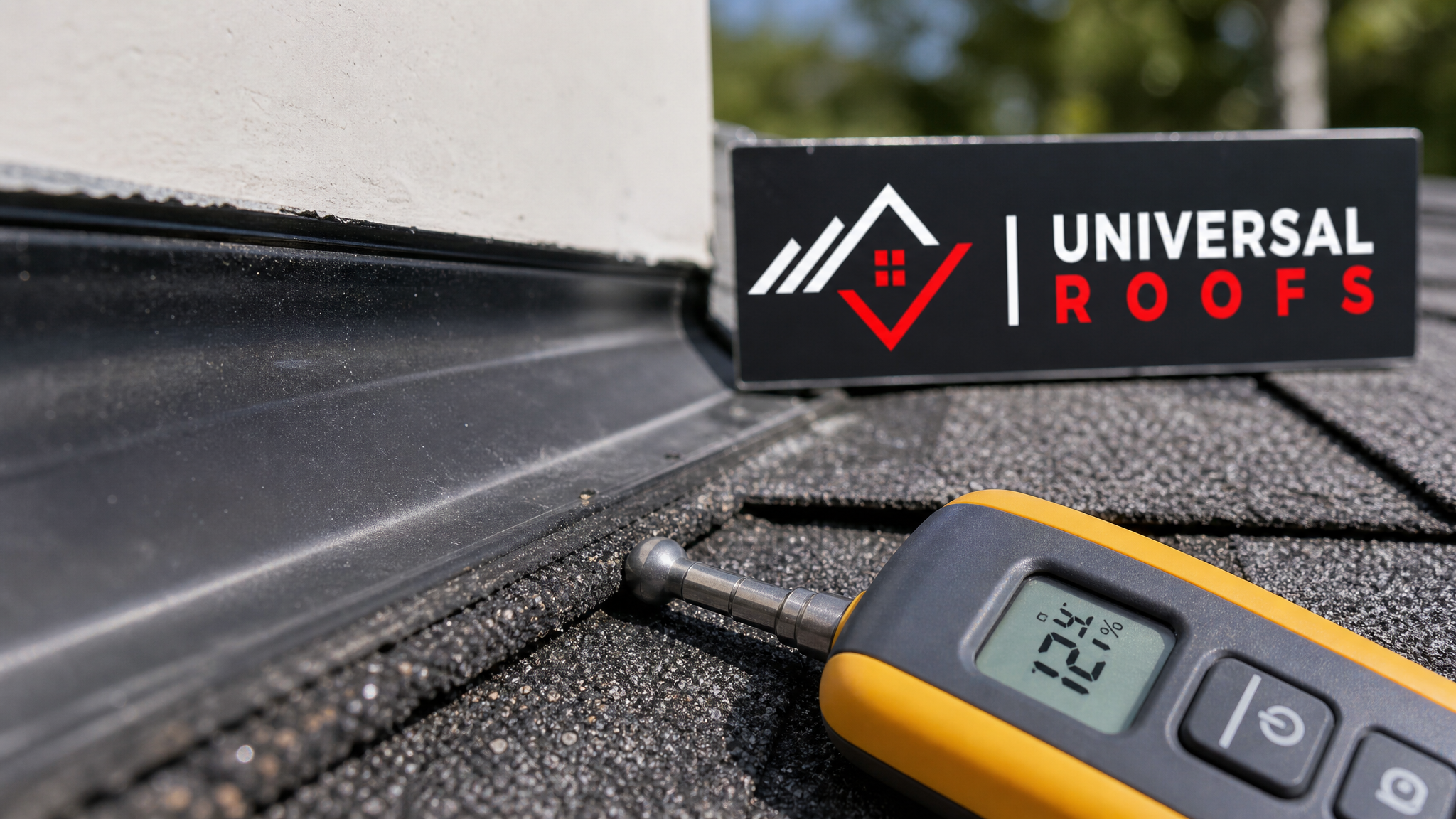
| Moisture meter scanning | Elevated moisture content within decking, insulation, or drywall | Mapping the extent of water intrusion and tracking it toward the source | Requires direct contact and roof access to use effectively |
| Infrared thermal imaging | Temperature differences caused by trapped or evaporating moisture | Large commercial roofs and flat roof membranes over big surface areas | Most accurate under specific temperature and humidity conditions |
| Controlled water testing | Reproduces the leak on demand by flooding suspected zones section by section | Intermittent leaks that only appear under specific wind or rain conditions | Time-intensive and requires an assistant inside to watch for drips |
Controlled water testing deserves special mention because it’s one of the most reliable methods for chasing down elusive leaks. A technician sections off areas of the roof — starting low and working upslope — and applies water with a hose for several minutes at a time while a second person watches the interior for the first sign of moisture. This methodical, one-section-at-a-time approach eliminates guesswork and isolates the exact failure point, whether that’s a step flashing gap near a chimney, a nail pop through a shingle, or a seam in a flat roofing membrane.
Common Culprits Behind GTA Roof Leaks
Toronto’s climate creates a specific set of recurring failure points that experienced local roofers learn to check first. Recognizing these patterns helps homeowners understand what an inspector is actually looking for.
| Leak Source | Typical Cause | Warning Signs | Seasonal Risk Factor |
|---|---|---|---|
| Flashing around chimneys and walls | Sealant dries out and cracks, or metal separates from masonry over time | Rust streaks, visible gaps, ceiling stains near chimney | Worsens through freeze-thaw cycles in spring and fall |
| Pipe and vent boots | Rubber collars around plumbing vents degrade under UV exposure | Cracked rubber, discoloured shingles around the pipe | Accelerated by intense summer sun exposure |
| Valley leaks | Debris accumulation or worn valley flashing redirects water sideways | Granule buildup, standing water after rain, interior staining near roof valleys | Peaks during heavy summer thunderstorms |
| Ice dam backups | Melting snow refreezes at the eaves, forcing water back under shingles | Icicles, interior stains along exterior walls in winter | Highest risk during GTA winter thaw-freeze cycles |
| Skylight seals | Aging gaskets or improperly flashed curbs allow water infiltration | Condensation, staining around the skylight frame | Compounded by summer storms and winter ice |
Skylights in particular deserve a dedicated inspection, since a leak that looks like it’s coming from the roof itself can actually originate at the skylights curb or seal. If your skylight is more than 15 years old, deteriorated gaskets are often the real story, and in many cases a skylight replacement resolves recurring leaks more permanently than repeated resealing.
The Real Cost of Delayed or Missed Leak Detection
The financial argument for early, accurate detection is straightforward: the longer water sits inside a roof assembly, the more expensive the eventual repair becomes. What starts as a $300-400 diagnostic and patch can turn into a $4,000-8,000 structural repair if left unaddressed for a year or two, and significantly more if mould remediation or full roof deck replacement becomes necessary.
| Stage of Leak Progression | Typical Repair Scope | Estimated Cost Range (CAD) | Timeline If Ignored |
|---|---|---|---|
| Early detection, single point source | Spot flashing or shingle repair | $300 – $800 | Resolved in one visit |
| Moderate, insulation affected | Insulation replacement plus roof repair | $1,200 – $3,000 | 2-4 weeks to schedule and complete |
| Advanced, deck or truss involvement | Partial deck replacement, structural repair | $4,000 – $9,000 | Often requires interior drywall work too |
| Severe, widespread mould or rot | Mould remediation, deck and truss replacement, interior rebuild | $10,000+ | Can take months and may involve insurance claims |
This progression is the clearest illustration of why professional roof leak detection essential services pay for themselves. Catching a leak at the flashing-repair stage rather than letting it progress to structural damage isn’t just a matter of convenience — it can mean the difference between a same-day fix and a multi-week renovation involving contractors, insurance adjusters, and displaced living space.
Signs Your GTA Home Needs a Leak Inspection Now
Homeowners don’t need to wait for an obvious ceiling stain to justify calling in a professional. Several subtler signs often appear well before visible water damage, and catching them early is where the real savings happen.
- Musty odours in an upstairs room or closet, especially after rain, which often indicates trapped moisture in insulation or wall cavities
- Peeling paint or bubbling drywall on ceilings or upper walls, a sign moisture is building up behind the finished surface
- Granules collecting in gutters in unusually high volumes, suggesting accelerated shingle wear that can precede leaks
- Daylight visible through the roof deck when viewed from inside the attic, a clear indicator of a breach
- Sagging or discoloured attic insulation, which often means water has already been entering for some time
- Higher-than-normal energy bills, since damp insulation loses much of its R-value and forces your HVAC system to work harder
If any of these signs sound familiar, it’s worth scheduling an inspection before the next heavy summer storm rolls through. A thorough roof repair assessment at the first sign of trouble is almost always cheaper than waiting for a dramatic leak to force the issue.
What a Professional Leak Detection Visit Actually Involves
Homeowners calling for the first time often aren’t sure what to expect. A properly run inspection typically follows a consistent sequence, regardless of whether the roof is a straightforward asphalt shingle installation or a more complex system involving multiple roof planes, skylights, and chimneys.
- Interior walkthrough — the technician examines ceilings, walls, and the attic for existing staining, mould, or soft spots, building a map of where water has already shown up
- Exterior roof survey — a full walk of the roof surface checking shingles, flashing, seals, and drainage points for visible wear or damage
- Moisture mapping — using a moisture meter to trace dampness in the decking and insulation back toward its likely origin point
- Targeted testing — for leaks that aren’t immediately obvious, controlled water application isolates the precise failure point section by section
- Written report and recommendation — homeowners receive a clear explanation of what was found, photos of the problem area, and a repair plan with transparent pricing
This structured process is what separates a genuine diagnostic service from a quick patch job. Contractors who skip straight to applying sealant without first confirming the actual source are effectively guessing — and callbacks for the “same” leak a few months later are common when that shortcut is taken.
Attic Ventilation and Insulation’s Role in Leak Prevention
Leak detection isn’t only about finding active water intrusion — it’s also about identifying the conditions that make leaks more likely in the first place. Poor attic ventilation traps humid air against the underside of the roof deck, encouraging condensation that can mimic or worsen an actual leak. In winter, inadequate insulation combined with heat escaping into the attic melts snow unevenly on the roof surface, contributing directly to ice dam formation at the eaves — one of the most common leak sources in the GTA.
A comprehensive attic assessment during a leak detection visit often reveals whether ventilation baffles are blocked, whether insulation depth meets current standards, and whether bathroom or kitchen exhaust fans are venting improperly into the attic space rather than outside. Addressing these root causes alongside any active leak repair reduces the likelihood of new leaks developing in the following seasons.
Flat Roofs and Skylights Require Specialized Detection Approaches
Not every roof leak detection scenario looks the same. Sloped asphalt shingle roofs behave very differently from low-slope membrane systems, and detection techniques need to adapt accordingly. On a flat roofing system, water doesn’t shed quickly by gravity — it can pond, especially near drains, and even a pinhole in the membrane can allow slow infiltration that spreads laterally beneath the surface before finding a seam or penetration to drip through into the building below. Infrared thermal imaging tends to be particularly effective on flat roofs because temperature differentials between wet and dry membrane areas show up clearly, especially in the evening after a day of solar heating.
Skylights present their own detection challenge because leaks around them are frequently mistaken for roof leaks generally, when the actual problem is a failed seal at the curb, deteriorated glazing gaskets, or improperly integrated step flashing where the skylight meets the surrounding shingles. A technician experienced with both roofing and skylights systems knows to isolate these zones separately during testing rather than assuming the leak originates from the general roof field.
Choosing a Roofer for Leak Detection Across the GTA
Leak detection quality varies significantly between contractors, and homeowners across Toronto, Peel, York, Halton, and Durham regions should look for a few specific qualifications before booking a service call. Verify that the company carries liability insurance, provides a written diagnostic report rather than a verbal guess, and has specific experience with your roof type, whether that’s asphalt shingle, flat membrane, or a skylight-integrated system.
It’s also worth checking how a company has performed for other local homeowners. Reading through reviews from past clients, browsing common questions on a company’s FAQ page, and learning more about how long a business has operated in the region all provide useful signals of reliability before committing to an inspection.
Universal Roofs has been diagnosing and resolving roof leaks throughout the region since 2005, with crews regularly working across Toronto, Peel Region, York Region, Halton Region, and Durham Region. That regional experience matters because leak patterns and building code requirements can shift slightly from municipality to municipality, and a contractor familiar with local conditions is better equipped to spot the failure points specific to your neighbourhood’s housing stock and weather exposure.
When Detection Reveals It’s Time for Repair or Replacement
Not every leak calls for a full roof replacement, but a proper diagnostic visit should always include an honest assessment of whether targeted repair is sufficient or whether the roof’s overall condition points toward a bigger project. Isolated flashing failures or a single cracked vent boot on an otherwise sound roof are usually addressed with a straightforward roof repair. But if the inspection reveals widespread granule loss, multiple failure points across different roof planes, or a roof that’s already well past its expected service life, a roof replacement often ends up being the more cost-effective long-term choice rather than continuing to chase individual leaks as they appear year after year.
A trustworthy contractor will lay out both options clearly, with the reasoning behind each recommendation, rather than defaulting to the most expensive solution. This transparency is part of what makes professional roof leak detection essential — not just for finding the water, but for making an informed decision about the right long-term fix.
Why is professional roof leak detection essential rather than a DIY fix?
How much does professional roof leak detection typically cost in the GTA?
What tools do professionals use to find hidden roof leaks?
Can a roof leak cause damage even if I don’t see a stain yet?
Are skylights a common source of leaks that get mistaken for roof leaks?
How often should GTA homeowners schedule a roof leak inspection?
Need Help With Why Is Professional Roof?
If you’ve noticed a stain, a musty smell, or simply want peace of mind before the next storm rolls through, don’t wait for a small issue to become a major one. Universal Roofs has the experience and equipment to trace even the most stubborn leaks back to their true source and fix them right the first time.
Call us today at (416) 732-2421 or request a free inspection to get started.
Universal Roofs proudly serves Toronto, Mississauga, Brampton, Vaughan, Markham, Oakville and the GTA since 2005.