
Finding trusted experts for roof inspections and repairs is one of the most important decisions a Toronto-area homeowner can make. A roof is the single largest barrier between your family and the elements, and in the GTA it has to withstand freeze-thaw cycles, ice damming, humid summers, and the occasional wind event that peels back shingles overnight. Yet most homeowners only think about their roof when water is already dripping onto the ceiling.
That reactive approach is exactly why so many small, inexpensive problems turn into five-figure repairs. A cracked pipe boot that would have cost a couple hundred dollars to reseal in year three can, by year eight, rot the decking, saturate the attic insulation, and creep into the drywall below. The difference between a minor line item and a major claim almost always comes down to whether someone qualified looked at the roof early and often.
This guide walks through exactly what a proper roof inspection involves, how experienced technicians diagnose and repair the most common issues found in Toronto homes, what things should cost, how long each type of repair takes, and how to tell a genuinely qualified roofing contractor from someone who simply owns a ladder. Whether you are dealing with an active leak this week or you simply want to get ahead of next winter, the information below is meant to help you make an informed decision.
Why Roof Inspections Matter More Than Most Homeowners Realize
A roof inspection is not a cosmetic once-over. It is a structured assessment of every component that keeps water out of your home, including shingles or membrane, flashing, ventilation, fascia, soffits, and the attic space underneath. In the Greater Toronto Area, roofs endure a wider range of stress than in most Canadian climates: sub-zero winters that create ice dams, rapid spring thaws, humid summer afternoons that can trigger sudden thunderstorms, and UV exposure that gradually breaks down asphalt shingle granules over the warmer months.
Because of that combination, the Canadian Home Builders’ Association and most municipal building departments recommend at least one professional roof inspection per year, ideally in spring or early autumn, with a supplementary check after any major wind or hailstorm. Skipping this step doesn’t make problems disappear; it just means they are discovered later, when they are more expensive and more disruptive to fix.
An inspection performed by Universal Roofs typically takes 30 to 60 minutes for an average detached home and produces a written report with photos, a list of any deficiencies found, and a recommendation on urgency. This is different from a “free roof check” offered by door-to-door salespeople, which is often a pretext to upsell a full replacement regardless of the roof’s actual condition. A trustworthy inspection should be able to tell you honestly when your roof is fine and doesn’t need anything at all.
What a Thorough Roof Inspection Actually Covers
Not all inspections are created equal. A rushed walk-around from the ground with binoculars is not the same as a hands-on assessment. Below is what should be checked during any inspection worth paying for, whether it is a routine maintenance visit or a pre-purchase inspection ahead of buying a home.
- Shingle or membrane condition: granule loss, curling, cracking, blistering, or missing sections
- Flashing around chimneys, vent stacks, skylights, and roof-to-wall transitions
- Valleys, where two roof planes meet and water volume is highest
- Fascia and soffit for rot, insect damage, or improper ventilation
- Eavestroughs and downspouts for proper pitch, clogs, and secure attachment
- Attic space from the inside: insulation levels, moisture staining, mould, daylight gaps, and signs of pest entry
- Ventilation balance between intake (soffit) and exhaust (ridge or roof vents)
- Structural sag or deflection in the roof deck, visible from both outside and inside the attic
If a contractor only looks at shingles and skips the attic entirely, they are missing at least half the picture. Many of the most damaging issues, like inadequate ventilation or a slow leak that has been wicking along a rafter for two years, are only visible from underneath. A team that also handles attic insulation and ventilation work will typically be far more thorough here, because they understand how the attic and roof system function together.
| Inspection Type | Typical Duration | Best Time of Year | What It’s For |
|---|---|---|---|
| Routine annual check-up | 30–45 minutes | Spring or early fall | General maintenance, catching small issues early |
| Post-storm inspection | 30–60 minutes | Within days of a wind or hailstorm | Assessing storm damage for repair or insurance claim |
| Pre-purchase inspection | 45–75 minutes | Any time, before closing | Verifying remaining roof life before buying a home |
| Pre-listing inspection | 30–45 minutes | Before listing a home for sale | Identifying issues before a buyer’s inspector finds them |
| Warranty or insurance inspection | 45–90 minutes | As required | Documenting condition for a claim or warranty dispute |
The Most Common Roof Problems Found in GTA Homes
After thousands of inspections across Toronto, Mississauga, Brampton, Vaughan, Markham, Oakville, and the surrounding suburbs, a handful of issues show up again and again. Recognizing these early, ideally from the ground with binoculars or from inside your attic on a bright day, can help you decide whether it’s time to call in a professional.
1. Ice Damming and Winter Water Intrusion
Ice dams form when heat escaping from the attic melts snow on the upper roof, which then refreezes at the colder eaves. Over a few cycles, this creates a ridge of ice that backs water up under the shingles. This is one of the single most common calls received every spring, and it is almost always a ventilation and insulation problem, not a shingle problem.
2. Flashing Failure
Flashing is the metal or rubber material that seals transitions: chimney to roof, wall to roof, vent pipe to roof. It moves slightly with temperature swings, and the sealant around it degrades faster than the roofing material itself. Flashing failure is responsible for a disproportionate share of “mystery leaks” that appear far from where the water actually enters.
3. Granule Loss and UV Degradation
Asphalt shingles lose their protective granules over time, especially on south- and west-facing slopes that get the most direct sun. Once bare asphalt is exposed, the shingle degrades much faster. Finding granules pooling in your eavestroughs is often the first visible sign.
4. Poor Attic Ventilation
A roof needs balanced intake and exhaust airflow to regulate temperature and moisture. Without it, shingles overheat and age prematurely from below, and moisture condenses on the underside of the deck, encouraging rot and mould.
5. Skylight Leaks
Older skylights, or skylights that were installed without proper step flashing, are a frequent source of interior water stains. This is a specialized enough problem that many general roofers under-diagnose it; a company that also does dedicated skylight installation and skylight replacement work will usually catch it faster.
6. Flat and Low-Slope Roof Ponding
On additions, garages, and some newer builds with modern flat-roof designs, standing water after rain is a warning sign of poor drainage slope or a failing membrane. Left unaddressed, ponding accelerates membrane breakdown and can eventually lead to structural sagging.
Repair vs. Replacement: How the Decision Actually Gets Made
One of the most valuable things a trustworthy inspector does is tell you honestly whether a roof needs a targeted repair or a full roof replacement. This decision should never be based on a single visible symptom; it should weigh the roof’s overall age, the extent of the damage, and the cost of repair relative to the remaining service life.
As a general rule of thumb, if a roof is under 12 to 15 years old and the damage is isolated to one section, flashing, or a specific leak point, a roof repair is almost always the more sensible option. If the roof is nearing or past its expected lifespan, has widespread granule loss across multiple slopes, or has already had two or three patch repairs in different areas, replacement typically becomes the better long-term value, since further patching just delays an inevitable and larger expense.
| Situation | Recommended Approach | Typical Cost Range (CAD) | Expected Timeline |
|---|---|---|---|
| Single flashing leak, roof under 10 years old | Targeted flashing repair | $250–$650 | Same day |
| Localized wind damage, 5–15 shingles | Shingle patch repair | $300–$900 | Same day |
| Ice dam damage to eaves and soffit | Repair plus ventilation upgrade | $800–$2,500 | 1–2 days |
| Widespread granule loss, roof 15+ years old | Full roof replacement | $8,000–$16,000+ | 1–3 days |
| Flat roof membrane ponding or blistering | Membrane repair or overlay | $600–$4,000 | 1–2 days |
These figures are general market ranges for the GTA and will vary based on roof size, pitch, material, and accessibility. A proper quote should always follow an in-person inspection rather than a phone estimate.
How the Repair Process Works, Step by Step
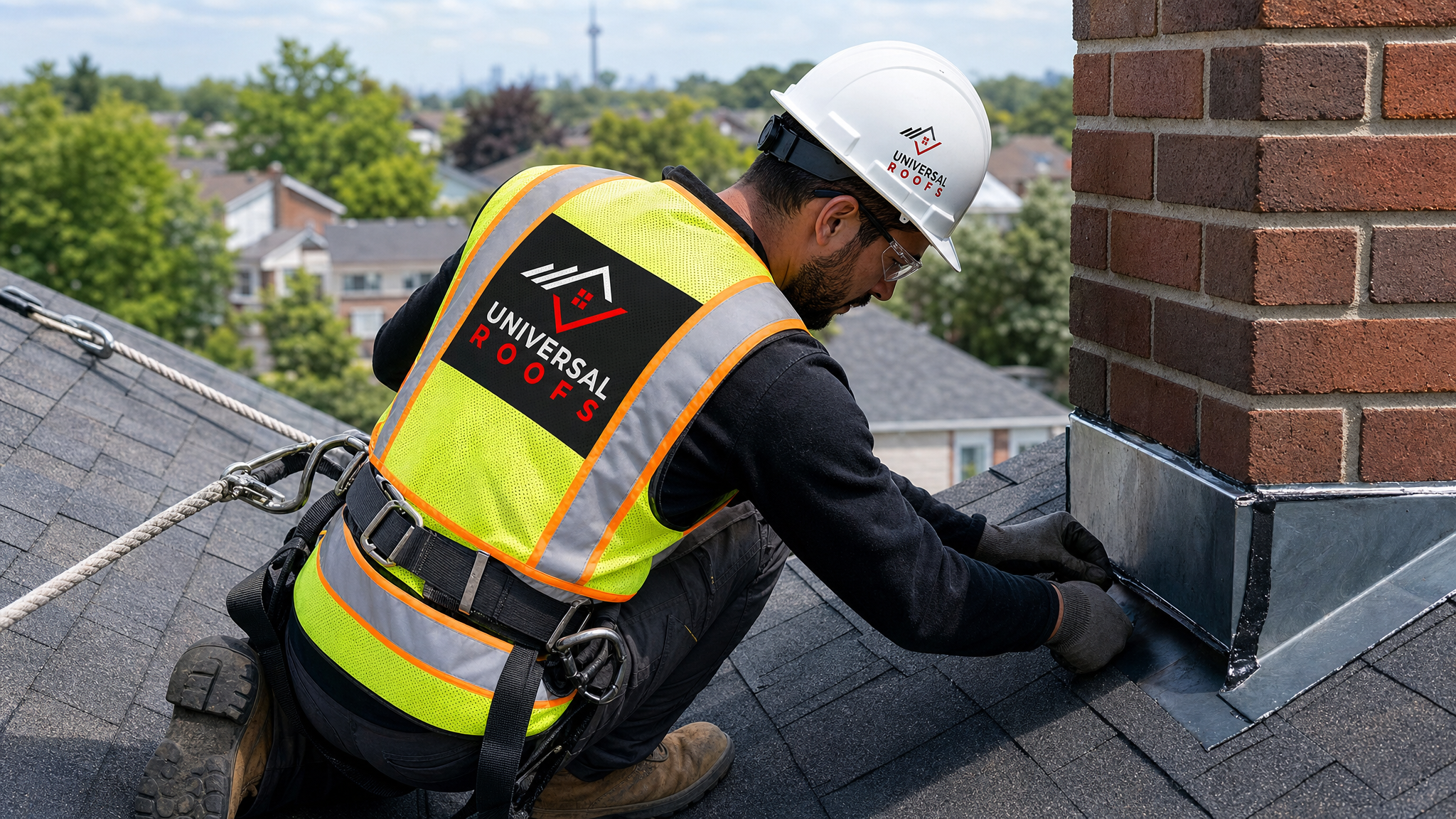
A well-run repair follows a consistent process regardless of the specific problem being addressed. Understanding these steps helps homeowners know what to expect and spot shortcuts if a contractor tries to skip them.
- Initial assessment and photo documentation. The technician records the exact location and extent of the damage, including from inside the attic where relevant.
- Written estimate with scope of work. A trustworthy quote itemizes materials, labour, and any additional findings, rather than a single lump sum with no detail.
- Material matching. Shingles, membrane, or flashing should match the existing roof as closely as possible in both colour and profile, particularly for insurance-related repairs.
- Removal of damaged material. Old shingles, sealant, or membrane are fully removed rather than covered over, so the deck underneath can be inspected for rot.
- Deck inspection and repair if needed. Any soft or water-damaged plywood is replaced before new material goes down; skipping this step is one of the most common corner-cutting practices in the industry.
- Installation of new material, following manufacturer specifications for nailing patterns, overlap, and sealant.
- Clean-up and magnetic nail sweep of the property to remove debris and stray fasteners.
- Final walkthrough with photos of the completed work provided to the homeowner.
If any step above is missing from a quote or job, it is worth asking why. A rushed repair that skips deck inspection, for example, can leave rotten plywood under brand-new shingles, guaranteeing a repeat call within a year or two.
Choosing a Roofing Contractor You Can Actually Trust
The roofing industry has a reputation problem, largely because it is easy to enter with minimal equipment and no formal training. Every spring, especially after a significant storm, homeowners across Toronto, Mississauga, Brampton, and Vaughan report door-knocking crews offering “storm damage assessments” that conveniently always find damage requiring immediate signature on a contract. Here is what actually separates a trustworthy roofing company from an opportunistic one.
| Warning Sign | What a Trustworthy Contractor Does Instead |
|---|---|
| Unsolicited door-to-door “storm damage” claims | Provides an honest assessment, including telling you when nothing is wrong |
| Demands full payment upfront | Uses a reasonable deposit and payment structure tied to milestones |
| No local address or verifiable reviews | Has an established local presence and a public reviews history |
| Vague verbal quote only | Provides a detailed written estimate before any work begins |
| Pressures you to sign the same day | Gives you time to review the quote and ask questions |
| No proof of WSIB coverage or liability insurance | Provides documentation without being asked twice |
Beyond avoiding red flags, look for a few concrete positive signals: how long the company has operated in your specific region, whether they carry manufacturer certifications for the materials they install, and whether they offer a written workmanship warranty separate from the manufacturer’s material warranty. A company that has served the same communities for two decades has a reputation to protect that a fly-by-night crew simply does not.
Seasonal Timing: When to Book Your Inspection
Timing matters more than most homeowners assume. Spring inspections, generally April through June, are ideal for catching winter damage such as ice dam impact, cracked flashing from freeze-thaw movement, or shingles loosened by high winter winds. Late summer, which is where we are now heading into peak roofing season, is an excellent window to schedule repairs before the autumn rains arrive, since materials are easier to work with in warm, dry conditions and contractor schedules are typically more flexible than the fall rush.
Waiting until October or November to book a repair often means competing for limited appointment slots before winter, and some repairs, particularly membrane work on flat roofing systems, are more reliable when installed in warmer, drier weather. If you’ve noticed any signs of wear this spring or summer, mid-year is genuinely one of the best times to have it addressed rather than gambling on another winter.
Regional Considerations Across the GTA
While roofing fundamentals don’t change from one municipality to the next, a few regional patterns are worth knowing. Older housing stock in central Toronto neighbourhoods often has narrower attic spaces and older ventilation setups, which makes ice damming more common. Newer subdivisions across Peel Region and York Region tend to have more standardized roof designs but can still suffer from builder-grade ventilation that was never upgraded. Homes in Halton Region and Durham Region, particularly those closer to the lake, often see faster wear on the windward-facing roof slope due to consistent lake-effect wind exposure.
None of these regional differences change the fundamentals of a good inspection, but they do mean a contractor with broad experience across the whole GTA is more likely to correctly diagnose a pattern they’ve already seen dozens of times in your specific type of neighbourhood.
Maintaining Your Roof Between Professional Inspections
A professional inspection is not a substitute for basic homeowner vigilance in between visits. A few simple habits go a long way toward catching problems early and extending the life of any roof.
- Walk the perimeter of your home twice a year and look up for obviously missing, curling, or discoloured shingles
- Check eavestroughs for granule buildup, which signals accelerated shingle wear
- Look for daylight or staining in the attic on a sunny day, ideally right after a heavy rain
- Keep tree branches trimmed back at least a metre from the roofline to reduce debris and abrasion
- Clear eavestroughs of leaves and debris each fall and spring so water can drain properly
- Note any new ceiling stains immediately, even faint ones, and have them checked before the next rainfall
None of these substitute for a hands-on professional assessment, particularly of the attic and flashing, but they do help you flag problems between visits so a small issue never quietly becomes a large one.
Frequently Asked Questions
How do I find trusted experts for roof inspections and repairs near me?
How much does a professional roof inspection cost?
How often should I have my roof inspected?
Can a small roof leak really wait until next season?
What’s the difference between a repair and a full roof replacement?
Do roof inspections cover attic ventilation as well as shingles?
Need Help With Trusted Experts for Roof?
If you’ve noticed missing shingles, a water stain on your ceiling, or simply haven’t had your roof looked at in a few years, now is a good time to get ahead of it. Universal Roofs has been inspecting, repairing, and replacing roofs across the Greater Toronto Area since 2005, and our team knows exactly what to look for in this climate, from ice dam damage to flashing failures to attic ventilation issues.
Call us today at (416) 732-2421 or request a free inspection to get started.
Universal Roofs proudly serves Toronto, Mississauga, Brampton, Vaughan, Markham, Oakville and the GTA since 2005.