
If you have never given much thought to the narrow strips of material tucked under your roofline, you are not alone. Soffit and fascia sit in the least glamorous part of a home’s exterior, yet they quietly do some of the hardest work of any building component. When they fail, the damage is rarely obvious from the driveway until it becomes a much bigger, much more expensive problem.
Understanding the benefits of soffit and fascia repair is the first step toward protecting your roof, your attic, and your home’s overall value. In this guide, we explain exactly what soffit and fascia do, why Toronto’s freeze-thaw winters and humid summers are especially hard on these components, and how a timely repair pays for itself many times over in avoided damage.
At Universal Roofs, we have been repairing and replacing soffit and fascia across the Greater Toronto Area since 2005. This article draws on what we see most often on GTA roofs: rotted fascia boards behind sagging eavestroughs, soffit panels chewed open by squirrels, and attics that stay damp all summer because the ventilation built into the soffit has been blocked or destroyed.
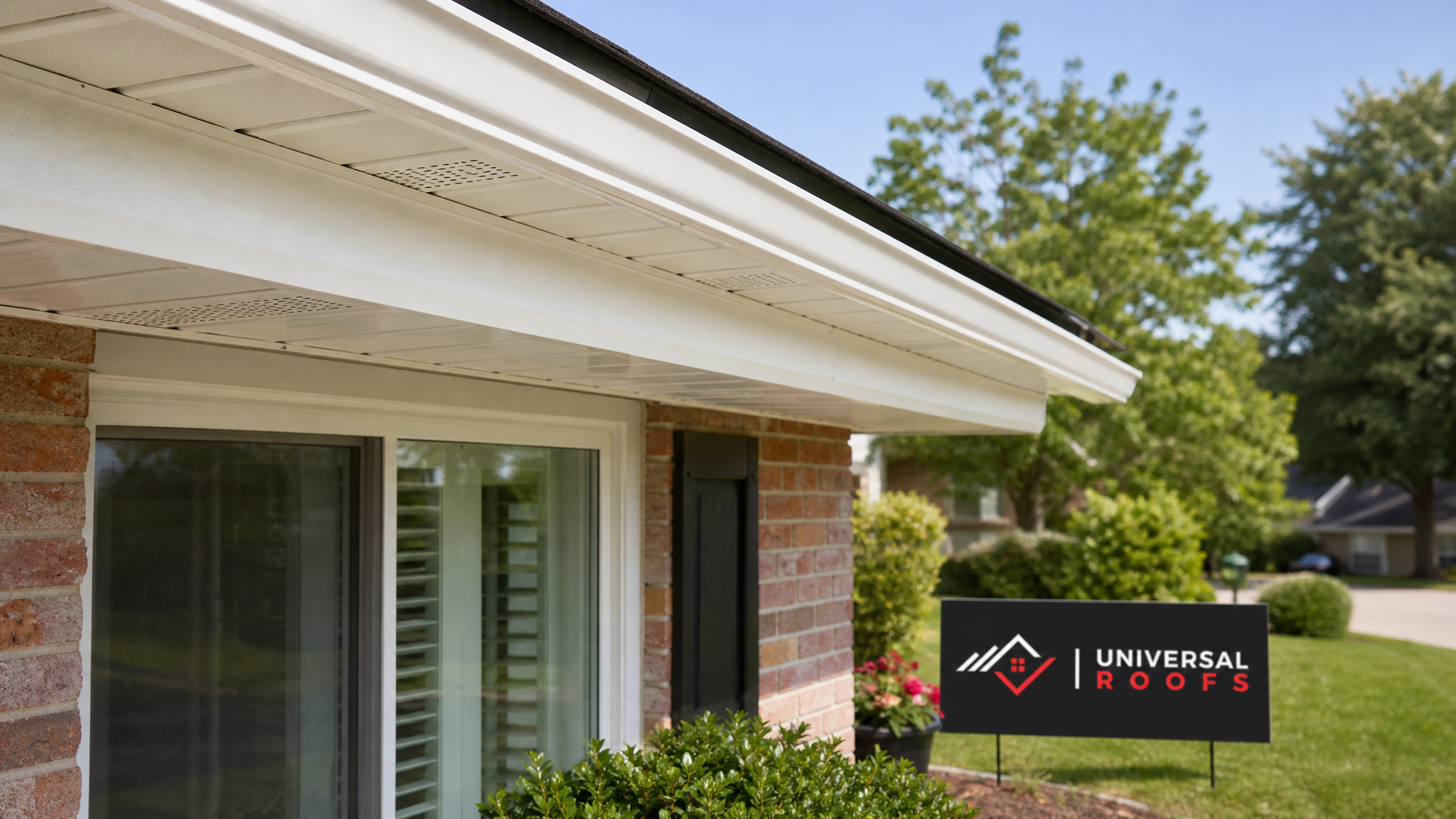
What Soffit and Fascia Actually Do
Before getting into the benefits of soffit and fascia repair, it helps to understand what these two components are and why they exist at all.
Fascia is the vertical board that runs along the edge of your roofline, directly behind the eavestrough. It is the visible “face” of your roof edge, and it is also the anchor point for your gutters. Every screw holding your eavestrough in place is driven into the fascia board, which means the fascia is carrying the full weight of your gutters, plus whatever rain or snow they are holding at any given moment.
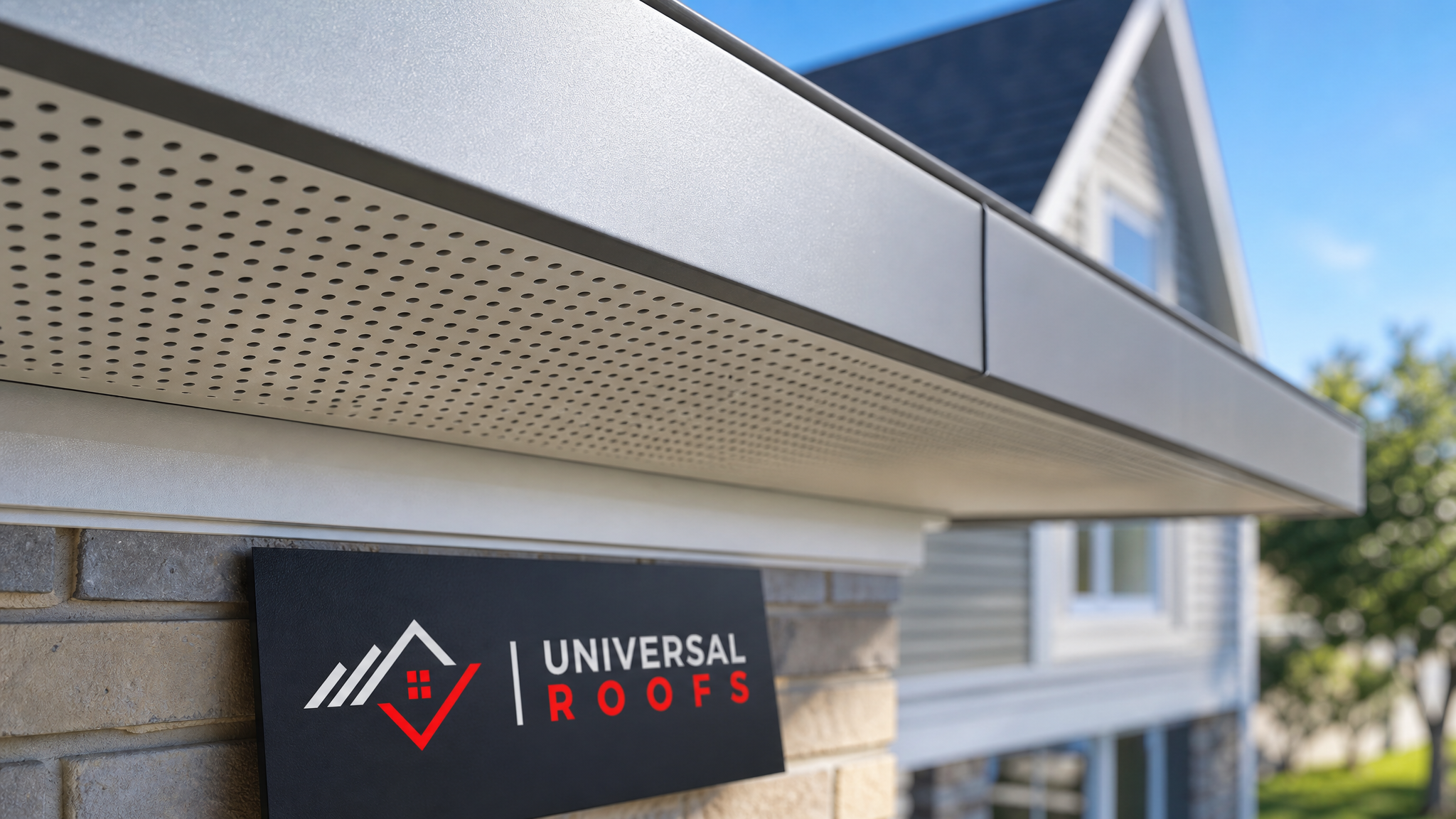
Soffit is the material that covers the underside of your roof overhang, connecting the fascia to the exterior wall of the house. Soffit is not just cosmetic trim: it is almost always perforated or vented, allowing outside air to flow into the attic. That airflow works together with roof or ridge vents to keep the attic at a stable temperature and moisture level year-round.
Together, soffit and fascia form a protective, ventilated envelope around the most vulnerable edge of your roof structure: the point where the roof deck, the exterior walls, and the eavestrough all meet.
Why Soffit and Fascia Fail in the GTA Climate
Toronto and the surrounding regions see a demanding mix of conditions for exterior wood and aluminum components. Winters bring repeated freeze-thaw cycles, ice damming along the eaves, and heavy, wet snow loads on gutters. Summers bring high humidity, intense UV exposure, and sudden thunderstorms that test every seal and joint. Add in the GTA’s mature tree canopy, and you have near-ideal conditions for squirrels, raccoons, and birds looking for a way into a warm, dry attic.
The most common failure patterns we see on service calls include:
- Fascia board rot from water backing up behind clogged eavestroughs, especially on north-facing rooflines that stay damp longer
- Soffit panels pried open or chewed through by squirrels seeking attic access, particularly in late summer and early autumn
- Paint failure and wood splitting on fascia from years of direct sun and freeze-thaw cycling
- Sagging or pulling-away eavestroughs after the fascia behind them has softened and can no longer hold screws
- Painted-over or debris-clogged soffit vents that quietly cut off attic airflow for years without anyone noticing
Left unaddressed, any one of these issues tends to compound. A small squirrel entry hole becomes an insulation and drywall problem. A soft fascia board becomes a gutter that pulls away from the house during the next heavy rain. This is exactly why proactive soffit and fascia repair delivers such outsized value compared to its cost.
The Core Benefits of Soffit and Fascia Repair
When homeowners ask us to explain the real, practical benefits of soffit and fascia repair, we usually group the answer into five categories.
1. Protecting the Roof Structure and Fascia-Mounted Gutters
Because your eavestroughs are fastened directly to the fascia board, a rotted or soft fascia cannot hold gutter hangers securely. Repairing fascia before it deteriorates further keeps your entire gutter system properly pitched and firmly attached, which in turn keeps water moving away from your foundation instead of pooling against it.
2. Restoring Proper Attic Ventilation
Vented soffit is one half of a balanced attic ventilation system, working with ridge or roof vents to move fresh air continuously through the attic space. When soffit is damaged, blocked by insulation, or painted shut, that airflow stops. The result is a hot, stagnant attic in summer and a moisture-trapping attic in winter. Repairing and clearing soffit vents restores the airflow your attic depends on to regulate temperature and control condensation.
3. Preventing Wood Rot and Structural Rot From Spreading
Soffit and fascia sit right at the intersection of your roof deck and exterior wall framing. Rot in this location does not stay contained. It travels along the wood grain into the roof deck, the rafter tails, and sometimes the top plate of the exterior wall. Catching and repairing soffit and fascia damage early is one of the most cost-effective ways to prevent a $500 repair from becoming a $15,000 structural rebuild.
4. Blocking Pest Entry Points
An open seam in soffit or a gap where fascia has pulled away from the roof edge is an open invitation for squirrels, raccoons, bats, and birds. Once inside the soffit cavity, animals can nest in insulation, chew wiring, and create odour and noise problems that are far more disruptive and expensive to resolve than the original repair would have been.
5. Improving Curb Appeal and Home Value
Because fascia runs the entire visible perimeter of your roofline, damage here is one of the first things a buyer, appraiser, or neighbour notices. Cracked, peeling, or sagging fascia reads as deferred maintenance even if the roof itself is in good condition. Clean, straight soffit and fascia lines make the whole roof edge look sharper and better maintained.
Signs Your Soffit or Fascia Needs Repair
Most soffit and fascia damage develops slowly, which is why homeowners often miss the early warning signs. Walk your property twice a year, ideally in spring and again in late summer, and look for the following:
- Peeling paint, warping, or visible cracks along the fascia board
- Soft spots you can press in with a finger, a classic sign of rot underneath the paint
- Gaps, holes, or chew marks in the soffit panels, especially near the corners of the roof
- Sagging eavestroughs pulling away from the fascia, or visible gaps behind the gutter
- Water stains on the fascia or soffit after rain
- Increased attic heat in summer or frost buildup on the underside of the roof deck in winter
- Wasp nests, bird nests, or scratching sounds coming from the eaves
If you notice any of these signs, it is worth having a professional take a closer look before booking a full roof repair. In many cases, soffit and fascia issues can be addressed on their own without touching the shingles, but ignoring them long enough will eventually affect the roof deck itself.
Repair Methods and Materials Compared
Soffit and fascia repair is not a one-size-fits-all job. The right method depends on the extent of damage, the existing material, and your budget. The table below compares the most common approaches we use across GTA homes.
| Repair Method | Best For | Typical Lifespan | Relative Cost |
|---|---|---|---|
| Spot repair (patch section of rotted board) | Isolated rot or animal damage under 1 metre | 5-10 years before wider replacement needed | Low |
| Full fascia board replacement | Widespread rot, sagging gutters, or old wood fascia | 20-25 years (wood-composite or aluminum-wrapped) | Moderate |
| Aluminum soffit and fascia capping | Protecting sound wood fascia from further weathering | 25-30 years | Moderate |
| Full soffit panel replacement (vented aluminum or vinyl) | Pest damage, blocked vents, or failed original installation | 25-30 years | Moderate to High |
| Complete soffit, fascia, and eavestrough system replacement | Older homes doing a full roofline refresh alongside roof work | 25-30+ years | Highest |
For most GTA homes, aluminum soffit and fascia capping or full panel replacement offers the best long-term value. Aluminum resists the freeze-thaw cracking and UV fading that eventually defeats painted wood, and it never needs repainting.
Material Options at a Glance
Homeowners often ask which material makes the most sense for their specific situation. Here is how the main options compare on the qualities that matter most in our climate.
| Material | Moisture Resistance | Maintenance Needs | Approximate Lifespan |
|---|---|---|---|
| Painted wood fascia | Low to moderate (needs sealed paint layer) | Repaint every 4-6 years | 10-15 years |
| Aluminum-wrapped fascia | High | Occasional cleaning only | 25-30 years |
| Vinyl soffit panels | High | Occasional cleaning only | 20-25 years |
| Perforated aluminum soffit | High | Occasional cleaning, keep vents clear | 25-30 years |
| Wood soffit (unclad) | Low | Repaint/reseal every 3-5 years | 8-12 years |
Troubleshooting Common Soffit and Fascia Problems
Not every issue requires a full replacement. This table walks through some of the most frequent problems we are called out for and the typical fix.
| Problem Observed | Likely Cause | Typical Fix | Urgency |
|---|---|---|---|
| Eavestrough sagging away from the roofline | Fascia board has softened and can no longer hold gutter screws | Fascia repair or replacement, then re-hang gutters | High |
| Hole or gap in soffit near roof corner | Squirrel or raccoon entry point | Patch or replace panel, seal gap, verify no animals remain in attic | High |
| Peeling paint but wood feels solid | Normal UV and weather wear, not yet structural | Clean, prime, and repaint, or cap with aluminum | Low to Moderate |
| Hot, stuffy attic in summer | Soffit vents blocked by paint, debris, or insulation | Clear and re-open vents, add baffles if insulation is blocking airflow | Moderate |
| Visible mold or dark staining on soffit underside | Trapped moisture from poor ventilation or a roof leak nearby | Repair source of moisture, clean and treat surface, verify attic airflow | High |
How the Repair Process Works
A typical soffit and fascia repair with our team follows a straightforward process:
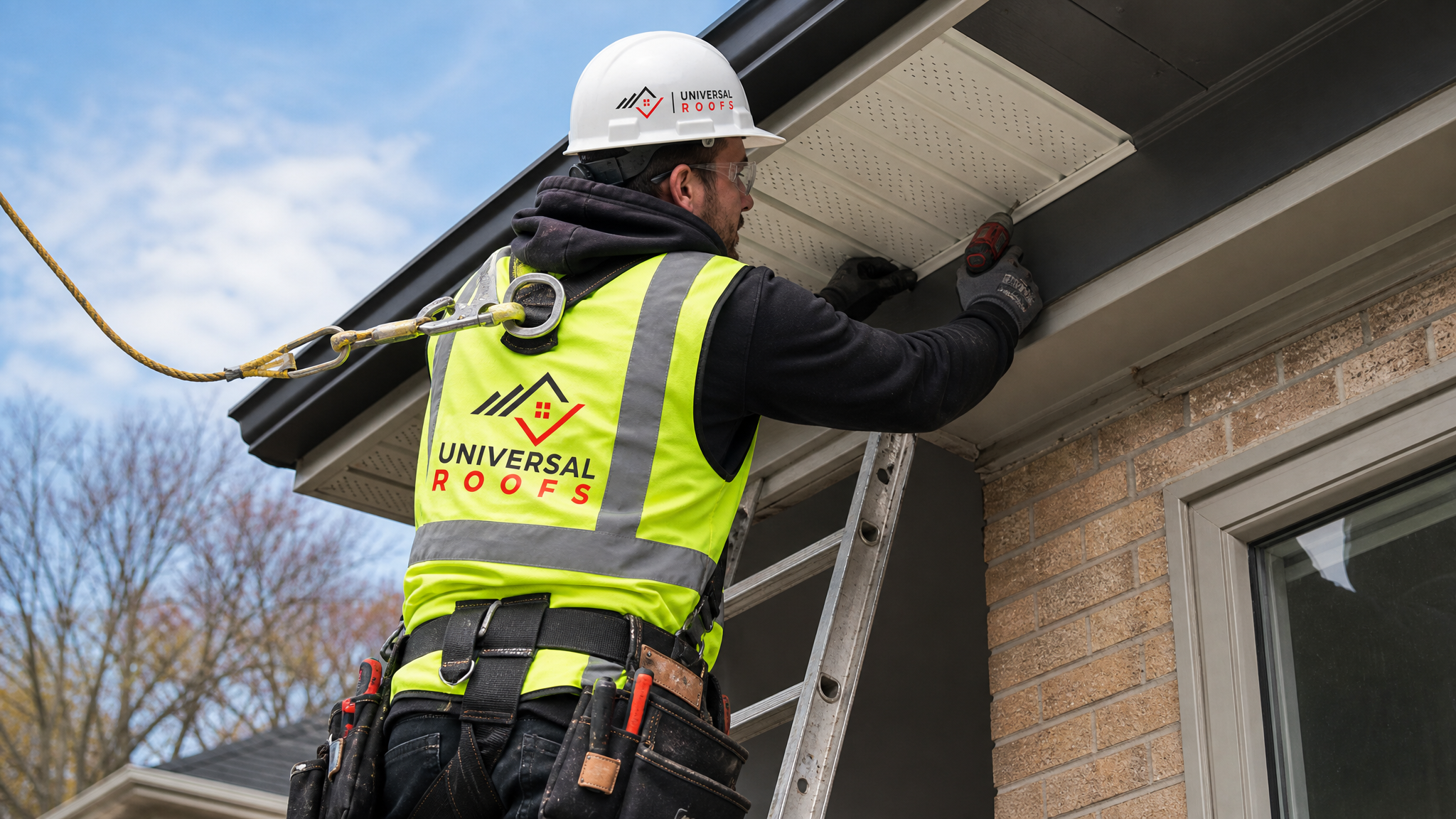
- Inspection: We examine the full roofline from a ladder or roof access, checking for soft spots, gaps, pest activity, and blocked vents, and we take a look inside the attic where possible to assess ventilation and any signs of moisture.
- Scoping the repair: Based on what we find, we determine whether the job is a targeted patch, a full fascia and soffit replacement on the affected elevation, or a whole-house refresh.
- Removing damaged material: Rotted wood, chewed panels, and any pest nesting material are removed and disposed of. If animals have been present, we check for and seal secondary entry points before closing anything up.
- Installing new material: New aluminum or vinyl fascia and vented soffit panels are cut, fitted, and fastened to match your home’s existing roofline profile and colour.
- Re-hanging gutters: If eavestroughs were removed or were sagging, they are reattached to the newly repaired fascia at the correct pitch for proper drainage.
- Final check: We confirm soffit vents are clear and unobstructed, seams are properly sealed, and the repair blends visually with the rest of the home.
Most soffit and fascia repairs on a typical GTA detached home are completed in a single day, weather permitting. Larger jobs involving the full roofline or coordinated roof replacement work may take longer.
Soffit and Fascia in Context: Flat Roofs and Skylights
Soffit and fascia condition matters just as much on homes with flat roofing sections as it does on standard pitched roofs, since the perimeter edge detailing still relies on properly vented soffit and solid fascia to shed water correctly. Similarly, homes with skylights or considering a skylight replacement should have their soffit ventilation checked at the same time, since a well-ventilated attic reduces condensation risk around skylight shafts and roof penetrations generally.
When Repair Makes Sense vs. When to Replace
As a general rule, repair is the right call when damage is limited to one or two sections, the underlying structure is still sound, and the rest of the soffit and fascia system is in reasonable shape. Full replacement becomes the smarter long-term investment when:
- Rot or pest damage appears in multiple locations around the home
- The existing material is original wood fascia older than 20 years
- You are already planning gutter replacement or roofing work
- Ventilation problems are affecting the whole attic rather than one section
A professional inspection is the most reliable way to know which category your home falls into. Our technicians will always recommend the least invasive option that genuinely solves the problem, rather than upselling a full replacement when a targeted repair will do.
Summer Maintenance Tips for GTA Homeowners
Since we are heading into peak summer conditions across the GTA, July is an ideal time to check your soffit and fascia while the weather is dry and roof access is easiest. A few simple habits go a long way:
- Clear leaves, seeds, and debris from soffit vents at least twice during the growing season
- Trim back tree branches that touch or overhang the roofline, reducing both debris buildup and easy pest access
- Check eavestroughs for proper pitch and clear attachment to the fascia after any major storm
- Look up at the fascia line from ground level every few months, watching for new gaps, staining, or sagging
- Book a professional inspection every two to three years, or immediately after noticing any warning sign listed above
These small checks cost nothing but a few minutes and can catch a developing problem long before it requires a costly repair.
Serving Homeowners Across the Greater Toronto Area
Soffit and fascia conditions vary by neighbourhood depending on tree cover, building age, and exposure to wind-driven rain. Our crews regularly repair soffit and fascia for homeowners throughout Toronto, Peel Region, York Region, Halton Region, and Durham Region, so we understand the specific patterns of wear that show up in each area’s housing stock. You can read about other homeowners’ experiences with our team on our reviews page, or check our FAQ page for answers to more general roofing questions. To learn more about our history and licencing, visit our about page.
What are the benefits of soffit and fascia repair for an older home?
How do I know if my soffit or fascia needs repair?
Can soffit and fascia repair improve attic ventilation?
Does soffit and fascia repair help prevent pest problems?
Is it better to repair or fully replace soffit and fascia?
How much does soffit and fascia repair typically cost in the GTA?
Need Help With What Are the Benefits?
Soffit and fascia repair is one of the most cost-effective ways to protect your roof, your attic, and your home’s curb appeal, and the team at Universal Roofs has been helping GTA homeowners stay ahead of this kind of damage since 2005.
Call us today at (416) 732-2421 or request a free inspection to get started.
Universal Roofs proudly serves Toronto, Mississauga, Brampton, Vaughan, Markham, Oakville and the GTA since 2005.