
High winds are one of the most underestimated threats to a Toronto-area roof. While homeowners tend to watch for obvious storm damage like missing shingles or a leaking ceiling, the wind-related wear that shortens a roof’s lifespan is often slow, quiet, and easy to miss until it becomes a costly repair. Understanding how wind actually damages a roof, and how to care for your roof before and after it happens, is one of the simplest ways to protect your investment for decades.
At Universal Roofs, we have inspected thousands of GTA roofs since 2005, and wind-related deterioration is one of the most common issues we find during routine inspections that homeowners never knew existed. The good news is that most wind damage is preventable with the right maintenance habits, and most existing damage can be caught early enough to avoid a full roof replacement.
This guide walks through exactly how wind shortens roof lifespan, how to spot the warning signs, what maintenance actually extends the life of your roofing system, and when it makes more sense to repair versus replace. Whether you are dealing with the aftermath of a summer thunderstorm or simply want to get ahead of the problem before the next windy season, this article covers what you need to know.

How Wind Actually Damages a Roof
Wind does not need to reach hurricane force to hurt a roof. In the Greater Toronto Area, sustained winds of 60 to 80 km/h during a summer squall or a fall wind advisory are enough to lift shingle edges, work fasteners loose, and drive rain sideways underneath the roofing material. Over time, this repeated flexing and lifting is what actually shortens a roof’s usable life, far more than any single dramatic storm.
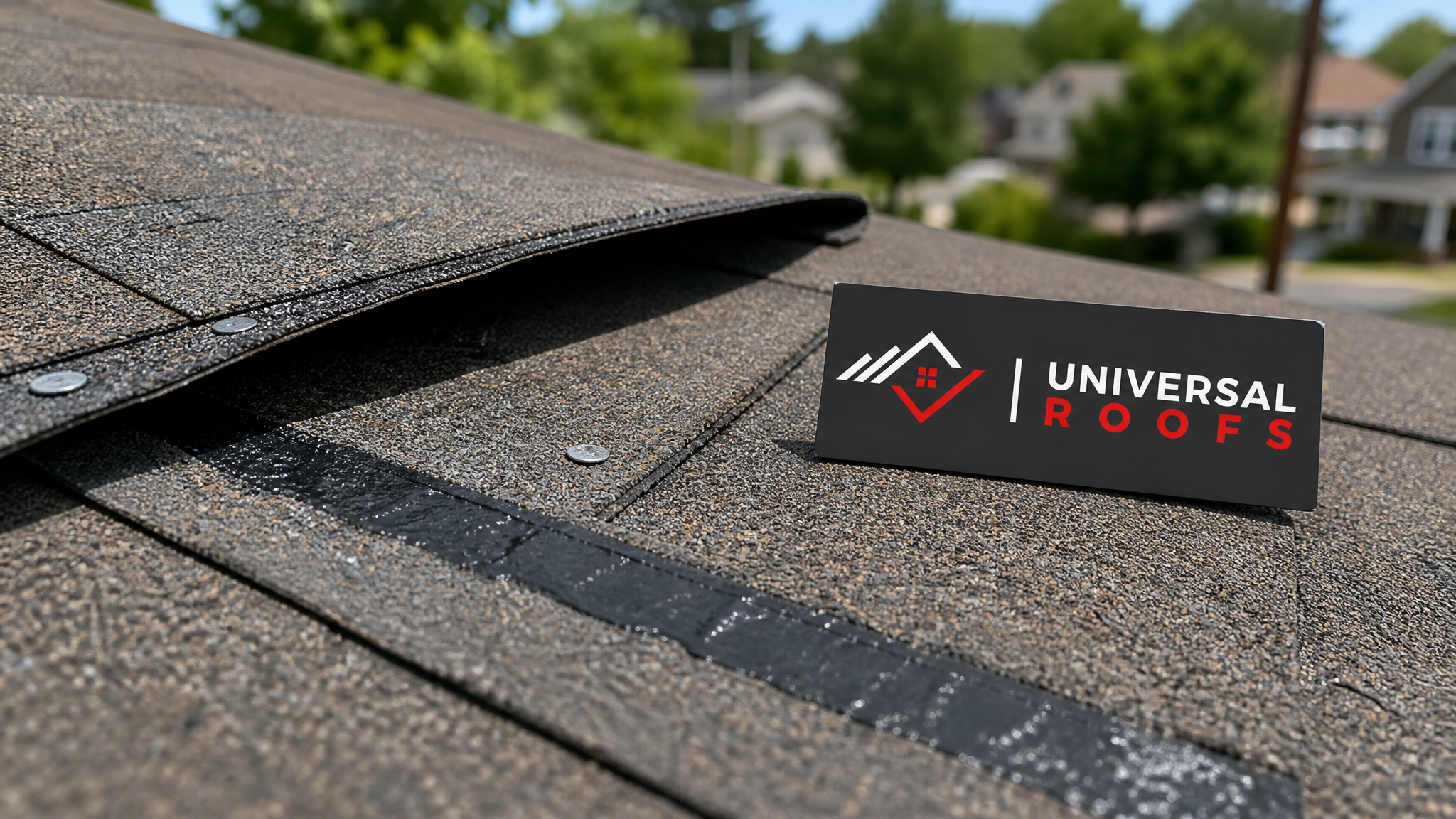
Wind attacks a roof in three main ways. First, it creates uplift pressure that gets underneath the leading edge of a shingle, especially at corners, ridgelines, and eaves where wind speed accelerates as it passes over the roof plane. Second, it drives airborne debris such as branches, gravel, or ice pellets into the roofing surface, which abrades the protective granules on asphalt shingles. Third, it forces wind-driven rain sideways and even slightly upward under flashing and shingle laps, which is how leaks start well before any shingles are visibly missing.
Each of these mechanisms compounds the others. A shingle that has been lifted once rarely seals back down perfectly, which means the next windstorm has an easier time lifting it further. This is why wind damage tends to snowball: a roof that looks fine after one storm can be significantly more vulnerable by the next one if the initial lifting was never addressed.
Warning Signs Your Roof Has Wind Damage
Most wind damage is visible if you know where to look, though a lot of it is only visible from the ground with binoculars or during a professional roof repair inspection. Here are the signs that consistently show up after wind events across our service area.
- Shingles that appear curled, lifted, or “flagged” (bent upward at one edge) rather than lying flat
- Bald patches or exposed black underlayment where granules have been stripped away
- Shingles missing entirely, often just one or two rather than a large section
- Soft or sagging sections of roof deck, which suggest water has already gotten underneath
- Granules collecting in gutters or at the base of downspouts after a storm
- Flashing around chimneys, vents, or skylights that has been bent, lifted, or separated from the roof surface
- Water stains on interior ceilings or attic sheathing that appear shortly after a windy rainstorm
If you notice any of these signs after a wind event, the priority is a prompt inspection rather than waiting to see if it gets worse. A shingle that is lifted but not yet torn off can often be resealed in minutes; the same shingle left alone through another storm may need to be replaced along with the underlayment beneath it.
| Warning Sign | What It Means | Urgency Level | Recommended Action |
|---|---|---|---|
| Curled or lifted shingle edges | Adhesive seal has broken; wind can lift further | Moderate | Reseal or replace within 2-4 weeks |
| Granule loss in gutters | Shingle surface is wearing thin, less UV/water protection | Low-Moderate | Monitor; plan replacement within 1-3 years |
| Missing shingles | Deck and underlayment directly exposed to weather | High | Repair within days, tarp if rain is forecast |
| Bent or lifted flashing | Water entry point at vulnerable roof transitions | High | Repair immediately to prevent interior leaks |
| Ceiling stains after windy rain | Water has already penetrated the roof assembly | Urgent | Call a roofer same week; check attic insulation |
Why Roof Age and Wind Resistance Are Connected
A brand-new asphalt shingle roof installed with proper nailing technique can typically withstand wind gusts up to 190 km/h on paper, based on manufacturer wind-resistance ratings. In practice, that number assumes ideal installation, intact sealant strips, and a deck in good condition. As a roof ages, several things quietly erode that wind resistance long before the shingles look obviously worn.
Asphalt shingles rely on a factory-applied adhesive strip that bonds each shingle to the one below it once the sun’s heat activates it after installation. This bond is what actually resists wind uplift, not the nails alone. Over 10 to 15 years of freeze-thaw cycling, common across the GTA’s winters, this adhesive gradually becomes brittle and less effective. A 15-year-old roof can have dramatically less wind resistance than the same roof at year one, even if it looks structurally sound.
This is also why maintaining consistent attic ventilation matters more than most homeowners realize. Poor attic ventilation causes heat and moisture to build up under the roof deck, which accelerates shingle aging from underneath and can warp the deck itself, creating an uneven surface that is harder for shingles to seal against. A well-ventilated attic keeps the roof deck closer to outdoor temperature, which slows down this deterioration considerably.
| Roof Age | Typical Wind Resistance | Sealant Strip Condition | Recommended Wind-Care Action |
|---|---|---|---|
| 0-5 years | Near manufacturer rating (110-190 km/h) | Fully bonded | Annual visual inspection only |
| 6-10 years | Slightly reduced, minor edge lifting possible | Mostly bonded, some brittleness | Inspect after every major wind event |
| 11-15 years | Noticeably reduced | Brittle in sun-exposed areas | Bi-annual inspection, reseal lifted edges promptly |
| 16-20 years | Significantly reduced | Failing in most areas | Plan replacement, repair only as a stopgap |
| 20+ years | Minimal, high risk of tear-off in moderate wind | Failed | Full roof replacement recommended |
Maintenance Habits That Extend Roof Lifespan Against Wind
Extending a roof’s life in a wind-exposed climate like Toronto’s comes down to consistent, unglamorous maintenance rather than any single fix. The following habits, done consistently, are the single biggest factor in whether a roof reaches or exceeds its rated lifespan.
Inspect twice a year, and always after severe wind. Spring and fall inspections catch the slow damage from winter freeze-thaw and summer storms before it compounds. An inspection after any wind advisory, even if nothing looks obviously wrong from the ground, catches lifted shingles while they can still be resealed rather than replaced.
Keep gutters and downspouts clear. Clogged gutters force water to back up under the shingle edge during wind-driven rain, which is one of the most common causes of eave-level leaks that homeowners misattribute to “just an old roof” rather than a maintenance gap.
Trim overhanging branches. Branches that whip against a roof surface during wind events wear through granules far faster than wind alone, and a falling branch during a windstorm is one of the most common causes of a full shingle tear-off.
Check and maintain flashing. Flashing around chimneys, skylights, and roof-to-wall transitions is often the first thing to fail in high wind because it is mechanically fastened rather than adhered. If you have skylights installed, the flashing kit around them deserves particular attention, since a poorly sealed flashing joint is a common source of leaks that get blamed on the skylight itself. Homeowners replacing an aging unit should also review our skylight replacement guidance, since newer flashing kits perform considerably better in wind than older designs.
Address minor damage immediately. A single lifted shingle resealed today costs a fraction of what three replaced shingles and a section of underlayment cost after the next storm finishes the job. Waiting rarely saves money.
Maintain attic ventilation and insulation. As covered above, a well-ventilated attic keeps the deck cooler and drier, which preserves the shingle sealant strips that provide most of a roof’s actual wind resistance.
Consider wind-rated shingles at replacement time. Not all asphalt shingles are rated equally. Products with a Class F or Class H wind rating, combined with proper starter strip installation and nailing pattern, dramatically outperform standard shingles in GTA wind conditions.
Repair or Replace: Making the Right Call After Wind Damage
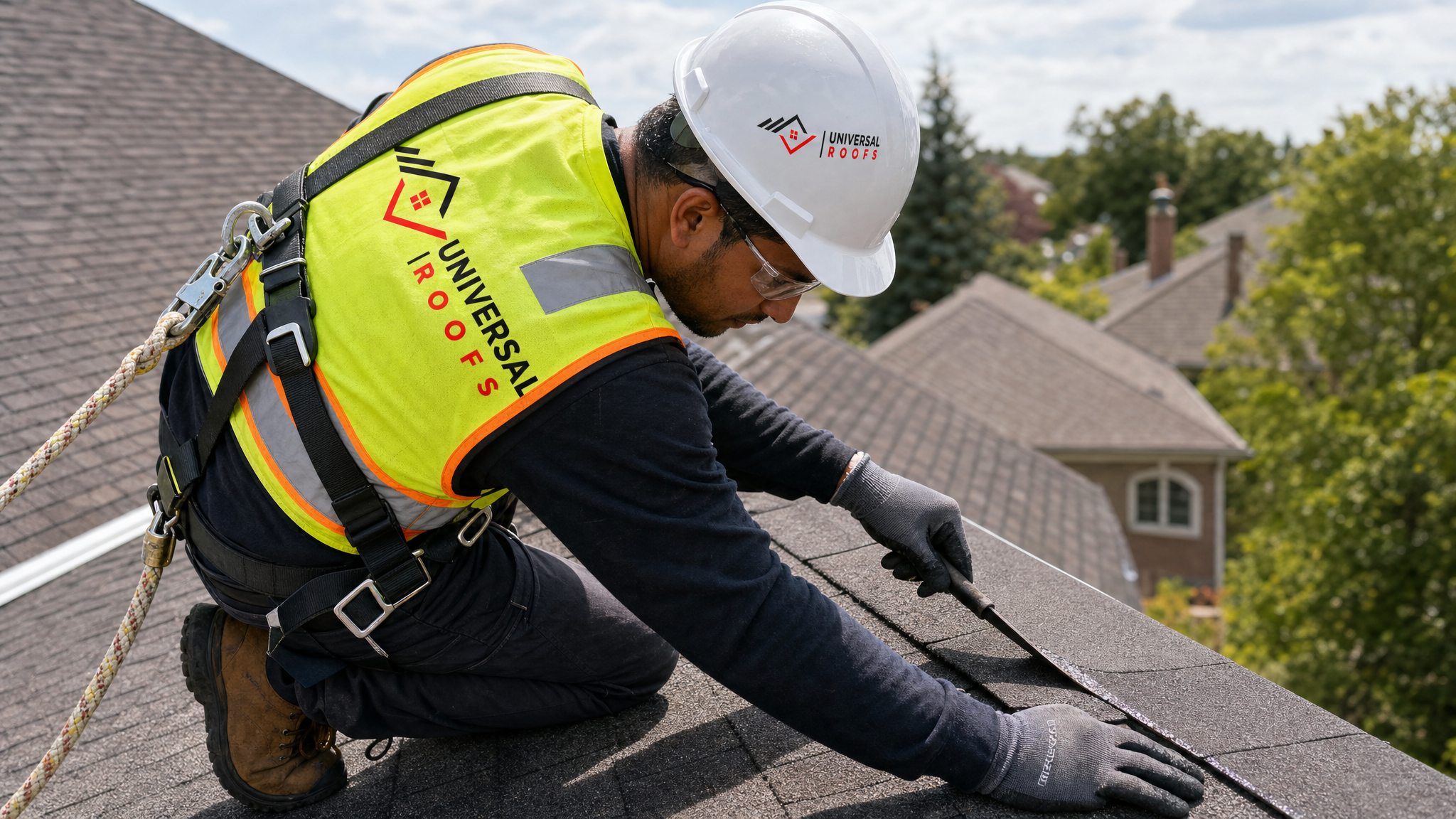
One of the most common questions we get after a wind event is whether a homeowner needs a full new roof or a targeted repair. The honest answer depends on the extent of damage, the roof’s age, and how much of the shingle’s original wind resistance is left. As a general framework, isolated damage on a roof under 12 to 15 years old is almost always a repair situation. Widespread damage, or any damage on a roof already near the end of its expected service life, tips the calculation toward replacement.
A professional inspection is the only reliable way to know for certain, since granule loss and sealant brittleness are not always visible from the ground. During an inspection, a roofer will check not just the shingles but the condition of the underlayment, the deck, and the flashing at vulnerable points, since wind damage often affects more than what is visible from the driveway.
| Situation | Repair or Replace | Typical Cost Range (CAD) | Typical Timeline |
|---|---|---|---|
| 1-3 shingles lifted or missing, roof under 10 years old | Repair | $300 – $800 | Same day to 2 days |
| Flashing damage at chimney or skylight | Repair | $400 – $1,200 | 1-2 days |
| Widespread granule loss across multiple slopes | Replace | $8,000 – $16,000+ | 2-4 days |
| Roof 18+ years old with any wind damage | Replace | $8,000 – $16,000+ | 2-4 days |
| Deck damage from prolonged undetected leaks | Replace (with deck repair) | $9,000 – $18,000+ | 3-5 days |
Flat roofs handle wind differently than sloped shingle roofs, since uplift forces act on the entire membrane rather than individual shingles. If your property has a flat or low-slope section, our flat roofing team checks membrane adhesion and perimeter fastening separately, since these are the failure points most likely to be affected by sustained wind.
Insurance Considerations for Wind Damage
Most Canadian home insurance policies cover sudden, accidental wind damage, but coverage details vary significantly between insurers and policies. Understanding a few key points before you need to file a claim can save considerable time and frustration.
Insurers generally distinguish between sudden wind damage (a storm tears off shingles) and gradual deterioration (shingles that failed slowly due to age and lack of maintenance). This distinction matters because most policies only cover the former. This is one of the strongest arguments for regular maintenance and prompt repairs: a well-documented maintenance history makes it far easier to demonstrate that damage was storm-related rather than a pre-existing maintenance issue, which insurers will otherwise use to deny or reduce a claim.
Photograph your roof during routine inspections, keep dated records of any repairs, and photograph damage immediately after a storm before any cleanup begins. A detailed, dated inspection report from a licenced roofing contractor carries significant weight with adjusters and is often the deciding factor in whether a claim is approved at full value.
Seasonal Wind Patterns Across the GTA
Wind exposure varies meaningfully across the Greater Toronto Area depending on local terrain and proximity to open ground or Lake Ontario. Homes closer to the waterfront in parts of Toronto tend to experience stronger sustained lake-effect winds, while properties in more open suburban areas of the Peel Region, York Region, Halton Region, and Durham Region can see stronger gusts during summer thunderstorm season due to less wind-blocking from surrounding buildings and mature trees.
Summer in Toronto brings the highest frequency of sudden, intense wind gusts tied to thunderstorm cells, sometimes exceeding 90 km/h in a squall line that lasts only minutes but does more damage than hours of steady wind. Late fall and early winter bring longer-duration wind events tied to weather systems moving across the Great Lakes, often combined with rain or wet snow that compounds the damage. Understanding which season your roof is heading into helps prioritize maintenance: a pre-summer inspection catches winter freeze-thaw damage before storm season, while a fall inspection catches summer wear before winter arrives.
What a Professional Wind Damage Inspection Includes
Not all roof inspections are created equal, and a thorough wind damage assessment covers considerably more ground than a quick look from the driveway. A proper inspection should include a physical walk of the roof surface (not just binoculars from the ground), a check of every flashing point, an inspection of the attic from underneath for signs of moisture or light penetration, and a check of gutters and downspouts for granule accumulation that indicates accelerated shingle wear.
Many homeowners are surprised to learn that some of the most important wind damage indicators are only visible from inside the attic. Water staining on the underside of the roof deck, daylight visible through the roof boards, or damp insulation are all signs that wind-driven rain has already found a way in, even if the exterior shingles look intact. This is why a comprehensive inspection always includes both the exterior roof surface and the interior attic space. You can read about what past customers experienced during their own inspections and repairs on our reviews page, or check our FAQ page for answers to other common roofing questions.
Frequently Asked Questions
How can I maximize my roof’s lifespan with wind damage care?
How much wind can a typical Toronto roof withstand?
What are the first signs of wind damage on a roof?
Does home insurance cover wind damage to a roof?
Should I repair or replace a roof after wind damage?
How often should I inspect my roof for wind damage?
Need Help With Maximize Your Roofs Lifespan?
Since 2005, Universal Roofs has helped GTA homeowners protect their roofs from the wind exposure that comes with our region’s changing seasons. Whether you need a post-storm inspection, a targeted repair, or want a second opinion on whether your roof still has the wind resistance to get through another season, our team can help you make the right call. Learn more about our company and the neighbourhoods we serve.
Call us today at (416) 732-2421 or request a free inspection to get started.
Universal Roofs proudly serves Toronto, Mississauga, Brampton, Vaughan, Markham, Oakville and the GTA since 2005.