
If your roof has a few years of life left but you are not ready to spend tens of thousands of dollars on a full tear-off, a protective coating deserves a serious look. Homeowners and property managers across the Greater Toronto Area constantly ask us the same question: is a roof coating actually worth it, or is it a band-aid that delays the inevitable? The honest answer is that this is exactly why choose long lasting roof coatings for extra protection makes sense for the right roof, at the right stage of its life, applied by someone who knows what they are doing.
A quality coating system is not paint. It is a monolithic, seamless membrane engineered to shed water, reflect UV radiation, resist ponding, and flex with the thermal movement that every GTA roof experiences between a -20°C January morning and a 34°C July afternoon. Applied correctly over a sound substrate, a long lasting roof coating can add 10 to 15 years of service life to an ageing flat roof, sloped asphalt roof, or metal roof for a fraction of the cost of full replacement.
In this guide we will walk through how coatings work, which coating chemistry suits which roof type, what real GTA homeowners pay, how long the process takes, the warning signs that tell you a coating is (or is not) the right move, and how to keep the system performing for its full rated lifespan. We will also flag the situations where a coating is the wrong answer and a full roof replacement is the more honest recommendation.
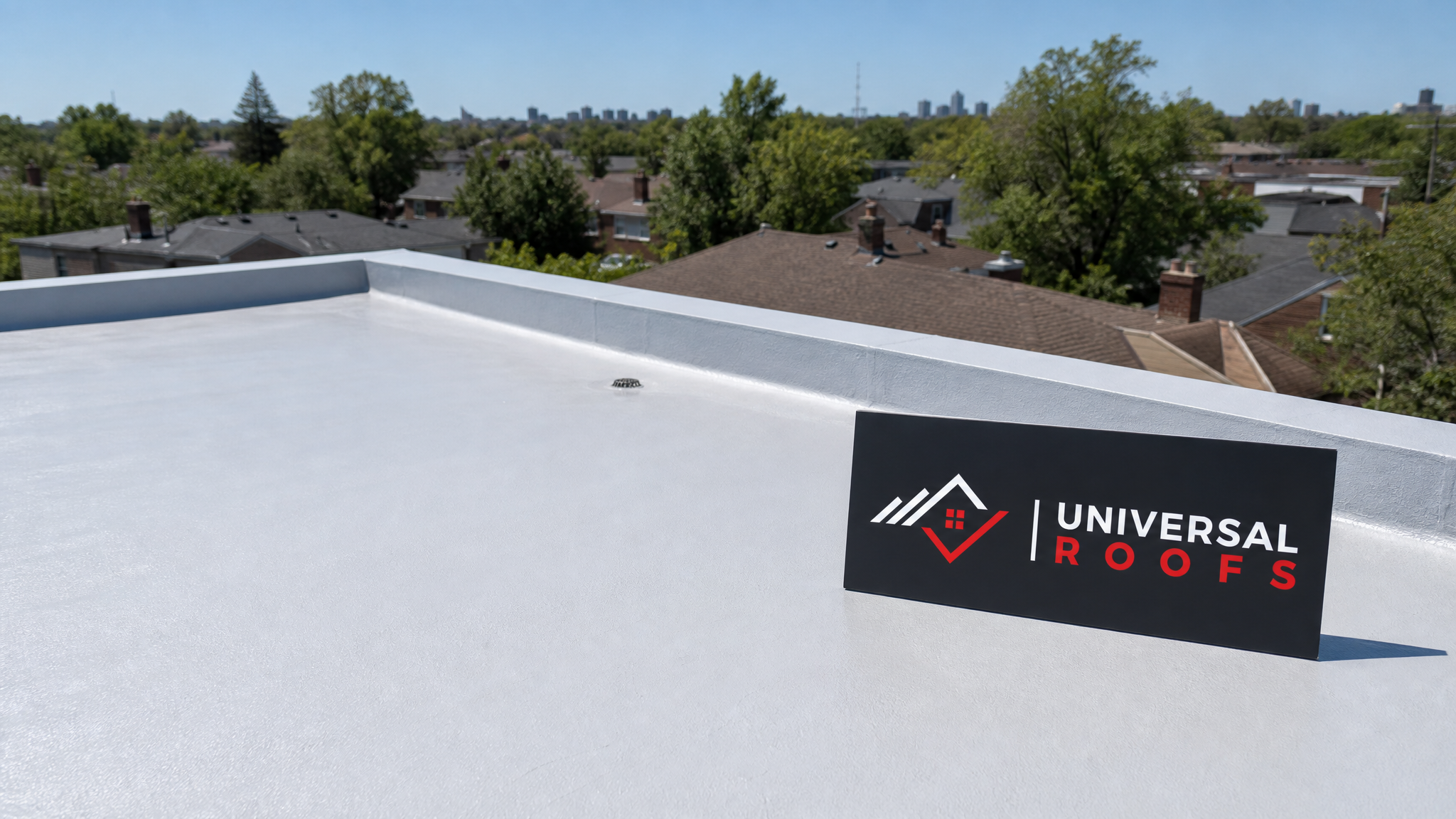
What Long Lasting Roof Coatings Actually Do
A roof coating is a fluid-applied membrane, usually rolled, brushed, or sprayed on in one or more coats, that cures into a continuous, rubber-like skin bonded directly to the existing roof surface. Unlike shingles or membrane sheets that rely on overlapping joints and mechanical fasteners, a coating has no seams once cured. Every square metre is monolithic, which eliminates the number-one failure point on most ageing roofs: deteriorated seams and flashing details.
Beyond waterproofing, modern coatings serve several protective functions at once:
- UV and heat reflection — white and light-coloured acrylic and silicone coatings can reflect 80% or more of solar radiation, dramatically reducing surface temperature and slowing the oxidation that ages roofing materials.
- Elastomeric flexibility — the membrane expands and contracts with the roof deck through Toronto’s wide seasonal temperature swings without cracking, which is critical during freeze-thaw cycles.
- Ponding water resistance — certain silicone and polyurethane formulations are specifically engineered to tolerate standing water on flat and low-slope roofs, something asphalt-based products cannot do reliably.
- Restoration of a failing membrane — a coating bridges hairline cracks, minor blisters, and pinholes, essentially resetting the clock on a roof that still has structurally sound decking underneath.
The result is a roof that stays cooler, sheds water more effectively, and resists the granule loss, cracking, and membrane fatigue that eventually force a full tear-off. That is the practical case for why choose long lasting roof coatings for extra protection over doing nothing and waiting for the first leak.
Coating Types Compared: Which Chemistry Fits Your Roof
Not every coating is interchangeable. Chemistry matters, and the wrong product on the wrong substrate will fail early. Here is how the four most common coating families used across Toronto, Mississauga, Brampton, Vaughan, Markham, and Oakville compare.
| Coating Type | Best Roof Substrate | Typical Lifespan | Ponding Water Tolerance | Approx. Cost Per Sq. Ft. (CAD) |
|---|---|---|---|---|
| Silicone | Modified bitumen, EPDM, existing silicone | 15–20 years | Excellent | $3.50–$5.50 |
| Acrylic elastomeric | Metal roofs, sloped asphalt shingles | 10–15 years | Fair to poor | $2.00–$3.50 |
| Polyurethane (aromatic base coat / aliphatic top coat) | High-traffic flat roofs, parking decks | 15–20 years | Very good | $4.00–$6.50 |
| Asphalt emulsion / rubberized | Older built-up asphalt roofs, budget flat roofs | 5–8 years | Poor | $1.25–$2.25 |
For most GTA flat roofs on residential or light-commercial buildings, silicone remains the gold standard specifically because Toronto weather produces frequent standing water after spring rain and rapid snowmelt. For sloped roofs and metal roofing, acrylic elastomeric coatings offer the best balance of flexibility, reflectivity, and cost. If you are unsure which substrate your home has, our team can assess it during a roof repair visit or a dedicated coating consultation.
Coatings vs. Full Replacement: A Cost and Timeline Comparison
The decision between coating an existing roof and tearing it off for a full replacement usually comes down to three factors: current roof condition, remaining budget, and how many years you need the roof to last. The table below breaks down what GTA homeowners typically experience with each path.
| Factor | Roof Coating | Full Roof Replacement |
|---|---|---|
| Average project cost (1,500 sq. ft. roof) | $4,500–$9,000 | $14,000–$28,000 |
| Installation timeline | 1–3 days | 3–10 days depending on scope |
| Disruption to occupants | Minimal, roof stays functional throughout | Significant, tear-off noise and debris |
| Added service life | 10–15 years (with recoat cycle) | 25–50 years depending on material |
| Best suited for | Roofs under 15 years old with sound decking, minor wear | Roofs with structural deck damage, widespread leaks, or beyond 75% of expected lifespan |
If your roof is still structurally sound and the underlying decking has no rot or sagging, a coating is almost always the more cost-effective path to extending its life. If an inspection reveals compromised decking or widespread membrane failure, no coating chemistry will fix that, and replacement is the honest recommendation. This is precisely why an on-site inspection matters more than a phone quote.
The Application Process, Step by Step
A coating is only as good as the preparation underneath it. Rushed prep is the single biggest reason coatings fail early, and it is worth understanding what a proper job actually involves.
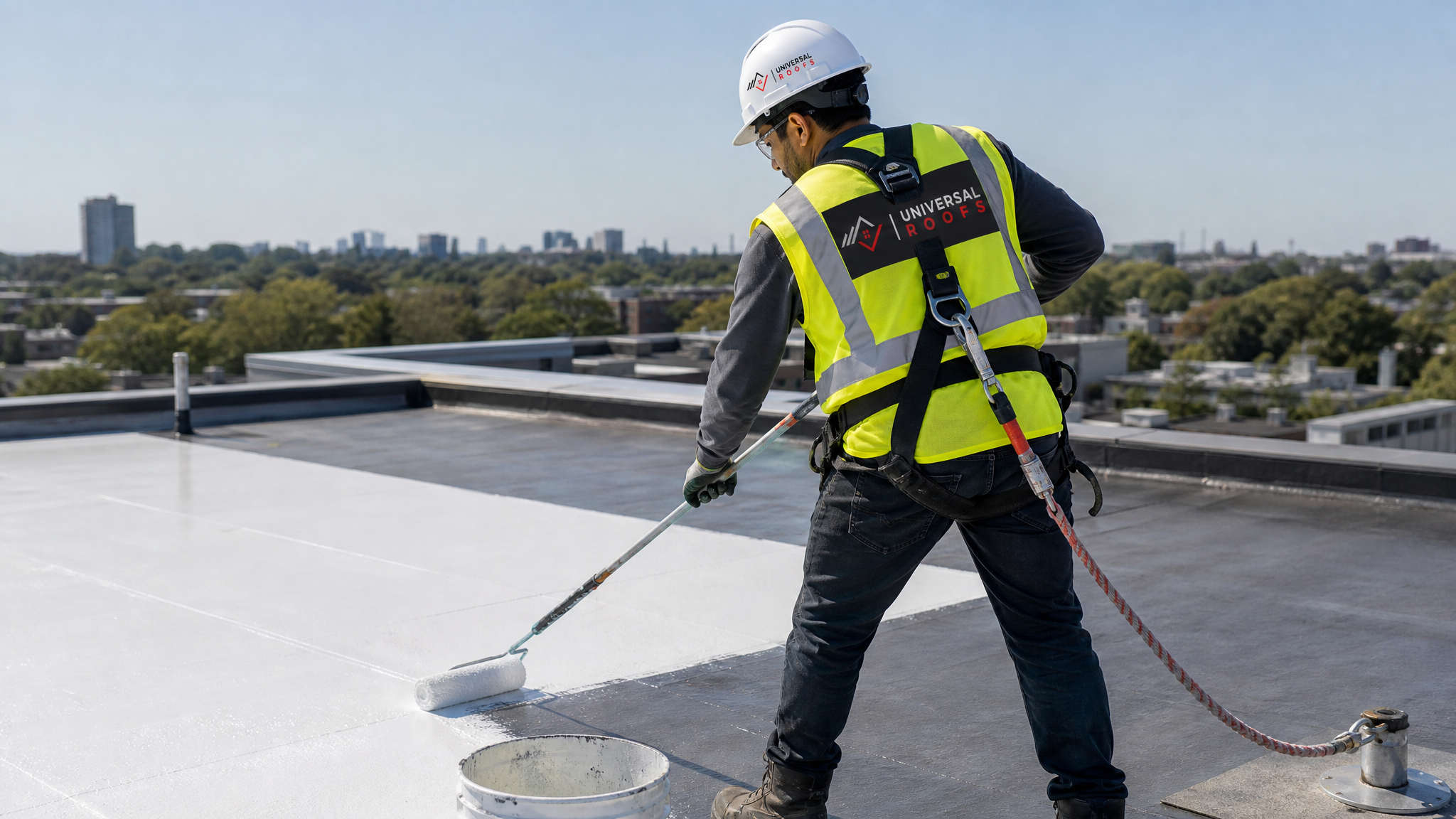
- Roof inspection and moisture scan. Before any product touches the roof, a qualified crew checks for trapped moisture in the insulation, soft spots in the decking, and existing membrane condition. Coating over a wet substrate traps moisture and accelerates rot.
- Power washing and debris removal. The surface is cleaned of dirt, moss, chalking, and loose granules so the coating can achieve a proper mechanical bond.
- Repair of existing damage. Cracks, blisters, exposed fasteners, and deteriorated flashing are patched or replaced before coating begins. Skipping this step is the most common cause of premature failure.
- Priming (if required). Some substrates, particularly bare metal or heavily oxidized surfaces, need a bonding primer for the topcoat to adhere properly.
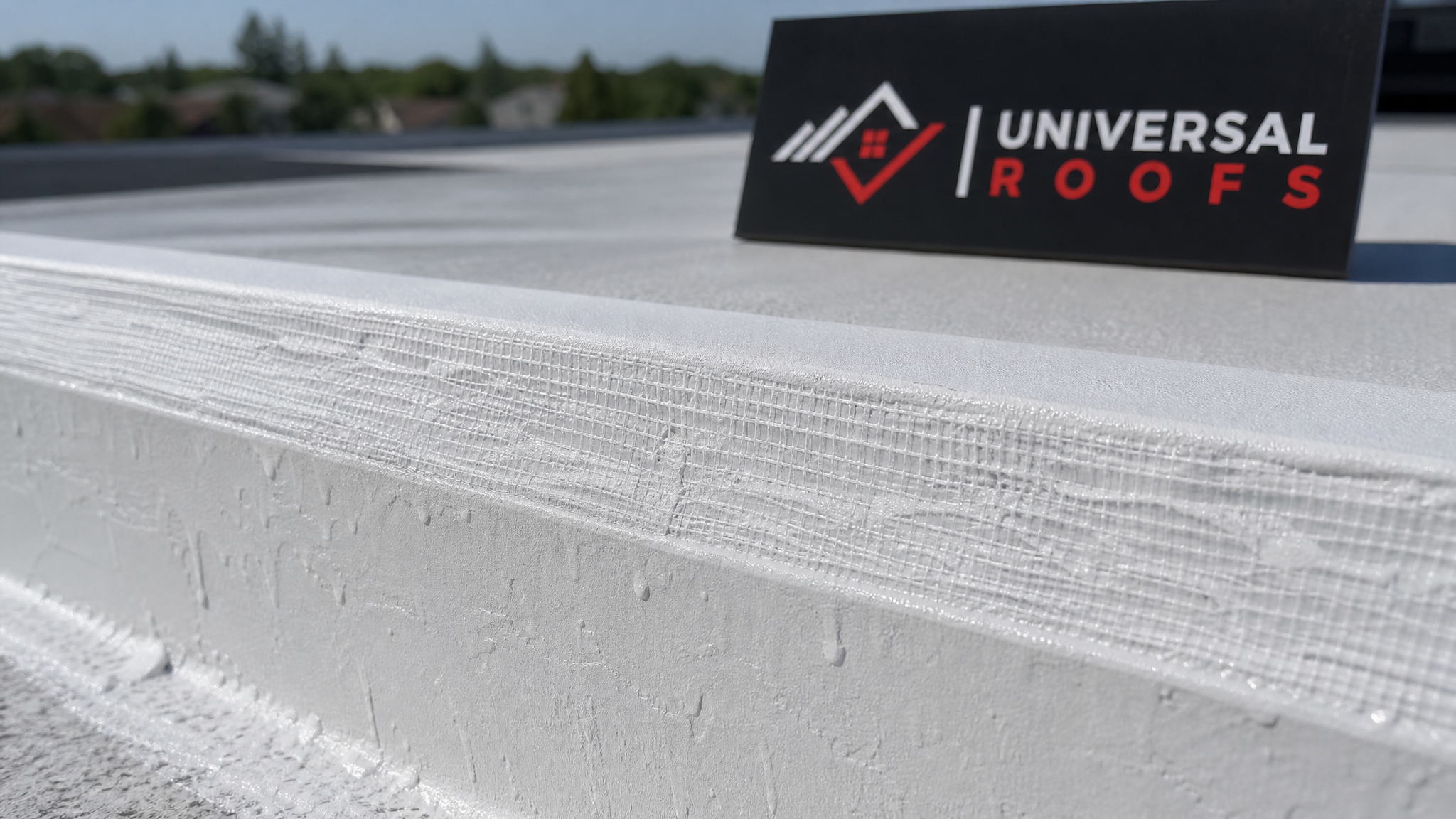
- Reinforcement at seams and penetrations. Polyester or fiberglass fabric reinforcement is embedded at seams, drains, vents, and around any roof penetration to prevent early cracking at stress points.
- Base coat application. Applied at the manufacturer’s specified wet-film thickness, typically by spray or roller, and allowed to cure fully before the next coat.
- Topcoat application. The finish coat provides the UV-reflective, weather-facing surface and determines the final warranted lifespan of the system.
- Final inspection and documentation. Dry-film thickness readings, photos, and warranty paperwork are provided to the homeowner.
Weather windows matter here too. Most coating chemistries need a dry substrate and temperatures above roughly 10°C to cure properly, which is why late spring through early autumn is the ideal application season in the GTA. Attempting a coating job in cold, damp conditions is one of the fastest ways to void a manufacturer warranty.
Signs Your Roof Is a Good Candidate for Coating
Not every roof qualifies. Here are the signs we look for during an assessment that suggest a coating will perform well and deliver real value:
- The roof deck is dry, solid, and free of soft or spongy areas when walked.
- Leaks, if any, are isolated and traceable to specific flashing or seam failures rather than widespread membrane breakdown.
- The existing membrane still has more than 50% of its granule or surface coating intact.
- Ponding water drains within 48 hours after rainfall rather than sitting indefinitely.
- The roof is less than 15 years old, or has already had one prior recoat and is being maintained proactively.
- There is no evidence of structural sagging, which usually signals deck or truss damage that a coating cannot address.
On the other hand, if a roof inspection during a attic and deck check reveals rot, persistent moisture intrusion, or multiple failed layers of roofing material, coating over the problem simply delays a more expensive fix later. We would rather tell a homeowner honestly that replacement is the better investment than sell a coating job that will fail in two years.
Maintaining a Coated Roof for Maximum Lifespan
A long lasting roof coating is not a “set it and forget it” product. Manufacturers publish specific maintenance schedules, and following them is what turns a 10-year coating into a genuine 15-to-20-year investment.
| Maintenance Task | Frequency | Why It Matters |
|---|---|---|
| Visual inspection for cracks, blisters, or ponding | Twice yearly (spring and fall) | Catches minor issues before they penetrate the membrane |
| Clear debris from drains and scuppers | Quarterly, or after major storms | Prevents ponding water from overloading the coating |
| Remove moss, algae, and organic growth | Annually | Organic growth retains moisture and degrades coating adhesion |
| Re-inspect and reseal penetrations (vents, HVAC curbs, skylights) | Annually | Penetration flashing is the most common leak point on any roof type |
| Full recoat / maintenance topcoat | Every 8–12 years depending on chemistry | Restores UV protection and extends total system life by another decade |
Homeowners with skylights should pay particular attention to the coating and flashing around the curb, since this is a common failure point regardless of what roofing material surrounds it. If you notice discolouration or soft spots near a skylight, it is worth a dedicated look at skylight replacement or repair before the surrounding coating is compromised. Likewise, for larger commercial-style flat sections, coordinating coating maintenance with your flat roofing maintenance schedule keeps everything on one consistent inspection cycle.
Seasonally, early summer is actually one of the better windows to schedule a maintenance recoat in the GTA. The membrane has fully cured through spring warmth, humidity is manageable, and the work is completed well before autumn leaf debris and winter freeze-thaw cycles put stress on the system again.
Common Coating Failures and How to Avoid Them
We get called out to inspect a lot of coating jobs that failed early, and the causes are almost always preventable. Understanding them helps you evaluate any contractor’s proposal critically.
- Under-thickness application. Coatings are rated by dry-film thickness, not by “number of coats.” A contractor spreading product too thin to stretch coverage will produce a membrane that cracks and fails years ahead of schedule.
- Coating over trapped moisture. If moisture is sealed underneath the membrane, it has nowhere to go and eventually causes blistering, delamination, or accelerated deck rot.
- Wrong chemistry for the substrate. Acrylic coatings applied to a roof with regular ponding water will fail far sooner than a silicone system designed for that exact condition.
- Skipped seam reinforcement. Seams and penetrations are the highest-stress points on any roof. Skipping fabric reinforcement here is a shortcut that shows up as leaks within the first two winters.
- Application in poor weather. Rushing a job to beat rain, or applying coating when the substrate is too cold or damp, prevents proper curing and adhesion.
Ask any contractor quoting a coating job for their dry-film thickness specification, their seam reinforcement approach, and their manufacturer warranty terms in writing. A crew confident in their work will have straightforward answers to all three.
Why Toronto and GTA Climate Makes Coatings Especially Valuable
The case for a long lasting roof coating is stronger here than in milder climates, simply because of what our roofs endure. Winters bring repeated freeze-thaw cycling that stresses rigid roofing materials, while summer UV exposure accelerates oxidation on unprotected asphalt and metal surfaces. Spring meltwater combined with clogged drains is a leading cause of ponding-related leaks on flat roofs throughout Toronto and neighbouring communities.
A reflective coating reduces summer surface temperatures by a meaningful margin, which lowers thermal stress on the membrane and can modestly reduce cooling costs in the building below. In winter, an elastomeric membrane’s flexibility helps it move with the deck rather than cracking as temperatures swing through the freeze point multiple times per week, a pattern that is far more common in the GTA than in most parts of Canada.
We see this play out consistently across Peel Region, York Region, Halton Region, and Durham Region properties: roofs that receive a properly applied, properly maintained coating simply age slower than roofs left bare. It is not a marketing claim, it is what our own repair calls show us year after year when we compare coated and uncoated roofs of similar age.
How to Choose the Right Contractor for Your Coating Project
Because coating quality depends so heavily on preparation and application technique, the contractor matters as much as the product. A few questions worth asking before you sign anything:
- Will they perform a moisture scan or core sample before quoting, rather than pricing from a photo?
- Do they specify a dry-film thickness target and verify it with a wet-mil gauge during application?
- What manufacturer warranty backs the system, and is it a material-only warranty or a full labour-and-material warranty?
- Can they show recent, verifiable local work, and do they have reviews you can check independently?
- Do they carry proper liability insurance and WSIB coverage for rooftop work?
A reputable contractor will walk you through all of this without hesitation. If you are still weighing options, our FAQ page covers many of the same questions we get asked on every estimate call, and our about page outlines our history serving the GTA since 2005.
Why choose long lasting roof coatings for extra protection instead of just patching leaks as they appear?
How long does a properly applied roof coating actually last?
Can any roof be coated, or are some roofs too far gone?
Is a roof coating a good option for a Toronto winter?
How much does a long lasting roof coating cost compared to replacement?
Do roof coatings need any ongoing maintenance after installation?
Need Help With Why Choose Long Lasting?
Deciding between a coating and a full replacement is easier with an experienced eye on your actual roof rather than a guess from a photo. Universal Roofs has inspected and coated flat, sloped, and metal roofs across the GTA since 2005, and we will tell you honestly which option makes financial sense for your property.
Call us today at (416) 732-2421 or request a free inspection to get started.
Universal Roofs proudly serves Toronto, Mississauga, Brampton, Vaughan, Markham, Oakville and the GTA since 2005.