
Water finds every weakness in a roof, and in the Greater Toronto Area it does not have to look hard. Between spring downpours, summer thunderstorms, and the freeze-thaw cycles that grip the region from November through March, a roof that is not properly waterproofed will eventually leak. The question homeowners face is not whether their roof needs waterproofing at some point, but who they trust to do it correctly. Hiring the wrong contractor can mean a membrane that fails within two years, a warranty that is not worth the paper it is printed on, and thousands of dollars in interior water damage that could have been avoided entirely.
These essential tips for selecting a roof waterproofing contractor are drawn from two decades of roofing work across Toronto, Mississauga, Brampton, Vaughan, Markham, and Oakville. We have seen what separates a waterproofing job that lasts fifteen years from one that fails before the first winter is over, and almost all of that difference comes down to who was standing on the roof and what materials they chose. This guide walks through the five most important factors to evaluate, plus the practical details — licensing, warranties, materials, and cost — that most homeowners do not think to ask about until it is too late.
Whether you are dealing with a leaking flat roof, planning ahead of a roof replacement, or simply trying to get ahead of a problem before it starts, the tips below will help you avoid the most common and most expensive mistakes.
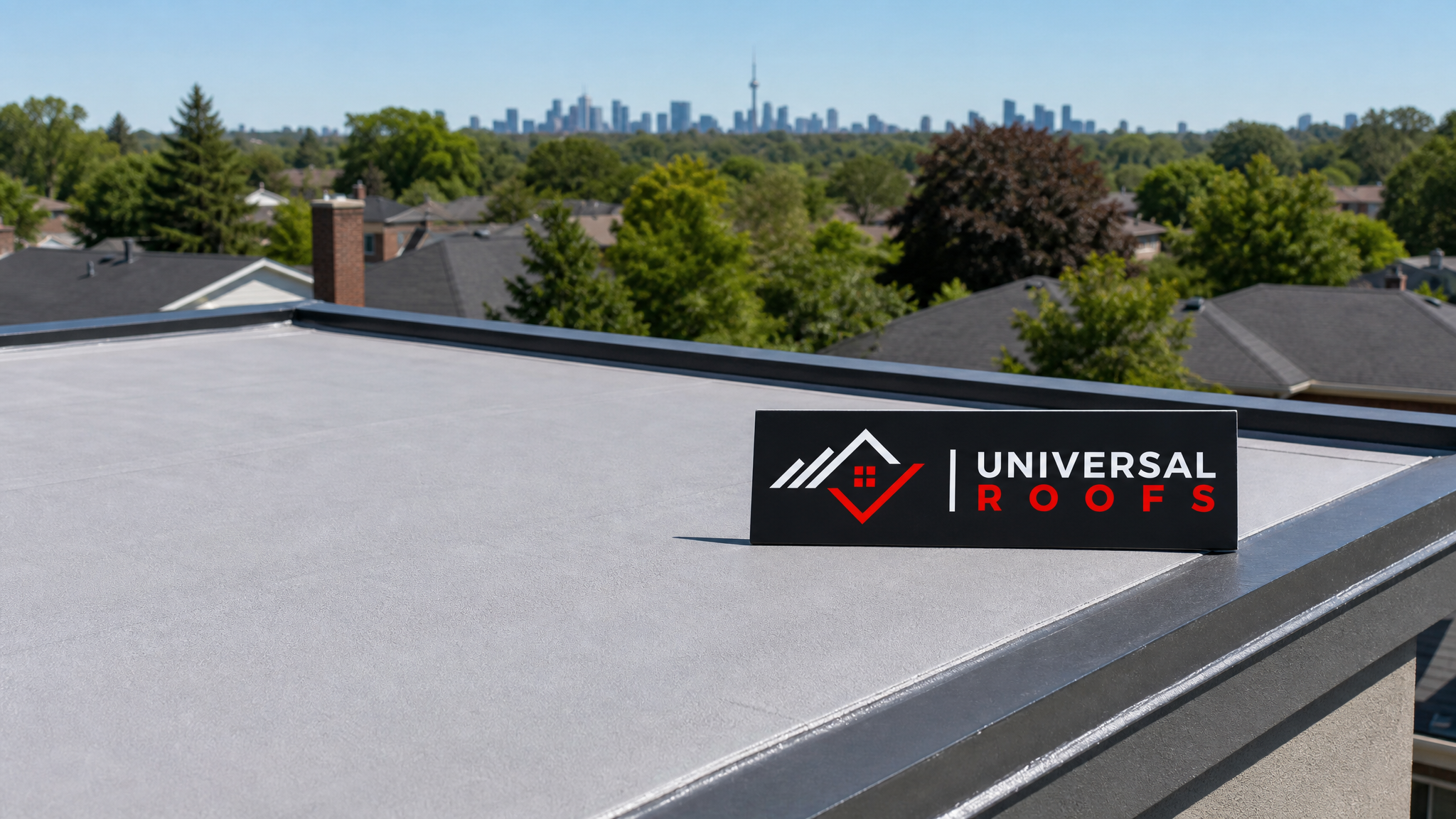
Why Waterproofing Matters More in the GTA Than People Realize
Toronto’s climate is uniquely hard on roofing systems. The region sees roughly 40 freeze-thaw cycles per winter, where meltwater seeps into tiny cracks during the day and expands as ice overnight. Over a few seasons, this cycle turns a hairline seam into a active leak path. Add in summer humidity, occasional hail, and the sheer volume of rain the GTA receives in spring and early autumn, and it becomes clear why a properly waterproofed roof is not a luxury — it is basic protection for the single largest asset most homeowners own.
Flat and low-slope roofs, which are extremely common on additions, garages, porches, and many post-war Toronto homes, are especially vulnerable. Without a slope to shed water quickly, these roofs rely almost entirely on the integrity of the membrane and its seams to stay dry. That is precisely why choosing the right team for flat roofing work matters as much as choosing the right materials.
Waterproofing failures rarely announce themselves immediately. A small gap in flashing around a vent pipe, or a seam that was not properly heat-welded, might not show a visible leak for a year or more. By the time water starts staining a ceiling, it has often already been soaking into insulation, sheathing, and framing for months. This is why the selection of a qualified, careful contractor at the outset is so much more important than trying to catch problems after the fact.
Tip 1: Verify Licensing, Insurance, and Local Experience
The single most overlooked step in choosing a roof waterproofing contractor is confirming that the company is properly licensed and insured to work in Ontario. This sounds obvious, but every year homeowners in the GTA hire unlicensed operators who offer a lower price up front and then disappear when something goes wrong, leaving the homeowner responsible for the cost of fixing both the leak and the shoddy repair.
Before signing anything, ask for proof of:
- WSIB (Workplace Safety and Insurance Board) coverage for all workers on site
- General liability insurance, ideally a minimum of two million dollars
- A valid business licence for the municipality where the work will take place
- Manufacturer certification if a specific membrane brand is being installed, since many warranties are void unless the installer is certified by that manufacturer
Local experience matters just as much as paperwork. A contractor who has spent years working on roofs across Toronto, Mississauga, and the surrounding regions understands how local building codes, typical roof assemblies, and weather patterns interact. That knowledge shows up in details that generic national franchises often miss, such as correctly detailing a parapet wall on a century-old Toronto semi-detached home or knowing which membrane systems perform best given the freeze-thaw stress common in this region.
| Credential to Verify | Why It Matters | How to Confirm | Red Flag |
|---|---|---|---|
| WSIB Coverage | Protects you from liability if a worker is injured on your property | Ask for a WSIB clearance certificate number and verify it online | Contractor hesitates or cannot produce a certificate |
| General Liability Insurance | Covers accidental property damage during the project | Request a certificate of insurance naming the amount and expiry date | Policy is expired or coverage is unusually low |
| Manufacturer Certification | Required for most membrane warranties to remain valid | Ask which specific brands and systems they are certified to install | Vague answers or no named manufacturer |
| Local Business Licence | Confirms legal standing to operate in your municipality | Check with the municipal licensing office or business registry | Business is registered outside Ontario with no local address |
| Years in Local Market | Indicates familiarity with GTA-specific roofing conditions | Ask directly and cross-check against online reviews and registration date | Company is brand new with no verifiable project history |
Tip 2: Ask Detailed Questions About Materials and Application Methods
Not all waterproofing systems are equal, and a contractor who cannot clearly explain why they are recommending a particular material for your specific roof should raise a flag. Waterproofing is not one-size-fits-all; the right approach depends on the roof’s slope, existing structure, drainage, and exposure to sun and foot traffic.
The main categories of roof waterproofing systems used across the GTA include modified bitumen (torch-applied or self-adhered), TPO and PVC single-ply membranes, EPDM rubber membranes, and liquid-applied elastomeric coatings. Each has strengths and weaknesses. A qualified contractor should walk you through why they are recommending one system over another rather than defaulting to whatever they happen to have on the truck that week.
Ask specifically about:
- How seams will be joined (heat-welded seams are generally more reliable than adhesive-only seams)
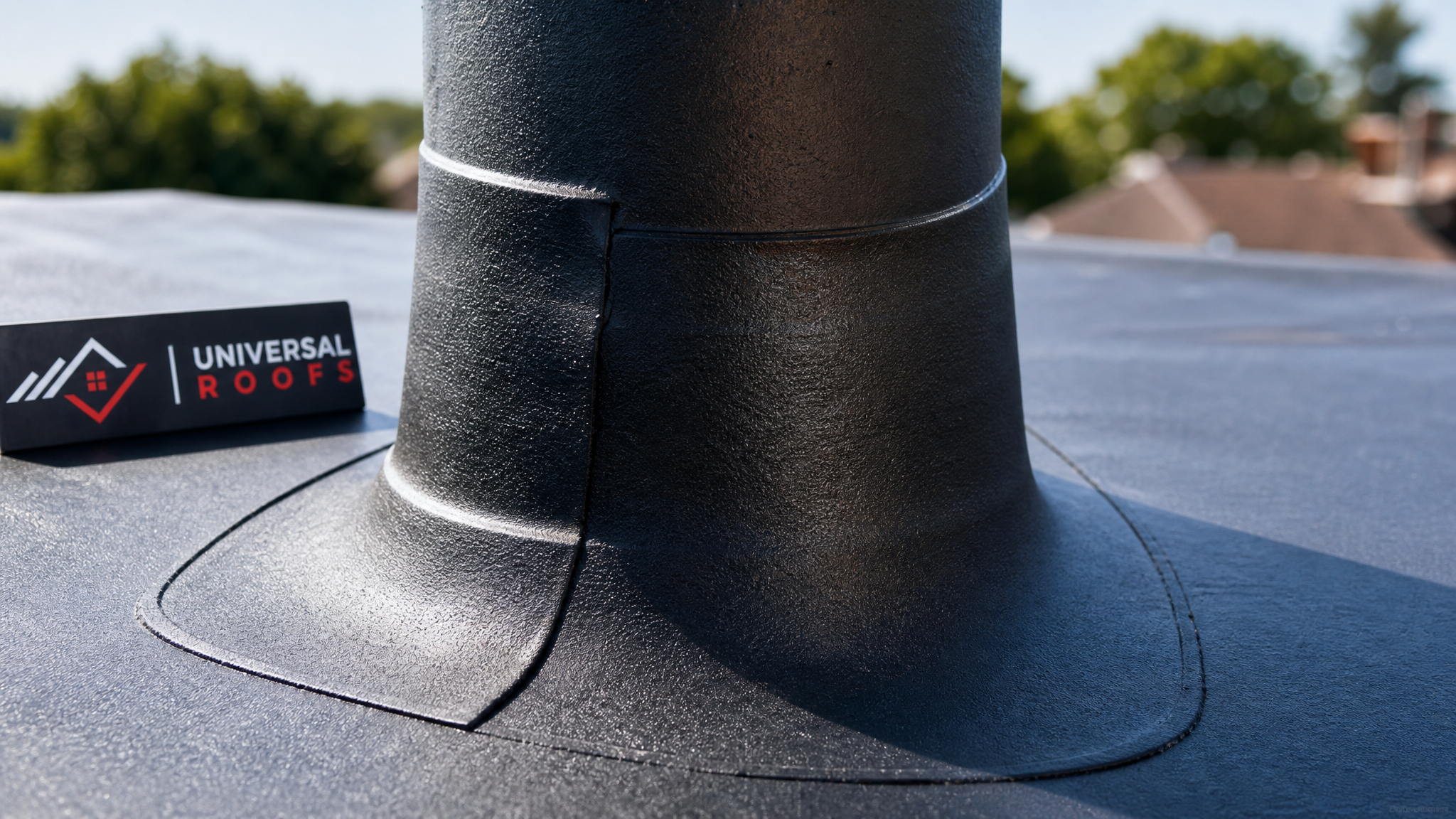
- How flashing will be detailed around penetrations such as vents, drains, and skylights
- Whether the existing insulation and substrate will be inspected and repaired before the new membrane goes down
- What slope or drainage improvements, if any, are needed to prevent ponding water
Ponding water is one of the most common causes of premature waterproofing failure in Toronto. If water sits on a flat roof for more than 48 hours after rainfall, it accelerates membrane breakdown and increases the risk of leaks at seams and penetrations. A contractor who inspects your roof’s drainage and slope before quoting, rather than simply measuring the square footage, is doing the job properly.
| Waterproofing System | Best Suited For | Typical Lifespan | Relative Cost |
|---|---|---|---|
| Modified Bitumen (torch or self-adhered) | Flat and low-slope roofs, additions, garages | 15-20 years | Moderate |
| TPO Single-Ply Membrane | Larger flat commercial or residential flat roofs | 20-25 years | Moderate to high |
| EPDM Rubber Membrane | Flat roofs with minimal foot traffic | 20-30 years | Moderate |
| Liquid-Applied Elastomeric Coating | Repairs, transitions, complex penetrations, spot waterproofing | 8-12 years (recoatable) | Lower |
| PVC Single-Ply Membrane | Roofs near grease exposure or chemical fumes | 20-25 years | Higher |
Tip 3: Compare Written Estimates Line by Line, Not Just the Bottom Number
It is tempting to simply compare the total price across two or three quotes and choose the lowest one. This is one of the most common and costly mistakes homeowners make. A waterproofing estimate that is significantly lower than the others is usually lower because it excludes something important: tear-off and disposal of the old membrane, substrate repair, proper flashing detail, or a meaningful warranty.
A trustworthy contractor will provide a written estimate that breaks down labour, materials, disposal, and any anticipated repair work separately, so you can see exactly what you are paying for. If a quote is vague, phrased only as a single lump sum with no breakdown, that is a sign the contractor either has not properly assessed the scope of work or is hoping you will not ask questions.
When comparing estimates, look specifically for:
- Whether tear-off of the old roofing material is included or billed separately later
- Whether substrate or deck repair is included if rot or damage is found once the old membrane is removed
- What specific brand and thickness of membrane is being used
- Whether flashing, drains, and penetrations are itemized or lumped into a vague “miscellaneous” line
- The payment schedule, and whether a large deposit is required before any work begins
| Estimate Component | What to Look For | Typical Cost Range (CAD) | Common Shortcut Taken by Low Bidders |
|---|---|---|---|
| Tear-Off and Disposal | Clearly listed, includes dump fees | $2-$4 per sq ft | Installing new membrane directly over old, failing layer |
| Substrate/Deck Repair | Contingency or allowance clearly stated | $3-$8 per sq ft if needed | Skipped entirely, leak recurs from rotted decking |
| Membrane Material | Brand, thickness (mils), and system named | $5-$12 per sq ft | Substituting a thinner, cheaper membrane without disclosure |
| Flashing and Penetration Detail | Itemized per drain, vent, and skylight curb | $150-$400 per penetration | Reusing old flashing instead of replacing it |
| Warranty | Written, with specific years and named coverage | Included or $200-$600 extra | Verbal promise only, nothing in writing |
Tip 4: Understand the Warranty Before You Sign
A waterproofing job is only as good as the warranty standing behind it. There are two separate warranties that matter: the manufacturer’s warranty on the membrane material itself, and the contractor’s workmanship warranty on the installation. Homeowners often assume these are the same thing, but they are not, and a failure caused by poor installation is frequently not covered by a manufacturer warranty at all.
Ask your contractor directly:
- How many years does the workmanship warranty cover, and what specifically does it include?
- Is the manufacturer warranty transferable if you sell the home?
- What voids the warranty (for example, unauthorized rooftop equipment installation or lack of regular maintenance)?
- Will the company still be in business to honour the warranty years from now?
That last question matters more than most homeowners realize. A ten-year warranty is meaningless if the company that issued it closes its doors in year three. Established companies with a long, verifiable local track record and a strong reviews history are a safer bet for warranty follow-through than a newly formed company offering rock-bottom prices.
Tip 5: Read Reviews and Ask for Local References
Online reviews, before-and-after photos, and direct references from recent clients tell you more about a contractor’s actual day-to-day work quality than any sales pitch. Look specifically for reviews that mention waterproofing or flat roof work rather than general roofing reviews, since the skill sets involved are related but distinct.
When speaking with references, ask about the contractor’s communication during the project, whether the crew cleaned up properly each day, whether the final price matched the original estimate, and — most importantly — whether the roof has stayed dry through at least one full winter and spring melt cycle since the work was completed. A roof that looks good on installation day is not proof of anything; a roof that stays watertight through a full GTA freeze-thaw season is.
It is also worth checking how long the contractor has been established in the community. A company with a decade or more of continuous local operation, a searchable project history, and an about page detailing its background is generally a safer choice than a contractor who cannot point to a consistent history of completed work in your neighbourhood.
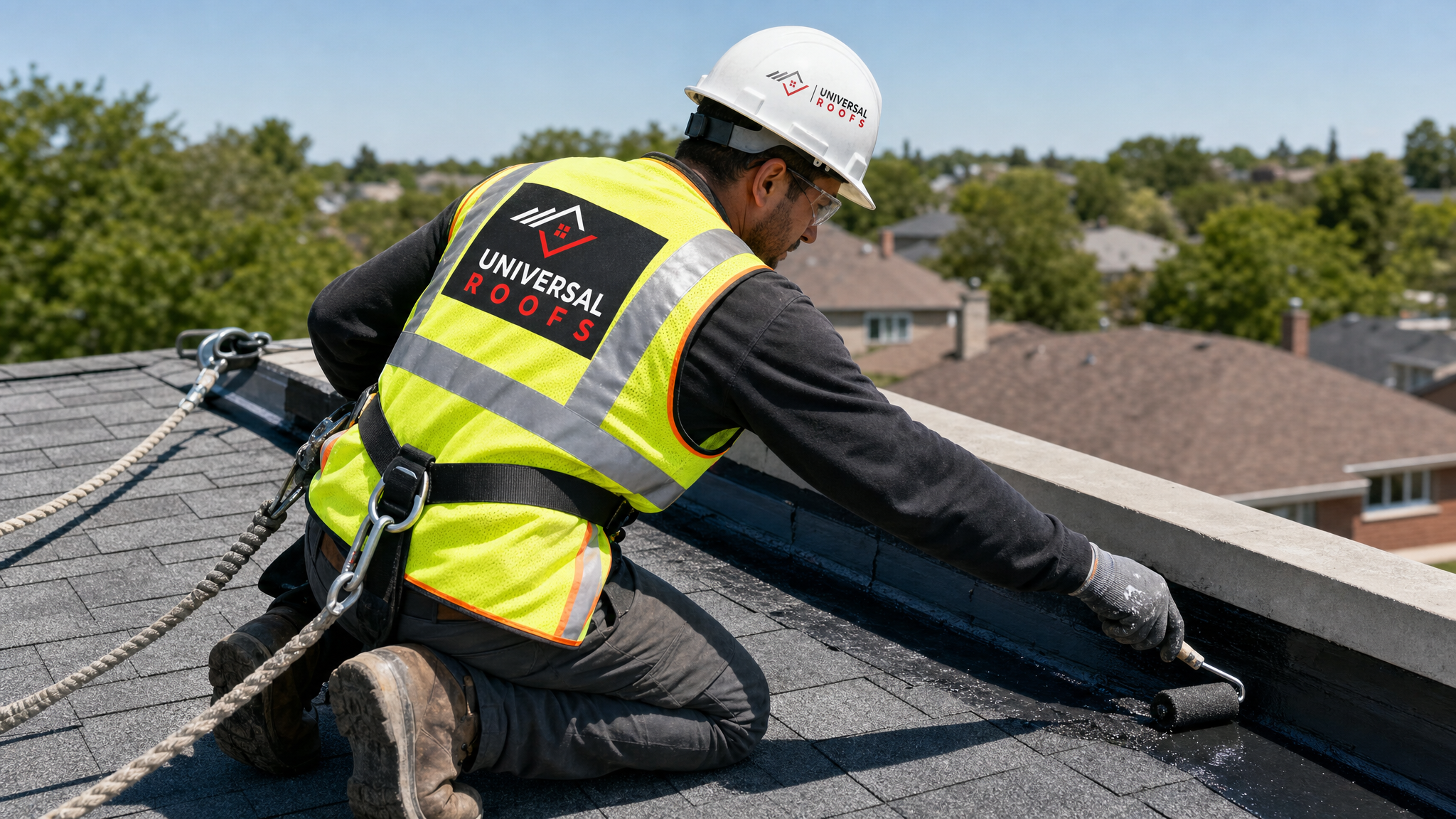
Common Waterproofing Problems and How a Qualified Contractor Diagnoses Them
Understanding what typically goes wrong helps homeowners ask sharper questions during the hiring process. Below are the issues we most frequently find when called out to inspect a failing waterproofing job that was completed by another contractor.
| Problem Observed | Likely Root Cause | How a Qualified Contractor Diagnoses It | Typical Fix |
|---|---|---|---|
| Recurring leak near a vent pipe | Improperly sealed or reused flashing | Visual inspection plus water test around the penetration | Remove and replace flashing with new boot and sealant |
| Bubbling or blistering membrane | Trapped moisture beneath the membrane during installation | Core sample or moisture scan of the roof assembly | Cut out affected section, dry substrate, patch and reseal |
| Ponding water lasting several days | Insufficient slope or blocked drainage | Roof survey after rainfall to map low spots | Tapered insulation or additional drain installation |
| Cracking at seams | Adhesive-only seams instead of heat-welded seams | Physical inspection and seam probe test | Reweld or reseal seams with correct method for that membrane type |
| Interior ceiling staining with no visible roof damage | Slow leak travelling along framing before surfacing | Attic inspection combined with roof-level moisture testing | Trace and repair source, inspect attic insulation for saturation |
Waterproofing Around Skylights and Other Penetrations
Roof penetrations are the single most common failure point in any waterproofing system, and skylights deserve special attention because of how frequently homeowners add or upgrade them without confirming that flashing was properly redone. A skylight that was installed correctly ten years ago may still develop a leak if the surrounding waterproofing membrane was recently replaced without the flashing being redetailed to match the new material.
If your roof waterproofing project involves an existing skylight, make sure your contractor coordinates the flashing work with the skylight curb specifically, rather than simply working around it. This is especially important if you are also considering skylight replacement or new skylight installation at the same time as roof waterproofing, since doing both projects together allows a single, continuous membrane detail rather than two separate seams that could eventually separate.
Seasonal Timing: Why Summer Is the Ideal Window for Waterproofing in the GTA
Membrane materials, particularly modified bitumen and liquid-applied coatings, need warm, dry conditions to cure and bond properly. Summer in Toronto offers the most reliable stretch of consistent temperatures and lower humidity, which is why most reputable contractors are booked heavily from June through early September. Waterproofing performed in late autumn or winter is far riskier, since cold temperatures can prevent proper adhesive bonding and torch-applied membranes are more difficult to install safely in freezing conditions.
If your roof has known weak points, scheduling waterproofing work now, while conditions are favourable, means the membrane has a full season to cure completely before it faces its first real test during the autumn rains and the winter freeze-thaw cycle that follows. Waiting until a leak appears in December often means an emergency patch rather than a proper, lasting repair.
Questions to Ask Before You Sign a Waterproofing Contract
Bring this list to your consultation and expect clear, specific answers to each one:
- Can you provide proof of WSIB coverage, liability insurance, and manufacturer certification?
- Which specific membrane system are you recommending for my roof, and why this one over the alternatives?
- What is included in your written estimate, and what could cause the price to change once work begins?
- What does your workmanship warranty cover, and for how many years?
- Can you provide three local references from projects completed in the last two to three years?
- How will you handle drainage or ponding water issues if they are found during the inspection?
- What is your plan for protecting my property and landscaping during the work?
A contractor who welcomes these questions and answers them without hesitation is demonstrating the kind of transparency that tends to carry through the entire project. One who becomes evasive or dismissive at the consultation stage is showing you, before any money changes hands, how they are likely to handle problems later.
Serving Homeowners Across the Greater Toronto Area
Waterproofing needs vary somewhat by neighbourhood and building age across the region. Century homes in older parts of Toronto often have parapet walls and complex roof-to-wall transitions that require careful detailing. Newer builds across Peel Region and York Region tend to have larger flat roof additions and garages that benefit from single-ply membrane systems. Homes in Halton Region and Durham Region often combine both older and newer construction, which means the right waterproofing approach really does depend on a proper on-site assessment rather than a one-size-fits-all quote given over the phone.
An experienced local contractor who has worked across all of these municipalities will recognize these differences immediately and adjust their recommendation accordingly, rather than applying the same system to every roof regardless of its age, structure, or location.
What are the most essential tips for selecting a roof waterproofing contractor?
How much does roof waterproofing typically cost in Toronto?
How long should a properly installed waterproofing membrane last?
What questions should I ask before hiring a roof waterproofing contractor?
Is summer really the best time to waterproof a roof in the GTA?
Can waterproofing prevent leaks around skylights and vents?
Need Help With 5 Essential Tips for?
Choosing the right team for the job is the single biggest factor in whether a waterproofing project lasts fifteen years or fails within two. Universal Roofs has spent two decades helping GTA homeowners make that decision with confidence, backed by proper licensing, transparent written estimates, and workmanship warranties that mean something.
Call us today at (416) 732-2421 or request a free inspection to get started.
Universal Roofs proudly serves Toronto, Mississauga, Brampton, Vaughan, Markham, Oakville and the GTA since 2005.