
An outdated skylight is more than a cosmetic nuisance. Older units installed before modern glazing and flashing standards existed often leak, fog up, whistle in the wind, or let far more heat escape than a homeowner expects. If your skylight was installed more than 15-20 years ago, chances are it uses single-pane glass, aluminum flashing that has since corroded, or a curb design that no longer meets current building code expectations for the Greater Toronto Area’s freeze-thaw climate.
The good news is that an outdated skylight rarely means you’re stuck choosing between an expensive full tear-out and living with a leaky, draughty window in your roof. There are several genuinely effective repair and upgrade paths, ranging from simple reglazing and reseal work to a full curb-to-cap replacement. This guide walks through every realistic option for repairing outdated skylight designs, what each approach actually fixes, what it costs, and how to know which route makes sense for your home.
Whether you’re dealing with condensation between the panes, a yellowed acrylic dome, chronic leaks around the flashing, or a design that simply doesn’t match today’s energy codes, understanding your options before you call a contractor will help you make a more informed decision and avoid paying for more (or less) work than you actually need.
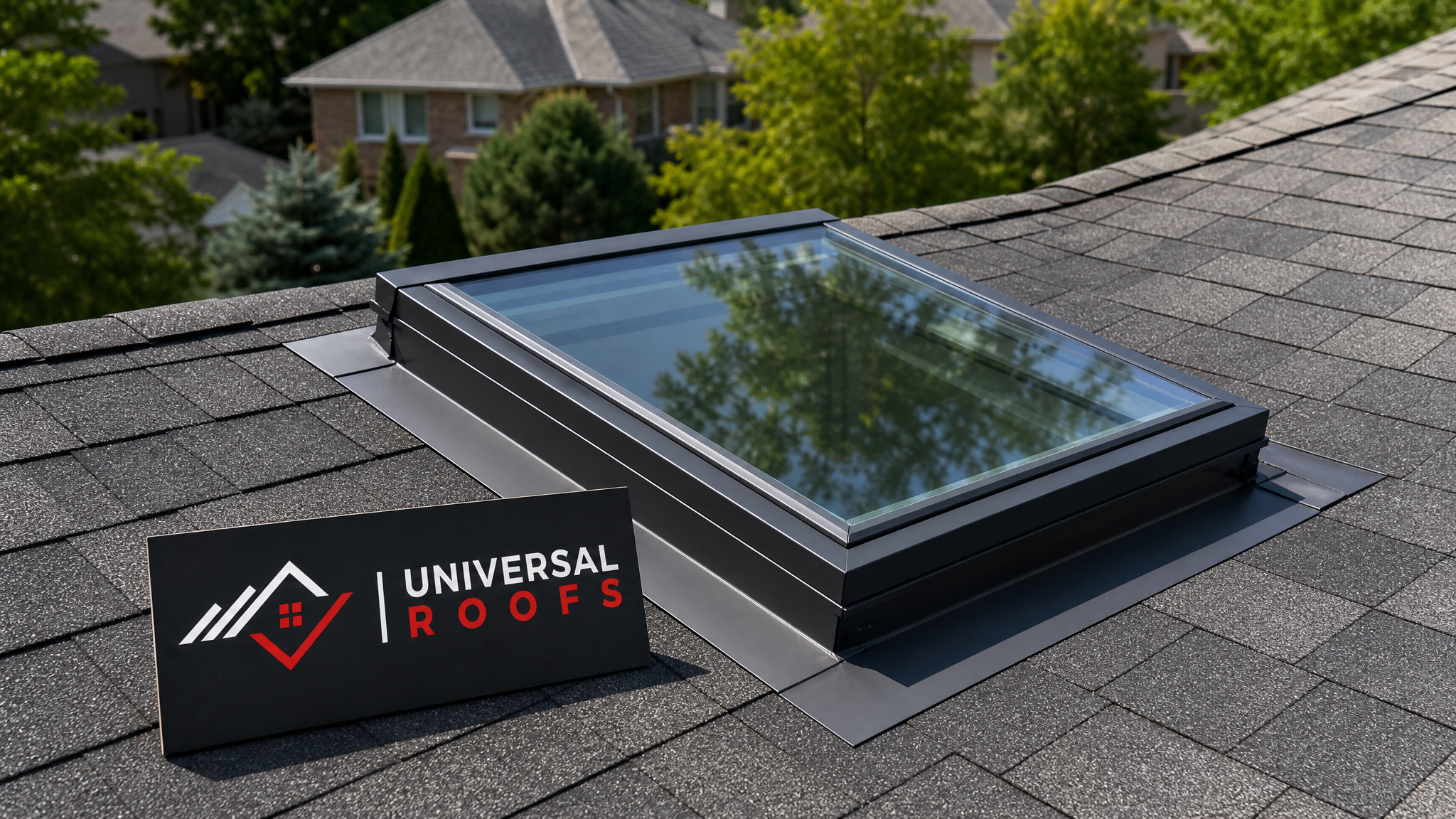
Signs Your Skylight Design Is Outdated
Before choosing a repair path, it helps to correctly diagnose what’s actually wrong. Skylight technology has changed considerably since the 1980s and 1990s, when many GTA homes had their first units installed. Older designs typically show one or more of the following problems:
- Single-pane or double-pane glass without low-E coating, leading to excessive heat loss in winter and heat gain in summer
- Acrylic or polycarbonate domes that have yellowed, clouded, or become brittle from decades of UV exposure
- Aluminum step flashing that has corroded or separated from the roof deck, allowing water infiltration
- Wood curbs that have rotted at the base where they meet the roof membrane
- Condensation or fogging between glass panes, which signals a failed seal on an insulated glass unit
- Manual cranks or vents that no longer operate smoothly, or lack any ventilation feature at all
- A curb height that no longer meets current Ontario Building Code minimums for flashing clearance above the roofline
If your skylight shows two or more of these signs, it is very likely a legacy design that predates current thermal and moisture performance standards. The next question is whether repair, partial upgrade, or full skylight replacement is the right call.
Option 1: Reseal and Reflash the Existing Unit
If the glass or acrylic itself is still in good condition and the core problem is water intrusion, the least invasive option is to strip back the old flashing and reseal the skylight in place. This works well when:
- The skylight is less than 10-15 years old
- The glazing shows no fogging, cracking, or yellowing
- Leaks are isolated to the flashing or counterflashing, not the seal within the glass unit
- The curb structure underneath is solid, with no rot or deflection
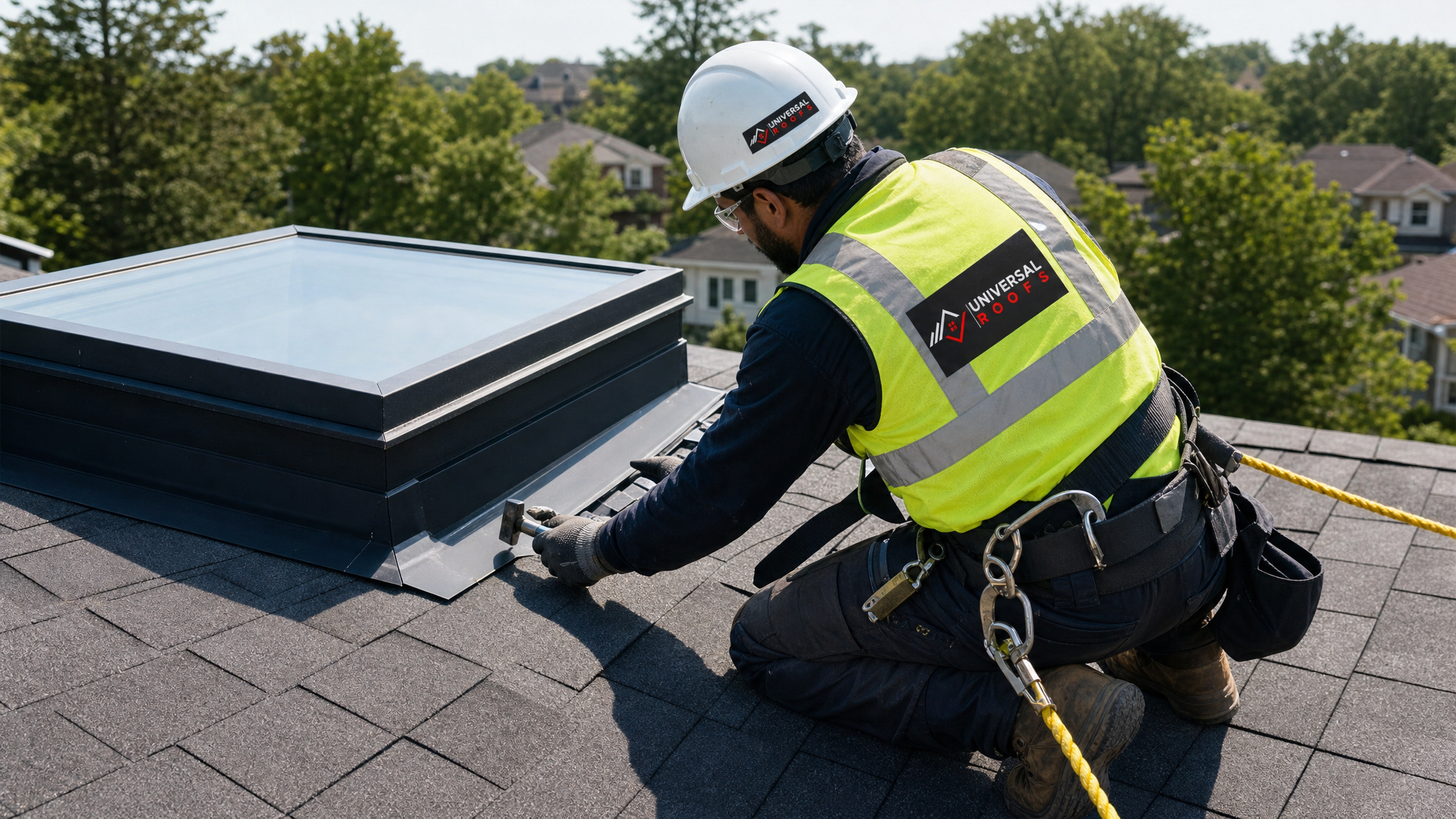
A proper reflash involves removing the old step flashing, inspecting the curb and roof deck for hidden water damage, installing new self-adhered ice-and-water membrane around the opening, and fitting new corrosion-resistant flashing (typically aluminum or galvanized steel) with fresh sealant at every joint. This is a job best left to a roofer experienced with roof repair work, since improper flashing overlap is the single most common cause of skylight leaks in the GTA.
Reflashing alone will not fix condensation between glass panes, a cracked dome, or persistent draughts caused by an aging frame — those require the more involved options below.
Option 2: Glazing and Glass Unit Replacement
When the frame and curb are sound but the glass or acrylic dome has failed, you can often replace just the glazing without tearing out the entire unit. This is one of the most cost-effective ways to modernize an old skylight’s energy performance.
Older insulated glass units (IGUs) lose their seal over time, letting moisture seep between the panes and creating that telltale foggy, cloudy appearance. Once that seal fails, the argon or air gap that provided insulation is compromised, and the unit needs to be replaced. Fortunately, most standard skylight frames can accept a new IGU sized to match the existing opening, often upgraded to:
- Double or triple-pane glass with a low-E coating
- Argon or krypton gas fill for improved insulation
- Laminated inner pane for added impact resistance and UV filtering
- Tempered outer pane rated for Ontario snow and hail loads
For older acrylic dome skylights, the entire dome and its seal gasket are typically swapped for a new one, which instantly resolves yellowing, cloudiness, and most drafts, all while keeping the existing curb and frame in place.
Option 3: Curb and Frame Rebuild
When water has been getting past a failed seal for years, it often rots the wood curb or frame beneath the skylight, even if the glazing itself still looks fine. A curb rebuild is a more involved repair, but it’s still short of a full replacement of the skylight unit.
This involves removing the skylight temporarily, cutting out and rebuilding the rotted curb framing with pressure-treated lumber or a composite curb material, reinforcing the roof deck opening if needed, and then reinstalling the existing (or newly glazed) skylight on the rebuilt curb with all-new flashing and membrane. Homeowners in older GTA neighbourhoods with wood-framed curbs from the 1980s and 90s see this issue most often, since original curb materials weren’t always treated for long-term moisture exposure.
A curb rebuild is a good middle-ground option: it addresses the structural cause of chronic leaks without the cost of a brand-new skylight unit, and it buys many more years of service life from an otherwise dated design.
Option 4: Full Skylight Replacement
Sometimes the most cost-effective long-term option is simply a full replacement. This makes the most sense when the skylight is genuinely at the end of its service life, or when the design itself (fixed-only ventilation, undersized curb, non-code flashing profile) no longer suits how the home is used.
Modern replacement skylights offer several advantages over legacy designs:
- Factory-sealed, code-compliant flashing kits engineered for the specific unit
- Better thermal performance (lower U-values and solar heat gain coefficients)
- Options for manual, solar-powered, or electric venting not available on older fixed units
- Improved condensation control through better internal drainage channels
- Warranties that typically run 10-20 years on the unit and 5-10 years on installation
A full replacement also gives you the opportunity to resize the opening, switch from a dome to a flat-glass design, add remote-controlled shades, or reposition the skylight for better solar orientation. For homeowners weighing this route, our skylights page outlines the full range of products available, while the dedicated skylight replacement page covers the installation process in more detail.
Comparing the Four Repair Options
Each of the four approaches above addresses a different root cause and comes with its own cost and lifespan trade-offs. The table below summarizes how they compare.
| Repair Option | Best For | Typical Cost Range (CAD) | Added Lifespan |
|---|---|---|---|
| Reseal & reflash | Isolated leaks, sound glass and curb | $400 – $900 | 5-10 years |
| Glazing/glass unit replacement | Fogged, yellowed, or failed seal glass | $600 – $1,800 | 10-15 years |
| Curb & frame rebuild | Rotted curb, structural water damage | $1,200 – $3,000 | 15-20 years |
| Full skylight replacement | End-of-life unit or design mismatch | $1,800 – $4,500+ | 20-30 years |
These figures are general GTA market ranges and vary based on skylight size, roof pitch, accessibility, and the number of units being addressed in the same visit. A licenced roofer can give you an exact quote after an on-site assessment.
Materials Worth Upgrading To
If you’re already investing in any of the repair paths above, it’s worth knowing which materials perform best in Toronto’s climate, where summer heat, winter freeze-thaw cycles, and heavy spring rain all put real stress on a roof opening.
| Component | Outdated Material | Recommended Upgrade | Why It Matters |
|---|---|---|---|
| Glazing | Single-pane or clear acrylic dome | Low-E double or triple-pane glass | Cuts heat loss and reduces condensation risk |
| Flashing | Bare aluminum, hand-bent | Factory step-flashing kit, corrosion-resistant coating | Consistent overlap and long-term rust resistance |
| Curb material | Untreated dimensional lumber | Pressure-treated or composite curb | Resists rot from condensation and roof moisture |
| Underlayment | Tar paper or none | Self-adhered ice-and-water membrane | Seals fastener penetrations against wind-driven rain |
| Seals/gaskets | Original rubber gasket (10+ years old) | EPDM or silicone gasket replacement | Rubber hardens and cracks with UV and cold exposure over time |
How Toronto’s Climate Affects the Decision
The GTA’s climate is genuinely hard on skylights. Winters bring repeated freeze-thaw cycles that expand and contract flashing seams, ice damming that can force water backward under shingles near the skylight curb, and heavy, wet snow loads that test the structural glazing. Summers bring intense UV exposure that accelerates yellowing in older acrylic domes and breaks down rubber gaskets faster than in milder climates.
This means a repair that might last 15-20 years in a drier, more temperate region may only hold up for 8-10 years here. It’s one reason we generally recommend upgrading to code-current materials whenever a skylight is opened up for any kind of repair, rather than simply replacing like-for-like with the original design. It’s also worth having your attic ventilation checked at the same time, since poor attic airflow is a major contributor to the ice damming and condensation issues that shorten a skylight’s service life.
Repair Timeline: What to Expect
One of the most common questions homeowners have is simply how long each option takes. Timelines depend on weather, accessibility, and whether hidden damage is found once the old flashing or curb is opened up.
| Repair Option | On-Site Time | Lead Time for Materials | Weather Sensitivity |
|---|---|---|---|
| Reseal & reflash | Half day to 1 day | Same-day (stock flashing) | Low – can be scheduled around light rain |
| Glazing/glass unit replacement | Half day per unit | 1-3 weeks (custom glass sizing) | Moderate – needs a dry install window |
| Curb & frame rebuild | 1-2 days | Same-day (standard lumber) | High – roof is open during rebuild |
| Full skylight replacement | 1 day per unit | 1-4 weeks (unit-dependent) | Moderate – install day must be dry |
For homes with multiple ageing skylights, many homeowners choose to bundle several units into one visit, whether that means resealing two units and fully replacing a third, which is often more cost-efficient than scheduling separate service calls for each.
DIY vs. Professional Repair
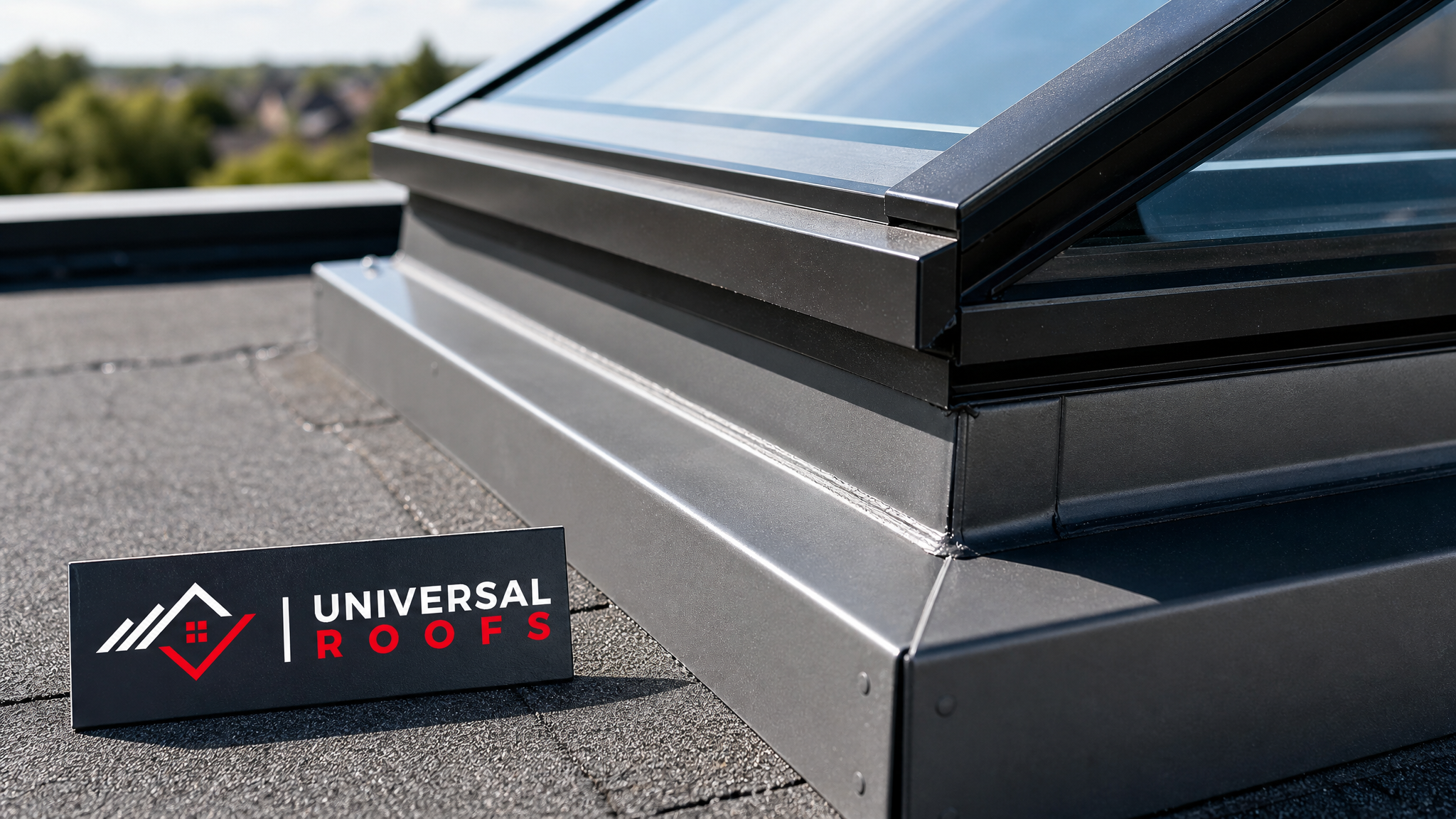
Some homeowners are tempted to reseal a leaking skylight themselves with a tube of roofing caulk. While this can offer very short-term relief, it rarely solves the underlying problem and can actually make later repairs more difficult by trapping moisture under a fresh bead of sealant. Skylight work also usually means working at height on a sloped roof, which carries real fall risk without the proper harness and anchor points.
Flashing, in particular, is not a caulk-and-forget job. Correct step flashing relies on precise overlap with each course of shingles so that water is shed downward and outward, never into the roof deck. Getting this wrong is one of the most common reasons a “repaired” skylight leaks again within a season. For anything beyond a very minor cosmetic touch-up, it’s worth having a professional assess the unit, since what looks like a simple caulking fix from the ground is often a symptom of a bigger flashing or curb issue.
How to Choose the Right Option for Your Home
With four legitimate repair paths available, the right choice comes down to an honest assessment of age, condition, and how long you plan to stay in the home. As a general guide:
- Skylight under 10 years old, isolated leak: reseal and reflash
- Skylight 10-20 years old, foggy or yellowed glazing but sound frame: glazing replacement
- Any age, rotted curb or structural water damage: curb rebuild
- Skylight 20+ years old, or design mismatch (no venting, wrong size, poor placement): full replacement
An on-site inspection is really the only reliable way to know for certain which category your skylight falls into, since visible symptoms like fogging or drips don’t always point to the root cause. A qualified roofer can check the flashing profile, curb condition, and glazing seal in a single visit and give you a clear recommendation, along with straightforward pricing for each option.
If your skylight repair uncovers broader roof issues, such as ageing shingles or a flat roof section nearby, it’s worth having those assessed at the same time. Our roof replacement and flat roofing pages cover those services if a wider scope of work is needed.
Maintaining a Newly Repaired or Replaced Skylight
Whichever repair option you choose, a bit of regular maintenance goes a long way toward preventing the same outdated-design problems from recurring. We recommend:
- Inspecting flashing and sealant every spring after the freeze-thaw season
- Clearing debris, leaves, and snow buildup from around the curb
- Checking for condensation on the inside of the glass after cold snaps, which can signal an emerging seal failure
- Having gutters and downspouts near the skylight kept clear so water drains away from the roof opening rather than pooling near the curb
- Scheduling a professional roof inspection every 2-3 years, or after any major storm
Homeowners across Toronto, the Peel Region, York Region, Halton Region, and Durham Region all face the same seasonal stresses on ageing skylights, so this maintenance rhythm applies no matter which municipality you’re in.
What are the options for repairing outdated skylight designs?
How do I know if my skylight needs a full replacement or just a repair?
Can foggy or cloudy skylight glass be fixed without replacing the whole unit?
How much does it cost to repair an outdated skylight in Toronto?
Why do older skylight designs leak more often than newer ones?
Is it worth repairing an outdated skylight instead of removing it entirely?
Need Help With What Are the Options?
Diagnosing an outdated skylight correctly the first time saves homeowners money and prevents repeat leaks. Universal Roofs has been assessing and repairing skylights across the GTA since 2005, and we can tell you on-site whether a reseal, glazing swap, curb rebuild, or full replacement is the right fit for your roof.
Call us today at (416) 732-2421 or request a free inspection to get started.
Universal Roofs proudly serves Toronto, Mississauga, Brampton, Vaughan, Markham, Oakville and the GTA since 2005.