
Hail is one of the most underrated threats to a Toronto-area roof. A summer thunderstorm can roll through in twenty minutes, drop a batch of pea- to golf ball-sized hailstones, and leave behind damage that looks like almost nothing from the driveway. That is exactly why addressing roof hail damage is crucial: the harm is frequently invisible from the ground, it worsens with every freeze-thaw cycle and rainfall that follows, and insurance claim windows do not stay open forever.
At Universal Roofs, we have been inspecting and repairing hail-damaged roofs across the Greater Toronto Area since 2005. Every summer we get calls from homeowners who assumed a hailstorm was “no big deal” because nothing was leaking yet, only to find granule loss, cracked shingle mat, or dented flashing once we get on the roof with a ladder and a trained eye. This guide walks through what hail actually does to a roof, how to recognize the warning signs, what happens if the damage is ignored, and exactly how the repair and insurance process works in Ontario.
Whether your home was hit by last week’s storm or you are still assessing damage from earlier this season, understanding why addressing roof hail damage is crucial now — rather than waiting until a leak appears — can save you thousands of dollars and protect the rest of your home from water intrusion.

How Hail Actually Damages a Roof
Hail damage is rarely as dramatic as a hole punched through your shingles. In the vast majority of cases in the GTA, hailstones range from 1.5 cm to 3 cm in diameter — enough to bruise a shingle without immediately causing a visible leak. The damage happens in layers:
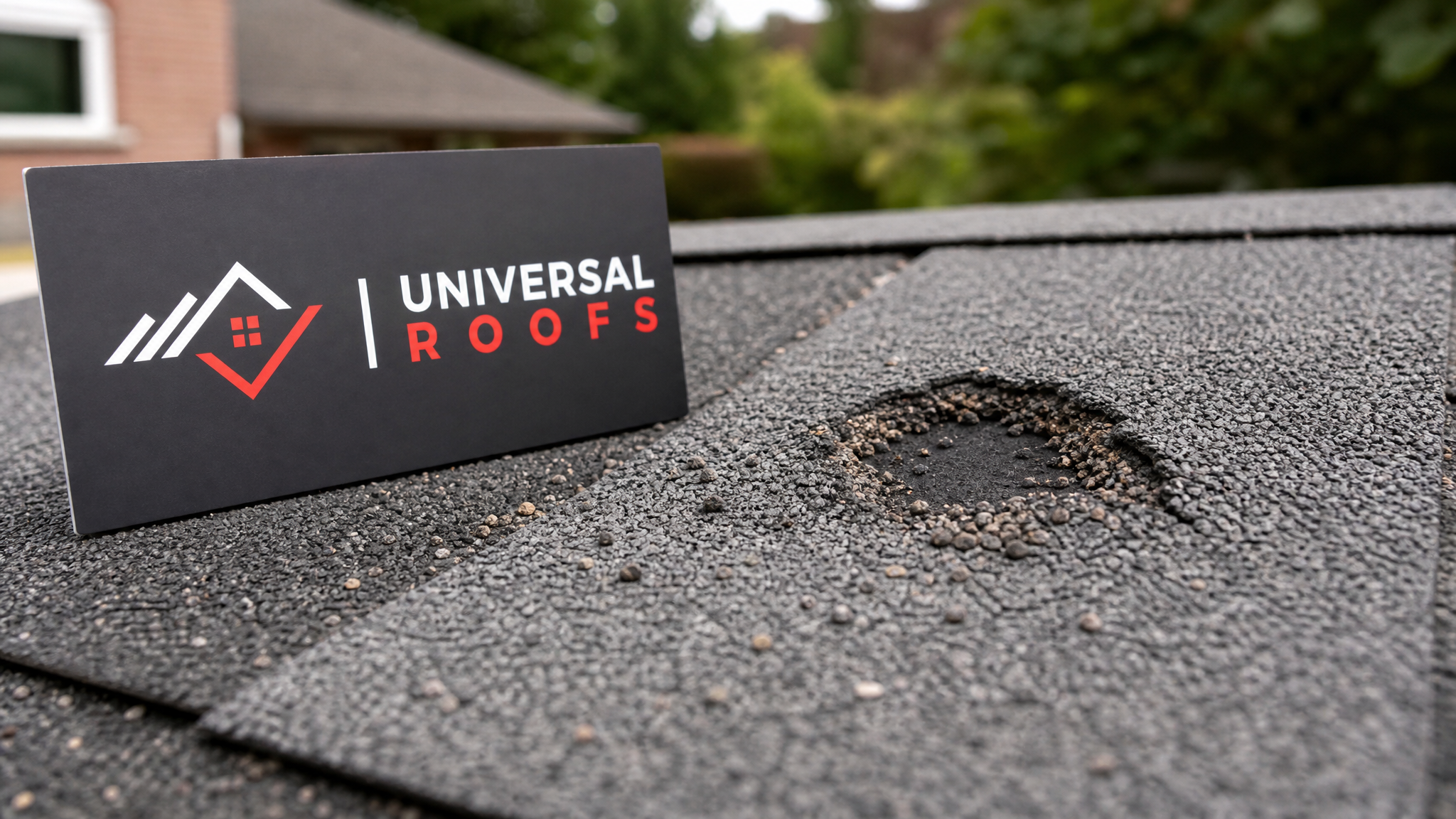
- Granule loss — the impact knocks the protective ceramic granules off the shingle surface, exposing the black asphalt mat underneath to UV rays.
- Mat fracturing — a hard enough impact cracks the fibreglass or organic mat inside the shingle, weakening its structure even though the surface may look intact.
- Bruising — a soft, spongy spot forms where the impact compressed the shingle without breaking it outright; this is the classic sign a roofing inspector checks for by pressing on the shingle.
- Flashing and metal damage — soft metal components like step flashing, vent caps, and eavestrough take dents that can crack sealant and open small gaps.
- Skylight and vent impact — skylight frames, plastic vent covers, and soffit panels can crack or split from direct hits, which is often the first place moisture gets in.
None of these are cosmetic problems, even though they often look that way at first. A bruised or cracked shingle no longer sheds water the way it is designed to. Once the mat is compromised, that section of roof degrades far faster than the surrounding, undamaged shingles — meaning a small hailstorm today can turn into a full leak twelve to eighteen months from now, usually during a heavy spring rain or the first big freeze-thaw cycle of winter.
Why the Damage Is So Easy to Miss
Homeowners almost never see hail damage from the ground, and for good reason: most of it happens on roof slopes facing the direction the storm travelled from, and granule loss and bruising simply are not visible from a second-storey window or a ladder glance at the eavestrough. This is the single biggest reason so many hail-damaged roofs go unaddressed until they start leaking.
Common places we find hail damage that homeowners had no idea existed:
- The back slope of the roof, facing away from the street
- Around plumbing vents, where soft rubber boots crack on impact
- On skylight flashing and frames, which are often the weakest point on a roof
- Inside the attic, where a hairline crack lets in moisture that shows up as staining on the underside of the roof deck
- On soft metal components like eavestrough, downspouts, and window capping
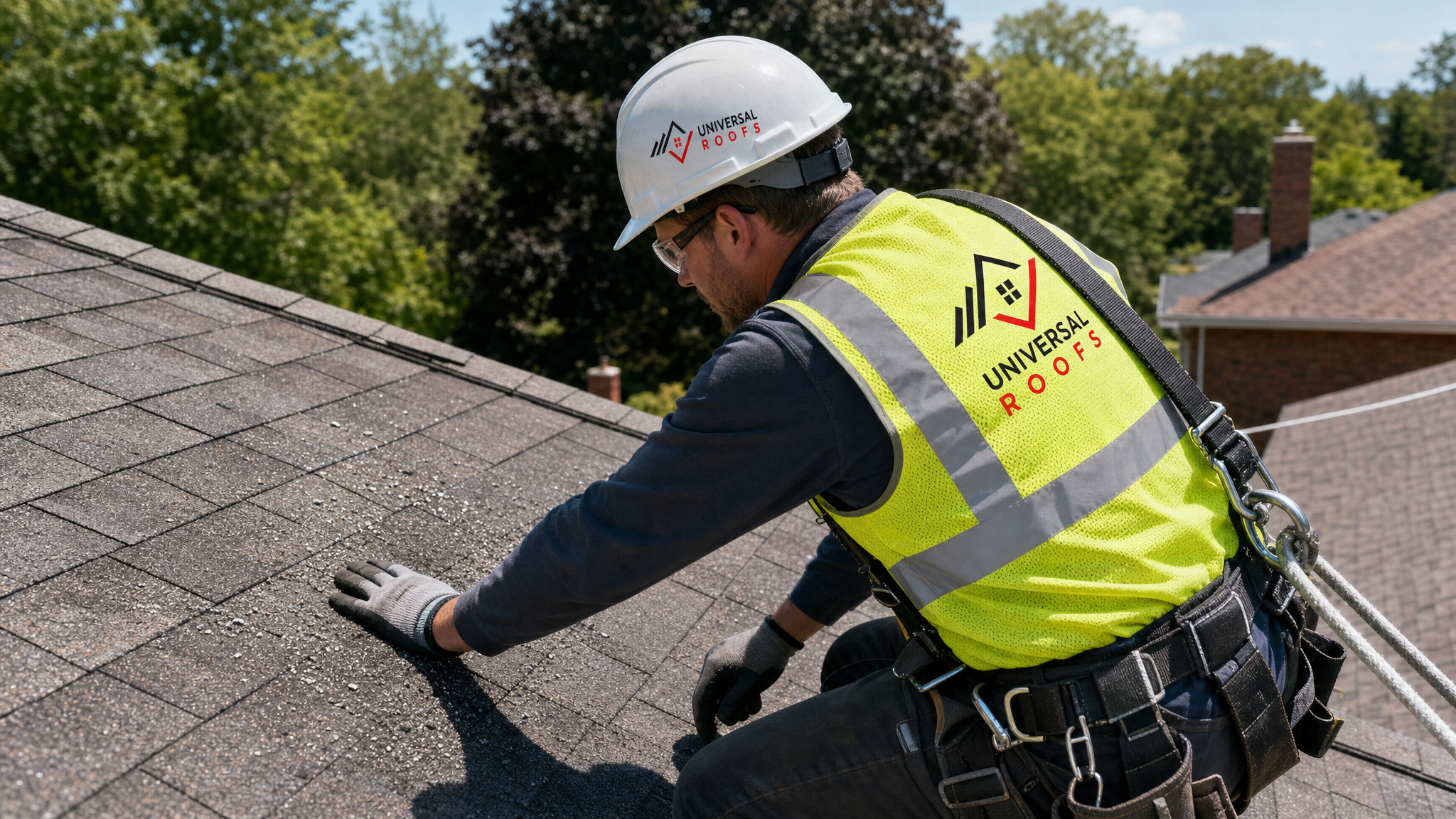
This is why we always recommend a professional roof inspection after any hailstorm that produced stones larger than 1 cm, even if there is no visible leak. A trained roofer knows to check granule accumulation in the eavestrough (a strong sign of impact damage), press-test suspect shingles, and examine the attic deck from the inside — steps a homeowner typically cannot safely or accurately perform from a ladder.
What Happens If You Ignore Hail Damage
Every roofer in the GTA has a story about a homeowner who waited. Here is the typical progression when hail damage is left unaddressed:
| Timeframe After Hailstorm | What Typically Happens | Cost Impact |
|---|---|---|
| 0–3 months | No visible symptoms; granule loss and bruising are present but hidden | Repair cost still minimal — often a few hundred dollars per affected section |
| 3–12 months | UV exposure accelerates on exposed mat; minor cracking spreads | Repair scope grows; some shingles now need full replacement rather than patching |
| 12–24 months | First leaks appear, usually during spring thaw or a heavy summer storm | Water intrusion adds drywall, insulation, and mould remediation costs |
| 24+ months | Deck rot, insulation damage, and possible mould in the attic | Full section replacement plus interior repairs — often 3–5x the original repair cost |
| Insurance window closed | Most Ontario insurers require claims within 1–2 years of the storm date | Homeowner absorbs 100% of the cost with no insurance contribution |
That last row is the one that catches people off guard most often. Insurance companies in Ontario typically require a claim to be filed within a defined window of the storm event — sometimes as short as 12 months, depending on the policy. If you wait two years to notice a leak and connect it back to “that storm a while ago,” most insurers will deny the claim outright, or at minimum require an engineer’s report proving the timeline, which adds cost and delay you would not otherwise have faced.
How to Spot Hail Damage Yourself (Safely)
We never recommend homeowners climb onto a wet, sloped roof after a storm — that is how second, much more serious injuries happen. But there is a lot you can check safely from the ground and from inside the attic:
| Where to Look | What to Check For | What It Means |
|---|---|---|
| Eavestrough and downspouts | Small dark granules collecting like coarse sand | Strong indicator of granule loss from hail impact on the shingles above |
| Metal flashing, vent caps, capping | Small round dents or dings, often in a scattered pattern | Confirms hail size and impact force; soft metal dents before shingles show visible damage |
| Window screens and siding | Torn mesh or small chips in vinyl/aluminum siding | Corroborating evidence of hail size for an insurance adjuster |
| Attic ceiling and rafters | New water stains, damp insulation, or a musty smell | Possible active leak; needs same-week professional attention |
| Skylight interior frame | Condensation trails or staining around the frame edge | Cracked flashing or frame seal, common after direct hail hits |
If you notice any of these signs, the next step is a professional roof and attic inspection, not a DIY patch job. Sealant and roofing cement bought at a hardware store can mask a symptom for a season but will not restore the shingle’s structural integrity, and it can actually make an insurance claim harder to process if an adjuster later finds unpermitted patchwork.
Documenting Damage for an Insurance Claim
Because most hail damage claims in Ontario hinge on proving the storm caused the damage and that you acted within a reasonable time, documentation matters enormously. Here is the process we walk homeowners through:
- Note the storm date. Local weather records (Environment Canada) can corroborate a hail event on a specific date, which strengthens your claim.
- Photograph visible exterior damage immediately — dented eavestrough, cracked siding, damaged window screens — before any cleanup happens.
- Book a professional roof inspection within days, not months. A written inspection report with photos, timestamps, and a hailstone-size estimate is the single most useful document for a claim.
- Contact your insurer promptly and reference the inspection report when you file. Many policies specify a claim window, so earlier is always safer.
- Get a detailed repair estimate that separates hail-related repair from any unrelated, pre-existing wear — adjusters look closely at this distinction.
A reputable roof repair contractor should be comfortable providing documentation formatted for insurance purposes and, where needed, meeting your adjuster on-site to walk through the findings together. This is standard practice for us on hail claims across Toronto, Mississauga, Vaughan, and the rest of the GTA.
Repair Options: Patch, Partial Replacement, or Full Roof Replacement
Not every hail-damaged roof needs a full tear-off. The right repair scope depends on the extent and location of the damage, the age of the existing roof, and how many separate slopes or sections were affected.
| Repair Option | Best For | Typical Timeline | Considerations |
|---|---|---|---|
| Spot shingle replacement | Isolated impact damage on a roof under 10 years old | Half a day to 1 day | Colour matching can be imperfect on older, sun-faded shingles |
| Partial section replacement | Concentrated damage on one slope or elevation | 1–2 days | Most cost-effective option when damage is localized to a single exposure |
| Full roof replacement | Widespread damage, an older roof nearing end of life, or damage across multiple slopes | 2–4 days | Often the better long-term value if the roof was already within a few years of replacement |
| Flashing and component repair only | Damage isolated to vent boots, step flashing, or skylight seals | Half a day | Must be paired with a full shingle inspection to rule out hidden granule loss |
We always start with an honest assessment rather than defaulting to the most expensive option. If your roof is only a few years old and the damage is contained to one slope, a partial section repair is usually the right call. If the roof was already approaching 18–20 years of age — the typical lifespan of asphalt shingles in the Toronto climate — hail damage is often the deciding factor that makes full replacement the more sensible investment, particularly since insurance may be covering a meaningful portion of the cost.
The same logic applies to flat roofing systems, which respond differently to hail impact than sloped asphalt shingles. Membrane roofing can show punctures, bruising, or granule displacement (on granulated cap sheets) that are easy to overlook without a trained inspection, since flat roofs do not shed hailstones the way a pitched roof does.
Why Toronto’s Climate Makes Hail Damage Worse, Faster
The Greater Toronto Area sees a distinct hail season, generally from late spring through late summer, when warm, moist air collides with cold fronts moving through Southern Ontario. But what makes hail damage particularly urgent here is not just the storms themselves — it is what comes after them.
Toronto’s climate puts roofs through dozens of freeze-thaw cycles every winter. A shingle with a hairline crack or compromised mat that would sit quietly for years in a milder climate gets repeatedly stressed here: water works into the crack, freezes, expands, and widens the damage, then thaws and repeats the cycle through the following months. This is why a roof that looked fine in August can develop a full leak by the following March, even though no new storm caused it — the freeze-thaw cycle simply finished what the hail started.
This seasonal reality is exactly why summer — right after hail season peaks — is the ideal time to get a roof inspected, well before the first frost sets in. Addressing hail damage in July or August, rather than waiting until a leak forces the issue in winter, means repairs happen in stable, dry conditions and give shingle sealant strips time to properly bond before cold weather arrives.
Preventive Steps and Long-Term Roof Resilience
While no roofing material is fully hail-proof, there are steps homeowners can take to reduce the severity of future damage and to catch problems earlier:
- Choose impact-resistant shingles on your next replacement — Class 4 impact-rated shingles hold up meaningfully better against hail and can sometimes qualify for an insurance premium discount.
- Schedule an annual roof check-up, ideally in late spring before hail season and again in fall before winter, so small issues are caught before freeze-thaw cycles compound them.
- Keep eavestrough clear so granule accumulation is easy to spot and water can drain properly rather than backing up under damaged shingle edges.
- Protect skylights and vents with properly rated flashing kits, since these components take the brunt of hail impact disproportionately to their size.
- Keep records of every roof inspection and repair — this history becomes invaluable if you ever need to demonstrate a maintenance timeline to an insurer.
If your roof or skylights are approaching the end of their expected service life, a hailstorm is often the trigger that reveals just how much wear had already accumulated. Rather than viewing storm damage purely as bad luck, it is worth treating it as an opportunity to catch age-related issues before they become expensive emergencies.
Choosing the Right Contractor for Hail Damage Repair
Not every contractor who shows up after a storm is equipped to properly assess hail damage. The GTA sees a wave of door-knocking “storm chasers” after any significant hail event, and homeowners should be cautious. A few markers of a legitimate, qualified roofer:
- A physical local presence and a verifiable track record, not just a truck and a business card handed out door-to-door
- Willingness to provide a written inspection report with photos, not just a verbal estimate
- Experience working directly with insurance adjusters and documentation requirements
- Manufacturer certifications for the shingle brands they install
- Transparent, itemized quotes rather than vague lump-sum pricing
You can read what past clients have said about our inspection and repair process on our reviews page, and check common questions on our FAQ page. We have built our reputation over two decades serving Toronto, Peel Region, York Region, Halton Region, and Durham Region homeowners specifically because we take the time to explain what we find, rather than pushing an unnecessary full replacement when a targeted repair will do the job. You can learn more about our team and history on our about page.
Why addressing roof hail damage is crucial even if there is no visible leak?
How can I tell if my roof has hail damage after a storm?
How long do I have to file a hail damage insurance claim in Ontario?
Does hail damage always require a full roof replacement?
Why does hail damage seem to get worse over the winter?
Can hail damage skylights and flat roofing, not just shingles?
Need Help With Why Addressing Roof Hail?
Storm damage rarely announces itself, which is exactly why a professional inspection matters more than a quick look from the driveway. Universal Roofs has spent nearly two decades helping GTA homeowners catch hail damage early, document it properly for insurance, and repair it right the first time.
Call us today at (416) 732-2421 or request a free inspection to get started.
Universal Roofs proudly serves Toronto, Mississauga, Brampton, Vaughan, Markham, Oakville and the GTA since 2005.