
If you are booking a roof repair in Toronto this summer, your contractor has probably asked whether you also want to replace your skylights or repair the flashing around your chimney. It is a fair question, and the honest answer is usually yes. Understanding why should you replace skylights and chimneys during roof repair can save you thousands of dollars, prevent a second disruptive project a year or two later, and close off the most common sources of hidden water damage in GTA homes.
Skylights and chimneys are the two biggest interruptions in an otherwise continuous roof surface. Every seam where a flat shingle field meets a vertical wall, a curb, or a masonry structure is a potential leak point. When roofers open up a section of roof for repair, they get a rare, direct view of the flashing, decking, and seals around these penetrations — and what they usually find is that the skylight or chimney flashing is older, more worn, and closer to failure than the surrounding shingles. Replacing or resealing them while the roof is already open is almost always cheaper and more effective than waiting.
This guide walks through the mechanical, financial, and warranty reasons for coordinating skylight and chimney work with roof repair, what a Toronto homeowner should expect to pay, how the process works, and the questions to ask before you sign off on the scope of work.
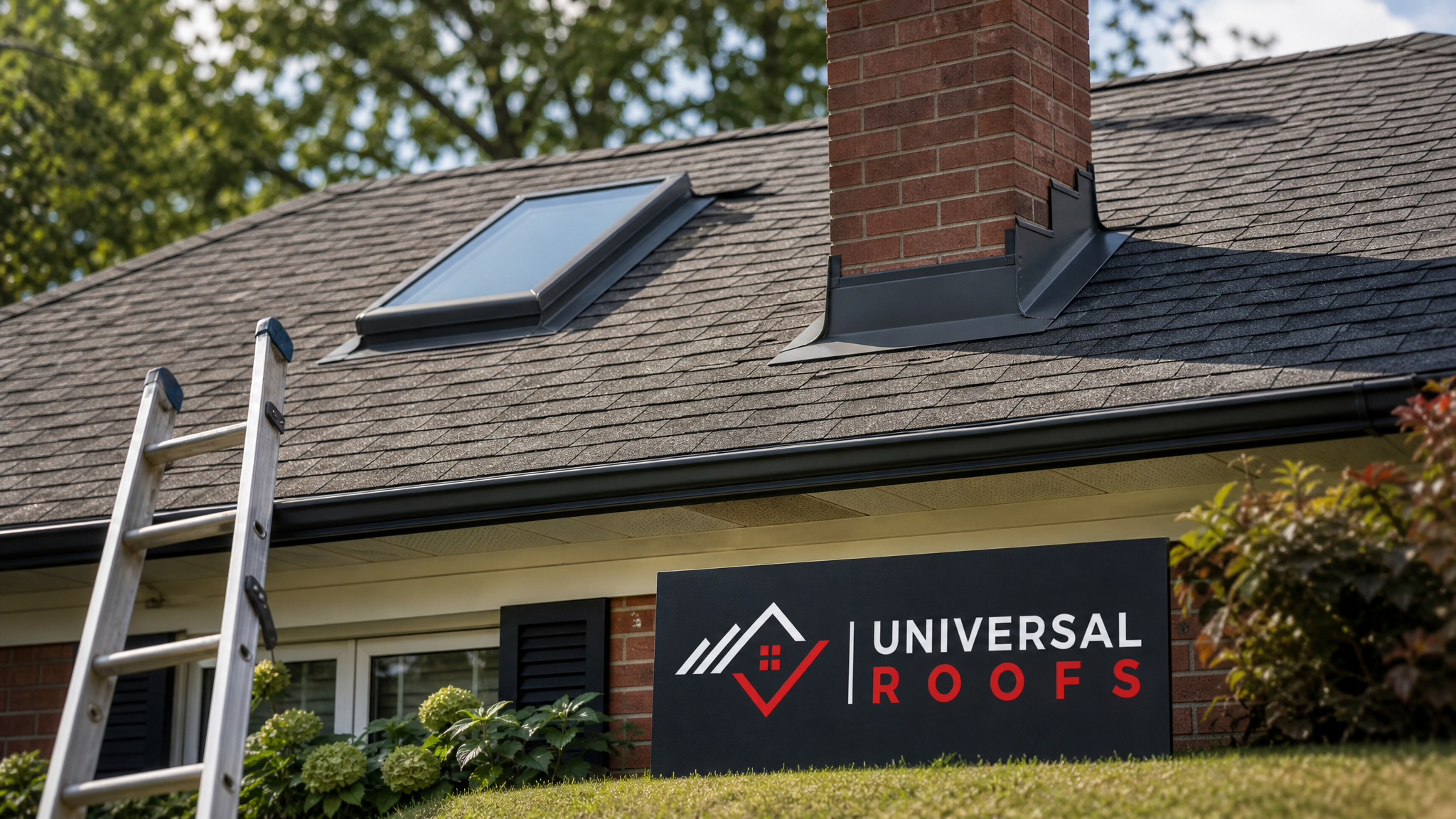
Why Skylights and Chimneys Fail Before the Rest of the Roof
A typical asphalt shingle roof is designed as a continuous water-shedding surface. Shingles overlap in a shingle pattern that lets rain run downhill, off the eaves, and into the gutters. A skylight or a chimney breaks that pattern. Instead of a smooth run of shingles, you have a rectangular curb or a masonry stack sticking up through the roof deck, and the roofer has to build a custom system of step flashing, counter-flashing, saddle flashing, and sealant to redirect water around that obstruction.
That custom flashing system takes more abuse than the field shingles around it for several reasons:
- Thermal cycling. Metal flashing expands and contracts with temperature swings far more than asphalt shingles do. Toronto’s freeze-thaw winters and hot, humid summers put flashing seams through repeated stress cycles that loosen fasteners and crack sealant.
- Sealant degradation. Many older chimney and skylight installations rely on caulking or roofing cement at the counter-flashing joint. Sealant has a much shorter service life than metal or shingles — typically 5 to 10 years before it dries out, shrinks, and cracks.
- Ice damming. Snow melts faster around a warm chimney and pools against the upslope side of a skylight curb, both classic ice dam locations. Trapped meltwater finds any gap in the flashing.
- Structural movement. Chimneys settle at a different rate than the rest of the house because they typically have their own, smaller footing. That differential movement stresses the flashing joint every year.
Because of these factors, flashing and seals around skylights and chimneys typically need attention on a 10 to 15 year cycle, while a well-installed asphalt shingle roof lasts 20 to 25 years. If your roof is being repaired at year 15 or later, there is a good chance the skylight and chimney flashing is already past its functional life even if the shingles have a few years left in them.
The Real Cost of Skipping Skylight and Chimney Work
The most common mistake homeowners make is treating the roof repair, skylight, and chimney as three separate projects to be dealt with “when they become a problem.” In practice, this almost always costs more money and causes more damage than doing the work together. Once a crew is already on the roof with scaffolding or a lift in place, tear-off complete, and the deck exposed, the marginal cost of also swapping a skylight or repairing chimney flashing is far lower than calling the same crew back for a standalone visit weeks or months later.
There is also a hidden cost that does not show up on any invoice: interior damage. A slow leak around a chimney or skylight curb can travel along a rafter or truss for metres before it shows up as a stain on your ceiling drywall. By the time you notice the stain, insulation may already be soaked, mould may have started in the attic, and framing may need to dry out or be replaced. A roof repair that addresses the penetration points proactively avoids this entirely.
| Approach | Typical Cost | Risk of Follow-Up Damage | Number of Site Visits |
|---|---|---|---|
| Combined roof repair + skylight/chimney work | $1,800 – $6,500 | Low | 1 |
| Roof repair only, skylight/chimney deferred | $800 – $2,200 | High within 1-3 years | 1 now, 1 later |
| Emergency leak repair after failure | $1,500 – $4,000 (leak) + drywall/insulation repair | Very high, may include mould remediation | 2-3 |
| Full roof replacement with new skylight/chimney flashing | $9,000 – $22,000+ | Lowest, full reset of service life | 1 |
The numbers above are general GTA ranges and vary by roof size, skylight model, and chimney height, but the pattern holds across almost every job: addressing skylights and chimneys during a scheduled repair is the cheapest way to eliminate the two most leak-prone areas of your roof.
What Happens to Chimney Flashing When It Is Left Alone
Chimney flashing typically fails in a predictable sequence. First, the sealant at the top of the counter-flashing, where it meets the brick, dries out and cracks. Water then gets behind the counter-flashing and runs down between the flashing and the masonry rather than over the shingles. Because this leak path is hidden, it can go unnoticed for one or more full seasons.
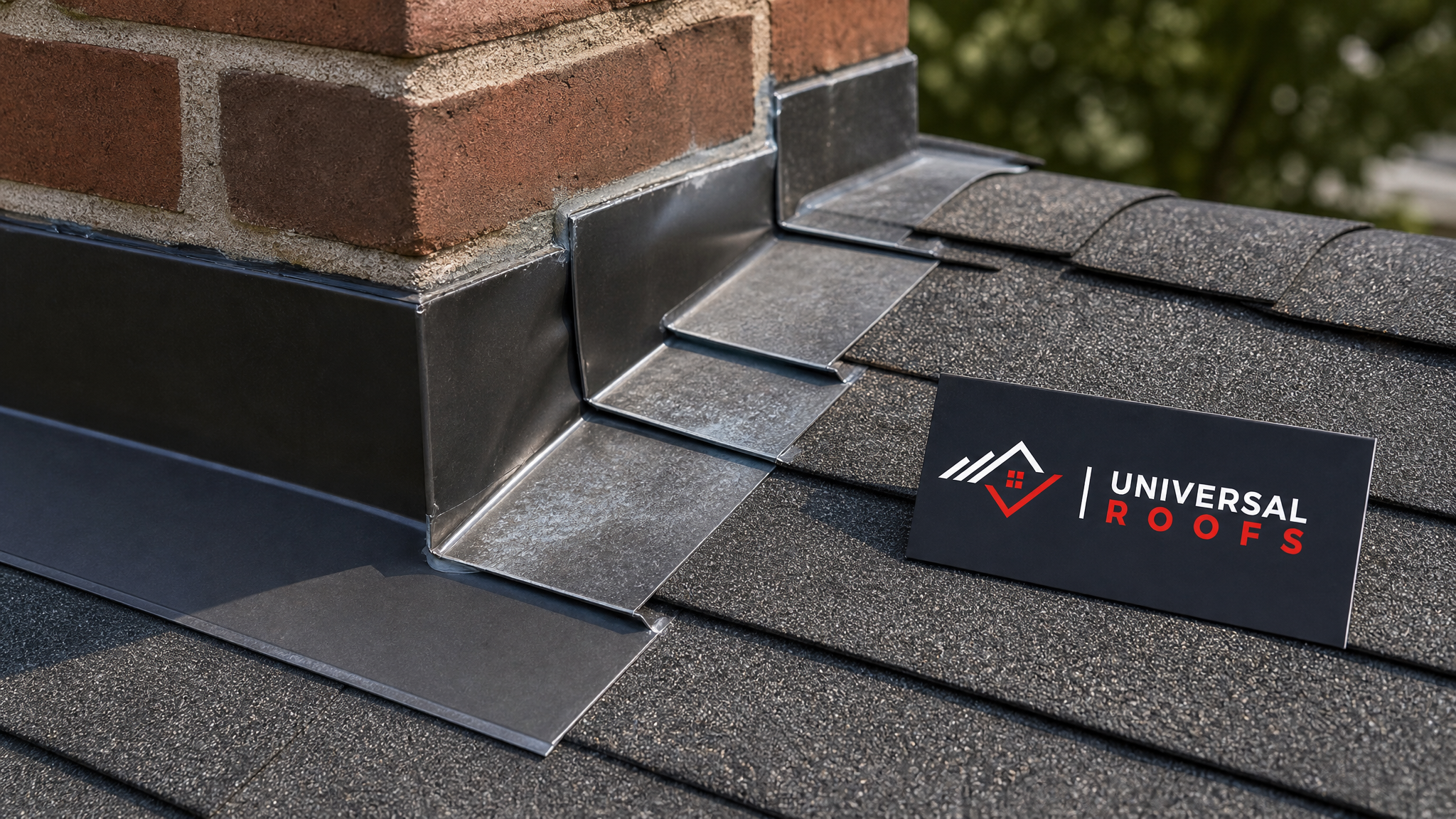
Next, the step flashing along the sides of the chimney — the small L-shaped metal pieces woven between shingle courses — starts to rust or work loose from repeated expansion and contraction. Once step flashing lifts even slightly, wind-driven rain during a Toronto summer thunderstorm can be pushed sideways underneath it. Finally, the saddle or cricket flashing at the back (uphill) side of a wide chimney, which is designed to divert water and snowmelt around the masonry, can crack at the seam where two metal pieces meet, letting water pool directly against the base of the chimney.
By the time any of these failures becomes visible as an interior stain, the leak has usually been active for a while. This is exactly why experienced roofers recommend inspecting and, where needed, replacing chimney flashing at the same time as a shingle repair rather than waiting for a visible symptom.
Why Skylights Are Even More Leak-Prone Than Chimneys
Skylights add a second vulnerability that chimneys do not have: the unit itself can fail, not just the flashing around it. Older skylights, particularly units installed before the early 2000s, often used single-pane or early double-pane glazing with rubber gaskets that harden and shrink over 15 to 20 years. Even if the roof flashing around the skylight is in perfect condition, a failed gasket or a cracked seal between the glass panes can let water and condensation into the room below.
Modern skylights, including the units used in most current skylight installations, use welded frame corners, laminated or tempered glass sealed units, and integrated flashing kits engineered specifically for that skylight model. When a roof repair opens up the area around an ageing skylight, replacing the unit at the same time — rather than reusing 15-year-old glass under new flashing — closes off both failure paths at once.
Table: Skylight Age vs. Recommended Action During Roof Repair
| Skylight Age | Common Condition Found | Recommended Action | Typical Additional Cost |
|---|---|---|---|
| 0 – 5 years | Seal intact, flashing sound | Inspect only, no action needed | $0 |
| 6 – 10 years | Minor sealant wear, flashing mostly sound | Re-seal and inspect flashing | $150 – $400 |
| 11 – 15 years | Gasket hardening, occasional fogging between panes | Replace flashing kit, consider unit replacement | $600 – $1,400 |
| 16+ years | Fogged glass, cracked gaskets, brittle flashing | Full skylight replacement with new flashing | $1,200 – $2,800 per unit |
If your skylights fall into the 11-year-or-older range and your roof is already scheduled for repair, replacing them during the same visit is one of the more straightforward ways to avoid a repeat service call.
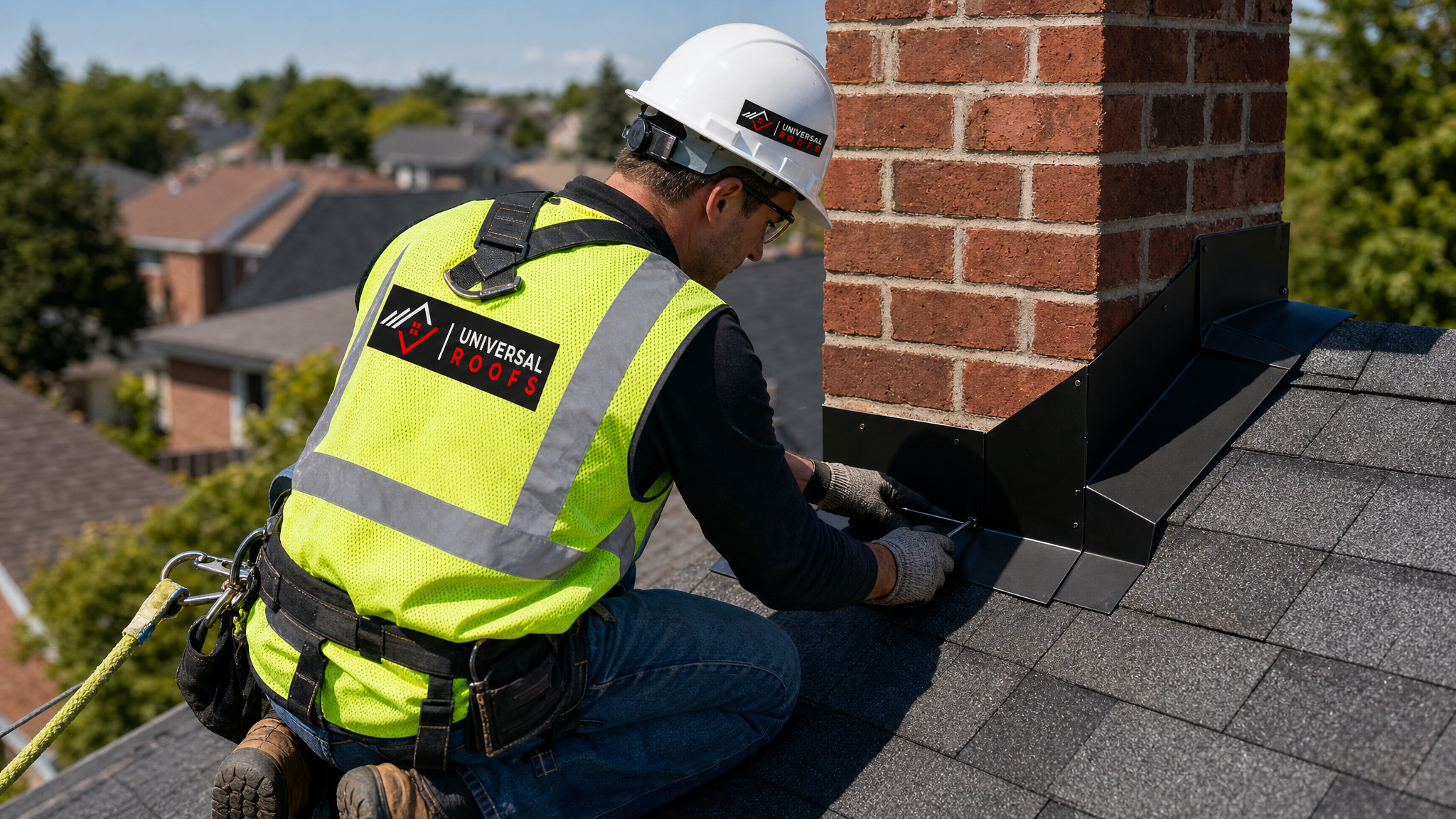
How the Combined Repair Process Works
When skylight and chimney work is coordinated with a roof repair, the process generally follows these steps:
- Assessment. The roofer inspects the shingle field, decking, skylight curb, and chimney flashing together and documents what needs repair versus replacement.
- Tear-off around the penetration. Shingles surrounding the skylight or chimney are removed to expose the old flashing and check the decking underneath for rot or water staining.
- Deck repair if needed. Any soft, delaminated, or water-damaged plywood is cut out and replaced before new flashing goes down.
- Skylight or flashing installation. A new skylight unit and its manufacturer-matched flashing kit are installed, or new step, counter, and saddle flashing is fabricated and installed around the chimney.
- Underlayment and shingle tie-in. Ice-and-water membrane is applied around the penetration before shingles are woven back in, matching the existing roof pattern.
- Sealing and final inspection. All seams are sealed with roofing-grade sealant, and the repair is inspected from the ground and, where accessible, from the attic side.
Because the same crew, the same access equipment, and the same weather window are already in use for the roof repair, this combined approach typically adds one to two days to the project rather than requiring an entirely separate mobilization.
Attic Impact: The Part Homeowners Often Miss
Leaks around chimneys and skylights rarely stay contained to the roof deck. Water that gets past flashing travels along rafters and drips into attic insulation, where it can sit for weeks without being noticed from inside the house. Wet insulation loses much of its R-value, which increases heating and cooling costs, and prolonged moisture in an attic is one of the leading causes of mould growth in GTA homes.
If your roof repair reveals staining, damp insulation, or a musty smell in the attic near a chimney or skylight, it is worth having your attic assessed at the same time. Catching and drying out a small area now is far less costly than a full insulation replacement and mould remediation later.
Chimney and Skylight Work vs. Full Roof Replacement
Not every roof needs a full replacement just because a skylight or chimney needs attention. The right decision depends largely on the remaining life of the shingle field. Use the table below as a general guide.
| Roof Age | Shingle Condition | Recommended Approach |
|---|---|---|
| Under 10 years | Good, isolated wear | Repair with skylight/chimney flashing update as needed |
| 10 – 15 years | Moderate granule loss, some curling | Repair now, budget for replacement within 5-10 years |
| 16 – 20 years | Widespread curling, brittle shingles | Evaluate full roof replacement instead of repeated repairs |
| 20+ years | End of service life | Full replacement, including all new flashing and skylights |
If your roof is already near the end of its service life, replacing the skylight and chimney flashing as part of a standalone repair is still worthwhile, but it makes sense to have an honest conversation with your contractor about whether a full replacement is the better long-term investment.
Flat Roof Considerations for Skylights and Chimneys
Homes and additions with flat roofing sections face a related but distinct challenge. On a flat or low-slope roof, water does not shed as quickly, so any gap in flashing around a skylight curb or chimney base can allow standing water to sit against the seal for hours after a storm rather than running off immediately. Flat roof skylight curbs typically need to be built up higher than on a sloped roof, and chimney flashing on a flat roof section often uses a fully adhered membrane detail rather than woven shingle flashing. If your home has a flat roof section with a skylight or chimney penetration, it is worth having it inspected specifically for standing-water risk during any repair visit.
Signs You Should Not Wait for the Next Scheduled Repair
While this article focuses on combining skylight and chimney work with a planned repair, some signs indicate the work should not be deferred at all:
- Visible daylight around the skylight curb or chimney base from inside the attic
- Ceiling stains that appear or grow after every significant rainfall
- Peeling paint or bubbling drywall near a chimney chase
- Condensation or fogging trapped between skylight glass panes
- Missing or visibly lifted flashing pieces visible from the ground with binoculars
- A musty odour in the attic, particularly near a chimney or skylight shaft
Any of these signs warrants a prompt inspection rather than waiting for a routine repair window.
Regional Notes for the GTA
Climate and building stock vary somewhat across the region, which affects how urgently skylight and chimney flashing should be addressed. Homes in Toronto with older brick chimneys, particularly in neighbourhoods with housing stock from the 1950s through 1980s, tend to see more masonry settling and flashing wear than newer builds. Properties across Peel Region and York Region with larger custom homes often have multiple skylights installed during renovations, which increases the total number of penetration points to maintain. In Halton Region and Durham Region, homes closer to the lake can see additional wind-driven rain exposure that stresses flashing seams a little faster than inland properties. In every case, the underlying principle is the same: flashing around skylights and chimneys wears out faster than the surrounding shingles, and addressing it during a scheduled repair is the most cost-effective time to do so.
Questions to Ask Your Roofer Before the Repair Begins
Before work starts, it is worth confirming a few details with your contractor so there are no surprises once the roof is opened up:
- Will you inspect the flashing around every skylight and chimney while the roof is open, even if that was not the original scope?
- What is the age and expected remaining life of my current skylights?
- Is the chimney flashing step-flashed and counter-flashed, or is it sealed with caulking alone?
- If additional work is found necessary, how will the added cost be communicated and approved before proceeding?
- What warranty applies to new flashing and any replaced skylight units?
A contractor who welcomes these questions and explains the reasoning behind their recommendations is generally a good sign that the scope of work will be handled transparently.
Warranty and Long-Term Value
Most manufacturer warranties on shingles and skylights are conditioned on proper installation of the surrounding flashing. If old, worn flashing is left in place around a new skylight, or if a roof repair is performed without addressing failing chimney flashing nearby, any resulting leak can be attributed to the flashing rather than the product itself, which may limit warranty coverage. Replacing both components together, using matched flashing kits and correctly layered step and counter-flashing, keeps your roofing system working as a single warrantied assembly rather than a patchwork of parts installed at different times under different conditions.
Beyond warranty terms, coordinated work also protects resale value. Home inspectors routinely flag ageing skylights and chimney flashing as line items in pre-sale inspections, and unresolved flashing issues are a common point of price negotiation. Addressing them proactively, with documentation of the work performed, removes that friction later.
Why should you replace skylights and chimneys during roof repair instead of waiting?
How do I know if my chimney flashing needs replacing during a roof repair?
Does replacing skylights during roof repair really save money?
What happens if I only repair the roof and leave old skylights and chimney flashing in place?
Can skylight and chimney flashing be repaired without replacing the whole roof?
How long does it take to replace a skylight and chimney flashing during a roof repair?
Need Help With Why Should You Replace?
If your roof repair is coming up and you are unsure whether your skylights or chimney flashing need attention at the same time, the team at Universal Roofs can inspect both during a single visit and give you a clear, honest recommendation before any work begins.
Call us today at (416) 732-2421 or request a free inspection to get started.
Universal Roofs proudly serves Toronto, Mississauga, Brampton, Vaughan, Markham, Oakville and the GTA since 2005.