
A roof does its hardest work when nobody is watching it. Through the sticky heat of a Toronto July, the freeze-thaw cycles of a GTA January, and the wind-driven rain of a spring squall off Lake Ontario, your roof is quietly absorbing punishment that most homeowners never think about until a stain appears on the ceiling. The good news is that the vast majority of premature roof failures we see across Toronto, Mississauga, Vaughan, and the surrounding regions are preventable with a simple, consistent seasonal maintenance routine.
At Universal Roofs, we have been inspecting, repairing, and replacing roofs across the GTA since 2005, and the pattern is always the same: homeowners who check their roof twice a year rarely need an emergency call, while homeowners who ignore it for five or ten years often end up needing a full roof replacement years before they should. This guide walks through exactly what to check, when to check it, and how to tell the difference between a five-minute fix and a problem that needs a professional.
Whether you have asphalt shingles, a flat roof, or a roof with skylights built in, the principles below apply. We will break the year into its four maintenance windows, cover the specific climate stresses that hit Toronto roofs hardest, and give you clear tables you can use as a quick-reference checklist.
Why Seasonal Roof Maintenance Tips Keeping Your Roof in Top Shape Matter in the GTA Climate
Toronto and the surrounding regions see one of the more demanding climate cycles in North America for a roofing system. We swing from -20°C polar vortex days in January to 30°C-plus humidity in July, often within the same calendar year, and that swing is exactly what destroys roofing materials over time. Asphalt shingles expand and contract with every temperature shift. Flashing metal expands at a different rate than the wood and membrane around it, which is why flashing seams are one of the most common leak points we repair. Ice forms and melts dozens of times each winter along eaves and valleys, and every one of those cycles works water a little further under your shingles if your ventilation and insulation are not doing their job.
This is why a single annual inspection is not enough. A proper seasonal roof maintenance routine looks at your roof through the lens of what each season actually does to it: winter loads it with ice and snow, spring exposes what winter damaged, summer bakes and dries out materials while giving you the best access for repairs, and autumn is your last chance to prepare before the cycle repeats. Homeowners across our Toronto, Peel Region, York Region, Halton Region, and Durham Region service areas all deal with essentially the same climate pattern, just with slightly different exposure depending on proximity to the lake and tree cover.
Spring Roof Maintenance: Assessing Winter’s Damage
Spring is arguably the most important inspection window of the year. This is when you find out what winter actually did to your roof, and it is also when you have the best window to fix small problems before the summer heat bakes them in and before next winter’s ice makes them worse.
Start with a walk around the exterior of your home, looking up at the roofline with binoculars rather than climbing a ladder yourself — we always recommend leaving ladder work to a professional, especially on a steep or wet roof. Look for:
- Missing, cracked, or curling shingles, especially on south and west-facing slopes that see the most sun exposure
- Granules collecting in gutters or at the base of downspouts, which signal accelerated shingle wear
- Sagging sections of roofline, which can indicate structural or decking damage
- Ice dam staining — dark streaks along the eaves where water backed up under shingles
- Damaged or lifted flashing around chimneys, vents, and skylights
- Debris, branches, or moss buildup in valleys and against walls
Inside the attic, spring is also the time to check for water stains on the underside of the roof deck, damp or compressed insulation, and daylight coming through anywhere it should not. If you see any of these signs, particularly around a skylight, it is worth having it looked at — small leaks around skylight flashing are one of the more common spring repair calls we get, and they are far cheaper to fix in spring than to discover mid-summer when a rainstorm floods a bedroom ceiling.
| Spring Inspection Item | What to Look For | Urgency if Found | Typical Next Step |
|---|---|---|---|
| Shingle granule loss | Sand-like granules in gutters/downspouts | Moderate | Schedule an inspection within weeks |
| Ice dam staining | Dark streaks along eaves and soffits | Moderate to High | Check attic insulation and ventilation |
| Lifted flashing | Gaps around chimney, vents, or skylights | High | Book roof repair before spring rains increase |
| Attic water stains | Brown rings or streaks on underside of deck | High | Locate leak source immediately |
| Sagging roofline | Visible dip or wave in the roof plane | Urgent | Call for a structural assessment right away |
| Debris in valleys | Leaves, branches, or moss buildup | Low | Clear debris and monitor drainage |
Summer Roof Maintenance: The Best Window for Repairs
Summer, including right now in July, is the ideal season for roofing work in the GTA. Shingles are pliable and seal properly in warmer temperatures, there is no risk of ice on the roof surface, and days are long enough for crews to complete larger jobs in a single visit. If you noticed anything concerning during your spring walk-around, summer is when you want to act on it.
Summer maintenance has a slightly different focus than spring, because the main enemy shifts from ice and snow load to heat, UV exposure, and severe thunderstorms. Here is what we recommend checking:
- UV and heat damage: prolonged direct sun causes asphalt shingles to dry out and become brittle over years of exposure. Look for widespread curling or blistering, which usually signals a shingle system nearing the end of its service life.
- Attic ventilation and temperature: a poorly ventilated attic can reach extreme temperatures in summer, which accelerates shingle aging from underneath and can also drive up cooling costs. If your attic feels noticeably hotter than it should, or you notice uneven snow melt patterns in winter, ventilation is likely a factor.
- Storm damage after severe weather: summer thunderstorms and the occasional derecho-style wind event can knock loose flashing, tear shingles, or drop branches on the roof. After any major storm, a quick visual check from the ground is worth the five minutes.
- Skylight seals: summer heat can dry out old sealant around skylights. If you are noticing condensation or a musty smell near a skylight, it is worth having the seals checked before autumn rain arrives, and in some cases a full skylight replacement is more cost-effective than repeated resealing on an older unit.
- Flat roof membrane condition: if you have a flat or low-slope roof, summer is the best time to check the membrane for blistering, cracking, or ponding water, since you can see how the surface is draining during and after a normal rain.
Summer is also when full roof replacements make the most sense from a scheduling standpoint. If your spring inspection revealed widespread shingle failure rather than a localized repair, getting the work booked in July or August means you are protected well before the next winter arrives, rather than scrambling for emergency service in November.
Autumn Roof Maintenance: Preparing for Winter
Autumn maintenance is really about preparation rather than repair. Everything you do in September and October is aimed at making sure your roof, gutters, and attic are ready to handle snow load, ice, and freeze-thaw cycling without letting water find a way in.
The single highest-value task in autumn is gutter cleaning. Clogged gutters are one of the leading causes of ice dams, because water that cannot drain freezes at the eaves and backs up under the shingle line. Clean gutters and downspouts thoroughly after the majority of leaves have fallen, and check that downspouts are directing water at least a couple of metres away from the foundation.
Beyond gutters, an autumn checklist should include:
- Trimming back tree branches that overhang the roof, both to reduce debris accumulation and to prevent branch strikes during winter ice storms
- Checking attic insulation depth and evenness, since gaps or thin spots are where ice dams tend to form first
- Confirming that soffit and ridge vents are clear and unobstructed so air can flow properly through the attic all winter
- Re-checking flashing around chimneys, vents, and skylights one more time before the first snowfall
- Looking for any loose or lifted shingles that summer heat may have made more obvious, and getting them re-secured
If your home has a history of ice dams, autumn is also the time to discuss ventilation and insulation upgrades with a roofing professional, since the underlying cause is almost always heat escaping from the living space into the attic and melting the underside of the snow layer, rather than a problem with the shingles themselves.
Winter Roof Maintenance: Managing Snow and Ice Safely
Winter is the season where the emphasis shifts from active maintenance to careful monitoring, because climbing on a snow- or ice-covered roof yourself is genuinely dangerous. Most of what you can safely do in winter is done from the ground or from inside the attic.
From the ground, watch for:
- Heavy, wet snow accumulation, particularly after a snowfall followed by a thaw-and-refreeze cycle, which adds significant weight to the structure
- Icicles forming along the eaves, which are a visible sign that an ice dam is starting to form behind them
- Uneven snow melt patterns across the roof surface, where some areas clear faster than others — this usually points to inconsistent attic insulation or a heat source escaping unevenly
- Ice buildup around vent pipes, chimneys, and skylight edges
From inside the attic, on a cold day, check for frost or condensation on the underside of the roof deck and nails. A little frost on nail tips is common in a properly ventilated attic, but heavy frost buildup or dripping water when temperatures rise is a sign that warm, moist air from the house is reaching the attic and needs to be addressed.
If you do develop a significant ice dam, resist the urge to chip at it with an axe or hammer, which can tear shingles and cause far more damage than the ice itself. A roof rake used carefully from the ground to remove excess snow load, along with calcium chloride socks placed perpendicular to the eave to create drainage channels, are the safer DIY options. For anything beyond that, or for any leak that develops during winter, it is worth calling a professional rather than getting on a ladder in icy conditions.
| Season | Primary Risk | Key Maintenance Focus | Best DIY vs. Professional Split |
|---|---|---|---|
| Spring | Winter damage revealed by thaw | Full visual inspection, attic check | DIY visual walk-around; professional for repairs |
| Summer | UV/heat aging, storm damage | Ventilation, membrane checks, repairs | DIY ground checks; professional for all roof-surface work |
| Autumn | Debris blocking drainage before winter | Gutter cleaning, flashing, insulation | DIY gutters (with care); professional for flashing/insulation |
| Winter | Snow load, ice dams | Monitoring from ground and attic | DIY monitoring only; professional for any ice dam removal or leak |
Common Roofing Materials and How Their Maintenance Needs Differ
Not every roofing material ages or fails the same way, and your seasonal maintenance priorities should shift depending on what is actually on your roof. Asphalt shingles, the most common material on GTA homes, are vulnerable to granule loss, curling, and UV brittleness, and typically need the most attention in the spring and summer inspection windows. Flat and low-slope membrane roofs, common on additions, garages, and some commercial buildings, are more vulnerable to ponding water and membrane cracking, and benefit from a dedicated inspection after any heavy rain to confirm drainage is working as designed.
Metal roofing tends to hold up extremely well against ice and UV but requires attention to fastener seals and seam integrity, since thermal expansion and contraction over many cycles can loosen fasteners over a decade or more. Skylights, regardless of the roofing material around them, have their own maintenance profile centred entirely on the flashing and seal integrity where the unit meets the roof deck, which is why we treat skylight inspections as a distinct line item rather than folding them into a general shingle check.
| Roofing Material | Most Common Failure Point | Recommended Inspection Frequency | Typical Lifespan (GTA Climate) |
|---|---|---|---|
| Asphalt shingles | Granule loss, curling, UV brittleness | Twice yearly (spring and autumn) | 20-25 years |
| Flat/membrane roofing | Ponding water, membrane cracking | Twice yearly plus after major storms | 15-20 years |
| Metal roofing | Fastener loosening, seam separation | Once yearly | 40-50 years |
| Skylights | Flashing and seal failure | Twice yearly | 10-20 years depending on unit |
| Wood shakes | Rot, moss growth, splitting | Twice yearly | 25-30 years |
DIY Roof Maintenance vs. Calling a Professional
There is a meaningful amount you can do yourself to extend your roof’s life, and there is a clear line where DIY effort turns into unnecessary risk. Ground-level and attic-based checks are almost always safe and worth doing regularly. Anything that requires walking on the roof surface, working near an edge, or handling flashing and membrane repairs should go to a professional, both for safety and because improper DIY repairs are one of the more common causes of the leaks we get called out to fix.
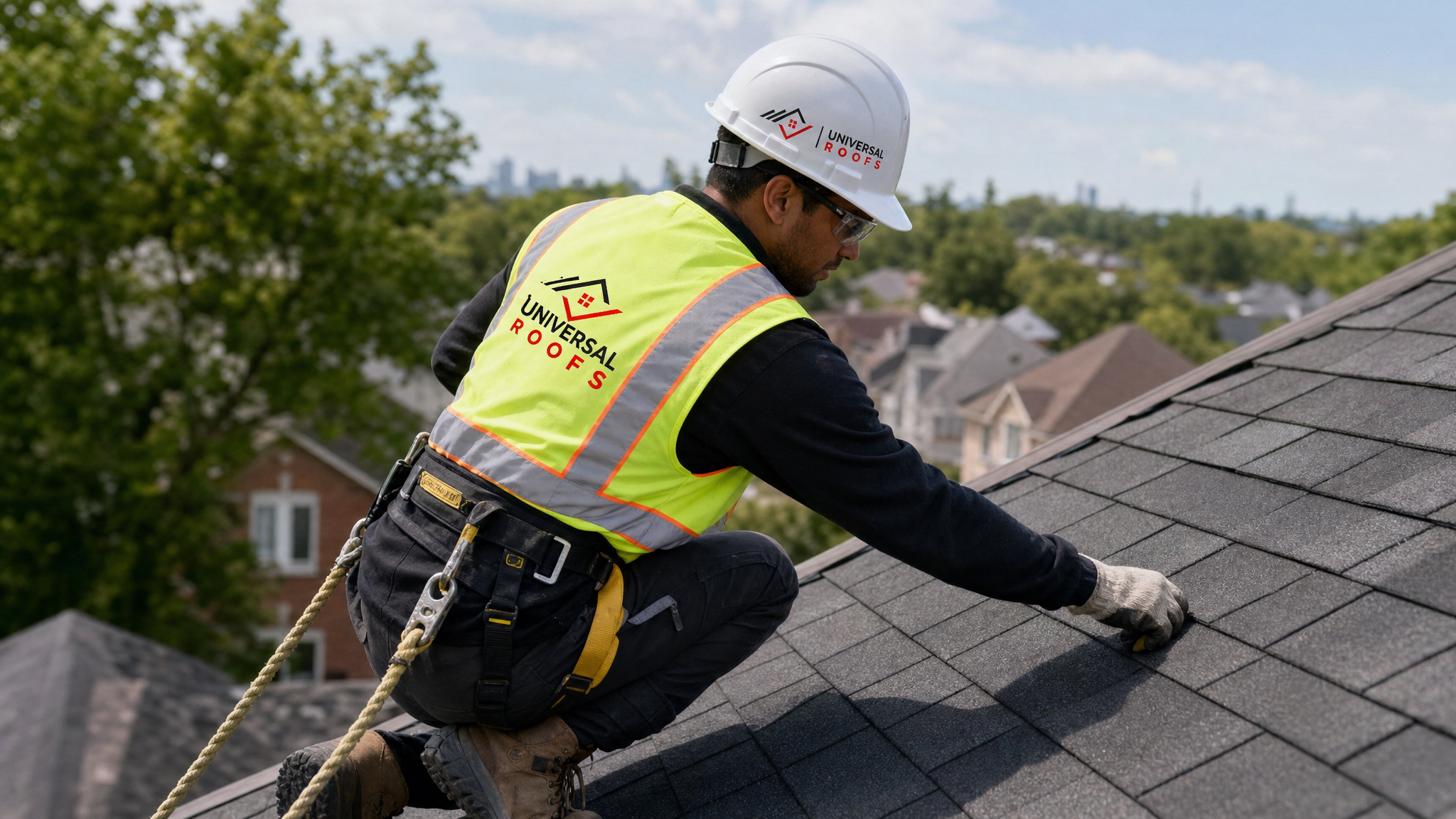
A properly equipped roofing crew works with fall-protection harnesses, safety ropes, and the right footwear for the specific roof pitch and material, none of which the average homeowner has on hand or is trained to use safely. Beyond the safety question, a trained eye can also catch early-stage problems — a slightly lifted shingle tab, a hairline crack in flashing sealant, early membrane blistering — that are easy for an untrained eye to miss entirely until they become active leaks.
If you are ever unsure whether something you have spotted needs professional attention, it costs nothing to ask. You can browse verified feedback from homeowners across the GTA on our reviews page, or check our FAQ page for answers to the most common roofing questions we receive. Our about page also covers our history serving the region since 2005, if you want more background before booking an inspection.
Building a Year-Round Seasonal Maintenance Checklist
Bringing all four seasons together into a single reference makes it much easier to actually follow through, rather than remembering piecemeal tasks as they occur to you. We recommend homeowners set calendar reminders for each of the four windows below, ideally tied to a recognizable event like the first warm week of spring or the weekend you put up holiday lights in autumn.
| Task | Spring | Summer | Autumn | Winter |
|---|---|---|---|---|
| Visual roof inspection (ground level) | Yes | After storms | Yes | Monitor only |
| Gutter cleaning | Yes | Optional | Yes (priority) | No |
| Attic inspection | Yes | Yes (ventilation focus) | Yes (insulation focus) | Yes (frost/condensation) |
| Flashing and skylight seal check | Yes | Yes | Yes | Monitor only |
| Book professional repairs | As needed | Best window | Before first snow | Emergencies only |
| Tree/branch trimming near roofline | Optional | Optional | Yes (priority) | No |
Following a routine like this consistently, year after year, is genuinely the single biggest factor in whether a roof reaches the top or bottom end of its expected lifespan. A shingle roof that is properly ventilated, kept clear of debris, and repaired promptly when small issues appear can regularly outlast the manufacturer’s stated lifespan. The same roof neglected for a decade will often need premature, and more expensive, replacement.
When Seasonal Maintenance Reveals It Is Time for Repair or Replacement
Sometimes a seasonal inspection uncovers something that goes beyond routine maintenance. Widespread granule loss across most of the roof, multiple soft spots in the decking, recurring leaks in different locations each season, or a roof that is simply past its expected service life are all signs that maintenance alone will not solve the underlying problem.
In these cases, it is worth getting a clear, honest assessment of whether targeted roof repair will genuinely extend the roof’s usable life, or whether a full roof replacement is the more cost-effective path once you account for the frequency of repair calls a failing roof tends to generate. A good roofer will tell you honestly which category your roof falls into rather than defaulting to the most expensive recommendation, and will walk you through the reasoning so you can make an informed decision either way.
What are the most important seasonal roof maintenance tips for keeping your roof in top shape?
How often should I inspect my roof each year?
Can I safely inspect my own roof, or should I always call a professional?
What causes ice dams and how does seasonal maintenance prevent them?
How do I know if my roof needs repair versus full replacement?
Does seasonal maintenance matter as much for flat roofs and skylights?
Need Help With Seasonal Roof Maintenance Tips?
A little consistency goes a long way toward protecting one of the most expensive components of your home. Universal Roofs has been helping GTA homeowners stay ahead of seasonal wear and tear since 2005, and our team can walk your roof with you so you know exactly what shape it is in before the next season arrives.
Call us today at (416) 732-2421 or request a free inspection to get started.
Universal Roofs proudly serves Toronto, Mississauga, Brampton, Vaughan, Markham, Oakville and the GTA since 2005.