
Tile roofs are among the most durable roofing systems available to GTA homeowners, but Toronto summers put them through a demanding cycle of intense UV exposure, surface temperatures that can climb past 65 degrees Celsius on a black underlayment, and sudden thunderstorms that follow a heat wave. If you own a clay or concrete tile roof, the repairs you make in July and August need to account for thermal expansion, softened sealants, and a workforce that has to stay safe on a roof deck hot enough to warp footwear. This guide walks through the essential tips for tile roof repair in sun and heat that matter most for homes across Toronto, Mississauga, Vaughan, and the wider GTA.
Tile roofing rewards patience and the right technique far more than asphalt shingles do. A cracked tile that would take fifteen minutes to swap in October can turn into a two-tile job in August if you don’t manage the heat correctly, because the surrounding tiles have expanded and locked tightly against the damaged piece. Underlayment that has baked in the sun all afternoon becomes brittle and prone to tearing the moment a technician kneels on it. And the batten and counter-batten framework underneath can shift slightly as the wood dries out, changing how tiles seat back into place after a repair.
This article covers the three tips that matter most, then expands into the surrounding details every homeowner should understand: material selection, timing your repair around the hottest hours, safety protocols for a hot roof deck, and how to tell when a patch job is no longer enough. Whether you’re planning a DIY fix on a single cracked tile or comparing quotes for a larger roof repair project, the fundamentals below will help you avoid the mistakes that turn a simple job into a costly one.
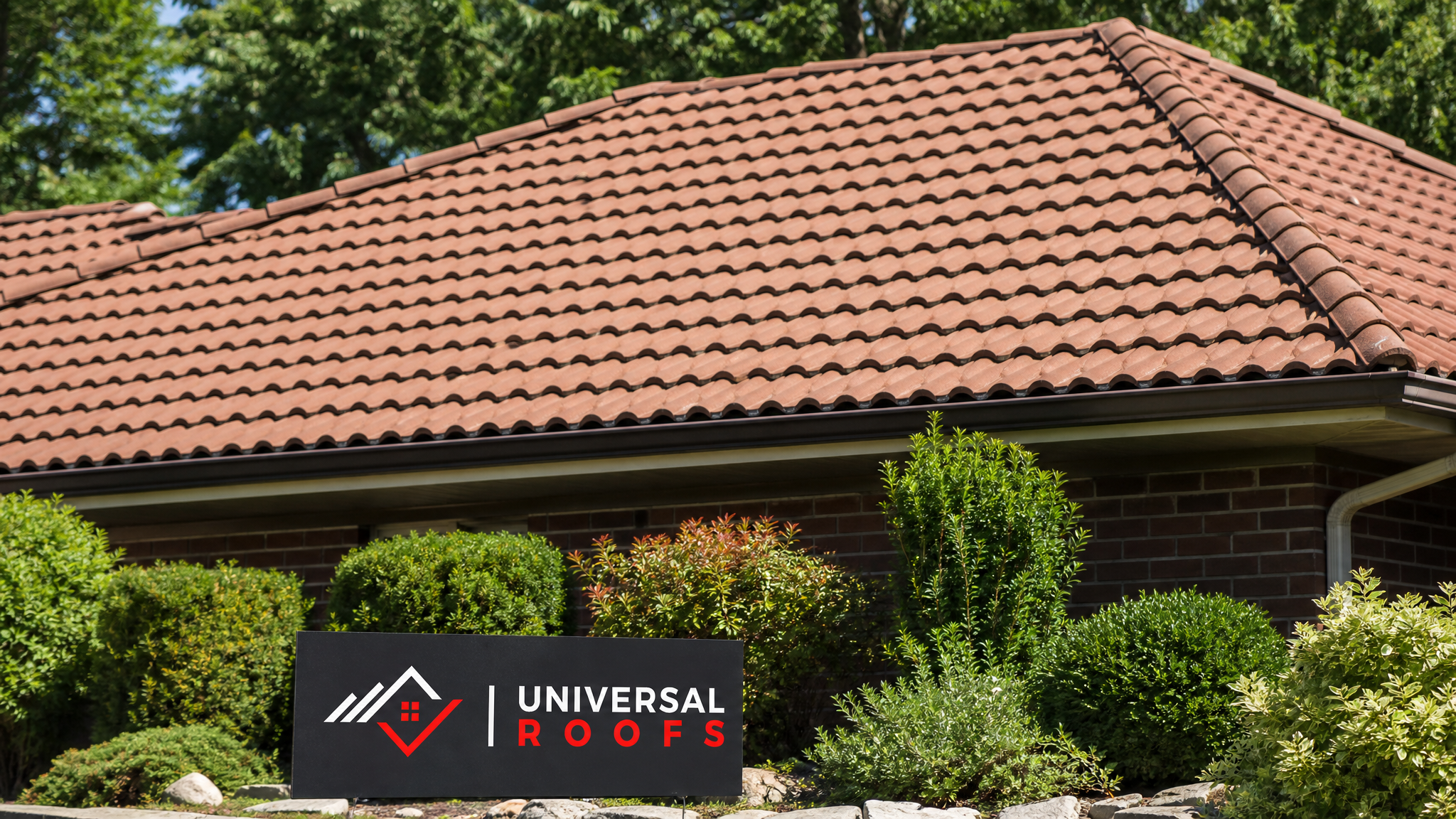
Why Sun and Heat Change the Rules for Tile Roof Repair
Concrete and clay tiles are dense, mineral-based materials that absorb and retain heat throughout the day. On a clear July afternoon in Toronto, a dark-coloured tile roof can reach surface temperatures 30 to 40 degrees hotter than the surrounding air, meaning a 30-degree Celsius day can produce a roof surface pushing 65 to 70 degrees. That heat changes the physical behaviour of nearly everything involved in a repair.
Tiles themselves expand slightly in heat, tightening their overlap with neighbouring pieces. Sealants and adhesives that are rated for a wide temperature range can still skin over too fast in direct sun, trapping solvents underneath and weakening the bond. Underlayment membranes, especially older asphalt-saturated felt, lose flexibility as UV exposure accumulates year after year, so a technician who presses a knee into hot felt can tear it even when it looked intact from the ground. And the roofer’s own tools, from caulking guns to sealant tubes, perform differently when the material inside them is already warm from sitting in a truck bed.
None of this means tile roof repair is impossible in summer. It means the approach has to change: work in the cooler parts of the day, use materials rated for high-heat application, and inspect more carefully before starting rather than assuming a tile that looks fine from the ground is actually fine underneath.
Tip One: Schedule Repairs for Early Morning or Late Afternoon
The single most effective adjustment for summer tile roof repair is timing. Roofing crews who work through the peak heat of midday face a roof surface that is not only hotter but also expanding and contracting faster, which makes precise tile alignment more difficult. Scheduling work between 7 a.m. and 10 a.m., or after 5 p.m. once the sun has moved lower in the sky, keeps surface temperatures manageable and gives sealants and adhesives a realistic window to cure before the next heat spike.
Morning work has an added benefit: overnight cooling brings tiles back to a more neutral size, so a technician can lift and reposition a cracked or slipped tile with less resistance from the tightly expanded tiles around it. By late afternoon, after a full day of sun, that same tile may have shifted just enough to bind against its neighbours, making removal riskier and increasing the chance of cracking an adjacent, previously undamaged tile.
For homeowners hiring a contractor, ask directly what time of day the crew plans to work. A reputable roofing company will already be planning around the heat, particularly for larger jobs that touch flashing, underlayment, or a full section replacement rather than a single tile swap.
Tip Two: Use Heat-Rated Sealants, Adhesives, and Underlayment
Not every roofing sealant is designed to perform well when applied to a hot substrate. Standard-grade roofing cements and mastics can be formulated for a narrower application-temperature range, and applying them to a tile surface that has already reached 50 or 60 degrees Celsius can cause the product to skin over on the outside while remaining uncured underneath. That trapped, uncured layer is a common cause of repairs that look fine for a few weeks and then fail once autumn temperature swings begin.
Look for products explicitly rated for high-heat or “summer grade” application, and for underlayment, favour synthetic membranes over older asphalt-felt products. Synthetic underlayment resists UV degradation far better, stays more flexible in heat, and is less likely to tear when a technician has to walk or kneel on it during a repair. If your roof still has original felt underlayment from a build more than 15 years old, a tile repair is often the right moment to have a contractor check its condition, since felt that has baked through several Toronto summers may already be too brittle to trust.
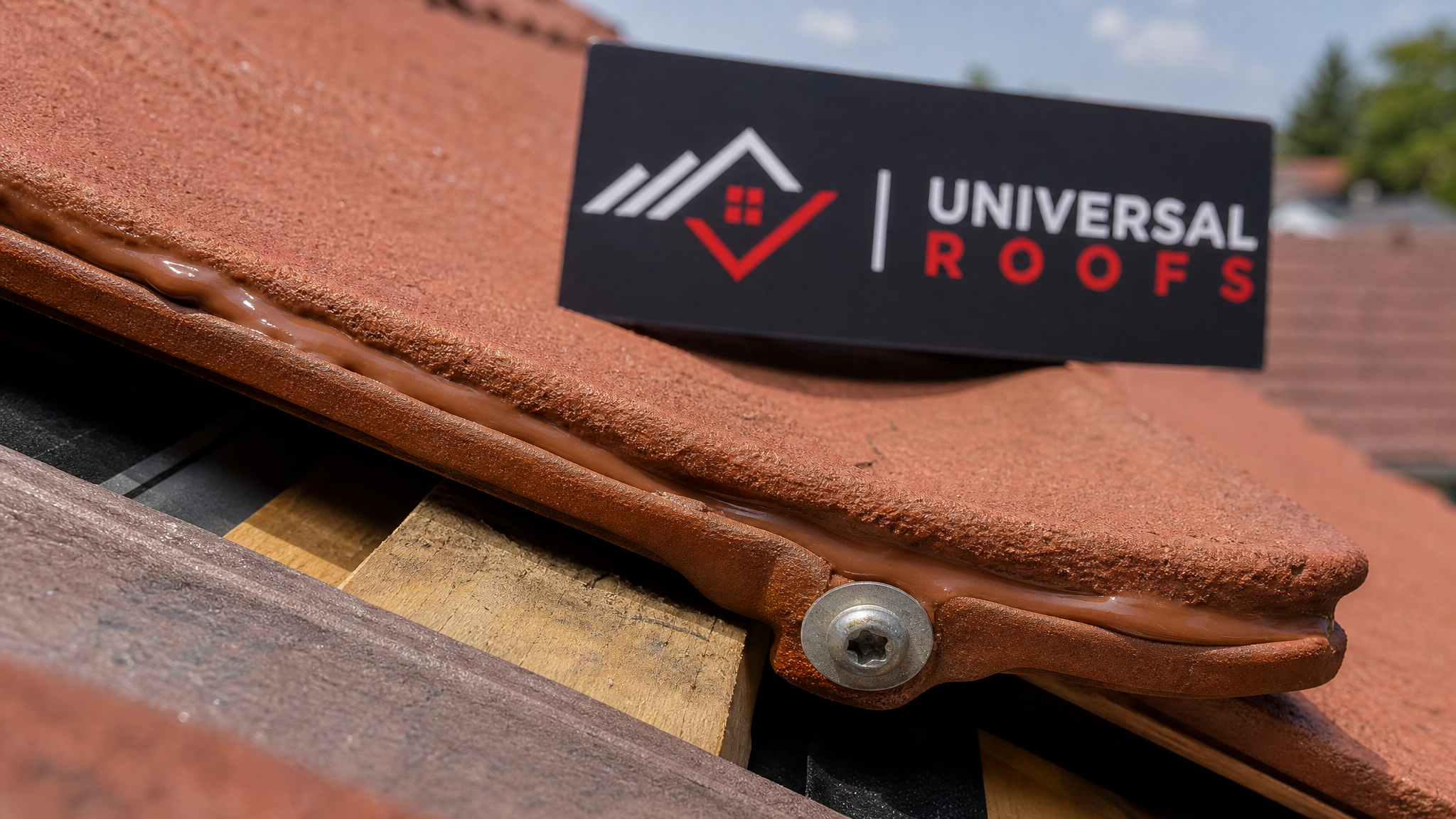
Fasteners matter too. Heat causes battens and counter-battens to dry and can loosen nail or screw fasteners over time. A proper repair reseats and, where needed, replaces fasteners rather than simply gluing a tile back into position, which is a shortcut that tends to fail within a year or two.
Tip Three: Protect the Crew and the Roof Deck During the Work
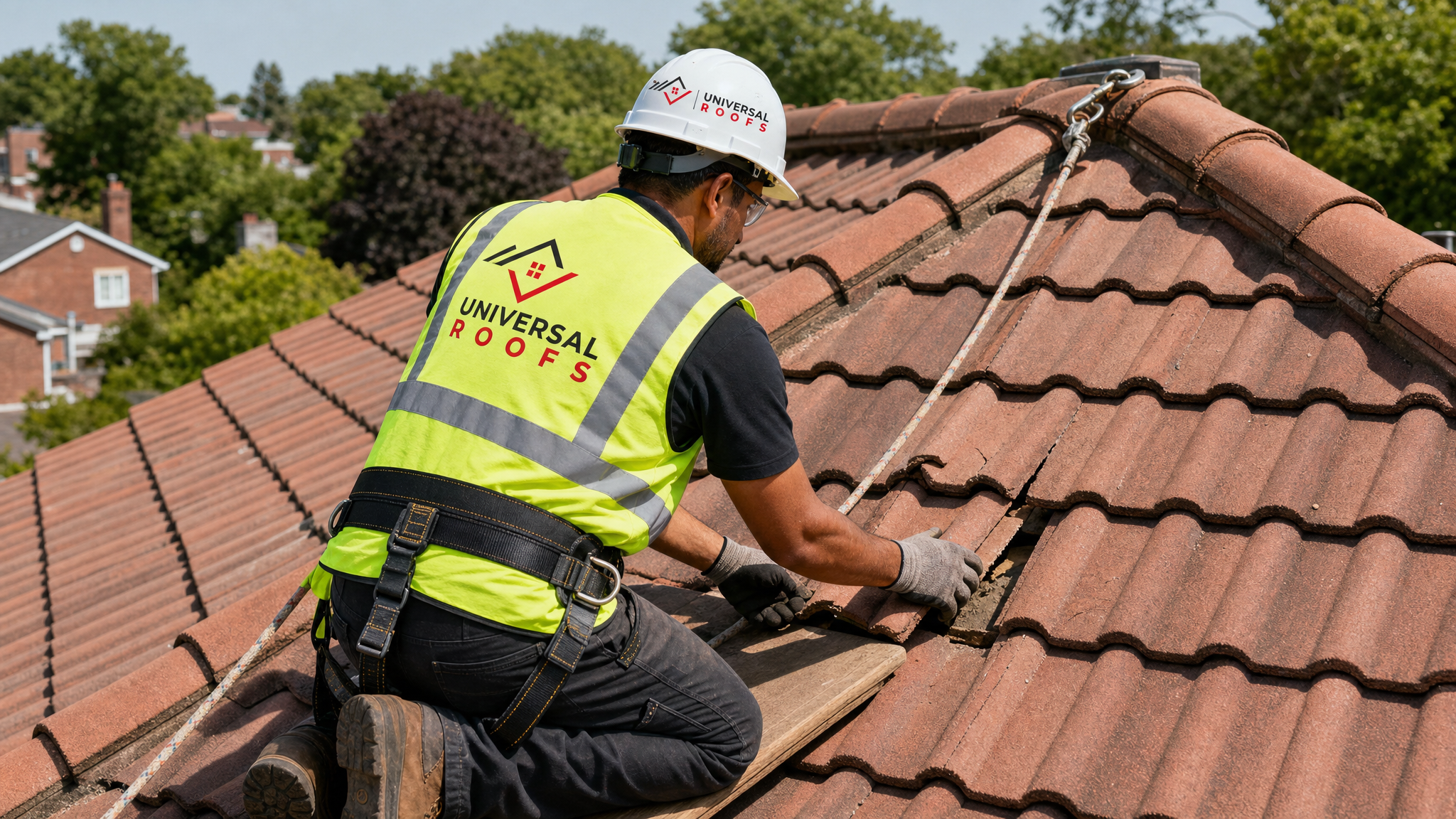
A tile roof repaired safely is one where the crew has taken precautions for both personal safety and roof protection. Standing directly on tile in bare or thin-soled footwear during a heat wave risks burns and also increases the chance of cracking tiles underfoot, since heat-softened components are more brittle to sudden point-loading than people expect. Crews should use padded walk boards or foam roof pads to distribute weight, work in short rotations with shade and hydration breaks, and avoid leaving tools, sealant tubes, or fastener boxes sitting in direct sun where their internal temperature can spike well past the surrounding air.
Fall protection remains essential regardless of season, and heat adds a layer of risk because fatigue sets in faster. A harness and secured rope anchor point are non-negotiable for any repair above a single storey, and reputable contractors will not skip this step even for what looks like a quick, five-minute tile swap.
For homeowners considering a DIY repair, this is the tip that most often gets skipped, and it’s the one with the highest consequences. If your roof pitch is anything beyond a gentle slope, or if the repair is anywhere near a hip, valley, or ridge, it’s worth getting a professional roof repair assessment rather than risking a fall on a hot, potentially slippery tile surface.
Common Summer Tile Damage and How to Diagnose It
Before any repair begins, an accurate diagnosis prevents wasted effort and wasted material. Summer tile damage in the GTA tends to fall into a few recurring categories, each with a slightly different repair approach.
Hairline cracks often develop from thermal cycling, where a tile expands under midday heat and contracts overnight, repeating that stress daily for months. These cracks may not leak immediately but will widen over subsequent seasons, including the freeze-thaw cycles of a Toronto winter, so a crack spotted in July is best addressed before autumn rather than left until it becomes an active leak. Slipped tiles usually point to a fastener or batten issue rather than the tile itself being defective, and simply resetting the tile without addressing the underlying fastener will lead to a repeat slip. Faded or chalky tile surfaces, particularly on concrete tile, are a sign of UV degradation in the surface coating; this is largely cosmetic in the short term but can accelerate porosity and water absorption over many years. And granular loss or surface pitting near valleys and hips often indicates water has been sitting in these low points longer than it should, a common issue when gutters are undersized for the roof’s drainage volume.
| Damage Type | Likely Cause | Urgency | Typical Repair |
|---|---|---|---|
| Hairline cracking | Thermal expansion/contraction cycling | Moderate — address within one season | Tile replacement, sealant at hairline if isolated |
| Slipped or displaced tile | Loosened or corroded fastener, dried batten | High — exposes underlayment to UV and moisture | Reset tile, replace fastener, inspect batten |
| Chalky or faded surface | UV coating breakdown over time | Low — cosmetic, monitor porosity | Surface sealant coating, monitor for absorption |
| Granular loss near valleys | Standing water, undersized drainage | High — active leak risk | Tile replacement plus valley flashing check |
| Brittle, cracking underlayment (visible at edges) | Accumulated UV exposure over many summers | High — compromises entire water barrier | Section or full underlayment replacement |
DIY Repair vs. Calling a Professional
A single cracked or slipped tile on an easily accessible, low-pitch section of roof is sometimes within reach of a confident, careful homeowner, provided proper fall protection and a cool-hours schedule are used. However, tile roofing has a few characteristics that make it less forgiving of DIY mistakes than asphalt shingle repair. Tiles are heavier and more brittle underfoot, matching an exact profile and colour for a replacement piece can be difficult if the original product line has been discontinued, and the underlayment beneath tile is often older material that was never designed to be walked on repeatedly.
The table below compares the two paths across the factors that matter most for a summer repair.
| Factor | DIY Repair | Professional Repair |
|---|---|---|
| Tile matching | Limited to what’s available at retail; older profiles hard to source | Access to salvage tile, distributor networks, and profile matching |
| Underlayment inspection | Rarely checked unless damage is already visible | Standard part of a proper repair scope |
| Fall protection equipment | Often skipped or improvised | Harness, anchor points, and rope standard on every job |
| Warranty on the repair | None | Workmanship warranty typically included |
| Cost for a single tile | Low — cost of one tile and sealant | Moderate — includes labour and inspection |
| Risk of collateral cracking | Higher — inexperience with heat-expanded tiles | Lower — trained technique for hot conditions |
If your roof is more than 15 years old, has multiple damaged tiles rather than one isolated piece, or shows any sign of underlayment failure, it’s worth having a professional assess whether a targeted repair is enough or whether a broader roof replacement conversation makes more financial sense over the next five to ten years.
How Toronto’s Climate Shapes a Tile Roof’s Lifespan
Tile roofing performs well across a very wide range of climates, but the GTA presents a specific combination of stresses: intense summer UV and heat, followed by a freeze-thaw winter that can see dozens of cycles between zero and negative temperatures each season. A repair done poorly in July, using the wrong sealant or skipping a fastener replacement, often doesn’t show its true failure until the following winter, when trapped moisture freezes, expands, and cracks the tile or lifts the patch entirely.
This is why summer repairs on tile roofs benefit from a slightly more thorough approach than the visible damage alone might suggest. A technician who is already on the roof to fix one cracked tile should also check the surrounding fasteners, the condition of nearby flashing around any penetrations, and whether the attic below shows any sign of heat buildup or moisture that might point to a ventilation issue. Proper attic ventilation reduces the temperature differential between the underside of the roof deck and the outside air, which in turn reduces the thermal cycling stress placed on tiles and underlayment from below as well as above.
Homeowners in Toronto, Mississauga, Brampton, Vaughan, Markham, and Oakville all face broadly similar seasonal stresses, though microclimates near the lake shore can see slightly different humidity patterns that affect how quickly organic growth develops on shaded tile sections. If you’re unsure how your specific neighbourhood’s conditions affect your roof, a local inspection is more useful than general guidance, since drainage, tree cover, and prevailing wind direction all vary block to block.
Materials and Tools That Perform Better in Summer Conditions
Choosing the right materials up front prevents a repair from needing to be redone within a year. For sealants, silicone-based and high-temperature-rated polyurethane products generally outperform standard asphalt-based roofing cement in summer application, since they cure more predictably even when applied to a warm substrate and remain flexible across a wider temperature swing once cured. For replacement tiles, matching not just the colour but the exact profile and thickness matters more in heat-prone applications, since a slightly mismatched tile can create a gap that allows water intrusion during a summer thunderstorm, which in the GTA often arrives suddenly and heavily after a multi-day heat stretch.
For underlayment repairs or replacement during a larger job, self-adhered synthetic membranes rated for high-temperature roof decks are worth the modest price premium over older felt products. These membranes also tend to handle the humidity that follows a Toronto summer storm better, resisting the mould and mildew growth that can develop when moisture gets trapped against older, more absorbent felt.
| Material | Summer Performance | Best Use Case | Approximate Longevity |
|---|---|---|---|
| Silicone-based sealant | Cures reliably in heat, stays flexible | Hairline cracks, flashing edges | 10-15 years |
| High-heat polyurethane adhesive | Strong bond even on warm tile surfaces | Reseating slipped tiles | 10-12 years |
| Standard asphalt roofing cement | Prone to skinning over before full cure in heat | Cooler-season repairs only | 5-8 years |
| Synthetic underlayment membrane | UV-resistant, stays flexible, walkable | Underlayment repair or replacement | 25-30 years |
| Asphalt-saturated felt underlayment | Becomes brittle after repeated summer UV exposure | Legacy installations, budget replacements | 10-15 years |
When a Repair Isn’t Enough: Signs You Need a Larger Assessment
Some tile roofs reach a point where patching individual tiles no longer addresses the underlying problem. If more than 10 to 15 percent of the roof surface shows cracking, chalking, or granular loss, if the underlayment is visibly brittle or torn in multiple locations, or if you’re seeing recurring leaks in the same general area despite repeated tile-level fixes, the issue is likely below the tile layer rather than in the tiles themselves.
In these cases, a full inspection that includes lifting a sample section of tile to examine the underlayment and batten condition gives a much clearer picture than continuing to replace surface tiles one at a time. This is also the point where it makes sense to review whether a full roof replacement is more cost-effective than an ongoing cycle of repairs, particularly if your tile roof is approaching or past the 30-year mark. While you’re having that conversation, it’s also worth having any skylights or skylight flashing checked, since these penetrations are common failure points that get overlooked during tile-focused repairs but fail under the same heat and UV stress as the surrounding tile.
Working With a Professional Roofing Contractor
For homeowners who decide a professional repair is the right call, a few questions help separate a contractor who understands summer tile work from one who treats it the same as any other season. Ask whether the crew schedules tile work around the cooler parts of the day, what sealant and underlayment products they use and whether those products are rated for high-heat application, and whether their process includes checking fasteners and surrounding tiles rather than only replacing the single damaged piece that prompted the call.
It’s also reasonable to ask about the contractor’s safety protocol for hot-weather roof work, including hydration breaks, fall protection, and how they protect the roof deck itself from foot traffic damage during the hottest hours. A company that has been doing this work across the GTA for years, through many summers of exactly these conditions, should be able to answer these questions without hesitation.
Universal Roofs has served homeowners across Toronto, the Peel Region, York Region, Halton Region, and Durham Region since 2005, and tile roof repairs during summer heat are a routine part of that work. You can read how past clients describe their experience on our reviews page, or check our FAQ page for answers to more general roofing questions before booking an assessment.
Maintaining Your Tile Roof Through the Rest of Summer
Once a repair is complete, a bit of ongoing attention through the remainder of the summer season helps confirm the fix is holding and catches any new issues early. A quick visual check from the ground after any major thunderstorm, looking for shifted or missing tiles, costs nothing and takes only a few minutes. Keeping gutters clear reduces the chance of water backing up under lower courses of tile during heavy summer downpours, and trimming back any overhanging tree branches reduces both debris accumulation and the abrasion that branches can cause against tile surfaces during windy weather.
If your home has a flat roofing section, such as over a garage or rear addition, it’s worth having that checked at the same time, since flat sections face their own heat-related stresses, including membrane softening and ponding water that can accelerate degradation. A single seasonal inspection that covers both the tile roof and any flat sections is more efficient than treating them as separate projects, and it gives you a complete picture of your home’s roofing health heading into autumn.
What are the most essential tips for tile roof repair in sun and heat?
Can tile roof repair be done safely during a Toronto heat wave?
Why do tiles crack more often in summer heat?
Is it better to repair or replace a tile roof that has multiple cracked tiles?
How much does tile roof repair typically cost in the GTA?
What sealant works best for tile roof repairs in hot weather?
Need Help With 3 Essential Tips for?
Whether you have a single cracked tile or a roof section showing multiple signs of summer wear, the team at Universal Roofs has the experience to diagnose the problem correctly and repair it using materials suited to Toronto’s heat and freeze-thaw cycles.
Call us today at (416) 732-2421 or request a free inspection to get started.
Universal Roofs proudly serves Toronto, Mississauga, Brampton, Vaughan, Markham, Oakville and the GTA since 2005.