
Every winter, Toronto homeowners watch thick icicles form along their eavestroughs and assume it is simply a normal part of a Canadian winter. In reality, those icicles are often the first visible sign of a much bigger problem happening above the ceiling. Learning how to prevent roof leaks and ice dams with insulation is one of the most cost-effective things a GTA homeowner can do, and it starts long before the first snowfall. At Universal Roofs, we have spent nearly two decades diagnosing why roofs leak in winter, and in the overwhelming majority of cases, the root cause is not the shingles at all. It is what is happening in the attic below them.
This guide explains exactly how ice dams form, why insulation and ventilation are the real solution, and what a properly protected Toronto attic should look like heading into the cold season.
What Causes Ice Dams on Toronto Roofs
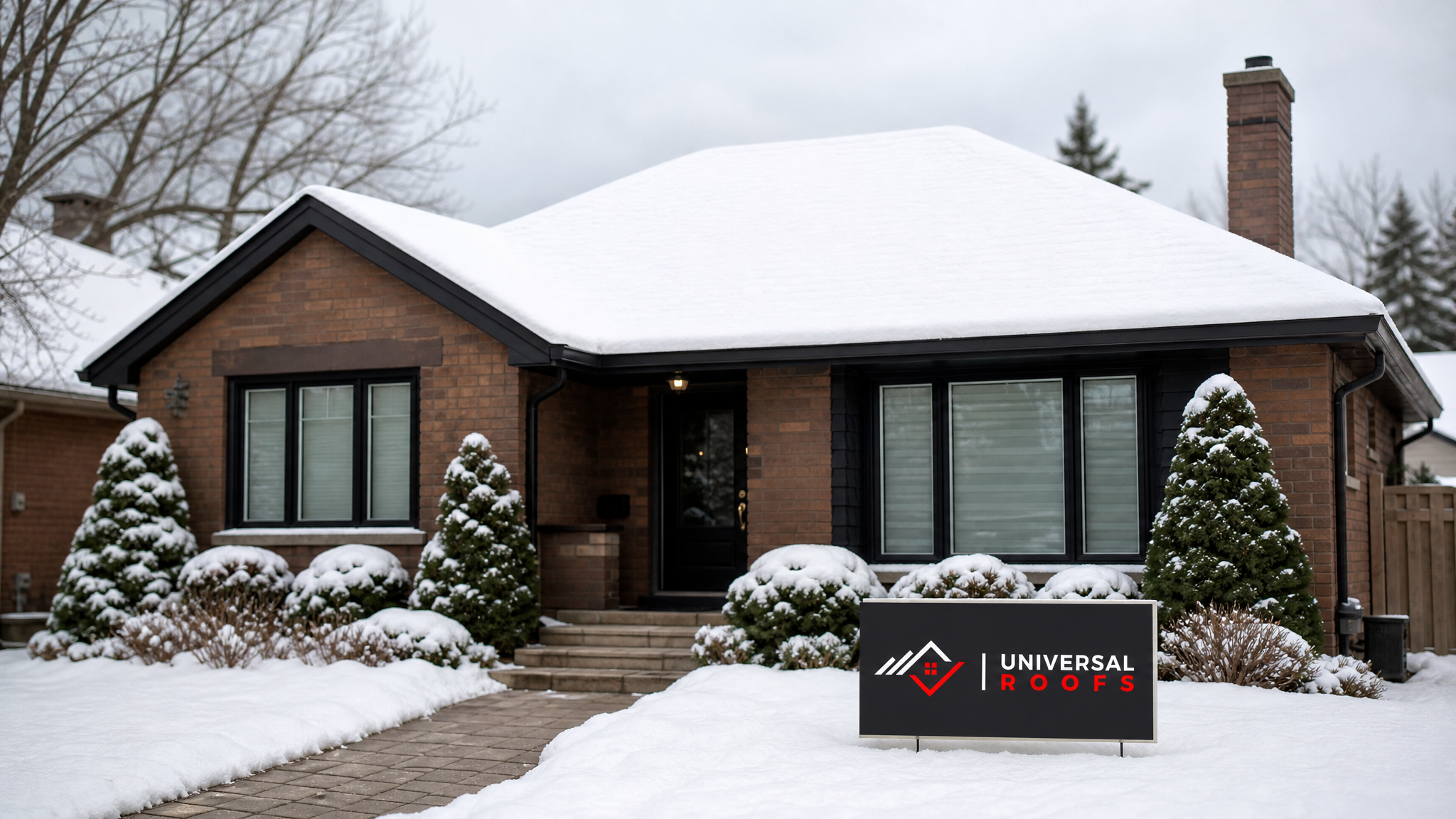
An ice dam forms through a simple but destructive cycle. Heat escapes from the living space into the attic, warms the underside of the roof deck, and melts the snow sitting on the upper part of the roof. That meltwater runs down the slope until it reaches the cold overhang above the eavestroughs, where there is no heat loss underneath. There, it refreezes into a ridge of ice. As the cycle repeats night after night, the ridge grows thicker, eventually damming water behind it. That trapped water has nowhere to go but up and under the shingles, straight into your attic and ceiling.
The technical term for this is thermal bridging combined with poor attic ventilation, but homeowners simply experience it as a leak that appears only in the coldest months. If you want to prevent roof leaks and ice dams with insulation, you have to stop the heat loss that creates the melt-freeze cycle in the first place, rather than just chipping away at the ice each spring.
Toronto’s climate makes this especially common. Freeze-thaw cycles through December, January and February create the ideal conditions for ice dams, particularly on older homes in neighbourhoods like the Beaches, Leaside and Etobicoke, where attic insulation levels were often installed decades ago to standards that no longer meet today’s building code minimums.
Why Insulation Is the Real Fix, Not Just Ice Removal
Many homeowners respond to ice dams by hiring someone to steam or chip the ice off the roof edge each winter. That approach treats the symptom, not the cause, and it needs to be repeated every time temperatures swing. Proper attic insulation work addresses the actual source of the problem: uncontrolled heat loss from the living space into the attic cavity.
When an attic is properly insulated and air-sealed, the attic space stays close to the outdoor temperature. Snow on the roof melts slowly and evenly from the sun and ambient air, not from escaping furnace heat, so there is no meltwater rushing down to refreeze at the eaves. This is why you will notice on a well-insulated home that snow tends to sit evenly across the entire roof slope for days, rather than melting near the ridge while staying frozen at the edges.
| Ice Dam Response Method | Addresses Root Cause? | Typical Cost Range | How Often Needed |
|---|---|---|---|
| Steaming or chipping ice off roof edge | No | $300 – $800 per visit | Every major freeze-thaw event |
| Heat cables along eaves | Partially | $500 – $1,500 installed | One-time, plus electricity cost each winter |
| Attic insulation top-up | Yes | $1,200 – $3,500 | One-time, lasts 20+ years |
| Full insulation and ventilation upgrade | Yes | $2,500 – $6,000 | One-time, lasts life of roof |
As the table shows, only the insulation-based approaches actually stop ice dams from forming rather than reacting to them after the fact. A one-time investment in proper attic performance almost always costs less over a five-year span than repeated emergency ice removal calls.
The Role of Attic Ventilation Alongside Insulation
Insulation alone is not the whole story. A cold attic needs a continuous flow of outdoor air moving from the soffits at the eaves up through the roof to the ridge or roof vents. This ventilation carries away any residual heat and moisture, keeping the entire underside of the roof deck at a consistent, cold temperature during winter.
We frequently find attics where insulation has been added over the years but has drifted or been packed directly against the soffit vents, blocking the intake airflow completely. In that scenario, even generous insulation cannot fully prevent ice dams, because trapped heat and humidity still build up near the ridge. Correct baffles (sometimes called vent chutes) must be installed at every soffit bay to hold insulation back and preserve a clear air channel.
A balanced system needs roughly equal intake at the soffits and exhaust at the ridge or roof vents. When this balance is off, homeowners sometimes see ice dams form in new locations even after insulation top-ups, which is why a full attic assessment matters more than simply adding more loose-fill material.
Signs Your Attic Insulation Needs Attention
Several warning signs point to inadequate attic insulation before a single leak ever shows up on your ceiling. Homeowners in the Toronto area should watch for the following during winter months:
- Icicles forming consistently along the eavestroughs after every snowfall
- Uneven snow melt patterns, with bare patches near the ridge and thick snow at the edges
- Visible frost or condensation on the underside of the roof deck when viewed from the attic hatch
- Rooms below the attic that feel noticeably colder or draftier in winter
- Higher than expected heating bills compared to similarly sized homes nearby
- Musty odours in upstairs closets, which can indicate trapped moisture in the insulation
If any of these sound familiar, it is worth having a professional inspect both the insulation depth and the ventilation pathways before committing to any repairs on the roof itself. In many cases, what looks like a roofing problem is actually an attic performance problem, and our roof repair technicians always check the attic first for exactly this reason.
How Much Attic Insulation Do Toronto Homes Actually Need
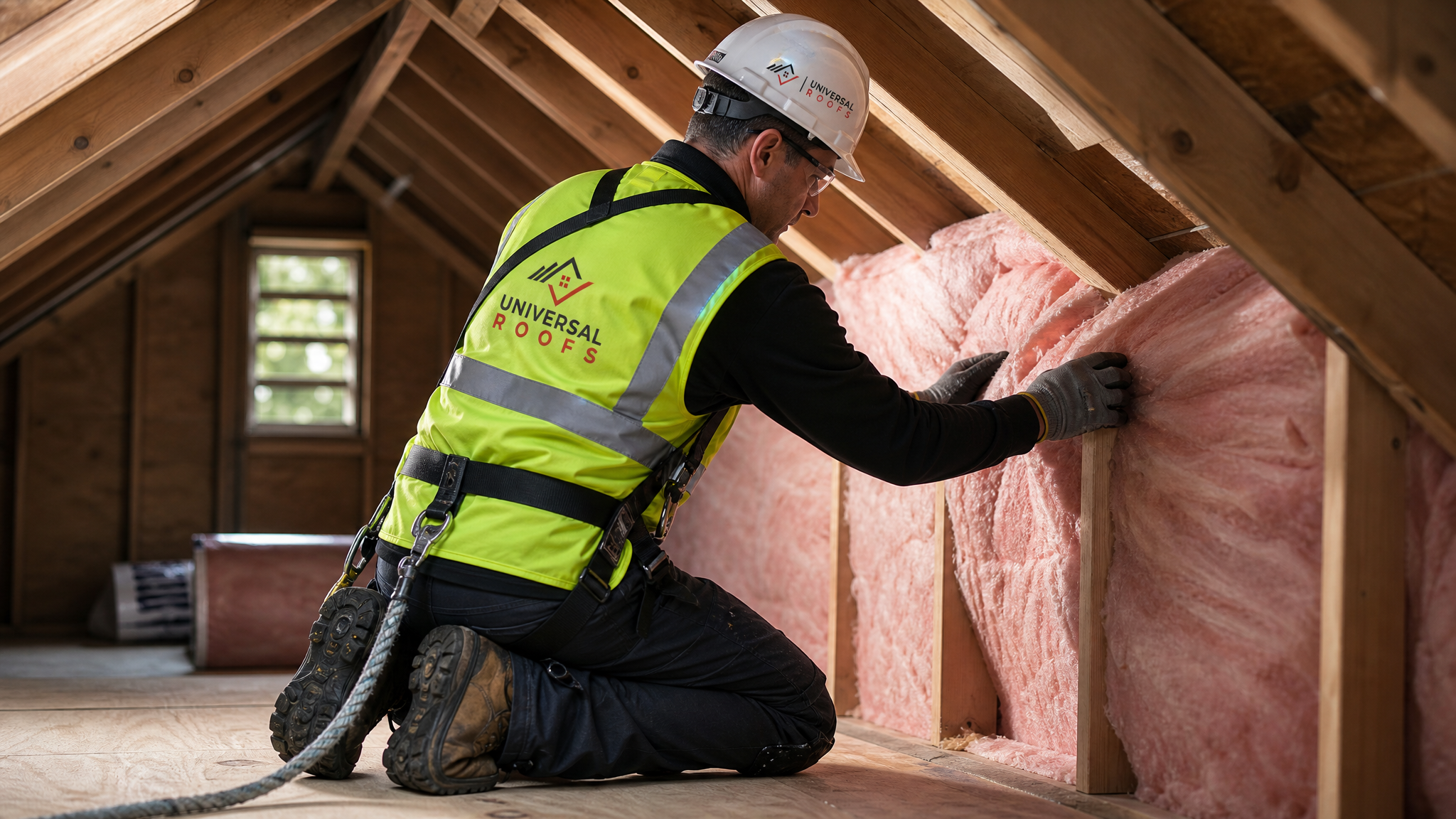
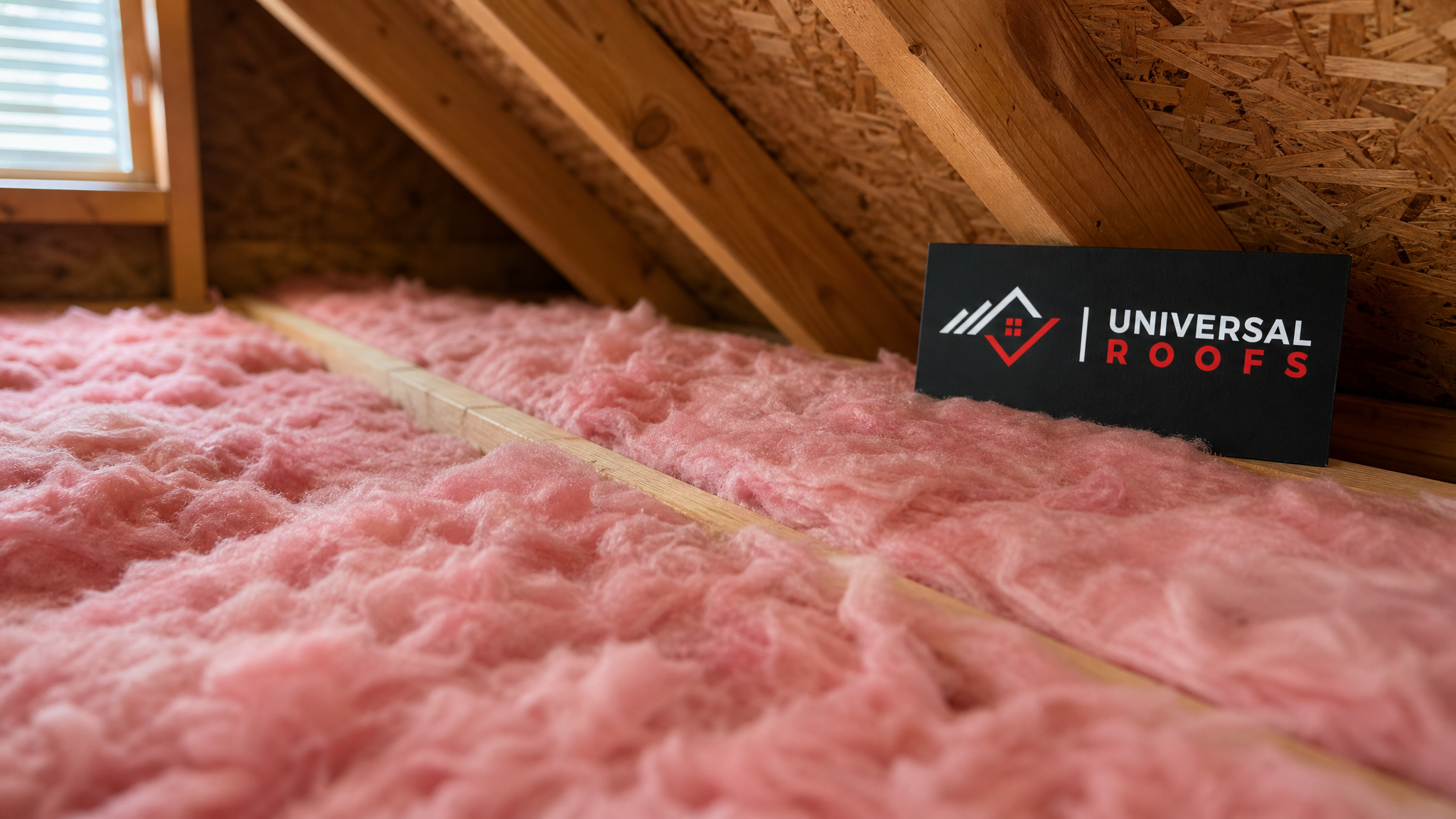
Ontario’s building code recommends an insulation value of approximately R-60 for attics in most residential construction in the Toronto climate zone, which typically translates to roughly 450 to 500 millimetres of loose-fill fibreglass or cellulose insulation, depending on the product used. Many older homes built before the 1990s have only R-20 to R-30 in the attic, sometimes less, leaving them significantly under-protected against both heat loss and the resulting ice dam risk.
| Home Age | Typical Existing R-Value | Recommended Target | Ice Dam Risk If Untouched |
|---|---|---|---|
| Pre-1980 | R-12 to R-20 | R-60 | Very High |
| 1980s to 1990s | R-20 to R-30 | R-60 | High |
| 1990s to 2000s | R-30 to R-40 | R-60 | Moderate |
| 2010s or newer | R-50 to R-60 | R-60 | Low |
Homes with flat or low-slope roofs, common on additions and some bungalow-style properties across the GTA, face a slightly different insulation strategy since there is less attic cavity depth to work with. If your property includes a flat roofing section, insulation upgrades usually need to be combined with the roofing membrane work itself, since the insulation often sits directly beneath the roof deck rather than in an open attic space.
How Skylights and Roof Penetrations Affect Ice Dam Risk
Every penetration through the roof deck, including skylights, plumbing stacks, and bathroom exhaust vents, is a potential weak point in your attic’s thermal envelope. Skylights in particular need careful air sealing and insulation detailing around the shaft, because warm, moist air from the room below can escape around a poorly sealed skylight well and accelerate localized ice dam formation directly above it.
If your home has existing skylights, it is worth having the surrounding insulation and flashing inspected as part of any attic upgrade. We regularly find that ice dams forming in one specific spot on a roof, rather than along the entire eave, trace back to a poorly insulated skylight shaft or an exhaust fan duct that vents warm bathroom air directly into the attic instead of outside through the roof or wall.
Bathroom and kitchen exhaust fans should always terminate outside the building envelope, never simply dump into the attic space. This single detail is one of the most common insulation-adjacent mistakes we find during attic inspections across Toronto and Mississauga homes.
What Happens When Ice Dams Are Left Untreated
Ignoring ice dams rarely makes them go away, and the damage compounds each winter. Meltwater trapped behind an ice ridge does not just sit on the roof surface. It works its way under shingles, through the underlayment, and into the roof deck itself, then continues into insulation, drywall, and framing below.
| Damage Stage | Visible Signs | Estimated Repair Cost |
|---|---|---|
| Early water intrusion | Faint ceiling staining, peeling paint | $200 – $600 |
| Insulation saturation | Musty smell, reduced attic R-value | $800 – $2,000 |
| Drywall and framing damage | Sagging ceiling, visible mould | $2,000 – $6,000 |
| Structural rot in roof deck | Soft spots, shingle displacement | $5,000+ |
Because the damage happens slowly and mostly out of sight, many homeowners do not realize the extent of the problem until a ceiling stain appears or a full roof replacement becomes necessary years earlier than it should have. Catching the insulation and ventilation issue early is dramatically less expensive than repairing the water damage it eventually causes.
Our Process for Assessing and Fixing Attic Insulation
When our team is called out to prevent roof leaks and ice dams with insulation, we follow a consistent process rather than guessing at a fix. First, we inspect the attic directly, measuring existing insulation depth in multiple locations and checking for compression, moisture staining, or displaced material near the soffits. Second, we check ventilation pathways, confirming soffit vents are clear and baffles are correctly installed, and that ridge or roof vents provide adequate exhaust.
Third, we identify any bypass points, gaps around pot lights, attic hatches, plumbing stacks, or wiring penetrations, where warm air is leaking directly into the attic and undermining the insulation’s effectiveness. Air sealing these bypasses is often just as important as the insulation itself. Finally, we top up or replace insulation to meet the recommended R-value for the Toronto climate zone, and correct any ventilation deficiencies found along the way.
This full-picture approach is why homeowners across the GTA trust Universal Roofs for insulation work rather than a quick patch job. You can read about other homeowners’ experiences with our attic and roofing teams on our reviews page.
Insulation Upgrades and Long-Term Value for Your Home
Beyond preventing ice dams, proper attic insulation delivers year-round benefits that many homeowners do not anticipate when they first call about a winter leak. Summer cooling costs typically drop as well, since the same insulation that keeps furnace heat inside during winter also keeps solar heat gain out of the living space during warmer months. Consistent indoor temperatures from room to room, reduced strain on HVAC equipment, and a longer service life for the roofing system itself are all common outcomes.
Many homeowners are also surprised to learn that some attic insulation upgrades qualify for federal or provincial energy rebate programs, which can offset a meaningful portion of the project cost. We can advise on current program eligibility during an on-site assessment.
For homeowners throughout our Toronto service area, we recommend scheduling an attic assessment in late summer or early fall, well before the first cold snap arrives. This timing allows any insulation or ventilation corrections to be completed before ice dam season begins, rather than scrambling for emergency service once ice has already formed.
Frequently Asked Questions
How do you prevent roof leaks and ice dams with insulation?
What is the main cause of ice dams on a roof?
How much attic insulation is recommended for Toronto homes?
Can I add insulation myself to stop ice dams?
Do ice dams always mean I need a new roof?
When is the best time to insulate an attic against ice dams?
Need Help With Roof Insulation or Ice Dams?
If icicles, uneven snow melt, or a mysterious ceiling stain have you wondering about your attic’s condition, the team at Universal Roofs can provide a clear, honest assessment before winter turns a minor insulation gap into a costly repair.
Call us today at (416) 732-2421 or request a free inspection to get started.
Universal Roofs proudly serves Toronto, Mississauga, Brampton, Vaughan, Markham, Oakville and the GTA since 2005.