
If you have ever asked yourself why does proper maintenance prolong roof flashing lifespan, the short answer is that flashing fails long before the surrounding shingles or membrane do, and small, cheap interventions early on prevent expensive, disruptive failures later. Flashing is the thin metal or composite material installed at every roof transition point, chimneys, valleys, skylights, walls, vents, and roof edges, and it is the single most common source of roof leaks in the Greater Toronto Area. Shingles shed water across a flat plane, but flashing has to manage water at angles, corners, and penetrations where two different materials meet, which is inherently a weak point.
In our years serving homeowners across Toronto, Mississauga, Brampton, Vaughan, Markham, and Oakville, we have found that the roofs which last 20, 25, even 30 years without a major leak are almost never the ones with the thickest shingles or the most expensive underlayment. They are the ones where the homeowner or a contractor caught small flashing problems, a lifted edge, a hairline crack in sealant, a rust spot, before water ever made it past the surface. Proper maintenance does not just delay flashing failure; it fundamentally changes the failure mode from a slow, catastrophic leak that damages framing and drywall into a minor, inexpensive repair.
This guide explains exactly why maintenance has such an outsized effect on flashing lifespan, what a proper maintenance routine actually looks like, which materials hold up best in our climate, and how to tell the difference between a flashing problem you can monitor and one that needs immediate roof repair.
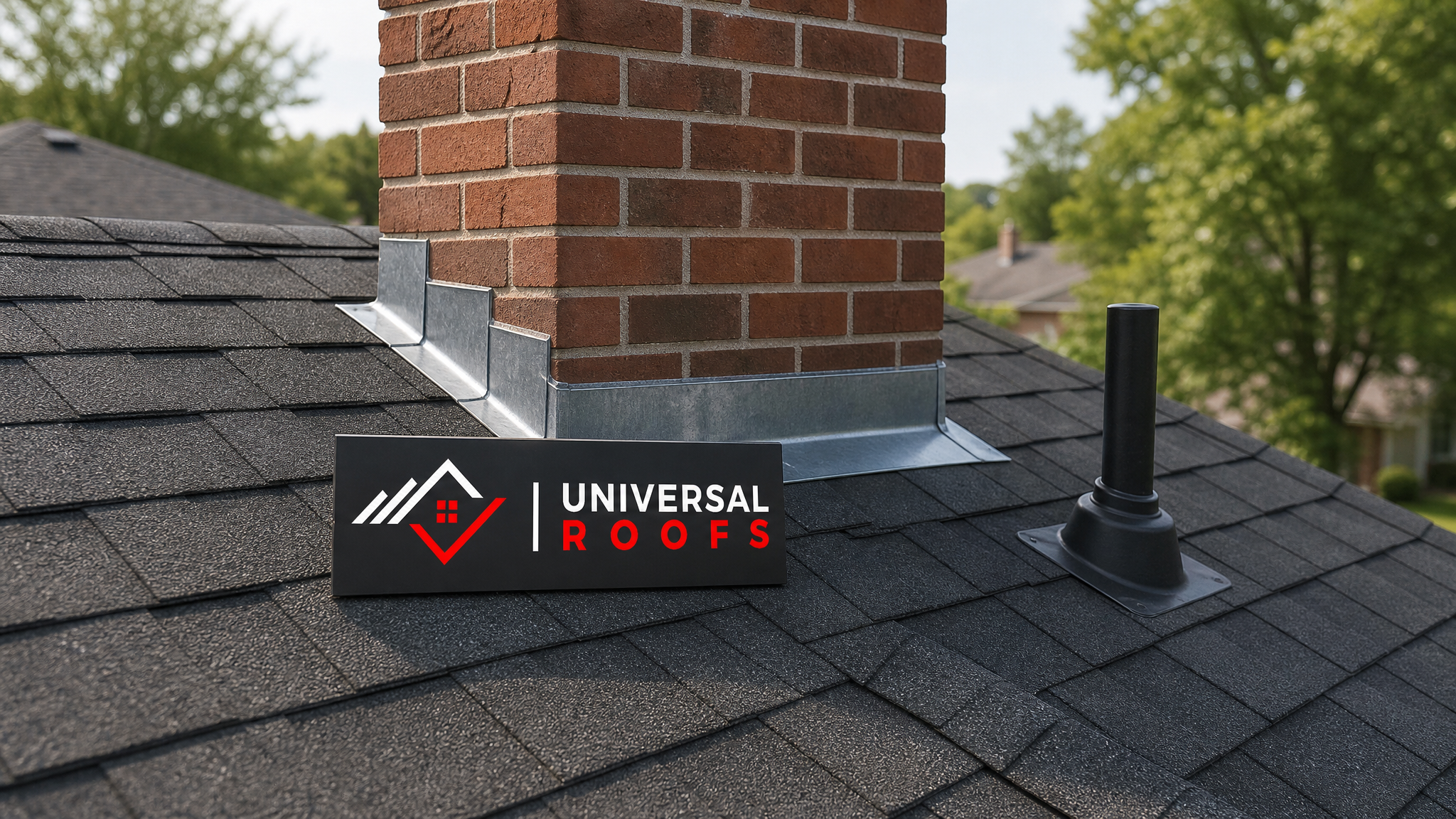
What Roof Flashing Actually Does and Why It Fails First
Flashing is typically formed galvanized steel, aluminum, or copper, sometimes rubber or modified bitumen on flat sections, installed to direct water away from joints and seams rather than relying on shingles alone. You will find it around chimneys (step flashing and counter-flashing), at roof valleys, around plumbing and exhaust vents, along walls where a roof meets siding, at skylight perimeters, and along drip edges at the eaves and rakes.
Flashing fails before the field of the roof for a few structural reasons. First, it is thinner than shingle material and more exposed to direct sun, wind uplift, and thermal cycling. Second, it relies on overlaps, seams, and sealant rather than a single continuous surface, and every seam is a potential entry point. Third, in the GTA specifically, our freeze-thaw cycle is brutal on flashing: water gets into a tiny gap in the fall, freezes and expands over a Toronto winter, widens the gap, then thaws in spring. Repeat that 15 or 20 times over a decade and even well-installed flashing degrades. Fourth, sealants and caulking, wherever used to supplement flashing, are the weakest link of all; most exterior roofing sealants only last three to seven years before they crack, shrink, or lose adhesion, long before the metal itself is compromised.
This is precisely why maintenance matters so much more for flashing than for shingles. Shingles degrade slowly and predictably from UV exposure over 20-plus years. Flashing can fail suddenly at a single seam, and once it does, water tracks along the roof deck and can travel metres from the actual entry point before showing up as a stain on your ceiling, which is why so many homeowners are shocked to learn a small chimney flashing gap has been leaking for over a year.
The Direct Link Between Maintenance and Flashing Lifespan
Explaining why does proper maintenance prolong roof flashing lifespan really comes down to four mechanisms:
1. Early detection stops corrosion before it perforates the metal. Galvanized steel flashing has a zinc coating that protects the steel underneath. Once that coating is scratched, worn, or chemically compromised (often by acidic runoff from moss or lichen), rust starts. Caught early, a rusting spot can be cleaned, primed, and coated. Left unaddressed, rust perforates the metal entirely within a few years, and at that point the flashing must be replaced rather than treated.
2. Resealing prevents water intrusion during the sealant’s useful life gap. Because sealant fails faster than metal, a maintenance routine that resealed exposed fastener heads and seam joints every three to five years keeps water out during exactly the window when the original installation sealant is degrading. Skip this, and water finds its way under the flashing during that gap, saturating the underlayment and deck below.
3. Debris removal prevents standing water and ice damming. Leaves, granules, and needles collect in valleys and around chimney bases. This debris holds moisture against the flashing constantly rather than allowing it to shed and dry, which accelerates corrosion and, in winter, contributes directly to ice dams that force water backward under the flashing and shingles.
4. Fastener maintenance prevents wind uplift and loosening. Nails and screws that hold flashing down back out slightly over years of thermal expansion and contraction. A maintenance check that re-drives or replaces lifted fasteners keeps the flashing mechanically secure, preventing the wind uplift events that peel back an entire flashing section during a Toronto windstorm.
Skip all four of these for a decade and even premium copper flashing on a well-built roof will underperform its expected lifespan. Do them consistently and 26-gauge steel flashing routinely outlasts its typical 20-year rating.
Typical Flashing Lifespan by Material, With and Without Maintenance
The table below reflects what we see across the roofs we inspect and service throughout the GTA. “Maintained” assumes an inspection and minor resealing roughly every two to three years; “neglected” assumes no attention until a visible leak appears.
| Flashing Material | Typical Lifespan, Maintained | Typical Lifespan, Neglected | Primary Failure Mode |
|---|---|---|---|
| Galvanized steel | 20 to 25 years | 8 to 12 years | Rust perforation at scratches and seams |
| Aluminum | 25 to 30 years | 12 to 15 years | Corrosion from contact with masonry mortar |
| Copper | 50-plus years | 25 to 30 years | Seam separation, rarely corrosion |
| Rubber or EPDM boot flashing | 10 to 12 years | 4 to 6 years | UV cracking and splitting around vent pipes |
| Modified bitumen (flat roof edges) | 15 to 18 years | 7 to 9 years | Seam lifting and granule loss |
The pattern across every material is identical: maintenance roughly doubles useful lifespan. That is not a marginal improvement; it is the difference between replacing your flashing once versus twice or three times over the life of the roof, along with everything that comes with premature replacement, torn-off shingles, disrupted attic insulation, and the labour cost of accessing the area again.
Building a Proper Flashing Maintenance Routine
A proper maintenance routine does not require climbing onto your own roof, which we do not recommend for safety reasons. It requires a predictable schedule of visual inspection and, where issues are found, prompt minor repair rather than a wait-and-see approach.
| Task | Recommended Frequency | Who Should Do It | What to Look For |
|---|---|---|---|
| Ground-level visual check with binoculars | Twice yearly, spring and fall | Homeowner | Lifted edges, visible rust streaks, gaps at chimney base |
| Attic interior inspection for water stains | Twice yearly, after heavy rain | Homeowner | Discolouration, damp insulation near penetrations |
| Professional roof and flashing inspection | Every 2 to 3 years, or after major storms | Licensed roofing contractor | Seam integrity, fastener condition, sealant condition, rust onset |
| Gutter and valley debris clearing | Twice yearly, spring and fall | Homeowner or contractor | Leaf buildup, granule accumulation, standing water |
| Sealant and caulking renewal at seams and fasteners | Every 3 to 5 years | Licensed roofing contractor | Cracked, shrunk, or missing sealant at joints |
| Post-storm inspection | Within 1 to 2 weeks of any major wind or hail event | Licensed roofing contractor | Lifted or displaced flashing, dented sections |
Note that a professional inspection is not the same as simply looking at the roof from the ground. A trained technician gets close enough to check individual seams, test fastener tightness, and identify the earliest stages of rust or sealant failure that are invisible from the driveway. If it has been more than three years since your last professional look, it is worth scheduling an assessment before the fall rain season, since problems found in summer are far cheaper to fix than the same problem discovered mid-winter with ice on the roof.
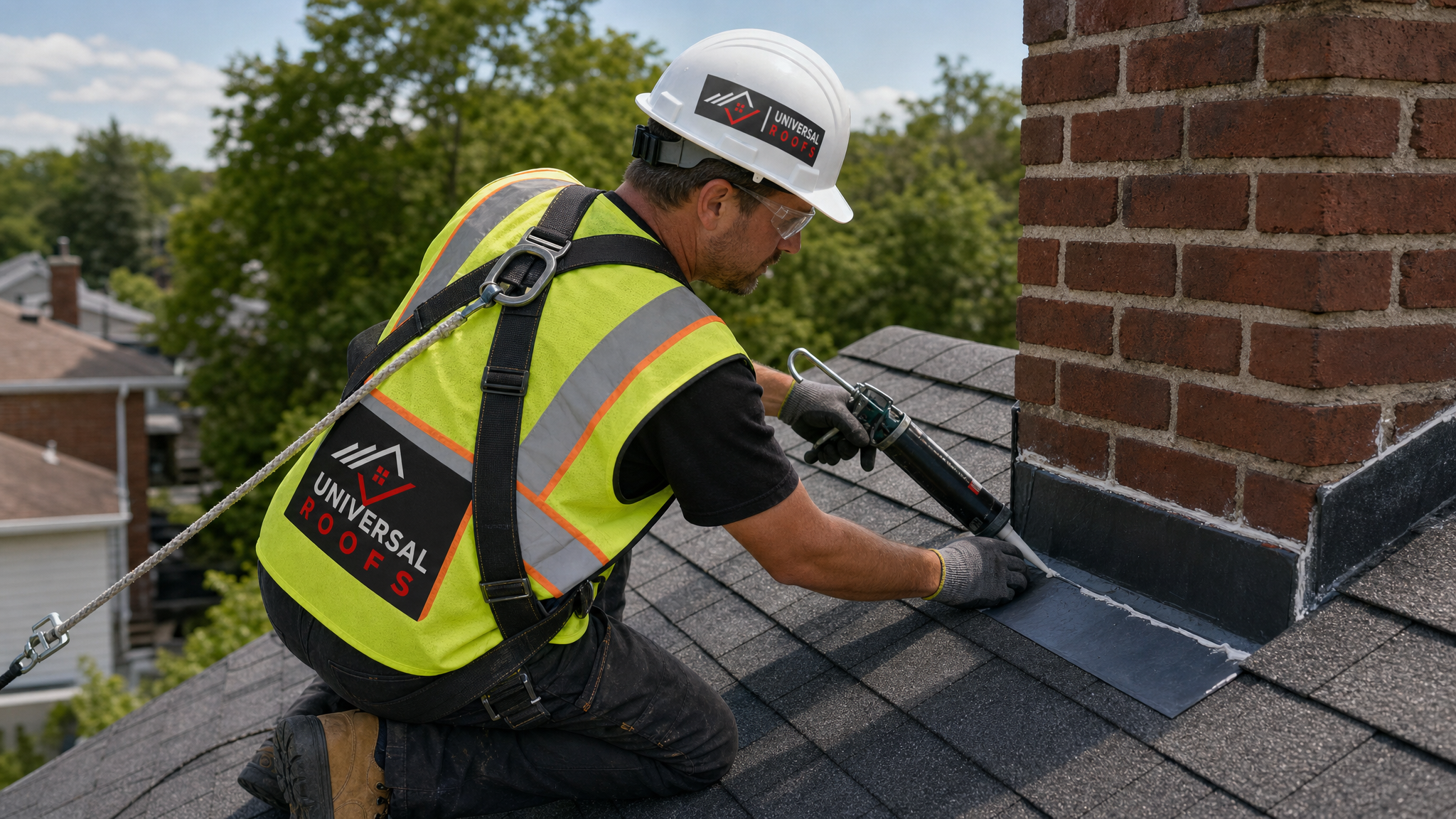
Warning Signs That Maintenance Alone Will Not Fix
Part of understanding why does proper maintenance prolong roof flashing lifespan is knowing where the line sits between “clean and reseal it” and “this section needs replacement.” Maintenance extends lifespan; it cannot reverse structural failure.
- Visible daylight or gaps at the base of a chimney or skylight from inside the attic means water has already been entering, not just at risk of entering.
- Rust that has created a hole, rather than surface discolouration, cannot be sealed over reliably; the metal itself has lost integrity.
- Flashing that has physically separated from the roof deck or pulled away from a wall, rather than simply having worn sealant, needs to be re-fastened and often replaced.
- Recurring leaks at the same spot after a repair usually indicate the flashing style itself was inadequate for the location, not a maintenance gap, and calls for a proper reinstallation.
- Widespread rust or corrosion across most flashing on the roof at once, rather than an isolated spot, generally means the whole flashing system has reached end of life simultaneously and a section-by-section patch approach will not be cost-effective.
If any of these apply to your roof, a maintenance visit will confirm it and a proper roof repair or targeted flashing replacement is the right next step rather than continued monitoring. In cases where the flashing failure has affected a large enough section of the roof deck or shingles, it may also be a signal to start planning for eventual roof replacement rather than repeated patchwork.
Flashing on Flat Roofs and Around Skylights Needs Its Own Attention
Flat and low-slope roofs handle flashing differently than sloped shingle roofs, and the maintenance stakes are arguably higher because water does not shed as quickly. On a flat roofing system, the perimeter flashing and any parapet wall flashing sit under near-constant ponding risk after rain, and a single lifted seam can allow water to pool directly against the vulnerable joint for hours rather than running off in minutes. We recommend flat roof flashing be checked at minimum once a year, ideally after the spring thaw when the effects of winter freeze-thaw cycling are most visible.
Skylights present a similar concentrated risk. The flashing kit around a skylight curb is one of the most leak-prone details on any roof because it combines a penetration, multiple seams, and often a slightly different expansion rate between the skylight frame and the roof deck. If your skylight is more than 12 to 15 years old and has never had its flashing inspected independently of a general roof check, it is worth having a technician confirm the seal is intact, particularly before considering a full skylight replacement. New installations benefit from the same discipline; proper skylights flashing work at the time of installation, followed by the same maintenance cadence as the rest of the roof, is what allows a skylight to go 20-plus years without a leak at the curb.
How Flashing Failure Impacts Your Attic and Home, Not Just the Roof Surface
Homeowners sometimes underestimate flashing maintenance because the visible symptom, a small stain or slightly discoloured shingle, looks cosmetic. In reality, water that gets past flashing travels along the roof deck and drips into the attic space, where it soaks insulation, reduces its effectiveness, and creates conditions for mould growth on framing members. Wet insulation loses much of its R-value, meaning a flashing leak you ignore for a season is not just a roofing problem, it becomes an energy efficiency and indoor air quality problem too.
In colder months, moisture in the attic from a flashing leak can also worsen ice damming at the eaves, compounding the original issue. This is why our technicians always check the attic interior during a flashing inspection, not just the exterior roof surface; the earliest and clearest evidence of a flashing problem is often a faint water stain on a rafter, visible months before any exterior sign appears.
Cost Comparison: Maintenance Versus Reactive Repair
The financial case for proper maintenance is as strong as the durability case. The table below reflects typical ranges we see across GTA properties; exact pricing depends on roof pitch, access, and the specific flashing detail involved.
| Scenario | Typical Cost Range | Disruption Level | Long-Term Outcome |
|---|---|---|---|
| Routine flashing inspection (no issues found) | $150 to $300 | None, exterior visual and attic check only | Confirms condition, establishes maintenance record |
| Minor resealing or fastener repair at one location | $200 to $450 | Low, same-day, no interior work | Extends flashing life 3 to 5 more years |
| Section flashing replacement (chimney or valley) | $500 to $1,500 | Moderate, may require partial shingle removal | Resets that section to full lifespan |
| Reactive repair after active leak with interior damage | $1,500 to $6,000-plus | High, includes drywall, insulation, and possible mould remediation | Roof repaired but interior damage separately incurred |
| Full re-flashing after widespread neglect | $2,500 to $8,000-plus depending on roof size | High, often bundled with broader roof work | Full reset, but at multiples of the maintenance cost |
The pattern holds across every property we service: a $150 to $300 inspection every two to three years, plus occasional minor resealing, costs a small fraction of a single reactive repair involving interior damage. This is the practical, dollars-and-cents version of why does proper maintenance prolong roof flashing lifespan, it is simply cheaper to catch problems while they are still small.
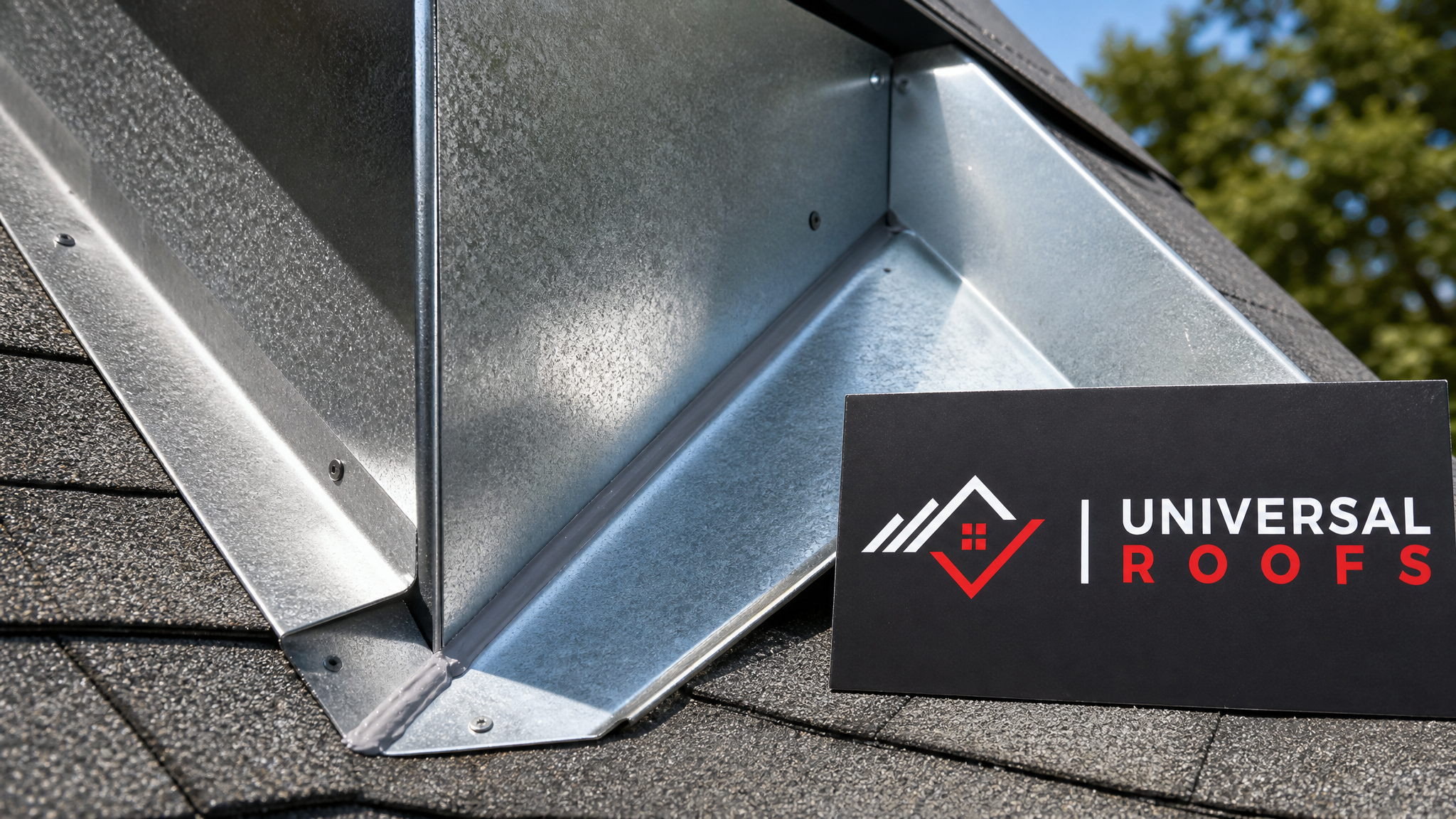
Seasonal Timing for Flashing Maintenance in the GTA
Timing your maintenance around our climate improves results significantly. Late spring through summer, right now in July, is the ideal window for a flashing inspection and any needed resealing, since materials are warm, sealants cure properly, and there is no risk of trapped moisture freezing behind a repair. Fall inspections, ideally completed before late October, are equally important because they catch anything that shifted over the summer before winter’s freeze-thaw cycling and ice damming season begins. We generally advise against attempting sealant work in late fall or winter in Toronto, since cold temperatures prevent proper sealant curing and can mask problems rather than fix them.
If you are due for maintenance, summer is the most forgiving time to schedule it, both because the work itself holds up better and because any minor repairs identified can be completed calmly rather than urgently, unlike a leak discovered during a January thaw.
DIY Checks Versus When to Call a Professional
Homeowners can safely handle two parts of flashing maintenance: the ground-level visual scan with binoculars, and the attic interior check for stains or dampness after heavy rain. Both take under 15 minutes and require no ladder or roof access.
Everything beyond that, close inspection of individual seams, fastener tightening, resealing, and any repair work, should go to a licensed roofing professional. Flashing sits at roof edges, valleys, and around chimneys, exactly the areas where a fall risk is highest, and a technician working with proper fall protection can safely access and correctly diagnose issues that are difficult to judge accurately from a ladder at the eave. Improper DIY resealing is also a common cause of trapped moisture, since the wrong sealant type or an incomplete seal can lock water in rather than keep it out.
If you are unsure whether something you noticed warrants a professional look, our FAQ page covers many of the most common flashing and leak questions we receive, and our reviews page reflects the kind of thorough, honest assessments GTA homeowners have come to expect from our team.
Why Professional Installation Quality Still Matters for Maintenance to Work
Maintenance can only prolong the lifespan of flashing that was installed correctly in the first place. Step flashing installed without proper overlap, counter-flashing that was face-nailed and caulked instead of properly cut into a mortar reglet, or valley flashing installed with insufficient width for our snow load, all of these installation shortcuts create failure points that no amount of resealing will fully solve. This is part of why we recommend homeowners know the installation history of their roof; a roof installed by a reputable contractor with proper technique will respond well to routine maintenance for decades, while one with shortcuts at the flashing details may need more frequent attention or eventual correction regardless of maintenance diligence.
Whether your home is in Toronto, the Peel Region, York Region, Halton Region, or Durham Region, local climate conditions are broadly similar, meaning the same freeze-thaw and seasonal maintenance logic applies across the GTA. What varies more is the age and construction style of the housing stock in each area, which is why a proper inspection by someone familiar with regional building practices matters more than a generic checklist.
Why does proper maintenance prolong roof flashing lifespan more than it helps shingles?
How often should flashing be professionally inspected in Toronto?
Can I reseal roof flashing myself instead of hiring a contractor?
What is the earliest sign that flashing maintenance is overdue?
Does flashing maintenance matter as much on a flat roof as a sloped one?
Is it worth maintaining old flashing or better to replace it outright?
Need Help With Why Does Proper Maintenance?
Understanding why does proper maintenance prolong roof flashing lifespan is only useful if it turns into an actual inspection schedule for your home. Universal Roofs has been diagnosing and maintaining flashing systems across the GTA since 2005, and we would rather catch a small seam problem in July than discuss water damage in your attic in January.
Call us today at (416) 732-2421 or request a free inspection to get started.
Universal Roofs proudly serves Toronto, Mississauga, Brampton, Vaughan, Markham, Oakville and the GTA since 2005.