
A clean metal roof is not just a matter of curb appeal. Dirt, organic growth, chalking residue, and airborne pollutants can quietly shorten the life of even the best-installed metal roofing system, trap moisture against seams and fasteners, and stain a home’s exterior in ways that are difficult to reverse once they set in. For GTA homeowners, the mix of humid summers, road salt in winter, and heavy tree cover in older neighbourhoods means metal roofs get dirty faster than most people expect.
This guide walks through exactly how to clean a metal roof safely and effectively, which cleaning solutions are appropriate for different finishes, what to avoid, and when it makes more sense to bring in a professional. Whether you have a standing seam roof on a modern build in Markham or a metal shingle roof on a century home in the Beaches, the fundamentals below apply.
We have inspected, repaired, and maintained thousands of metal roofs across the Greater Toronto Area since 2005, and the single most common issue we see is not rust or storm damage — it is neglected surface buildup that eventually leads to premature coating failure. A proper cleaning routine, done a couple of times a year, is one of the cheapest ways to protect your investment.
Why Metal Roofs Get Dirty and Why It Matters
Metal roofing is prized for its longevity, but it is not maintenance-free. Understanding what actually accumulates on the surface helps explain why routine cleaning matters more than most homeowners assume.
- Airborne grime and pollution: Toronto’s urban environment deposits a fine layer of soot, dust, and vehicle exhaust residue on every exposed roof surface. Over a year, this builds into a dull grey film that is easy to mistake for weathering.
- Organic growth: Algae, moss, and lichen thrive in shaded, north-facing sections of a roof, especially where overhanging branches keep the surface damp longer after rain. On lighter-coloured metal panels, black algae streaking is the most visible complaint we hear from clients.
- Tree debris and sap: Leaves, seed pods, and pine needles collect in valleys and around penetrations. Left in place, they hold moisture against the panel and can stain or, in extreme cases, contribute to localized corrosion at seams and fastener heads.
- Hard water and mineral deposits: Homes near the lake or with older eavestroughs sometimes show mineral streaking below overflow points, which needs a different cleaning approach than organic staining.
- Chalking residue: As a painted metal finish ages, the topcoat naturally chalks — a fine, powdery layer forms as the resin binder breaks down under UV exposure. A rag wiped across a chalking roof will come away covered in coloured powder. This is a normal aging process, but it accelerates if the roof is never cleaned and grime is left to interact with the coating.
None of this is purely cosmetic. Trapped moisture and organic matter can degrade sealants at seams, promote fastener corrosion, and shorten the effective life of the paint system, which is what actually protects the steel or aluminum substrate underneath. If you are unsure whether staining on your roof is surface-level dirt or a sign of coating failure, it is worth having it assessed — our roof repair team can tell the difference during a routine inspection.
What to Check Before You Start Cleaning
Before grabbing a hose or a scrub brush, take stock of what you are actually dealing with. Not all metal roofs are cleaned the same way, and using the wrong method on the wrong finish can void a manufacturer warranty or cause more damage than the dirt itself.
- Identify the panel material. Galvalume steel, painted (Kynar/PVDF-coated) steel, aluminum, and metal shingles that mimic slate or shake each respond differently to cleaning chemicals.
- Check the finish for chalking or fading. Run a white cloth across a shaded section. If it comes away with colour on it, the coating is chalking and needs a gentler approach than a roof with an intact factory finish.
- Look for existing damage. Loose fasteners, lifted seams, or soft spots around penetrations should be addressed before you introduce more water and pressure to the surface. This is also the time to check flashing around any skylights, since valleys near skylight curbs collect debris quickly.
- Review your roof’s slope and access. Steep-slope metal roofs, anything over roughly a 6:12 pitch, or roofs above two storeys are not safe for most homeowners to walk or work on without fall protection.
- Read your warranty documentation. Many premium metal roofing warranties specify approved cleaning methods and explicitly prohibit high-pressure washing or certain chemical classes. Cleaning outside those terms can void coverage.
Safety First: Working at Height on a Metal Roof
Metal roofs are among the more hazardous surfaces to work on, particularly when wet. Painted and coated panels can become extremely slick with even a light film of soap or algae, and the smooth surface offers far less traction than asphalt shingles.
If you decide to tackle a low-slope or single-storey section yourself, treat these as non-negotiable:
- Never clean a metal roof during or immediately after rain, or in early morning when dew is still present.
- Wear soft-soled, slip-resistant footwear — never work shoes with hard leather soles.
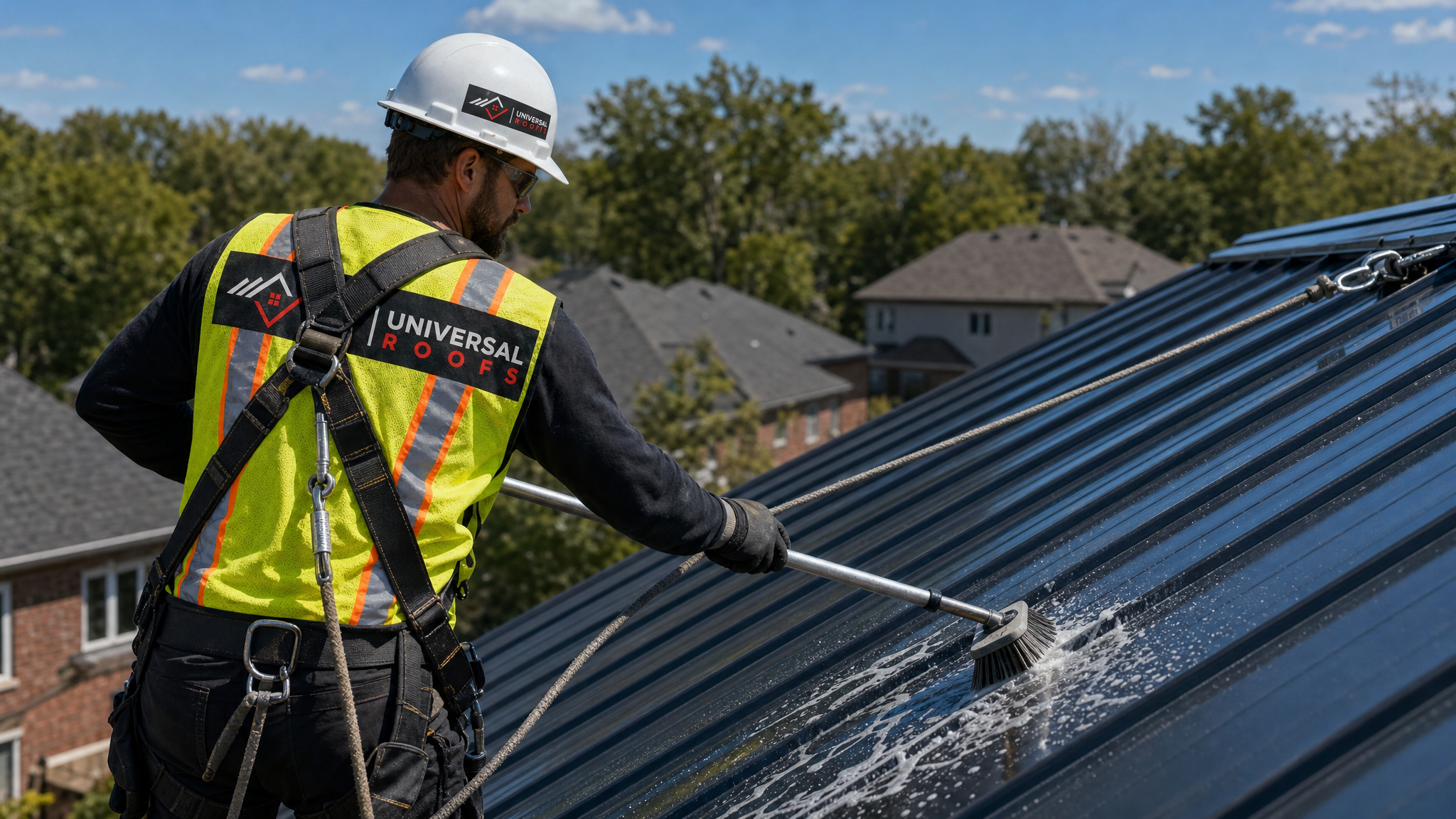
- Use a properly rated harness anchored to a structural point if the roof has any meaningful pitch, not just a rope looped over the ridge.
- Keep a spotter on the ground whenever you are working above single-storey height.
- Avoid working near power lines, especially when using extendable wash wands.
- Never lean a ladder against a gutter or fascia for support — use proper ladder stabilizers.
For anything beyond a simple rinse-and-scrub on a walkable, low-slope section, we strongly recommend hiring a professional. Our crews carry full fall-protection equipment on every job, which is one of the reasons DIY cleaning attempts account for a disproportionate share of the roof-related injuries we hear about from homeowners across the Toronto, Peel Region, and York Region areas each summer.
Step-by-Step: How to Clean a Metal Roof Safely
The safest and most widely recommended method for cleaning painted or coated metal roofing is a low-pressure “soft wash,” not a pressure washer. Here is the process we follow on maintenance visits.
- Clear loose debris first. Use a soft-bristle broom or leaf blower to remove leaves, twigs, and seed pods from valleys, panel seams, and around any roof penetrations before introducing water.
- Rinse the full surface with clean water. A garden hose with a fan nozzle, working from the ridge down, loosens surface dust and reduces the concentration of cleaning solution you will need.
- Apply a gentle cleaning solution. Mix a mild, roof-safe detergent (see the comparison table below) and apply with a pump sprayer or soft-bristle brush. Let it dwell for 10-15 minutes on algae or lichen so the solution has time to work.
- Agitate gently where needed. Use a soft nylon-bristle brush, never a wire brush or abrasive scrub pad, on stubborn organic growth. Always work in the direction of the panel ribs.
- Rinse thoroughly from the top down. Residual cleaner left on the surface can streak or, in the case of stronger solutions, continue reacting with the coating.
- Inspect while you are up there. A cleaning pass is the ideal time to check fastener heads, sealant at penetrations, and seam condition, since dirt and grime often hide early signs of wear.
- Check gutters and downspouts. Runoff from cleaning carries loosened debris directly into the eavestrough system, so clear it out afterward to prevent a secondary clog.
If chalking residue is heavy, a single pass rarely removes it completely — expect to repeat the process, and consider that heavy chalking is often a sign the coating is nearing the end of its useful life, which is worth discussing with a roofing professional rather than repeatedly power-washing an aging finish.
Comparing Cleaning Methods for Metal Roofs
Not every cleaning method suits every situation. The table below compares the most common approaches homeowners consider.
| Method | Best For | Risk Level | DIY Suitability |
|---|---|---|---|
| Soft wash (garden hose + mild detergent) | Routine dust, light grime, general upkeep | Low | Suitable for most homeowners on low-slope, accessible sections |
| Low-pressure soft wash with pump sprayer | Algae, moss, lichen staining | Low to moderate | Suitable with proper fall protection |
| High-pressure power washing | Not recommended for coated metal roofs | High — can strip coatings, drive water under seams | Not recommended; often voids warranty |
| Wire brush or abrasive scrubbing | Not recommended for painted finishes | High — scratches coating, exposes bare metal | Not recommended |
| Chemical algaecide/biocide treatment | Persistent algae or moss in shaded valleys | Moderate — must be roof-safe and rinsed fully | Best handled by a professional familiar with the product |
| Professional soft-wash service | Whole-roof cleaning, steep slope, multi-storey homes | Low when performed correctly | Recommended for most GTA homes |
Choosing the Right Cleaning Solution
The cleaning solution you use matters as much as the technique. Harsh chemicals can strip protective coatings, dull the finish, or corrode fasteners and flashing over time. Here is how common options compare.
| Cleaning Solution | Effective Against | Suitable For | Notes |
|---|---|---|---|
| Mild dish soap + water (diluted) | General dust, light grime | All painted and bare metal finishes | Safest general-purpose option; rinse well to avoid streaking |
| Vinegar and water solution (diluted) | Light mineral staining | Painted steel and aluminum, spot use only | Avoid prolonged contact; always rinse fully afterward |
| Oxygen bleach (sodium percarbonate) | Algae, mildew, organic staining | Most coated metal roofs | Gentler than chlorine bleach; will not harm surrounding plants as severely |
| Diluted chlorine bleach solution | Heavy algae and moss | Use with caution; rinse thoroughly | Can discolour some finishes and harm landscaping if not contained |
| Commercial roof-safe biocide/algaecide | Persistent moss and lichen at the root | Formulated specifically for roofing materials | Follow dwell-time instructions; often the most effective long-term solution |
| Abrasive household cleaners or solvents | Not recommended | None | Can strip coatings and damage sealants; avoid entirely |
Seasonal Timing for Cleaning in the GTA
When you clean matters almost as much as how. Toronto’s climate cycles through freeze-thaw winters, humid summers, and a heavy autumn leaf drop, and each season affects both what accumulates on a metal roof and how safe it is to work on.
| Season | Typical Roof Condition | Recommended Action | Timing Notes |
|---|---|---|---|
| Spring | Winter grime, salt residue, early moss regrowth | Full soft-wash cleaning once temperatures are consistently above freezing | Ideal window: mid-April through May |
| Summer | Dust, pollen, chalking residue, UV fading | Light rinse and inspection; ideal season for a full professional clean | July and August offer the longest dry, warm working windows |
| Autumn | Leaf and debris accumulation in valleys | Clear debris regularly; avoid letting wet leaves sit through fall rains | Check monthly from September through November |
| Winter | Snow load, ice, minimal organic growth | Avoid cleaning; monitor for ice damming and safely remove snow buildup only if needed | Hold off on wet cleaning below freezing |
Since it is currently mid-summer, this is genuinely one of the best times of year to schedule a full roof cleaning: panels are dry, algae growth from spring rains is at its most visible and treatable, and there is enough warm, dry weather ahead for any cleaning solution to fully cure and rinse without refreezing.
Common Mistakes That Damage Metal Roofs
We get called out more often to repair damage from bad cleaning attempts than you might expect. The most frequent issues we see include:
- Using a pressure washer at close range. Even moderate PSI, held too close to a seam, can force water underneath panels and into the underlayment, leading to hidden moisture damage that surfaces months later.
- Scrubbing with wire brushes or steel wool. This scratches through the protective coating, exposing bare metal to corrosion — particularly damaging on galvanized or Galvalume finishes.
- Walking on the roof incorrectly. Stepping in the flat of a panel rather than directly over a rib or support structure can cause oil-canning (visible waviness) or dent the panel.
- Mixing bleach with ammonia-based cleaners. This produces toxic fumes and should never be attempted under any circumstances.
- Ignoring surrounding landscaping. Runoff from stronger cleaning solutions can kill grass, shrubs, and garden beds below the roofline if not diluted or diverted properly.
- Cleaning without checking the flashing first. Water and cleaning solution finding their way into a compromised flashing joint is one of the most common causes of interior leaks reported after a DIY roof cleaning.
Cleaning Metal Roofs Around Skylights, Flashing, and Attic Vents
Metal roofs with penetrations for skylights, plumbing stacks, and attic ventilation need extra care during cleaning, since these are the highest-risk points for water intrusion. Debris tends to collect in the valleys around skylight curbs, and prolonged organic buildup there can accelerate sealant breakdown faster than on the open field of the roof.
When cleaning around these areas:
- Clear debris from skylight curbs and crickets by hand rather than blasting it with a hose, which can push material further into seams.
- Avoid directing water upward under flashing edges.
- Inspect sealant around every penetration while you are up there — this is a natural moment to catch a failing seal before it becomes a leak.
- If a skylight shows fogging, staining, or a compromised seal during your inspection, it is worth having it evaluated for skylight replacement rather than waiting for a leak to appear inside the home.
Good attic ventilation also plays a supporting role here: a well-ventilated attic reduces the condensation that can contribute to underside corrosion on metal panels, which is a less visible but real factor in long-term roof health.
DIY vs. Professional Cleaning: What It Actually Costs
Many homeowners start with a DIY approach and later call in a professional once they realize the scope, height, or condition of the roof exceeds what is safely manageable at home. Here is a realistic comparison of what each route typically involves in the GTA.
| Factor | DIY Cleaning | Professional Soft-Wash Service |
|---|---|---|
| Typical cost | $30-$100 in supplies (detergent, sprayer, brush) | Varies by roof size, slope, and condition; typically billed per job after an on-site assessment |
| Time required | Half a day to a full weekend for an average home | Usually completed in a few hours by a trained crew |
| Safety equipment needed | Harness, anchor points, non-slip footwear, spotter | Included — full fall-protection gear standard on every job |
| Risk of coating damage | Higher, especially with incorrect chemicals or pressure | Low — technicians know coating-safe methods per manufacturer |
| Inspection value | Limited to what an untrained eye notices | Includes a trained assessment of seams, flashing, and fasteners |
| Best suited for | Single-storey, low-slope, easily accessible roofs | Steep-slope, multi-storey, or aging roofs with visible wear |
If your roof has visible rust spots, lifted seams, or damage beyond surface grime, cleaning alone will not solve the underlying problem — that calls for a proper roof repair assessment rather than another wash cycle. And if your metal roof is approaching or past its expected service life with widespread coating failure, a cleaning schedule can only do so much; at that point it is worth exploring roof replacement options rather than repeatedly treating a failing finish.
Building a Long-Term Maintenance Routine
The homeowners who get the longest life out of their metal roofs treat cleaning as a routine, not a one-time fix. A simple, realistic schedule looks like this:
- Twice a year, minimum: A full soft-wash cleaning in spring and again in late summer or early autumn, timed around this region’s growing season for algae and moss.
- Monthly during leaf drop: Quick debris clearing from valleys and around penetrations from September through November.
- After major storms: A visual check for dislodged debris, dented panels, or loosened fasteners, particularly after high winds or hail.
- Annually: A professional inspection that covers not just cleanliness but seam integrity, fastener condition, flashing, and attic ventilation — the areas a routine cleaning pass will not fully reveal on its own.
Homeowners across Halton Region and Durham Region who stick to this kind of schedule consistently report fewer surprise repairs and get more years out of their coating before a repaint or replacement becomes necessary. You can see examples of the kind of long-term relationships this builds with clients on our reviews page.
What is the best method in this ultimate guide to cleaning metal roofs for removing algae stains?
Can I use a pressure washer on a metal roof?
How often should a metal roof be cleaned in the Toronto area?
Is chalking residue on a metal roof a sign of damage?
What cleaning solutions are safe for painted metal roofs?
When should I hire a professional instead of cleaning a metal roof myself?
Need Help With Ultimate Guide to Cleaning?
Keeping a metal roof clean is one of the simplest ways to protect the investment you made when you chose Universal Roofs, and our team is happy to handle the parts of the job that call for proper training and safety equipment.
Call us today at (416) 732-2421 or request a free inspection to get started.
Universal Roofs proudly serves Toronto, Mississauga, Brampton, Vaughan, Markham, Oakville and the GTA since 2005.