
If your energy bills climb every winter and summer without fail, the culprit is often hiding right above your ceiling. The energy saving perks of roof insulation are among the most overlooked value-adds in home performance, yet they touch everything from your monthly utility statement to the lifespan of your shingles. Toronto homeowners deal with brutally cold winters, humid summers, and everything in between, which means a roof and attic system that isn’t properly insulated is working against you twelve months a year.
At Universal Roofs, we’ve been inspecting, repairing, and upgrading roofs across the GTA since 2005, and attic insulation is one of the fastest, most cost-effective upgrades we recommend. This guide breaks down exactly how proper insulation saves energy, what R-value actually means for your home, how it prevents costly ice dams, and what kind of return on investment you can realistically expect.
Understanding the Energy Saving Perks of Roof Insulation
Heat moves in a predictable way: it always travels from warm areas to cool ones. In winter, the heat your furnace generates rises and searches for the fastest route out of your home, and an under-insulated attic is exactly that route. In summer, the reverse happens, with solar heat radiating through the roof deck and pouring into your living space. The energy saving perks of roof insulation come from slowing this heat transfer in both directions, which means your HVAC system runs less often and less aggressively to maintain a comfortable indoor temperature.
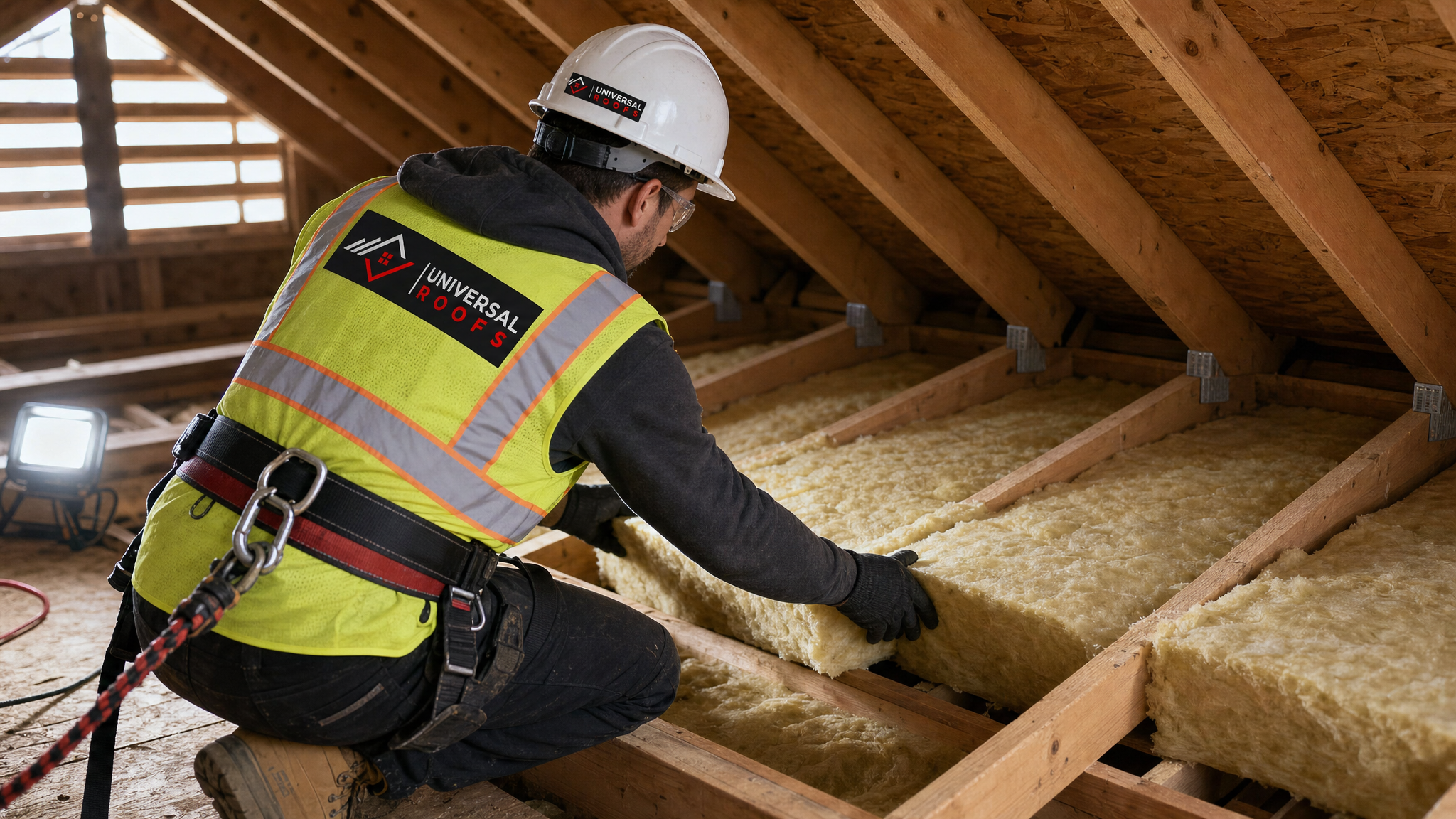
Most GTA homes built before the 2000s were insulated to standards that are now considered inadequate by today’s energy codes. Insulation also settles, compresses, and loses effectiveness over 15 to 20 years, so even a home that was properly insulated when built may need a refresh. A proper attic and roof insulation upgrade typically includes an inspection of the existing material, air sealing around penetrations like pot lights and vent stacks, and either topping up or fully replacing the insulation to reach the recommended depth.
How R-Value Determines Your Energy Savings
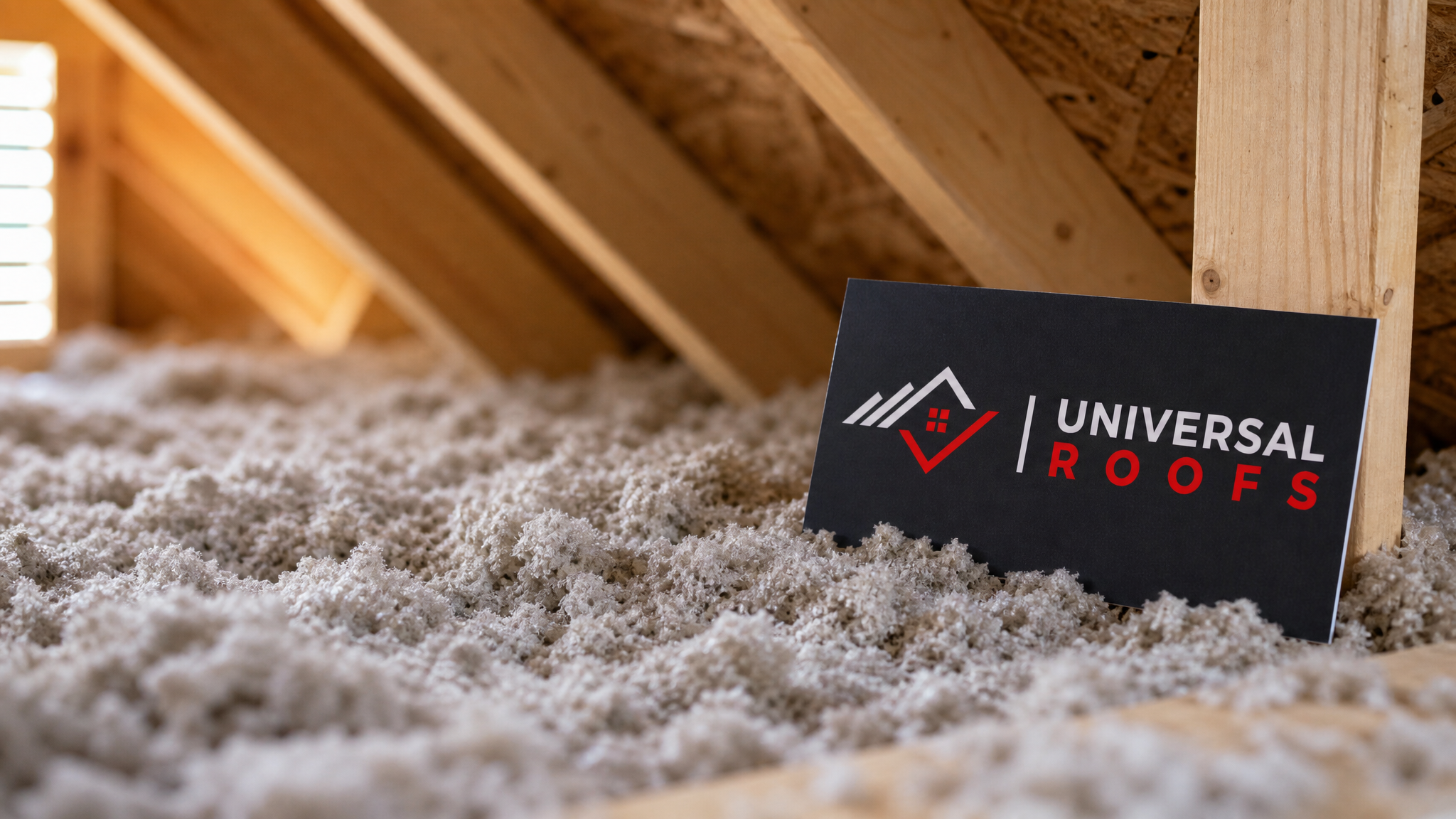
R-value measures a material’s resistance to heat flow — the higher the number, the better the insulating performance. In Ontario’s climate zone, the Ontario Building Code and ENERGY STAR guidelines recommend attic insulation levels between R-50 and R-60 for most detached homes, which is significantly higher than the R-20 to R-28 levels common in homes built several decades ago.
The relationship between R-value and energy savings isn’t perfectly linear. Going from R-0 to R-20 delivers dramatic savings because you’re stopping the worst of the heat loss. Going from R-40 to R-60 still saves money, but the incremental gain per dollar spent is smaller. This is why our technicians measure your existing insulation depth and material type before recommending a target R-value — the goal is hitting the sweet spot for your specific attic, not simply piling on more material than the space or budget calls for.
| Insulation Material | R-Value Per Inch | Typical Attic Use | Approximate Lifespan |
|---|---|---|---|
| Blown-in fibreglass | R-2.2 to R-2.7 | Topping up existing attics | 20-30 years |
| Blown-in cellulose | R-3.2 to R-3.8 | Full attic re-insulation | 20-25 years |
| Batt fibreglass | R-3.0 to R-3.8 | New construction, additions | 25-30 years |
| Spray foam (closed-cell) | R-6.0 to R-6.5 | Cathedral ceilings, tight spaces | 30+ years |
Winter Perks: Lower Heating Bills and Ice Dam Prevention
The most immediate energy saving perk of roof insulation shows up on your winter heating bill. When warm air escapes through a poorly insulated attic, your furnace has to run longer and more frequently to compensate. Homeowners who upgrade from below-code insulation to the recommended R-50 to R-60 range commonly see heating costs drop by 15 to 25 percent, depending on the home’s age, size, and existing envelope condition.
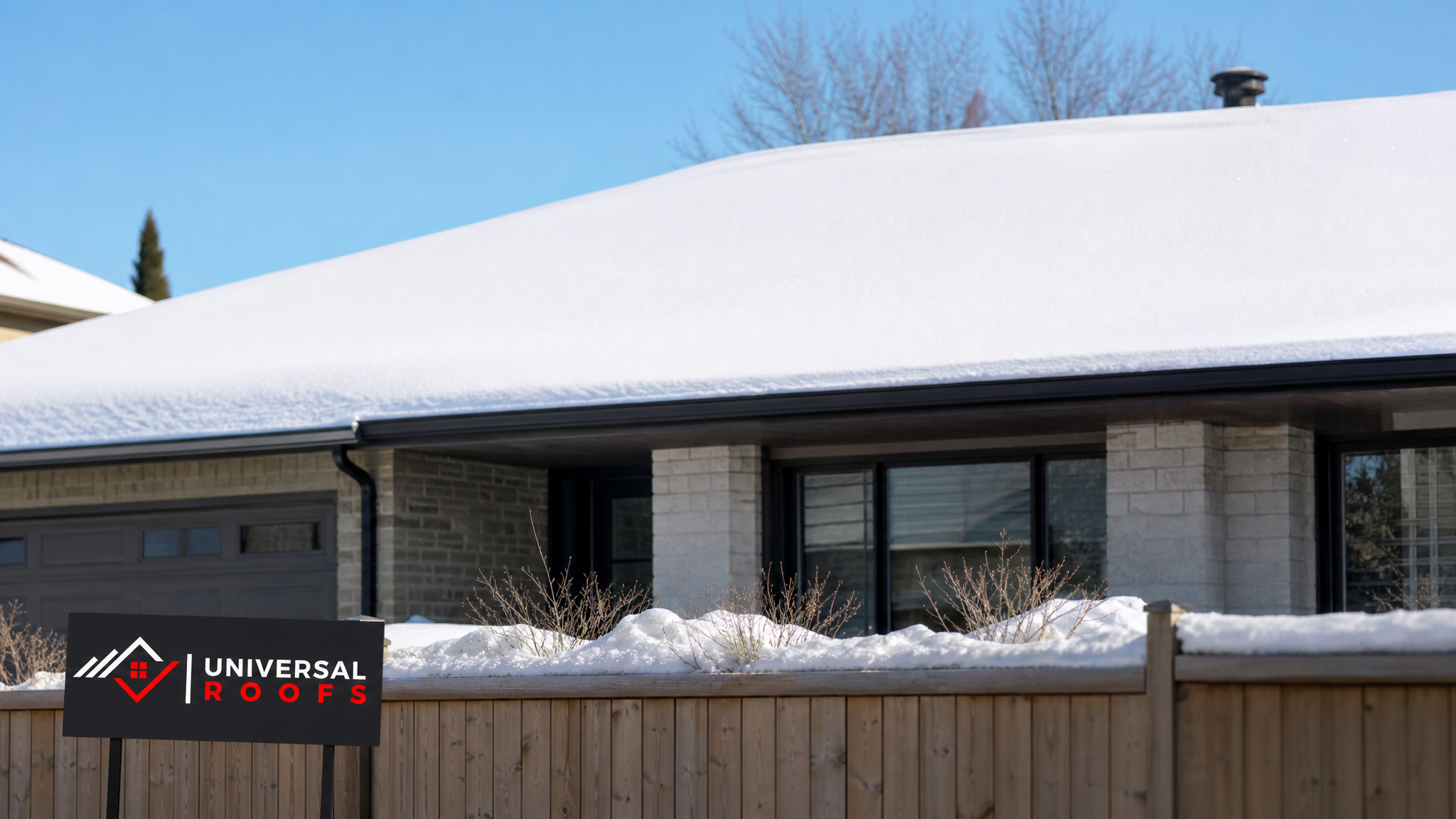
Beyond the utility bill, insulation plays a critical structural protection role by preventing ice dams. When heat escapes into the attic, it warms the underside of the roof deck unevenly, melting snow near the ridge while the eaves stay cold. That meltwater runs down and refreezes at the colder eave edge, building a dam of ice that forces water back under the shingles. The result is interior water stains, damaged insulation, and in severe cases, structural rot. Proper attic insulation combined with adequate ventilation keeps the entire roof deck at a consistent, cold temperature, which stops the melt-refreeze cycle before it starts. If you’re already seeing ice buildup along your eaves each winter, it’s worth pairing an insulation upgrade with a roof repair assessment to check for existing damage.
Summer Perks: Reduced Cooling Loads and Attic Heat Buildup
Insulation isn’t just a winter play. Toronto summers regularly push attic temperatures above 60°C on a sunny afternoon, and without adequate insulation, that heat radiates directly into the rooms below, forcing your air conditioner to work overtime. Homeowners often notice upstairs bedrooms staying uncomfortably warm even with the AC running constantly — a classic sign of an under-insulated attic.
Proper insulation acts as a thermal barrier that slows this downward heat transfer, keeping conditioned air where it belongs. Combined with good attic ventilation, insulation helps regulate the temperature swing between your living space and the unconditioned attic above it, which reduces both energy consumption and wear on your HVAC equipment. For homes with flat roof sections, the same principle applies, though the insulation approach differs — see our flat roofing page for details on rigid insulation systems used in those assemblies.
Insulation and Skylights: A Commonly Overlooked Connection
Skylights introduce a unique thermal challenge because the insulated shaft connecting the roof opening to the ceiling below can become a significant heat loss and heat gain point if not properly sealed and insulated. Poorly insulated skylight shafts are a common source of condensation, drafts, and energy loss, even when the rest of the attic is well insulated.
If your home has skylights, it’s worth having the surrounding insulation and shaft sealing inspected alongside your broader attic assessment. Modern skylight units with better-insulated frames and glazing, paired with properly insulated shafts, can eliminate what used to be a major weak point in the building envelope. Learn more on our skylights page, or book a full attic evaluation to see how your current setup performs.
Calculating the Return on Investment
Attic insulation upgrades consistently rank among the highest ROI home improvements available, largely because the material and labour costs are modest compared to the ongoing savings. Most GTA homeowners recoup their insulation investment within three to seven years through reduced heating and cooling costs alone, not counting the added benefits of ice dam prevention and extended roof lifespan.
| Upgrade Scope | Typical Cost Range | Estimated Annual Savings | Approximate Payback Period |
|---|---|---|---|
| Top-up existing insulation to R-50 | $800 – $1,600 | $150 – $300 | 4-6 years |
| Full attic re-insulation to R-60 | $1,800 – $3,500 | $300 – $550 | 4-7 years |
| Air sealing plus insulation top-up | $1,200 – $2,200 | $250 – $450 | 3-5 years |
| Spray foam cathedral ceiling upgrade | $3,000 – $6,000 | $350 – $600 | 6-9 years |
These figures vary based on attic size, accessibility, existing material condition, and local energy rates, but the pattern holds across almost every project we’ve completed: insulation upgrades pay for themselves faster than most other home improvements, and they keep paying dividends for two decades or more.
Signs Your Attic Insulation Needs an Upgrade
Several warning signs suggest your attic insulation is underperforming. Ice dams or icicles along the eaves each winter point to heat escaping unevenly through the roof deck. Uneven snow melt on the roof — patches that melt faster than the surrounding surface — is another visible clue, since a well-insulated roof should hold snow evenly across its surface. Indoors, rooms directly under the attic that feel drafty, too cold in winter, or too warm in summer often trace back to insufficient insulation depth or gaps around penetrations.
A close inspection of the insulation itself can also reveal problems. Compressed, discoloured, or water-stained material has lost much of its original R-value and needs replacing rather than topping up. If you’re noticing any of these signs, a professional inspection can confirm exactly where the gaps are and what upgrade path makes the most sense for your home.
Why Professional Installation Matters
DIY insulation projects often fall short because even coverage, correct depth, and proper air sealing around penetrations are harder to achieve than they appear. Gaps, compressed spots, and blocked soffit vents can undermine the energy saving perks of roof insulation almost entirely, even when a homeowner has installed a generous amount of material.
Our technicians assess the whole roof and attic system together, since insulation, ventilation, and roof condition all interact. An insulation upgrade paired with a ventilation check ensures moisture doesn’t get trapped in the attic, which protects both the new insulation and the roof deck above it. We’ve served homeowners throughout Toronto and the surrounding GTA for nearly two decades, and insulation assessments are a routine part of our roof inspection process. You can read about other homeowners’ experiences on our reviews page, or check our FAQ page for answers to common questions about roofing and attic work. If your roof itself shows signs of wear alongside insulation issues, our roof replacement team can address both at once.
Planning Your Insulation Upgrade Timeline
Most attic insulation projects in the GTA can be completed in a single day, though the exact timeline depends on attic size, accessibility, and whether air sealing is included alongside the insulation top-up. Scheduling ahead of the coldest and hottest months means you start capturing energy savings before your heating or cooling system faces its heaviest seasonal demand.
Fall and early spring tend to be the most popular booking windows, since homeowners want the upgrade finished before winter heating bills climb or before summer air conditioning kicks in. Booking outside peak season can sometimes mean faster scheduling and more flexible appointment times.
| Project Phase | Typical Duration | What Happens | Homeowner Involvement |
|---|---|---|---|
| Initial assessment | 30-60 minutes | Measure existing insulation depth, check for air leaks and moisture | Walkthrough with technician |
| Quote and material selection | Same day to 2 days | Recommend target R-value and insulation type | Review and approve scope |
| Air sealing (if included) | 1-2 hours | Seal gaps around pot lights, vents, and penetrations | None during work |
| Insulation installation | 2-6 hours | Blow in or lay batts to target depth across the attic | None during work |
| Final walkthrough | 15-20 minutes | Confirm even coverage and target depth achieved | Final inspection with technician |
Many homeowners choose to pair an insulation upgrade with other attic-related work, such as ventilation improvements or addressing early ice dam damage, since the attic is already fully accessible during the visit. This bundled approach often costs less overall than scheduling separate service calls for each issue.
Homeowners considering this upgrade should also ask about local rebate programs, since utility providers and municipal energy efficiency programs periodically offer incentives for attic insulation upgrades that meet or exceed code-minimum R-values. These programs can offset a meaningful portion of the material and labour cost, further shortening the payback period discussed earlier in this guide.
What are the energy saving perks of roof insulation for a Toronto home?
What R-value should my attic insulation be in Ontario?
How does roof insulation prevent ice dams?
How much can I save with better attic insulation?
How do I know if my attic insulation needs to be replaced?
Does insulation type affect the energy saving perks of roof insulation?
Need Help With Roof Insulation?
A properly insulated attic is one of the simplest ways to lower your energy bills, protect your roof from ice dam damage, and keep your home comfortable in every season. The team at Universal Roofs can assess your current insulation levels and recommend the right upgrade path for your specific home.
Call us today at (416) 732-2421 or request a free inspection to get started.
Universal Roofs proudly serves Toronto, Mississauga, Brampton, Vaughan, Markham, Oakville and the GTA since 2005.