
Your shingles get all the attention, but the roof decking underneath them is the structural layer that actually holds your entire roofing system together. When that plywood or oriented strand board (OSB) sheathing starts to rot, delaminate, or sag, no amount of new shingles will fix the underlying problem. Understanding the roof decking damage repair signs and options available to Toronto-area homeowners can mean the difference between a straightforward repair and a costly structural failure.
Roof decking takes a beating in the Greater Toronto Area. Freeze-thaw cycles, ice damming, humid summers, and decades-old ventilation systems all conspire to trap moisture against the wood sheathing that spans your rafters or trusses. Because decking sits hidden beneath shingles, underlayment, and often insulation, damage can progress for years before a soft spot, a sag, or a water stain on the ceiling finally gives it away.
In this guide, we walk through exactly what causes decking damage, the visual and structural signs to watch for, how professionals assess the extent of the problem, and the repair versus replacement options available depending on severity. Whether you noticed a spongy spot while walking your attic or you’re simply being proactive ahead of your next roof replacement, this article will help you understand what’s happening under your shingles and what it will take to fix it properly.
What Is Roof Decking and Why It Matters
Roof decking (also called sheathing) is the layer of structural wood panels — typically 7/16-inch to 5/8-inch OSB or plywood — fastened directly to your rafters or roof trusses. It creates the flat, continuous surface that underlayment and shingles are installed on top of. Without sound decking, shingles have nothing rigid to grip, nails lose their holding power, and the entire roofing assembly becomes unstable.
Decking also plays a structural role beyond just supporting shingles. It ties the roof framing together, helps the roof resist racking forces from wind, and, in many homes, forms part of the diaphragm that keeps the whole structure square. When decking rots or weakens, you’re not just risking a leak — you’re risking the structural integrity of the roof itself.
Most GTA homes built before the 2000s used plywood decking, while newer builds typically use OSB. Both materials perform well when kept dry, but both are vulnerable to sustained moisture exposure. The difference matters when it comes time to repair: OSB tends to swell and crumble at the edges when wet, while plywood tends to delaminate in layers. A qualified inspector from our roof repair team can identify which material you have and how it’s failing during an on-roof assessment.
Common Causes of Roof Decking Damage in the GTA
Decking damage rarely happens overnight. It’s almost always the end result of prolonged moisture exposure combined with one or more contributing factors common to our climate.
- Ice damming — Toronto winters create repeated freeze-thaw cycles. Snow melts from attic heat loss, refreezes at the cold eave, and backs water up under the shingles where it saturates the decking below.
- Poor attic ventilation — Without adequate intake and exhaust airflow, warm, moist household air condenses on the underside of the decking, slowly rotting it from below. Our attic ventilation assessments frequently uncover this as the root cause.
- Aging or failed underlayment — Underlayment that has cracked, torn, or simply outlived its service life allows wind-driven rain to reach the decking directly.
- Flashing failures — Deteriorated flashing around chimneys, vent stacks, and skylights is one of the most common entry points for water that eventually saturates the decking.
- Clogged gutters and poor drainage — Water that can’t drain off the roof edge backs up under shingles at the eaves, a problem especially common on homes with minimal roof overhang.
- Age of the roofing system — Shingles nearing the end of their lifespan lose their seal and granule protection, exposing the decking to years of incremental moisture intrusion.
Visible and Structural Signs of Decking Damage
Because decking is hidden, homeowners usually notice indirect signs before they ever see the wood itself. Knowing what to look for both inside and outside the home helps you catch problems early, before they spread to adjacent framing.
Interior Warning Signs
- Brown or yellow water stains on ceilings, especially near exterior walls or chimneys
- Sagging or bulging drywall on the top floor
- A musty odour in upper-level rooms or the attic
- Visible mould or dark staining on the attic side of the roof deck
- Daylight visible through the roof boards when viewed from inside the attic
Exterior and Rooftop Warning Signs
- A visible dip, wave, or soft valley in the roofline when viewed from the street or a neighbour’s yard
- Shingles that appear uneven, cupped, or curling in a localized area
- A spongy or bouncy feeling underfoot when walking the roof (a sign inspectors take very seriously)
- Nail pops pushing shingles up in a cluster, caused by fasteners losing their grip in softened wood
- Moss or algae growth concentrated in one section, often indicating trapped moisture below
If you notice any combination of these signs, it’s worth scheduling an inspection promptly. Decking damage tends to spread laterally along the roof deck as moisture wicks through the wood grain, so a small soft spot today can become a much larger repair area within a season or two.
How Professionals Assess Decking Damage
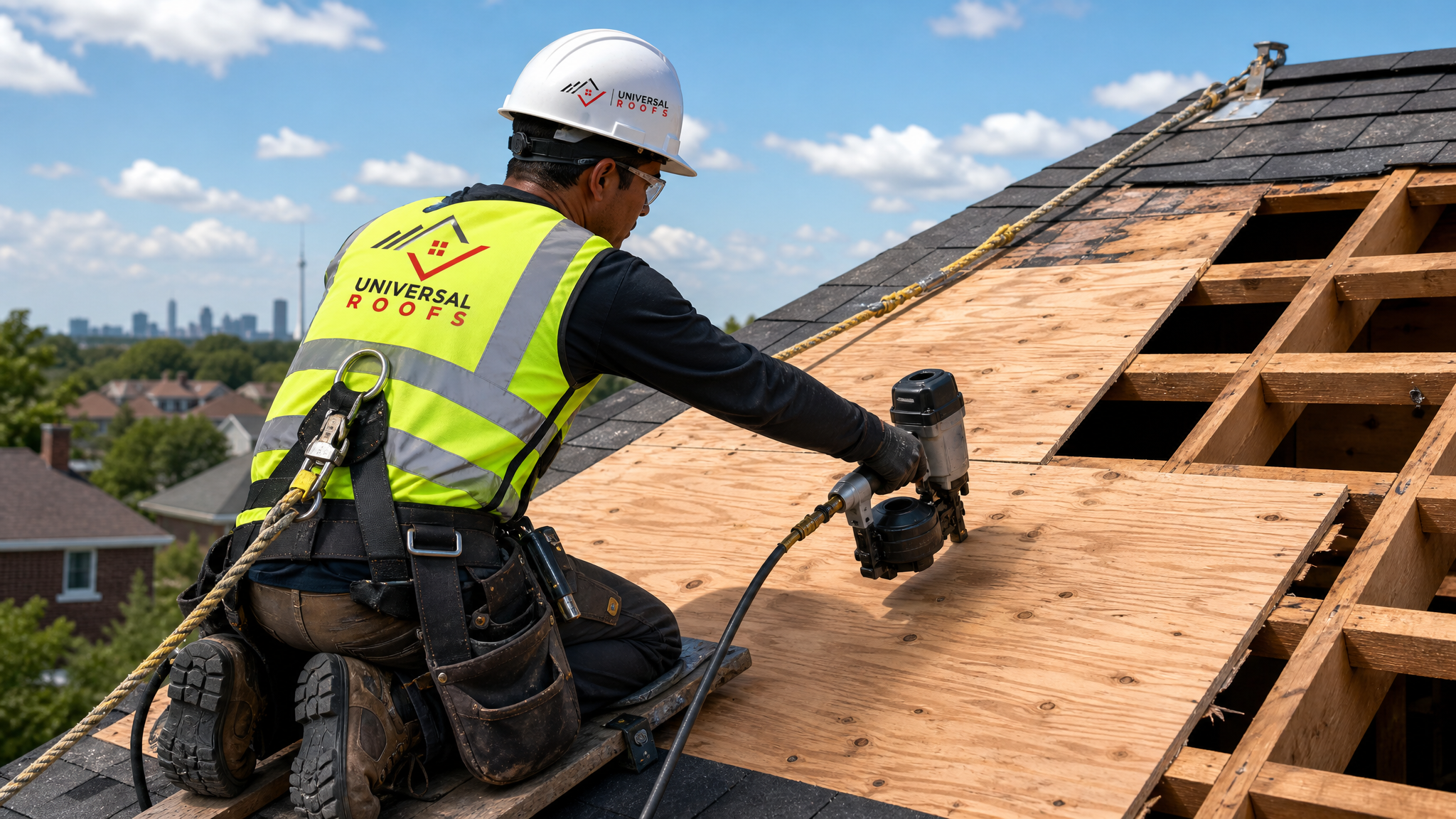
A proper decking assessment goes well beyond a visual walk-around. When our technicians evaluate a roof for suspected decking damage, we typically follow a layered process:
- Attic inspection — We check the underside of the deck for staining, delamination, sagging between rafters, and active moisture, often using a moisture meter to quantify wood water content.
- Rooftop walk-test — Technicians methodically walk the roof surface, feeling for soft, spongy, or springy sections that indicate compromised sheathing beneath the shingles.
- Shingle test-lift — In suspect areas, a small section of shingles is carefully lifted to visually inspect the decking surface and underlayment condition directly.
- Perimeter and penetration check — Extra attention goes to eaves, valleys, chimneys, and skylight curbs, since these are the highest-risk zones for decking rot and the most common locations flagged during our skylight and flashing inspections.
- Documentation and photos — Every soft spot, stain, and measurement is documented with photos so homeowners can see exactly what’s being replaced and why.
This process determines whether the damage is isolated to a few panels or has spread across a larger section of the roof, which directly informs the repair options available.
Repair Options: Spot Repair vs. Full Deck Replacement
The right fix depends entirely on how much of the decking is compromised and where it’s located relative to the rest of the roofing system. Below is a comparison of the main approaches we use across the GTA.
| Repair Option | Best For | Typical Scope | Approx. Timeline |
|---|---|---|---|
| Localized panel replacement | Small, isolated soft spots (1-3 panels) | Remove shingles over affected area, cut out and replace damaged panel(s), re-shingle | Half day to 1 day |
| Section replacement | Damage concentrated in one roof plane or valley | Strip a full slope, replace multiple panels, install new underlayment and flashing | 1-2 days |
| Full deck replacement | Widespread rot, multiple leak sources, or roof age 20+ years | Complete tear-off, full re-decking, new underlayment, new shingles | 2-4 days |
| Structural sistering | Rafters or trusses weakened alongside the decking | New lumber fastened alongside compromised framing before re-decking | Add 1-2 days to above scopes |
For homeowners who are already planning a roof replacement, it’s almost always more cost-effective to address decking issues at the same time rather than as a separate project later, since the tear-off labour is already accounted for in the replacement scope.
Materials Used for Decking Repair
Not all replacement panels are created equal, and matching the right material and thickness to your existing structure matters for long-term performance. The table below outlines the materials we most commonly use on GTA homes.
| Material | Common Thickness | Strengths | Considerations |
|---|---|---|---|
| OSB (oriented strand board) | 7/16″ – 5/8″ | Cost-effective, widely available, consistent panel strength | Swells at edges if exposed to prolonged moisture before shingling |
| CDX plywood | 1/2″ – 5/8″ | Better moisture resistance, holds fasteners well, favoured for older homes | Higher material cost than OSB |
| Tongue-and-groove plywood | 5/8″ – 3/4″ | Reduces panel deflection between rafters, ideal for wider rafter spacing | More labour-intensive to install |
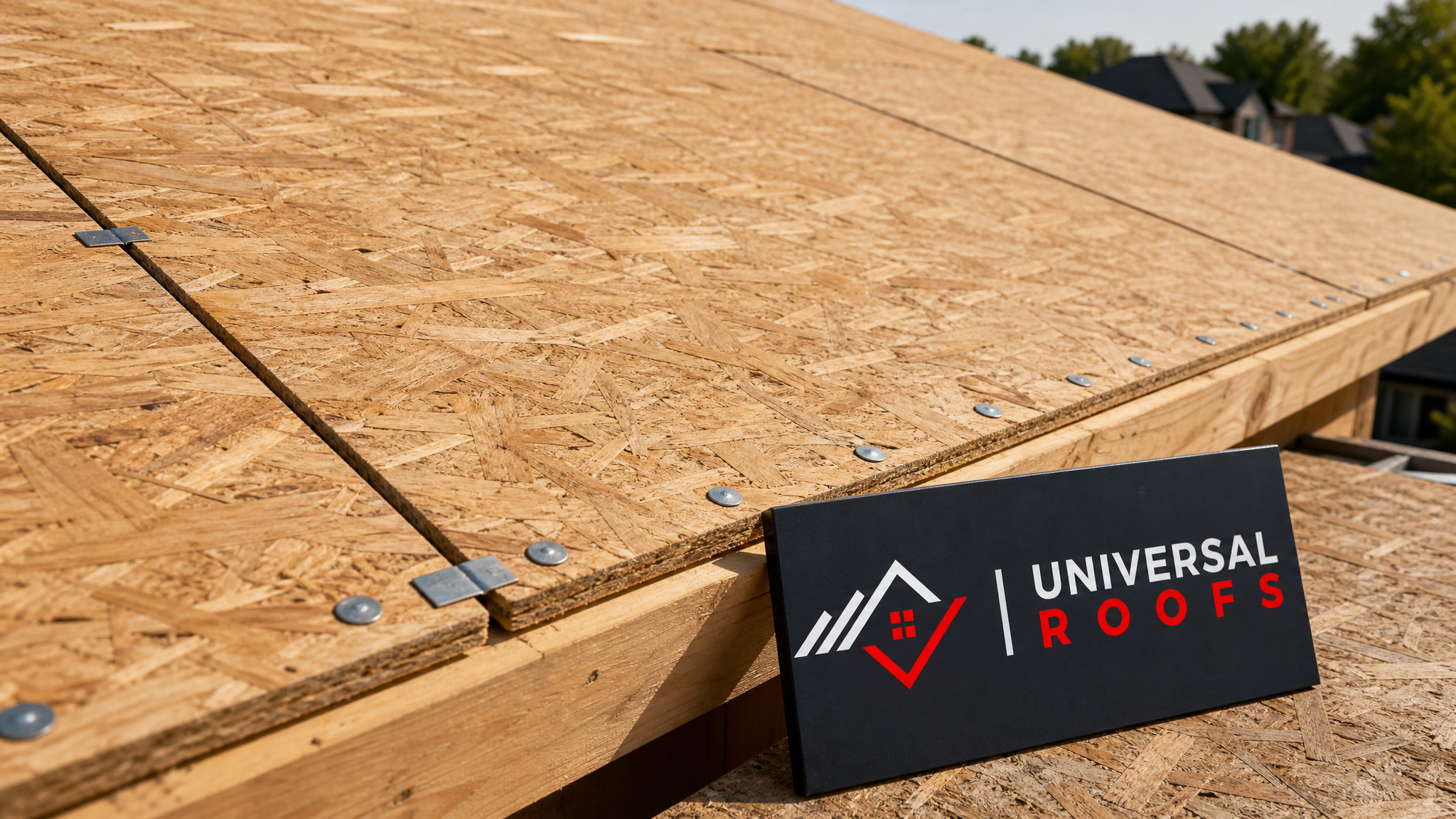
| H-clip reinforced OSB panels | 7/16″ – 1/2″ | Metal clips between panel edges reduce sagging and improve uniform support | Requires precise spacing during installation |
We always match new decking to the existing panel thickness unless the current deck falls below current Ontario Building Code minimums, in which case we upgrade to code-compliant thickness as part of the repair.
Cost Factors for Decking Repair and Replacement
Decking repair costs in the GTA vary significantly based on the extent of damage, roof pitch, accessibility, and whether structural framing also needs attention. Several factors influence the final price on any given project:
- Number of panels required — Isolated repairs involving one or two 4×8 sheets cost far less than a full re-deck
- Roof pitch and accessibility — Steep roofs or those with limited access require additional safety equipment and labour time
- Underlying framing condition — If rafters or trusses need sistering or reinforcement, this adds materials and labour
- Disposal and tear-off volume — Larger sections generate more waste material requiring proper disposal
- Matching existing roofing materials — Colour-matching shingles for a partial repair on an older roof can sometimes be more complex than a full replacement
| Scope of Work | Typical Panel Count | Relative Cost Level | When It’s Recommended |
|---|---|---|---|
| Spot repair | 1-2 panels | Lowest | Small, recently discovered soft spot with no surrounding spread |
| Multi-panel repair | 3-6 panels | Moderate | Damage traced to a single leak source, such as a failed flashing detail |
| Full slope re-deck | 7-15+ panels | Higher | Damage spans an entire roof plane or valley |
| Full roof re-deck | Entire roof | Highest | Combined with full re-shingling or roof nearing end of service life |
Because every roof and every damage pattern is different, we recommend a free on-site assessment before assuming the worst. Many homeowners are relieved to learn their damage is limited to a single panel rather than requiring the full-roof intervention they feared.
Preventing Future Decking Damage
Once decking has been repaired or replaced, a few preventive measures go a long way toward protecting your investment for the decades ahead.
- Improve attic ventilation. Balanced intake and exhaust airflow keeps the underside of the deck dry and reduces condensation-driven rot.
- Address ice damming proactively. Adequate attic insulation, air sealing, and ice-and-water shield membrane at the eaves all reduce the freeze-thaw cycles that drive water under shingles.
- Keep gutters clear. Regular gutter cleaning, particularly in the fall, prevents water backup at the roof edge.
- Schedule periodic inspections. An annual or bi-annual check, especially after major storms, catches flashing and underlayment failures before they reach the decking.
- Don’t delay flashing repairs. Chimney, vent, and skylight flashing are common failure points — our skylight replacement and flashing services address these before they become decking problems.
Homeowners across Toronto, Peel Region, York Region, Halton Region, and Durham Region deal with the same freeze-thaw climate challenges, and consistent maintenance is the single best defence against recurring decking issues.
Flat Roofs and Decking: A Different Set of Considerations
While this guide focuses primarily on sloped residential roofs, it’s worth noting that flat and low-slope roofs have their own decking vulnerabilities. Ponding water, membrane seams, and drain blockages can all lead to moisture intrusion into the deck below a flat roof system. If you own a property with a flat or low-slope roof, our dedicated flat roofing team can assess decking condition specific to that roof type, since inspection methods and repair techniques differ from sloped shingle roofs.
When to Call a Professional
Any time you suspect decking damage, it’s worth having it assessed by a professional rather than attempting a DIY inspection from a ladder. Walking on compromised decking is genuinely dangerous — soft spots can give way underfoot, and identifying the true extent of rot requires experience distinguishing surface staining from structural deterioration.
If you’ve noticed any of the interior or exterior warning signs covered above, don’t wait for a small soft spot to become a larger structural repair. Our team has handled decking repairs across every housing style common to the GTA, from post-war bungalows to modern two-storey builds, and we document every finding with photos so you understand exactly what’s being repaired and why. You can review feedback from past clients on our reviews page, and check common questions on our FAQ page.
What are the most common roof decking damage repair signs and symptoms homeowners notice first?
Can roof decking be repaired without replacing the entire roof?
How much does roof decking repair typically cost in the GTA?
What causes roof decking to rot in the first place?
Is it safe to walk on a roof with suspected decking damage?
How long does a roof decking repair take to complete?
Need Help With Roof Decking Damage Repair?
If you’ve spotted any of the warning signs covered in this guide, don’t wait for a small soft spot to spread. Universal Roofs has been assessing and repairing roof decking across the GTA since 2005, and every inspection includes clear photo documentation so you know exactly what’s happening beneath your shingles.
Call us today at (416) 732-2421 or request a free inspection to get started.
Universal Roofs proudly serves Toronto, Mississauga, Brampton, Vaughan, Markham, Oakville and the GTA since 2005.