
A single missed roof leak can turn a small repair into a five-figure insurance claim, mouldy insulation, and a ruined ceiling in a matter of weeks. That is why professional roof leak detection services for repairs exist: to find the true source of water intrusion before it spreads, so contractors fix the actual problem instead of guessing and patching the wrong spot.
At Universal Roofs, we have spent close to two decades tracking down stubborn leaks across the Greater Toronto Area, from century-old Cabbagetown semis to new-build homes in Vaughan. What we have learned is simple: leak detection is a skill set of its own, distinct from general roof repair. Water rarely drips straight down from where it enters — it travels along rafters, pools behind flashing, and soaks insulation long before a stain appears on your ceiling. Finding the entry point requires method, not luck.
This guide walks homeowners through how professional leak detection actually works, which methods contractors use and when, what it costs, how long it takes, and how to tell a thorough inspection from a rushed one. Whether you have a slow drip after every rainstorm or a sudden ceiling stain following a summer thunderstorm, understanding the detection process will help you ask the right questions and avoid paying twice for the same repair.
Why Accurate Leak Detection Matters More Than the Repair Itself
Homeowners often call a roofer expecting a quick patch, but the patch is only useful if it goes over the actual point of entry. Roofing leaks are notoriously deceptive because water follows the path of least resistance along the underside of the deck, a truss, or a layer of insulation before it finally drips somewhere visible. A stain on your kitchen ceiling might be traced back to a failed pipe boot four metres away on the roof surface.
This is the core reason roof leak detection services for repairs are worth paying for separately from a basic patch job. A contractor who skips proper detection and repairs only the visible symptom will often see the same stain reappear within one or two rainstorms, because the actual failure point — a cracked vent flashing, a nail pop, or deteriorated step flashing along a chimney — was never touched.
In the Toronto climate, this matters even more. Our freeze-thaw cycles from November through March expand and contract roofing materials dozens of times each winter, working small gaps into larger ones. By the time spring and summer storms arrive, a pinhole opening from January can be a fully established leak path. Careful detection in the summer months, when roofs are dry and safe to walk, is one of the best ways to catch these problems before the next winter makes them worse.
How Professional Roof Leak Detection Works, Step by Step
A proper leak investigation follows a sequence, not a single glance at the roof. Our crews at Universal Roofs generally move through four stages on every roof repair call that starts with an unexplained leak.
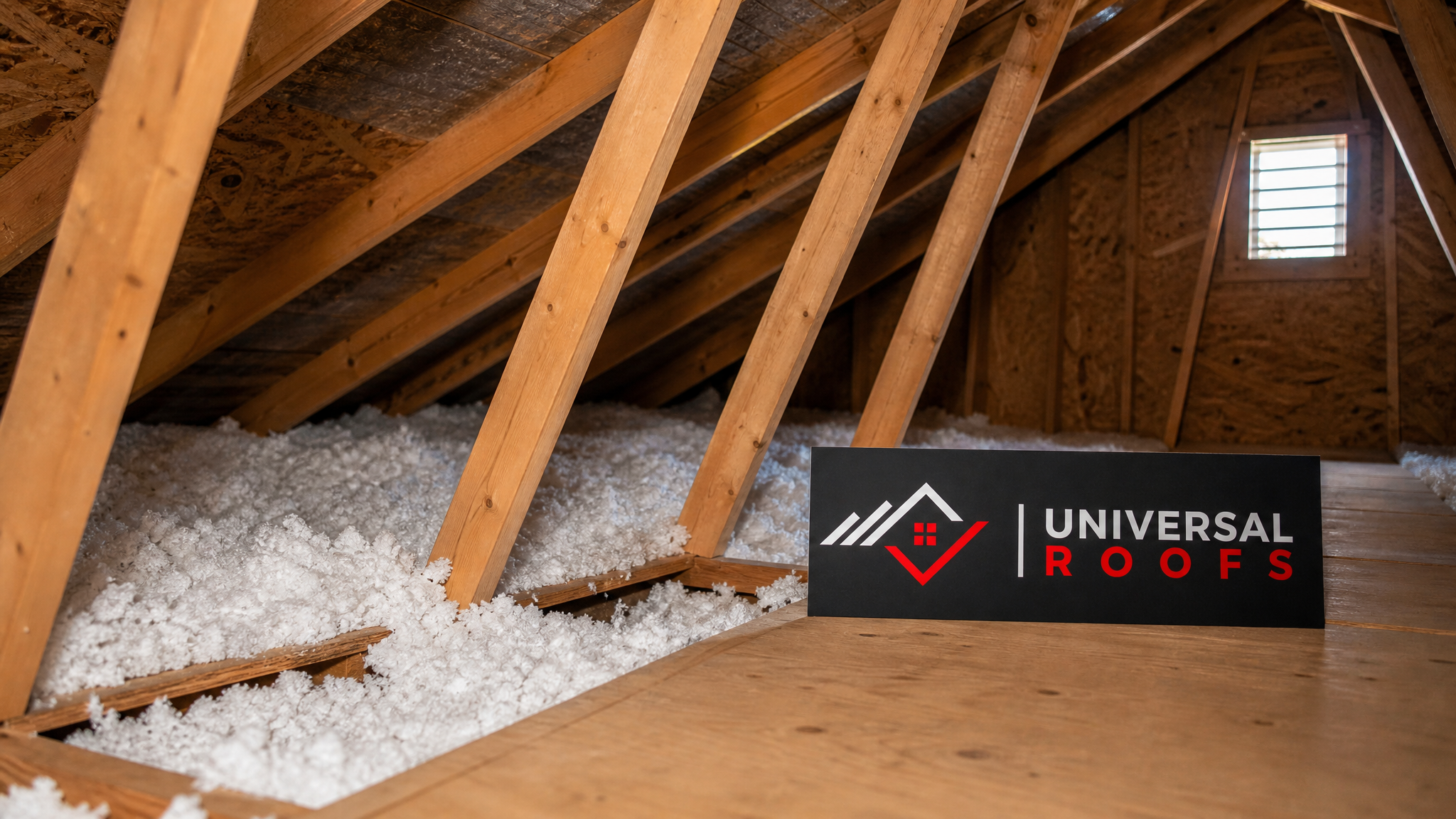
1. Interior assessment first. Before anyone climbs a ladder, we examine the attic and ceiling from inside. Staining patterns, damp insulation, rusted nail tips, and mould growth all tell a story about how long water has been entering and roughly where it is travelling from. An attic inspection at this stage often narrows the search area by half before the exterior inspection even begins.
2. Exterior visual and physical inspection. Next, a technician walks the full roof surface, checking every penetration — vent stacks, chimneys, skylights, plumbing boots, and roof-to-wall junctions — since these account for the overwhelming majority of residential leaks, far more than field shingle failure.
3. Targeted testing. If the source is not obvious from a visual check, we move to active testing: controlled water testing with a garden hose in sequenced sections, or in stubborn commercial cases, moisture meters and infrared thermography to see dampness trapped beneath the membrane or decking.
4. Confirmation and repair plan. Once the entry point is confirmed, we document it with photos, explain the cause to the homeowner, and outline exactly what repair is needed — whether that is a simple flashing reseal or a full section of roof replacement if the surrounding materials have deteriorated beyond a spot repair.
Leak Detection Methods Compared
Not every home needs the same detection approach. The table below compares the main methods professional crews use, along with when each one makes sense.
| Detection Method | Best For | Typical Duration | Relative Cost |
|---|---|---|---|
| Visual roof and attic inspection | Most residential leaks, recent stains | 30-60 minutes | Often included with a repair quote |
| Controlled water testing (hose test) | Intermittent leaks only during heavy rain | 1-3 hours | $150-$400 |
| Infrared thermography | Flat and low-slope commercial roofs, hidden moisture | 2-4 hours | $400-$900 |
| Moisture meter scanning | Confirming wet insulation under membranes | 1-2 hours | $200-$500 |
| Smoke or dye testing | Suspected plumbing vent or seam failures | 1-2 hours | $250-$550 |
For the vast majority of sloped residential roofs in Toronto, the combination of a thorough attic inspection and a targeted exterior check resolves the mystery without needing infrared equipment. Infrared and moisture meters earn their keep mainly on flat commercial roofs and complex flat roofing assemblies where water can travel sideways under a membrane for several metres before it drips through a seam.
The Most Common Leak Sources We Find in the GTA
After thousands of service calls, certain culprits show up again and again. Knowing the usual suspects helps homeowners describe symptoms accurately when booking an inspection, and helps you understand what a technician is checking first.
- Flashing failures around chimneys and walls. Step flashing and counter-flashing shrink, rust, or pull away from mortar joints over time, creating a direct channel for water.
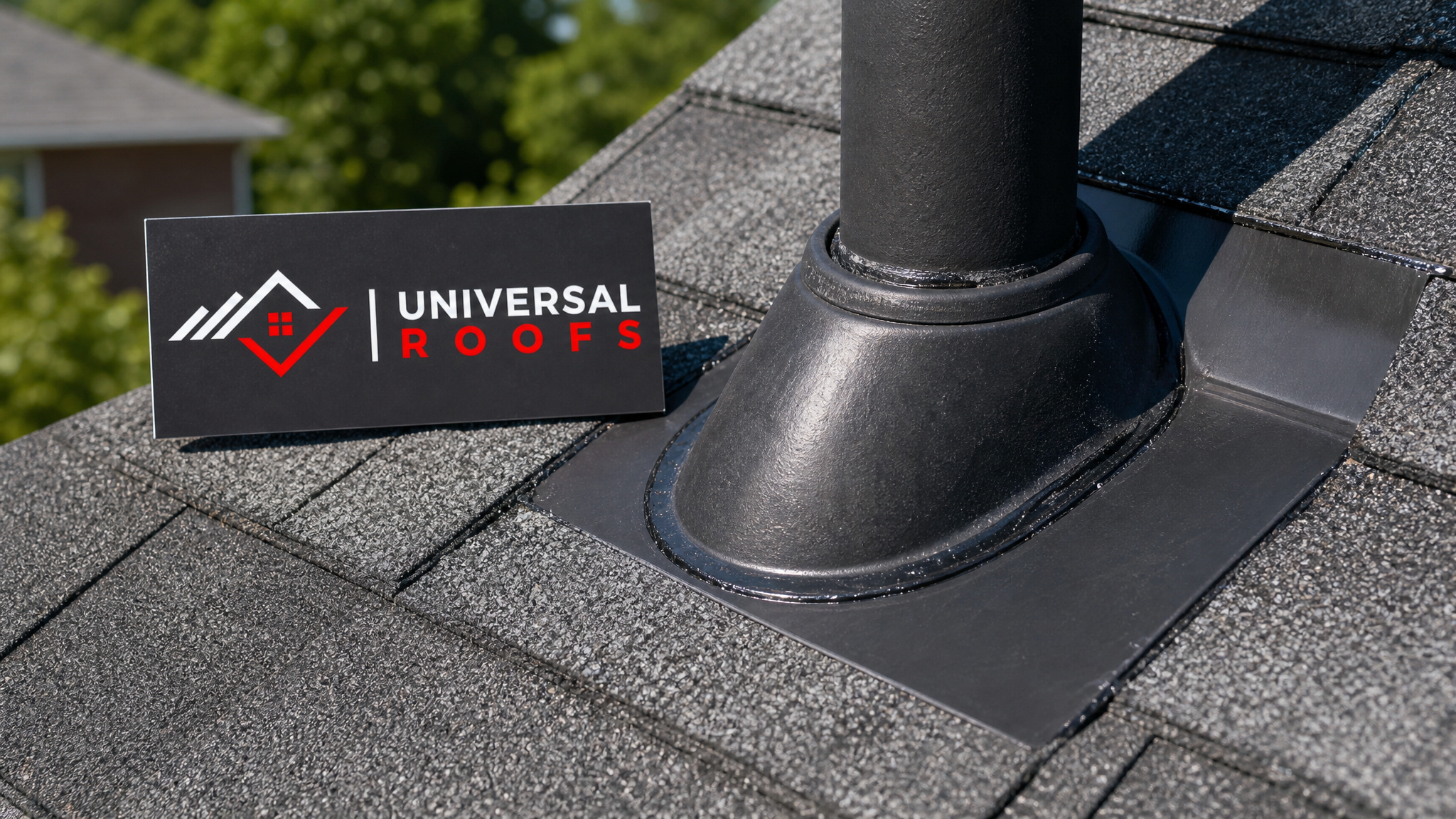
- Deteriorated pipe boots. The rubber collar around plumbing vent stacks is usually the first roofing component to fail, often within 10-12 years, well before the shingles themselves need replacing.
- Skylight seals and curbs. Older or improperly flashed skylights are a frequent leak source, especially after wind-driven rain. See our dedicated skylights and skylight replacement pages for more on this specific issue.
- Ice damming at the eaves. Poor attic ventilation lets heat escape upward, melting snow that refreezes at the cold eave and backs water up under shingles — a problem best diagnosed by reviewing your attic insulation and airflow.
- Nail pops and fastener backout. Improperly seated nails work loose as the roof deck expands and contracts, creating small but persistent openings.
- Valley and seam failures. Roof valleys concentrate enormous water volume during storms; failed valley flashing or worn membrane seams here cause some of the most serious leaks we see.
Signs You Need a Leak Detection Service Right Away
Some warning signs are obvious, but many are subtle enough that homeowners live with them for months before calling anyone. Watch for the following:
| Warning Sign | What It Usually Means | Urgency Level |
|---|---|---|
| Brown or yellow ceiling stain | Active or recent water intrusion above | High — book within days |
| Musty odour in attic or upstairs rooms | Trapped moisture, possible mould growth | High — book within days |
| Peeling paint near ceiling lines | Slow, longer-term leak behind drywall | Medium — book within 1-2 weeks |
| Granules collecting in eavestroughs | Shingle wear, may precede leaks | Low-medium — schedule seasonal check |
| Daylight visible through attic boards | Confirmed gap or deck damage | High — same-week inspection |
| Higher-than-normal summer humidity indoors | Possible hidden moisture or ventilation issue | Medium — schedule attic inspection |
If you notice more than one item from this table at once, it is a strong indicator that water has already been finding its way in for some time, and a full inspection rather than a quick patch is the right call.
What a Thorough Leak Detection Report Should Include
Not all inspections are created equal. When you hire a company for roof leak detection, insist on documentation, not just a verbal opinion. A complete report should include:
Clear photos of the suspected entry point taken from both the interior and exterior, a written explanation of how the water is travelling from that point to where you see the damage, an assessment of any secondary damage to decking, insulation, or framing, and a repair recommendation with a cost estimate broken down by scope. If the technician recommends a full roof replacement rather than a patch, they should be able to explain specifically why the surrounding materials cannot be spot-repaired — age, extensive granule loss, multiple failure points, or structural sagging are all valid reasons, but you should always hear the reasoning, not just the recommendation.
This standard of documentation is also invaluable if you end up filing an insurance claim, since adjusters want to see a clear cause-and-effect chain rather than a general note that says “roof leaking.”
Leak Detection and Repair Costs in the Toronto Area
Costs vary with roof complexity, accessibility, and how many suspected entry points need to be tested, but the table below gives a realistic range for the Greater Toronto Area in 2026.
| Service | Typical Price Range | Notes |
|---|---|---|
| Standard visual leak inspection | $0-$150 | Often waived if repair work is booked |
| Advanced testing (infrared/water test) | $150-$900 | Depends on roof size and method used |
| Minor flashing or pipe boot repair | $250-$600 | Single point of entry, easy access |
| Valley or multi-point flashing repair | $600-$1,800 | More labour-intensive, may need new membrane |
| Section re-decking after prolonged leak | $1,200-$4,000+ | Required when plywood or boards have rotted |
Prices in this table are general GTA estimates and can vary based on roof pitch, height, and material type. We recommend booking an on-site assessment for an exact quote rather than relying on averages, since a two-storey home in York Region with steep gables will price differently than a bungalow in Durham Region with a simple hip roof.
DIY Leak Checks vs. Calling a Professional
Homeowners can safely do a few basic checks themselves before calling in a crew, and doing so can help speed up the eventual inspection.
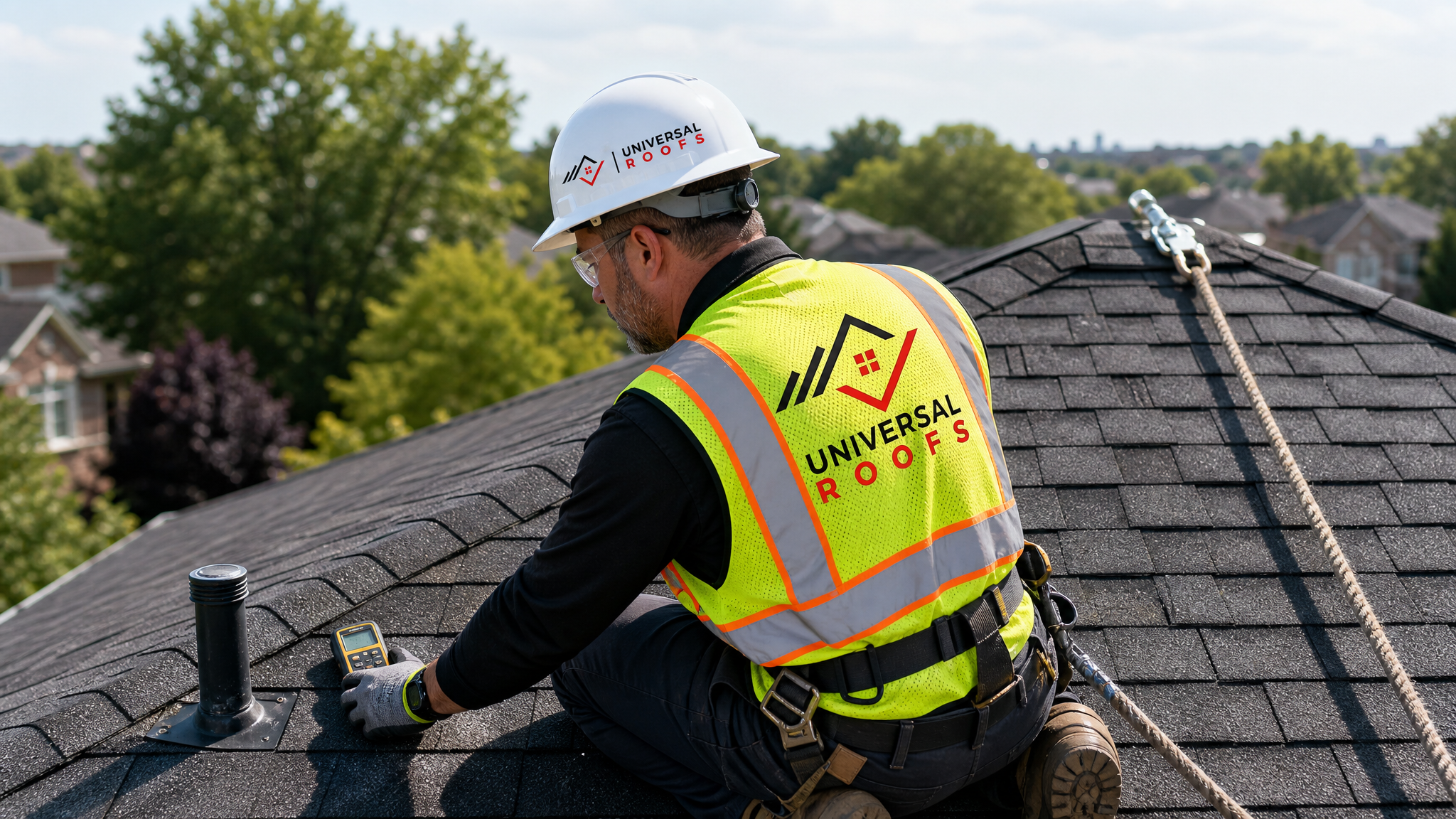
From inside the attic on a dry day, look for dark staining on the underside of the roof deck, rusted nail tips (a sign of condensation or a nearby leak), and compressed or discoloured insulation. Outside, from the ground with binoculars, you can often spot obviously lifted shingles, missing pieces, or a sagging area near a valley. What you should not do is climb onto the roof yourself, especially on steep pitches or after rain when surfaces are slippery — this is exactly the kind of work where professional crews use fall-protection harnesses and anchor points for a reason.
If your at-home check turns up nothing obvious but the stain keeps appearing, that is precisely the scenario where professional detection tools like moisture meters or water testing earn their cost, because the leak is very likely travelling laterally before it drips down.
Seasonal Timing: Why Summer Is the Best Time to Book an Inspection
July and August are ideal months for leak detection in the GTA. Roof surfaces are dry, safe to walk, and free of ice or snow load, which lets technicians perform water testing and physical inspection without the safety limitations that winter conditions impose. Booking now also means any recommended repairs — new flashing, pipe boot replacement, or a section of decking — can be completed well before the next freeze-thaw cycle begins in late autumn, when temperature swings are hardest on roofing materials.
Homeowners who wait until the first snowfall to investigate a leak often find themselves stuck with a temporary tarp solution until conditions allow safe repair work. Scheduling a summer inspection, even for a leak that only seemed to act up during last winter’s storms, is one of the most effective ways to prevent a repeat problem.
Choosing the Right Leak Detection Company
Not every roofing company invests in proper leak detection training or equipment, and it shows in the outcomes. When comparing quotes, ask whether the inspection includes an interior attic check as standard, whether the company provides written documentation with photos, and whether they guarantee the repair against the same leak recurring within a defined period. A company confident in its detection process will stand behind the fix.
It is also worth checking a company’s reviews specifically for mentions of leak repairs, since a contractor who is excellent at full roof replacements is not automatically skilled at tracing a stubborn intermittent leak — the two jobs draw on different expertise. You can also browse our FAQ page or read more about us to understand our approach before booking.
Universal Roofs has served homeowners across Toronto, Peel Region, and Halton Region since 2005, and leak detection has always been one of our most requested services, particularly for older homes where multiple decades of roofing layers can complicate a straightforward diagnosis.
Preventing Future Leaks After a Repair
Once a leak has been found and fixed, a few maintenance habits go a long way toward preventing a repeat. Schedule a roof inspection at least once a year, ideally in spring or early summer, to catch flashing wear or granule loss before it becomes a leak. Keep eavestroughs clean so water can drain properly instead of backing up under the roof edge. Check attic ventilation periodically, since poor airflow accelerates both ice damming in winter and material aging in summer heat. Finally, keep a record of any past repairs and their locations, so future inspections can quickly rule out already-addressed areas and focus on new or recurring problems.
What are roof leak detection services for repairs, and how do they differ from a standard roof inspection?
How much do professional roof leak detection services for repairs typically cost in Toronto?
Can a roof leak be detected without climbing onto the roof?
Why does my roof only leak during certain storms?
Is it worth repairing a leak or should I replace the whole roof?
How quickly should I book roof leak detection services for repairs after noticing a ceiling stain?
Need Help With Top Roof Leak Detection?
If you are dealing with a mystery stain, a musty attic, or a leak that only shows up during certain storms, the team at Universal Roofs can trace it to the source and fix it properly the first time.
Call us today at (416) 732-2421 or request a free inspection to get started.
Universal Roofs proudly serves Toronto, Mississauga, Brampton, Vaughan, Markham, Oakville and the GTA since 2005.