
When a Toronto homeowner hears the words “roof replacement,” the first thought is usually the price tag. It doesn’t have to be that way. Affordable roof replacement techniques are not about cutting corners — they’re about making smarter decisions on materials, timing, and scope so you get a durable, code-compliant roof without paying for things you don’t actually need.
At Universal Roofs, we’ve replaced roofs across the GTA since 2005, and the single biggest lesson we’ve learned is that cost control happens long before a single shingle is removed. It happens in the planning stage — choosing the right time of year, the right materials, the right scope of tear-off, and the right contractor process. This guide walks through the specific, practical techniques that keep a roof replacement affordable without sacrificing the workmanship that protects your home through Toronto’s freeze-thaw winters and humid summers.
We’ll cover material selection, timing strategy, tear-off versus overlay decisions, financing and staging options, and the maintenance habits that stretch a roof’s lifespan so you replace it less often. Whether you’re planning a project this summer or budgeting for next year, these are the same techniques our crews and estimators use every day in Toronto, Mississauga, Brampton, Vaughan, Markham, Oakville, and the surrounding regions.
What “Affordable” Really Means in Roof Replacement
Affordable does not mean cheapest. A roof that fails in eight years because low-grade materials were substituted, or because ventilation was skipped to save an hour of labour, is not affordable — it’s expensive twice. True affordability comes from eliminating waste, not eliminating quality. There are four levers that actually move the price of a roof replacement without touching the durability of the finished product:
- Choosing a material tier that matches your home’s realistic lifespan needs rather than over-buying or under-buying
- Scheduling the work during a contractor’s lower-demand season
- Reducing tear-off complexity through accurate scope assessment
- Bundling related repairs (flashing, ventilation, decking) into one mobilization instead of paying for separate site visits later
Each of these levers can shave real money off a project, and none of them require using a lesser-quality contractor or skipping permits. In fact, skipping permits or hiring uninsured labour is the single most common way homeowners turn an affordable project into a costly one, because deficient work voids manufacturer warranties and can trigger insurance disputes after storm damage.
Material Selection: Where Most of the Savings (and Risk) Live
Material choice is the largest single line item in any roof replacement, and it’s also where the most misleading “affordable” advice circulates online. The table below compares the roofing materials most commonly installed on GTA homes, with realistic cost and lifespan expectations based on our installation history.
| Material | Typical Lifespan | Relative Cost | Best For |
|---|---|---|---|
| 3-tab asphalt shingles | 15–20 years | Lowest | Budget-conscious resale properties, rental units |
| Architectural (laminate) shingles | 25–30 years | Low-Moderate | Most GTA detached and semi-detached homes |
| Premium/designer shingles | 30–40 years | Moderate | Homes prioritizing curb appeal and longer intervals between replacements |
| Metal (steel) roofing | 40–60 years | High | Long-term owners who want to avoid ever replacing the roof again |
| Modified bitumen / TPO (flat sections) | 20–25 years | Moderate | Additions, garages, and low-slope sections — see our flat roofing page |
For most detached and semi-detached homes in the GTA, architectural shingles hit the sweet spot between upfront cost and total cost of ownership. A 3-tab shingle roof costs less today, but if it needs replacing again in 15 years while an architectural roof would have lasted 28, the “affordable” choice actually costs more per year of service. When we quote a job, we always show homeowners the cost-per-year math, not just the sticker price, because that’s the number that actually matters for a long-term budget.
Timing Your Replacement to Reduce Labour Costs
Roofing contractors in Toronto see demand spike sharply after major wind and hail events, typically late spring through early autumn. During these peak windows, labour is stretched thin, material lead times lengthen, and pricing reflects the imbalance between demand and available crews. Scheduling your replacement outside these peaks is one of the most reliable ways to control cost.
Late summer, like right now in July, is actually a reasonable window — storm-driven demand hasn’t yet peaked the way it does in late August and September, shingles seal properly in warm weather, and crews still have realistic scheduling availability. Early winter and very early spring bookings can also come with softer pricing, provided temperatures stay within the manufacturer’s installation range for shingle sealing.
| Season | Typical Demand | Pricing Impact | Installation Considerations |
|---|---|---|---|
| Spring (Apr–Jun) | Rising | Neutral to slightly elevated | Good sealing conditions once temperatures stabilize |
| Summer (Jul–Aug) | High, peaks late August | Elevated during peak weeks | Ideal shingle sealing temperatures |
| Early Autumn (Sep–Oct) | Highest (post-storm rush) | Highest of the year | Excellent sealing, but longest wait times |
| Late Autumn/Winter (Nov–Mar) | Lowest | Most favourable | Cold-weather adhesives and hand-sealing required below 4°C |
Booking during a lower-demand window doesn’t just affect the quote — it often means a more attentive, less rushed crew, because they aren’t juggling five emergency tarps the same week they’re on your roof.
Tear-Off vs. Overlay: The Decision That Changes Everything
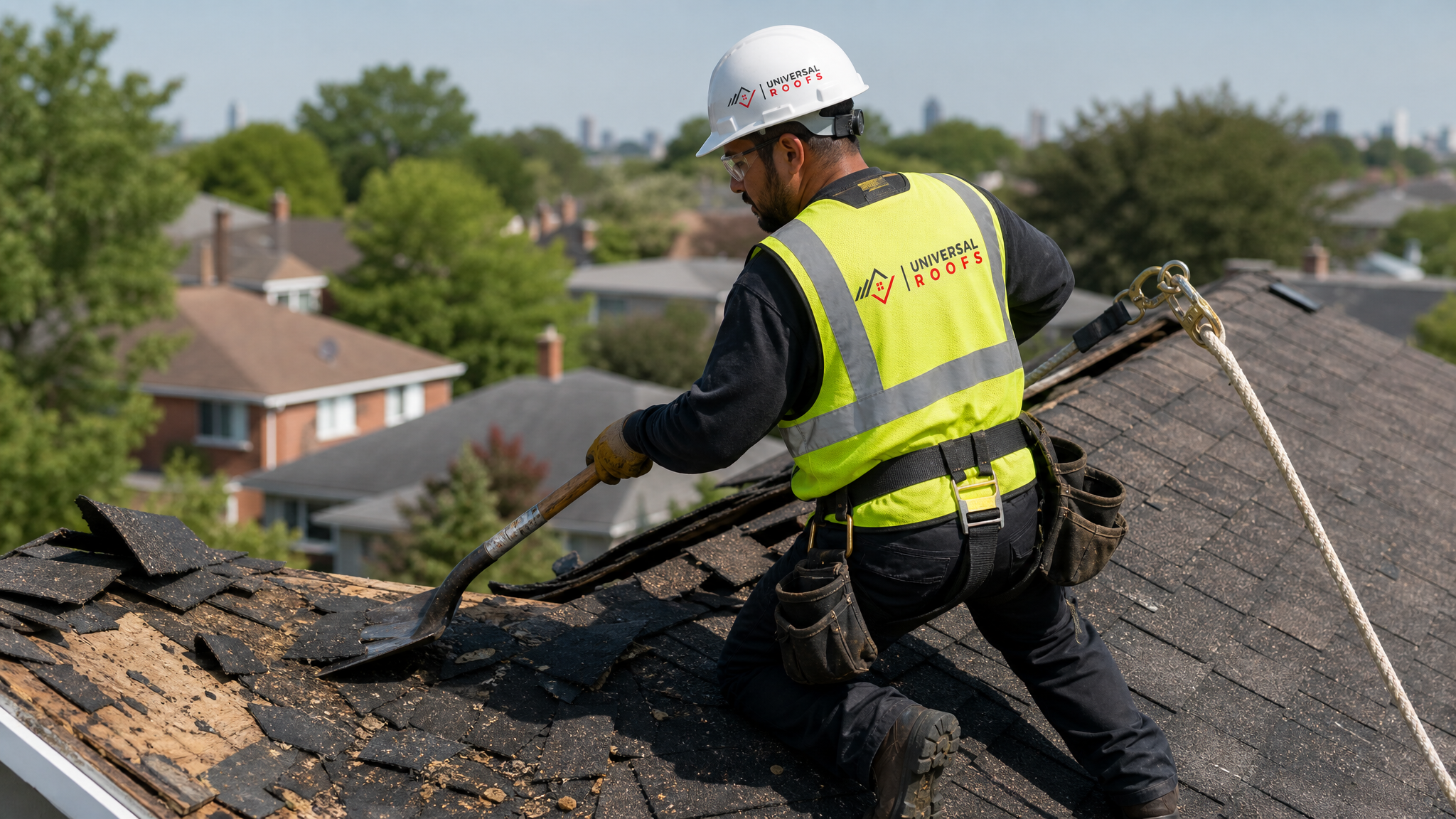
One of the most consequential cost decisions in a roof replacement is whether to fully tear off the existing roofing down to the decking, or install new shingles over the existing layer (an overlay). Overlays are cheaper upfront because they skip disposal costs and labour for removal, but they come with real trade-offs that we walk every client through honestly.
Ontario building code permits a maximum of two shingle layers on most residential roofs. If your home already has one layer, an overlay may be possible; if it already has two, a full tear-off is required by code regardless of budget. Beyond code compliance, overlays hide the condition of the decking underneath — if there’s rot, moisture damage, or inadequate attic ventilation causing condensation on the underside of the sheathing, an overlay buries the problem instead of fixing it.
| Approach | Relative Cost | Decking Inspection | Code/Warranty Notes |
|---|---|---|---|
| Full tear-off (single layer) | Moderate | Full visibility, repairs possible | Full manufacturer warranty eligibility |
| Overlay (over 1 existing layer) | Lowest | None — decking hidden | Often reduced or voided warranty terms |
| Full tear-off (removing 2 layers) | Highest | Full visibility, repairs possible | Required by code once two layers exist |
| Partial/section tear-off | Moderate-Low | Partial, limited to affected sections | Suitable only for isolated damage, not full replacement |
Our general advice: a full tear-off is almost always the more affordable choice over a 20-30 year horizon, because it lets us catch rot, ventilation gaps, and flashing failures while the roof is open rather than after they’ve caused interior damage. An overlay can make sense for a starter home you plan to sell within a few years, but for a long-term family home, it usually shifts cost into the future rather than removing it.
Reducing Scope Without Reducing Quality
Not every square metre of a roof needs the same treatment. One technique experienced estimators use is scope segmentation: identifying which sections of the roof are structurally sound and which are failing, rather than defaulting to a blanket full replacement when a targeted approach would perform just as well.
For example, a home with a straightforward gable roof and a small flat-roofed rear addition often doesn’t need identical materials or identical urgency on both sections. The sloped shingle roof might have 8-10 years of remaining service life, while the flat addition roof is failing now and needs immediate attention. In that case, replacing just the flat section this year — and scheduling the sloped section for a future budget cycle — can be a legitimate, affordable strategy, provided both sections are properly assessed by someone who understands how they interact (shared flashing, water diversion, ice damming risk).
This is also where bundling matters. If our crew is already mobilized on-site with equipment, scaffolding, and disposal bins, addressing a skylight replacement or degraded flashing at the same time avoids a second mobilization fee entirely. Homeowners who call us back six months later for a “small” skylight leak repair often end up paying more in trip charges and re-scaffolding than if it had been addressed during the original roof replacement.
Financing, Staging, and Realistic Budget Planning
Affordability is not only about the invoice total — it’s about how the cost lands on your household budget. Several approaches can make a necessary roof replacement fit more comfortably into your finances without resorting to the cheapest possible materials:
- Multi-quarter budgeting: Booking in one fiscal quarter and paying a deposit, with the balance due on completion, spreads the cash flow impact.
- Staged replacement: As described above, replacing the most urgent section first and the remainder on a planned schedule.
- Insurance coordination: If storm or wind damage contributed to the need for replacement, a documented inspection report can support a partial insurance claim, reducing your out-of-pocket exposure. This only works if the assessment and photo documentation are done properly and promptly after the event.
- Home equity or contractor financing: Many GTA homeowners use a home equity line of credit or contractor-partnered financing to avoid draining savings, paying it down over a period that matches the roof’s expected service life.
We always recommend homeowners get a written, itemized quote — not a lump-sum number — so you can see exactly what you’re paying for materials, labour, disposal, permits, and any deck repair allowance. An itemized quote also makes it much easier to compare bids apples-to-apples, since a suspiciously low bid often hides a missing line item like proper ice-and-water shield membrane or code-required ventilation upgrades.
Maintenance Techniques That Delay (and Reduce the Cost of) Replacement
The most affordable roof replacement is the one you can delay responsibly through proper maintenance. A well-maintained architectural shingle roof can genuinely reach the upper end of its 25-30 year lifespan range, while a neglected one can fail a decade early. A few habits make the biggest difference:
- Gutter and downspout clearing twice a year prevents water backup that rots fascia and drives moisture under the shingle edge.
- Attic ventilation checks — poor attic airflow causes condensation that rots decking from underneath, a failure mode that’s invisible from the outside until it’s severe.
- Flashing inspection around chimneys, vents, and skylights, since flashing failures are the single most common cause of roof leaks that are unrelated to shingle age.
- Prompt minor repairs — a single lifted or cracked shingle left unaddressed for a season can allow water intrusion that damages the decking beneath several surrounding shingles.
If you’re not sure whether a small issue needs a full roof repair or can wait, a professional inspection typically costs far less than the water damage that results from waiting too long. We offer assessments across our full service area, including Toronto, Peel Region, York Region, Halton Region, and Durham Region.
Common Cost-Cutting Mistakes to Avoid
Not every cost-saving idea actually saves money. Some of the most common mistakes homeowners make when trying to keep a roof replacement affordable actually increase total cost or risk:
| Mistake | Why It Backfires | Better Alternative |
|---|---|---|
| Hiring uninsured or unlicenced labour to save on quoted price | No recourse if work fails; may void home insurance coverage | Verify licencing and liability insurance before signing any contract |
| Skipping ice-and-water shield membrane at eaves and valleys | Ice damming causes water intrusion, drywall damage, and mould | Keep this line item — it’s inexpensive relative to the damage it prevents |
| Choosing lowest-tier shingles purely on sticker price | Shorter lifespan means replacing again sooner, raising cost-per-year | Compare cost-per-year of service, not just upfront price |
| Skipping permits to save time and fees | Can complicate resale, insurance claims, and future work | Confirm your contractor pulls proper permits as part of the quote |
| Ignoring attic ventilation during replacement | Traps moisture, shortens shingle life, can cause condensation rot | Have ventilation assessed and upgraded as part of the same project |
The pattern across all five mistakes is the same: they defer cost rather than eliminate it, often converting a moderate expense today into a much larger one in three to five years. A properly scoped, properly permitted, properly ventilated roof replacement is the actual affordable option, even when the quote is a few percentage points higher than a corner-cutting competitor’s bid.
What a Transparent, Affordable Quote Should Include
When comparing quotes from different roofing contractors, look for these specific items to be listed separately rather than folded into a single vague number:
- Tear-off and disposal (including number of layers and any dumpster/bin fees)
- Decking repair allowance (a per-sheet rate for any rotten plywood found once tear-off begins)
- Underlayment and ice-and-water shield membrane at eaves, valleys, and penetrations
- Shingle material tier, brand, and warranty terms
- Flashing replacement around chimneys, vents, and skylights
- Ventilation components (ridge vent, soffit vent, or powered attic fan if applicable)
- Permit fees and inspection scheduling
- Cleanup, magnetic nail sweep, and final walkthrough
A quote missing several of these items isn’t necessarily dishonest, but it usually means those costs will appear later as change orders once work begins — which is the opposite of affordable. Ask any contractor you’re considering to walk you through each line before you sign anything, and check their track record on our reviews page or by reading more on our about page.
How Toronto’s Climate Shapes Affordable Roofing Decisions
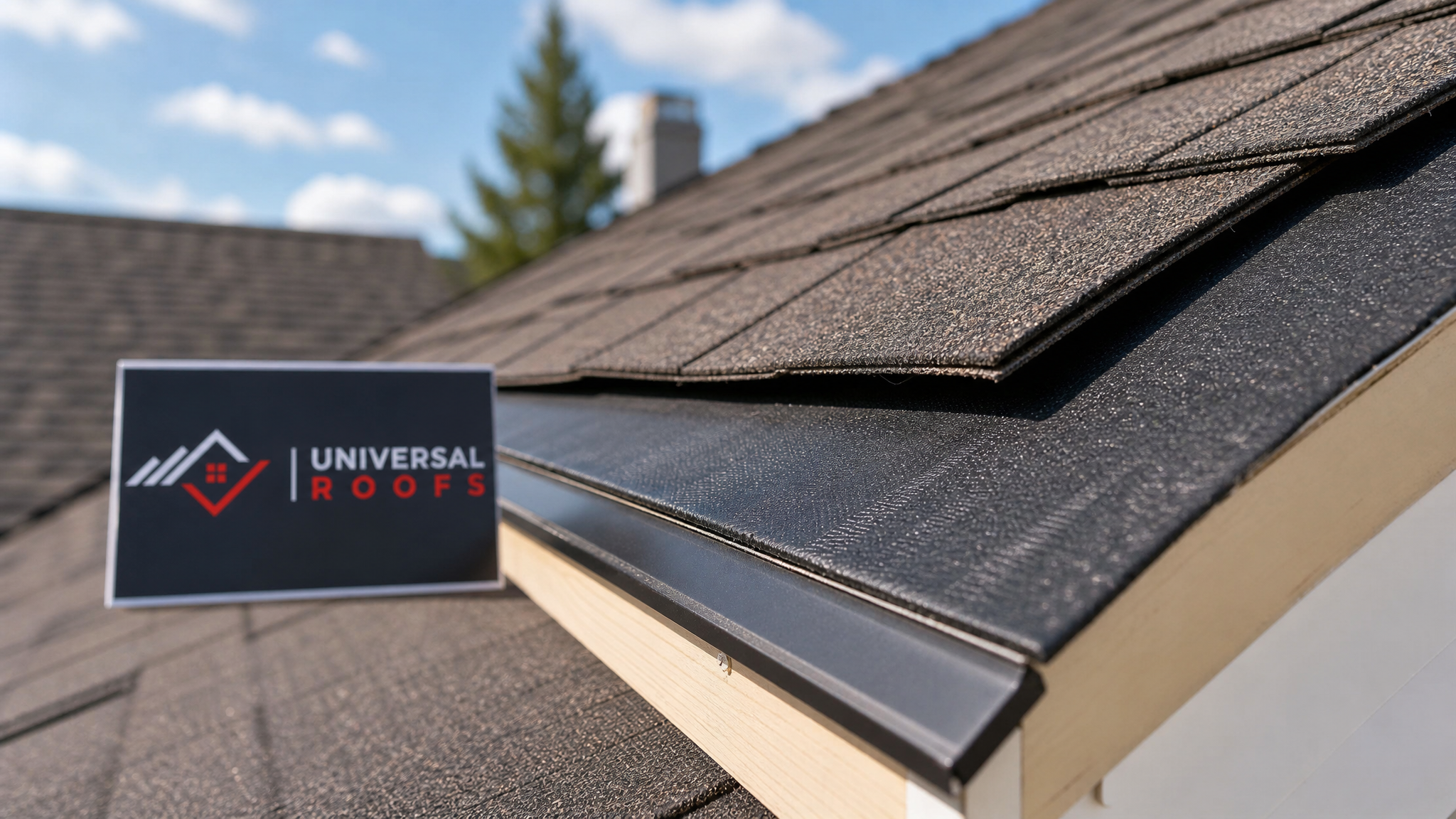
Freeze-thaw cycling is the defining climate stressor for GTA roofs. Water that gets under a shingle edge or through a cracked flashing seal can freeze, expand, and widen the gap, then thaw and re-enter, repeating the cycle dozens of times each winter. This is why techniques that might be optional in milder climates — ice-and-water shield membrane, proper soffit-to-ridge ventilation, and correctly lapped flashing — are not places to cut costs here.
Summer installation, like the work many homeowners are scheduling right now in July, has the advantage of ideal shingle sealing temperatures: the asphalt strips bond fully within days rather than weeks, giving the roof full wind resistance heading into autumn storm season. If you’re planning ahead for a replacement, aligning the work with these seasonal realities is itself a cost-avoidance technique, since a roof that seals properly the first time doesn’t need a warranty callback.
What are the most affordable roof replacement techniques for a GTA home?
Is an overlay cheaper and just as good as a full tear-off?
How much does an affordable roof replacement cost in Toronto?
Does the time of year affect the price of a roof replacement?
Can I replace only part of my roof to save money?
What should be included in an affordable roof replacement quote?
Need Help With Affordable Roof Replacement Techniques?
Choosing the right materials, timing, and scope is easier with an experienced partner who will show you the real numbers behind every recommendation. Universal Roofs has been helping GTA homeowners make informed, cost-effective roofing decisions since 2005.
Call us today at (416) 732-2421 or request a free inspection to get started.
Universal Roofs proudly serves Toronto, Mississauga, Brampton, Vaughan, Markham, Oakville and the GTA since 2005.