
Toronto homeowners are asking a new question about roof care: not just how to fix leaks, but how to maintain a roof responsibly. If you have searched for eco friendly roof maintenance techniques, you already know that roofing accounts for a meaningful share of a home’s energy loss, material waste, and stormwater runoff. The good news is that a handful of proven, low-impact practices can extend the life of your roof, cut your cooling bills, and reduce the environmental footprint of the work itself.
At Universal Roofs, we have been maintaining and replacing roofs across the Greater Toronto Area since 2005, and sustainable maintenance has moved from a niche request to a standard expectation for many homeowners. This guide walks through the eco friendly roof maintenance techniques that actually make a measurable difference: reflective coatings, environmentally responsible cleaning products, water conservation during upkeep, sustainable material choices, and the energy-efficiency gains that tie it all together.
Why Eco Friendly Roof Maintenance Matters in Toronto
Toronto’s climate is demanding on roofing systems. Homes endure humid, high-UV summers, freeze-thaw cycles through the winter, and heavy spring rain, all of which accelerate wear on shingles, membranes, and flashing. Conventional maintenance often leans on petroleum-based sealants, harsh chemical cleaners, and wasteful water use, all of which add unnecessary environmental cost to work that already needs doing.
Eco friendly roof maintenance techniques address this by working with the building’s natural performance rather than against it. Reflective coatings lower surface temperatures. Biodegradable cleaners protect nearby soil and municipal storm drains. Water-conscious washing methods reduce runoff into Lake Ontario’s watershed. None of these approaches require you to sacrifice performance, and most homeowners find they also lower long-term costs because the roof lasts longer and the home uses less energy.
For homes near the end of a roof’s service life, sustainable maintenance is often the difference between stretching a roof another five to seven years and needing a full roof replacement sooner than necessary. Even a full replacement can be done with sustainability in mind, using durable, energy-efficient materials designed to lower a home’s ongoing environmental impact.
There is also a financial argument for going green with roof upkeep, not just an environmental one. Reflective coatings and better attic ventilation reduce cooling costs every single summer, not just in the year the work is done. Biodegradable cleaning products avoid the corrosion and landscaping damage that harsher chemicals can cause, which means fewer follow-up repairs to gutters, siding, and garden beds. And choosing durable, recyclable materials during a repair means fewer tear-offs over the life of the home, which lowers total cost of ownership even though some sustainable materials carry a modest upfront premium. Homeowners who think of roof maintenance as a long-term system, rather than a once-a-decade emergency call, tend to get the best results from every one of the techniques covered below.
Reflective Coatings: The Single Biggest Impact Technique
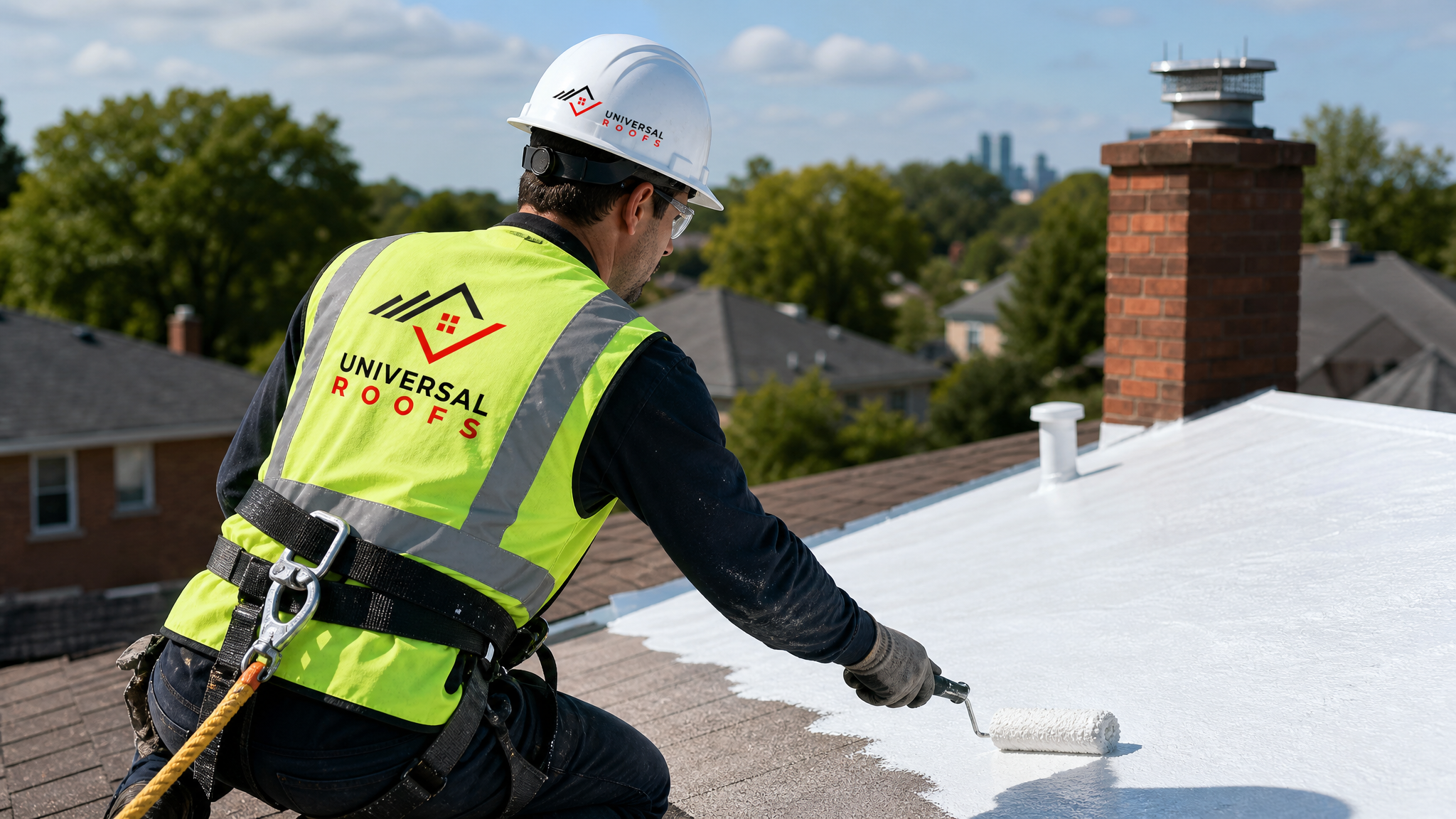
Reflective roof coatings, sometimes called “cool roof” coatings, are the most effective eco friendly roof maintenance technique available for existing roofs. These acrylic or elastomeric coatings are applied directly over asphalt shingles, modified bitumen, or flat roofing membranes, and they reflect a significant portion of solar radiation instead of absorbing it.
On a typical GTA home, an uncoated dark asphalt roof can reach surface temperatures of 65 to 80 degrees Celsius on a sunny July afternoon. A properly applied reflective coating can bring that down by 20 to 30 degrees, which reduces heat transfer into the attic and living space below. That translates directly into lower air conditioning run-times during the hottest months of the year.
Reflective coatings also protect the roofing material underneath from UV degradation, which is one of the leading causes of premature shingle cracking and membrane brittleness. By blocking UV exposure, the coating slows the ageing process of the roof, extending its usable life and delaying the need for a full roof repair or tear-off.
| Coating Type | Best Roof Surface | Typical Lifespan | Reflectivity Benefit |
|---|---|---|---|
| Acrylic elastomeric | Asphalt shingles, low-slope | 8-10 years | High |
| Silicone-based | Flat and low-slope membranes | 10-15 years | Very high |
| Aluminum coating | Metal and flat roofs | 5-8 years | Moderate to high |
| Polyurethane hybrid | Commercial and flat roofing | 10-12 years | High |
Flat roofs in particular benefit from reflective coatings because their large, exposed surface area absorbs more direct solar heat than a pitched roof. If your home or building has a low-slope section, ask about coating options during your next flat roofing inspection.
Application timing matters as much as the product itself. Coatings need a clean, dry surface and stable warm weather to cure properly, which is why late spring through early autumn is the ideal window in the GTA. Applying a coating over debris, moss, or trapped moisture will shorten its lifespan considerably, so a thorough cleaning and inspection should always come first. Most manufacturers recommend a second, lighter maintenance coat every five to seven years rather than a full reapplication, which keeps material use and cost to a minimum while maintaining the reflective benefit.
Green Cleaning Products for Moss, Algae, and Debris
Roof cleaning is a routine part of maintenance, but the products used matter more than most homeowners realize. Traditional roof cleaning solutions often rely on chlorine bleach mixtures, which kill moss and algae effectively but also run off into gardens, storm drains, and eventually local waterways. Bleach runoff can damage landscaping, harm soil microbiology, and contribute to chlorine contamination downstream.
Eco friendly roof maintenance techniques replace bleach-based cleaners with oxygen-based or enzyme-based cleaning solutions. These products break down organic growth just as effectively but decompose into oxygen and water rather than persisting as a chemical residue. They are safe for surrounding plants, pets, and the person applying them, and they do not corrode metal flashing or fasteners the way harsher chemicals can over repeated use.
For homes with heavy moss growth, particularly on north-facing slopes that stay shaded and damp, a zinc or copper control strip installed near the ridge is a low-maintenance, chemical-free way to inhibit future growth. Rainwater passing over the metal strip carries trace ions down the roof slope, which naturally discourages moss and algae without ongoing chemical treatment.
| Cleaning Method | Environmental Impact | Effectiveness | Recommended Frequency |
|---|---|---|---|
| Chlorine bleach wash | High runoff concern | High, short-term | Not recommended annually |
| Oxygen/enzyme cleaner | Low, biodegradable | High | Annually or as needed |
| Zinc/copper control strips | Minimal, passive | Preventive, long-term | Installed once, lasts years |
| Manual debris removal | None | Moderate | Twice yearly (spring/fall) |
Water Conservation During Roof Maintenance
Pressure washing is sometimes necessary during roof maintenance, but high-volume water use is not required to get the job done well. Low-flow pressure washing equipment and soft-washing techniques use significantly less water than a standard garden hose left running, while still achieving thorough debris and algae removal.
Soft washing in particular uses a low-pressure application combined with a cleaning solution that does the bulk of the work, rather than relying on high water volume to blast debris away. This method is gentler on shingles, reduces the risk of granule loss on asphalt roofs, and dramatically cuts the amount of water used per job compared to conventional pressure washing.
Collecting and reusing rainwater for pre-treatment rinsing is another practice some contractors use on larger properties, particularly ahead of gutter clearing or moss treatment. While not practical for every home, it illustrates the broader principle behind eco friendly roof maintenance techniques: use only what the job actually requires, and choose methods that minimize waste at every step.
Gutter and downspout maintenance also plays a quiet but important role in water conservation. Clear gutters direct rainwater efficiently to grade, away from the foundation, rather than allowing overflow that erodes landscaping and washes soil and debris into storm drains. Directing downspouts into rain barrels is a simple addition that lets homeowners reuse collected water for gardens later in the season, reducing overall household water demand while keeping the roof’s drainage system working as intended.
Sustainable Materials for Repairs and Replacement
When a repair or full replacement becomes necessary, material choice has a lasting environmental impact. Asphalt shingles remain the most common roofing material in the GTA, and modern architectural shingles now commonly include recycled content and improved durability ratings compared to older three-tab designs. Choosing a longer-lasting shingle reduces landfill waste over the life of the home, since fewer tear-offs are required over a 30-year span.
Metal roofing is another increasingly popular sustainable option. It is highly reflective, often manufactured with a significant percentage of recycled steel or aluminum, and is itself fully recyclable at the end of its service life, which can exceed 50 years with proper maintenance. For flat roof sections, TPO and PVC membranes offer strong reflectivity and are more recyclable than older built-up roofing systems.
Natural daylighting also plays a role in sustainable roofing. Adding or upgrading skylights reduces a home’s reliance on electric lighting during the day, and modern skylight units include improved glazing that limits unwanted heat gain in summer and heat loss in winter.
Fastener and flashing choices deserve attention too, since they are often overlooked in sustainability discussions. Corrosion-resistant stainless steel or coated fasteners last far longer than standard galvanized options in Toronto’s freeze-thaw climate, which means fewer replacement visits and less hardware waste over the life of the roof. Similarly, high-quality underlayment extends the interval between full replacements by protecting the roof deck from the moisture intrusion that causes premature rot, giving every layer of the system a longer, lower-impact service life.
| Material | Recycled Content | Recyclability at End of Life | Typical Lifespan |
|---|---|---|---|
| Architectural asphalt shingles | Moderate | Limited, improving | 25-30 years |
| Standing seam metal | High | Fully recyclable | 40-50+ years |
| TPO membrane (flat roof) | Moderate | Recyclable | 20-25 years |
| Cedar shakes | Renewable resource | Biodegradable | 25-30 years |
Attic Ventilation and Insulation: The Overlooked Half of the Equation
Roof maintenance does not stop at the shingles. What happens beneath the roof deck has a direct effect on both energy efficiency and roofing lifespan. A poorly ventilated attic traps heat in summer, forcing the roof surface and air conditioning system to work harder, and traps moisture in winter, which can lead to ice damming and premature shingle failure.
Balanced soffit and ridge ventilation allows hot, humid air to escape naturally rather than building up under the roof deck. Combined with proper attic insulation, this reduces the load on HVAC systems year-round, which is one of the most cost-effective energy-efficiency upgrades available to GTA homeowners. Improving attic ventilation alongside a reflective coating compounds the benefit: the roof surface rejects more heat, and the attic vents whatever heat does get through.
During a maintenance visit, a technician should always check baffle placement, insulation depth, and any signs of trapped moisture. These checks cost little but prevent expensive damage down the road, including rot in the roof deck and mould growth that can affect indoor air quality.
Building a Long-Term Eco Friendly Maintenance Plan
The techniques above work best as part of an ongoing plan rather than a one-time fix. A sustainable roof maintenance schedule typically includes a spring inspection to check winter damage, a mid-summer check on coating performance and attic temperatures, and a fall gutter and debris clearing before winter sets in. Each visit is an opportunity to catch small issues, like a lifted shingle edge or a clogged downspout, before they become larger repairs that consume more materials and resources to fix.
Homeowners who want documentation of a contractor’s real-world results can review our reviews from GTA clients who have had sustainable maintenance and coating work completed. For answers to common questions about scheduling, cost, and coating options, our FAQ page covers many of the details homeowners ask about before booking a visit. You can also learn more about our approach and history on the about page.
If you are located in the downtown core or surrounding neighbourhoods, our Toronto service area page has more detail on the specific services we provide in the city, including scheduling for coating applications, which perform best when installed during warm, dry stretches of the season.
What are the most effective eco friendly roof maintenance techniques?
Do reflective roof coatings actually reduce energy bills?
Are green cleaning products as effective as bleach for roof moss and algae?
How does water conservation factor into eco friendly roof maintenance techniques?
Which roofing materials are considered the most sustainable?
How often should eco friendly roof maintenance be performed?
Need Help With Eco Friendly Roof Maintenance?
A sustainable roof maintenance plan protects your home, lowers your energy costs, and reduces environmental impact all at once. Universal Roofs has been helping GTA homeowners maintain durable, efficient roofs since 2005, and we can build a maintenance plan around reflective coatings, green cleaning, and long-term material choices that fit your home.
Call us today at (416) 732-2421 or request a free inspection to get started.
Universal Roofs proudly serves Toronto, Mississauga, Brampton, Vaughan, Markham, Oakville and the GTA since 2005.