
If your attic feels like an oven in July or your shingles seem to be ageing faster than they should, the problem often traces back to a small, overlooked component tucked under your roof’s overhang. Soffit vents are the intake side of your home’s ventilation system, and understanding how they work is essential for any Toronto-area homeowner who wants a roof that lasts its full lifespan.
At Universal Roofs, we’ve inspected thousands of GTA attics since 2005, and soffit vent problems are among the most common — and most fixable — issues we find. This guide walks through the ten essential facts about soffit vents in roof ventilation that every homeowner should know, from how they function to how to spot when they’ve failed.
Whether you’re troubleshooting a hot upstairs bedroom, dealing with ice damming every winter, or simply doing due diligence before a roof replacement, this article gives you the practical, Toronto-specific knowledge you need to make informed decisions about your attic ventilation.
What Soffit Vents Actually Do in a Roof Ventilation System
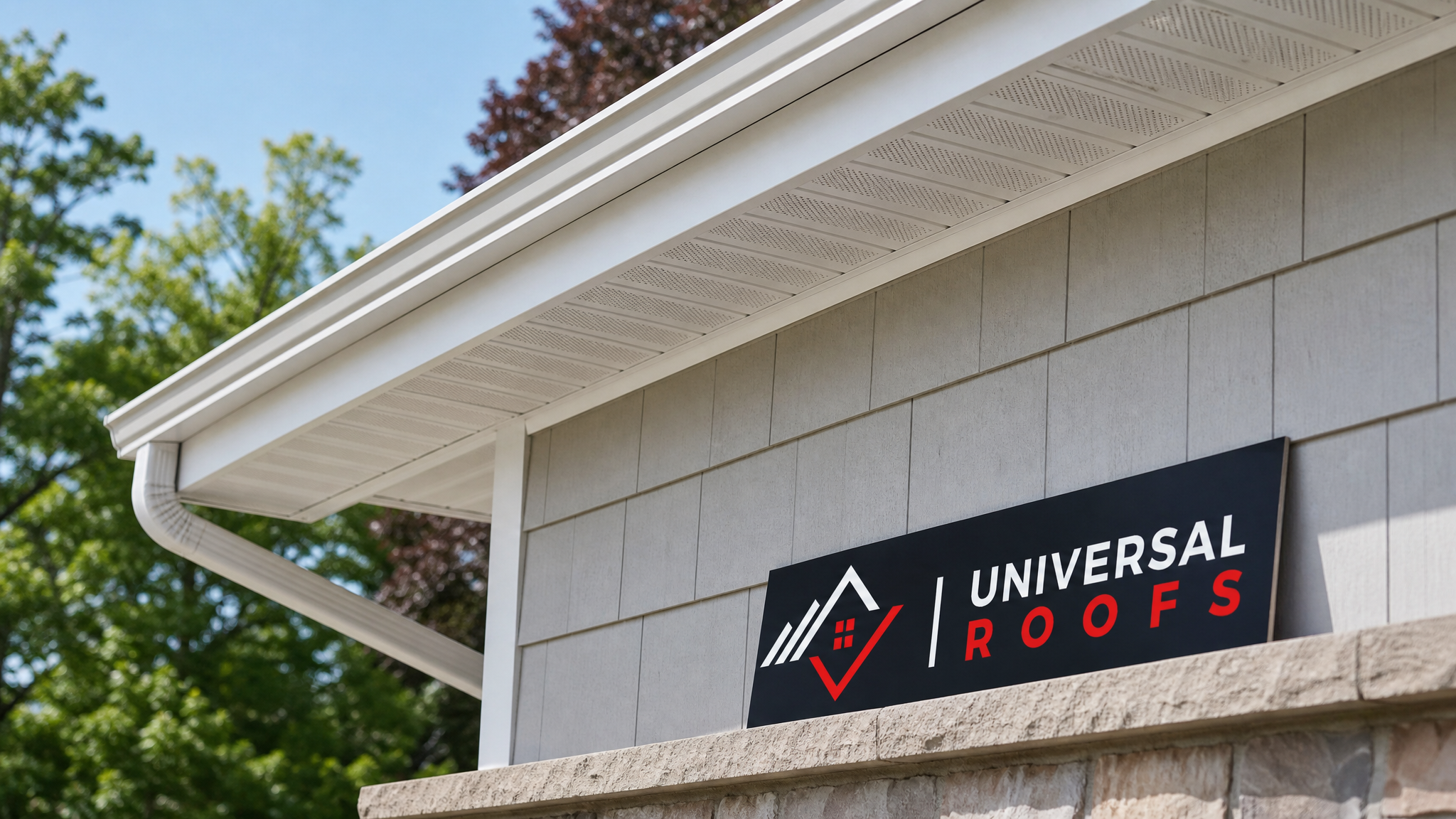
A soffit vent is an intake vent installed in the underside of your roof’s eaves — the horizontal panels, called soffits, that run along the perimeter of your house beneath the roofline. Their job is simple in concept but critical in practice: they draw cool, dry outdoor air into the attic space.
That incoming air is only half of a balanced system. Once it enters through the soffits, it needs somewhere to exit — typically through a ridge vent, roof vents, or gable vents higher up. This creates a continuous flow: cool air enters low, warms as it rises through the attic, and exits high, carrying moisture and heat with it. This is often called the “intake-exhaust” or “low-to-high” ventilation principle, and soffit vents are the foundation on which the entire system depends.
Without functioning soffit vents, even the best ridge vent or powered attic fan will struggle to pull in fresh air, because there’s no adequate source for it to draw from. In many older Toronto homes we inspect, the roof exhaust components are in good shape, but the soffit intake has been unknowingly blocked — meaning the whole system is working at a fraction of its intended capacity.
Fact One: Soffit Vents Regulate Temperature, Not Just Moisture
Many homeowners assume ventilation is purely about controlling humidity, but temperature regulation is equally important, especially during the GTA’s hot, humid summers. An attic without adequate soffit intake can reach temperatures well above 60°C on a sunny July afternoon. That heat radiates downward into living spaces, forcing air conditioning systems to work harder, and it also accelerates the ageing of asphalt shingles from underneath.
Shingle manufacturers design their products around an assumption of adequate attic ventilation. When that assumption doesn’t hold, warranties can be affected, and the granule loss, curling, and premature brittleness we see on many roof repair calls often trace back to years of an overheated, poorly vented attic rather than the shingles themselves being defective.
Fact Two: They Prevent Winter Ice Damming
In the Toronto climate, where freeze-thaw cycles are a fact of life from November through March, soffit vents play a defensive role against ice dams. When attic air is too warm because it can’t circulate properly, it warms the underside of the roof deck, melting snow near the ridge. That meltwater runs down to the colder eaves and refreezes, building up ice dams that can force water back under shingles and into the home.
A well-vented attic stays close to outdoor temperature throughout winter, which keeps the entire roof surface at a more uniform temperature and dramatically reduces the freeze-thaw cycling that causes ice dams. This is one of the main reasons our technicians check soffit vent function during any winter-related roof repair assessment — a leak that looks like a shingle problem is frequently a ventilation problem in disguise.
Fact Three: Insulation Can Silently Block Soffit Vents
One of the most common issues we find in older GTA homes is insulation — usually loose-fill fibreglass or cellulose — that has been pushed, settled, or blown directly against the underside of the roof deck at the eaves, completely covering the soffit vent openings from the inside. This can happen during a DIY insulation top-up, an improperly installed attic insulation upgrade, or simply from decades of insulation settling and shifting.
When this happens, the soffit vents may look perfectly fine from outside the house, giving homeowners a false sense of security while the attic is effectively unventilated. This is why any inspection of the attic should include a look at the eaves from inside, not just an exterior check of the soffit panels.
Fact Four: Baffles (Rafter Vents) Are Required to Keep the Airway Clear
Baffles, also called rafter vents or insulation chutes, are rigid or semi-rigid channels installed between the roof rafters at the eaves. Their purpose is to hold back insulation and maintain a clear air channel from the soffit vent all the way up to the open attic space above the top of the insulation.
Without baffles, insulation naturally slumps toward the eaves over time, and even a technically “open” soffit vent becomes useless because the air path behind it is blocked a few centimetres in. Installing baffles is inexpensive relative to the ventilation benefit they provide, and it’s a step we always recommend whenever we’re topping up attic insulation or addressing chronic moisture issues.
Fact Five: Not All Soffit Vent Types Perform Equally
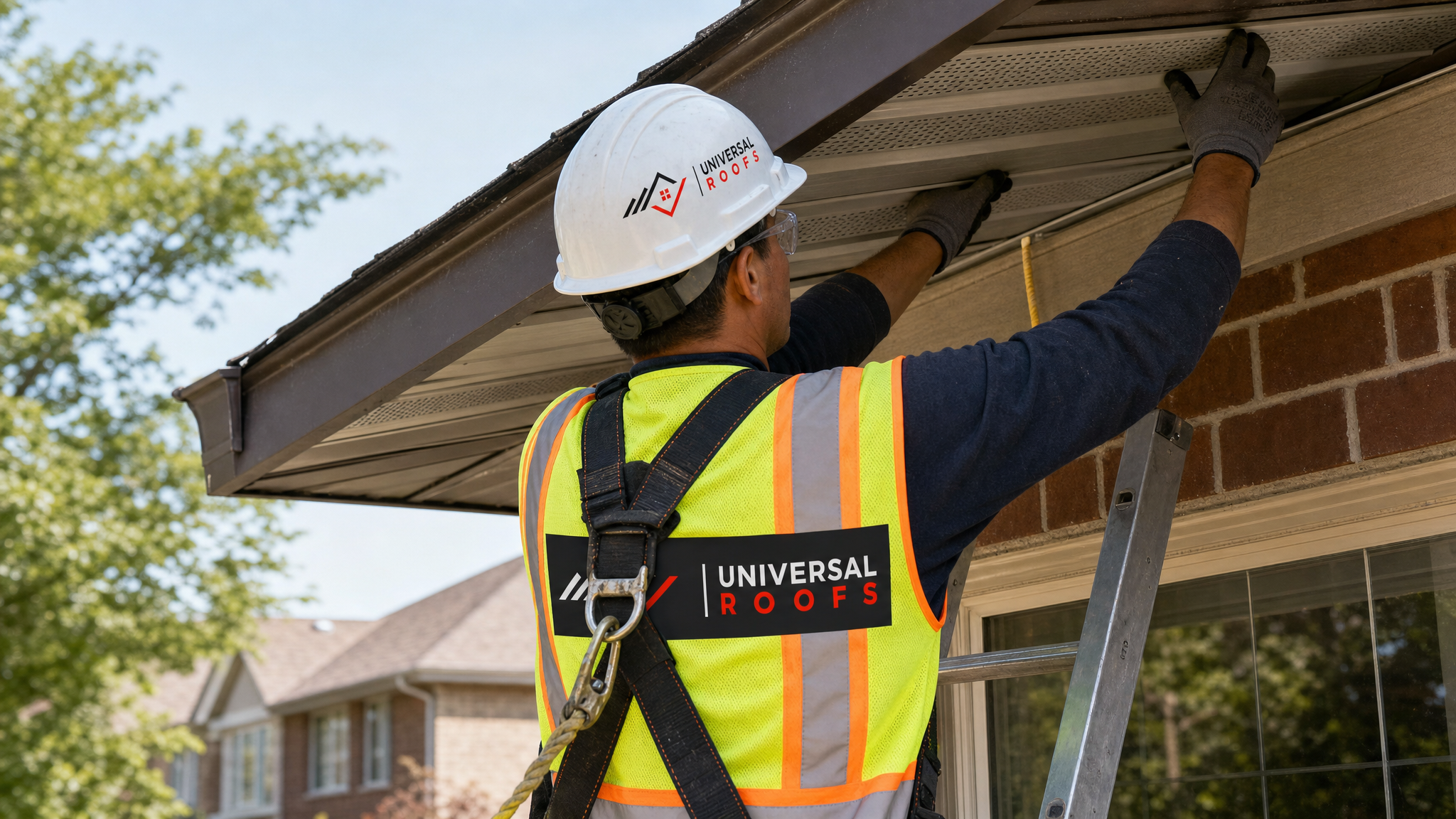
Soffit vents come in a few common configurations, and the type installed significantly affects how much intake airflow your attic actually receives. Individual round or rectangular vents spaced along the soffit provide some airflow but leave large gaps of solid soffit material between them. Continuous soffit vents, which run the entire length of the eave, provide dramatically more net free area for air intake and are generally the superior choice for homes needing to maximize ventilation.
Perforated soffit panels — where the entire soffit material itself is perforated — can also work well, provided the perforation pattern offers enough net free area and isn’t painted over during a later exterior refresh (a surprisingly common way homeowners accidentally seal off their own ventilation).
| Soffit Vent Type | Typical Net Free Area | Best For | Common Drawback |
|---|---|---|---|
| Individual round/rectangular vents | Low to moderate | Homes with limited budget or narrow soffits | Gaps between vents reduce total airflow |
| Continuous strip vents | High | Homes needing maximum intake for a ridge vent system | Requires uninterrupted soffit length |
| Perforated soffit panels | Moderate to high | New builds or full soffit replacements | Perforations can clog with paint or debris |
| Circular plug vents (retrofit) | Low | Older homes with solid soffits needing quick upgrade | Limited coverage, may require many units |
Fact Six: Soffit Vents Must Be Balanced With Exhaust Ventilation
Perhaps the single most misunderstood aspect of attic ventilation is that intake and exhaust must be roughly balanced. Building science guidance, echoed in most Canadian building codes, generally recommends a 50/50 split between intake (soffit) and exhaust (ridge, roof, or gable vents) net free area, calculated against a minimum ratio of total ventilation area to attic floor area.
If exhaust vastly outweighs intake, exhaust vents can actually begin pulling air from the soffit vents on one side of the roof and depositing it out other soffit vents, short-circuiting the system and pulling conditioned air from the living space through ceiling penetrations instead. If intake outweighs exhaust, the system becomes intake-starved and airflow stalls. Getting this balance right is a core part of any proper roof replacement ventilation plan.
| Ventilation Component | Role | Typical Location | Recommended Share of Total NFA |
|---|---|---|---|
| Soffit vents | Intake | Eaves / roof overhang underside | ~50% |
| Ridge vent | Exhaust | Peak of roof | ~50% (paired with soffit) |
| Gable vents | Exhaust (or intake, depending on design) | Attic end walls | Varies; often replaced by ridge vent systems |
| Powered attic fans | Forced exhaust | Roof deck or gable | Supplemental only; can cause imbalance if oversized |
Fact Seven: Blocked Soffit Vents Are a Leading Cause of Attic Moisture and Mould
When soffit vents are blocked — by insulation, paint, bird nests, wasp nests, or debris — moisture generated inside the home (from cooking, showers, and everyday living) that migrates into the attic has nowhere to escape efficiently. That trapped moisture condenses on the cold underside of the roof deck, especially during winter, leading to sheathing rot, mould growth, and rusted fasteners.
We routinely find that homeowners calling about a musty attic smell or visible black staining on roof sheathing have a soffit ventilation blockage rather than an active roof leak. Confirming this with a proper attic inspection before assuming the worst can save significant, unnecessary repair costs.
Fact Eight: Soffit Vents Interact With Skylights and Roof Penetrations
Any additional roof penetration, including skylights, changes local airflow patterns in an attic and around the roof deck. A skylight shaft that passes through the attic can create a localized zone where moist, warm air condenses if the surrounding insulation and vapour barrier aren’t installed correctly, particularly if soffit intake in that section of the roof is inadequate.
When we install or service skylights or handle a skylight replacement, we always check that the surrounding soffit and attic ventilation is adequate, because a skylight shaft with poor airflow around it is a common site for condensation drips that homeowners mistake for a leaking skylight seal.
Fact Nine: Flat and Low-Slope Roofs Handle Ventilation Differently
Traditional soffit-to-ridge ventilation applies primarily to sloped, attic-style roofs. Flat and low-slope roofs, common on additions, garages, and some commercial and residential buildings across the GTA, generally don’t have a traditional attic cavity in the same sense, and ventilation is handled through different means — such as vented flat roof assemblies, tapered insulation systems, or fully sealed, insulated assemblies that avoid the need for airflow altogether.
If your home has a mixed roofline — a sloped section with an attic and a flat section over an addition — it’s worth having both assessed separately, since applying sloped-roof ventilation logic to a flat roofing section can lead to the wrong diagnosis and the wrong fix.
| Roof Type | Ventilation Approach | Role of Soffit Vents | Typical Issue if Ignored |
|---|---|---|---|
| Sloped roof with attic | Soffit-to-ridge intake/exhaust flow | Primary intake source | Ice damming, overheating, mould |
| Flat/low-slope roof | Vented deck or fully sealed assembly | Not typically used | Trapped moisture in insulation layers |
| Cathedral ceiling | Dedicated vent channel per rafter bay | Feeds individual rafter channels | Condensation on ceiling drywall |
| Mixed rooflines | Separate strategy per section | Applies only to sloped sections | Misdiagnosed leaks between sections |
Fact Ten: Soffit Vent Inspection Should Be Part of Routine Roof Maintenance
Because soffit vents are easy to overlook, they’re rarely on a homeowner’s annual maintenance checklist — but they should be. A simple visual check, both from outside (are the vent openings clear of paint, caulking, and debris?) and from inside the attic (is insulation blocking the vent from behind?), can catch problems long before they show up as an ice dam, a hot upstairs, or a mouldy attic smell.
We recommend homeowners check their soffit vents at least once a year, ideally in spring after winter debris has accumulated and before summer heat puts maximum demand on the ventilation system. If you’re not comfortable getting into the attic yourself, this is a quick add-on to any scheduled roof inspection.
Signs Your Soffit Vents May Be Failing
Several warning signs point to compromised soffit ventilation. Recognizing them early can prevent more costly damage down the line.
- Visible ice dams or icicles along the eaves every winter
- An upstairs that stays noticeably hotter than the rest of the house in summer
- Musty odours or visible dark staining in the attic
- Frost or condensation visible on the underside of the roof deck in winter
- Peeling paint on soffit panels, sometimes a sign of trapped moisture pushing through
- Wasp nests, bird nests, or visible debris in or around the vent openings
- Recently added insulation with no visible baffles installed
If you notice any combination of these signs, it’s worth having a professional take a look. Sometimes the fix is as simple as clearing debris and adding baffles; other times it may point to a broader ventilation redesign as part of a future roof replacement.

How Toronto’s Climate Shapes Soffit Vent Requirements
The GTA’s climate is uniquely demanding on roof ventilation systems. Summers bring sustained heat and humidity, pushing attic temperatures skyward and increasing cooling loads on homes without adequate intake airflow. Winters swing the other direction, with repeated freeze-thaw cycles that make ice damming a near-annual risk for poorly ventilated attics.
This seasonal swing means soffit vents in Toronto homes work harder, in both directions, than they would in a more temperate climate. It’s part of why we treat soffit vent condition as a standard checkpoint whenever we’re assessing roofs across Toronto, Peel Region, York Region, Halton Region, and Durham Region — the same vent that would be a minor concern elsewhere can become a major source of damage here if it’s not functioning correctly.
DIY Checks vs. When to Call a Professional
Homeowners can safely perform a few basic checks themselves. From the ground, walk the perimeter of the house and look up at the soffit panels — check that vent openings aren’t painted shut, caked with dirt, or covered by debris such as leaves or nesting material. From inside the attic (if accessible and safe to enter), a flashlight check along the eaves can reveal whether insulation is piled against the roof deck at the perimeter, blocking the vent path.
Where things get more involved — measuring net free area, calculating the correct intake-to-exhaust ratio for your specific attic volume, installing baffles correctly across an entire roofline, or diagnosing whether a moisture issue is ventilation-related or leak-related — is where professional judgment pays off. Misdiagnosing the cause of attic moisture or heat issues can lead to spending money on the wrong fix entirely.
| Task | DIY-Friendly? | Tools Needed | Recommended Frequency |
|---|---|---|---|
| Visual exterior soffit check | Yes | Ladder, flashlight (optional) | Annually, in spring |
| Interior attic insulation check | With caution | Flashlight, dust mask | Annually, or after insulation work |
| Net free area calculation | Not recommended | Measuring tools, code reference | During renovation or replacement planning |
| Baffle installation across full attic | Not recommended for full jobs | Baffles, staple gun, safety gear | Once, during insulation upgrade |
| Full ventilation system redesign | No | Professional assessment | At time of roof replacement |
What are the most essential facts about soffit vents in roof ventilation for homeowners to know?
How do I know if my soffit vents are blocked?
Can too many soffit vents cause problems?
Do flat roofs need soffit vents?
Why do ice dams keep forming even though my soffit vents look fine from outside?
How often should soffit vents be inspected?
Need Help With 10 Essential Facts About?
Getting soffit ventilation right protects your entire roof system, from shingle lifespan to attic air quality, and it’s a detail worth getting professionally assessed rather than guessing at. Universal Roofs has been solving exactly these kinds of ventilation issues across the GTA for two decades, and our technicians can quickly tell you whether your soffit vents are doing their job.
Call us today at (416) 732-2421 or request a free inspection to get started.
Universal Roofs proudly serves Toronto, Mississauga, Brampton, Vaughan, Markham, Oakville and the GTA since 2005.