
If your skylight is leaking, fogged up, or letting a draft whistle through the frame, finding the right person to fix it matters more than most homeowners expect. A skylight sits at the single most exposed point on your roof, where flashing, glass, insulation and structural framing all meet in one small opening. Get the repair wrong and water finds its way back in within a season. Get it right and the unit can outlast the rest of your roof.
So what actually separates the top skylight repair specialists from a general handyman or a roofer who “does skylights sometimes”? It comes down to manufacturer training, flashing expertise, the tools they carry, and how they diagnose a leak before they ever touch a caulking gun. This guide walks through exactly what to look for, what a proper repair involves, and how Toronto-area homeowners can tell a genuine specialist from someone who will patch the symptom and leave the cause untouched.
We have been repairing and replacing skylights across the Greater Toronto Area since 2005, and the patterns are consistent: most “repeat leak” calls we get are for skylights that were previously repaired by someone without proper flashing training. This article explains what qualifies a contractor as a true specialist, the credentials and equipment that matter, and how to vet anyone before they get on your roof.
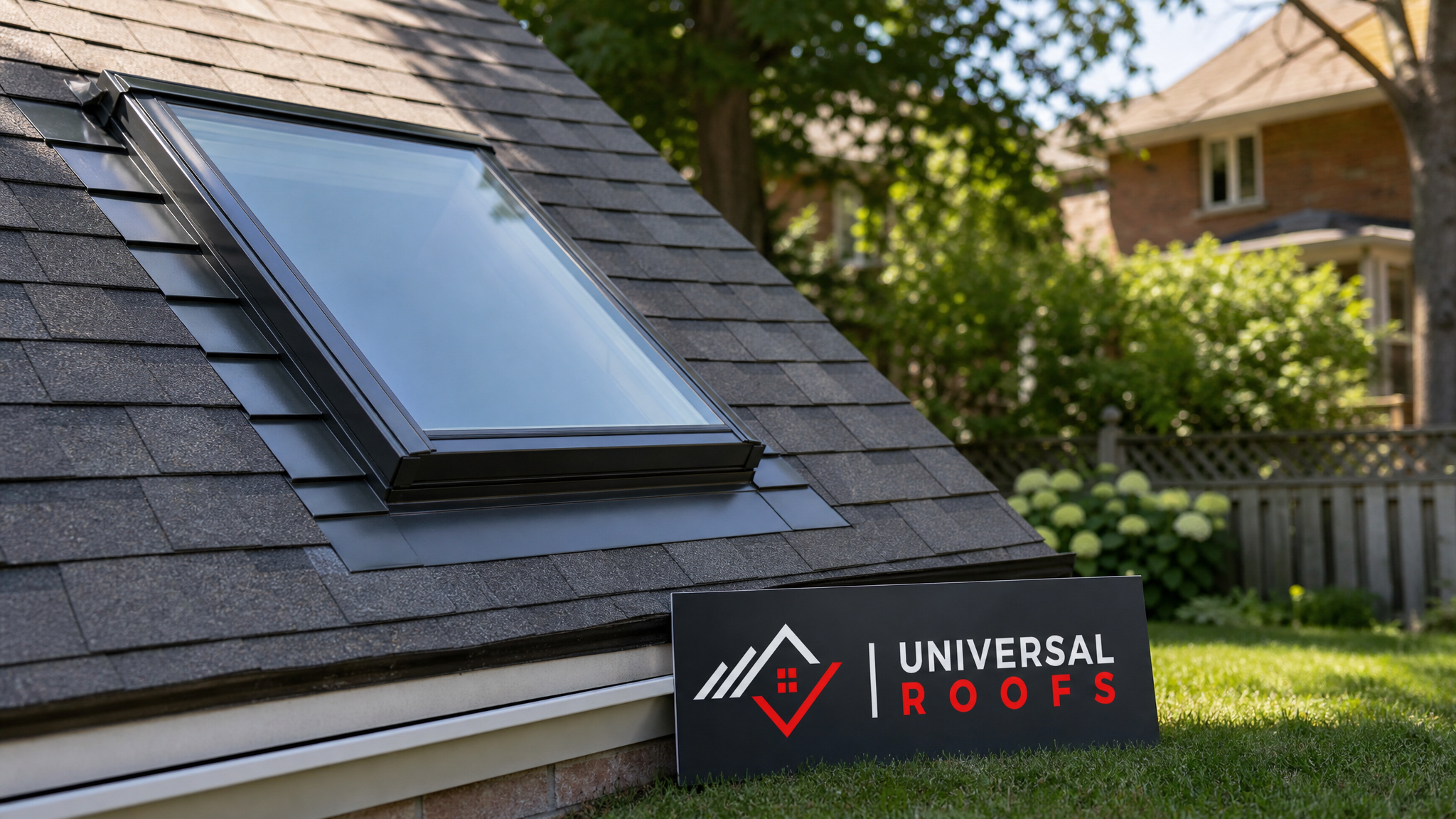
What Makes a Contractor a True Skylight Repair Specialist
Plenty of roofing companies will quote a skylight repair, but not all of them have the specific training the job requires. A genuine specialist typically has three things a generalist does not: manufacturer certification (Velux, Fakro, or similar), a documented track record of skylight-specific warranty work, and a crew that treats flashing as a system rather than a single strip of metal.
Skylight leaks are rarely caused by the glass unit itself failing outright. In our experience, the majority trace back to one of three sources: deteriorated step or counter-flashing, a failed seal between the curb and the roof deck, or condensation that homeowners mistake for a leak. A specialist knows how to tell these apart during the first visit, usually with a moisture meter and a visual inspection from both inside the attic and on the roof surface, rather than guessing from the ground.
Because Universal Roofs handles skylight work as a core service rather than an occasional add-on, our crews carry the specific flashing profiles, high-temperature sealants, and glazing tools that skylight manufacturers specify — not generic roofing supplies repurposed for the job.
Credentials and Training That Actually Matter
When homeowners search for skylight repair specialists, the marketing language can blur together fast. Here is a practical breakdown of the credentials worth asking about, and what each one actually tells you about a contractor’s capability.
| Credential or Trait | What It Verifies | Why It Matters | How to Confirm It |
|---|---|---|---|
| Manufacturer certification (Velux, Fakro) | Formal training on that brand’s flashing kits and install specs | Keeps factory warranty valid and ensures correct flashing sequence | Ask for a certificate number or check the manufacturer’s installer locator |
| WSIB coverage | Worker’s compensation is active and current | Protects the homeowner from liability if a worker is injured on the roof | Request a WSIB clearance certificate before work begins |
| Liability insurance | Coverage for property damage during the repair | Covers accidental damage to roofing, siding, or interiors | Ask for a certificate of insurance naming your address |
| Written skylight-specific warranty | The contractor stands behind flashing and sealant work, not just labour | Distinguishes a specialist from a one-time repair job | Get the warranty terms in writing before signing |
| Years of skylight-specific experience | Depth of exposure to different skylight brands and roof types | Flat roof curb-mounts and sloped shingle roofs require different techniques | Ask how many skylight repairs they complete per year, not just roofs |
A contractor who can answer all five of these without hesitation is almost always the safer choice. If a company cannot produce a WSIB clearance certificate on request, that alone should end the conversation — it is one of the most common corners cut by unlicensed crews working the GTA.
Diagnosing the Real Cause Before Any Repair Starts
The single biggest mistake we see from non-specialists is treating every skylight leak as a sealant problem. Caulking over a symptom without identifying the actual entry point almost always means the leak returns within a year, often worse than before because the new sealant traps moisture against the frame.
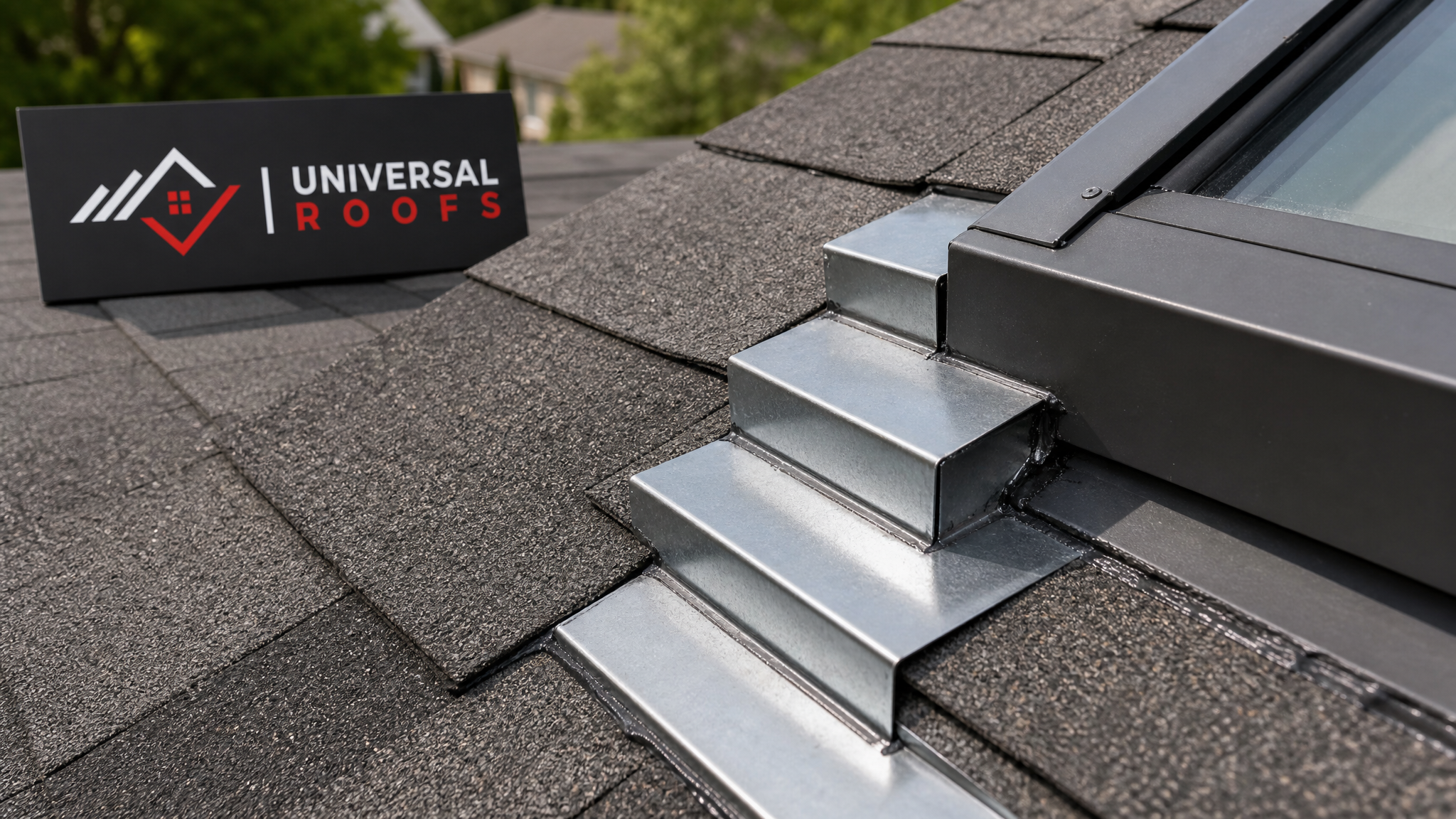
A proper diagnostic visit from a skylight repair specialist typically includes an interior inspection of the drywall and framing around the opening, a check of the attic space above the ceiling for staining or damp insulation, and an exterior inspection of the flashing, curb, and surrounding shingles or membrane. On sloped roofs, we pay particular attention to the step flashing pieces that interleave with each shingle course up the sides of the skylight — these are the pieces most often installed incorrectly by crews unfamiliar with skylight-specific sequencing.
| Symptom | Likely Cause | Diagnostic Method | Typical Fix |
|---|---|---|---|
| Water stain on ceiling drywall near one corner | Failed corner flashing or cracked sealant joint | Attic inspection with moisture meter, exterior flashing check | Re-flash the affected corner and reseal with high-temperature sealant |
| Dripping only during heavy rain, not light rain | Overwhelmed or undersized flashing on an older unit | Roof inspection during or immediately after a rain event | Upgrade to a modern step-and-counter flashing kit |
| Moisture appears only in cold weather, disappears in summer | Condensation from poor attic ventilation, not a leak | Check attic humidity and insulation around the skylight shaft | Improve attic ventilation rather than reseal the skylight |
| Foggy or cloudy glass between panes | Failed gas seal in a double- or triple-glazed unit | Visual inspection of the glazing unit | Full skylight replacement — the seal cannot be repaired |
| Leak appears only where the skylight meets a flat roof section | Membrane pulling away from the curb on a low-slope roof | Exterior inspection of the membrane-to-curb transition | Re-terminate the membrane and add proper curb flashing |
That fourth row is worth pausing on: fogging between the panes of glass is one of the most common reasons homeowners call about a “leaking” skylight when the unit is not leaking at all. It is condensation trapped inside a failed insulated glass unit, and no amount of exterior sealant will fix it. A specialist will tell you this honestly on the first visit rather than charging for a resealing job that was never going to solve the problem.
Why Toronto’s Climate Makes This Work Different
The GTA’s freeze-thaw cycle is one of the toughest environments in Canada for exterior seals and flashing. Water that gets behind a flashing joint in November can freeze, expand, and pry the joint further open by January, then thaw and run into the attic during a February melt. By the time a homeowner notices a stain on the ceiling, the underlying flashing damage is often months old.
This is why a specialist working in Toronto, Mississauga, Brampton, Vaughan, or Markham approaches skylight repair differently than a contractor in a milder climate would. Sealants rated for extreme temperature swings, flashing profiles designed to shed ice rather than trap it, and a genuine understanding of how a specific roof pitch sheds snow around a skylight curb all factor into a repair that actually lasts through a full Canadian winter.
Local code requirements also matter more than most homeowners realize. Skylight curbs in Ontario need to meet minimum height requirements above the roof deck specifically to keep pace with snow load and ice damming. A specialist familiar with Toronto-area building requirements will flag an undersized curb during a repair rather than simply resealing a unit that was never installed to code in the first place.
Repair Versus Replacement: How Specialists Make the Call
Not every skylight problem calls for full replacement, and not every leak can be permanently solved with a repair. A specialist will walk you through the tradeoffs honestly rather than defaulting to whichever option is more profitable for them.
| Factor | Favours Repair | Favours Replacement |
|---|---|---|
| Age of the unit | Under 10 years old | Over 15-20 years old, especially original builder-grade units |
| Glass condition | Clear glass, no fogging | Fogging or cloudiness between panes |
| Flashing condition | Localized damage to one section | Widespread corrosion or multiple failure points |
| Frame condition | Frame is solid, no rot or warping | Visible wood rot, warping, or cracked frame material |
| Energy efficiency | Unit already meets current Energy Star standards | Older single- or double-pane unit with poor insulation value |
When a unit is more than fifteen years old and the glazing has already failed once, we usually recommend skylight replacement over another repair. Replacement parts for older units become harder to source over time, and a modern unit typically pays part of itself back in reduced heating and cooling costs. For newer units with a single, identifiable flashing failure, a targeted repair is almost always the more sensible and less expensive route.
What a Proper Repair Visit Actually Involves
A specialist’s repair process looks noticeably more thorough than a quick resealing job. Here is what homeowners should expect from a proper visit, from first phone call to final walkthrough.
- Initial phone or photo assessment — a specialist will often ask for photos of the interior stain and, if safe, the exterior unit before booking a visit, so the crew arrives prepared with the right materials.
- On-site diagnostic — interior and exterior inspection, moisture meter readings, and an honest explanation of the likely cause before any work starts.
- Written estimate — a clear scope of work, materials being used, and whether the job is a repair or should be a replacement, provided before the crew begins cutting into anything.
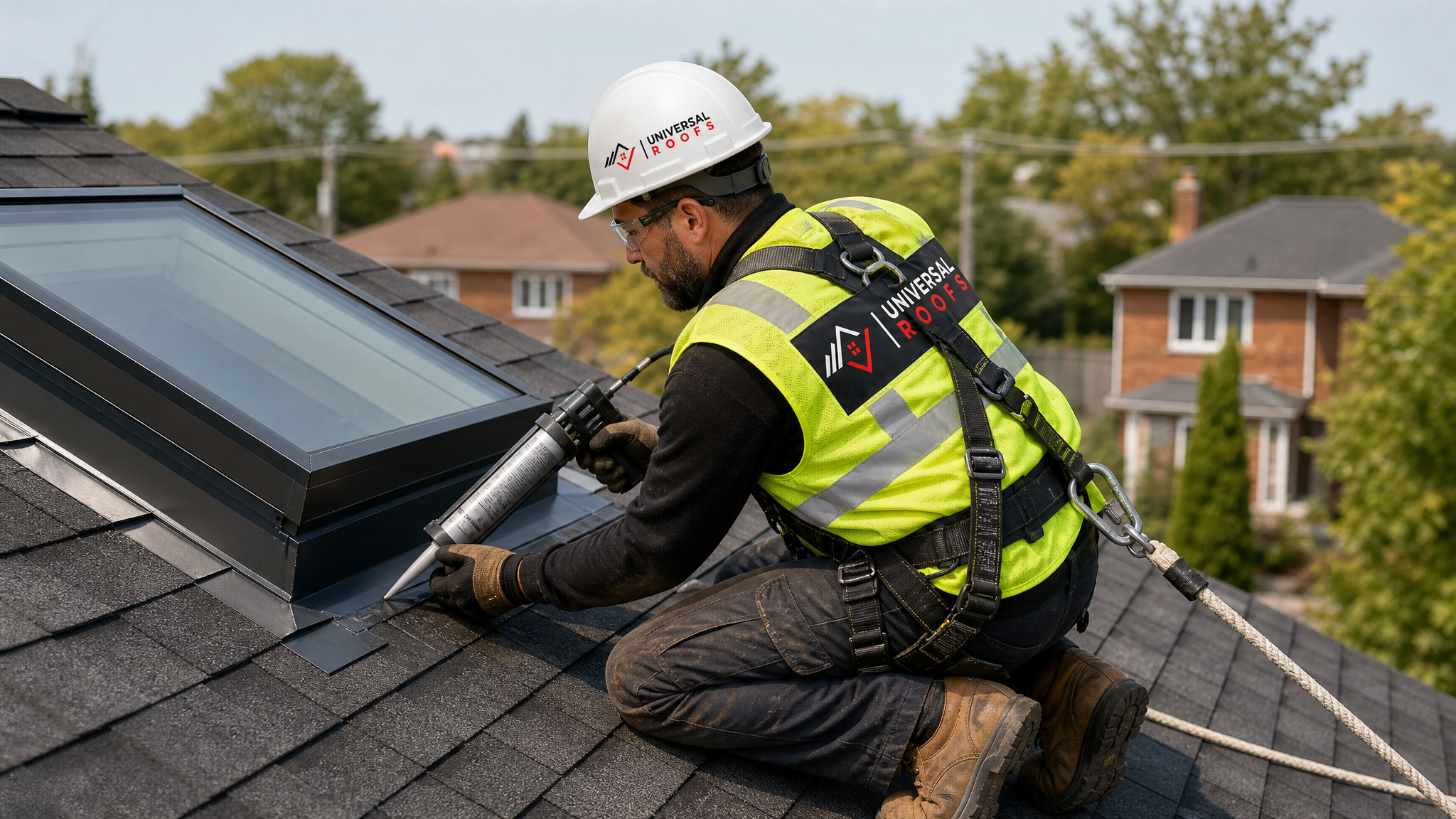
- Safe access setup — proper fall protection, harness anchor points, and roof protection to avoid damaging shingles or membrane during the work.
- Removal of failed materials — old sealant, corroded flashing, or damaged shingles around the curb are fully removed rather than sealed over.
- Reinstallation with correct materials — manufacturer-specified flashing kits, high-temperature sealants, and, where applicable, new shingles or membrane to match the surrounding roof.
- Interior check — confirming the drywall and insulation around the skylight shaft are dry and, if needed, flagging any remediation the homeowner should arrange separately.
- Written warranty — documentation of what is covered and for how long, handed over at project completion.
Skipping any of these steps is usually a sign the crew is treating the job as a quick patch rather than a genuine repair. The removal step in particular gets rushed by non-specialists — sealing over old, failed caulking rather than stripping it back to bare flashing is one of the fastest ways to guarantee a repeat leak.
Typical Costs and Timelines for Skylight Repairs
Costs vary with the type of failure, the roof pitch, and how the skylight is mounted, but homeowners researching skylight repair specialists in the GTA should expect the following general ranges. These are typical figures for standard residential jobs and can shift based on roof access, height, and material availability.
| Repair Type | Typical Cost Range (CAD) | Typical Timeline | Notes |
|---|---|---|---|
| Sealant and minor flashing touch-up | $300 – $700 | Same day | Suitable only for very localized, early-stage issues |
| Full step and counter-flashing replacement | $800 – $1,800 | 1 day | Most common repair for genuine flashing failures |
| Curb rebuild with membrane re-termination (flat roof) | $1,200 – $2,500 | 1-2 days | Common on flat roofing sections where the curb meets the membrane |
| Full skylight unit replacement | $1,500 – $4,500+ | 1 day | Cost depends on unit size, glazing type, and roof pitch |
| Attic ventilation correction (condensation cases) | $400 – $1,200 | 1 day | Addresses the root cause when fogging is condensation, not a leak |
Prices above are general Toronto-area ranges rather than a quote — every roof is different, and a proper on-site assessment is the only way to get an accurate number. Be cautious of any quote given over the phone without at least photos or a site visit; skylight repair pricing depends heavily on roof pitch, access, and the specific type of flashing failure involved.
Questions to Ask Before Hiring a Skylight Repair Specialist
Beyond credentials, the questions a contractor is willing to answer clearly tell you a lot about how they will handle your project. Before booking anyone, ask:
- How many skylight repairs, specifically, do you complete in a typical year?
- Will you diagnose the cause before quoting, or is this a flat-rate resealing?
- What brand of flashing kit and sealant will you use, and is it rated for our climate?
- Is the repair covered by a written warranty, and for how long?
- Do you carry WSIB coverage and liability insurance for work at height?
- Will you inspect the attic side of the skylight, not just the exterior?
A specialist should be comfortable answering every one of these without hedging. If you want to see how a company has handled similar jobs for other homeowners, checking a contractor’s customer reviews is one of the fastest ways to spot a pattern of repeat callbacks — or the absence of one.
How to Vet a Specialist’s Track Record
Beyond the questions above, a bit of independent research goes a long way before committing to a repair. Look at how long the company has operated in your specific region, whether they publish their service areas clearly, and whether their past work is documented anywhere you can verify.
Companies that have served the same communities for years, rather than appearing and disappearing between seasons, tend to stand behind their work more reliably simply because their reputation depends on it. A contractor’s company history and stated service areas — whether that is Peel Region, York Region, Halton Region, or Durham Region — are worth checking against your own address before assuming they service your neighbourhood.
It is also worth asking whether the same crew that diagnoses the problem is the crew that performs the repair. Some larger operations send a salesperson for the estimate and a separate, less experienced crew for the actual work. A specialist team keeps diagnosis and execution in the same hands, which reduces the chance of details getting lost between the quote and the ladder.
Preventing Future Leaks After a Repair
A quality repair should reduce, not just delay, the chance of a repeat issue. A few maintenance habits help homeowners get the most life out of a freshly repaired skylight:
- Clear debris from around the skylight curb each autumn before the first snowfall, since leaves and needles trap moisture against the flashing.
- Check attic insulation and ventilation annually — poor ventilation is one of the leading causes of condensation that gets mistaken for a leak.
- Have the skylight and surrounding roof inspected together during any general roof maintenance visit, since flashing issues often surface alongside other ageing roof components.
- Watch for hairline cracks in sealant after a harsh winter and have them addressed early, before freeze-thaw cycles widen them into a full leak path.
- If the skylight is part of a larger roof replacement project, make sure the curb and flashing are addressed as part of that scope rather than left as an afterthought.
Homeowners who stay ahead of these small maintenance items rarely need an emergency repair call, which is almost always more expensive and more disruptive than a scheduled inspection.
What should I look for in skylight repair specialists in Toronto?
How do I know if I need skylight repair specialists or just a general roofer?
Can skylight repair specialists fix fogging between the glass panes?
How much do skylight repair specialists charge in the GTA?
Why does my skylight leak only during heavy rain?
Do skylight repair specialists also handle flat roof skylights?
Need Help With What Are the Top?
Finding the right skylight repair specialists comes down to verified credentials, an honest diagnosis, and materials suited to the GTA’s climate — and that is exactly the standard we hold ourselves to at Universal Roofs on every skylight call we take.
Call us today at (416) 732-2421 or request a free inspection to get started.
Universal Roofs proudly serves Toronto, Mississauga, Brampton, Vaughan, Markham, Oakville and the GTA since 2005.