
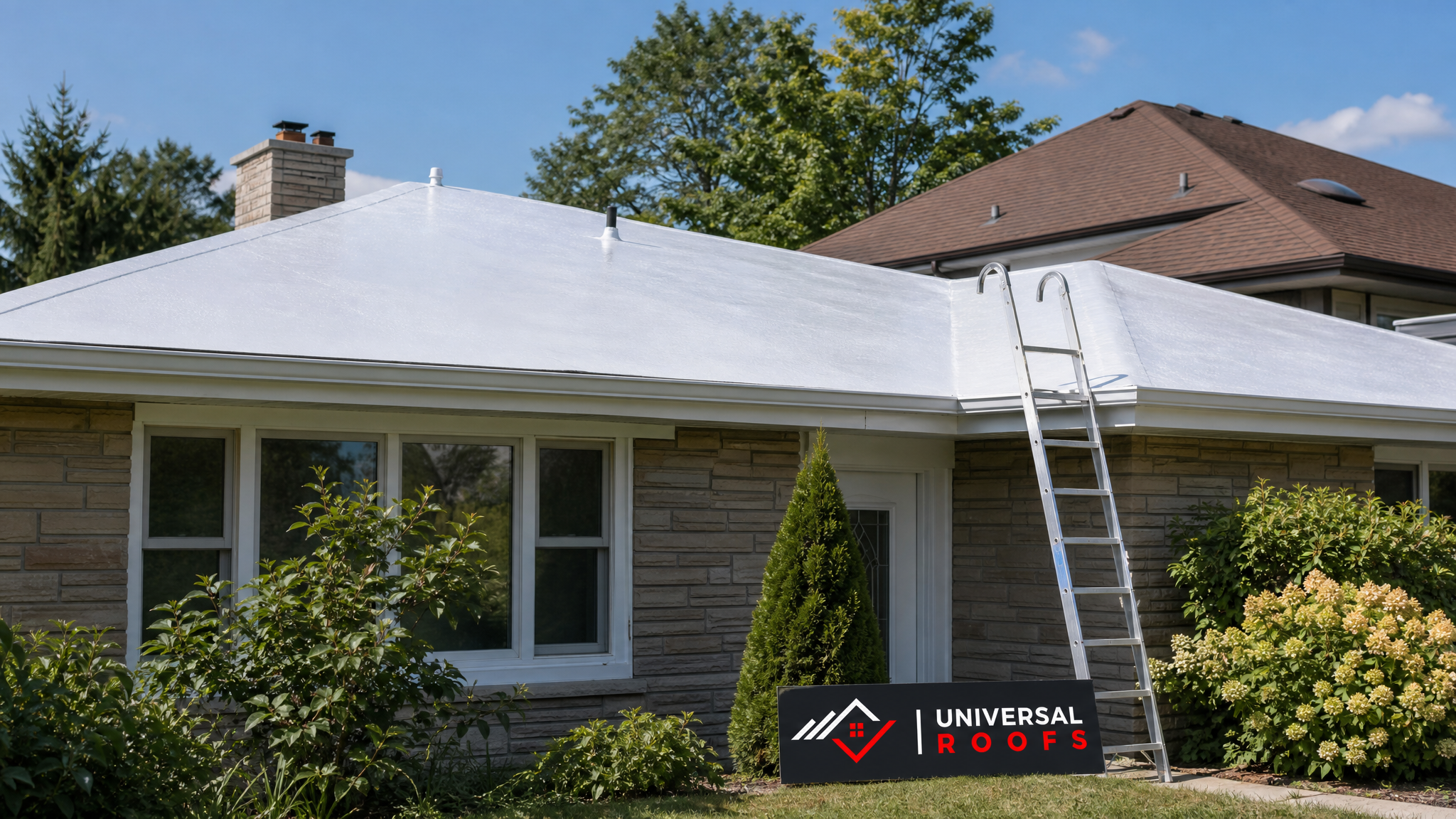
Every summer, Toronto roofs absorb hours of direct sunlight, and the ultraviolet radiation in that sunlight does far more damage than most homeowners realize. UV rays break down the molecular structure of roofing materials, causing shingles to become brittle, membranes to crack, and coatings to fade years before their expected lifespan is up. If you want to shield your roof from sun damage with UV resistant coatings, you are already asking the right question, because a properly applied UV-reflective coating is one of the most cost-effective ways to extend a roof’s service life while cutting cooling costs at the same time.
This guide walks through exactly how UV rays damage different roof types, which UV resistant coatings work best for GTA homes, what the application process actually involves, and how much you should expect to budget. We will also cover maintenance schedules, common mistakes homeowners make when trying to shield a roof from sun damage on their own, and how to tell whether your roof is already too far gone for a coating to help.
Whether you have an asphalt shingle roof in Etobicoke, a flat commercial membrane in Mississauga, or a metal roof in Vaughan, the fundamentals of UV protection are the same: block the radiation, reflect the heat, and reinforce the surface before cracks become leaks. Let’s get into the details.
How UV Radiation Actually Damages a Roof
Ultraviolet light carries more energy than visible light, and that energy is enough to break the chemical bonds holding roofing materials together. On asphalt shingles, UV exposure oxidizes the asphalt binder, drying out the oils that keep the material flexible. Over several summers, this oxidation causes granule loss, curling edges, and eventually cracking. On flat and low-slope membranes, UV breaks down the polymer chains in EPDM, TPO, and modified bitumen, leading to chalking, embrittlement, and surface crazing.
Metal roofing is more UV-resistant than asphalt or membrane systems, but the paint finish on steel and aluminum panels still fades and chalks under prolonged sun exposure, which reduces reflectivity and accelerates rust once the protective topcoat degrades. Even wood shake and cedar roofing dries out and splits faster under intense UV, particularly on south- and west-facing slopes that receive the most direct afternoon sun.
Heat compounds the problem. A dark asphalt roof surface can reach temperatures of 60 to 70 degrees Celsius on a sunny July afternoon in the GTA, and that thermal cycling between hot days and cool nights causes materials to expand and contract repeatedly. This constant movement is what turns small UV-related cracks into full-blown leaks. If you are dealing with active leaks already, our roof repair team can assess the damage before a coating is applied, since coatings work best as a preventative and restorative layer, not as a fix for structural problems.
What Makes a Coating “UV Resistant”
Not every roof coating on the market actually blocks ultraviolet radiation effectively. A genuine UV resistant coating uses reflective pigments, typically titanium dioxide or specially formulated acrylic resins, that bounce solar energy away from the roof surface rather than absorbing it. The best products carry a high Solar Reflectance Index (SRI) rating, which measures how much heat and light the coating reflects compared to a standard black surface.
Look for coatings that meet ENERGY STAR reflectivity standards or Cool Roof Rating Council (CRRC) certification. These third-party ratings confirm the manufacturer’s reflectivity and thermal emittance claims rather than relying on marketing copy. A coating with an SRI above 78 for low-slope roofs is generally considered a strong performer for reducing UV degradation and surface temperature.
| Coating Type | Typical SRI Rating | Best Roof Substrate | Expected Lifespan |
|---|---|---|---|
| Acrylic elastomeric | 80-105 | Asphalt shingle, metal, low-slope | 10-15 years |
| Silicone | 85-100 | Flat/low-slope membranes (EPDM, TPO) | 15-20 years |
| Polyurethane | 70-90 | Metal, high-traffic flat roofs | 10-15 years |
| Aluminum reflective | 60-75 | Metal roofing, older asphalt | 5-10 years |
| Ceramic-infused acrylic | 85-110 | Metal, tile, shingle | 12-18 years |
Acrylic elastomeric coatings tend to be the most versatile choice for GTA residential roofs because they remain flexible through our freeze-thaw cycles without cracking, while still delivering strong UV reflectivity. Silicone coatings excel on flat roofs because they resist ponding water in addition to blocking UV, which pairs well with the kind of low-slope systems we install and service through our flat roofing division.
Step-by-Step: How UV Resistant Coating Is Applied
A proper coating application is not simply rolling paint onto a roof. Each step matters for long-term adhesion and UV performance, and skipping steps is the most common reason coatings fail prematurely.
- Roof inspection and moisture testing. Before any coating goes down, the roof deck and existing membrane or shingles need to be checked for trapped moisture, soft spots, and existing leaks. Coating over a wet substrate traps moisture and accelerates rot.
- Surface cleaning. The entire roof surface is power washed to remove dirt, algae, chalking residue, and loose granules. UV coatings will not bond properly to a dirty or oxidized surface.
- Repair of existing damage. Cracks, blisters, punctures, and failed seams are repaired first. Any flashing around chimneys, vents, or skylights is checked and resealed as needed.
- Primer application (if required). Certain substrates, particularly bare metal or heavily oxidized surfaces, need a bonding primer so the topcoat adheres correctly.
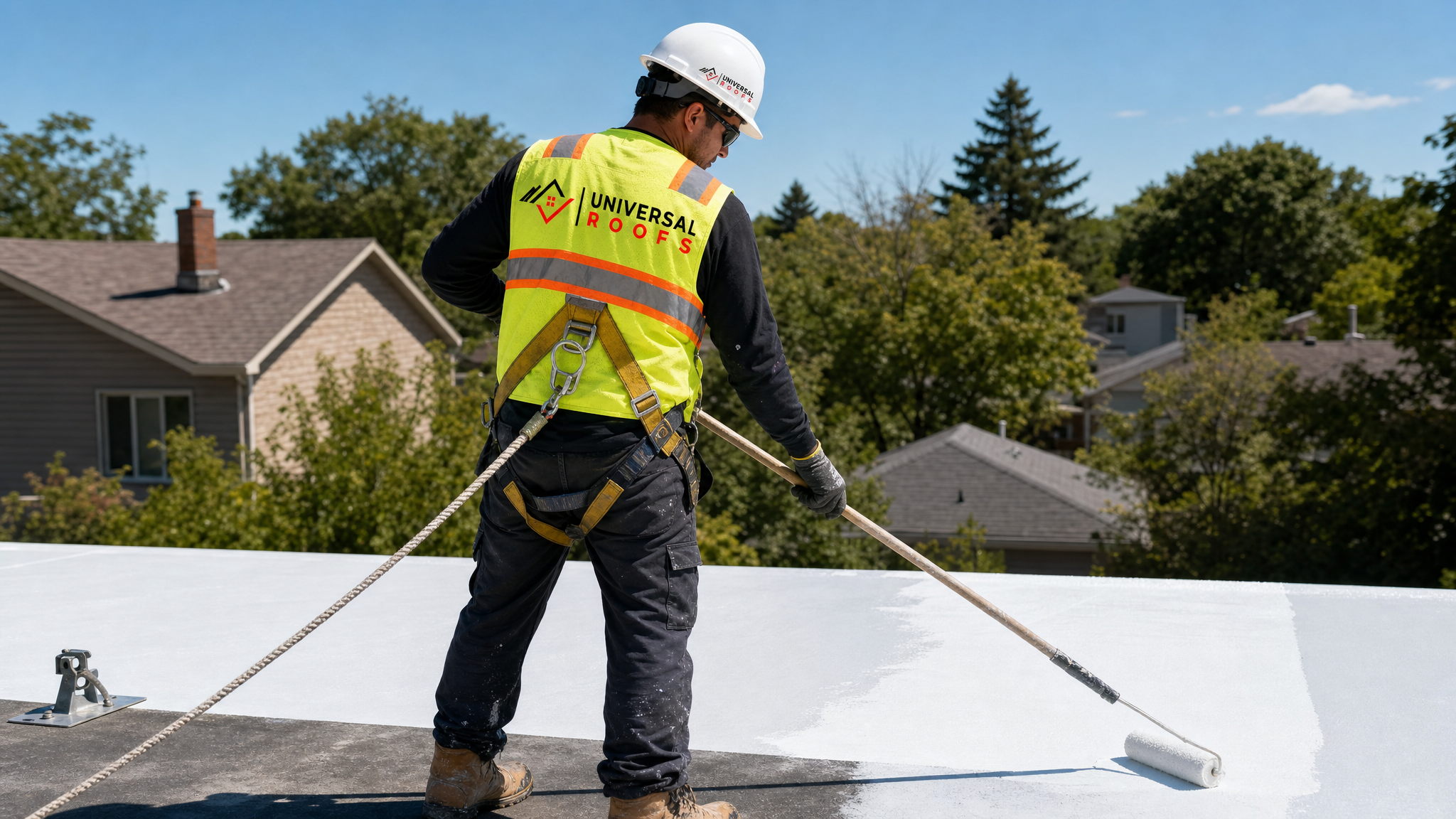
- Base coat application. The first coat is applied at the manufacturer’s specified wet-mil thickness, usually by roller, brush, or spray for larger commercial areas.
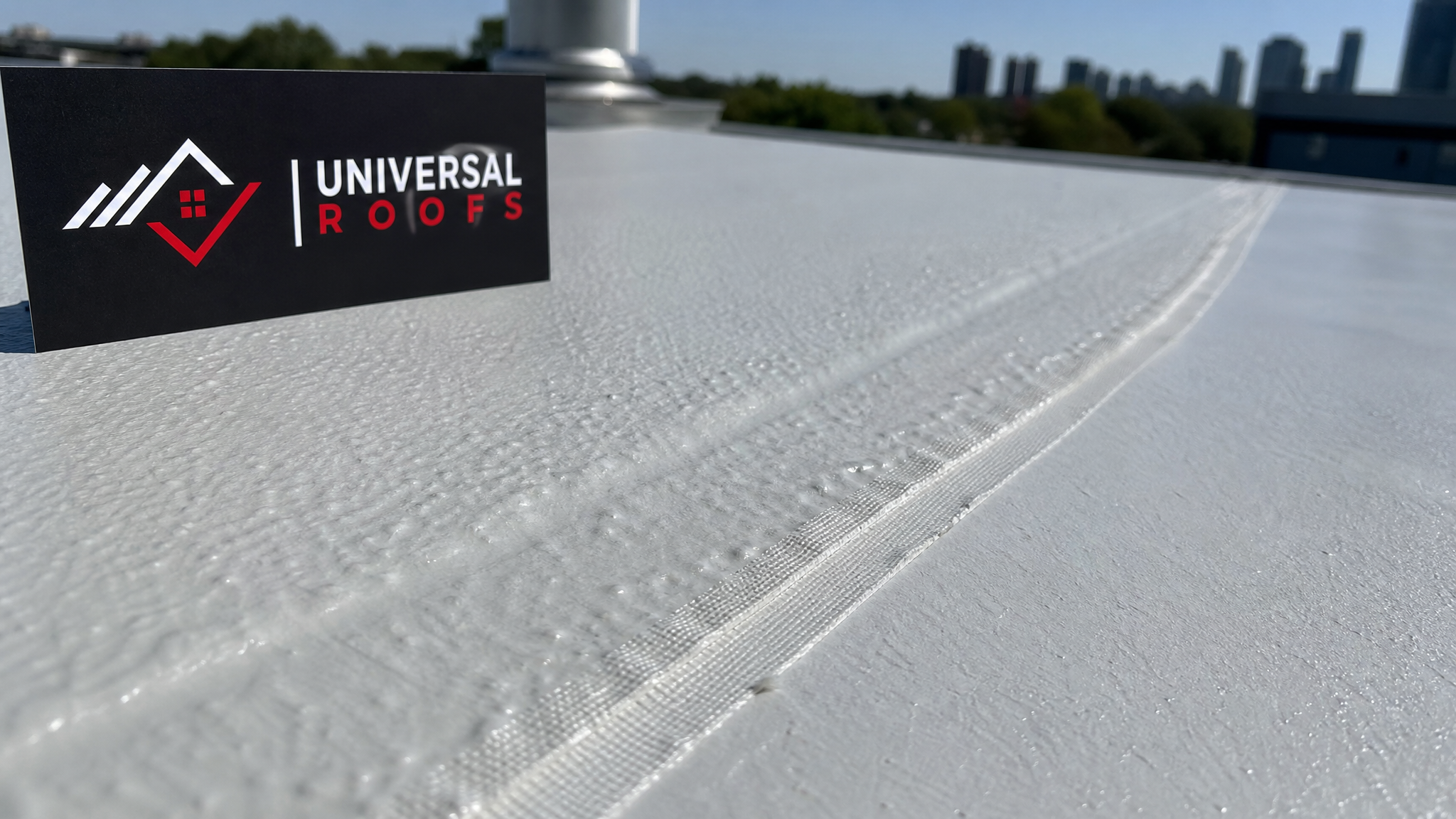
- Reinforcement at seams and penetrations. Fabric reinforcement is embedded at seams, corners, and around pipes to prevent cracking at stress points.
- Top coat application. A second coat is applied once the base has cured, ensuring full UV opacity and the manufacturer’s rated reflectivity.
- Final inspection. The finished surface is checked for full, even coverage, with particular attention to edges and drainage points.
Choosing the Right Coating for Your Roof Type
The right coating depends heavily on what your roof is made of and how it is sloped. Flat and low-slope roofs need coatings that also handle ponding water, while steep-slope asphalt shingle roofs need flexible acrylics that move with the material underneath. Metal roofs need coatings formulated to bond to painted or galvanized substrates without peeling.
Homeowners in Mississauga, Brampton, and across the Peel Region often ask whether a coating can replace a full re-roof. In most cases, if the underlying roofing material still has structural integrity and no widespread rot, a UV resistant coating can add 10 or more years of service life at a fraction of the cost of full roof replacement. But a coating cannot repair sagging decking, extensive water infiltration, or roofs that have already failed structurally — those situations call for replacement, not a topical fix.
| Roof Material | Recommended Coating | Application Notes | Reapplication Interval |
|---|---|---|---|
| Asphalt shingles | Acrylic elastomeric | Only recommended on roofs with granule loss under 20% | 8-10 years |
| EPDM rubber membrane | Silicone or acrylic | Silicone preferred where ponding occurs | 10-15 years |
| TPO membrane | Silicone | Requires TPO-specific primer for adhesion | 10-15 years |
| Metal panels | Polyurethane or ceramic acrylic | Rust spots must be treated before coating | 10-12 years |
| Modified bitumen | Acrylic or aluminum reflective | Compatible with granulated or smooth cap sheets | 8-12 years |
Cost of UV Resistant Roof Coating in the GTA
Cost varies based on roof size, substrate condition, coating type, and how much prep work is needed. As a general guide, homeowners across Toronto and the surrounding regions should expect the following price ranges per square metre, installed:
| Coating Type | Cost per Square Metre (Installed) | Typical Total Cost (150 m² roof) |
|---|---|---|
| Aluminum reflective | $8-$14 | $1,200-$2,100 |
| Acrylic elastomeric | $12-$20 | $1,800-$3,000 |
| Polyurethane | $16-$26 | $2,400-$3,900 |
| Silicone | $18-$30 | $2,700-$4,500 |
These figures assume a roof in reasonable condition requiring standard cleaning and minor repairs. Roofs with extensive granule loss, multiple leaks, or damaged flashing will need additional repair work first, which adds to the total. It is always worth getting an on-site assessment rather than estimating from square footage alone, since access difficulty, roof pitch, and the number of penetrations (vents, skylights, chimneys) all affect labour time.
Seasonal Timing: Why Summer Is the Best Window for Application
Most UV resistant coatings need warm, dry conditions to cure properly, which makes July and August an ideal window here in Ontario. Acrylic and silicone coatings typically require surface temperatures above 10 degrees Celsius during application and for at least 24 to 48 hours afterward while the coating cures. Applying a coating too late in the fall risks incomplete curing before overnight temperatures drop, which can compromise adhesion and reflectivity.
Humidity also matters. Coatings applied during periods of high humidity or right before rain may not bond correctly, leading to bubbling or premature peeling. Scheduling the work during a stretch of stable, dry summer weather gives the coating the best chance to cure fully and deliver its rated UV protection and reflectivity for the full warranty period.
If your roof also has ventilation issues, pairing a coating project with an attic assessment makes sense, since reflective coatings reduce roof deck temperatures but proper attic airflow is still essential for managing summer heat buildup and moisture in winter.
Signs Your Roof Needs UV Protection Now
Not every roof is a good candidate for coating, and catching UV damage early makes the difference between a simple coating job and a full replacement. Watch for these warning signs:
- Shingle granules collecting in gutters or at downspout exits
- Visible curling or cupping at shingle edges, especially on south- and west-facing slopes
- Chalky white residue on metal roofing or membrane surfaces (a sign the existing finish is breaking down)
- Fine surface cracking (“alligatoring”) on flat roof membranes
- Faded or unevenly discoloured roofing material compared to shaded areas
- Rising cooling bills during summer months without other explanation
- Brittle or cracked caulking around flashing, vents, and skylight curbs
If you notice several of these signs, especially combined with any interior staining or drafts, it’s worth having a professional assess whether a coating will help or whether the roof has progressed past the point where a topical treatment is enough. Our team frequently finds that skylight curbs and flashing are the first areas to show UV wear, since these transitions face constant direct sun and thermal cycling. If your skylights show cracked seals or chalking trim, check our skylights and skylight replacement pages for related guidance.
Maintaining a UV Resistant Coating Long-Term
A UV coating is not a one-time, forget-it-forever solution. Like any exterior finish, it benefits from periodic inspection and light maintenance to maximize its lifespan and keep reflectivity high.
| Maintenance Task | Recommended Frequency | Why It Matters | Who Should Do It |
|---|---|---|---|
| Visual inspection | Twice yearly (spring/fall) | Catches cracking, ponding, or debris buildup early | Homeowner or professional |
| Debris and leaf removal | Every 3-4 months | Prevents moisture retention that stresses coating seams | Homeowner |
| Professional recoat inspection | Every 5 years | Confirms remaining mil thickness and reflectivity | Licensed roofing contractor |
| Seam and flashing check | Annually | Seams and penetrations degrade faster than flat field areas | Professional |
| Gutter and drain clearing | Spring and fall | Poor drainage causes ponding that accelerates coating wear | Homeowner or professional |
Homeowners often ask whether pressure washing a coated roof is safe. Light, low-pressure rinsing is fine for removing surface dirt, but high-pressure washing can strip thin coating layers or damage seam reinforcement, so it’s best left to a professional who knows the coating’s rated thickness and can adjust technique accordingly.
Common Mistakes Homeowners Make With UV Roof Coatings
Because coating a roof looks like a straightforward DIY job, it’s an area where mistakes are common and costly. The most frequent issues we see when called in to fix a botched coating job include:
- Skipping surface prep. Coating over dirt, algae, or chalking residue leads to poor adhesion and early peeling, sometimes within a single season.
- Applying too thin a coat. Under-application reduces both UV protection and waterproofing, since coatings are rated based on a specific cured mil thickness.
- Ignoring existing leaks. A coating traps moisture already inside a roof system rather than solving the underlying leak, which can worsen rot.
- Mismatching coating chemistry to substrate. Not all coatings bond to all materials; using the wrong product type causes bubbling and delamination.
- Applying in poor weather. Coating during high humidity, before rain, or in cool fall temperatures compromises curing and long-term performance.
- Neglecting seams and penetrations. These are the highest-stress points on any roof and need fabric reinforcement, not just a thin coat of product.
Getting a professional assessment before starting a coating project avoids these pitfalls. Homeowners across Toronto, York Region, Halton Region, and Durham Region can have a technician evaluate their specific roof type and recommend the right coating system rather than guessing from a home improvement store product label.
UV Coating vs. Full Roof Replacement: Making the Right Call
One of the most common questions we hear is whether it makes more financial sense to coat an aging roof or simply replace it. The honest answer depends on the roof’s remaining structural life. If the decking is solid, there is no widespread rot, and granule loss or surface cracking is moderate rather than severe, a UV resistant coating is almost always the more economical choice, often costing 30 to 60 percent less than full replacement while adding a decade or more of protected service life.
However, if a roof inspection reveals soft decking, extensive leaks that have already damaged the substrate, or shingles that are brittle throughout (not just surface-chalked), coating is a short-term patch at best. In those cases, investing in replacement through our roof replacement service protects the home better in the long run and avoids paying for a coating that will fail within a year or two. This is exactly the kind of judgment call worth getting a second, honest opinion on, and it’s something our estimators walk homeowners through during every on-site visit.
You can see how other GTA homeowners have navigated similar decisions by browsing our reviews page, and our FAQ page covers additional questions about coatings, warranties, and maintenance scheduling.
How long does it take to shield your roof from sun damage with UV resistant coatings?
Can UV resistant coatings be applied over old asphalt shingles?
Do UV resistant roof coatings actually lower cooling costs?
What is the best time of year to shield your roof from sun damage with UV resistant coatings in Ontario?
How often do UV resistant coatings need to be reapplied?
Is a UV resistant coating a substitute for roof repair?
Need Help With Shield Your Roof from?
Protecting your home from Toronto’s intense summer sun doesn’t have to mean a full roof replacement. With the right assessment and the right UV resistant coating system, Universal Roofs can extend the life of your existing roof, cut cooling costs, and prevent the kind of UV degradation that leads to costly leaks down the road.
Call us today at (416) 732-2421 or request a free inspection to get started.
Universal Roofs proudly serves Toronto, Mississauga, Brampton, Vaughan, Markham, Oakville and the GTA since 2005.