
A dripping ceiling stain or a damp patch spreading across drywall is one of those problems homeowners want solved quickly and without breaking the budget. The good news is that affordable roof leak repair is almost always achievable, provided you understand which repair methods actually fix the problem versus which ones only mask it for a season. In the Greater Toronto Area, where freeze-thaw cycles, ice damming, and summer thunderstorms all take turns testing a roof’s weak points, choosing the right repair approach the first time is what keeps costs down over the long run.
This guide walks through the realistic price ranges for common leak repairs, the materials and methods that offer the best value, and the warning signs that tell you whether a small patch will do or whether you are looking at a more significant repair. We will also cover when a temporary fix makes sense to get you through a storm, and when it ends up costing more than doing the job properly from the start.
Whether you are dealing with a slow drip after a summer downpour or a stain that has been growing for months, the goal of this article is to help you make an informed, cost-conscious decision rather than panicking into an oversized repair or, worse, delaying a small fix until it becomes a large one.
Why Roof Leaks Happen and Why Fast Action Saves Money
Most roof leaks in the GTA do not start as dramatic failures. They begin small: a cracked pipe boot, a lifted shingle tab, a hairline gap in flashing, or granule loss that has thinned a shingle past its useful life. Water finds the smallest opening and, once inside, it can travel along rafters and sheathing before ever showing up as a ceiling stain. By the time you notice a mark on your drywall, the leak may have been active for weeks.
This delay between cause and visible symptom is exactly why affordable roof leak repair depends so heavily on timing. A $200 to $400 flashing repair done early is dramatically cheaper than the $2,000 to $5,000 in sheathing replacement, insulation removal, and drywall repair that can result from months of hidden moisture intrusion. Toronto’s climate makes this worse than milder regions: winter freeze-thaw cycles expand small cracks, ice damming forces water backward under shingles, and summer humidity encourages mould growth in damp attic insulation.
Homeowners who book a professional roof repair assessment at the first sign of a leak consistently spend less overall than those who wait. An inspection typically costs far less than the damage a hidden leak causes in a single season, which is why proactive scheduling is the single biggest lever homeowners have over their own repair budget.
Common Leak Sources and Their Typical Repair Costs
Not all leaks cost the same to fix, and understanding where your leak is coming from helps set realistic expectations before a contractor even arrives. The table below breaks down the most frequent leak sources on GTA homes and what homeowners can typically expect to pay for a proper repair.
| Leak Source | Typical Repair Cost (CAD) | Repair Time | Recurrence Risk if Ignored |
|---|---|---|---|
| Cracked or missing pipe boot / vent flashing | $200 – $450 | 1 – 2 hours | High — worsens every freeze-thaw cycle |
| Lifted or missing shingles (small area) | $250 – $600 | 1 – 3 hours | Moderate — spreads with wind exposure |
| Chimney or wall step flashing failure | $400 – $900 | 2 – 4 hours | High — often reopens without proper counter-flashing |
| Ice dam related leaks (eaves/soffit) | $350 – $1,200 | Half day, plus insulation check | High — repeats yearly without attic ventilation fix |
| Skylight seal or curb flashing failure | $300 – $1,500 | 2 – 5 hours | Moderate to high depending on skylight age |
| Widespread shingle deterioration (multiple areas) | $1,500 – $4,000+ | 1 – 2 days | Very high — often signals full replacement is near |
These figures assume the underlying decking has not suffered rot or water damage. Once sheathing needs replacement, costs climb quickly because carpentry work, additional labour, and disposal are added to the invoice. This is another reason why addressing a leak within days of noticing it, rather than months, keeps the job in the affordable range.
Affordable Repair Methods That Actually Work
“Affordable” does not have to mean “temporary.” Several genuinely cost-effective repair methods hold up for years when done correctly. The key is matching the method to the actual failure rather than defaulting to the cheapest possible patch regardless of cause.
Targeted shingle replacement is often the most budget-friendly true fix. Rather than replacing an entire section of roof, a technician removes only the damaged or missing shingles, checks the underlayment beneath them, and installs matching replacements. This works well when damage is isolated to a small area and the surrounding shingles are still structurally sound.
Flashing repair and re-sealing addresses one of the most common leak points on any roof: the metal or rubber transitions around chimneys, vents, skylights, and roof-to-wall junctions. Old flashing sealant dries out and cracks over time. A proper repair removes the old sealant entirely, cleans the metal, and applies new commercial-grade roofing sealant or replaces the flashing piece outright if it has rusted or bent.
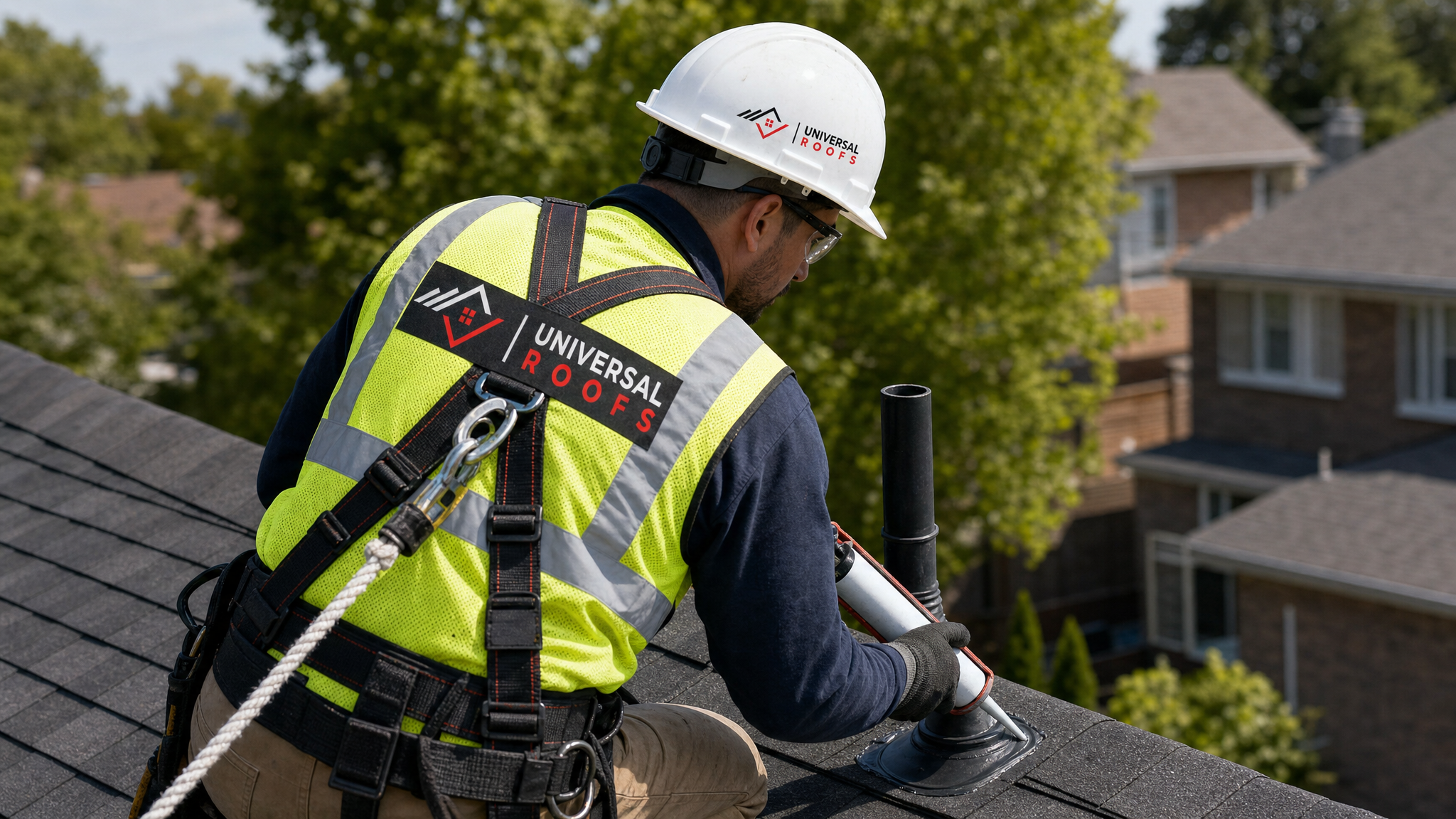
Pipe boot replacement is a quick, low-cost fix for one of the single most common leak causes on residential roofs. The rubber collar around plumbing vent pipes degrades from UV exposure faster than the shingles around it, cracking and letting water track down the pipe into the attic. Swapping the boot is usually a same-visit repair.
Sealant and caulking touch-ups handle minor gaps at fasteners, seams, and small flashing separations. This is the least expensive category of repair but should only be used where the underlying material is sound — sealant over a rotting or structurally compromised area is a false economy that will fail again quickly.
Ice and water shield reinforcement at eaves and valleys prevents the ice-damming leaks so common in Toronto winters. Adding or extending this waterproof membrane during a repair visit is inexpensive compared to the alternative of repeat callouts every spring thaw.
DIY Fixes vs. When to Call a Professional
Many homeowners search for affordable roof leak repair hoping a DIY approach will save money entirely. Sometimes it can, but the line between a reasonable DIY task and a job that needs a licenced professional is narrower than it looks, especially on steep-slope or multi-storey homes common across the GTA.
Reasonable DIY tasks include clearing debris from valleys and gutters that may be redirecting water under shingles, applying a small amount of roofing sealant to an accessible, clearly visible crack from a ladder positioned safely on level ground, and checking attic insulation for obvious gaps that could be contributing to ice damming. These are low-risk, low-cost interventions that can buy time before a professional visit.
Tasks that should be left to professionals include anything requiring you to walk on the roof surface itself, any repair near a chimney or second-storey area, flashing replacement (which requires removing and properly re-lapping shingles), and any situation where you cannot clearly identify the source of the leak from the ground or attic. Misdiagnosing a leak and patching the wrong spot is one of the most common reasons homeowners end up paying for two repairs instead of one.
| Task | DIY Appropriate? | Risk Level | Cost if Done Wrong |
|---|---|---|---|
| Clearing gutter and valley debris | Yes, from a stable ladder | Low | Minimal — worst case, leak continues |
| Sealing a small, visible surface crack | Yes, with caution | Low to moderate | $50 – $150 wasted sealant if underlying cause untreated |
| Replacing a damaged shingle | Not recommended | High (fall risk, improper lapping) | $300 – $700 to redo correctly |
| Flashing repair near chimney | No | High | $500 – $1,500 in follow-up repairs plus interior damage |
| Diagnosing an unclear leak source | No | Moderate (misdiagnosis risk) | Cost of repeated, mistargeted repairs |
Getting the Most Value From a Professional Repair Visit
When you do bring in a professional, there are ways to keep the visit as cost-effective as possible without cutting corners on quality. First, document everything you can before the appointment: photos of interior stains, the approximate location relative to interior rooms, and any sounds or timing patterns (does it only leak during heavy rain, or also during a thaw?). This information helps a technician diagnose faster, which reduces on-site time and labour cost.
Second, ask whether your issue can be addressed as a standalone repair or whether it makes sense to bundle it with other minor maintenance items while the crew is already on the roof, such as resealing a second vent boot or checking attic ventilation. Combining small jobs into one visit typically costs less than separate callouts.
Third, get a clear scope of work in writing before repairs begin. A reputable Universal Roofs technician will explain exactly what failed, why, and what the repair involves, rather than offering a vague “patch and seal” without specifics. This transparency protects you from unnecessary upsells while also ensuring the fix addresses the actual cause.
Finally, ask about warranty coverage on the repair itself. Many affordable repairs come with a workmanship guarantee ranging from one to several years, which means if the same spot leaks again within that window, the return visit costs nothing. This warranty coverage is often the difference between a genuinely affordable long-term fix and a cheap short-term patch that ends up costing more in repeat visits.
Repair vs. Replacement: How to Know Which Makes Financial Sense
Not every leak should be repaired. At a certain point, the cost of continued patching exceeds what a homeowner would spend amortized over a full roof replacement. Knowing where that line sits protects your budget from a series of “affordable” repairs that add up to more than a permanent solution would have cost.
As a general guideline, if your roof is under 15 years old, has isolated damage, and the rest of the shingle field is in good condition, repair is almost always the more affordable choice. If your roof is approaching or past 20 years old, has multiple leak points across different sections, or shows widespread granule loss and curling shingles, repeated repairs become a pattern rather than a solution, and it is worth getting a comparative quote for replacement.
| Roof Condition | Recommended Approach | Reasoning | Estimated Cost Range |
|---|---|---|---|
| Under 10 years old, single leak point | Targeted repair | Isolated failure, rest of roof has years of life left | $200 – $600 |
| 10-15 years old, 1-2 leak points | Repair with inspection of surrounding area | Still cost-effective but worth checking for early wear nearby | $400 – $1,200 |
| 15-20 years old, recurring leaks | Repair now, plan replacement within 2-3 years | Buys time but material is aging system-wide | $600 – $2,000 (repair) |
| 20+ years old, multiple active leaks | Full replacement | Repeated repairs cost more than replacement over 2-3 years | Repair costs often exceed 40-50% of replacement cost within a few seasons |
A qualified inspector can usually make this call within a single visit by checking shingle flexibility, granule loss, decking condition from the attic side, and the overall age and history of the roofing system. Getting this assessment before committing to a repair protects you from investing in a roof section that is fundamentally near the end of its service life.
Special Cases: Flat Roofs, Skylights, and Attic Ventilation
Leak repair costs and methods shift depending on the type of roofing system involved. Flat and low-slope roofs, common on additions, garages, and some GTA home styles, use membrane systems rather than shingles, and leaks typically stem from seam separation, membrane punctures, or pooling water around drains. Repairs to a flat roofing system usually involve patching or heat-welding the membrane at the failure point, which is a specialized skill distinct from sloped-roof shingle repair.
Skylights are another frequent leak source that homeowners often misattribute to the roof shingles nearby, when the actual failure is in the skylight curb flashing or the seal around the glass unit itself. If your leak tracks to a room with a skylight, it is worth having both the skylight and surrounding flashing inspected together, since the fix may be as simple as re-flashing the curb or, for an older unit, a straightforward skylight replacement that eliminates the recurring seal problem entirely.
Attic ventilation issues deserve mention too, because they are often the hidden contributor behind “mystery” leaks that seem to appear without an obvious exterior cause. Poor attic ventilation traps warm, moist air against the underside of the roof deck, which can condense and drip, mimicking a leak from outside. It also worsens ice damming in winter by melting snow unevenly. Addressing attic airflow alongside a leak repair often prevents the same symptom from recurring under a different cause.
Preventing Future Leaks After Your Repair
Once a leak is repaired, a few simple maintenance habits keep it from recurring and help you avoid paying for the same fix twice. Cleaning gutters and downspouts at least twice a year, in late spring and late autumn, prevents water backup at the eaves where ice dams most often form. Trimming overhanging tree branches reduces debris accumulation and limits abrasion damage to shingles during windstorms.
A visual roof check from the ground after major storms, looking for missing shingles, displaced flashing, or debris caught on the roof surface, catches new problems while they are still inexpensive to fix. Scheduling a professional inspection annually, ideally in spring after winter freeze-thaw cycles have had their chance to expose weak points, is one of the most cost-effective habits a homeowner can adopt. Many issues that would otherwise develop into a $1,000+ repair are caught and resolved for a few hundred dollars when found early.
Homeowners across Toronto, the Peel Region, York Region, Halton Region, and Durham Region deal with a similar climate pattern of harsh winters and humid summers, which means the maintenance calendar above applies broadly across the GTA regardless of which municipality you are in.
Choosing a Contractor Without Overpaying
Affordability is not just about the invoice total — it is also about avoiding a repair that fails within a year and forces you to pay again. When comparing quotes for roof leak repair, look past the bottom-line number and ask what materials will be used, whether the technician will inspect the attic side of the leak location (not just the exterior), and whether a written warranty is included.
Be cautious of quotes that are dramatically lower than others for the same described work; this often signals a sealant-only patch rather than a proper flashing or shingle repair, which tends to fail again within a season. It is reasonable to ask a contractor directly what causes they ruled out and how confident they are that the identified repair will resolve the leak permanently.
Checking a contractor’s reviews from past customers, especially reviews that mention repeat business or repair longevity rather than just initial service, gives a more honest picture than price alone. A company’s FAQ page and about page can also tell you how long they have operated locally and what their process looks like, both of which matter when you are trusting someone to correctly diagnose a hidden problem rather than just patch a visible symptom.
What is the most affordable roof leak repair option for a small leak?
Can I do affordable roof leak repair myself?
Why do roof leak repair costs vary so much between contractors?
How do I know if I need a repair or a full roof replacement?
Does ignoring a small leak make repairs more expensive later?
What causes most affordable roof leak repair calls in the GTA?
Need Help With What Are Affordable Roof?
If you are dealing with a leak right now, or simply want peace of mind before the next storm rolls through, Universal Roofs can diagnose the true cause and recommend the most cost-effective repair for your specific situation.
Call us today at (416) 732-2421 or request a free inspection to get started.
Universal Roofs proudly serves Toronto, Mississauga, Brampton, Vaughan, Markham, Oakville and the GTA since 2005.