
When homeowners think about roof care, they usually picture shingles, flashing, and gutters. Few think about the layer of insulation sitting quietly in the attic below the roof deck. Yet the significance of attic insulation in roof care is one of the most overlooked factors in whether a roof lasts its full lifespan or fails a decade early.
In the Greater Toronto Area, where winters bring deep freezes and summers bring humid heat, attic insulation does far more than lower your energy bill. It regulates the temperature of your roof deck, controls moisture that would otherwise rot your sheathing, and prevents the ice damming that destroys shingles, eavestroughs, and ceilings every winter. A roof without proper attic insulation and ventilation is working against itself, no matter how good the shingles are.
At Universal Roofs, we inspect attic insulation and ventilation on nearly every roof replacement and roof repair call we run across the GTA. This guide explains exactly how attic insulation protects your roof, what can go wrong when it is missing or installed incorrectly, and what Toronto-area homeowners should look for before their next roofing project.
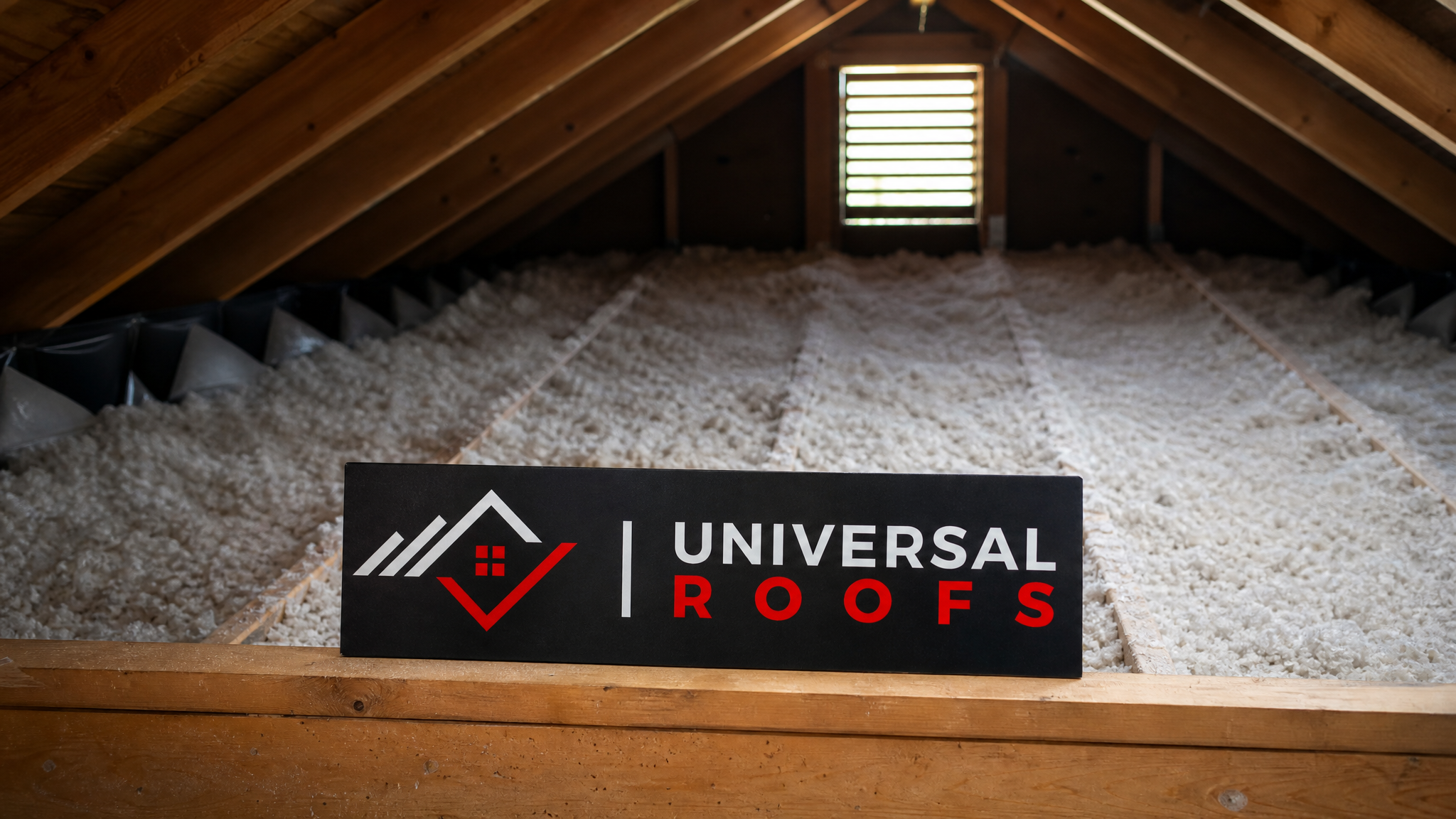
Why Attic Insulation Is Part of Roof Care, Not Just Energy Efficiency
Most homeowners file attic insulation under “energy efficiency” and roofing under “keeping water out.” In reality, the two systems are inseparable. Your roof deck, the layer of plywood or OSB directly under your shingles, sits just above the attic space. Whatever temperature and moisture conditions exist in that attic are transferred directly to the underside of your roof deck.
When attic insulation is insufficient, warm air from inside the house rises and collects against the underside of the roof deck. In winter, that warm air melts snow sitting on the roof above it. The meltwater runs down the roof slope until it reaches the cold overhang past the exterior wall, where it refreezes into ice. This is the classic ice dam, and it is a direct, measurable consequence of poor attic insulation, not a shingle defect or a workmanship issue with the roof itself.
In summer, the reverse problem shows up. Heat trapped in a poorly insulated and poorly ventilated attic can push attic temperatures well above outdoor air temperature, which accelerates the aging of asphalt shingles from below at the same time UV exposure ages them from above. A roof deck baking at high temperatures for months every summer will show curling, granule loss, and brittleness years before a properly insulated and ventilated equivalent.
This is why any serious roof replacement quote should include an attic insulation and ventilation assessment. Installing premium shingles over an under-insulated attic is like putting a new engine in a car with a cracked radiator: the visible part looks great, but the underlying problem keeps causing damage.
How Attic Insulation Prevents Ice Damming in the GTA Climate
Toronto and the surrounding GTA experience repeated freeze-thaw cycles every winter, sometimes several times in a single week. This makes the region particularly prone to ice damming compared to climates that stay consistently cold or consistently mild. Proper attic insulation, paired with soffit and ridge ventilation, keeps the entire roof deck at a uniform temperature close to the outdoor air temperature, so snow melts evenly from the sun rather than unevenly from heat loss below.
The mechanics are straightforward once you see them laid out. Heat escapes upward from living spaces, especially around poorly sealed light fixtures, attic hatches, bathroom fans, and plumbing stacks. If the insulation layer is thin, compressed, or has gaps, that heat passes straight through into the attic and warms the roof deck from below. Ventilation is meant to flush that heat out through the ridge and soffits before it reaches the shingles, but ventilation cannot compensate for insulation that is simply not doing its job.
| Ice Dam Risk Factor | Underlying Cause | Effect on Roof | Fix |
|---|---|---|---|
| Thin or compressed attic insulation | Heat escapes from living space into attic | Uneven snowmelt, ice buildup at eaves | Top up to current R-value target |
| Blocked soffit vents | Insulation pushed into soffit channels | No fresh air intake, trapped heat | Install baffles, clear channels |
| Air leaks around fixtures/hatches | Unsealed penetrations into attic | Localized hot spots on roof deck | Air-seal before adding insulation |
| Missing or damaged vapour barrier | Moist indoor air migrates into attic | Condensation, frost on sheathing | Repair or install proper vapour barrier |
| Undersized ridge ventilation | Insufficient exhaust for attic volume | Heat and moisture pool near ridge | Balance intake and exhaust venting |
If you have noticed icicles forming along your eaves every winter, or ice ridges building up at the edge of your roof, this is a strong signal that your attic insulation needs attention, not necessarily that your shingles are failing. A roof repair technician who only patches visible damage without addressing the attic will see the same ice damming return the following winter.
Recommended Attic Insulation Levels for Toronto and the GTA
Building codes set minimum insulation levels, but many older GTA homes fall well short of current recommendations, especially houses built before the 1990s that have never had their attic insulation upgraded. Insulation is measured in R-value, which represents resistance to heat flow. A higher R-value means better resistance to heat loss.
| Home Age / Type | Typical Existing R-Value | Recommended R-Value (Southern Ontario) | Common Insulation Type Found |
|---|---|---|---|
| Pre-1980 GTA homes | R-12 to R-20 | R-60 | Loose-fill fibreglass or vermiculite |
| 1980s–1990s homes | R-20 to R-31 | R-60 | Batt fibreglass |
| 2000s–2010s homes | R-40 to R-50 | R-60 | Blown-in fibreglass or cellulose |
| New builds (current code) | R-50 to R-60 | R-60 | Blown-in cellulose or fibreglass |
| Homes with knob-and-tube wiring | Varies, often reduced due to code restrictions | R-60 (after electrical upgrade) | Batt only until rewiring complete |
Homeowners are often surprised to learn how far short of R-60 their attic actually sits, especially if insulation has settled and compressed over decades. Loose-fill fibreglass and cellulose both lose loft and effectiveness over time, particularly around access hatches and where previous owners may have walked on it while storing items. If it has been more than 15 years since your attic insulation was assessed, it is worth having it measured during your next roof inspection.
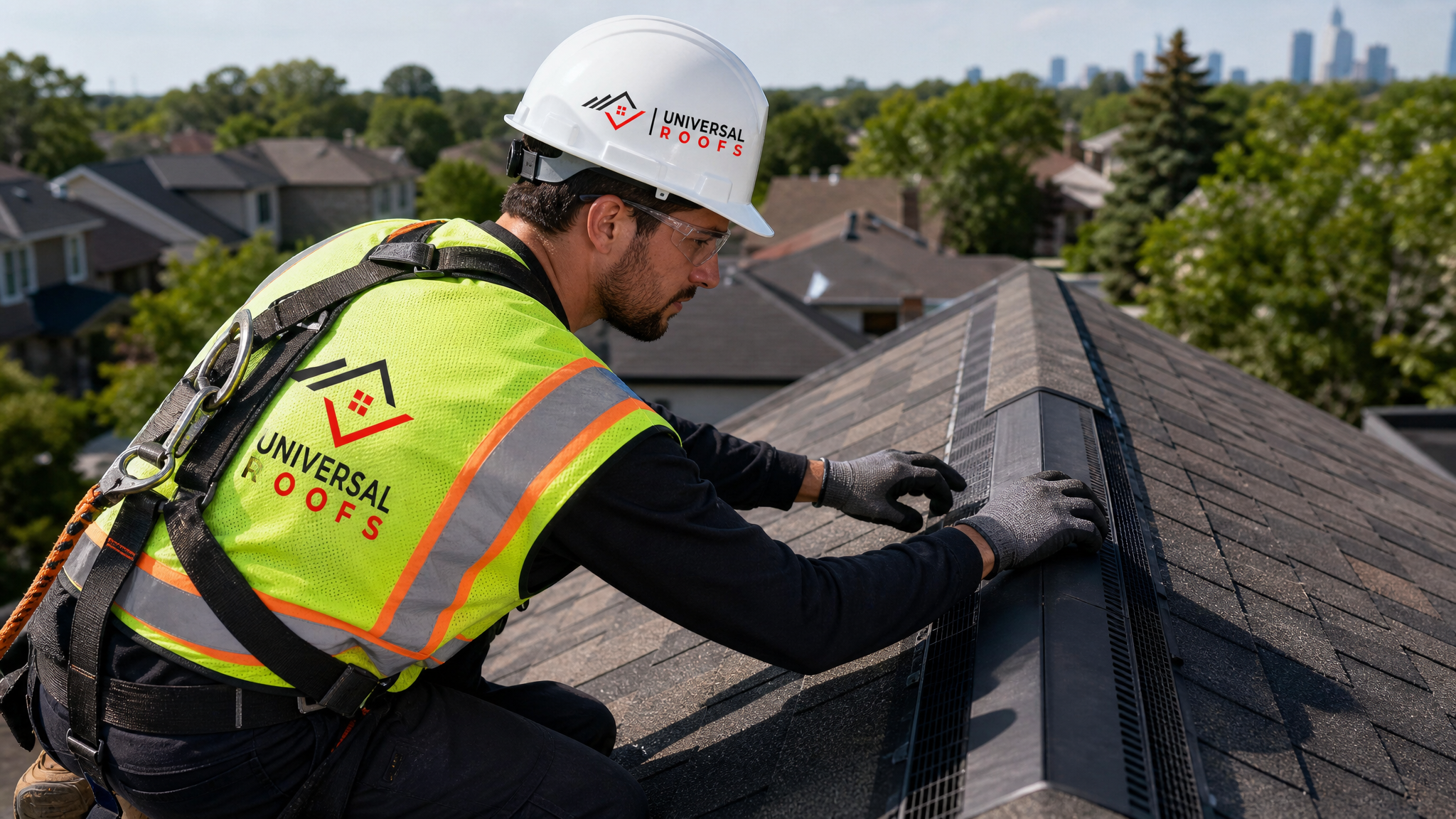
Insulation and Ventilation: Why Neither Works Without the Other
Attic insulation and attic ventilation are frequently discussed as though they solve the same problem, but they address two different sides of the same equation. Insulation slows heat transfer from the living space into the attic. Ventilation removes whatever heat and moisture do make it into the attic, whether from minor insulation gaps, cooking, showers, or laundry. A roof deck protected by both systems working together will consistently outlast one protected by either system alone.
A common mistake we see during roof repair calls across the Toronto area is insulation that has been blown in or batted right up against the roof deck at the eaves, completely blocking the soffit vents. This traps warm, moist air exactly where it does the most damage: right at the perimeter of the roof, where ice dams form and where roof deck rot is hardest to spot from inside the attic. The fix is straightforward but often skipped: rigid foam baffles installed at each rafter bay before insulation is added, keeping a clear air channel from soffit to ridge.
| Symptom Observed | Likely Cause | Insulation-Related? | Recommended Action |
|---|---|---|---|
| Icicles and ice dams at eaves every winter | Heat loss into attic, blocked soffits | Yes | Top up insulation, install baffles |
| Frost or moisture on attic sheathing | Warm moist air reaching cold roof deck | Yes | Air-seal ceiling penetrations, check vapour barrier |
| Shingles curling or granules shedding early | Excess attic heat in summer | Partially | Improve ventilation, verify insulation depth |
| Musty smell in upstairs rooms | Attic moisture and poor air exchange | Yes | Combined insulation and ventilation upgrade |
| Uneven indoor temperatures room to room | Inconsistent insulation coverage | Yes | Full attic insulation assessment |
Skylights add another wrinkle to this system. A poorly flashed or poorly insulated skylight shaft can create its own localized heat loss and condensation point, independent of the surrounding attic insulation. If you are noticing staining or drips specifically around a skylight rather than across the whole ceiling, it is worth having both the skylight unit and the surrounding insulation checked, since the fix for one is not always the fix for the other. In some cases a straightforward skylight replacement with better-insulated framing resolves a problem that looked like an insulation issue from inside the house.
How Attic Insulation Affects Flat Roof Systems
Flat and low-slope roofs, common on additions, garages, and some GTA bungalows, handle insulation differently than pitched, vented attics. Many flat roof assemblies use rigid insulation board installed directly above the roof deck rather than a ventilated attic cavity below it. This is sometimes called a “warm roof” assembly, and it changes the calculation entirely: insulation placement, vapour control, and drainage slope all have to work together, or moisture gets trapped inside the roof assembly with no attic space to ventilate it out.
When we assess a flat roofing system for insulation issues, we are checking for ponding water that signals inadequate slope, soft spots that indicate saturated insulation board beneath the membrane, and proper tapered insulation systems that direct water to drains rather than letting it sit and slowly work its way through membrane seams. A flat roof with waterlogged insulation loses most of its thermal performance and becomes significantly heavier, which is a structural concern as much as an efficiency one.
Signs Your Attic Insulation Needs Attention
Most homeowners never go up into their attic, so insulation problems tend to show up as symptoms elsewhere in the house long before anyone connects them back to the attic. Recognizing these signs early can save you from a much larger roof repair bill down the road.
- Icicles or visible ice ridges forming along the roof edge in winter
- Uneven snow melt patterns on the roof, with bare patches over heated areas and snow remaining elsewhere
- Ceiling stains that appear only during or shortly after winter thaws
- Noticeably higher heating bills compared to similar-sized neighbouring homes
- Cold drafts or cold spots on upper-floor ceilings and walls
- Condensation or frost visible on the underside of the roof deck when you check the attic
- A musty or damp smell when the attic hatch is opened
Any one of these on its own might have another explanation, but two or more together are a strong signal that your attic insulation and ventilation system deserves a proper look. Left unaddressed, these conditions accelerate roof deck rot, mould growth, and premature shingle failure, all of which cost far more to fix than the insulation upgrade itself would have.
What a Proper Attic Insulation Assessment Involves
A thorough assessment goes beyond simply measuring how deep the insulation is. Our technicians evaluate the whole system as it relates to your roof.
| Assessment Step | What We Check | Typical Timeline | Why It Matters |
|---|---|---|---|
| Insulation depth and coverage | Current R-value, gaps, compression, even distribution | 20–30 minutes | Confirms whether current levels meet regional targets |
| Air sealing check | Attic hatch, light fixtures, plumbing and wiring penetrations | 15–20 minutes | Stops warm air bypass that undermines insulation |
| Ventilation balance | Soffit intake vs. ridge/roof exhaust venting | 15–20 minutes | Ensures insulation gains are not offset by trapped heat |
| Moisture and rot inspection | Sheathing, rafters, insulation for staining or dampness | 15–20 minutes | Catches hidden damage before a full roof replacement is needed |
| Vapour barrier condition | Continuity and condition of poly or other vapour retarder | 10–15 minutes | Prevents indoor moisture from migrating into the attic |
We typically recommend pairing this assessment with any scheduled roof repair or roof replacement, since access to the attic and roof deck is already part of that work. Catching an insulation or ventilation issue during a planned project is far less disruptive than discovering it later as a leak or an ice dam.
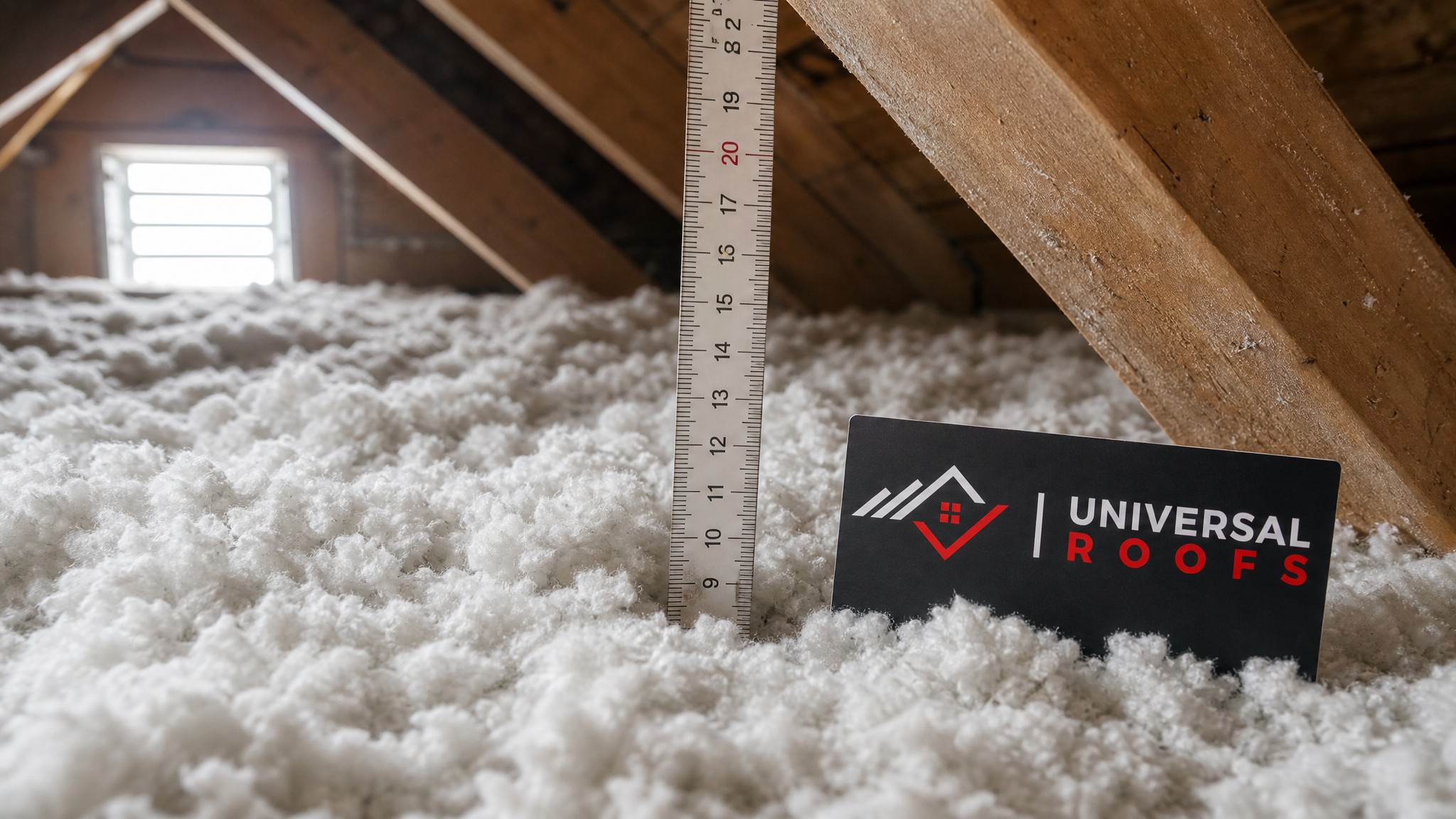
Attic Insulation Upgrades: What Homeowners Can Expect
Topping up attic insulation is one of the more cost-effective home improvements available to GTA homeowners, both for roof protection and for the substantial rebates often available through provincial and utility efficiency programmes. The right approach depends on your existing insulation type, attic accessibility, and whether any air sealing or ventilation work needs to happen first.
| Insulation Method | Best For | Typical R-Value Added | Considerations |
|---|---|---|---|
| Blown-in cellulose | Topping up existing loose-fill insulation | R-20 to R-40 depending on depth | Settles slightly over time; dense-pack option available |
| Blown-in fibreglass | Attics needing moisture-resistant fill | R-20 to R-40 depending on depth | Less prone to settling than cellulose |
| Batt fibreglass | Attics with obstructions requiring precise fit | R-12 to R-30 per layer | More labour-intensive to fit around obstacles |
| Rigid foam board (flat roofs) | Warm roof assemblies above the deck | R-5 to R-6.5 per inch | Must be paired with proper slope and vapour control |
Before any insulation goes in, air sealing should always come first. Insulation slows heat transfer through the material itself, but it does very little to stop air leakage through gaps, and air leakage is often the larger source of heat loss into an attic. A technician sealing penetrations before topping up insulation will get a better result than simply adding more material over unsealed gaps.
Frequently Asked Questions About Attic Insulation and Roof Care
What is the significance of attic insulation in roof care?
Can poor attic insulation cause roof leaks?
How much attic insulation do Toronto homes need?
Does attic insulation need to be paired with ventilation?
How do I know if my attic insulation is causing ice dams?
Is attic insulation different for flat roofs versus pitched roofs?
Need Help With The Significance of Attic?
Attic insulation might be the least visible part of your roofing system, but it is one of the most important factors in how long that roof actually lasts. The team at Universal Roofs evaluates attic insulation and ventilation as a standard part of every roof inspection, roof repair, and roof replacement we perform across the region.
Call us today at (416) 732-2421 or request a free inspection to get started.
Universal Roofs proudly serves Toronto, Mississauga, Brampton, Vaughan, Markham, Oakville and the GTA since 2005.