
If you own a metal roof in the Greater Toronto Area, you have probably heard the pitch: metal lasts 40 to 70 years, shrugs off hail, and barely needs a second thought once it is installed. Mostly true. But ask any roofer who has spent a summer crawling standing-seam panels and metal shingles across Toronto, Mississauga, and Vaughan, and you will hear a different story. Metal roofs do fail, and when they do, the causes are surprisingly predictable. So why do metal roofs often require repair, even though the material itself is so durable?
The short answer is that metal roofing is a system, not just a sheet of steel or aluminum. The panels themselves rarely wear out. What fails is everything around them: the fasteners, the sealants, the flashing, the coating, and the way the whole assembly reacts to Ontario’s brutal freeze-thaw cycles. A metal roof is only as good as its weakest connection point, and connection points are exactly where problems concentrate.
In this guide we will walk through the real mechanical and environmental reasons metal roofs need repair, how to recognize the early warning signs before a small issue becomes a costly one, and what a proper repair versus a full roof replacement looks like. We will also cover the GTA-specific climate factors that accelerate wear, and give you a practical maintenance schedule so you can get ahead of problems rather than reacting to them.
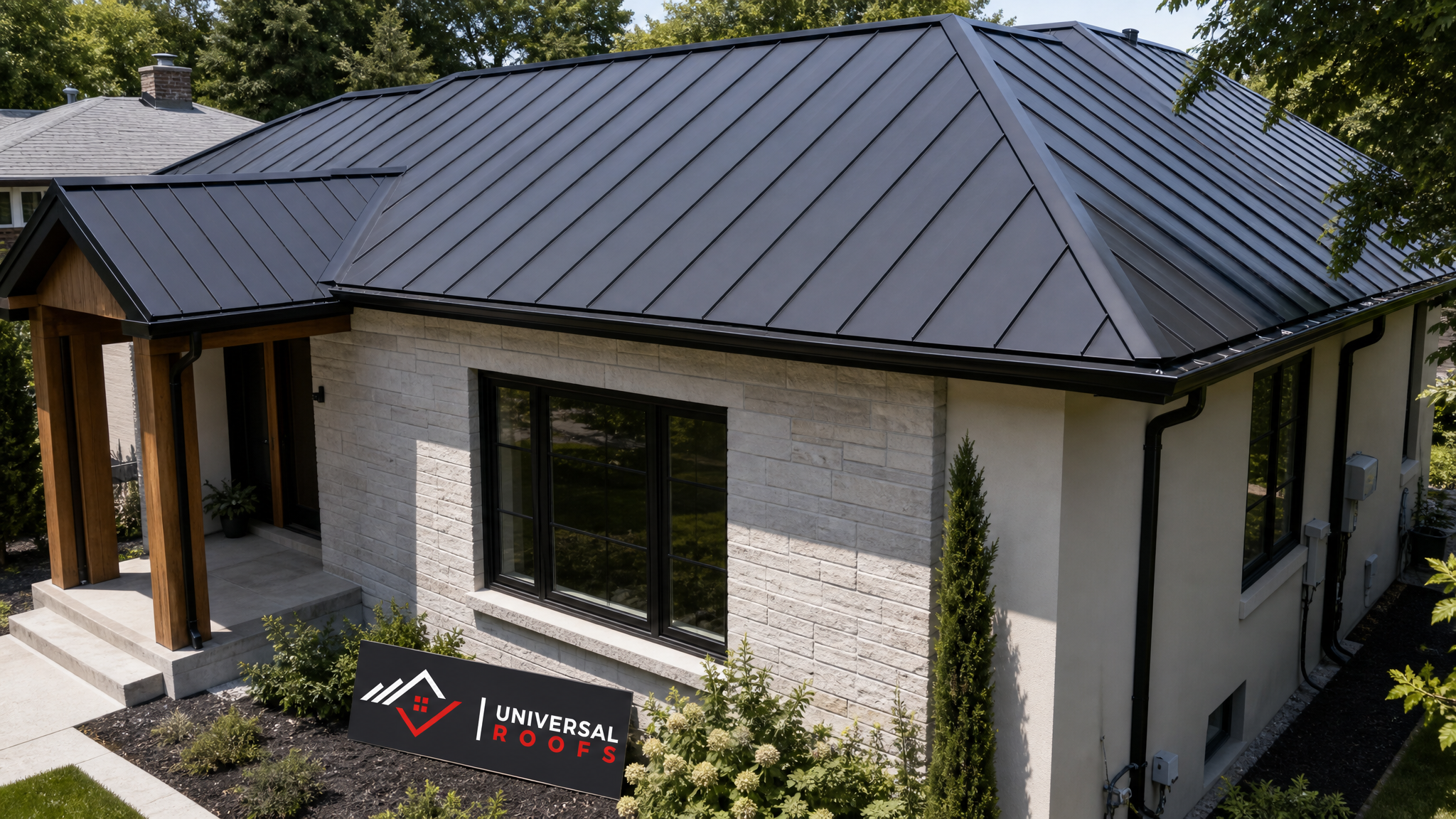
The Real Reasons Why Metal Roofs Often Require Repair
Metal roofing panels are engineered to handle wind, snow load, and UV exposure far better than asphalt shingles. So when a metal roof develops a leak or a loose panel, the panel material is rarely the culprit. The failure points cluster around a handful of predictable weak spots.
Fastener backout and loosening. Exposed-fastener metal roofs use thousands of screws with rubber washers to hold panels down. Every time the metal heats up in summer sun and contracts overnight, the panel expands and contracts around the fastener shank. Over years of this thermal cycling, screws slowly back out of the decking. A backed-out screw leaves a gap that water finds immediately, especially during the freeze-thaw swings so common in a Toronto winter and shoulder season.
Sealant and washer degradation. The rubber washers under exposed fasteners, and the sealant beads at seams and flashing joints, are the roof’s true weak point. Neoprene washers harden and crack from UV exposure typically within 10 to 15 years, long before the steel panel itself shows any wear. Once a washer cracks, it stops sealing and becomes a direct entry point for rain and meltwater.
Seam and flashing failures. Standing-seam roofs rely on mechanically crimped seams rather than exposed fasteners, which reduces one failure mode but introduces another: if the seams were not crimped to spec during installation, or if panels were cut and fitted around penetrations without proper flashing, water can wick in at valleys, chimneys, skylights, and vent stacks. Flashing failures are consistently one of the top reasons a metal roof needs a service call.
Galvanic corrosion from mismatched metals. When dissimilar metals contact each other in the presence of moisture, one corrodes preferentially. Copper flashing against a steel panel, or the wrong grade of fastener, sets up a slow electrochemical reaction that eats through metal from the inside of the joint outward. This is invisible until a rust stain or a pinhole leak appears.
Physical damage from debris, ice, and foot traffic. Falling branches, ladder contact during eavestrough cleaning, and ice dam formation at the eaves can dent panels, crack coatings, or force water beneath a seam. Coating damage matters because once the protective paint or galvanized layer is breached, bare steel is exposed to moisture and rust accelerates quickly.
Oil-canning and panel movement. Wide, flat panel sections can develop a wavy, “oil-canning” appearance as the metal expands and contracts. This is mostly cosmetic, but in some cases repeated flexing works fasteners loose or stresses seams over time, indirectly contributing to leaks.
How Toronto’s Climate Accelerates Metal Roof Wear
Every roofing material is rated for its climate zone, and the GTA presents a genuinely tough one for metal. We see wide seasonal temperature swings, from summer highs near 30°C to winter lows well below -15°C, plus dozens of freeze-thaw cycles each winter as temperatures hover around 0°C. That constant expansion and contraction is the single biggest driver of fastener backout and sealant fatigue.
Add in lake-effect snow squalls, ice storms that coat panels and flashings in a heavy shell, and spring thaw periods where meltwater refreezes overnight at the eaves, and you get an environment that stresses every mechanical connection point on the roof multiple times per year. Humidity from Lake Ontario also means condensation can form on the underside of metal panels if the attic is poorly ventilated, contributing to hidden corrosion from below rather than above.
None of this means metal roofing is a poor choice for Toronto. It remains one of the most durable options available. It does mean that a metal roof here needs a documented inspection routine, not a “install it and forget it” approach.
Warning Signs Your Metal Roof Needs Repair
Most metal roof failures give warning before they become a full leak. Catching these signs early is the difference between a $400 fastener service call and a $4,000 water damage repair inside the attic and ceiling.
- Rust streaks running down panel seams or around fastener heads
- Visible daylight through the roof deck when viewed from inside the attic
- Loose, raised, or missing fastener caps
- Cracked, brittle, or missing rubber washers around screws
- Water stains on ceilings, especially near chimneys, skylights, or vent penetrations
- Panels that flex, rattle, or lift slightly in high wind
- Granular paint chalking or peeling protective coating
- Ice buildup concentrated at specific points along the eaves each winter
If you notice any of these, a professional roof repair assessment should happen before the next major storm, not after.
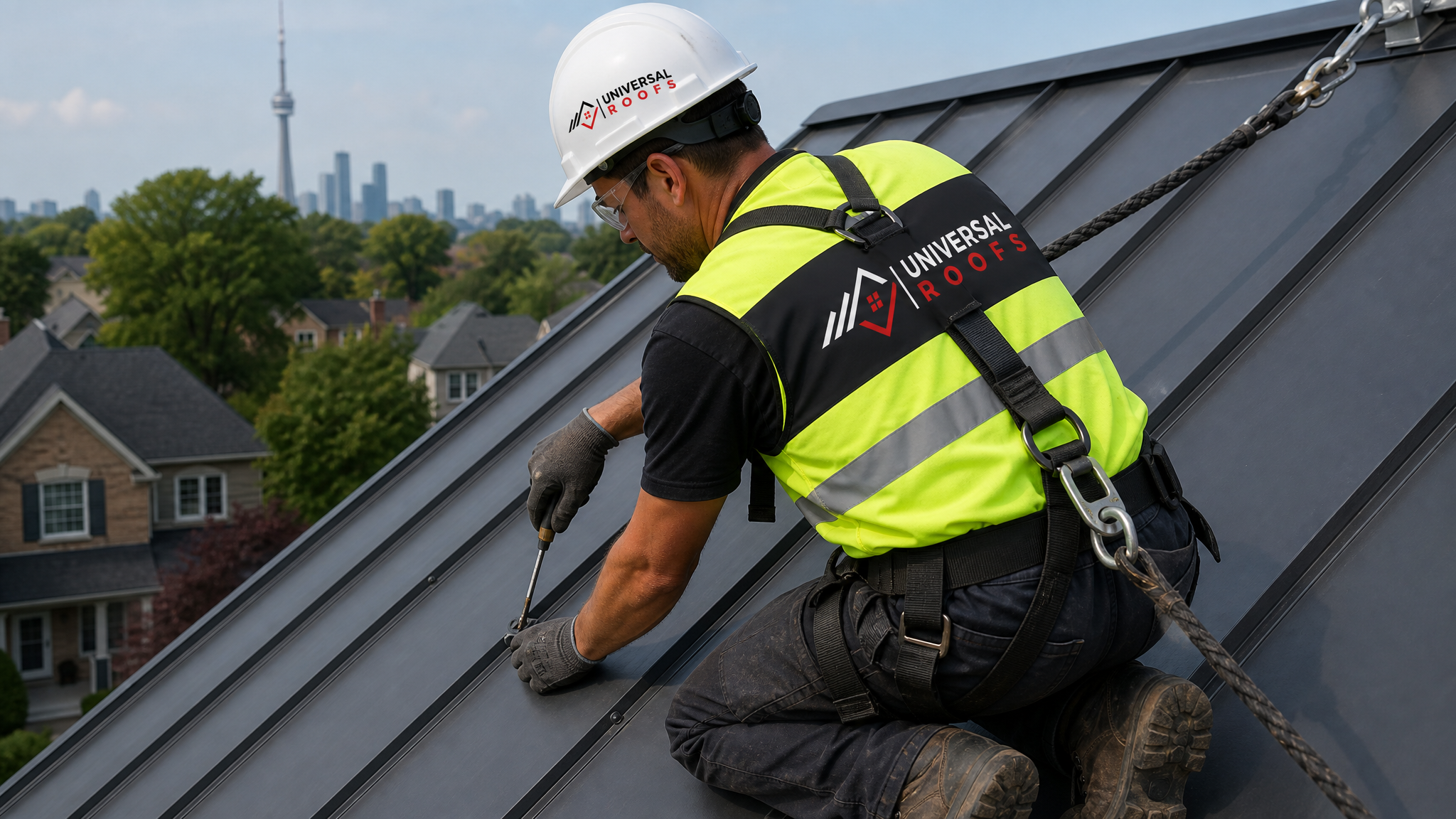
Common Metal Roof Problems and How They Are Fixed
Not every metal roof problem requires the same fix. The table below breaks down the most frequent issues we see across the GTA, their root cause, and the typical repair approach.
| Problem | Root Cause | Typical Repair | Urgency |
|---|---|---|---|
| Fastener backout | Thermal expansion/contraction over years | Remove and replace with oversized fastener and new washer | Moderate — address before winter |
| Cracked rubber washers | UV degradation, age (10-15 years) | Re-seat fastener with new EPDM washer | Moderate — inspect annually |
| Seam separation | Poor original crimping or panel shift | Re-crimp seam or install seam sealant tape | High — active leak risk |
| Flashing leak at chimney/skylight | Improper flashing installation or sealant failure | Remove and reflash with new step flashing and sealant | High — active leak risk |
| Rust spot / pinhole corrosion | Coating breach or galvanic reaction | Spot treat, prime, patch or replace panel section | Moderate to high depending on size |
| Dented panel from debris | Falling branches, hail, foot traffic | Panel replacement if coating is compromised | Low to moderate — cosmetic unless coating is broken |
| Ice dam damage at eaves | Poor attic ventilation and insulation | Repair damaged section, add ventilation, consider heat cable | High — recurring seasonal risk |
Repair vs. Replacement: How to Decide
Homeowners often ask whether a leaking metal roof should be repaired or replaced outright. The honest answer depends on the age of the roof, how widespread the damage is, and whether the underlying panels themselves are still structurally sound.
As a general rule, if less than 20 percent of the roof is affected and the panels are under 20 years old, targeted repair is almost always the more cost-effective route. If corrosion has spread across multiple panels, if the original installation had systemic flashing errors, or if the roof is approaching the end of its coating’s warranty life, a full roof replacement often makes more financial sense than repeatedly patching the same failure points.
| Factor | Favours Repair | Favours Replacement |
|---|---|---|
| Roof age | Under 20 years | Over 30 years or near coating warranty expiry |
| Extent of damage | Isolated to one section or penetration | Spread across multiple panels or seams |
| Fastener condition | Localized backout, most fasteners intact | Widespread washer failure across the whole roof |
| Corrosion pattern | Surface rust, coating intact elsewhere | Through-panel rust or recurring pinholes |
| Original installation quality | Sound crimping and flashing, isolated errors | Systemic flashing or seam defects throughout |
Preventive Maintenance That Reduces Repair Frequency
Most of the repair causes above share one thing in common: they are slow-developing and preventable with a regular inspection routine. A metal roof that gets checked twice a year, in spring and fall, rarely surprises a homeowner with a sudden interior leak.
A practical maintenance routine for GTA homeowners includes clearing debris from valleys and eaves each fall, checking fastener tightness during a spring inspection, examining flashing around every roof penetration (chimneys, plumbing vents, and especially skylights), and watching for the earliest signs of rust before it spreads. If your home has a skylight integrated into the metal roofing, the flashing collar around it deserves particular attention, since it is one of the highest-risk leak points on the whole roof — our skylight replacement team frequently finds that a “roof leak” reported by a homeowner is actually a failed skylight flashing seal rather than a panel problem at all.
Attic ventilation also plays a bigger role than most homeowners expect. Poor airflow traps humid air against the underside of metal panels, encouraging condensation that leads to hidden corrosion from below. A quick check of your attic insulation and venting during any roof inspection can catch this before it becomes a structural issue.
| Season | Recommended Task | Why It Matters | Time Needed |
|---|---|---|---|
| Spring | Full visual inspection, check fasteners and seams | Catch winter freeze-thaw damage before summer storms | 1-2 hours |
| Summer | Clear debris, inspect coating for chalking or UV wear | Prevents debris buildup and catches coating breakdown early | 30-60 minutes |
| Fall | Clean gutters and valleys, inspect flashing seals | Prevents ice dam formation and clogged drainage in winter | 1-2 hours |
| Winter | Monitor for ice buildup at eaves, check attic for condensation | Freeze-thaw cycling is the top driver of fastener and seam failure | Ongoing observation |
Why Professional Repair Matters for Metal Roofing
Metal roof repair looks simple from the ground: replace a screw, add some sealant, done. In practice, using the wrong fastener grade, the wrong washer material, or generic caulk instead of a proper butyl or polyurethane roofing sealant creates a repair that fails again within a season or two. Galvanic compatibility between the panel material, the fastener, and any flashing metal also has to be checked, or a well-intentioned DIY fix can actually accelerate corrosion.
Working safely on a metal roof also requires proper fall protection and an understanding of how panels flex and slide underfoot, especially on a steep pitch. This is one of the main reasons homeowners across Toronto, the Peel Region, York Region, Halton Region, and Durham Region call in a professional crew rather than attempting a fastener swap themselves.
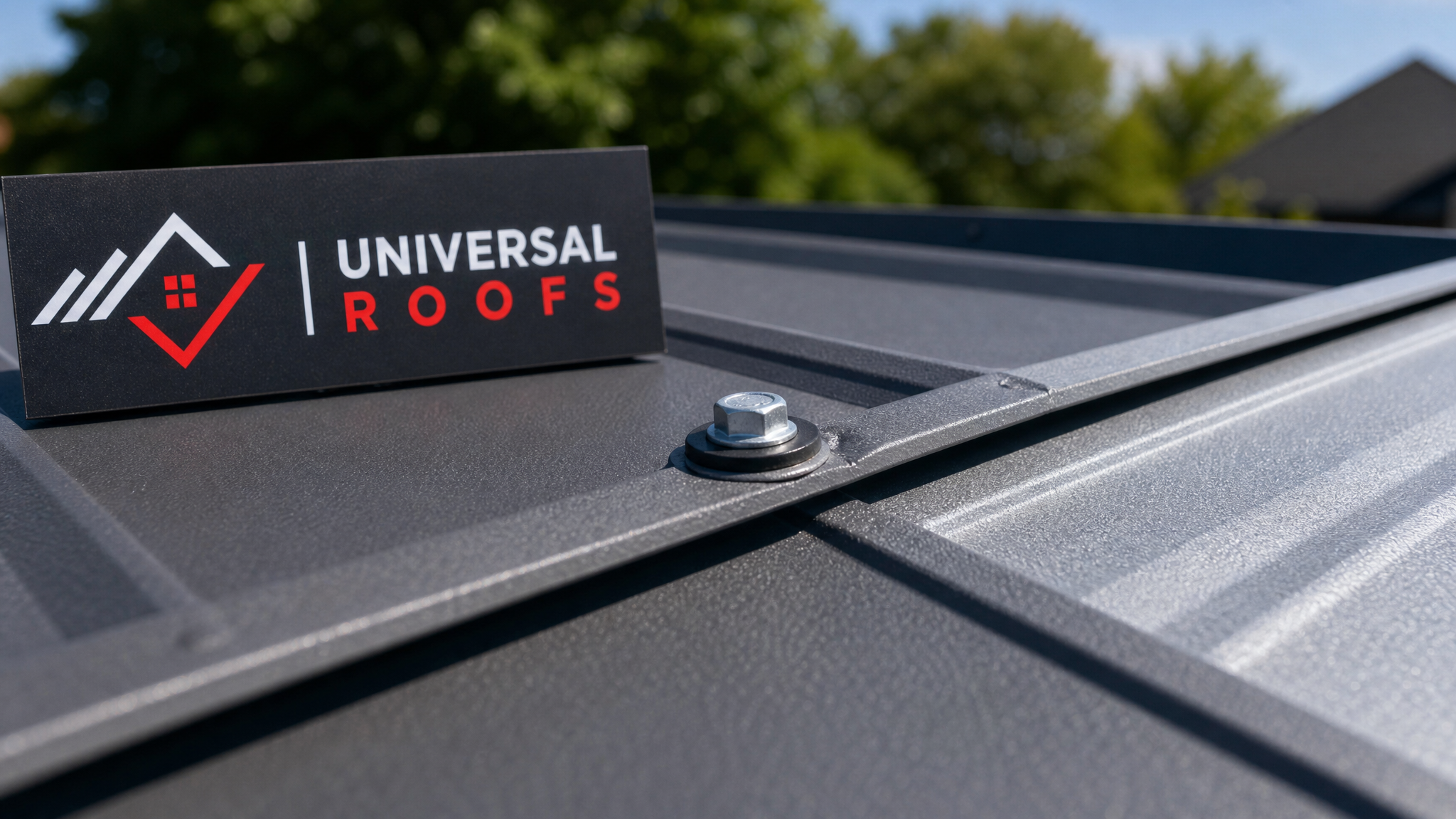
What a Metal Roof Repair Visit Typically Involves
When our team responds to a metal roof service call, the process generally follows the same sequence regardless of whether the issue is a single leak or a broader maintenance visit.
First comes a full visual and physical inspection, walking every panel and seam, checking fastener tightness by hand, and examining every flashing point including chimneys, vents, and skylight collars. Second, any active leak points are traced back to their true source, since water often travels along the underside of a panel before dripping somewhere well downhill of the actual entry point. Third, repairs are made using matched materials: the correct fastener alloy, EPDM or neoprene washers rated for the panel type, and sealant compatible with the metal coating. Finally, a post-repair check confirms the fix under simulated water flow before the crew leaves.
This methodical approach is why a proper inspection typically takes longer than homeowners expect for what looks like “just a leak.” The goal is fixing the actual cause, not just the symptom that happens to be visible from the ground.
Cost Expectations for Metal Roof Repairs in the GTA
Repair costs vary widely depending on the scope of work, but homeowners generally see a predictable range based on the type of issue.
| Repair Type | Typical Scope | Estimated Cost Range (CAD) | Notes |
|---|---|---|---|
| Fastener re-seating (localized) | 10-30 fasteners | $300 – $700 | Often bundled with an inspection visit |
| Full fastener replacement | Entire roof, older exposed-fastener system | $1,500 – $4,000 | Recommended once washers reach 12-15 years old |
| Flashing repair/replacement | One penetration (chimney, vent, skylight) | $400 – $1,200 | Cost rises with roof pitch and access difficulty |
| Panel section replacement | 1-3 damaged panels | $800 – $2,500 | Colour matching may affect cost on older roofs |
| Seam re-crimping/sealing | Localized seam failure | $500 – $1,500 | Specialized equipment required for standing-seam profiles |
These figures are general GTA market ranges and will vary based on roof pitch, access, panel profile, and material availability. A written estimate after an on-site inspection is always the most reliable way to budget for repair work.
When to Call a Professional Instead of Waiting
Some situations call for immediate attention rather than waiting for the next scheduled inspection. Active dripping inside the home, visible daylight through the roof deck, a sudden spike in attic humidity, or storm damage from high winds or hail all warrant a same-week service call. Left unaddressed, even a small entry point can lead to soaked insulation, mould growth, and damage to ceiling drywall that costs far more to remediate than the roof repair itself would have.
If you are unsure whether what you are seeing is cosmetic or structural, our FAQ page covers many of the most common homeowner questions, and our reviews page reflects the kind of thorough, honest assessments GTA homeowners have come to expect from our team. You can also learn more about our company and our two decades of experience working on roofs across the region.
Why do metal roofs often require repair if the material is so durable?
How often should a metal roof be inspected to avoid major repairs?
Can I repair a metal roof myself, or should I hire a professional?
What is the most common reason metal roofs leak in Toronto specifically?
How long does a metal roof repair typically take?
Is it cheaper to repair a metal roof or replace it entirely?
Need Help With Why Do Metal Roofs?
If your metal roof is showing rust streaks, loose fasteners, or an unexplained leak, the team at Universal Roofs can diagnose the real cause and fix it properly the first time, rather than patching a symptom that returns next season.
Call us today at (416) 732-2421 or request a free inspection to get started.
Universal Roofs proudly serves Toronto, Mississauga, Brampton, Vaughan, Markham, Oakville and the GTA since 2005.