
Metal roofing has become one of the most popular choices for GTA homeowners looking for a durable, long-lasting roof, and for good reason. A properly installed metal roof can last 40 to 70 years, shrugs off heavy snow loads, and handles the freeze-thaw cycles that punish asphalt shingles every winter. But even the toughest metal roof eventually needs attention, whether that is a loose fastener after a windstorm, a seam that has opened up, or a scratch in the coating that is starting to rust. When that happens, homeowners searching for local metal roof repair are often overwhelmed by the number of possible fixes and unsure which one actually applies to their situation.
This guide breaks down the full range of local metal roof repair options available to Toronto and GTA homeowners in 2026, from simple sealant touch-ups to full panel replacement. We will cover what each method involves, how long it typically lasts, what it costs, and how to tell which repair your roof actually needs. We will also explain when a repair no longer makes sense and a full roof replacement is the smarter long-term investment.
Whether you noticed a drip in the attic after last week’s summer thunderstorm or you are simply doing your annual roof check, this article will help you understand your options before you call a contractor.
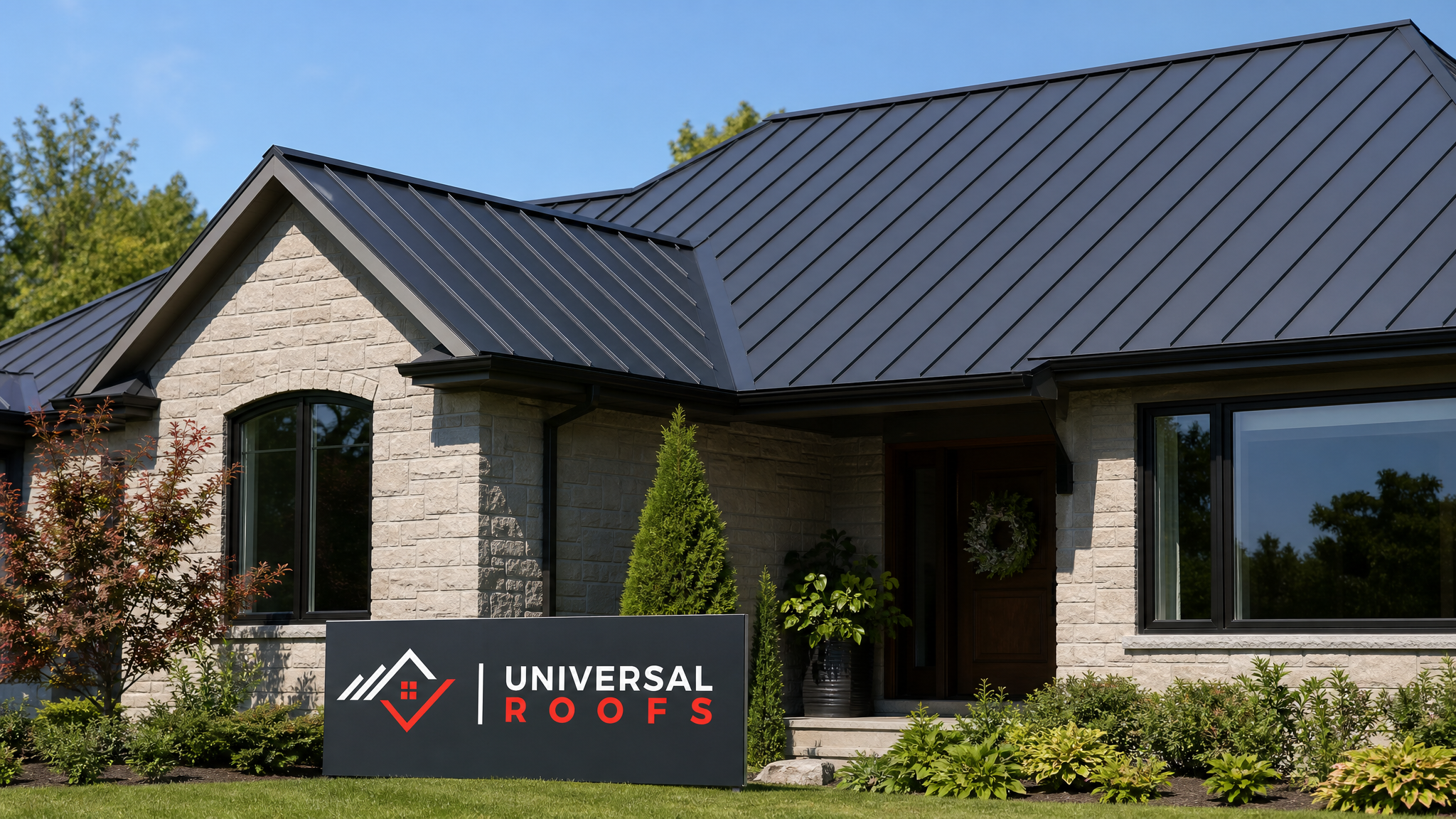
Why Metal Roofs Need Repair Less Often, But Still Need It
Metal roofing is prized for its longevity, but “low maintenance” does not mean “no maintenance.” Steel and aluminum panels expand and contract with temperature swings far more than asphalt shingles, and Toronto’s climate puts that movement to the test. A summer afternoon on a dark metal roof can reach surface temperatures well above 60 degrees Celsius, while winter nights regularly drop below minus 15. That constant expansion and contraction stresses fasteners, sealants, and seams over time.
The most common triggers for local metal roof repair calls in the GTA include:
- Wind uplift during spring and summer storms that loosens panel edges or ridge caps
- Ice damming in winter that backs up meltwater under flashing at valleys and penetrations
- UV degradation of exposed sealant at screws, seams, and around skylights
- Physical damage from falling branches, hail, or ladder contact during other home maintenance
- Age-related fastener backout, where screws work loose from repeated thermal cycling
- Galvanic corrosion where dissimilar metals (such as copper flashing against steel panels) touch
Understanding which of these applies to your roof is the first step toward choosing the right repair method. A qualified inspection from a company that specializes in roof repair will usually identify the cause before recommending a fix, and that diagnostic step matters more with metal roofing than with shingles because the wrong repair can actually accelerate corrosion.
Comparing the Main Local Metal Roof Repair Methods
Not every metal roof problem calls for the same solution. Below is a comparison of the repair methods most commonly used across the Toronto area, along with what each is best suited for.
| Repair Method | Best For | Typical Lifespan | Relative Cost |
|---|---|---|---|
| Sealant and caulking renewal | Minor leaks at fasteners, seams, penetrations | 5-10 years | Low |
| Fastener replacement/upgrade | Loose or backed-out screws, worn washers | 10-15 years | Low to moderate |
| Flashing repair or replacement | Leaks at valleys, chimneys, skylights, walls | 15-25 years | Moderate |
| Panel section replacement | Localized dents, punctures, corrosion spots | 20-30 years | Moderate to high |
| Seam re-crimping or re-welding | Standing seam panels with separated joints | 15-25 years | Moderate |
| Recoating or repainting | Faded finish, minor surface rust, chalking | 10-15 years | Moderate |
Most local metal roof repair jobs in the GTA fall into the first three categories, since they address the vast majority of leak calls we see. Panel replacement and re-crimping are less frequent but necessary when the damage is more than cosmetic.
Sealant and Caulking Renewal
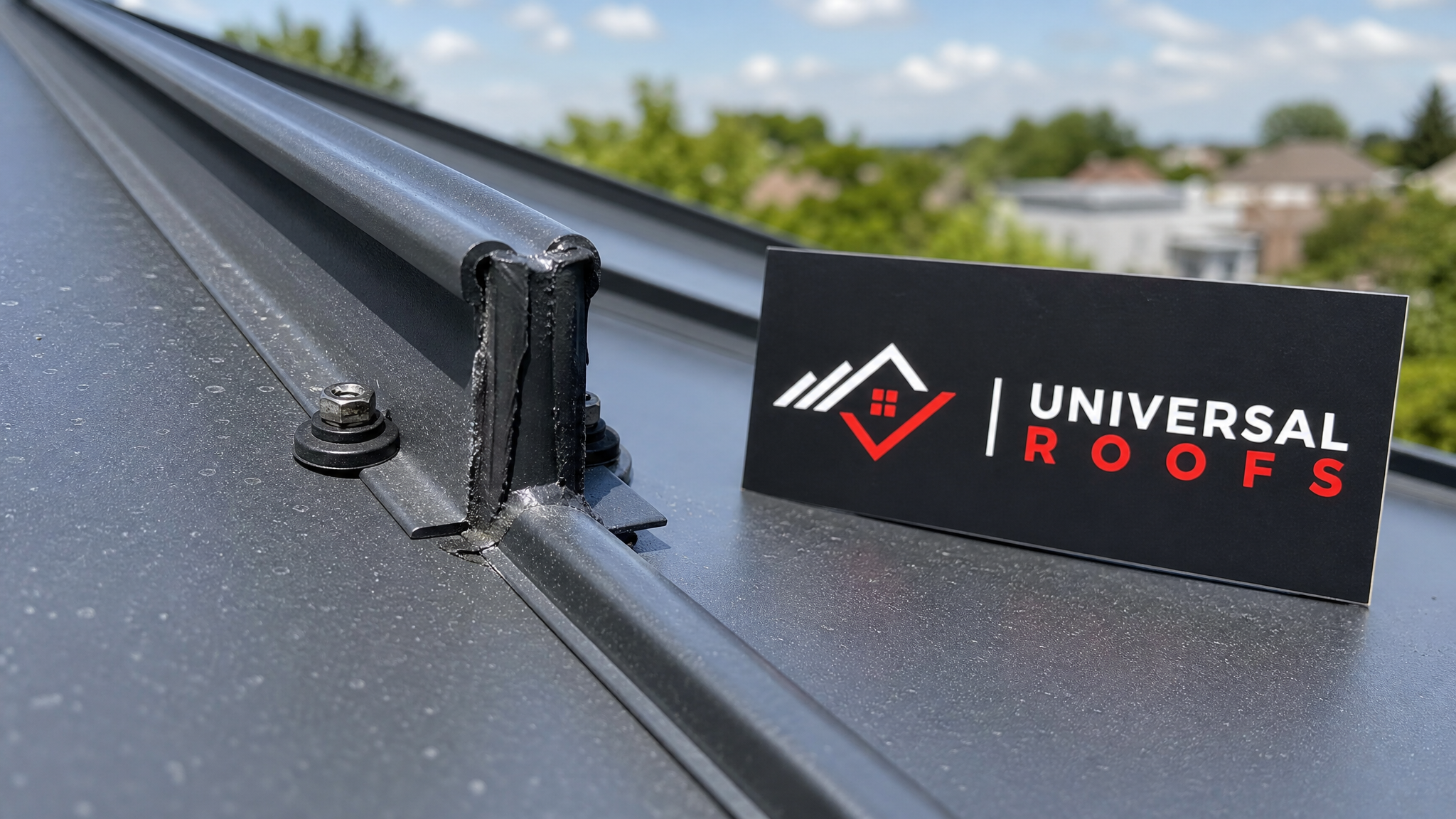
Every exposed fastener and seam on a metal roof relies on sealant to stay watertight. Ordinary roofing sealants degrade under UV exposure, typically needing renewal every 5 to 10 years depending on sun exposure and product quality. This is often the first thing a technician checks, since a hardened, cracked bead of sealant around a screw head is one of the most common sources of a slow attic leak.
The fix itself is straightforward for a trained professional: remove the old sealant, clean the substrate, and apply a high-grade polyurethane or butyl sealant rated for metal roofing. The tricky part is knowing which fasteners actually need attention versus which ones are still sound, which is why a full roof walk-through beats a spot check.
Fastener Replacement and Upgrades
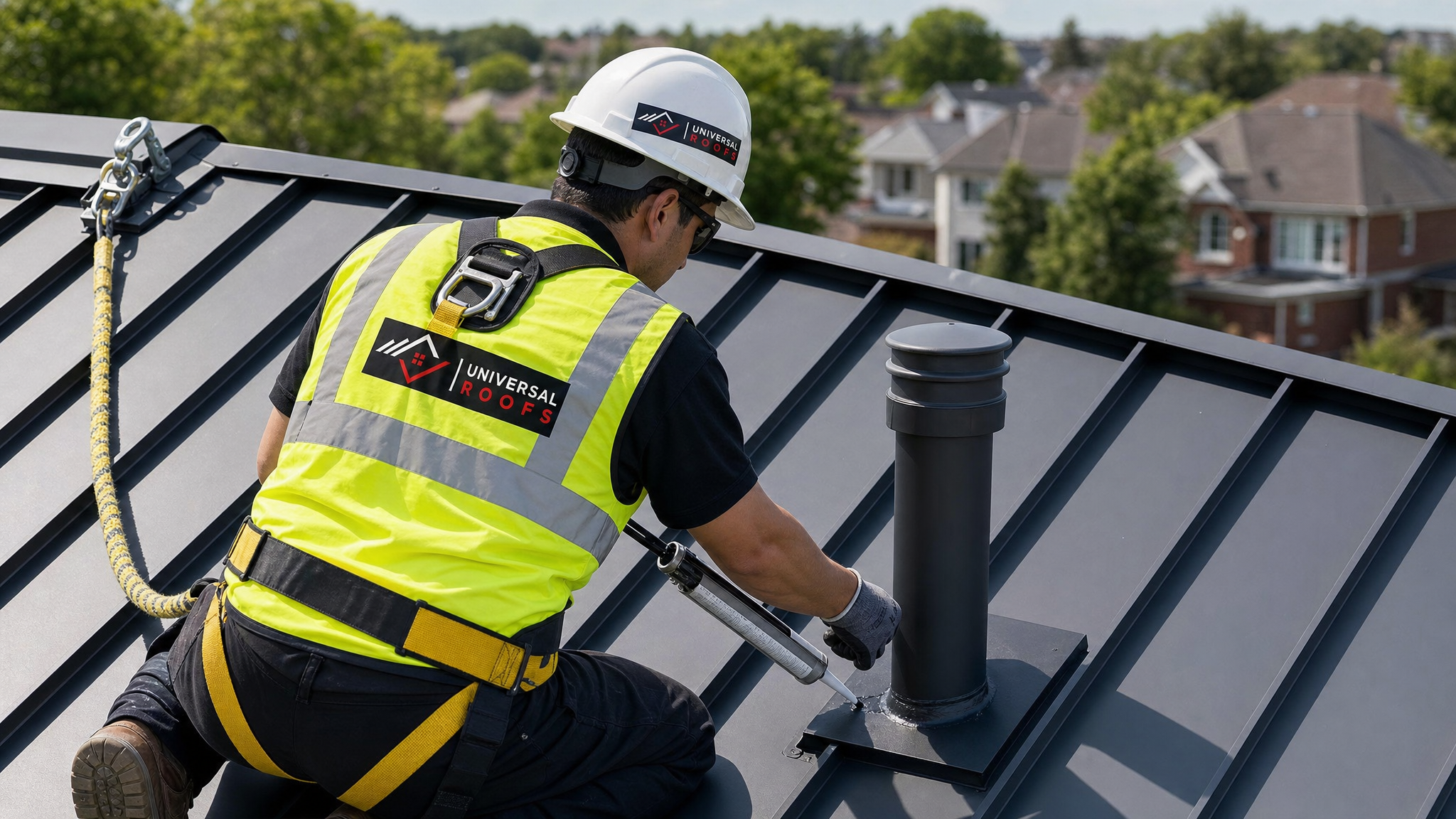
Exposed-fastener metal roofs (as opposed to concealed-fastener standing seam systems) rely on screws with rubber washers to stay sealed. Those washers harden and crack over the years, and the screws themselves can back out slightly as the panels expand and contract thousands of times per season. Replacing worn fasteners with new, properly torqued screws and fresh washers is one of the most cost-effective local metal roof repair options available, and it often prevents a much larger leak from developing.
Flashing Repair
Flashing does the hardest work on any roof: it seals the transitions where the roof meets a wall, chimney, vent pipe, or skylight. On metal roofs, flashing failures are the single most common cause of leaks we are called out for in the GTA, particularly around older chimney installations and skylight curbs. If you already have or are considering a skylight, pairing your roof inspection with a look at your skylight replacement options can address both issues at once, since flashing around skylights tends to fail on a similar timeline to the skylight unit itself.
How to Diagnose Which Repair You Need
Before calling a contractor, a quick homeowner-level check can help you describe the problem accurately, which speeds up diagnosis and quoting. Here is a simple troubleshooting sequence:
| Symptom | Likely Cause | Recommended Next Step |
|---|---|---|
| Water stain on ceiling near an exterior wall | Flashing failure at wall-to-roof transition | Book a flashing inspection |
| Drip only during heavy or wind-driven rain | Failed sealant at a seam or fastener | Sealant renewal assessment |
| Rust streaks below a specific panel | Coating breach or galvanic corrosion | Panel or coating evaluation |
| Visible dent or puncture from debris | Impact damage | Panel section replacement quote |
| Panel edges lifting in wind | Fastener backout or clip failure | Fastener and clip inspection |
| Leak concentrated around a skylight | Skylight curb flashing failure | Combined roof and skylight inspection |
Note that a single visible symptom, like a ceiling stain, does not always point to the leak source directly above it. Water can travel along the underside of decking or along a rafter before dripping, sometimes appearing metres away from the actual point of entry. This is why a thorough attic inspection with the roof surface examined from above is always more reliable than guessing from the interior alone.
What Local Metal Roof Repair Typically Costs in the GTA
Cost is naturally one of the first questions homeowners ask, and it varies with the extent of damage, roof pitch, and accessibility. The table below gives realistic ranges for the Toronto market based on jobs we commonly quote.
| Repair Type | Typical Cost Range (CAD) | Time to Complete |
|---|---|---|
| Spot sealant renewal (per problem area) | $250 – $600 | 1-2 hours |
| Fastener replacement (whole roof) | $600 – $1,800 | Half day to 1 day |
| Flashing repair (single penetration) | $400 – $1,200 | 2-4 hours |
| Panel section replacement | $800 – $2,500 | 1 day |
| Seam re-crimping (per section) | $500 – $1,500 | Half day |
| Full roof recoat | $3,000 – $8,000+ | 2-4 days |
These figures assume a standard sloped residential roof with reasonable access. Steep pitches, multi-storey homes, and roofs with limited ladder access can push costs toward the higher end of each range. It is always worth requesting an itemized quote so you can see exactly what is included, particularly whether cleanup, disposal, and a workmanship warranty are part of the price.
DIY vs. Professional Metal Roof Repair
Metal roofing looks simple from the ground, which leads some homeowners to attempt their own repairs. In our experience, a handful of tasks are reasonably safe for a confident homeowner, but most metal roof repairs are better left to professionals, for reasons that go beyond just safety.
- Walking on metal panels incorrectly can dent them, especially on lower-gauge residential panels, creating a new problem where there was none before.
- Mismatched sealants and fasteners accelerate corrosion. Using the wrong screw type or a generic caulk instead of a metal-rated sealant often fails within a single season and can trap moisture against the panel.
- Height and pitch create real fall risk. Metal surfaces are slicker than shingles, especially when wet or frosted, and professional crews use harnesses and rope anchors for a reason.
- Warranty implications. Many manufacturer warranties are voided by unauthorized repair work, which can cost you far more than the repair itself if a larger issue surfaces later.
If you are simply clearing debris from valleys or doing a visual check with binoculars from the ground, that is reasonable homeowner maintenance. Anything involving fasteners, sealant, or walking the roof surface should go to a licensed contractor.
Preventive Maintenance That Reduces Future Repair Needs
The best local metal roof repair is the one you never need to call for. A modest annual maintenance routine goes a long way toward extending the life of a metal roof in our climate.
| Maintenance Task | Recommended Frequency | Why It Matters |
|---|---|---|
| Visual inspection of panels and seams | Twice yearly (spring and fall) | Catches loose fasteners and sealant wear early |
| Clear debris from valleys and gutters | Seasonally | Prevents trapped moisture and ice damming |
| Check flashing at penetrations | Annually | Flashing fails before panels typically do |
| Inspect attic for moisture or staining | Annually, ideally after winter | Early sign of a developing leak |
| Professional roof and attic assessment | Every 2-3 years | Identifies issues not visible from the ground |
Homeowners in Toronto, Peel Region, York Region, and across the GTA all deal with the same freeze-thaw pressures, so this maintenance schedule applies broadly regardless of neighbourhood.
When Repair Is No Longer the Right Answer
Metal roofs are durable, but there comes a point where continued patching stops making financial sense. Signs that you may be past the point of cost-effective repair include:
- Corrosion spreading across multiple panels rather than isolated spots
- Recurring leaks in the same general area despite repeated repairs
- Panels reaching or exceeding their expected service life (often 40+ years for quality steel systems)
- Structural sagging or deck damage discovered during a repair
- Coating failure across large sections rather than localized fading
In these cases, a full roof replacement often costs less over a 10-year horizon than an ongoing series of patch repairs, and it comes with a fresh warranty. A reputable contractor should tell you honestly when this threshold has been reached rather than continuing to sell repairs that only delay the inevitable. You can read how other GTA homeowners describe this kind of honest guidance on our reviews page.
Choosing a Local Metal Roof Repair Contractor
Not every roofing company has genuine metal roofing experience, even if they advertise it. Metal systems require different tools, fasteners, and sealant compatibility knowledge than asphalt shingle work, and hiring a shingle-focused crew for a metal repair is one of the most common ways homeowners end up with a repeat leak. When vetting a contractor for local metal roof repair, look for:
- Documented metal roofing experience, not just general roofing, with photos of similar completed work
- Manufacturer-approved fasteners and sealants matched to your specific panel profile and gauge
- A written warranty on both materials and labour
- Proper fall protection equipment, since a contractor cutting corners on safety often cuts corners on workmanship too
- Local presence in the GTA, so they understand our freeze-thaw cycles, ice damming patterns, and municipal permit requirements across Halton Region and Durham Region as well as Toronto proper
Ask any prospective contractor how they diagnose the source of a leak before quoting a fix. A contractor who inspects thoroughly and explains the cause is far more likely to solve the problem the first time than one who quotes a repair sight unseen. You can find answers to more common questions on our FAQ page, or learn more about our approach on the about page.
Metal Roof Repair and Related Roofing Systems
It is worth noting that metal roofing often coexists with other roofing systems on the same property, particularly on additions, garages, or porch roofs. If your home has a mix of metal and flat roofing sections, leaks can sometimes originate at the transition between the two systems rather than within either roof surface individually. A comprehensive inspection should always account for these transition points, since they are a known weak spot regardless of how well either individual roofing system was installed.
Similarly, if your metal roof includes a skylight, remember that skylight flashing is a distinct repair category from the panel and seam work described above. Skylight curbs need their own inspection cycle, and pairing that with your metal roof maintenance visit is an efficient way to catch problems early.
How much does local metal roof repair cost in Toronto?
Can a metal roof be repaired instead of replaced?
How long does a typical metal roof repair take?
What causes most metal roof leaks in the GTA?
Is DIY metal roof repair a good idea?
How do I find a reliable contractor for local metal roof repair?
Need Help With Top Local Metal Roof?
If you have noticed a leak, a loose panel, or simply want peace of mind before the next storm rolls through, Universal Roofs has been diagnosing and fixing metal roofing issues across the GTA since 2005. Our crews carry the right fasteners, sealants, and safety equipment for every panel profile we work on, so the fix lasts.
Call us today at (416) 732-2421 or request a free inspection to get started.
Universal Roofs proudly serves Toronto, Mississauga, Brampton, Vaughan, Markham, Oakville and the GTA since 2005.