
If your roof is streaked with black algae, shedding granules, or hiding a soft spot near the chimney flashing, the first question is rarely “is this a problem” — it is “what will it cost to fix, and can it be done without a full replacement.” Between roof cleaning and roof repair, most Toronto homeowners have more affordable options than they expect, provided they know which service actually solves their problem.
This cost breakdown walks through what roof cleaning and roof repair genuinely cost in the Greater Toronto Area in 2026, what drives the price up or down, and how to tell when a $300 cleaning is enough versus when you are looking at a $1,200 repair — or when both are warranted on the same visit. We will also flag the false economy of cleaning methods that damage shingles, and the repair shortcuts that cost more in the long run.
Universal Roofs has been assessing, cleaning, and repairing roofs across the GTA since 2005, and the single most common call we get in the summer months is a homeowner who has been quoted wildly different prices for what sounds like the same job. This guide explains why those quotes differ and how to budget realistically for your specific situation.
Roof Cleaning vs. Roof Repair: Knowing Which One You Need
Roof cleaning and roof repair solve different problems, and conflating them is the single biggest reason homeowners overpay or under-fix an issue. Cleaning addresses cosmetic and biological growth — black algae streaks (usually Gloeocapsa magma), moss colonies on north-facing slopes, lichen, and general debris buildup in valleys and gutters. Repair addresses structural and weatherproofing failures — cracked or missing shingles, lifted flashing, punctured underlayment, and active leaks.
A roof can badly need cleaning and be structurally perfect. It can also look reasonably clean and be actively leaking behind a chimney. The two services are frequently bundled because a cleaning crew on the roof is well positioned to flag repair items, but they are priced and performed separately, and you should never let a quote conflate the two without an itemized breakdown.
Before booking either service, it helps to understand what a professional roof repair actually involves versus a maintenance cleaning, since the tools, time, and materials differ substantially. A cleaning crew carries soft-wash equipment and biocide treatments; a repair crew carries replacement shingles, flashing stock, sealants, and often has to match existing materials.
What Affects the Cost of Roof Cleaning in Toronto
Roof cleaning pricing in the GTA is driven by five main factors, and understanding them lets you sanity-check any quote you receive.
- Roof size and pitch — larger roofs and steeper pitches take longer and require more safety rigging, which raises labour cost.
- Severity of growth — light surface algae is a quick soft-wash; heavy moss colonization requires manual scraping before treatment, which adds significant time.
- Cleaning method — soft washing (low-pressure, chemical-based) costs more per job than a rushed pressure wash, but it is the only method that will not damage asphalt shingles.
- Access and roof complexity — dormers, multiple valleys, skylights, and steep unwalkable sections all add time and sometimes require additional fall-protection setup.
- Preventive treatment — a zinc or copper strip application to slow regrowth adds a modest amount to the invoice but meaningfully extends the interval before the next cleaning.
In the GTA, a straightforward soft-wash cleaning on a typical two-storey detached home with moderate algae staining generally lands in the low-to-mid hundreds of dollars. Heavier moss removal, steep roofs, or roofs with extensive valley debris push toward the higher end of that range. Below is a general cost breakdown by cleaning method and severity level.
| Cleaning Method | Best For | Typical Cost Range (Average GTA Home) | Shingle Safety |
|---|---|---|---|
| Soft washing (low-pressure + biocide) | Algae streaking, light moss, general grime | $300 – $600 | Safe for asphalt shingles |
| Manual moss scraping + soft wash | Heavy moss colonies, north-facing slopes | $500 – $900 | Safe when done carefully; risk of granule loss if rushed |
| Gutter and valley debris clearing (add-on) | Leaf and needle buildup, standing water risk | $100 – $250 | Not applicable |
| Preventive zinc/copper strip install | Reducing algae regrowth for 2–5 years | $150 – $350 | Safe, improves longevity |
| High-pressure power washing | Not recommended for shingles | Often quoted cheaply, $200 – $400 | Unsafe — strips granules, voids warranties |
That last row deserves emphasis: high-pressure washing is the most common cause of premature shingle failure we see after a “cheap” cleaning job. It strips the protective granules that shield the asphalt mat from UV degradation, and most shingle manufacturers explicitly void material warranties if pressure washing damage is documented. If a quote for roof cleaning seems unusually low, ask directly what equipment and pressure setting will be used before you agree to the job.
What Affects the Cost of Roof Repair in Toronto
Repair costs vary far more widely than cleaning costs because the underlying damage can range from a single lifted shingle to a compromised deck section. The main cost drivers are:
- Type of failure — a handful of wind-lifted shingles is a fast fix; a chimney flashing leak that has soaked the underlayment requires more disassembly and material replacement.
- Material match — if your roof is more than a few years old, matching the existing shingle colour and profile can take longer than the repair itself, and mismatched patches are a common complaint we hear about other contractors’ work.
- Extent of water intrusion — if water has reached the roof deck (plywood sheathing), that section may need to be cut out and replaced, not just re-shingled.
- Roof age and remaining life — on a roof nearing the end of its service life, it is sometimes more cost-effective to consider a partial or full roof replacement rather than repeated patch repairs.
- Access and steepness — the same access factors that affect cleaning cost also apply to repair labour, particularly for chimney and skylight-adjacent work.
Freeze-thaw cycling is the reason repair season in Toronto tends to spike every spring and again after summer storm season: ice that forms in a small crack in the fall will expand through winter and can turn a minor issue into a larger one by the time the snow melts. Addressing small repair items promptly, rather than waiting, is consistently the more affordable path.
| Repair Type | Common Cause | Typical Cost Range | Urgency |
|---|---|---|---|
| Spot shingle replacement (1–10 shingles) | Wind lift, storm damage, aging tabs | $250 – $500 | Moderate — address within weeks |
| Flashing repair (chimney, wall, skylight) | Sealant failure, corrosion, poor original install | $350 – $800 | High — active leak risk |
| Valley repair | Debris damming, worn valley liner | $400 – $900 | High — concentrated water flow |
| Deck/sheathing section replacement | Prolonged undetected leak | $800 – $2,000+ | Urgent — structural concern |
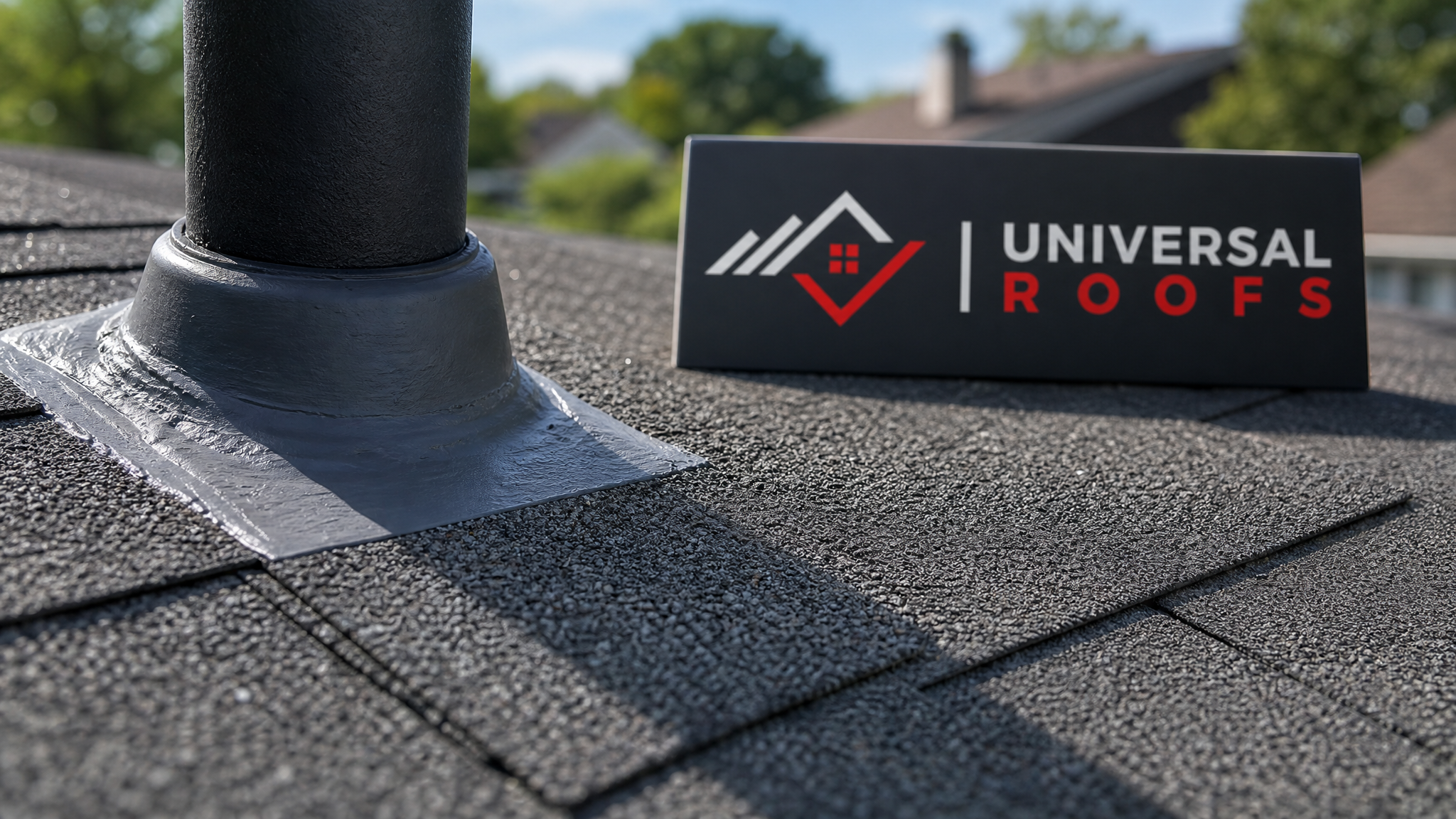
| Ridge cap or vent repair | Cracked caps, failed pipe boot seals | $200 – $450 | Moderate |
Note that these are general Toronto-area ranges intended to help you budget and evaluate quotes — the only way to get an accurate number for your specific roof is a physical assessment. Universal Roofs provides free, no-obligation inspections precisely because phone estimates on repair work are unreliable; two roofs with “a small leak near the chimney” can have completely different underlying causes and costs.
The Cost of Waiting: Why Small Repairs Are the Affordable Option
The most expensive roofing decision most homeowners make is postponing a small repair. A single cracked flashing seal left through one Toronto winter can allow meltwater to migrate under the shingles, saturate the underlayment, and stain or rot the deck below — turning a $400 flashing repair into an $1,800 deck replacement. This is the pattern we see most often between October and April.
The same logic applies to cleaning. Moss left unaddressed does not stay cosmetic. Moss holds moisture against the shingle surface, which accelerates granule loss and, on wood-adjacent components like fascia, can encourage rot. A $500 cleaning today is meaningfully cheaper than the shingle replacement that neglected moss can hasten.
If your roof has water stains on interior ceilings, visible daylight through the attic, or shingles in the gutter after a wind event, treat it as a repair priority rather than a cosmetic one. A quick way to catch problems early is a periodic attic check for moisture staining on the underside of the roof deck — it is often visible from inside long before it shows up as a ceiling stain.
Bundling Cleaning and Repair: Where the Real Savings Are
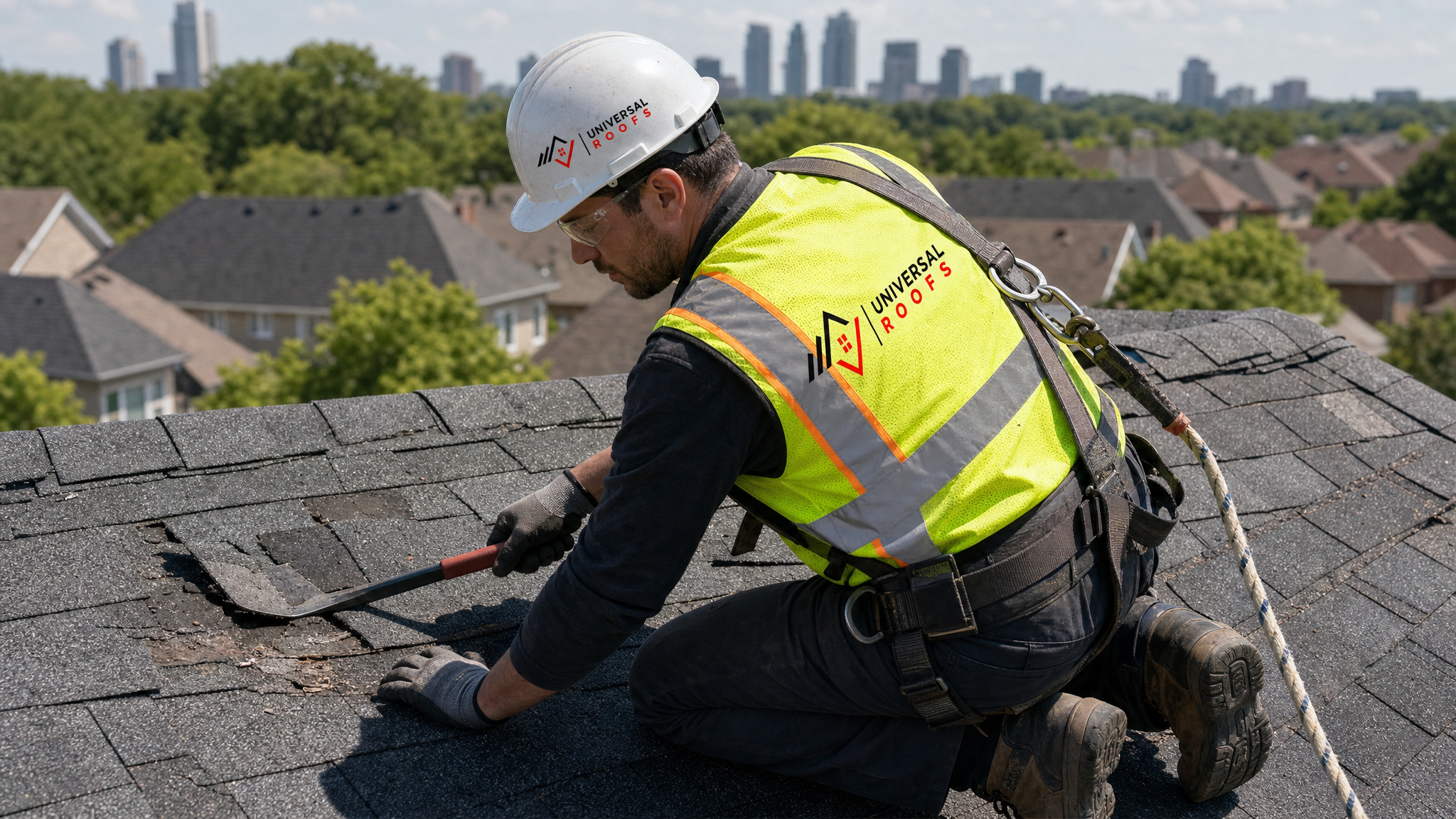
The most cost-effective approach for most homeowners is a single combined visit: a roof assessment that includes both a cleaning quote and a repair quote from the same crew. This saves on the mobilization and access setup that would otherwise be charged twice, and it means any repair items discovered during cleaning — a lifted shingle noticed while clearing a valley, for example — get flagged immediately rather than after a second scheduling round.
It also avoids a common problem: a cleaning-only company that is not equipped to properly diagnose or repair what it finds, versus a repair contractor who does not offer cleaning at all. Working with a company that does both under one roof (so to speak) keeps the process and the invoice simpler.
Bundled visits are also the right time to have flat sections, skylights, and attic ventilation checked, since access is already arranged. If your home has a flat roofing section over a garage or addition, or existing skylights, it is worth asking the crew to inspect those areas for separate signs of wear while they are on site, since flat membrane seams and skylight flashing are common leak points that are easy to overlook during a standard sloped-roof visit.
DIY vs. Professional: What Actually Saves Money
Homeowners frequently ask whether they can clean or repair a roof themselves to save the labour cost. The honest answer depends entirely on the task.
DIY-appropriate tasks generally include clearing debris from ground-accessible gutters with a stabilized ladder, and applying a manufacturer-approved roof cleaner from ground level with a garden hose attachment on single-storey sections. These carry manageable risk and low cost.
Tasks that should not be DIY’d include anything requiring walking the roof surface itself, any repair involving flashing or sealant (which requires proper material compatibility knowledge to avoid a repeat failure), and anything above a single storey. The fall risk alone makes roof-surface work a poor DIY candidate — professional crews use certified harnesses and anchor points specifically because a slip on a shingle roof, especially a damp or algae-slick one, can be serious. There is also a false-economy trap: a well-intentioned DIY pressure wash is the single most common cause of the granule-stripping damage described earlier, which can cost far more to remediate than the original cleaning would have cost professionally.
| Task | DIY Feasibility | Risk Level | Recommended Approach |
|---|---|---|---|
| Ground-level gutter clearing | Feasible | Low | DIY with stable ladder and helper |
| Applying approved cleaner via hose attachment (single storey) | Feasible with caution | Low–Moderate | DIY or professional, homeowner’s choice |
| Full roof soft-wash cleaning | Not recommended | Moderate | Professional (equipment and safety rigging required) |
| Shingle or flashing repair | Not recommended | High | Professional (material matching, warranty, fall risk) |
| Any two-storey-plus roof work | Not recommended | High | Professional |
How Toronto’s Climate Shapes Your Maintenance Budget
The GTA’s freeze-thaw winters and humid summers create ideal conditions for both algae growth and repair urgency, which is why an annual maintenance rhythm is more affordable over a five-year period than reactive, as-needed calls. Summer humidity feeds algae and moss growth, particularly on shaded, north-facing slopes common in mature Toronto neighbourhoods with tree cover. Winter freeze-thaw cycling is what turns small cracks and worn sealant into active leaks by spring.
A practical, budget-friendly maintenance rhythm for most GTA homes looks like: an inspection and minor repair pass each spring after the winter thaw, and a cleaning pass in late summer when algae growth is most visible and conditions are dry enough for treatments to cure properly. This timing also lines up well with July and August scheduling, since roofing crews are not contending with snow or ice on the surface.
Homes in different parts of the GTA see different patterns worth knowing about. Homes in the Toronto core with mature tree canopy tend to see more moss and algae pressure. Newer subdivisions in Peel Region and York Region often have less shade-driven growth but can see more wind-related shingle lift on exposed lots. Halton Region and Durham Region properties near the lake or open farmland frequently deal with more wind exposure as well. None of this changes the fundamentals of cost, but it does affect which service — cleaning or repair — you are more likely to need first.
How to Get an Accurate, Affordable Quote
The best way to keep roof cleaning and repair affordable is to get an itemized, in-person quote rather than relying on a phone estimate or a flat “whole roof” price with no breakdown. A trustworthy quote should separate:
- Cleaning cost (by method, with pressure setting or chemical process specified)
- Any preventive treatment cost, listed separately and optional
- Repair cost, itemized by specific defect found (not a lump sum)
- Material costs versus labour, especially for flashing or shingle matching
- Any recommendation for further investigation (attic check, deck moisture reading) with its own cost, if applicable
If a contractor cannot or will not break down a quote this way, treat that as a warning sign. Reputable roofers welcome the question because it protects both parties: you know exactly what you are paying for, and the contractor has a documented scope if anything is disputed later. You can read how past clients have found this process by checking reviews from homeowners across the GTA, and our FAQ page covers additional questions about scheduling, warranty coverage, and what to expect on inspection day.
Warning Signs You Should Not Ignore
Certain signs point toward repair being the priority over cleaning, regardless of how the roof looks cosmetically:
- Granules collecting in gutters or at downspout outlets in larger-than-normal amounts
- Curling, cupping, or cracked shingle tabs, especially on south- and west-facing slopes
- Visible daylight through the roof deck when viewed from inside the attic
- Soft or spongy sections underfoot noted by anyone accessing the roof
- Water stains on interior ceilings or upper-floor walls, particularly near chimneys or skylights
- Sagging in the roofline visible from the street
Any of these warrants a repair-focused inspection ahead of, or instead of, a cosmetic cleaning. Our team at Universal Roofs will always tell you honestly if a roof needs repair more urgently than it needs cleaning — we would rather solve the right problem at a fair price than sell a service that does not address your actual issue.
Building a Realistic Roof Maintenance Budget
Putting the numbers together, a homeowner with a typical GTA detached house can expect to budget roughly $300 to $900 annually for routine cleaning and minor upkeep in a normal year, with occasional larger repair years (flashing failure, storm damage, valley repair) landing in the $500 to $2,000 range depending on severity. Spreading this across a 20+ year shingle roof lifespan, proactive cleaning and prompt small repairs are dramatically more affordable than the alternative: a neglected roof that requires premature full replacement years ahead of schedule.
If you are unsure where your roof currently stands, the most affordable first step is simply a professional inspection. It costs nothing to find out whether you need a $350 cleaning, a $500 flashing repair, or nothing at all this year, and it gives you a documented baseline to compare against in future years.
What is the most affordable roof cleaning and repair option for a typical Toronto home?
How much does roof cleaning cost in the GTA?
Is pressure washing a cheap and affordable roof cleaning option?
What roof repairs are typically the most affordable to fix quickly?
Can I clean or repair my roof myself to save money?
How often should I budget for roof cleaning and repair in Toronto?
Need Help With Affordable Roof Cleaning and?
Whether your roof needs a straightforward soft-wash, a targeted repair, or both, the team at Universal Roofs provides honest, itemized quotes so you know exactly what you are paying for and why.
Call us today at (416) 732-2421 or request a free inspection to get started.
Universal Roofs proudly serves Toronto, Mississauga, Brampton, Vaughan, Markham, Oakville and the GTA since 2005.