
A sudden leak, a bulging membrane, or a puddle that will not drain can turn a calm summer evening into a scramble for buckets and tarps. Flat roofs on Toronto homes and commercial buildings take a beating from freeze-thaw cycles, intense summer downpours, and UV exposure, and when something fails, it rarely waits for business hours. Knowing the quick fixes for flat roof emergencies that actually buy you time — and which ones are just wishful thinking — can mean the difference between a contained problem and thousands of dollars in interior damage.
This guide walks through the temporary measures that genuinely help, the tools worth keeping on hand, and the warning signs that mean a patch job will not cut it. We will also cover why so many “quick fixes for flat roof emergencies” end up causing more harm than good when they are treated as permanent solutions instead of stopgaps.
Whether you manage a low-slope commercial building in North York or own a home with a flat-roofed addition in Scarborough, the goal during an emergency is the same: stop water from getting further into the building, protect the people and property inside, and get a professional assessment as soon as it is safe to do so. Universal Roofs has been responding to flat roof emergencies across the GTA since 2005, and the patterns behind these calls repeat themselves year after year.
Recognizing a True Flat Roof Emergency
Not every issue on a flat roof needs an after-hours call. Before running through quick fixes for flat roof emergencies, it helps to understand what actually qualifies as urgent. A slow, cosmetic stain on a ceiling tile that has not grown in weeks is worth monitoring, but active dripping, a sagging ceiling, or water pooling more than 5 centimetres deep for over 48 hours after rain are all signs that the situation has moved from “maintenance item” to “emergency.”
Common triggers we see across Toronto, Mississauga, and the wider GTA include summer thunderstorms overwhelming a clogged drain, ice damming during winter thaws, wind uplift after a storm that lifts a membrane seam, and mechanical damage from HVAC servicing or falling branches. Each of these can create an opening for water within minutes, and the membrane itself may already be compromised even if the leak has not shown up indoors yet.
The table below breaks down common scenarios by urgency so you can decide how quickly to act.
| Scenario | Urgency Level | Immediate Risk | Recommended Action |
|---|---|---|---|
| Active dripping through ceiling | Critical | Electrical hazard, drywall failure, mould growth | Contain water, cut power to area, call for emergency roof repair |
| Standing water over 5 cm after 48 hours | High | Added structural load, membrane stress | Clear drains if accessible from a safe point; call a roofer |
| Lifted membrane seam after wind storm | High | Rapid water intrusion in next rainfall | Weigh down safely, tarp if accessible, schedule repair |
| Small blister or bubble, no leak yet | Moderate | Potential future puncture | Monitor, schedule an inspection within days |
| Faint ceiling stain, dry, not spreading | Low | Cosmetic, early warning sign | Document and book a routine assessment |
Immediate Steps to Protect Your Property Indoors
The first few minutes of a flat roof leak are about damage control inside the building, not roof repair. Move furniture, electronics, and stored items away from the affected area immediately. If water is coming through a light fixture or is pooling near an outlet, shut off power to that circuit at the breaker panel before doing anything else — water and electricity are a dangerous combination and this step should never be skipped.
Place a bucket or bin directly under the drip point, and if the ceiling is visibly bulging with trapped water, it is often safer to puncture a small controlled hole at the lowest point of the bulge with a screwdriver, directing the flow into a container, rather than letting the ceiling material fail unpredictably and dump water and debris across the room. Lay down towels or a tarp on the floor beyond the bucket’s reach in case of splashing or a larger-than-expected flow.
Take photos and short videos of the damage as it happens. This documentation is valuable both for insurance claims and for helping a roofing contractor understand water paths that may not be obvious once things dry out. Note the time the leak started and whether it correlates with a specific weather event, since that detail often points directly to the failure point on the roof.
Temporary Exterior Patches That Actually Work
If it is safe to access the roof — meaning no active lightning, no high winds, and the surface is not icy or excessively slippery — a few temporary exterior measures can meaningfully slow water intrusion until a proper repair happens. These are genuine quick fixes for flat roof emergencies, but they are stopgaps, not solutions.
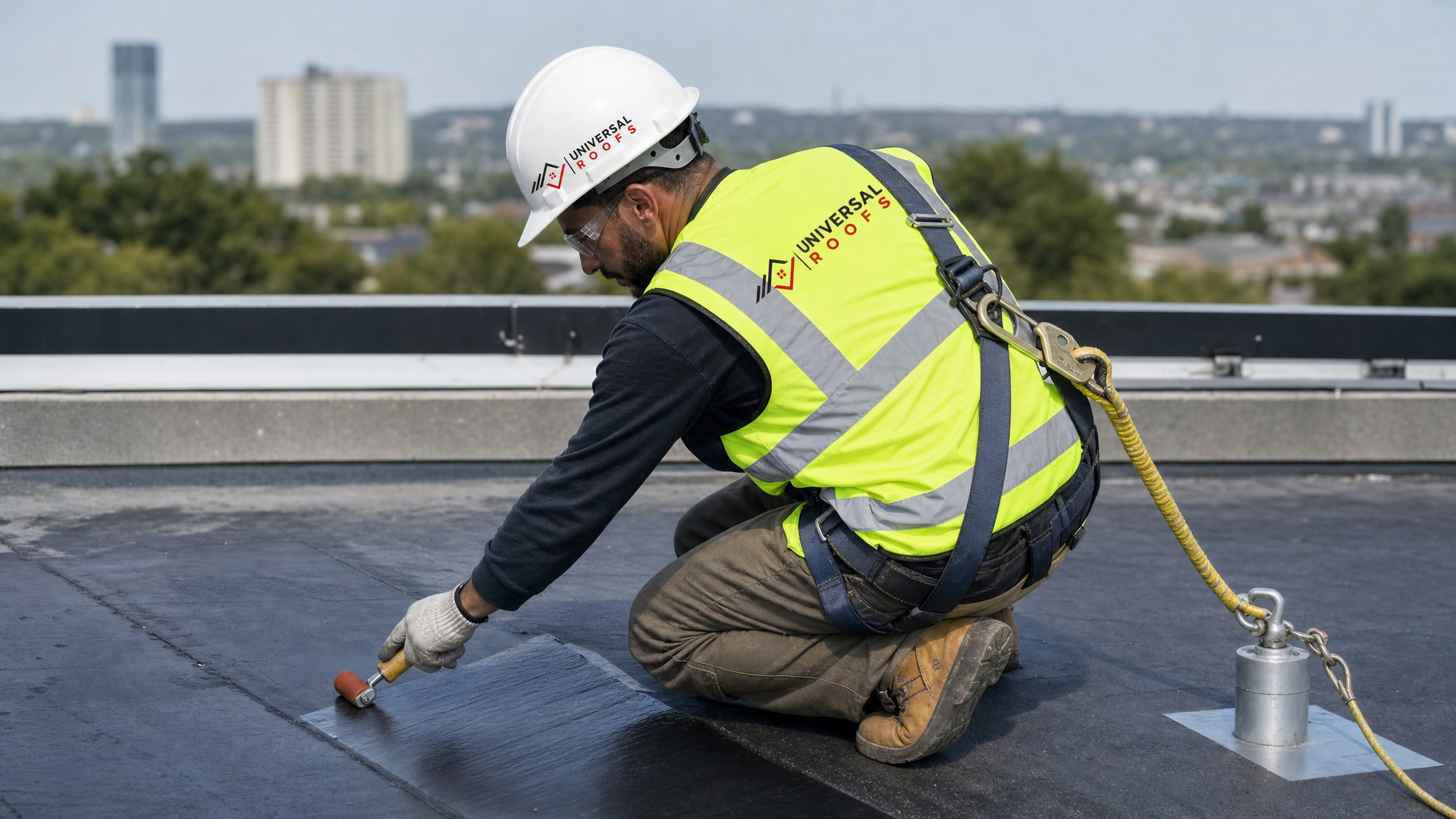
Butyl-based roofing tape or a peel-and-stick membrane patch can be pressed over a small puncture or a lifted seam once the surface is towelled dry. For larger tears, a self-adhering repair membrane cut a few centimetres larger than the damaged area on every side, with rounded corners to prevent the patch from catching wind, holds up far better than flat rectangular patches. Roofing cement (plastic roof cement) troweled generously under and over a patch adds another layer of protection, particularly around flashing details and pipe boots where leaks commonly originate.
A tarp, secured with sandbags or roof-rated weights rather than nails or screws that create new puncture points, can cover a larger compromised area while you wait for a crew. Never use bricks or loose concrete blocks, since they can shift in wind and cause additional damage or become a hazard for people below.
Tools and Materials Worth Keeping On Hand
Building owners who manage flat roofs, especially commercial properties with rooftop mechanical equipment, benefit from keeping a small emergency kit on site. It does not need to be elaborate, but having the right materials ready shaves precious minutes off a response when water is actively entering the building.
| Item | Purpose | Approx. Cost (CAD) | Where Used |
|---|---|---|---|
| Self-adhering repair membrane | Covers punctures and lifted seams | $30–$60 per roll | Exterior, over dry damaged area |
| Plastic roofing cement | Seals patch edges and flashing details | $15–$25 per pail | Exterior, around penetrations |
| Roof-rated tarps and sandbags | Temporary coverage for large damaged sections | $40–$100 | Exterior, over larger openings |
| Wet-dry shop vacuum | Clearing standing water from drains and low spots | $80–$150 | Roof surface and drain areas |
| Moisture meter | Checking for hidden saturation in insulation below membrane | $40–$120 | Interior ceiling, roof deck |
Beyond materials, it is worth keeping a laminated card near your electrical panel with the number for a trusted flat roofing contractor, since fumbling for a phone number during an active leak wastes time you do not have.
Clearing Drains and Managing Ponding Water
One of the most common causes of flat roof emergencies is not a failed membrane at all — it is a blocked drain, scupper, or gutter that lets water back up faster than the roof can shed it. Leaves, roofing granules, tennis balls, and windblown debris collect at drain strainers, and in Toronto’s older commercial buildings, decades of gravel ballast can slowly migrate toward low points and choke a drain entirely.
If the roof is safely accessible and the ponding is not accompanied by lightning or high wind, clearing debris from a drain strainer by hand or with a small hand tool can resolve a building leak within minutes. Pushing a garden hose gently into a scupper (never with high pressure, which can damage internal piping) sometimes dislodges a soft blockage. A wet-dry shop vacuum can pull standing water away from a low spot that is stressing a seam, temporarily reducing the load and buying time.
What should not be attempted as a “quick fix” is cutting a new drainage path into the membrane or deck. This might seem like a fast way to relieve pressure, but it creates a permanent penetration that will need professional flashing and sealing, and doing it incorrectly under emergency conditions often causes more damage than the original ponding problem.
When a Quick Fix Is Not Enough
Temporary patches are exactly that — temporary. They are designed to slow water intrusion for days, not months, and they are especially vulnerable to the freeze-thaw cycles that define a Toronto winter and the sudden intense downpours of a GTA summer. Relying on a tarp or a peel-and-stick patch as a long-term answer typically leads to trapped moisture, insulation breakdown, and mould growth in the roof assembly that is far more expensive to fix than the original leak.
Certain signs mean it is time to stop patching and call in a professional roof repair crew right away: soft or spongy spots underfoot on the membrane, visible sagging in the roof deck from below, multiple leak points appearing simultaneously, or a patch that fails again within a week of being applied. These all point to deeper deck damage, saturated insulation, or a membrane that has reached the end of its service life.
Older flat roofs — generally those past 15 to 20 years old depending on the membrane type — are also more likely to need a full roof replacement rather than another round of spot repairs. A patch on a roof that is structurally sound but has one isolated failure point makes sense. A patch on a roof riddled with brittle seams and multiple soft spots is often just delaying an inevitable, more costly failure.
Insurance, Documentation, and Next Steps
Most home and commercial insurance policies distinguish between sudden, accidental damage (like a storm-caused tear) and gradual deterioration from lack of maintenance, and this distinction can determine whether a claim is approved. Photograph the damage from multiple angles as soon as it is safe, keep receipts for any emergency materials purchased, and request a written assessment from whoever performs the temporary or permanent repair.
A professional inspection after any emergency, even one that seemed to resolve on its own, is worth scheduling. Water that enters through a lifted seam does not always travel straight down — it can run along the underside of a membrane or across a roof deck before dripping somewhere entirely different indoors, meaning the visible leak point and the actual damage location may not match. A thorough inspection using a moisture meter and, when needed, a core sample can map the true extent of saturation.
The table below compares the typical timeline and cost range for temporary versus permanent flat roof repairs, to help set expectations once the emergency has passed.
| Repair Type | Typical Timeline | Expected Lifespan | Approx. Cost Range (CAD) |
|---|---|---|---|
| Emergency tarp / patch | Same day to 24 hours | Days to a few weeks | $150–$500 |
| Localized membrane repair | 1–3 days | 3–7 years | $400–$1,500 |
| Drain and flashing repair | 1–2 days | 7–10 years | $500–$2,000 |
| Full membrane replacement | 3–7 days | 15–25 years | $8,000–$20,000+ |
| Insulation and deck repair (if saturated) | 2–5 days | Matches new membrane | $2,000–$10,000+ |
Preventing the Next Emergency
The best quick fix for a flat roof emergency is one you never have to perform because the problem was caught during routine maintenance instead. Twice-yearly inspections — ideally in spring after winter thaw and in fall before freeze-up — let a roofer catch lifted seams, clogged drains, and worn flashing before they become active leaks. Regular clearing of leaves and debris, especially near overhanging trees common in older Toronto neighbourhoods, keeps drains flowing freely through heavy summer storms.
If your building has rooftop-mounted skylights, these penetrations deserve particular attention, since flashing around a skylight is a frequent leak origin point on otherwise sound flat roofs. Older units nearing the end of their service life are often better addressed with a planned skylight replacement than repeated caulking. Similarly, checking that your attic or roof cavity has adequate ventilation reduces condensation-related moisture that can be mistaken for a roof leak.
Homeowners and property managers who want a second opinion on the condition of their roof, or who are unsure whether a recent storm caused hidden damage, can review real feedback from other GTA clients on our reviews page, or browse answers to common questions on our FAQ page before booking an assessment.
Working Safely During a Roof Emergency
It bears repeating: no repair is worth a fall injury. Flat roofs can feel deceptively safe because they lack an obvious slope, but wet membranes, algae growth, and hidden soft spots from water damage all create serious slip and collapse hazards. If there is any doubt about the structural integrity of a section of roof — particularly if there is visible sagging — stay off it entirely and wait for a professional with the right harness, anchor points, and training.
Professional roofers use fall-protection harnesses, anchored safety lines, and slip-resistant footwear even for what looks like a simple patch job, because conditions on a compromised roof are rarely as stable as they appear. If lightning, high winds, or darkness are factors, the safest quick fix is often no roof access at all — managing the leak from inside and waiting for daylight and safe conditions is the right call, even if it means a longer wait for the exterior patch.
Serving Homeowners and Businesses Across the GTA
Flat roof emergencies do not respect municipal boundaries, and neither does our response. From condominiums and commercial plazas in Toronto to industrial buildings across Peel Region, from residential additions throughout York Region to properties in Halton Region and Durham Region, the same freeze-thaw stress and summer storm patterns create similar failure points on flat roofs everywhere in the region.
Learn more about who we are and how long we have been solving these problems on our about page, or explore our full range of services beyond emergency response, including planned roof repair and roof replacement projects that address the root cause rather than just the symptom.
What are the best quick fixes for flat roof emergencies before a roofer arrives?
Can I use roofing tape or cement as a permanent flat roof repair?
Is it safe to walk on a flat roof during an emergency to make repairs?
What usually causes flat roof leaks in Toronto specifically?
How much does an emergency flat roof patch cost compared to full replacement?
How do I know if my flat roof needs a repair or a full replacement?
Need Help With Quick Fixes for Flat?
When a flat roof emergency strikes, having an experienced team on call makes all the difference between a contained repair and extensive interior damage. Universal Roofs has responded to flat roof emergencies across the GTA since 2005, combining fast response times with lasting repairs.
Call us today at (416) 732-2421 or request a free inspection to get started.
Universal Roofs proudly serves Toronto, Mississauga, Brampton, Vaughan, Markham, Oakville and the GTA since 2005.