
If your energy bills climb every summer and your attic feels like an oven by July, your roof is probably part of the problem. Choosing among the many energy efficient roof replacement options for you can feel overwhelming, especially with so many materials, coatings, and insulation upgrades competing for your attention. The right combination can lower cooling costs in summer, reduce ice damming in winter, and add years of comfortable, consistent indoor temperatures to your Toronto-area home.
This guide breaks down every major energy efficient roof replacement option available to GTA homeowners in 2026, comparing materials, reflective coatings, insulation strategies, and ventilation upgrades side by side. We’ll also cover realistic costs, expected energy savings, and how our climate (hot, humid summers followed by freeze-thaw winters) should shape your decision. Whether you’re replacing aging asphalt shingles or considering a full roof replacement, this article will help you choose confidently.
Energy efficiency in roofing isn’t a single product; it’s a system made up of the roofing material itself, the underlying insulation, attic ventilation, and reflective properties that control how much solar heat your home absorbs. We’ll walk through each layer of that system so you understand exactly where your money delivers the best return.
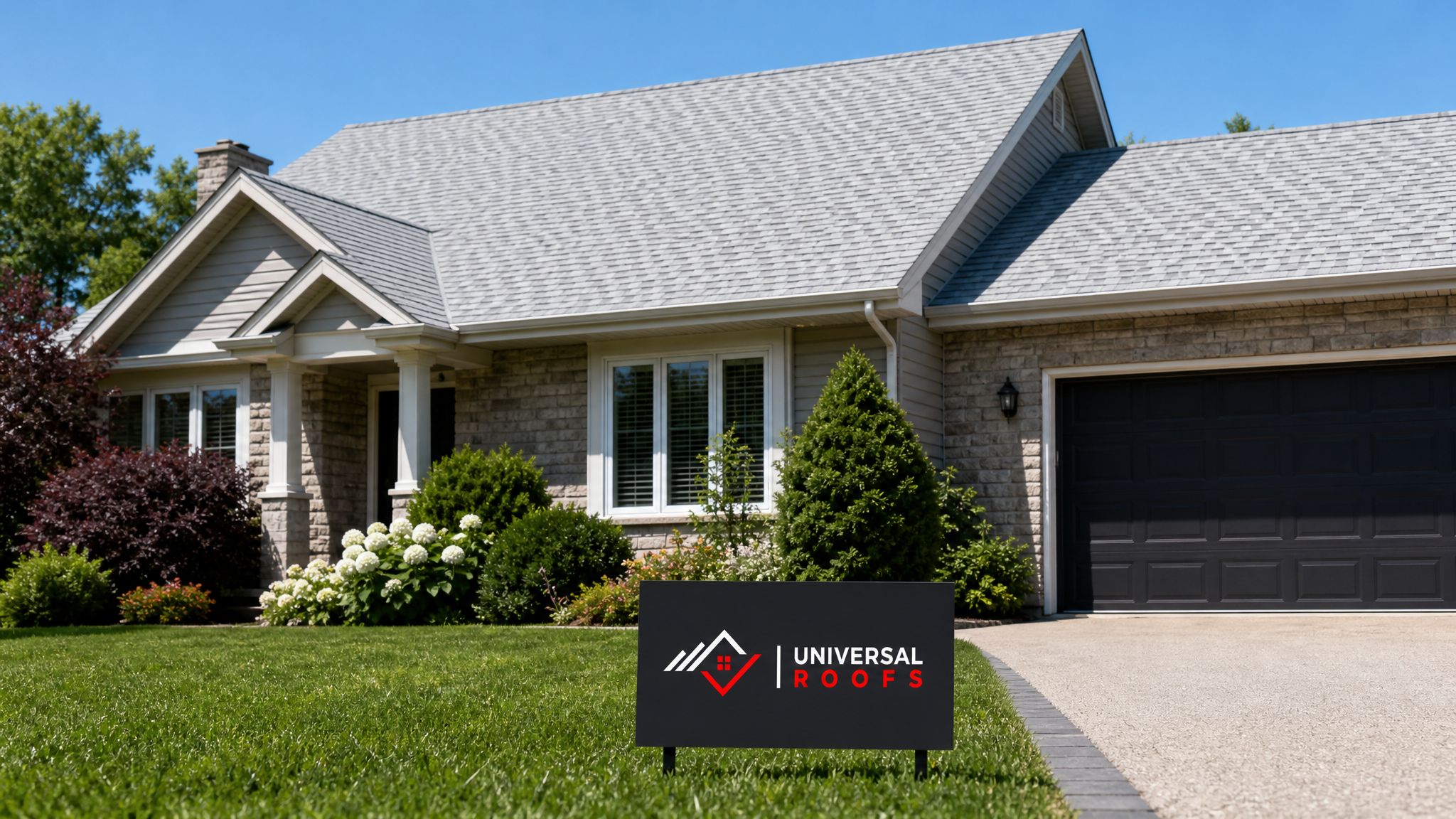
Why Roof Choice Matters for Energy Efficiency
Your roof is the single largest surface exposed to direct sunlight on your entire home. In the GTA, a dark asphalt shingle roof can reach surface temperatures of 60 to 80 degrees Celsius on a sunny July afternoon. That heat doesn’t stay on the surface; it radiates through the decking, into the attic, and eventually into your living space, forcing your air conditioner to work harder and run longer.
In winter, an under-insulated or poorly ventilated roof allows heat to escape from the living space into the attic, warming the underside of the roof deck. This melts snow unevenly, which then refreezes at the colder eaves, creating ice dams that force water back under your shingles. So an energy efficient roof replacement isn’t only about summer comfort; it also directly affects moisture management and structural durability through our freeze-thaw winters.
When homeowners across Toronto, Mississauga, Brampton, and the wider GTA book an assessment, energy performance is one of the first things we evaluate alongside the condition of the existing roof deck and attic insulation levels.
Cool Roofing Materials: The Foundation of Energy Efficient Roof Replacement
“Cool roofing” refers to any roofing material engineered to reflect more sunlight and absorb less heat than a standard dark roof. The Cool Roof Rating Council measures this using solar reflectance (how much sunlight bounces off) and thermal emittance (how efficiently the surface releases absorbed heat). Higher numbers in both categories mean a cooler roof and lower cooling loads.
Several material categories now offer genuine cool-roof performance without sacrificing the classic look homeowners expect from a pitched residential roof:
- Cool asphalt shingles use reflective granules embedded in lighter colour blends (slate grey, driftwood, light brown) that reflect significantly more solar energy than traditional black or dark brown shingles, while still looking like a conventional shingle roof.
- Metal roofing with a reflective factory finish is one of the best-performing options, often reflecting 60-70% of solar radiation and re-emitting absorbed heat quickly once the sun goes down.
- Clay and concrete tile naturally create an air gap between the tile and the roof deck, which passively cools the structure even without special reflective coatings.
- Synthetic/composite slate and shake products increasingly come with reflective pigment technology that mimics premium materials while cutting solar heat gain.
Choosing between these depends on your home’s architecture, your budget, and how long you plan to stay in the house. A full material comparison is below.
| Roofing Material | Typical Solar Reflectance | Expected Lifespan | Relative Cost | Best For |
|---|---|---|---|---|
| Standard dark asphalt shingles | Low (5-15%) | 18-25 years | $ | Budget-focused replacements |
| Cool/reflective asphalt shingles | Moderate (25-35%) | 20-30 years | $$ | Homeowners wanting energy savings without changing roof style |
| Reflective metal roofing | High (60-70%) | 40-60 years | $$$ | Long-term owners seeking maximum efficiency and durability |
| Clay/concrete tile | Moderate-High (30-50%) | 50+ years | $$$$ | Mediterranean or Spanish-style architecture |
| Synthetic slate/shake | Moderate (20-35%) | 40-50 years | $$$ | Heritage-style homes wanting efficiency upgrades |
Metal roofing consistently ranks as the top-performing energy efficient roof replacement option for homeowners planning to stay in their home long-term, largely because the reflective coating doesn’t degrade the way granule-based reflectivity on shingles can over 10-15 years. If you’re weighing metal against other materials, our roof replacement team can walk you through samples and performance data specific to your roof’s orientation and pitch.
Reflective Coatings and Cool Roof Coatings for Flat and Low-Slope Roofs
Many GTA homes, garages, additions, and virtually all commercial buildings use flat or low-slope roofing systems: EPDM rubber, modified bitumen, or TPO membranes. These roofs benefit enormously from reflective coatings, sometimes called “cool roof coatings,” which can be applied during a full replacement or as a maintenance upgrade on an existing membrane.
Elastomeric acrylic coatings, silicone coatings, and white or light-grey TPO membranes all reduce surface temperatures dramatically compared to traditional black modified bitumen. On a well-maintained flat roof, a reflective coating can lower membrane surface temperatures by 30 to 50 degrees Celsius during peak summer sun, which directly reduces heat transfer into the building below and extends the membrane’s lifespan by reducing thermal cycling and UV degradation.
If your home or building has a flat or low-slope section, it’s worth discussing coating options as part of any flat roofing replacement. Not every flat roof needs a full membrane swap; sometimes a reflective recoat on a structurally sound membrane is the most cost-effective energy efficiency upgrade available.
Attic Insulation and Air Sealing: The Most Cost-Effective Upgrade
Here’s a fact that surprises many homeowners: for most GTA houses, upgrading attic insulation delivers a better return on investment than upgrading the roofing material itself. The Ontario Building Code recommends a minimum of R-60 insulation in attics for new construction in our climate zone, yet many homes built before 2000 have R-20 to R-30 or less, often compressed, gapped, or water-damaged after years of minor leaks.
When we perform a roof replacement, it’s the ideal moment to address attic insulation because the roof deck is already exposed and accessible. Common upgrades we recommend alongside a reroofing project include:
- Blown-in cellulose or fibreglass to top up existing insulation to current R-value targets, typically the most affordable option per square metre of coverage.
- Spray foam insulation at the roof deck for homes converting to a conditioned (“hot”) attic, which also helps control humidity and ice damming.
- Air sealing around pot lights, bathroom fans, attic hatches, and plumbing stacks, since air leakage often accounts for more heat loss than insulation gaps alone.
- Vapour barrier repair to prevent warm, moist household air from migrating into the attic and condensing on the underside of the roof deck.
Because our attic insulation and ventilation are directly connected to how well any new roof performs, we always inspect attic conditions before recommending a specific material. A premium reflective metal roof installed over poorly insulated, poorly ventilated attic space will underperform its rated efficiency.
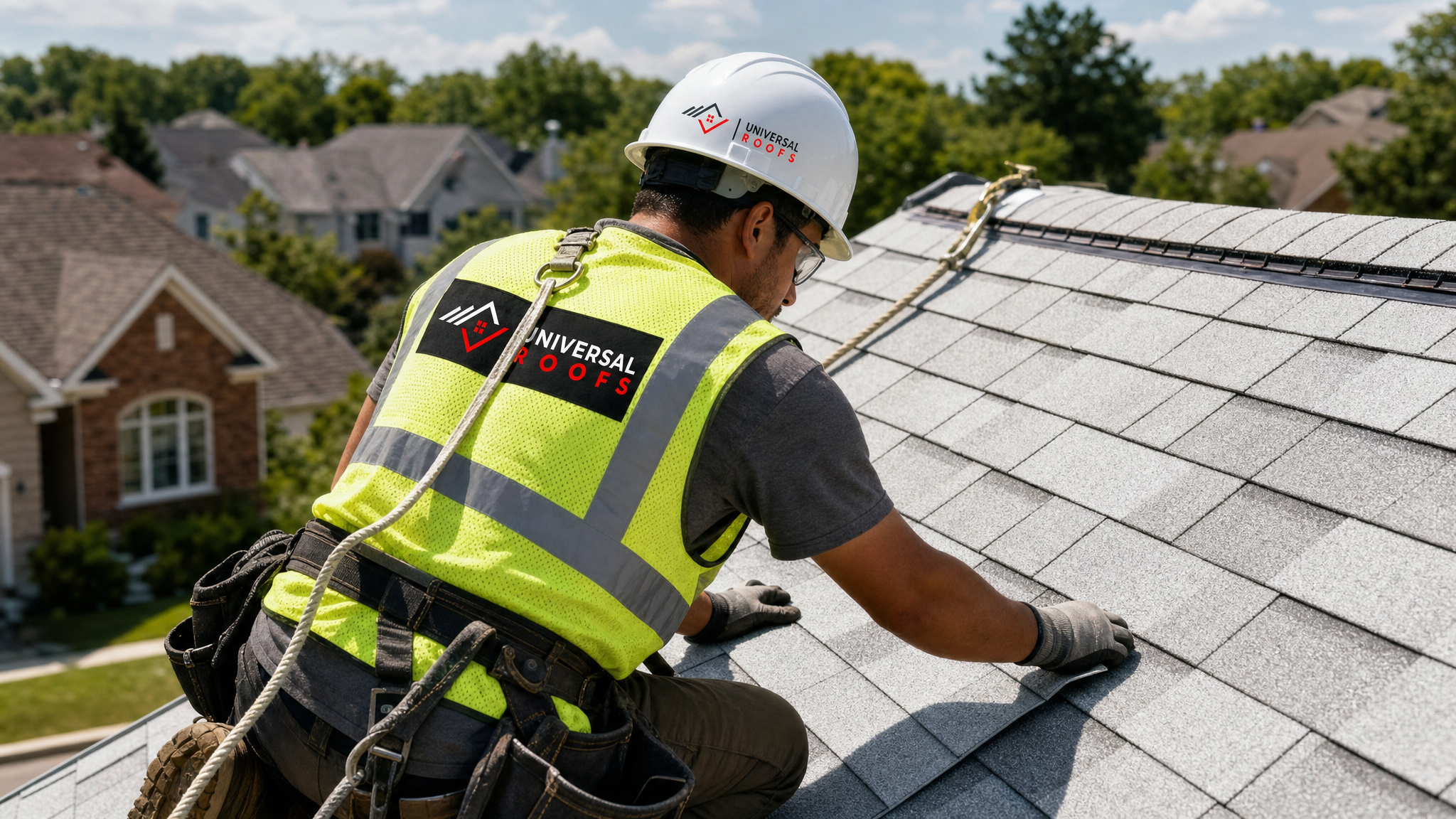
Attic Ventilation: Balancing Intake and Exhaust
Proper attic ventilation works hand-in-hand with insulation to regulate roof deck temperature year-round. A balanced system pulls cooler outside air in through soffit vents at the eaves and pushes warm, moist attic air out through ridge vents, roof vents, or power vents at the peak. This continuous airflow keeps the roof deck closer to outdoor temperature, which reduces summer heat buildup and prevents the uneven snowmelt that causes ice dams in winter.
Many older GTA homes have ventilation systems that were adequate decades ago but no longer meet current recommended ratios, especially after additions, renovations, or previous reroofing jobs that blocked soffit intake with insulation. Signs your ventilation needs attention include visible frost or moisture on the underside of the roof deck, ice dams along the eaves every winter, or an attic that feels noticeably hotter than the outdoor temperature in summer.
| Ventilation Component | Function | Common Issue in Older GTA Homes | Recommended Fix |
|---|---|---|---|
| Soffit vents | Intake, draws cool outside air in | Blocked by insulation or paint | Clear obstructions, add baffles |
| Ridge vent | Exhaust, continuous airflow at peak | Missing or undersized on older roofs | Install continuous ridge vent during reroofing |
| Roof/box vents | Exhaust, point-source venting | Too few units for attic square footage | Add units to match intake capacity |
| Power/solar attic fan | Active exhaust, useful for complex rooflines | Can depressurize attic if intake is inadequate | Pair with sufficient soffit intake |
A properly balanced system doesn’t just protect your shingles from premature failure; it directly supports the energy efficiency of whatever roofing material you choose. We assess soffit and ridge conditions on every project before finalizing a replacement plan.
Skylights: A Double-Edged Energy Consideration
Skylights bring natural daylight into upper-floor rooms, but older single or double-pane skylights are notorious energy weak points: they can lose significantly more heat per square metre than the surrounding roof surface, and in summer they can add substantial solar heat gain if not properly glazed. If your roof replacement includes existing skylights, this is the time to evaluate whether they need upgrading too.
Modern energy efficient skylight units use double or triple glazing, low-E coatings, and argon gas fills to dramatically cut heat transfer in both directions. Some models also include venting capability, letting you exhaust hot attic-adjacent air on summer evenings. If your current skylights are original to a home built in the 1990s or earlier, they are very likely underperforming against current energy codes.
We handle both new and replacement skylight projects through our dedicated skylights and skylight replacement services, and we always coordinate skylight work with the surrounding roofing material so flashing and thermal breaks are integrated properly rather than treated as an afterthought.
Comparing Total Cost and Payback Period by Option
Energy efficient upgrades vary enormously in upfront cost and how quickly they pay for themselves through reduced utility bills. The table below gives realistic GTA benchmark ranges based on projects we complete regularly; actual costs depend on roof size, pitch, accessibility, and existing deck condition.
| Upgrade Option | Typical Cost Range | Estimated Annual Energy Savings | Approximate Payback Period |
|---|---|---|---|
| Cool/reflective asphalt shingles (full replacement) | $8,000 to $16,000 | $150 to $350 | 10-15 years |
| Reflective metal roofing (full replacement) | $18,000 to $35,000 | $300 to $600 | 15-20 years (plus far longer lifespan) |
| Attic insulation top-up to R-60 | $1,500 to $4,000 | $200 to $500 | 3-8 years |
| Ventilation balancing (soffit/ridge upgrade) | $800 to $2,500 | $50 to $150 (plus reduced ice dam damage) | 5-10 years |
| Reflective coating on flat/low-slope roof | $3 to $7 per square foot | $100 to $400 depending on building size | 4-9 years |
Notice that attic insulation typically offers the fastest payback of any single upgrade, which is why we recommend addressing it before or during any roofing material change, regardless of which product you ultimately choose.
Government Rebates and Incentives for Energy Efficient Roofing
Ontario and federal programs periodically offer rebates for insulation upgrades, air sealing, and in some cases high-performance roofing materials as part of broader home energy retrofit incentives. Eligibility, funding levels, and program names change from year to year, so we recommend checking current programs through Natural Resources Canada and your municipality before finalizing your project scope.
A pre-retrofit energy audit, sometimes required to qualify for rebates, will also give you a clear picture of where your home loses the most heat: information that helps prioritize between roofing material upgrades, insulation, and ventilation work. Many homeowners are surprised to learn the attic accounts for a larger share of total heat loss than the walls or windows combined.
How to Choose the Right Option for Your Home
With so many components in play, here’s a practical decision framework we walk clients through during every assessment:
- If your attic insulation is below R-50, prioritize insulation and air sealing first; it’s the fastest payback regardless of what roofing material you eventually choose.
- If you’re staying in the home 15+ years, reflective metal roofing offers the best long-term efficiency and durability combination, despite higher upfront cost.
- If you want efficiency gains without changing your roof’s traditional appearance, cool asphalt shingles in lighter colour blends deliver meaningful improvement at a moderate cost premium.
- If you have a flat or low-slope section, a reflective coating or light-coloured membrane should be part of the plan regardless of what you do on the pitched sections.
- If ice dams have been a recurring problem, address ventilation and insulation together before or during reroofing; a new roof alone won’t solve a ventilation-driven ice dam issue.
Every home is a little different depending on orientation, roof pitch, tree cover, and existing attic conditions, which is why an in-person assessment consistently produces better recommendations than a generic online calculator.
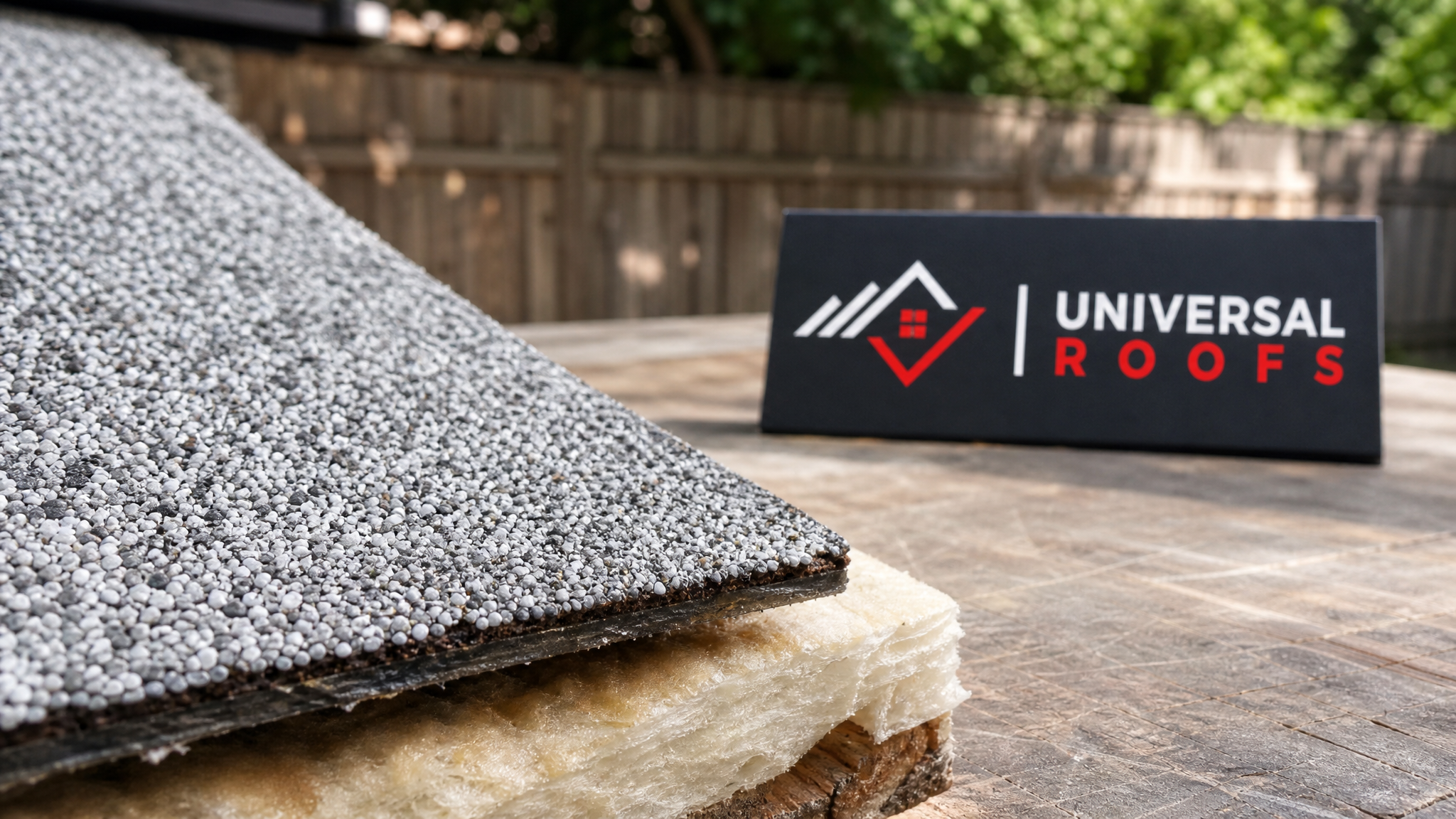
Why Work With a Local GTA Roofing Contractor
Energy efficient roofing decisions depend heavily on local climate conditions, building code requirements, and the specific way Toronto-area homes are constructed: attic layouts, soffit designs, and roof pitches common in neighbourhoods across the region all affect which upgrades make sense. Since 2005, Universal Roofs has replaced and repaired roofs across the GTA, giving us direct experience with how different materials and insulation strategies perform through our specific mix of humid summers and freeze-thaw winters.
We serve homeowners throughout Toronto, Peel Region, York Region, Halton Region, and Durham Region, and we’re happy to walk you through material samples, reflectivity ratings, and insulation options specific to your home. You can also read what past clients have said about their projects on our reviews page, or browse common questions on our FAQ page before booking a visit.
If you’re unsure whether your current roof needs full replacement or targeted repairs first, our roof repair team can assess whether isolated fixes make more sense before committing to a full energy efficient roof replacement.
What are the best energy efficient roof replacement options for you if you live in the GTA?
How much can a reflective roof actually lower my cooling costs?
Is attic insulation or roofing material more important for energy efficiency?
Do energy efficient roof replacement options help prevent ice dams in winter?
Are metal roofs worth the higher upfront cost compared to shingles?
Should skylights be replaced at the same time as an energy efficient roof replacement?
Need Help With Top Energy Efficient Roof?
Choosing among the many energy efficient roof replacement options for your home doesn’t have to be complicated. The team at Universal Roofs can assess your existing roof, attic insulation, and ventilation, then recommend the combination of materials and upgrades that delivers the best real-world energy savings for your specific home.
Call us today at (416) 732-2421 or request a free inspection to get started.
Universal Roofs proudly serves Toronto, Mississauga, Brampton, Vaughan, Markham, Oakville and the GTA since 2005.