
If you manage a commercial property in the Greater Toronto Area, the roof over your head is quietly doing more work than almost any other part of the building. It sheds rain and snow, shields insulation and mechanical equipment, and protects everything from inventory to employees below. Yet because commercial roofs are rarely visible from ground level, they are often the most neglected surface on the entire property. Understanding why roof cleaning is important for commercial buildings is the first step toward avoiding costly surprises and extending the life of a very expensive asset.
Commercial roofs — whether low-slope membrane systems, built-up roofing, or metal roofing over a warehouse — accumulate debris, algae, moss, ponding water residue, and airborne grime far faster than most property managers expect. In a city like Toronto, where humid summers alternate with freeze-thaw winters, that buildup does not just sit harmlessly on the surface. It actively degrades roofing materials, blocks drainage, and creates the exact conditions that lead to leaks, mould growth, and premature roof failure.
This guide explains, in plain language, why routine roof cleaning matters for commercial buildings, what happens when it is skipped, how professional cleaning compares to DIY approaches, and how to build a cleaning schedule that protects your investment year-round. Whether you oversee a strip mall, an office tower, a warehouse, or a multi-tenant industrial complex, the principles below apply directly to your property.
Why Roof Cleaning Is Important for Commercial Buildings
The short answer is that a clean roof lasts longer, performs better, and costs less to maintain than a neglected one. Commercial roofs represent one of the largest capital investments a property owner will make, often costing hundreds of thousands of dollars to replace. Roof cleaning is the least expensive way to protect that investment, yet it is consistently overlooked in favour of more visible maintenance priorities like parking lot repairs or lobby renovations.
Debris such as leaves, branches, dust, and windblown grit collects in low spots, around drains, and along parapet walls. Over time this organic material breaks down and holds moisture against the roofing membrane. Sustained moisture contact is one of the fastest ways to shorten the service life of any roofing system, whether it is a modified bitumen membrane, a single-ply TPO or EPDM system, or a built-up gravel roof. Regular cleaning removes that material before it can cause damage, which is why building owners across Toronto increasingly treat it as a standard line item in their roof repair and maintenance budgets rather than an optional extra.
There is also a direct financial argument. A roof replacement on a mid-size commercial building can run into six figures, while professional cleaning and inspection typically costs a small fraction of that amount per visit. Spread over a 20-year roof lifespan, the math consistently favours proactive cleaning over reactive repair or early replacement.
How Debris and Organic Growth Damage Commercial Roofing Systems
Not all roof buildup is created equal, and understanding the different types of contamination helps explain why cleaning frequency matters. The table below breaks down the most common contaminants found on GTA commercial roofs and how each one affects the roofing system over time.
| Contaminant | Common Source | Effect on Roof | Risk Level |
|---|---|---|---|
| Leaves and organic debris | Nearby trees, wind drift | Clogs drains, holds moisture against membrane | High |
| Algae and moss | Shaded, damp areas of roof | Retains water, degrades membrane surface over time | Medium-High |
| Dirt and airborne grit | Urban pollution, construction dust | Reduces reflectivity, accelerates UV degradation | Medium |
| Ponding water residue | Poor drainage slope | Leaves mineral deposits, promotes membrane blistering | High |
| Bird droppings and nesting material | Rooftop HVAC units, parapet ledges | Highly acidic, corrodes metal flashing and membranes | High |
| Ice and snow residue | Winter accumulation | Refreezing cycles stress seams and fasteners | Medium-High |
Each of these contaminants interacts with Toronto’s climate in a slightly different way. Our region’s freeze-thaw cycles mean that any trapped moisture — whether from decomposing leaves or ponding water — can freeze, expand, and stress seams, flashing, and fasteners over a single winter. Left unaddressed across multiple seasons, this cycle is one of the leading causes of premature leaks on commercial roofs throughout the GTA.
Algae and moss deserve particular attention because they are often dismissed as a cosmetic issue. In reality, moss root structures can work into membrane seams and granulated surfaces, lifting materials and creating pathways for water intrusion. On flat and low-slope roofs common to strip malls and industrial buildings, moss tends to establish itself in shaded corners near HVAC units or parapet walls where drainage is already marginal — precisely the areas most vulnerable to leaks.
The Hidden Costs of Skipping Roof Cleaning
Many property managers assume that if a roof isn’t actively leaking, it doesn’t need attention. This is one of the most expensive misconceptions in commercial building maintenance. A roof can appear structurally sound from the ground while quietly accumulating damage that will surface as a major repair bill within a year or two.
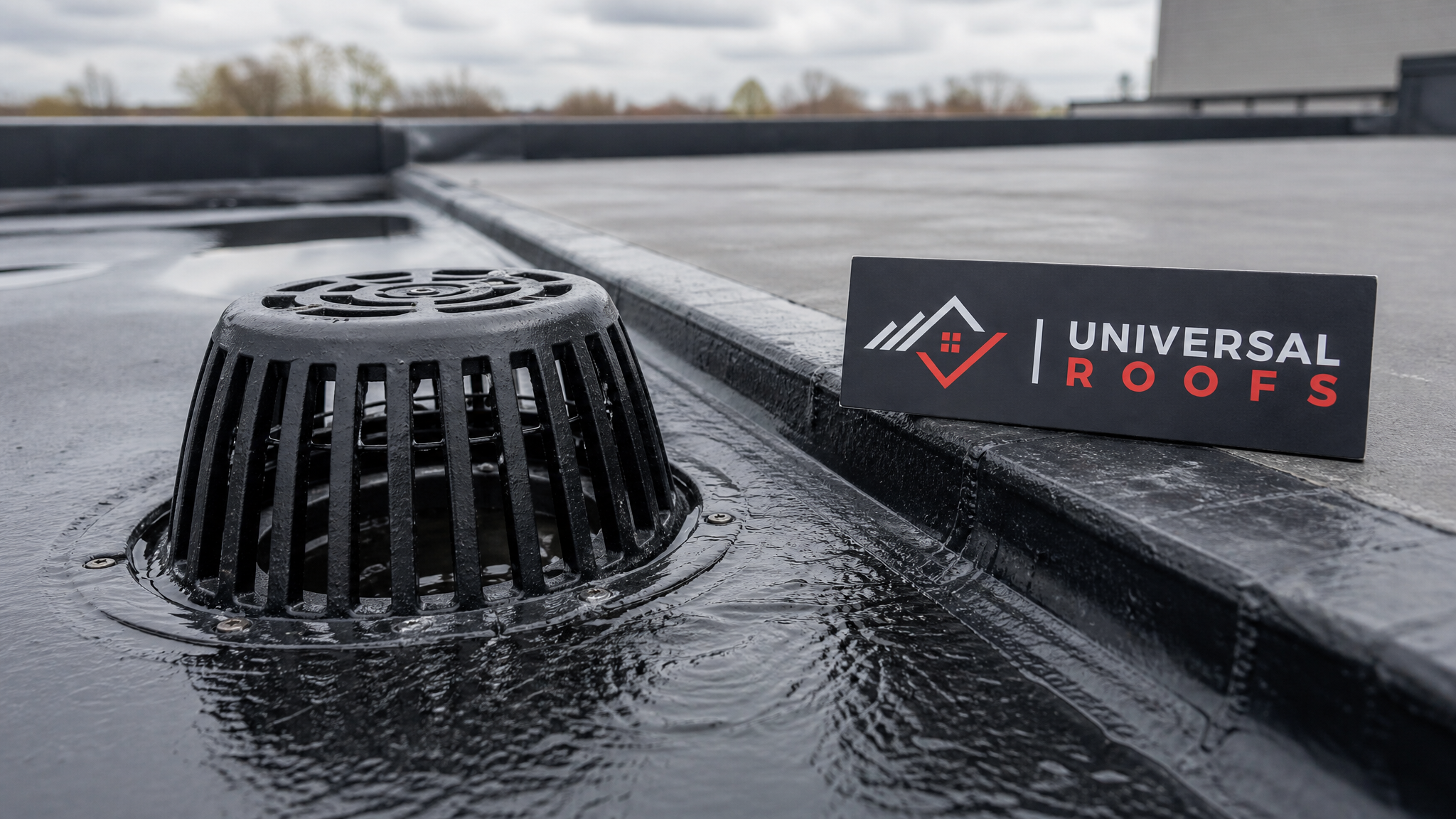
Clogged drains and scuppers are the most common consequence of a neglected roof. When debris blocks water from draining properly, ponding water forms. Standing water adds significant dead-load weight to the roof structure, accelerates membrane breakdown through prolonged UV and moisture exposure, and can eventually work its way through seams, penetrations, or aged flashing. On a flat roof system, even a few centimetres of standing water across a large surface area represents a substantial and unplanned structural load.
Beyond structural concerns, a dirty roof also creates indoor air quality problems. Moisture trapped under debris promotes mould and mildew growth, and once mould establishes itself on the underside of a roof deck or within insulation, it can spread into the building’s HVAC system and interior spaces. For commercial tenants — particularly in retail, food service, or healthcare settings — mould contamination can trigger costly remediation, tenant complaints, and in some cases regulatory issues.
Roof Cleaning and Your Warranty: What Building Owners Need to Know
One of the most overlooked reasons roof cleaning matters is warranty protection. Most commercial roofing manufacturers require documented, regular maintenance as a condition of keeping a materials or workmanship warranty valid. If a roof fails and the manufacturer’s inspection reveals a buildup of debris, standing water, or unaddressed organic growth, a warranty claim can be denied outright — even if the underlying failure was technically a materials defect.
This is a detail that catches many property managers off guard, especially on buildings that changed ownership or management companies partway through the warranty period. Keeping dated records of cleaning and inspection visits is the simplest way to demonstrate compliance if a claim ever needs to be filed. It is also one of the reasons many commercial clients bundle their cleaning schedule with periodic checks through our roof repair team, so that any developing issues are documented and addressed before they affect warranty standing.
Energy Efficiency and Reflectivity: An Overlooked Benefit
Roof cleaning has a measurable impact on energy performance, particularly for buildings with white or light-coloured single-ply membranes designed to reflect solar heat. Over time, dirt, soot, and airborne grime accumulate on the membrane surface and reduce its solar reflectance index — essentially turning a reflective roof into an absorptive one. In the summer months, this means the building’s cooling system has to work harder to offset the additional heat gain, driving up utility costs.
For buildings pursuing LEED certification or other energy efficiency benchmarks, roof reflectivity is often a documented performance metric. A dirty roof can quietly undermine those certifications over time, even when no other building systems have changed. Restoring the membrane’s reflective properties through proper cleaning is a low-cost way to support energy performance targets without touching the HVAC system at all.
Professional Roof Cleaning vs. DIY: A Cost and Safety Comparison
Some property managers consider handling roof cleaning in-house using maintenance staff. While this can seem like a cost-saving measure, it introduces safety and liability risks that are rarely worth the modest savings. The comparison below outlines the key differences between DIY and professional commercial roof cleaning.
| Factor | DIY / In-House Cleaning | Professional Roof Cleaning |
|---|---|---|
| Fall protection compliance | Often lacking proper harness anchor points | Full fall-protection systems and trained crews |
| Membrane-safe techniques | Risk of using damaging pressure or chemicals | Membrane-specific cleaning methods and solutions |
| Drain and scupper inspection | Often surface-level only | Full drainage system clearing and testing |
| Documentation for warranty | Rarely recorded formally | Dated reports suitable for manufacturer records |
| Cost per visit | Lower direct cost, higher liability exposure | Predictable, budgeted cost with insurance coverage |
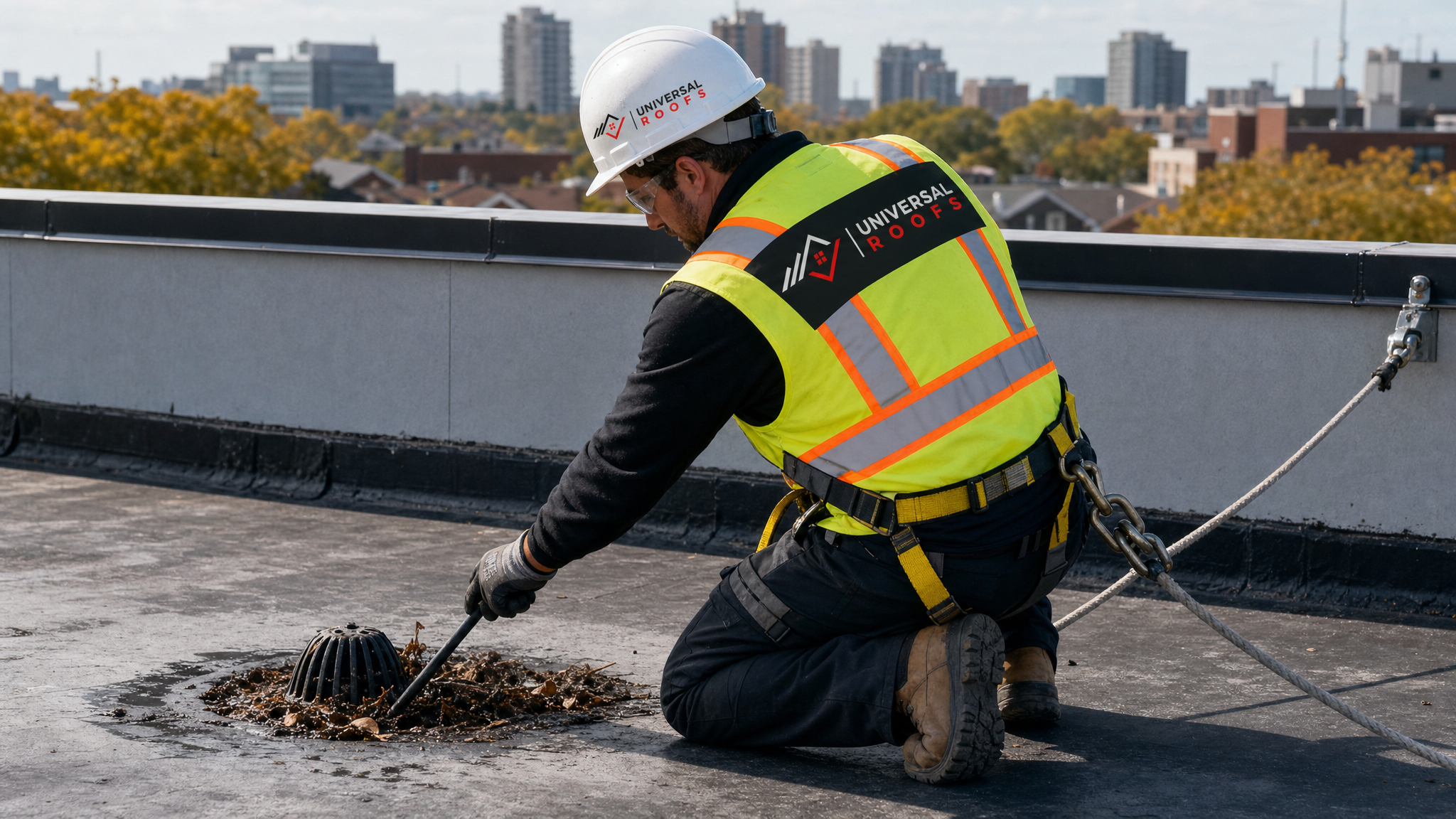
Working at height on a commercial roof carries genuine fall risk, and most in-house maintenance staff are not equipped or certified for rooftop work under Ontario’s occupational health and safety requirements. Professional crews bring insurance coverage, proper fall-arrest equipment, and training specific to the membrane type installed on your building — whether that’s a flat roofing membrane, built-up roofing, or a metal roof system. Improper cleaning methods, such as high-pressure washing on a granulated membrane, can actually strip protective surfacing and shorten the roof’s remaining service life rather than extend it.
Building a Commercial Roof Cleaning Schedule for the GTA Climate
The right cleaning frequency depends on the building’s surroundings, roof type, and drainage design, but most commercial properties in the Toronto area benefit from a structured seasonal approach rather than a one-time or reactive cleaning. The table below outlines a general schedule that applies to most low-slope commercial roofs in our climate.
| Season | Recommended Action | Why It Matters |
|---|---|---|
| Spring | Full debris removal and drain clearing | Clears winter accumulation before spring rains |
| Summer | Inspection and spot cleaning of algae/moss growth | Prevents growth from establishing during humid months |
| Fall | Leaf and debris removal, gutter and scupper check | Prevents clogging before winter freeze-thaw cycles |
| Winter | Snow load monitoring, ice dam checks | Reduces structural load and leak risk from meltwater |
Buildings surrounded by mature trees, located near construction sites, or situated close to bodies of water tend to accumulate debris faster and may need quarterly attention rather than the standard biannual visit. Buildings with rooftop mechanical equipment, such as HVAC units or exhaust systems, should also have cleaning coordinated with mechanical maintenance schedules, since technicians servicing equipment often generate debris of their own around unit pads and curbs.
It’s worth noting that a cleaning visit is also the ideal opportunity to catch early signs of wear that might otherwise go unnoticed — cracked sealant around penetrations, lifting flashing, or membrane blistering. Many of our commercial clients pair their cleaning schedule with a broader inspection through our roof replacement and repair planning process, which helps them budget years in advance rather than facing an emergency replacement.
Rooftop Equipment, Skylights, and Attic Considerations
Commercial roofs frequently host more than just membrane and flashing. Rooftop HVAC curbs, exhaust fans, and increasingly, commercial skylights, all interact with the cleaning process. Debris that accumulates around skylights can block drainage paths and lead to pooling directly against the unit’s frame, which is a common source of leaks that are frequently misdiagnosed as skylight failures rather than debris-related drainage issues. If your building’s skylights are aging or showing signs of seal failure, it’s worth having them assessed alongside a cleaning visit — our team can advise on skylight replacement where warranted.
Similarly, buildings with accessible attic or roof-deck cavities should have those spaces checked periodically for signs of moisture intrusion tied to roof-level debris buildup. Ventilation blocked by debris at soffits or roof vents can trap humidity in the attic space, contributing to condensation issues that mirror what’s happening on the roof surface above.
Signs Your Commercial Roof Needs Cleaning Now
While a scheduled maintenance plan is the best long-term approach, there are several warning signs that indicate a commercial roof needs immediate attention rather than waiting for the next scheduled visit:
- Visible ponding water that remains more than 48 hours after rainfall
- Dark streaking or green-black discolouration suggesting algae or moss growth
- Debris visibly overflowing drains or scuppers
- Interior ceiling stains, especially near HVAC penetrations or parapet walls
- A noticeable increase in cooling costs without other explanation
- Musty odours in top-floor units, suggesting trapped moisture below the roof deck
If any of these signs are present, it’s worth scheduling an assessment rather than waiting for the next routine cycle. Early intervention is almost always less expensive than addressing water damage after it has reached the building interior.
Choosing a Commercial Roof Cleaning Provider
Not every roofing contractor is equipped to handle commercial-scale cleaning safely and effectively. When evaluating a provider, look for a company with documented experience working on the specific membrane type installed on your building, proper insurance and WSIB coverage for rooftop work, and a willingness to provide before-and-after documentation for your records. A provider who can also speak to drainage design, flashing condition, and membrane wear during the same visit adds significantly more value than one who simply removes visible debris.
Property managers across Toronto, Mississauga, Brampton, Vaughan, Markham, and Oakville have relied on Universal Roofs since 2005 for exactly this kind of combined cleaning-and-inspection approach. You can review feedback from other commercial clients on our reviews page, and browse common questions on our FAQ page before booking a visit.
Regional Considerations Across the GTA
Roof cleaning needs vary somewhat depending on where in the region a property is located. Buildings in dense urban cores, such as those we service across Toronto, tend to accumulate more airborne grime and construction dust due to surrounding development activity. Properties in Peel Region and York Region with more mature tree cover often see heavier organic debris loads in the fall. Buildings in Halton Region and Durham Region closer to open water or exposed sites may experience faster algae growth in humid summer stretches. Regardless of location, the underlying principle stays the same: consistent, professional cleaning protects the roof’s ability to perform its primary job of keeping water out.
Why is roof cleaning important for commercial buildings specifically, compared to residential roofs?
How often should a commercial roof be cleaned in the Toronto area?
Can skipping roof cleaning void a commercial roofing warranty?
Does roof cleaning actually affect a building’s energy costs?
Is it safe for building maintenance staff to clean the roof themselves?
What are the warning signs that a commercial roof needs cleaning right away?
Need Help With Why Is Roof Cleaning?
A clean, well-maintained roof is one of the simplest ways to protect a commercial property’s value, warranty coverage, and energy performance, and the team at Universal Roofs has been helping GTA property managers stay ahead of these issues since 2005.
Call us today at (416) 732-2421 or request a free inspection to get started.
Universal Roofs proudly serves Toronto, Mississauga, Brampton, Vaughan, Markham, Oakville and the GTA since 2005.